

P0174 on 1997-2000 Dodge Caravan 3.0L: Lean Condition Causes and Fixes
P0174 on a 1997-2000 Dodge Caravan with the 3.0L V6 is most often caused by vacuum leaks from aged rubber hoses or failed intake manifold gaskets. Expect to spend $10-$50 on hoses or around $20-$60 for an intake gasket set. A thorough inspection for leaks, preferably with a smoke machine, before buying parts is key to an accurate diagnosis.
- Assume you have a vacuum leak until proven otherwise. This is the most common cause of P0174 on this specific engine.
- Perform a thorough visual inspection of all vacuum hoses and consider a smoke test before replacing any expensive parts.
- The intake manifold gaskets are a known weak point; if you hear a hissing sound from the top of the engine, they are the prime suspect.
- Do not replace the oxygen sensor as a first step. It is likely doing its job correctly by detecting the leak.
- If replacing the intake gaskets, it is a good time to also replace spark plugs, wires, and other 'while-you-are-in-there' components to save on future labor.
What's Unique About the 1997-2000 Dodge Caravan
The Mitsubishi-built 3.0L 6G72 V6 in this generation of Caravan is exceptionally prone to vacuum leaks as it ages, particularly from the intake manifold plenum gaskets. Unlike many engines where a lean code might point to a sensor first, on this specific platform, a physical leak from deteriorating gaskets or rubber hoses is the most probable culprit. This makes a visual inspection and a smoke test a critical first step, often revealing the problem before any parts are purchased. The issue is so common that it's considered a pattern failure for this engine.
Symptoms You May Notice
- Check Engine Light is on
- Rough or unstable idle, sometimes surging up and down
- Engine hesitation or stumbling during acceleration
- Reduced engine power and sluggish performance
- Hissing or whistling sound from the engine bay, especially around the top of the engine
- Stalling at low RPMs or when coming to a stop
- Decreased fuel economy
- Engine knocking or pinging under load
- Replacing the oxygen sensor without first checking for vacuum leaks. A vacuum leak is the most common cause, and a new O2 sensor will not fix it. The O2 sensor is often just correctly reporting the lean condition caused by the leak.
Most Likely Causes
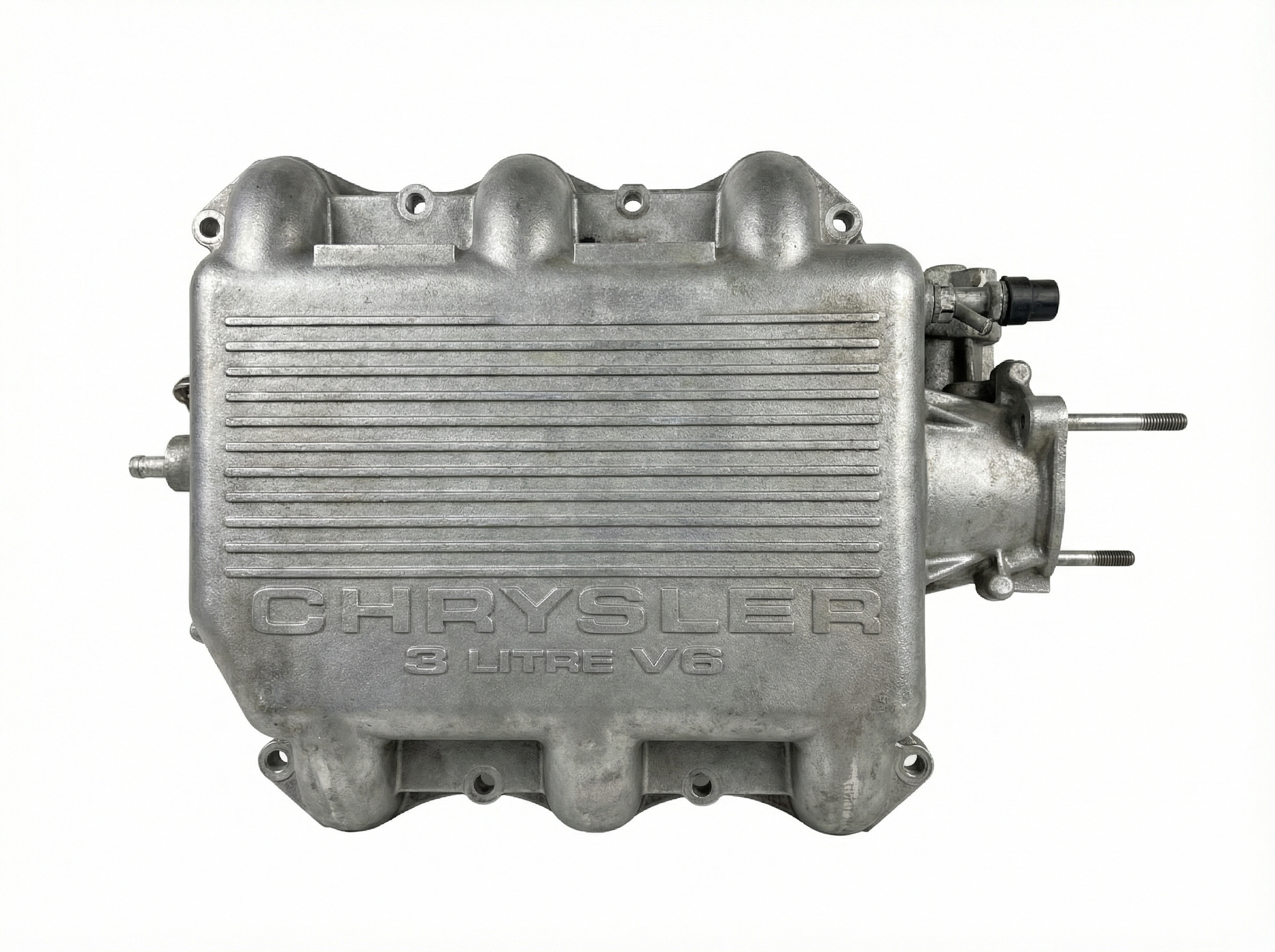
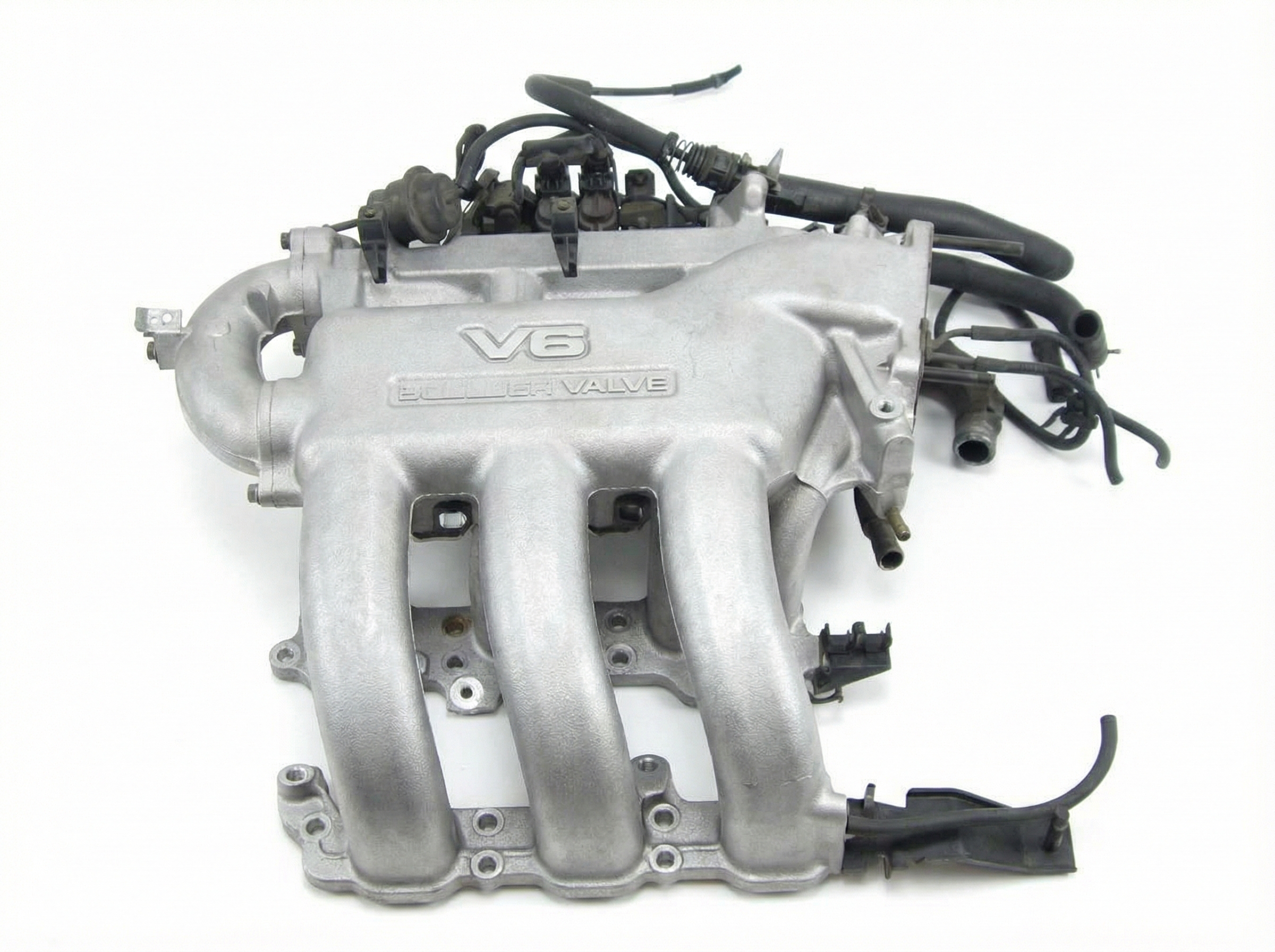
- Leaking Intake Manifold Gaskets 🔴 High Probability → Shop Engine Intake Manifold The gaskets between the upper intake plenum and the lower intake runners are a well-documented, common failure point on the 3.0L 6G72 engine. Over time, they become hard, brittle, and crack, leading to unmetered air entering the engine.
How to confirm: Perform a smoke test on the intake system; smoke will visibly exit from the gasket area. 🎬 See how to perform a quick and effective smoke test. Another method is to carefully spray short bursts of brake cleaner or starting fluid around the gasket sealing surfaces with the engine running; a noticeable change in engine RPM or tone indicates a leak.
Typical fix: Replace the upper (plenum) and lower intake manifold gaskets. It is critical to tighten the plenum bolts to the correct torque specification (16 ft-lbs) to avoid cracking the manifold.
Est. part cost: $20-$60 - Cracked or Disconnected Vacuum Hoses 🔴 High Probability → Shop Vacuum Hose Rubber hoses become brittle and crack over 20+ years of heat cycles. The PCV hose and elbow, brake booster hose, and other small vacuum lines connected to the intake manifold 🎬 Learn how to test and replace your brake booster vacuum hose. are frequent culprits.
How to confirm: Visually inspect all vacuum lines for obvious cracks, splits, or loose connections. Listen for a hissing sound with the engine running. A smoke test is the most definitive way to find small or hidden leaks.
Typical fix: Replace the damaged vacuum hose(s). It's often wise to replace multiple aged hoses at once.
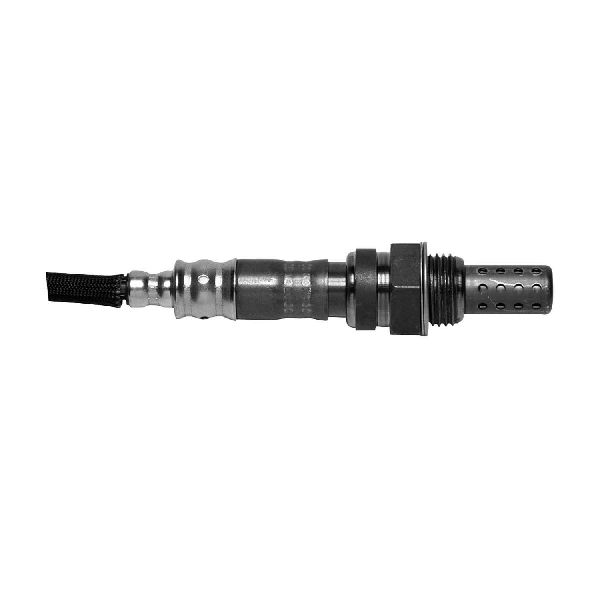
Est. part cost: $5-$30 - Faulty Upstream Oxygen (O2) Sensor 🟡 Medium Probability → Shop Oxygen Sensor
How to confirm: Use a scan tool to monitor the live data voltage of the Bank 2, Sensor 1 O2 sensor (the upstream sensor on the radiator side). A healthy sensor's voltage fluctuates rapidly between approximately 0.1V and 0.9V. A sensor that is stuck at a low voltage (e.g., <0.2V) or is very slow to respond, after vacuum leaks have been ruled out, is likely faulty.
Typical fix: Replace the Bank 2, Sensor 1 (upstream) oxygen sensor. This should only be done after confirming there are no vacuum leaks.
Est. part cost: $30-$80 - Low Fuel Pressure ⚪ Low Probability
How to confirm: Connect a fuel pressure gauge to the fuel rail's test port (Schrader valve). With the key on and engine off, pressure should meet the manufacturer's specification, which for many Chrysler vehicles of this era is in the 48-55 PSI range. Pressure that is low or drops quickly can indicate a weak fuel pump or a clogged fuel filter.
Typical fix: Replace the clogged fuel filter or the failing fuel pump module.
Est. part cost: $15-$40 for a filter, $100-$250 for a pump
Rare But Worth Checking
- Dirty or Clogged Fuel Injectors: → Shop Fuel Injector If the lean condition is isolated to one or two cylinders on Bank 2 (confirmed via misfire data), a clogged injector could be the cause. This is less common than a vacuum leak affecting the entire bank.
- Exhaust Leak Before the O2 Sensor: → Shop Oxygen Sensor A crack in the exhaust manifold or a leaking flange gasket before the upstream O2 sensor can allow outside air to be drawn into the exhaust stream, fooling the sensor into reading a false lean condition.
- Faulty Idle Air Control (IAC) Valve: A leaking IAC valve can sometimes cause a vacuum leak. One owner on a forum found smoke exiting the IAC during a smoke test, which resolved the lean code when the valve was replaced.
Diagnosis Steps
- Confirm P0174 is present using an OBD-II scanner. Check for any other codes, especially P0171 (lean on both banks) 🎬 Watch: A guide on what to look for with lean codes. or misfire codes (P030x).
- Check freeze frame data to see engine conditions (RPM, load, temperature) when the code was set.
- Perform a thorough visual inspection of the engine bay. Look for obviously cracked, disconnected, or deteriorated vacuum hoses, particularly the PCV hose and lines connected to the intake plenum.
- With the engine running, listen for audible hissing sounds that indicate a vacuum leak.
- Perform a smoke test. This is the most effective way to find hidden vacuum leaks. Feed smoke into the intake system and watch for it to emerge from the intake manifold gaskets, throttle body, IAC valve, or vacuum hoses.
- If no vacuum leaks are found, use a scan tool to observe the live data for the Bank 2, Sensor 1 (upstream) oxygen sensor. Verify its voltage is fluctuating correctly and not stuck low.
- If the O2 sensor appears to be working, test the fuel pressure using a gauge connected to the fuel rail to rule out a weak pump or clogged filter. Verify pressure is within the 48-55 PSI range.
- As a final step, if all else checks out, consider the possibility of clogged fuel injectors on Bank 2 or a subtle exhaust leak before the O2 sensor.
Parts You'll Likely Need
- Intake Manifold Gasket Set (Plenum) — This is the most common cause of vacuum leaks on the 3.0L 6G72 engine, directly causing the P0174 code.
Trusted brands: Fel-Pro (Part # MS 95391), Victor Reinz, Mahle
OEM price range: $40-$70
Aftermarket price range: $20-$60 - Vacuum Hose Assortment — Aged and cracked rubber vacuum lines are a high-probability cause for unmetered air entering the engine.
OEM price range: $5-$20 per hose
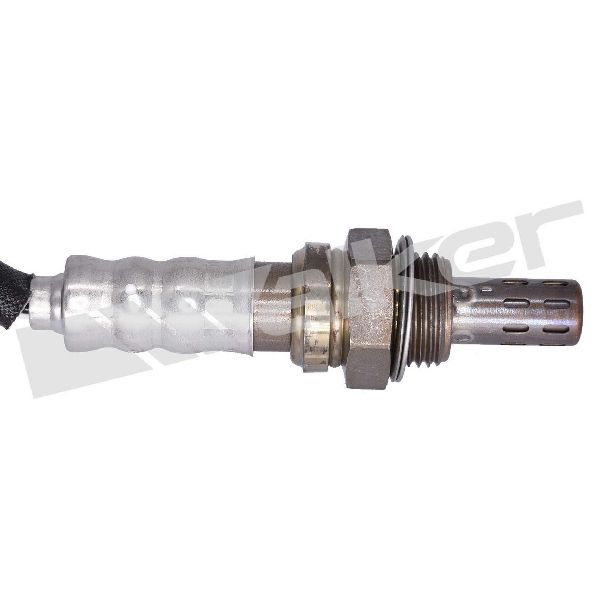
Aftermarket price range: $5-$30 for assortment - Upstream Oxygen Sensor (Bank 2, Sensor 1) — If the sensor fails and reads a constant lean condition, it will trigger this code. It should be replaced only after vacuum leaks are ruled out. Bank 2 Sensor 1 is on the front (radiator side) of the engine, before the catalytic converter.
Trusted brands: Denso, Bosch, NGK/NTK
OEM price range: $60-$120
Aftermarket price range: $30-$80
Related Codes That Often Appear With This One
- P0171 — System Too Lean (Bank 1). If a vacuum leak is large enough or located centrally (like the main intake plenum gasket), it can affect both cylinder banks, causing both P0171 and P0174 to appear together.
- P0300, P0301-P0306 — Misfire codes. A severe lean condition can prevent proper combustion, leading to random (P0300) or specific cylinder (P030x) misfires.
Technical Service Bulletins (TSBs) & Recalls
- No specific TSBs were found directly addressing P0174 on this model. The primary cause (gasket/hose aging) is considered a general maintenance and wear issue rather than a specific manufacturing defect requiring a TSB.
Platform-Specific Known Issues
- The intake manifold gaskets on the Mitsubishi 3.0L V6 are a well-documented, common failure item that causes vacuum leaks and lean codes like P0174. The repair is more labor-intensive than on many other engines.
- An owner on the ScannerDanner forum reported fixing a P0174 code after a smoke test revealed a leak from the Idle Air Control (IAC) valve, which was not an immediately obvious cause.
Mechanic-Grade Diagnostic Values
- Fuel Pressure (Key On, Engine Off) — expected: 48-55 PSI. Failure: Pressure below 48 PSI indicates a weak pump or clogged filter. Pressure that drops quickly after the pump primes indicates a leak or faulty check valve.
- Long Term Fuel Trim (LTFT) for Bank 2 — expected: Close to 0%, ideally within +/- 5%. Failure: When P0174 is set, the LTFT will be highly positive, often +15% to +35%, indicating the PCM is adding maximum fuel to compensate for a lean condition.
- MAP Sensor Signal Voltage (Key On, Engine Off) — expected: ~4.5 Volts DC. Failure: A significantly lower voltage suggests a sensor or wiring issue.
- MAP Sensor Signal Voltage (Engine at Idle) — expected: 1.4 - 1.8 Volts DC. Failure: Voltage outside this range at idle can indicate a bad sensor or a significant vacuum leak.
- Upstream O2 Sensor (Bank 2, Sensor 1) Voltage — expected: Rapidly fluctuating between ~0.1V and ~0.9V. Failure: Stuck low (e.g., < 0.2V) indicates a lean condition (either real or a sensor fault). No fluctuation indicates a dead sensor.
Wiring & Ground Locations
- G115 — Rear of cylinder head.. A poor ground connection at this location can affect the readings of various engine sensors, potentially causing incorrect data to be sent to the PCM and contributing to fuel trim issues.
- Engine Harness Grounds — There are two primary ground cables for the engine harness under the hood. One major ground point is often a strap from the engine block or cylinder head to the chassis/firewall.. A loose or corroded main engine ground can cause a host of electrical problems, including erratic sensor behavior for components like the O2 sensors and MAP sensor, which are critical for fuel control.
- PCM Connector (Bank 2 O2 Sensor Signal) — The signal wire from the Bank 2 upstream O2 sensor runs to a specific pin on the Powertrain Control Module (PCM), which is located on the driver's side fender shield.. If sensor replacement and vacuum leak checks don't solve the problem, testing for continuity and voltage at the PCM pin for the Bank 2 O2 sensor can identify a wiring fault (short or open circuit) between the sensor and the computer.
Real Owner Repair Stories
- Jaguar Forums (similar V6 engine lean code issue) (2005 S-Type 3.0L V6) — Persistent P0171 and P0174 codes, high long-term fuel trims (around 40%), restricted performance message.
❌ Tried (didn't work) Replacing IMT o-rings, Replacing upper intake gaskets, Replacing MAF sensor, Repairing cracked purge canister, Replacing gas cap, fuel filter, air filter, coils, and plugs, Multiple smoke tests
✅ What actually fixed it The final fix was replacing a cracked breather tube located under the lower intake plenum. This part looked fine on initial inspection but was found to be cracked on the underside when removed. - Ranger-Forums (1998 Ford Ranger 3.0L V6) — P0171, P0174, and P1121 codes. Occasional stalling when decelerating.
❌ Tried (didn't work) Replacing fuel filter, Replacing differential pressure sensor, Replacing throttle position sensor, Replacing EGR position sensor, Replacing Mass air flow sensor, Fuel system pressure check
✅ What actually fixed it The user's issue was not definitively resolved in the public thread, highlighting the difficulty of diagnosing this code when common fixes fail. The combination of lean codes and occasional stalling strongly points to an intermittent vacuum leak that is difficult to find.
"I Checked Everything" — The Actual Cause
- A common scenario for a persistent P0174 after a 'clean' smoke test is a faulty fuel pressure regulator or a weak fuel pump. A smoke test will not identify a fuel delivery problem. If fuel pressure is low, the PCM will try to increase injector pulse width to compensate, but if it maxes out, it will set a lean code.
- Another possibility is a faulty upstream O2 sensor that is 'lazy' or biased, reading lean incorrectly but not erratically enough to set a specific O2 sensor code. It correctly reports a lean condition it is sensing, but the sensor itself is the source of the incorrect reading.
Model Year Variations Within This Range
- 1997-2000: The 3.0L 6G72 V6 was not available in several northeastern U.S. states because it did not meet their emissions standards. In those regions, the 3.3L V6 was the standard V6 option. This is important for sourcing used engines or parts, as the 3.0L will be less common in junkyards in those specific states.
Diagnostic Flowchart
Other Known Issues on This Vehicle
Issues unrelated to this code that are worth knowing about as an owner of this generation:
- Failing Valve Stem Seals 🔴 High — Very common on high-mileage (100k+) engines. Manifests as blue smoke from the exhaust after idling or on startup, and significant oil consumption.
- A604/41TE Automatic Transmission Failure 🔴 High — This transmission, while not exclusive to the 3.0L engine, was notoriously problematic in this era. Failures can be electrical (solenoid pack, sensors) or mechanical (clutch packs, internal shafts). Problems can occur at any mileage.
- Oil Leaks from Valve Covers and Camshaft Seals 🟠 Medium → Shop Engine Valve Cover — Common as the engine ages. The gaskets and seals become hard and brittle, leading to persistent oil leaks onto the engine and exhaust.
- Serpentine Belt Slipping in Wet Conditions 🟡 Low — A known annoyance where the alternator/power steering belt can slip off its pulleys when driving through water or snow. A simple shield (Dorman P/N 82570) can be added to the tensioner to fix this.
Used vs. New Parts: Buying Guide for This Vehicle
When a used part is the smart pick: For major mechanical components like a complete engine assembly (if needed) or large bracketry, a used part from a reputable salvage yard is a viable cost-saving option. Small electronic sensors and wear items should generally be purchased new.
Donor-vehicle mileage cap: roughly under 150000 miles for the part to have meaningful remaining life.
What to inspect on the donor part:
- For an engine, look for signs of regular maintenance. Check for sludge under the oil cap.
- Inspect for external oil leaks, especially around the valve covers, oil pan, and front seals.
- Ask for the vehicle's history if possible to check for accidents or flood damage.
- For any part, check rubber components for cracking and brittleness.
OEM-only on this vehicle (don't cheap out):
- Powertrain Control Module (PCM) - While aftermarket options exist, they can be problematic. A used OEM unit from a matching vehicle is often a better choice than a cheap aftermarket re-flash.
Aftermarket brands forum-validated for this vehicle:
- Fel-Pro for intake manifold gaskets.
- Denso or NTK for oxygen sensors.
- Gates for hoses and belts.
Brands owners have reported issues with on this vehicle:
- Unbranded, 'white box' oxygen sensors and MAP sensors from online marketplaces often have high failure rates and can cause more diagnostic headaches.
Real Owner Stories
Aggregated from forums and TSBs cited above. Mileages and costs reflect what owners reported in those sources.
1997-2000 Dodge Caravan 3.0L V6
Symptoms: The owner performed a smoke test which revealed a leak that was not immediately obvious from a visual inspection.
What fixed it: Replacing the Idle Air Control (IAC) valve after the smoke test identified it as the source of the vacuum leak.
Source hint: ScannerDanner Forum - 'P0174 only' thread
1997-2000 Dodge Caravan 3.0L V6
Symptoms: The owner utilized multiple smoke tests to find persistent vacuum leaks affecting the lean bank.
What fixed it: Repairing leaks found at the EGR valve and the IAC valve.
Source hint: ScannerDanner Forum - 'P0174 only' thread
1995 Dodge Caravan 3.0L V6 — ~125000 miles
Symptoms: High-mileage engine burning oil and producing blue smoke from the exhaust after idling or on startup.
What fixed it: While not a direct fix for P0174, mechanics identified failed valve stem seals as the cause of the oil consumption issue common to this engine family.
Source hint: DoItYourself.com Community Forums - '1995 Dodge Caravan burns oil' thread
Related OBD-II Codes
Frequently Asked Questions
Is there a specific TSB for the P0174 code on my 1997-2000 Dodge Caravan 3.0L?
I hear a hissing sound from the top of my 3.0L engine; could this be related to P0174?
What is the correct torque for the intake plenum bolts on the 6G72 engine?
Can a bad oxygen sensor cause P0174 on my Caravan?
Why is the intake gasket failure so common on the 3.0L V6?
Could my stalling at stoplights be related to this code?
Helpful Videos
Used OEM Parts in Stock
New Aftermarket Parts Available


The information in this article is provided for general reference and educational purposes only. Vehicle specifications, procedures, and part compatibility can vary by production date, trim level, and region. Always consult your vehicle's factory service manual and verify part numbers before purchasing or performing repairs. Safety-critical components such as airbags, seat belts, and braking systems should be installed by a qualified professional.
- Dodge Caravan:
- 🧭 Diagnostic Flowchart
- 🎬 Helpful Videos
- 🛍️ Shop This Part
- What's Unique About the 1997-2000 Dodge Caravan
- Symptoms You May Notice
- Most Likely Causes
- Rare But Worth Checking
- Diagnosis Steps
- Parts You'll Likely Need
- Related Codes That Often Appear With This One
- Technical Service Bulletins (TSBs) & Recalls
- Platform-Specific Known Issues
- Mechanic-Grade Diagnostic Values
- Wiring & Ground Locations
- Real Owner Repair Stories
- "I Checked Everything" — The Actual Cause
- Model Year Variations Within This Range
- Other Known Issues on This Vehicle
- Used vs. New Parts: Buying Guide for This Vehicle
- Real Owner Stories
- 1997-2000 Dodge Caravan 3.0L V6
- 1997-2000 Dodge Caravan 3.0L V6
- 1995 Dodge Caravan 3.0L V6 — ~125000 miles
- Related OBD-II Codes
- Frequently Asked Questions
- 🎟️ Get 5% Off