

P0174 on 2018-2021 Ford F-150: Lean Code Causes and Fixes
For the 2018-2021 F-150, especially with the 5.0L engine, code P0174 (System Too Lean Bank 2) is frequently caused by a software issue that requires a Powertrain Control Module (PCM) update from a Ford dealer, as outlined in multiple TSBs. Other common causes include vacuum leaks from the intake manifold, PCV system hoses, or a faulty Intake Manifold Runner Control (IMRC) system.
- For a 2018-2021 F-150 with a 5.0L engine, your first step for a P0174 code should be to check with a Ford dealer for a PCM software update.
- If software is not the issue, the most likely mechanical cause is a vacuum leak from a cracked hose (especially PCV) or a bad intake gasket.
- A smoke test is the most reliable way to find a hard-to-see vacuum leak.
- Cleaning the MAF sensor is a simple, low-cost diagnostic step that can often solve the problem.
- Avoid replacing the oxygen sensor as a first step; it is usually just reporting the problem, not causing it.
What's Unique About the 2018-2021 Ford F-150

What's unique about this generation of F-150, particularly with the 5.0L V8 Coyote engine, is the high likelihood of a software-related cause for the P0174 code. Ford has issued multiple Technical Service Bulletins (TSBs) stating that incorrect software parameters in the Powertrain Control Module (PCM) can cause false lean (P0171/P0174) and rich (P0172/P0175) codes. This is a significant departure from older vehicles where a vacuum leak is almost always the primary suspect. One TSB even links the code to incorrect flex-fuel learning based on refueling habits, like adding small amounts of fuel frequently. [SSM 49050, 17] Additionally, the plastic intake manifold on the 5.0L engine has components like the Intake Manifold Runner Control (IMRC) that can fail and cause vacuum leaks.
Diagnostic Flowchart

Tap your situation to follow the diagnostic path that matches what you're seeing on this vehicle.
Generation note: This range covers the end of the 13th generation (2018-2020) and the first year of the 14th generation (2021) F-150. The provided TSBs from Ford cover vehicles in both generations, particularly those with the 5.0L engine, indicating the software-related issues can be present in both. [TSB 22-2393, TSB 21-2443] The 5.0L engine in this era is known for these specific software and intake manifold-related issues. For 2021, the 5.0L V8 was updated with Variable Displacement Engine (VDE) technology, or cylinder deactivation, which was not present in the 2018-2020 models.
Symptoms You May Notice

- Check Engine Light is on
- Rough or unstable idle
- Hesitation or stumbling during acceleration
- Reduced engine power
- Poor fuel economy
- Hissing or whistling sound from the engine bay, especially at idle
- Replacing the Bank 2 oxygen (O2) sensor. The O2 sensor is most often accurately reporting a lean condition that is caused by another component. While the sensor can fail, it should be tested before being replaced.
Most Likely Causes

- Powertrain Control Module (PCM) Software Update Needed 🔴 High Probability Multiple Ford TSBs (e.g., TSB 21-2443, TSB 22-2393) specifically identify software parameters as the cause for P0174 on 2019-2021 F-150s with the 5.0L engine. This can also be related to incorrect flex-fuel learning from refueling habits. [SSM 49050, 17]
How to confirm: A Ford dealership can check your vehicle's VIN against their database to see if it's eligible for a PCM software update under one of the TSBs. Many owners on forums report this being the first and final fix.
Typical fix: The dealer will reprogram the PCM with the latest software and reset the Keep Alive Memory (KAM). This typically takes 0.3-0.5 hours of labor.
Est. part cost: $0 (if under warranty) - $150 (dealer diagnostic/reprogram fee) - Vacuum Leak 🔴 High Probability The 5.0L engine's PCV hoses and plastic intake manifold are common sources of vacuum leaks. Air enters the engine unmetered by the MAF sensor, creating a lean mixture. A cracked PCV hose elbow or a disconnected vacuum line at the back of the intake manifold is a very frequent culprit.
How to confirm: Perform a visual inspection of all vacuum hoses, including the PCV lines and intake air ducting, for cracks or disconnections. A disconnected line at the back of the intake manifold can cause a large leak. The most effective method is to have a smoke test performed, which will reveal the exact location of any leaks.
Typical fix: Replace the cracked hose or faulty gasket. Common culprits include the PCV valve hose assembly and intake manifold gaskets.
Est. part cost: $20-$150 - Dirty or Faulty Mass Airflow (MAF) Sensor 🟡 Medium Probability → Shop Fuel Injection Air Flow Meter Dirt or oil from an aftermarket air filter can contaminate the MAF sensor's delicate wire, causing it to under-report the amount of air entering the engine. The PCM then commands less fuel, leading to a lean condition.
How to confirm: Remove the MAF sensor and inspect it for contamination. Cleaning it with a dedicated MAF sensor cleaner is a good first step. If the problem persists, monitor the MAF readings on a scan tool to see if they are rational. A dirty sensor can also cause an incorrect Barometric Pressure (BARO) reading on Fords.
Typical fix: Clean the sensor with MAF sensor cleaner. If cleaning doesn't work, the sensor must be replaced. Only use OEM/Motorcraft replacements for best results.
Est. part cost: $10 (cleaner) - $220 (new sensor)
Rare But Worth Checking
- Faulty Intake Manifold Runner Control (IMRC): → Shop Engine Intake Manifold The 5.0L V8 uses an IMRC system with plastic linkage arms that can break or get stuck. This can cause a vacuum leak from the actuator lines or improper airflow, leading to lean codes (P0171/P0174) or specific IMRC codes (P2006/P2007). 🎬 See how to diagnose and test the IMRC system.
- Leaking Purge Control Valve: The EVAP purge valve can stick open, creating a constant vacuum leak as it pulls fuel vapors from the charcoal canister at the wrong time. This can cause lean codes along with a rough idle, especially after refueling.
- Low Fuel Pressure: A weak fuel pump, clogged fuel filter, or failing fuel pressure regulator can restrict fuel flow, causing a lean condition. This usually affects both engine banks, triggering P0171 as well.
- Clogged Fuel Injector: → Shop Fuel Injector A single clogged or dirty fuel injector on Bank 2 can cause a lean condition isolated to that side of the engine.
- Exhaust Leak: A leak in the exhaust manifold or pipes before the upstream oxygen sensor can pull in outside air, causing the sensor to send a false lean signal to the PCM. This is a known issue on platform-mate Mustangs.
Diagnosis Steps
- For 5.0L engines, the first step is to contact a Ford dealer and provide your VIN. Ask if there are any open TSBs (like TSB 22-2393) for a PCM reflash related to lean codes. 🎬 Watch this breakdown of the dealer TSB and diagnosis process. This is the most likely fix for 2019-2021 models.
- If no TSB applies or the reflash doesn't solve the issue, connect a scan tool and observe the Long Term Fuel Trim (LTFT) values for both banks at idle. A high positive number on Bank 2 (e.g., >15%) confirms the lean condition. If both banks are high, suspect a central issue like the MAF or a large vacuum leak.
- Perform a thorough visual and physical inspection of the engine bay. Check the PCV hose assembly, especially the rubber elbow that connects to the back of the intake manifold, for cracks or softness. Check all vacuum lines for secure connections.
- Perform a smoke test to definitively identify any vacuum leaks. Pay close attention to the intake manifold gaskets, the IMRC actuator and lines, and the PCV hoses, which are common failure points.
- If no vacuum leaks are found, remove and clean the Mass Airflow (MAF) sensor using a dedicated MAF sensor cleaner. Do not touch the sensor element. Reinstall, clear codes, and check if fuel trims improve.
- Inspect the Intake Manifold Runner Control (IMRC) linkage on the back of the intake manifold for broken plastic parts.
- If the issue persists, test the fuel system. Use a fuel pressure gauge to check that fuel pressure at the rail is within Ford's specifications.
- As a final step, consider testing the Bank 2, Sensor 1 oxygen sensor's operation or checking for a clogged fuel injector on Bank 2.
Parts You'll Likely Need
- PCV Valve / Hose Assembly
(OEM #JL3Z-9E495-A (for 2018-2020 5.0L))— The PCV system hoses, particularly the rubber elbows, can become brittle and crack over time, creating a significant vacuum leak at the back of the intake manifold.
Trusted brands: Motorcraft
OEM price range: $40-$90
Aftermarket price range: $25-$60 - Intake Manifold Gaskets — Gaskets can fail and cause a vacuum leak directly into the intake ports, leading to lean codes. This is a more involved repair.
Trusted brands: Motorcraft, Fel-Pro
OEM price range: $50-$100
Aftermarket price range: $30-$70 - Mass Airflow (MAF) Sensor
(OEM #Motorcraft AFLS193 (verify by VIN))— If cleaning the sensor doesn't resolve the issue, the sensor itself may have failed and is providing incorrect airflow data to the PCM.
Trusted brands: Motorcraft, Bosch
OEM price range: $150-$220
Aftermarket price range: $70-$150
Related Codes That Often Appear With This One
- P0171 — System Too Lean (Bank 1). When both P0171 and P0174 are present, it strongly indicates a problem affecting the entire engine, such as a major vacuum leak (intake manifold gasket, PCV hose), a faulty MAF sensor, or a fuel delivery issue.
- P0172 / P0175 — System Too Rich (Bank 1 / Bank 2). Several TSBs for the 5.0L engine group the lean codes (P0171/P0174) with the rich codes (P0172/P0175), indicating the underlying PCM software issue can manifest as either condition. [TSB 21-2443, TSB 22-2393]
- P2006 / P2007 — Intake Manifold Runner Control Stuck Closed. These codes point directly to a failure in the IMRC system, which is a known cause of vacuum leaks and airflow problems that can also trigger P0174 on the 5.0L engine.
Technical Service Bulletins (TSBs) & Recalls
- TSB 22-2393: Addresses a wide range of DTCs, including P0174, on 2019-2021 5.0L F-150s, fixed by a PCM reprogram and KAM reset.
- TSB 21-2443: Specifically calls out P0171, P0172, P0174, and P0175 on 2019-2020 5.0L F-150s due to PCM software parameters, fixed by a reprogram.
- SSM 49050: Notes that on 2018-2020 5.0L vehicles, lean/rich codes can be caused by incorrect flex-fuel learning from refueling habits.
Platform-Specific Known Issues
- A primary documented issue for 2019-2021 F-150s with the 5.0L engine is faulty PCM software logic causing erroneous lean (P0171/P0174) and rich (P0172/P0175) codes, often related to flex-fuel calculations. [TSB 21-2443, SSM 49050]
Mechanic-Grade Diagnostic Values
- Mass Airflow (MAF) Sensor Reading at Idle — expected: 5.0 to 5.5 grams per second (g/s) at normal operating temperature.. Failure: Readings significantly lower than 5.0 g/s at idle suggest the sensor is dirty or failing, causing it to under-report airflow.
- Long Term Fuel Trim (LTFT) — expected: Ideally between -10% and +10%. A healthy engine should be close to 0% at idle.. Failure: Sustained readings above +25% will trigger the P0174 code, indicating the PCM is at its maximum limit for adding fuel to correct a lean condition.
- Low-Pressure Fuel System Pressure — expected: Approximately 55-60 PSI for the 5.0L Coyote engine. Some sources mention 35-45 PSI for other Ford applications.. Failure: A significant drop in pressure below the expected range indicates a weak in-tank fuel pump or a clogged filter.
- Upstream Oxygen Sensor (Bank 2, Sensor 1) Voltage — expected: Should rapidly fluctuate between approximately 0.1 and 0.9 volts as the PCM adjusts the air-fuel mixture.. Failure: A sensor that is stuck low (e.g., below 0.45 volts) is indicating a lean condition. This doesn't mean the sensor is bad; it's likely reporting the problem correctly.
Hidden / Shadow Codes Worth Checking
- U3003: Battery Voltage. This code can appear alongside P0174, especially during cold starts. A weak battery can cause a low voltage condition during cranking, which may corrupt the PCM's adaptive fuel tables, leading to a false lean code. (see via A capable OBD-II scanner like FORScan or a professional-grade tool can read 'U' (network) codes.)
Scan Tool Commands That Help
- Ford IDS / FORScan: Reset KAM (Keep Alive Memory) or Clear Transmission Adaptive Tables — This function should be used after performing repairs for P0174, especially if a PCM reflash was done or if a low voltage event is suspected of corrupting fuel trims. It forces the PCM to relearn idle and fuel strategies from scratch. Simply disconnecting the battery may not be sufficient to clear this non-volatile memory on modern Fords.
- Ford IDS / FORScan: IMRC Bidirectional Control — To test the function of the Intake Manifold Runner Control. A technician can command the IMRC flaps open and closed while monitoring the engine to see if it affects the lean condition or if the actuators are responding correctly. This helps diagnose a stuck or broken IMRC linkage.
Wiring & Ground Locations
- Engine/Frame Ground Straps — There are multiple ground points, including bonding straps between the engine, frame, and body/box. A key ground is often located on the frame rail.. A poor ground connection for the PCM or its sensors can introduce electrical noise and incorrect voltage readings, potentially causing sensors like the O2 or MAF sensor to send erroneous data that leads to a lean code.
Real Owner Repair Stories
- Reddit user 'bigaust' (2021 F-150 5.0L) — Check Engine Light with codes P0174 and U3003 (low battery voltage), intermittent rough start on cold mornings.
❌ Tried (didn't work) Replacing the battery and resetting the battery control module.
✅ What actually fixed it The user gave up on targeted fixes and performed a 'reset ALL adaptive modules' using a scan tool (likely FORScan). This cleared the CEL, which had previously returned within minutes. The theory was that low voltage during cranking corrupted the adaptive fuel tables, and only a full reset could clear them. - Ford F150 Forum user (2004 F-150 (similar principle)) — P0171 and P0174 codes, high positive fuel trims at idle that decrease with RPM.
❌ Tried (didn't work) Visual inspection initially revealed nothing obvious.
✅ What actually fixed it A disconnected vacuum line on the back of the intake manifold was found just lying there unplugged. Plugging it back in resolved the massive vacuum leak and fixed the lean codes.
"I Checked Everything" — The Actual Cause
- In some cases, a smoke test may not reveal a leak if the crack is hairline or only opens under specific temperature or vacuum conditions. A user on a forum reported passing a smoke test but eventually finding the cause to be a cracked intake manifold runner, which was only discoverable after removing the manifold for inspection.
When the Usual Fixes Don't Work
- While TSBs point to a PCM reflash as a primary fix, some owners have had the update performed only for the code to return. In one documented case, a 2021 F-150 with P0174 and a low voltage code (U3003) was not fixed by a battery replacement. The final solution was a full reset of all adaptive memory modules via a scan tool, suggesting that low voltage events can corrupt the Keep Alive Memory (KAM) in a way that even a standard dealer reflash might not fully clear without this specific extra step.
Model Year Variations Within This Range
- 2021: The 5.0L V8 engine for the 2021 model year (start of the 14th generation) introduced Variable Displacement Engine (VDE) technology, also known as cylinder deactivation. This system was not present on the 2018-2020 models and adds another layer of complexity to the valvetrain and engine control software.
- 2018: The 2018 model year introduced a dual-fuel injection system (port and direct injection) to the 5.0L V8, along with the 10-speed automatic transmission. Earlier generations had a different setup. This means fuel system diagnosis must account for both high-pressure and low-pressure fuel systems.
Helpful Videos
Used OEM Parts in Stock
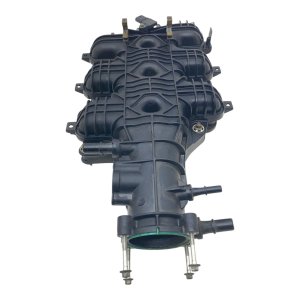
New Aftermarket Parts Available





The information in this article is provided for general reference and educational purposes only. Vehicle specifications, procedures, and part compatibility can vary by production date, trim level, and region. Always consult your vehicle's factory service manual and verify part numbers before purchasing or performing repairs. Safety-critical components such as airbags, seat belts, and braking systems should be installed by a qualified professional.
- Ford F-150:
- 🧭 Diagnostic Flowchart
- 🎬 Helpful Videos
- 🛍️ Shop This Part
- What's Unique About the 2018-2021 Ford F-150
- Symptoms You May Notice
- Most Likely Causes
- Rare But Worth Checking
- Diagnosis Steps
- Parts You'll Likely Need
- Related Codes That Often Appear With This One
- Technical Service Bulletins (TSBs) & Recalls
- Platform-Specific Known Issues
- Mechanic-Grade Diagnostic Values
- Hidden / Shadow Codes Worth Checking
- Scan Tool Commands That Help
- Wiring & Ground Locations
- Real Owner Repair Stories
- "I Checked Everything" — The Actual Cause
- When the Usual Fixes Don't Work
- Model Year Variations Within This Range
- 🎟️ Get 5% Off