

P0174 on 2009-2019 Ford Flex 3.5L V6: Causes for System Too Lean Bank 2
For the 2009-2019 Ford Flex with the 3.5L V6, a P0174 code is most often caused by a vacuum leak from a cracked intake air hose or failed intake manifold gaskets. Cleaning the Mass Airflow (MAF) sensor is a common first step, but a smoke test is often required to find the leak. Expect to pay $100-$500 for a professional diagnosis and repair.
- P0174 on a Ford Flex 3.5L means the engine is running lean on the cylinder bank near the firewall.
- The most likely cause is unmetered air entering the engine from a vacuum leak. Carefully inspect the main air intake hose for cracks.
- Cleaning the MAF sensor with a dedicated cleaner is an inexpensive and easy first diagnostic step.
- If P0171 (Bank 1 Lean) is also present, the cause is almost certainly a component that affects the entire engine, like the MAF sensor or a large vacuum leak.
- Do not replace the O2 sensor unless it has been tested and proven to be faulty; it is usually just reporting the problem.
What's Unique About the 2009-2019 Ford Flex
The 3.5L Cyclone V6, used across many Ford and Lincoln models, is known for developing vacuum leaks as it ages. The plastic and rubber components in the intake system, such as hoses and gaskets, can become brittle from heat cycles. A very common failure point is the nipple for a PCV or breather line on the main air intake duct breaking off. This often happens when the duct is moved during routine air filter changes without first disconnecting the smaller hose, creating a significant vacuum leak. While a dirty MAF sensor is a frequent cause on many Fords, on this specific platform, a physical vacuum leak is a high-probability root cause that should be thoroughly investigated.
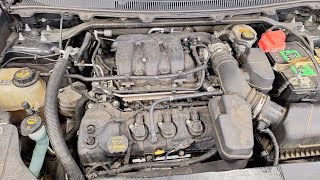
🎬 Watch: Common causes and diagnostic tips for the 3.5L engine.Symptoms You May Notice
- Check Engine Light illuminated
- Rough or unstable idle
- Hesitation or stumbling during acceleration
- Reduced engine power
- Poor fuel economy
- Hissing or whistling noise from the engine bay, indicating a vacuum leak
- Stalling when coming to a stop
- Replacing the oxygen sensor first. The O2 sensor is often just the messenger reporting the lean condition. Unless it is tested and confirmed faulty (e.g., stuck, slow response on a scan tool), the root cause is likely elsewhere, such as a vacuum leak.
Most Likely Causes
- Vacuum Leak (Intake Hose, Gaskets, PCV System) 🔴 High Probability Plastic and rubber components in the engine bay become brittle over time. A very common point of failure is the air intake duct, which can crack where a small breather hose connects, especially after being moved for air filter service. Upper and lower intake manifold gaskets also degrade and compress, causing leaks that are often worse when the engine is cold.
How to confirm: Perform a visual inspection of all vacuum hoses and the intake air duct for cracks or loose connections. Listen for a hissing sound at idle. A professional smoke test is the most effective way to pinpoint the source of a leak. You can also carefully spray a non-flammable liquid like water or a small amount of brake cleaner around suspected leak points (like the intake gasket edges) and listen for a change in engine idle.
Typical fix: Replace the cracked hose or failed gasket. This can range from a simple hose swap to replacing the upper and lower intake manifold gaskets.
Est. part cost: $20-$150 - Dirty or Faulty Mass Airflow (MAF) Sensor 🟡 Medium Probability → Shop Fuel Injection Air Flow Meter Oil vapors from the PCV system or fine dust/debris that gets past the air filter can contaminate the MAF sensor's delicate wire, causing it to under-report the amount of air entering the engine. This leads the PCM to command an insufficient amount of fuel.
How to confirm: Remove the MAF sensor and inspect it for any visible contamination like dust, fibers, or an oily film. A key diagnostic step is to monitor the MAF reading in grams/second at idle with a scan tool; it should roughly equal the engine displacement (e.g., ~3.5 g/s for the 3.5L V6). A significantly lower reading indicates a problem.
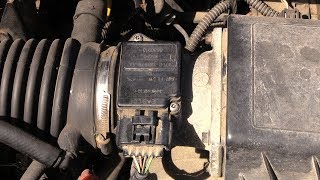
Typical fix: Clean the sensor with a dedicated MAF sensor cleaner spray. 🎬 See how to safely clean your Ford's MAF sensor. Do not touch the wires or use other chemicals like brake or carb cleaner. If cleaning doesn't resolve the issue, the sensor may need replacement.
Est. part cost: $10-$150 - Failed Canister Purge Valve ⚪ Low Probability → Shop Vapor Canister The purge valve (or EVAP purge solenoid) can fail by sticking open, creating a constant vacuum leak as it pulls unmetered fuel vapors from the charcoal canister into the intake manifold at idle, when it should be closed.
How to confirm: With the engine running at idle, disconnect the electrical connector and then the vacuum line leading from the valve to the intake manifold. Place your finger over the port on the valve; if you feel any suction at all, the valve is stuck open and needs to be replaced.
Typical fix: Replace the canister purge valve. It is typically an easy-to-access part in the engine bay.
Est. part cost: $25-$75 - Low Fuel Pressure / Weak Fuel Pump ⚪ Low Probability → Shop Fuel Pump While not specific to this platform, fuel pumps can weaken with age and high mileage, failing to supply adequate pressure to the fuel rail, which starves the engine of fuel.
How to confirm: Connect a fuel pressure gauge to the fuel rail's service port (if equipped) and verify the pressure is within the manufacturer's specifications (typically 40-65 PSI, depending on the system). A scan tool can also monitor fuel pressure on some models. Fuel trims that are normal at idle but increase significantly with RPM can also point to a fuel delivery issue.
Typical fix: Replace the in-tank fuel pump module. Checking the fuel pump driver module (FPDM) for corrosion or damage is also recommended.
Est. part cost: $200-$500
Rare But Worth Checking
- Faulty Upstream Oxygen (O2) Sensor: → Shop Oxygen Sensor The O2 sensor is what detects the lean condition. While it's usually reporting a real problem, the sensor itself can fail, become slow to respond, or get contaminated, sending false 'lean' signals to the PCM. This is less common than a vacuum leak or MAF issue and should generally be one of the last parts replaced.
- Clogged Fuel Injectors: → Shop Fuel Injector If one or more injectors on Bank 2 are restricted, they won't deliver enough fuel, leading to a lean condition on that bank. This is uncommon unless the vehicle has been sitting for a long time or has been run with poor quality fuel.
- Exhaust Leak: A crack or leak in the exhaust manifold or pipe before the upstream O2 sensor can allow outside air to be drawn into the exhaust stream. This extra oxygen fools the O2 sensor into reporting a false lean condition.
Diagnosis Steps
- Read the codes with an OBD-II scanner and confirm P0174 is present. Note if P0171 is also present, as this points to a system-wide issue.
- Check the freeze frame data to see the engine conditions (RPM, load, temperature) when the code was set.
- Using the scanner's live data, observe the Short-Term (STFT) and Long-Term Fuel Trim (LTFT) values for Bank 1 and Bank 2 at idle. High positive numbers (e.g., >10%, adding up to >25%) confirm the PCM is adding fuel to correct a lean condition.
- Perform a thorough visual inspection of the engine bay. Look for any obviously cracked, disconnected, or broken vacuum hoses, especially the large intake air duct between the air filter box and the throttle body. Pay close attention to the small nipple on the duct.
- Inspect and clean the Mass Airflow (MAF) sensor using a dedicated MAF sensor cleaner. Do not touch the sensor wires. Re-check fuel trims after cleaning.
- If fuel trims are high at idle but improve (move closer to zero) when RPMs are raised to ~2500, a vacuum leak is the most likely cause. If trims remain high or worsen at higher RPMs, suspect a fuel delivery issue.
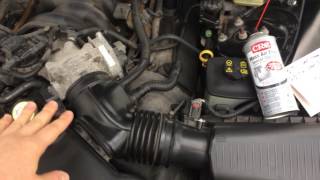
- If a vacuum leak is suspected, perform a smoke test. This involves introducing smoke into the intake system to visually identify the source of any leaks. 🎬 Watch: How to perform a smoke test to find leaks. Pay close attention to the intake manifold gaskets and PCV hoses.
- Test the canister purge valve for leaks by checking for vacuum at the inlet port when the valve is electrically disconnected and the engine is running.
- If no vacuum leaks are found, check fuel pressure using a mechanical gauge or scan tool to ensure the fuel pump and regulator are functioning correctly.
- As a final step, if all else fails, you can test the Bank 2 upstream oxygen sensor's operation with a scan tool to ensure it is switching correctly and not stuck in a lean state.
Parts You'll Likely Need
- Intake Air Duct Hose
(OEM #DA8Z-9C675-B (example, verify by VIN))— This hose frequently cracks where smaller PCV lines connect, creating a significant unmetered air leak. This is a very common failure point for P0171/P0174 on this platform.
Trusted brands: Motorcraft, Dorman
OEM price range: $80-$150
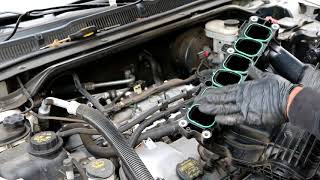
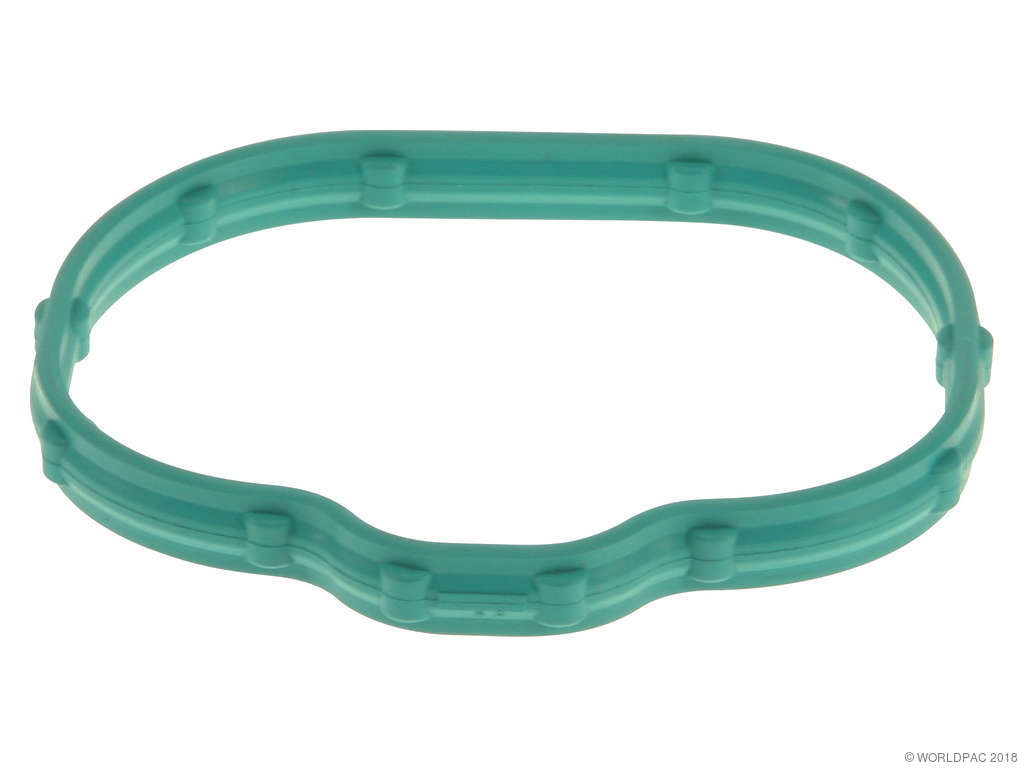
Aftermarket price range: $50-$100 - Upper Intake Manifold Gasket Set
(OEM #AT4Z-9H486-A (verify by VIN))— The gaskets for the upper intake plenum (crossover) can compress and fail over time, causing vacuum leaks that trigger lean codes.
Trusted brands: Motorcraft, Fel-Pro, Victor Reinz
OEM price range: $20-$35
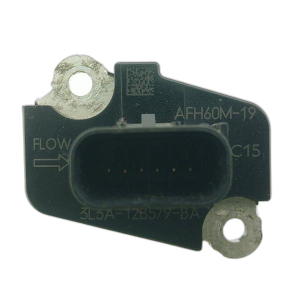
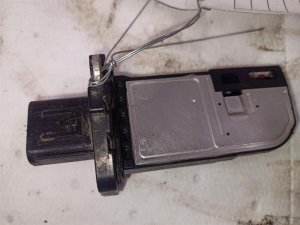
Aftermarket price range: $15-$25 - Mass Airflow (MAF) Sensor
(OEM #BR3Z-12B579-A (verify by VIN))— If cleaning does not resolve incorrect readings, the sensor itself may have failed. It is a critical input for fuel calculation.
Trusted brands: Motorcraft, Hitachi, Bosch
OEM price range: $90-$160
Aftermarket price range: $60-$120
Related Codes That Often Appear With This One
- P0171 — P0171 is the 'System Too Lean' code for Bank 1 (radiator side). When both P0171 and P0174 are present, it strongly suggests a problem affecting both cylinder banks, such as a major vacuum leak (e.g., intake manifold gasket, cracked air duct) or a faulty MAF sensor.
Technical Service Bulletins (TSBs) & Recalls
- TSB 03-16-1: While for an older 3.8L engine, it describes a similar issue of lean codes caused by leaking intake gaskets and PCV hoses, showing a history of this type of issue on Ford V6 engines.
Mechanic-Grade Diagnostic Values
- Upstream O2 Sensor (Bank 2) Voltage — expected: Fluctuating rapidly between 0.1 and 0.9 volts at operating temperature.. Failure: Voltage is stuck low (e.g., < 0.2V), stuck high (e.g., > 0.8V), or switches very slowly.
- Fuel Pressure (Key On, Engine Running) — expected: Within manufacturer specification, typically 40-65 PSI for this type of port-injected system.. Failure: Pressure is significantly below specification (e.g., reading 30-40 PSI when spec is 55 PSI).
- Long-Term Fuel Trim (LTFT) + Short-Term Fuel Trim (STFT) for Bank 2 — expected: Ideally close to 0%, but under +/- 10% is generally acceptable.. Failure: The combined value is consistently above +25%, indicating the PCM is at its maximum limit for adding fuel.
- MAP vs. BARO PID Comparison (Key On, Engine Off) — expected: The Manifold Absolute Pressure (MAP) and Barometric Pressure (BARO) values should be nearly identical (within 1.5 psi).. Failure: A difference greater than 1.5 psi between the two readings points to a faulty MAP sensor.
Hidden / Shadow Codes Worth Checking
- Mode $06 Data: While not a 'shadow code,' Mode $06 provides results from the PCM's self-tests of various components. For a P0174, a technician would examine the Test IDs (TIDs) and Component IDs (CIDs) related to the Bank 2 O2 sensor response rate (rich-to-lean and lean-to-rich switching) and fuel system monitoring. A failing test result here can condemn a lazy O2 sensor even if it hasn't set its own specific trouble code. (see via A professional-grade OBD-II scan tool with Mode $06 viewing capability.)
Scan Tool Commands That Help
- Ford IDS (or equivalent professional scanner): FP (MODE) PID Control — This bidirectional command allows a technician to directly control the fuel pump, helping to diagnose issues with the fuel pump, its wiring, or the Fuel Pump Driver Module (FPDM) by verifying the system's response to commands.
- Ford IDS (or equivalent professional scanner): EVAP Purge Solenoid On/Off — This command allows for testing the canister purge valve. A technician can command the valve closed and apply a vacuum or smoke to see if it's sealing properly, which is more precise than simply checking for vacuum at idle.
Wiring & Ground Locations
- PCM — Located at the rear of the engine compartment, typically on the firewall.. The PCM is the central computer that receives data from the MAF and O2 sensors to control fuel delivery. All related sensor wiring terminates here.
- G101 — A primary engine ground point located at the left front of the engine compartment.. A poor ground at G101 can cause erratic voltage signals from sensors connected to the engine block, such as the O2 sensors or coolant temp sensor, leading to incorrect data and potential lean codes.
- HO2S 22 Connector — The electrical connector for the Bank 2, Sensor 2 (downstream) oxygen sensor, located on the left side of the engine's exhaust system after the catalytic converter.. While P0174 is set by the upstream sensor, issues with the downstream sensor's wiring or connector can sometimes contribute to overall fuel trim problems. The upstream (Sensor 1) connector is in a similar vicinity but before the converter.
Real Owner Repair Stories
- Ford SportTrac Forum user (2001 Ford Sport Trac 4.0L V6 (similar V6 engine with same codes)) — On a very cold morning, experienced a rough start, rough idle, and stalling. Check Engine Light came on with codes P0171 and P0174.
❌ Tried (didn't work) Initial thought was a common PCV elbow issue, but this model did not have that specific failure point.
✅ What actually fixed it The problem was caused by failed intake manifold gaskets. The final repair involved replacing both the upper and lower intake manifold gaskets, cleaning the gunk out of the intake manifold itself, and cleaning the MAF sensor. After this, the codes were cleared and the engine ran perfectly.
"I Checked Everything" — The Actual Cause
- A failing Fuel Pump Driver Module (FPDM) can cause intermittent low fuel pressure, triggering a P0174 code. This would pass a smoke test, as the issue is with fuel delivery, not a vacuum leak. The FPDM is prone to corrosion and failure and is often misdiagnosed as a bad fuel pump.
- A hairline crack in the plastic valve cover, which on this engine integrates part of the PCV system, can act as a vacuum leak that is difficult to find with a smoke test unless the smoke is directed very specifically. This is often missed as technicians look for bad gaskets or hoses, not a crack in a larger component.
When the Usual Fixes Don't Work
- While the most common causes for P0174 are vacuum leaks and MAF sensor issues, a significant number of cases on Ford platforms are resolved only after addressing the fuel delivery system in a way that goes beyond a simple pressure test. If a smoke test passes and a MAF cleaning or replacement does not fix the code, the next suspect should be the Fuel Pump Driver Module (FPDM). A failing FPDM can cause intermittent and fluctuating fuel pressure that a static test might miss. Owners have reported replacing fuel pumps multiple times, only to find the root cause was the corroded or faulty FPDM, which was starving the pump of correct voltage.
Model Year Variations Within This Range
- 2009-2012 vs. 2013-2019: A major facelift occurred in 2013. The naturally aspirated 3.5L V6's output increased from 262 hp to 287 hp. The update also included a new front-end design, a revised dashboard, and a switch from hydraulic to electric power steering. These changes can result in different part numbers for engine accessories, wiring harnesses, and control modules across the two periods.
- 2013-2015: Models within these years equipped with the 3.5L GTDI (EcoBoost) engine were subject to a recall for a faulty Fuel Pump Control Module (FPCM/FPDM). While the recall was for the EcoBoost, the naturally aspirated engine uses a similar fuel control system, and FPDM failures are a known issue that can cause lean conditions on these model years as well.
Diagnostic Flowchart
Other Known Issues on This Vehicle
Issues unrelated to this code that are worth knowing about as an owner of this generation:
- Internal Timing-Chain-Driven Water Pump Failure 🔴 High — Common after 60,000 miles, with many failures reported around 100,000 miles. Failure can be catastrophic if coolant mixes with engine oil.
- Electric Power Assisted Steering (EPAS) Failure 🔴 High — Can occur suddenly, resulting in a complete loss of power steering assist. Failures are linked to heat exposure and faulty control modules. Recalls were issued for some years (e.g., 15S18), but not all affected vehicles were included. (Ref: NHTSA Campaign 15V340000 (Recall 15S18))
- Power Transfer Unit (PTU) Failure (AWD Models) 🟠 Medium — The PTU fluid can overheat and break down, leading to gear and bearing failure. This often manifests as a whining or grinding noise. The unit is sealed with no drain plug, discouraging service.
- Faulty Throttle Body 🟠 Medium — Can cause the vehicle to enter 'limp mode' with sudden power loss, stalling, and rough idle. This was subject to a Customer Satisfaction Program (13N03) for some models. (Ref: Ford Customer Satisfaction Program 13N03)
- Door Ajar Switch Malfunction 🟡 Low — A faulty switch inside the door latch assembly causes the 'door ajar' light to stay on, preventing interior lights from turning off and draining the battery.
Used vs. New Parts: Buying Guide for This Vehicle
When a used part is the smart pick: Used parts can be a cost-effective option for major structural components like the intake manifold or throttle body, provided they are thoroughly inspected for cracks or damage before purchase.
Donor-vehicle mileage cap: roughly under 80000 miles for the part to have meaningful remaining life.
What to inspect on the donor part:
- For plastic parts like the intake manifold or air duct, check for any hairline cracks, especially around bolt holes and hose nipples.
- Ensure there is no warping on gasket mating surfaces.
- Avoid parts that appear excessively brittle or discolored from heat.
- Verify all electrical connector housings are intact and not broken.
OEM-only on this vehicle (don't cheap out):
- Mass Airflow (MAF) Sensor
- Oxygen (O2) Sensors
- Fuel Pump
- Fuel Pump Driver Module (FPDM)
Aftermarket brands forum-validated for this vehicle:
- Fel-Pro for intake manifold gaskets.
- NTK or Denso for Oxygen Sensors.
- Motorcraft (OEM) is the most reliable choice for sensors and electronic modules.
Brands owners have reported issues with on this vehicle:
- Unbranded 'white-box' electronic sensors (MAF, O2) from online marketplaces, as they are frequently calibrated incorrectly and can cause persistent issues.
Real Owner Stories
Aggregated from forums and TSBs cited above. Mileages and costs reflect what owners reported in those sources.
2009-2019 Ford Flex 3.5L V6
Symptoms: The owner experienced lean codes P0171 and P0174.
What fixed it: The issue was resolved by replacing the intake manifold gaskets.
Source hint: fordflex.net forum thread titled 'P0171/P0174 diagnosis'
2010 Ford Edge 3.5L V6
Symptoms: Vehicle was running lean with codes P0171 and P0174.
What fixed it: The diagnosis started with checking fuel pressure to address the lean condition.
Source hint: Reddit r/FordEdge thread '2010 ford edge with a 3.5 running lean'
Related OBD-II Codes
Frequently Asked Questions
I have a 2009 Ford Flex with P0174; does TSB 03-16-1 apply to my vehicle?
Why does my Ford Flex 3.5L only seem to have a rough idle and P0174 when the engine is cold?
I just serviced my air filter and now I have a P0174 code. What happened?
How can I tell if my Ford Flex MAF sensor is actually bad or just dirty?
Is there a simple way to check the purge valve on my Flex without professional tools?
Could my P0174 code be related to the water pump issue I've heard about on the 3.5L Cyclone engine?
Helpful Videos
Used OEM Parts in Stock
New Aftermarket Parts Available


The information in this article is provided for general reference and educational purposes only. Vehicle specifications, procedures, and part compatibility can vary by production date, trim level, and region. Always consult your vehicle's factory service manual and verify part numbers before purchasing or performing repairs. Safety-critical components such as airbags, seat belts, and braking systems should be installed by a qualified professional.
- Ford Flex:
- 🧭 Diagnostic Flowchart
- 🎬 Helpful Videos
- 🛍️ Shop This Part
- What's Unique About the 2009-2019 Ford Flex
- Symptoms You May Notice
- Most Likely Causes
- Rare But Worth Checking
- Diagnosis Steps
- Parts You'll Likely Need
- Related Codes That Often Appear With This One
- Technical Service Bulletins (TSBs) & Recalls
- Mechanic-Grade Diagnostic Values
- Hidden / Shadow Codes Worth Checking
- Scan Tool Commands That Help
- Wiring & Ground Locations
- Real Owner Repair Stories
- "I Checked Everything" — The Actual Cause
- When the Usual Fixes Don't Work
- Model Year Variations Within This Range
- Other Known Issues on This Vehicle
- Used vs. New Parts: Buying Guide for This Vehicle
- Real Owner Stories
- 2009-2019 Ford Flex 3.5L V6
- 2010 Ford Edge 3.5L V6
- Related OBD-II Codes
- Frequently Asked Questions
- 🎟️ Get 5% Off