

P0174 on 2007-2010 GMC Sierra 2500: System Too Lean (Bank 2) Causes and Fixes
On a 2007-2010 Sierra 2500, code P0174 is most frequently caused by a vacuum leak. A cracked Positive Crankcase Ventilation (PCV) tube is a known issue cited in a GM Technical Service Bulletin (TSB #PIP5341), often caused by rubbing against the engine cover. Other common causes include leaking intake manifold gaskets and a dirty Mass Airflow (MAF) sensor. These issues are most prevalent on the 6.0L V8 gasoline engine.
- Code P0174 on a 2007-2010 Sierra 2500 almost always indicates a vacuum leak.
- Start your diagnosis by inspecting the PCV tube on the driver's side valve cover for cracks, as this is a known issue documented by GM.
- The second most common cause is leaking intake manifold gaskets, a frequent problem on these V8 engines.
- Before replacing any parts, try cleaning the Mass Airflow (MAF) sensor with a dedicated cleaner.
- Do not replace the oxygen sensor unless it has been specifically tested and proven to be faulty; it is usually just doing its job by reporting the lean condition.
What's Unique About the 2007-2010 Gmc SIERRA 2500
The GMT900 platform trucks, including the 2007-2010 Sierra 2500 with the 6.0L V8, are particularly susceptible to specific vacuum leaks. GM issued a Technical Service Bulletin (TSB #PIP5341) that directly points to a cracked PCV tube as a common cause for P0174 (and P0171). The bulletin notes the engine cover can rub through the PCV tube located at the left rear of the intake manifold. Additionally, the original plastic-carrier intake manifold gaskets on the V8 engines are a well-documented failure point, often causing lean codes as they age, shrink in cold weather, and degrade.
Diagnostic Flowchart
Tap your situation to follow the diagnostic path that matches what you're seeing on this vehicle.
Symptoms You May Notice
- Check Engine Light is on
- Rough idle or stumbling, especially when cold.
- Hesitation or surging during acceleration.
- Reduced engine power
- Poor fuel economy
- Hissing or whistling sound from the engine bay.
- Replacing the Bank 2 Oxygen Sensor (O2 Sensor) without proper diagnosis. The O2 sensor is often just accurately reporting the lean condition caused by another component, like a vacuum leak. Unless tests confirm the sensor itself is faulty (e.g., it's flatlined lean in live data when it should be switching), replacing it will not fix the P0174 code.
Most Likely Causes
- Cracked or Leaking PCV Tube 🔴 High Probability → Shop PCV Valve Hose This is a known failure point documented by GM in TSB #PIP5341. The bulletin specifies that the engine cover can rub a hole in the PCV tube at the left rear of the intake manifold. The plastic and rubber components also become brittle over time due to heat cycles, leading to cracks and vacuum leaks.
How to confirm: Visually inspect the PCV tube that connects the driver-side valve cover to the intake manifold, paying close attention to the area where it runs near the back of the engine cover. Look for cracks, splits, or soft/collapsed sections. A hissing sound near the tube with the engine running is a strong indicator. A smoke test is the most definitive method to confirm the leak. 🎬 Watch: How to find vacuum leaks causing lean bank codes.
Typical fix: Replace the damaged PCV tube/hose assembly. GM recommends covering the new tube with conduit to protect it from happening again. This is typically an easy repair requiring few or no tools.
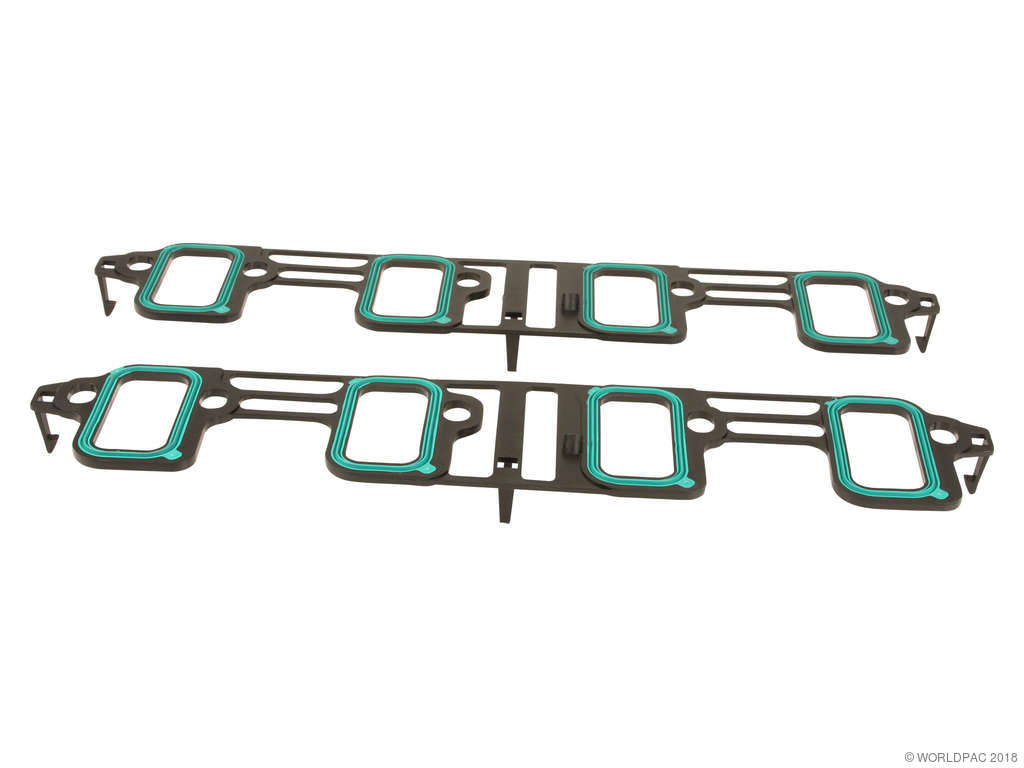
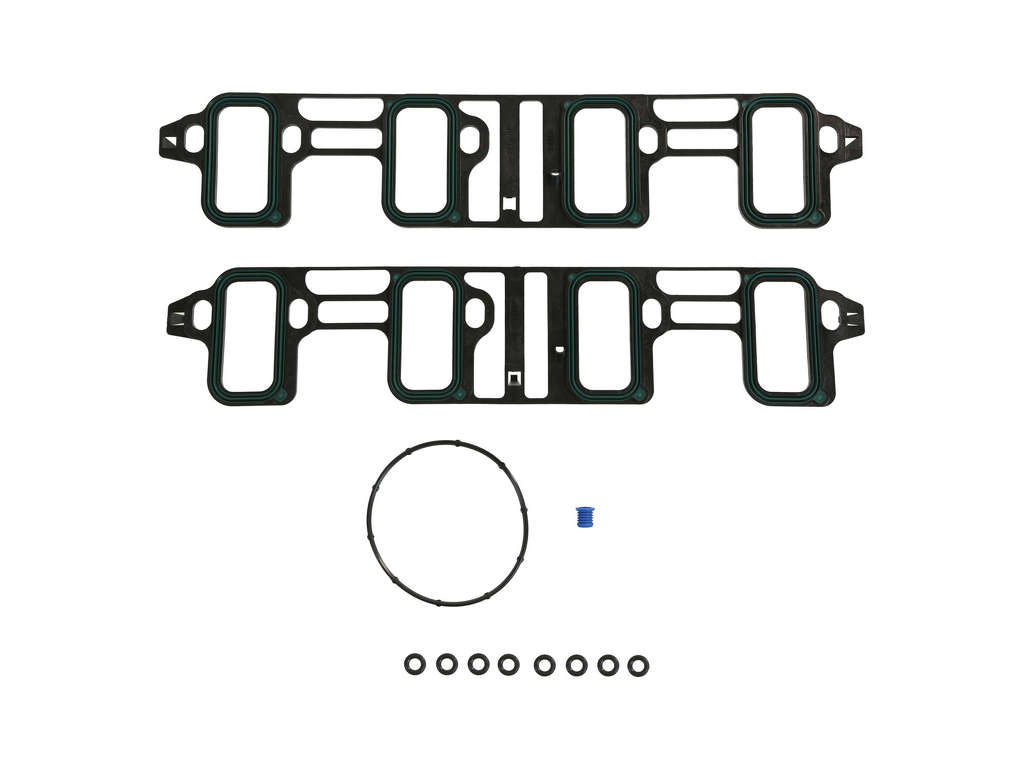
Est. part cost: $20-$60 - Leaking Intake Manifold Gaskets 🔴 High Probability → Shop Engine Intake Manifold The original intake manifold gaskets on these GM V8 engines use a plastic frame that is known to shrink, harden, and crack over time, causing unmetered air to enter the intake ports. This issue is often more noticeable in cold weather and is a very common cause of P0171 and P0174 codes on this platform.
How to confirm: With the engine running, spray short bursts of brake cleaner or introduce propane from an unlit torch around the area where the intake manifold meets the cylinder heads. If the engine RPM changes or stumbles, a leak is present. A smoke test is a more precise and safer method. Fuel trim data that is high at idle but improves when RPMs increase is a classic sign of a vacuum leak.
Typical fix: Replace the intake manifold gaskets. It is highly recommended to use a revised, improved-design set with a metal carrier, such as the Fel-Pro PermaDryPlus MS 98016 T, which is more durable 🎬 See this walkthrough on fixing lean codes and replacing intake gaskets. than the OEM plastic design. This is a more involved repair but is a common and permanent fix.
Est. part cost: $40-$100 - Dirty or Faulty Mass Airflow (MAF) Sensor 🟡 Medium Probability → Shop Fuel Injection Air Flow Meter The MAF sensor measures the amount of air entering the engine. If the sensing element becomes contaminated with dirt, oil from an aftermarket air filter, or debris, it will under-report airflow. This causes the PCM to command less fuel than necessary, resulting in a lean condition across both banks (P0171 and P0174).
How to confirm: Remove the MAF sensor from the air intake tube. Visually inspect the small wires or elements inside. If they appear dirty, cleaning is warranted. A faulty sensor may not show visible signs but can be diagnosed by monitoring its frequency (Hz) output with a scan tool; it should change smoothly with engine RPM.
Typical fix: Clean the sensor using only a dedicated MAF sensor cleaner spray. Do not touch the delicate internal wires. Allow it to dry completely before reinstalling. If cleaning does not resolve the code and no vacuum leaks are present, the sensor may need to be replaced.
Est. part cost: $10-$15 for cleaner, $70-$150 for a new sensor - Low Fuel Pressure ⚪ Low Probability
How to confirm: Connect a fuel pressure gauge to the Schrader valve on the fuel rail. With the key on and engine running, the pressure should be within the manufacturer's specification (typically 55-62 PSI for these trucks). If pressure is low, it could indicate a weak fuel pump, a clogged fuel filter, or a faulty fuel pressure regulator.
Typical fix: Replace the failing fuel pump or clogged fuel filter. Low fuel pressure will almost always cause lean codes on both banks (P0171 and P0174).
Est. part cost: $200-$400 for a fuel pump assembly
Rare But Worth Checking
- Exhaust Leak Before the Oxygen Sensor: → Shop Oxygen Sensor A crack in the exhaust manifold or a leaking flange gasket on Bank 2 can allow outside air to be drawn into the exhaust stream. This is a common issue on these trucks due to exhaust manifold bolts breaking. This fools the upstream O2 sensor into thinking the engine is running lean, causing the computer to unnecessarily add fuel.
- Clogged Fuel Injector on Bank 2: → Shop Fuel Injector If one or more fuel injectors on the passenger side are clogged or failing, that bank will receive less fuel, leading to a lean condition isolated to that side. This may also be accompanied by misfire codes for specific cylinders.
- Leaking Brake Booster or Vacuum Hose: → Shop Vacuum Hose A leak in the brake booster diaphragm or the vacuum hose leading to it can create a significant vacuum leak, causing lean codes. Symptoms can include a hard brake pedal or a hissing sound when the brake is applied. This is a less common, but possible, cause for lean codes on both banks.
Diagnosis Steps
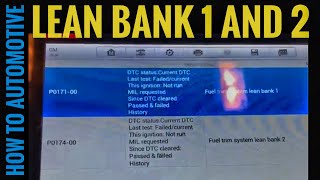
- Use an OBD-II scanner to confirm the P0174 code 🎬 Watch: Step-by-step diagnosis for P0171 and P0174 codes on your truck. and check for any other codes, such as P0171.
- Observe the Long-Term Fuel Trim (LTFT) data for Bank 1 and Bank 2. A value of +12.5% or higher on Bank 2 confirms the computer is adding fuel to compensate for a lean condition; values approaching +25% are severe. If both banks are high, the problem is system-wide.
- Perform a thorough visual inspection of the engine bay. Look for any cracked, disconnected, or deteriorated vacuum hoses, especially the PCV tube running from the driver's side valve cover to the intake manifold, checking for rub marks from the engine cover.
- With the engine running, listen for a distinct hissing sound that would indicate a vacuum leak, particularly around the intake manifold and brake booster.
- Conduct a smoke test by introducing smoke into the intake system. This is the most effective way to pinpoint the exact location of a vacuum leak from components like the PCV system, intake manifold gaskets, or brake booster hose.
- If no vacuum leaks are found, remove and clean the Mass Airflow (MAF) sensor using a dedicated MAF sensor cleaner. Allow it to dry completely before reinstalling.
- If the problem persists, test the fuel pressure using a gauge connected to the fuel rail to rule out a fuel delivery issue. Pressure should be 55-62 PSI with the key on or engine running.
- Inspect the exhaust manifolds for signs of leaks, such as black soot trails or broken bolts, which are common on this platform.
Parts You'll Likely Need
- PCV Tube / Hose
(OEM #ACDelco 12590958 (Superseded by 12679222))— This is a very common failure item identified in a manufacturer TSB (PIP5341) as a direct cause of lean codes on this platform due to rubbing on the engine cover or age-related cracking.
Trusted brands: ACDelco, Dorman
OEM price range: $40-$60
Aftermarket price range: $20-$40 - Intake Manifold Gasket Set
(OEM #Fel-Pro MS 98016 T (Improved metal carrier design))— These gaskets are a known weak point on GM V8 engines of this era and are a primary cause of vacuum leaks that trigger P0171 and P0174 codes, especially in cold weather. Upgrading to a metal-carrier gasket is a common, permanent fix.
Related Codes That Often Appear With This One
- P0171 — System Too Lean (Bank 1). When P0171 and P0174 appear together, it strongly suggests a problem affecting the entire engine, such as a large vacuum leak (intake manifold gaskets, PCV system), a faulty MAF sensor, or low fuel pressure.
- P0300 — Random/Multiple Cylinder Misfire Detected. A lean air/fuel mixture can fail to ignite properly, leading to misfires. This often happens as a symptom of the lean condition and can cause long-term damage to the catalytic converter.
Technical Service Bulletins (TSBs) & Recalls
- TSB #PIP5341: Details a common issue where the engine cover rubs through the PCV tube on the driver's side of the intake manifold, causing a vacuum leak and setting P0171/P0174 codes. Recommends replacing the tube and adding protective conduit.
Platform-Specific Known Issues
- 6.0L Gas vs. 6.6L Diesel Engine: The most common causes discussed (PCV tube, intake manifold gaskets) are overwhelmingly specific to the 6.0L (LY6/L96) gasoline V8 engine. The 6.6L Duramax diesel has a completely different air intake and fuel system architecture. While a Duramax can get a P0174, the causes would be different, such as injector issues or a leak in the intake tract after the turbocharger, and it is far less common.
- Broken Exhaust Manifold Bolts: → Shop Exhaust Manifold A frequent problem on this platform is the rear exhaust manifold bolts breaking off in the cylinder head. This creates an exhaust leak before the O2 sensor, allowing air to be sucked in, which makes the O2 sensor report a false lean condition and trigger a P0174 code.
Mechanic-Grade Diagnostic Values
- Fuel Pressure (6.0L V8) — expected: 55-62 PSI (Key On, Engine Running). Failure: Pressure below 55 PSI indicates a weak fuel pump, clogged filter, or faulty regulator.
- Long-Term Fuel Trim (LTFT) at Idle — expected: Between -5% and +5%. Failure: Sustained positive values above +10% indicate the PCM is compensating for a lean condition. The code often sets when LTFT approaches +25%. High trims at idle that decrease with RPM suggest a vacuum leak.
- Mass Air Flow (MAF) Sensor Reading (6.0L V8) — expected: Approximately 4-5 grams/second at idle, increasing smoothly with RPM (e.g., ~13 g/s at 2500 RPM).. Failure: Readings that are stuck, erratic, or do not correspond with engine RPM changes. A low reading causes the PCM to command less fuel, creating a lean condition.
- MAF Sensor Power Supply Voltage — expected: Battery voltage (approx. 12V) at the pink wire of the sensor connector with the key on.. Failure: Low or no voltage points to a wiring, fuse, or ECM power supply issue.
- MAF Sensor Ground Circuit Resistance — expected: Less than 0.5 ohms between the black/white wire on the sensor connector and the battery negative terminal.. Failure: High resistance indicates a poor ground connection, which can skew sensor readings.
Scan Tool Commands That Help
- GM Tech 2 / GDS2: Special Functions -> Fuel System -> Fuel Pump Relay — To manually command the fuel pump on to test its operation and verify fuel pressure without starting the engine. This helps isolate the pump from other ignition or starting issues.
- GM Tech 2 / GDS2: Special Functions -> Fuel System -> Fuel Injector Balance — To test individual fuel injectors. The tool fires each injector and measures the corresponding pressure drop. A clogged or failing injector will show a smaller pressure drop than the others, helping to isolate a lean condition to a specific cylinder on Bank 2.
- GM Tech 2 / GDS2: Data Display -> Engine Data -> Fuel Trim Values — To monitor Short-Term (STFT) and Long-Term (LTFT) fuel trims in real-time. This is the primary data for diagnosing a P0174. After a repair, resetting fuel trims and watching them re-learn and stay near zero confirms the fix.
Wiring & Ground Locations
- G104 — On the front of the left (driver's side) cylinder head.. This is a primary engine ground. A loose or corroded G104 can cause erratic behavior from sensors grounded through the block, including the MAF and O2 sensors, leading to incorrect fuel trim calculations.
- G103 — On the front of the passenger side cylinder head.. This is another critical engine ground point. Similar to G104, poor contact here can affect sensor readings on Bank 2, potentially contributing to a P0174 code.
- MAF Sensor Connector — On the Mass Airflow sensor, located in the air intake tube just after the air filter box.. The connector's pink wire should have battery voltage (power), and the black/white wire is the ground. Verifying power and ground here is a crucial first step before condemning the sensor itself.
Real Owner Repair Stories
- Tahoe Yukon Forum user 'Keiterburb' (2007-2014 GM SUV (similar platform/engine)) — Check engine light with codes P0171 and P0174 appeared after the ambient temperature dropped into the teens for the first time in the season.
❌ Tried (didn't work) No other parts were tried first. The user suspected the gaskets based on the cold weather symptom.
✅ What actually fixed it Replacing the intake manifold gaskets. The user noted the engine ran fine once temperatures warmed up, a classic symptom of shrinking, age-hardened intake gaskets creating a vacuum leak only when cold. The repair was successful. - Blazer Forum user (GM S-series truck (different platform, same diagnostic principles)) — P0171 and P0174 codes, hesitation/surging on acceleration, rough idle, strong fuel odor from exhaust.
❌ Tried (didn't work) Initial research pointed to MAF, O2 sensors, fuel pump, etc.
✅ What actually fixed it Replacing the PCV valve, elbow, grommets, and associated hoses. Upon inspection, the old PCV elbow had two large holes in the back, and another hose had a small cut, creating a significant vacuum leak. The total cost for OEM parts was $35 and resolved all symptoms.
"I Checked Everything" — The Actual Cause
- In some cases, a smoke test may not reveal a leak if it's internal or only occurs under specific conditions. A cracked fuel pump module flange can cause a vacuum leak inside the fuel tank, which a standard intake smoke test would miss. This allows unmetered air to be drawn into the fuel lines, causing a lean condition that is difficult to diagnose. Symptoms can be identical to a traditional vacuum leak.
- A failing brake booster check valve may pass a simple smoke test but can leak intermittently under the vacuum created when the engine is running and brakes are applied. This can cause lean codes P0171 and P0174 to appear alongside a hard or spongy brake pedal.
OEM Part Supersession History
GM 12590958→GM 12679222— This is the PCV tube/hose assembly. The part was likely updated for improved durability or material composition to better resist heat and oil, and to prevent cracking noted in TSB #PIP5341.GM 12590958 (also used for intake gaskets)→GM 12673300— This part number is confusingly also used for lower intake manifold gaskets on other GM engines (like the 3.6L V6), but not the 6.0L V8 in this truck. For the Sierra 6.0L, it's critical to order gaskets by application, not by this specific number. The recommended aftermarket upgrade is Fel-Pro MS 98016 T.
Heads up: Using part number 12590958 to order intake gaskets will result in receiving the wrong part for a 6.0L V8 Sierra.
Model Year Variations Within This Range
- 2007: For the 2007 model year, GM produced both the older 'Classic' GMT800 body style and the new GMT900 body style. Parts, wiring, and potential causes can differ significantly. This article applies specifically to the new GMT900 platform (2007.5-2010).
- 2009-2010: Starting in 2009, the 4-speed 4L60-E transmission was largely replaced by the 6-speed 6L80/6L90 automatic. While not a direct cause of P0174, the engine and transmission control modules are more integrated, and software strategies may differ slightly. For 2010, the 6.0L V8 received a minor power increase from 353 to 360 hp.
- 2007-2010 (Flex Fuel models): Vehicles with Flex Fuel (E85) capability (RPO code L96, LY6) have a fuel composition sensor. A failure of this sensor can cause extreme lean or rich conditions, as the PCM will calculate fuel delivery based on an incorrect ethanol percentage.
Helpful Videos
Used OEM Parts in Stock
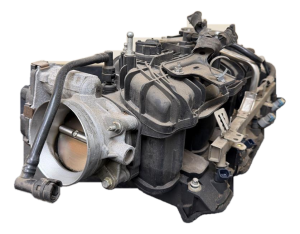
New Aftermarket Parts Available



The information in this article is provided for general reference and educational purposes only. Vehicle specifications, procedures, and part compatibility can vary by production date, trim level, and region. Always consult your vehicle's factory service manual and verify part numbers before purchasing or performing repairs. Safety-critical components such as airbags, seat belts, and braking systems should be installed by a qualified professional.
- Gmc SIERRA 2500:
- 🧭 Diagnostic Flowchart
- 🎬 Helpful Videos
- 🛍️ Shop This Part
- What's Unique About the 2007-2010 Gmc SIERRA 2500
- Symptoms You May Notice
- Most Likely Causes
- Rare But Worth Checking
- Diagnosis Steps
- Parts You'll Likely Need
- Related Codes That Often Appear With This One
- Technical Service Bulletins (TSBs) & Recalls
- Platform-Specific Known Issues
- Mechanic-Grade Diagnostic Values
- Scan Tool Commands That Help
- Wiring & Ground Locations
- Real Owner Repair Stories
- "I Checked Everything" — The Actual Cause
- OEM Part Supersession History
- Model Year Variations Within This Range
- 🎟️ Get 5% Off