

P0174 on 2012-2016 GMC Sierra Denali: Causes and Fixes for Lean Condition (Bank 2)
On a 2012-2016 Sierra Denali, P0174 is most often caused by a vacuum leak from a cracked PCV tube on the driver's side of the intake manifold. A dirty MAF sensor is the next most likely cause. Inspecting the PCV tube is the first step and the part is often under $50.
- P0174 on your Sierra Denali means Bank 2 (passenger side) is running lean (too much air, not enough fuel).
- Before buying any parts, first inspect the PCV hose on the driver's side of the intake manifold for cracks or damage. This is a known issue per GM TSBs.
- The second most likely cause is a dirty MAF sensor. Clean it with dedicated MAF sensor cleaner as an inexpensive diagnostic step.
- If both P0171 and P0174 codes are present, the problem is almost certainly a vacuum leak affecting the whole engine, such as the intake manifold gaskets or a faulty MAF sensor.
- Do not replace the oxygen sensor unless all other possibilities, especially vacuum leaks, have been ruled out.
What's Unique About the 2012-2016 Gmc SIERRA DENALI
For this generation of Sierra, GM issued multiple Technical Service Bulletins (TSBs) that point to specific, common failures causing this code. Unlike many vehicles where the cause is a generic vacuum leak, on these trucks the PCV tube is a known weak point. TSB #PIP5341 explicitly states the engine cover can rub a hole in the PCV tube at the left rear of the intake manifold. Additionally, TSB #PIP5446A points to a manufacturing defect where excessive casting flash (extra plastic) in the air filter housing near the MAF sensor can disrupt airflow, causing erratic readings and triggering P0174.
Diagnostic Flowchart
Tap your situation to follow the diagnostic path that matches what you're seeing on this vehicle.
Generation note: This range covers the end of the second generation (GMT900, 2012-2013) and the start of the third generation (K2XX, 2014-2016). While the engines are similar, the PCV tube design and intake manifold gaskets differ slightly. The PCV tube issue noted in TSB #PIP5341 is particularly relevant to the 2012-2013 models. Intake gasket issues are more noted on the 2014+ models. Many owners report the intake gasket leak first appears during cold weather snaps as the materials contract. The 2014 model year introduced Gasoline Direct Injection (GDI) engines which utilize both a low-pressure and a high-pressure fuel pump, adding another layer to fuel system diagnostics compared to the port-injection-only earlier models.
Symptoms You May Notice
- Check Engine Light is on
- Rough or unstable idle, sometimes worse in cold weather
- Hesitation or sputtering during acceleration, especially at low speeds
- Reduced engine power
- Harsh shifting, particularly 1-2 and 2-3 shifts
- Possible whistling or hissing noise from the engine bay due to a vacuum leak
- Poor fuel economy
- Replacing the oxygen sensor first. The O2 sensor is usually doing its job by detecting the lean condition. The root cause is almost always unmetered air (vacuum leak) or incorrect air measurement (MAF sensor).
Most Likely Causes
- Cracked or Disconnected PCV Tube 🔴 High Probability → Shop PCV Valve Hose GM TSB #PIP5341 specifically calls out this failure. The plastic tube on the left (driver's) side of the intake manifold can be rubbed through by the engine cover or become brittle and crack at the connection point. This is a very common point of failure discussed in owner forums.
How to confirm: Visually inspect the PCV tube that connects the valve cover to the intake manifold. Pay close attention to the connection point at the rear of the intake manifold, just above the fuel line connection. A smoke test is the most definitive way to find a leak if it's not visually obvious.
Typical fix: Replace the damaged PCV tube/hose assembly. 🎬 See how to replace the PCV tube and system components. It is recommended by the TSB to cover the new tube with protective conduit to prevent future rubbing.
Est. part cost: $25-$75 - Dirty or Faulty Mass Air Flow (MAF) Sensor 🔴 High Probability → Shop Fuel Injection Air Flow Meter Oiled air filters can contaminate the sensor, and general dust can accumulate, causing it to under-report airflow. TSB #PIP5446A also notes to check for casting flash (a manufacturing defect) in the air filter housing near the sensor that can disrupt airflow and cause this code.
How to confirm: Remove the MAF sensor from the intake tube (usually two T15 or T20 Torx screws). Visually inspect the small wires inside for dirt or debris. Check the air filter housing for excess plastic flash near where the sensor mounts. Often appears with code P0101.
Typical fix: Clean the sensor using only dedicated MAF sensor cleaner. 🎬 Watch: Step-by-step guide to cleaning your MAF sensor properly. Do not touch the delicate wires. If casting flash is found, the air filter housing lid must be replaced. If cleaning does not resolve the issue, the sensor may need to be replaced.
Est. part cost: $15-$25 for cleaner, $70-$150 for a new sensor - Leaking Intake Manifold Gaskets 🟡 Medium Probability → Shop Engine Intake Manifold The intake manifold gaskets on these engines are known to shrink, especially in cold weather, and the original plastic carrier can degrade and crack over time, creating a vacuum leak. This will typically cause both P0171 and P0174 codes to appear together.
How to confirm: With the engine running, carefully spray short bursts of brake cleaner or an unlit propane torch around the area where the intake manifold meets the cylinder heads. If the engine RPM changes, a leak is present. A smoke test is a safer and more effective method.
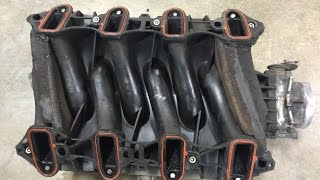
Typical fix: Replace the intake manifold gaskets. Many owners and mechanics recommend upgrading to an improved design like the Fel-Pro MS98016T, 🎬 Watch this walkthrough for replacing your intake manifold gaskets. which uses a more durable steel carrier instead of plastic.
Est. part cost: $40-$100 for the gasket set
Rare But Worth Checking
- Low Fuel Pressure: A weak fuel pump or clogged fuel filter can cause a lean condition across both banks (P0171 and P0174). This is less common than vacuum leaks but should be checked if intake/air-related causes are ruled out. A fuel pressure test at the fuel rail is required for diagnosis. Note that some 2014-2015 models were subject to a recall for a faulty high-pressure fuel pump.
- Faulty Oxygen Sensor: → Shop Oxygen Sensor While an O2 sensor can fail, it's more often correctly reporting a problem caused by something else. It's usually the last part to replace after all other causes have been eliminated.
- Exhaust Leak: A leak in the exhaust manifold or pipe before the upstream O2 sensor can allow outside air to be pulled in, fooling the sensor into thinking the engine is running lean. This can be identified by listening for leaks or looking for black soot marks near gaskets and welds.
Diagnosis Steps
- Check for other codes. If P0171 is also present, focus on causes that affect both banks, like the MAF sensor or intake gaskets.
- Visually inspect the engine bay for any obvious vacuum leaks, such as disconnected hoses or cracked lines.
- Specifically inspect the PCV tube on the driver's side of the intake manifold for cracks or signs of rubbing, as noted in TSB #PIP5341. This is a primary suspect.
- Remove and clean the Mass Air Flow (MAF) sensor using dedicated MAF sensor cleaner. While it's out, inspect the air filter housing for any plastic casting flash near the sensor mount, per TSB #PIP5446A.
- If no obvious leaks are found, perform a smoke test to check for hidden vacuum leaks from the intake manifold gaskets, PCV system, or other vacuum hoses.
- If no vacuum leaks are found, connect a fuel pressure gauge to the fuel rail to ensure the fuel pump and filter are functioning correctly and pressure is within spec.
- As a final step, inspect for exhaust leaks before the Bank 2 upstream O2 sensor and test the sensor itself to ensure it is responding correctly.
Parts You'll Likely Need
- PCV Tube / Hose (Foul Air)
(OEM #12597774 (for 2012-2013 GMT900 models))— This is a very common failure point identified in GM TSB #PIP5341 for causing P0174. It cracks from heat and abrasion from the engine cover.
Trusted brands: ACDelco, Dorman
OEM price range: $25-$50
Aftermarket price range: $20-$40 - Mass Air Flow (MAF) Sensor Cleaner — A dirty MAF sensor is a frequent cause. Cleaning is a cheap and effective first step before considering replacement.
Trusted brands: CRC, WD-40 Specialist
Aftermarket price range: $15-$25 - Intake Manifold Gasket Set
(OEM #89060413 (Original Plastic Style))— These gaskets are a known failure point that causes vacuum leaks, typically triggering both P0171 and P0174. Upgraded metal-carrier versions are recommended.
Trusted brands: ACDelco, Fel-Pro (MS98016T - Recommended upgrade)
OEM price range: $60-$80
Aftermarket price range: $40-$100
Related Codes That Often Appear With This One
- P0171 — This is the lean code for Bank 1. When both P0171 and P0174 are present, it strongly points to a problem affecting the entire engine, like a dirty MAF sensor, a large vacuum leak (intake gaskets, PCV system), or a fuel delivery issue.
- P0101 — This code relates to MAF sensor performance. Its presence alongside P0174 reinforces the likelihood of a dirty or faulty MAF sensor, or an air leak between the sensor and the throttle body. TSB #PIP5446A explicitly links these codes.
- P0300 — This indicates a random/multiple cylinder misfire. A lean air/fuel mixture can fail to ignite properly, causing misfires across one or more cylinders.
Technical Service Bulletins (TSBs) & Recalls
- PIP5341: Engine runs and idles rough, P0171 and/or P0174 set due to a vacuum leak from the PCV tube.
- PIP5446: Harsh shifts, sputtering, and codes including P0174 may be caused by cast flashing near the Mass Air Flow sensor.
- PI1438: Addresses intermittent MIL illumination with P0174 among other codes.
Platform-Specific Known Issues
- TSB #PIP5341: PCV Tube Rub-Through: → Shop PCV Valve Hose Notes that the engine cover can rub a hole in the PCV tube on the left (driver's) side of the engine, just above the fuel line connection to the intake manifold. This causes a significant vacuum leak and sets P0171/P0174. The fix is to replace the tube and add a protective conduit.
- TSB #PIP5446A: MAF Sensor Casting Flash: → Shop Fuel Injection Air Flow Meter Links P0174 with rough idle and sputtering, advising technicians to inspect for excess plastic 'casting flash' inside the air filter housing where the MAF sensor mounts. This flash disrupts airflow and causes incorrect sensor readings. The fix is to replace the air filter housing lid.
Mechanic-Grade Diagnostic Values
- Long-Term Fuel Trim (LTFT) at Idle — expected: -5% to +5%. Failure: Sustained values at or above +20% to +25% will trigger the P0174 code. If LTFT is high at idle but drops significantly when cruising, it strongly suggests a vacuum leak.
- Mass Air Flow (MAF) Sensor Reading at Idle (warmed up) — expected: Approximately 4-7 g/s for a 5.3L/6.2L V8. Should be roughly equivalent to engine displacement in liters (e.g., a 5.3L engine should read around 5.3 g/s).. Failure: A reading significantly lower than the engine's displacement (e.g., 3.5 g/s on a 5.3L) indicates the sensor is under-reporting airflow, a classic sign of a dirty sensor or a vacuum leak downstream.
- Low-Pressure Fuel Pressure (2012-2013 GMT900 models) — expected: 55-62 PSI. Failure: Pressure significantly below 55 PSI indicates a weak fuel pump, clogged filter, or failing regulator.
- High-Pressure Fuel Pressure at Idle (2014-2016 K2XX GDI models) — expected: Approximately 500-600 PSI. Failure: Pressure that is significantly lower than commanded pressure on a scan tool, or is erratic, points to a failing high-pressure fuel pump (HPFP).
Scan Tool Commands That Help
- GDS2 / Professional Scan Tool: Fuel Trim Reset — After replacing a component that caused the lean condition (like intake gaskets, MAF sensor, or PCV tube), a fuel trim reset should be performed. This clears the learned long-term fuel trim values from the ECM, allowing it to relearn the new, correct values faster and preventing the code from returning erroneously.
Wiring & Ground Locations
- G102 — Located at the left rear of the engine block (driver's side).. This is the primary ground for all 8 ignition coils. A poor connection here can cause weak spark, leading to incomplete combustion and symptoms that can mimic a lean condition, such as misfires (P0300).
- G103 (2014+ K2XX) — Located on the front corner of the passenger side cylinder head, just below the valve cover.. This is a key ground point for engine control devices. Corrosion or a loose connection at this point can cause erratic sensor readings and intermittent issues that are difficult to diagnose.
- MAF Sensor Connector — On the intake tube, just after the air filter box.. The 5-pin connector on these trucks contains the MAF signal, IAT signal, 12V power, and ground. A corroded pin or damaged wire (especially the yellow MAF signal wire or black/white ground wire) will cause incorrect airflow readings and trigger P0174/P0101 codes.
Real Owner Repair Stories
- YouTube user on channel '07 Silverado / Sierra 5.3L, P0171, P0174 Lean Codes Finally Solved For Good!' (2007 Silverado 5.3L LM7 (similar GMT900 platform)) — P0171 and P0174 codes appeared, especially in cold weather (<10°F).
❌ Tried (didn't work) Replaced intake manifold gaskets with upgraded Fel-Pro metal design., Replaced fuel injectors.
✅ What actually fixed it The root cause was a new, but faulty, aftermarket Delphi MAF sensor that was installed during previous troubleshooting. It was under-reporting airflow (reading 4.3 g/s at idle). Replacing it with a different new MAF sensor corrected the reading to ~6.3 g/s and resolved the lean codes permanently.
"I Checked Everything" — The Actual Cause
- A leaking brake booster check valve can cause a significant vacuum leak that may not be detected by a standard smoke test. The valve is designed to hold vacuum in the booster, but if it fails, it allows unmetered air to be drawn into the intake manifold through the vacuum hose. This will cause lean codes (P0171/P0174), a rough idle, and a hard brake pedal.
When the Usual Fixes Don't Work
- While vacuum leaks and MAF sensor issues are the most common causes, a notable number of owners have fixed P0174 only after replacing a new, but faulty, aftermarket MAF sensor. In one documented case, a new Delphi MAF sensor was under-reporting airflow by nearly 30%, causing persistent lean codes that were only resolved by installing another brand of MAF sensor. This highlights the importance of checking the live data (g/s) from a MAF sensor, even if it is a brand new part.
OEM Part Supersession History
12619985→12670791— This is the PCV tube (foul air) for the driver's side. GM updated the part likely for improved material durability to better resist heat and cracking, which was a common failure point on the original part.
Model Year Variations Within This Range
- 2012-2013 (GMT900): These models use a more traditional port fuel injection system. Fuel pressure diagnostics are limited to the low-pressure side (55-62 PSI). The PCV tube rub-through issue (TSB #PIP5341) is particularly common on this body style.
- 2014-2016 (K2XX): These models introduced Gasoline Direct Injection (GDI) engines (L83/L86). The fuel system has both a low-pressure in-tank pump and a high-pressure mechanical pump on the engine. Diagnosing fuel issues requires checking both low and high-side pressures (up to 500-600+ PSI at idle). The PCV system was also redesigned.
Helpful Videos

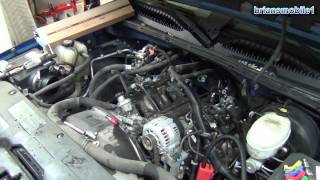
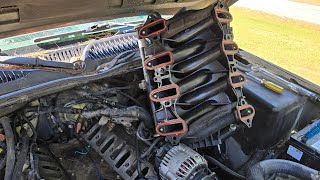
We Have This Part in Stock



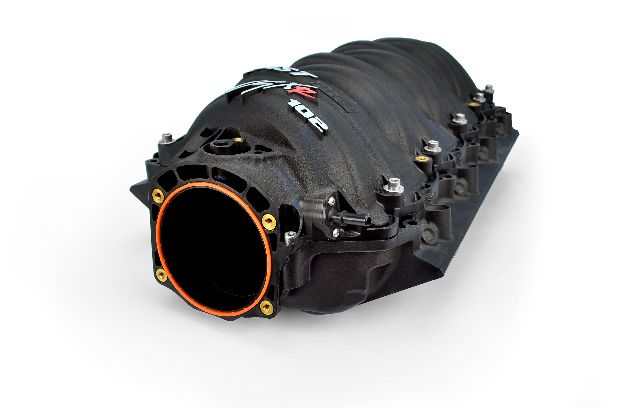

The information in this article is provided for general reference and educational purposes only. Vehicle specifications, procedures, and part compatibility can vary by production date, trim level, and region. Always consult your vehicle's factory service manual and verify part numbers before purchasing or performing repairs. Safety-critical components such as airbags, seat belts, and braking systems should be installed by a qualified professional.
- Gmc SIERRA DENALI:
- 🧭 Diagnostic Flowchart
- 🎬 Helpful Videos
- 🛍️ Shop This Part
- What's Unique About the 2012-2016 Gmc SIERRA DENALI
- Symptoms You May Notice
- Most Likely Causes
- Rare But Worth Checking
- Diagnosis Steps
- Parts You'll Likely Need
- Related Codes That Often Appear With This One
- Technical Service Bulletins (TSBs) & Recalls
- Platform-Specific Known Issues
- Mechanic-Grade Diagnostic Values
- Scan Tool Commands That Help
- Wiring & Ground Locations
- Real Owner Repair Stories
- "I Checked Everything" — The Actual Cause
- When the Usual Fixes Don't Work
- OEM Part Supersession History
- Model Year Variations Within This Range
- 🎟️ Get 5% Off