

P0174 on 2017-2020 Lexus RX HYBRID: Lean Code Causes and Fixes
On a 2017-2020 Lexus RX Hybrid, code P0174 is frequently linked to a failing low-pressure fuel pump, a known issue covered by a manufacturer TSB and multiple recalls. Other common causes are a dirty Mass Airflow (MAF) sensor or vacuum leaks, particularly from aged PCV hoses. Always check for fuel pump recalls or warranty extensions for your specific VIN before beginning repairs, as the fix is often free at a dealership.
- For a 2017-2020 Lexus RX Hybrid, P0174 is very likely caused by a failing low-pressure fuel pump.
- Before purchasing any parts, check with a Lexus dealer to see if your vehicle is covered by a recall or warranty extension for the fuel pump.
- If the fuel pump is not the issue, the next most common causes are a dirty MAF sensor and vacuum leaks, which should be checked before replacing more expensive parts like O2 sensors.
- If you also have a P0171 code, the problem is almost certainly system-wide (fuel pump, MAF, or major vacuum leak).
- If you also have a P0087 code, it is a near-certainty that the fuel pump is the root cause.
What's Unique About the 2017-2020 Lexus RX HYBRID
While the 2GR-FXS engine is known for its reliability, this specific platform and its contemporaries have a well-documented history of low-pressure fuel pump failures. The impeller within the Denso-made fuel pump can deform, causing it to stop operating. Lexus issued Technical Service Bulletin #L-SB-0052-23 (an update to LSB000523) directly linking lean codes P0171/P0174 with a low fuel pressure code (P0087). Furthermore, multiple recalls (like 20LA01) and customer support programs (like 21LC01) have been issued for failing fuel pumps on these and similar Lexus/Toyota models, making it a primary suspect for this code.
Diagnostic Flowchart
Tap your situation to follow the diagnostic path that matches what you're seeing on this vehicle.
Symptoms You May Notice
- Check Engine Light is on
- VSC (Vehicle Stability Control) light may also illuminate
- Engine may run rough, especially at idle
- Hesitation or lack of power during acceleration
- Reduced fuel economy
- Hard starting, as noted in TSB #L-SB-0052-23
- Engine stalling, particularly at low speeds
- Replacing the Air/Fuel Ratio (O2) sensor without first checking for the more common issues like fuel pressure problems (especially given the recall history), MAF sensor contamination, or vacuum leaks.
Most Likely Causes
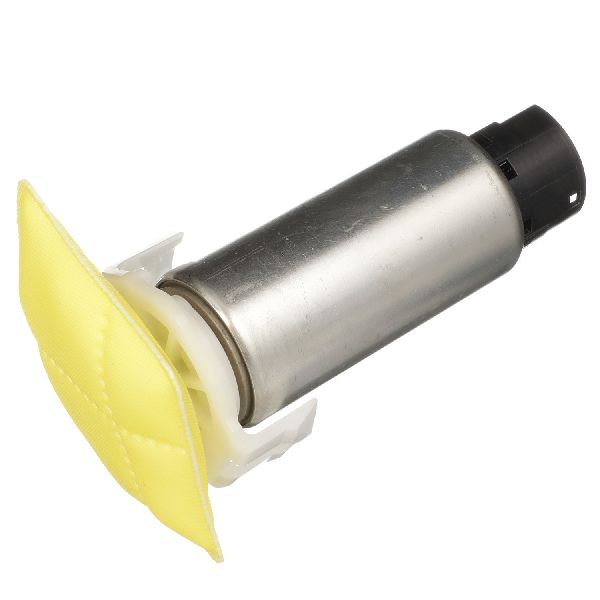
- Failing Low-Pressure Fuel Pump 🔴 High Probability → Shop Fuel Pump This is a widely recognized issue for this vehicle generation, addressed by recalls (20LA01) and Special Service Campaign (21LC01). The original Denso pumps contain an impeller that can deform and stop operating, leading to low fuel pressure and engine stalling.
How to confirm: First, check your VIN with a Lexus dealer or on the NHTSA website for applicability to recalls 20LA01, 21LC01, or other related fuel pump campaigns. The presence of code P0087 alongside P0174 is a strong indicator. A fuel pressure test at the fuel rail that shows pressure below manufacturer's specifications confirms the issue.
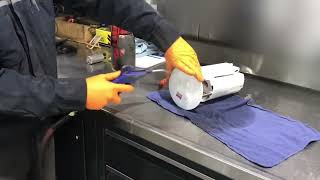
Typical fix: Replace the low-pressure fuel pump assembly with the improved part specified in the recall. 🎬 Watch: Step-by-step guide to removing the seat and replacing the pump. This is performed free of charge by any authorized Lexus dealer if the vehicle is covered.
Est. part cost: $0 (if under recall), $250-$500 (otherwise) - Dirty Mass Airflow (MAF) Sensor 🟡 Medium Probability → Shop Fuel Injection Air Flow Meter The MAF sensor measures all air entering the engine. If its delicate wires become contaminated (e.g., by oil from an over-oiled aftermarket air filter), it will under-report airflow, causing the ECU to command less fuel and create a lean condition. This is a common issue across many modern vehicles.
How to confirm: A dirty MAF sensor often sets lean codes on both banks (P0171 and P0174). The sensor can be removed and visually inspected for contamination. Cleaning is a simple and inexpensive first step.
Typical fix: Clean the sensor using only dedicated MAF sensor cleaner spray. Do not touch the sensor wires. If cleaning does not resolve the issue, the sensor may need to be replaced. The OEM part is made by Denso.
Est. part cost: $10-$20 (cleaner), $75-$200 (sensor) - Vacuum Leak 🟡 Medium Probability With age and heat cycles, rubber and plastic vacuum hoses can crack. The PCV (Positive Crankcase Ventilation) hose is a common culprit on Toyota/Lexus V6 engines. A leak allows unmetered air to enter the engine after the MAF sensor, disrupting the air-fuel ratio.
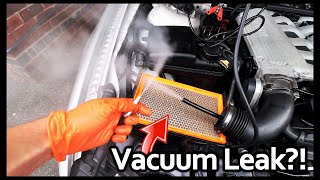
How to confirm: A smoke test is the most effective way to find leaks from sources like cracked vacuum hoses, a faulty PCV valve, or leaking intake manifold gaskets. 🎬 See how to perform a smoke test to find hidden leaks. You can also perform a careful visual inspection of all hoses connected to the intake manifold.
Typical fix: Replace the cracked hose, faulty valve, or leaking gasket that is identified during the smoke test.
Est. part cost: $20-$100 - Failing Air/Fuel Ratio Sensor (Bank 2, Sensor 1) ⚪ Low Probability → Shop Oxygen Sensor
How to confirm: The sensor itself can become slow or biased, sending an incorrect lean signal to the ECU. This should be suspected after fuel delivery and vacuum leaks have been ruled out. Its performance can be monitored with an advanced scan tool by observing its voltage waveform.
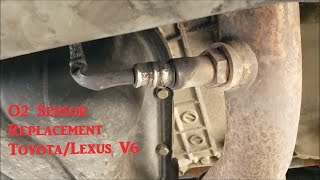
Typical fix: Replace the Bank 2, Sensor 1 Air/Fuel Ratio sensor. This is the upstream sensor located on the front exhaust manifold 🎬 Watch: How to replace the upstream O2 sensor on a Lexus V6. (near the radiator). The OEM sensor is made by Denso.
Est. part cost: $100-$250
Rare But Worth Checking
- Clogged Fuel Injectors: → Shop Fuel Injector While less common than a pump failure, dirty or clogged injectors on Bank 2 can restrict fuel flow to those cylinders, causing a localized lean condition. This can happen on both the port and direct injection systems in the 2GR-FXS engine.
- Exhaust Leak: A leak in the exhaust manifold or gasket before the A/F sensor can draw in outside air, causing the sensor to incorrectly read a lean condition, even if the engine is actually running rich.
- Oil Contamination of O2 Sensor: → Shop Oxygen Sensor A user on ClubLexus reported that a valve cover gasket leak dripped oil directly onto the Bank 2 O2 sensor, causing it to fail and trigger a P0174 code. Replacing the gasket and sensor fixed the issue.
Diagnosis Steps
- Check your vehicle's VIN with a Lexus dealer or on nhtsa.gov/recalls for open recalls or customer support programs related to the fuel pump (e.g., 20LA01, 21LC01). This should always be the first step.
- Scan for any other DTCs. The presence of P0171 or P0087 provides critical diagnostic clues.
- Using a scan tool, observe long-term fuel trims (LTFT) for both banks. Values consistently above +15% confirm a lean condition. If both banks are high, suspect a global issue like the MAF or fuel pump.
- Inspect the air intake system for any obvious cracks, loose hoses, or disconnected lines between the air filter box and the engine.
- Remove and clean the Mass Airflow (MAF) sensor using a dedicated cleaner. Allow it to dry completely before reinstalling. Clear codes and test drive to see if the code returns.
- If the code persists and the fuel pump is not under recall, perform a fuel pressure test to confirm if it is within OEM specifications. Low pressure strongly points to a failing fuel pump.
- If fuel pressure is normal, perform a smoke test to check for vacuum leaks from intake gaskets, PCV hoses, or other vacuum lines.
- If all other tests pass, investigate the Bank 2 Air/Fuel Ratio sensor for lazy or incorrect readings using a scan tool's live data function.
Parts You'll Likely Need
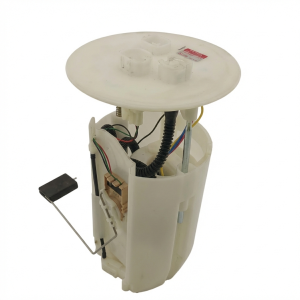
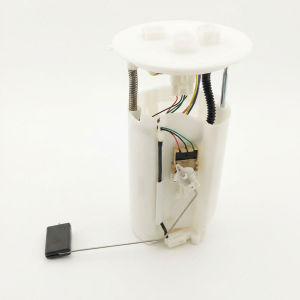
- Low-Pressure Fuel Pump Assembly
(OEM #23220-36010 (example, verify by VIN))— This is the most probable cause for this specific vehicle, as documented by Lexus through a TSB and multiple recalls/service campaigns.
Trusted brands: Denso (OEM supplier)
OEM price range: $300-$500
Aftermarket price range: $200-$400 - Mass Airflow (MAF) Sensor
(OEM #22204-75040)— A dirty MAF sensor is a very common cause for lean codes and cleaning it is an inexpensive first diagnostic step. If it fails, replacement is necessary.
Trusted brands: Denso (OEM), Bosch, Delphi
OEM price range: $170-$230
Aftermarket price range: $60-$150 - Air/Fuel Ratio Sensor (Bank 2, Sensor 1)
(OEM #89467-0E250 (or 89467-48320, verify by VIN))— If fuel delivery and air induction systems are confirmed to be working properly, a faulty sensor is the next likely culprit. Bank 2 is the front sensor near the radiator.
Trusted brands: Denso (OEM), NGK/NTK
OEM price range: $180-$250
Aftermarket price range: $100-$180
Related Codes That Often Appear With This One
- P0171 — System Too Lean (Bank 1). If both P0171 and P0174 are present, it strongly suggests a problem affecting the entire engine, such as the MAF sensor, a major vacuum leak, or low fuel pressure from the failing pump.
- P0087 — Fuel Rail / System Pressure – Too Low. This code, when seen with P0174, is a direct confirmation of a fuel delivery problem, as highlighted in TSB #L-SB-0052-23.
- P117B — Direct Injection System Performance. A YouTube repair video on a 2GR-FKS engine showed this code alongside P0174, which was ultimately traced to severely clogged direct and port fuel injectors.
Technical Service Bulletins (TSBs) & Recalls
- L-SB-0052-23: Links a hard start condition and MIL ON with DTCs P0171/P0174 and P0087 to low fuel system pressure from a failing low-pressure fuel pump.
Platform-Specific Known Issues
- This vehicle is subject to TSB #L-SB-0052-23, which states that a hard start condition with codes P0171/P0174 and P0087 may be caused by low fuel system pressure.
- Lexus Safety Recall 20LA01 and Special Service Campaign 21LC01 were issued to address failing low-pressure fuel pumps that can cause the engine to run rough or stall, which can also manifest as a lean condition. The recall involves replacing the pump with an improved version free
Mechanic-Grade Diagnostic Values
- Low-Side Fuel Pressure (at fuel pump) — expected: 28 - 121 psi. Failure: Pressure below 28 psi, especially under load, indicates a weak in-tank fuel pump.
- High-Side Fuel Pressure (at fuel rail) — expected: 348 - 2828 psi at 3000 RPM. Failure: Pressure below this range can indicate an issue with the high-pressure fuel pump, though the low-pressure pump is the more common failure for this code.
- Mass Airflow (MAF) Sensor Reading at 2500 RPM — expected: 6 - 17 gm/sec. Failure: Readings significantly outside this range suggest a faulty MAF sensor.
- Air/Fuel Ratio Sensor Heater Resistance (cold engine) — expected: 1.8 - 3.4 Ω at 20°C (68°F). Failure: Resistance outside this range indicates a failed heater circuit within the sensor, requiring replacement.
- Air/Fuel Ratio Sensor Voltage (Scan Tool, Idle) — expected: 2.8V - 3.8V. Failure: A voltage that is stuck, slow to respond, or consistently high (lean) after other causes are ruled out points to a bad sensor. On Toyota systems, voltages higher than the 3.3V stoichiometric center point indicate a lean mixture.
Scan Tool Commands That Help
- Toyota Techstream: Active Test: A/F CONTROL — This function is used to definitively test the response of the A/F and O2 sensors. It allows the technician to command a richer or leaner mixture (e.g., -12.5% to +25%) and watch the sensor voltage on the data list. If the sensor voltage does not respond accordingly, it indicates a faulty sensor.
Wiring & Ground Locations
- Engine Ground Straps — On the 2GR family of engines, there are critical ground straps from the top of each valve cover to the chassis, typically near the strut towers. There is also a key engine harness ground on the side of the cylinder head.. A poor or corroded ground connection can cause incorrect voltage readings from sensors, including the MAF and A/F sensors, leading the ECU to make incorrect fuel calculations and potentially set a false lean code.
Real Owner Repair Stories
- ClubLexus Forum Member (Lexus LS (with similar P0174 issue)) — Consistent P0174 code, VSC and CEL lights on.
❌ Tried (didn't work) Replacing gas cap, Considering replacing MAF and O2 sensors without a clear diagnosis
✅ What actually fixed it The user noticed a valve cover gasket leak was dripping oil directly onto the Bank 2 A/F (O2) sensor. Replacing the leaking valve cover gasket and the oil-fouled sensor resolved the P0174 code.
"I Checked Everything" — The Actual Cause
- A smoke test would likely pass, yet a P0174 code could still be set if the root cause is external contamination of the A/F sensor. In one documented case, a valve cover gasket leak dripped oil onto the Bank 2 sensor, causing it to send a false lean signal to the ECU. The problem was not unmetered air, but a sensor providing bad data due to the oil fouling.
OEM Part Supersession History
23220-36010→23220-36011— Standard part revision and improvement by the manufacturer.
Heads up: The new part number (23220-36011) is a direct replacement for the old one and should be used for repairs.
Model Year Variations Within This Range
- 2020: The 2020 model year was a mid-cycle refresh. While the 2GR-FXS engine and its power output remained the same, Lexus made significant changes to the chassis and suspension, using more structural adhesive and weld points and retuning dampers. Owners noted this resulted in a significant reduction in engine vibration transmitted to the cabin compared to 2017-2019 models.
Helpful Videos
![2009 Lexus Rx 330 Diagnosis P0171 & P0174. [FIXED!]](https://img.youtube.com/vi/Qw0YOf6w4SE/mqdefault.jpg)
Used OEM Parts in Stock
New Aftermarket Parts Available


The information in this article is provided for general reference and educational purposes only. Vehicle specifications, procedures, and part compatibility can vary by production date, trim level, and region. Always consult your vehicle's factory service manual and verify part numbers before purchasing or performing repairs. Safety-critical components such as airbags, seat belts, and braking systems should be installed by a qualified professional.
- Lexus RX HYBRID:
- 🧭 Diagnostic Flowchart
- 🎬 Helpful Videos
- 🛍️ Shop This Part
- What's Unique About the 2017-2020 Lexus RX HYBRID
- Symptoms You May Notice
- Most Likely Causes
- Rare But Worth Checking
- Diagnosis Steps
- Parts You'll Likely Need
- Related Codes That Often Appear With This One
- Technical Service Bulletins (TSBs) & Recalls
- Platform-Specific Known Issues
- Mechanic-Grade Diagnostic Values
- Scan Tool Commands That Help
- Wiring & Ground Locations
- Real Owner Repair Stories
- "I Checked Everything" — The Actual Cause
- OEM Part Supersession History
- Model Year Variations Within This Range
- 🎟️ Get 5% Off