

P0174 on 2003-2008 Mazda 6 3.0L V6: Causes and Fixes for Lean Condition
This code on a Mazda 6 3.0L V6 is most often caused by a vacuum leak from aged rubber hoses or intake gaskets. The PCV hose elbow and intake manifold gaskets are the most common culprits. A thorough smoke test is the most effective way to find the leak. Expect to replace a hose or gasket for under $50 in parts.
- P0174 on your Mazda 6 almost always points to unmetered air entering the engine on Bank 2 (the front bank).
- Do not replace the oxygen sensor first. It is most likely doing its job correctly by detecting the lean condition.
- The most effective diagnostic step is a smoke test to find the source of the vacuum leak.
- Carefully inspect all rubber vacuum hoses connected to the intake manifold and the large air intake boot for cracks.
- If no vacuum leaks are found, the next logical step is to clean the MAF sensor.
What's Unique About the 2003-2008 Mazda 6
The Ford-sourced 3.0L MZI/Duratec V6 in the first-generation Mazda 6 is a durable engine, but it is well-known for developing vacuum leaks as it ages. The plastic and rubber components in the intake system, particularly the upper and lower intake manifold gaskets and various vacuum hoses like the PCV hose, become brittle over time from heat and exposure, leading to unmetered air entering the engine. This makes vacuum leaks the number one suspect for a P0174 code on this specific platform.
Symptoms You May Notice
- Check Engine Light is on
- Rough or fluctuating idle
- Hesitation or lack of power during acceleration
- Engine misfires, which may feel like a shudder
- Reduced fuel economy
- A whistling or hissing sound from the engine bay at idle (indicating a vacuum leak)
- Replacing the oxygen sensor first. The O2 sensor is often just the messenger reporting the lean condition, not the cause of it. Always rule out vacuum leaks and MAF issues before replacing the O2 sensor.
Most Likely Causes
- Vacuum Leak 🔴 High Probability The rubber and plastic components of the intake system, such as the intake manifold gaskets, PCV hoses (especially the elbow behind the intake), and the air intake snorkel, are known to become brittle and crack with age on this engine.
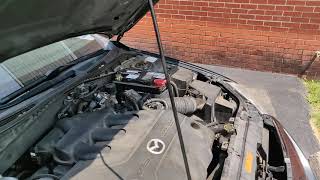
How to confirm: Perform a smoke test by introducing smoke into the intake system and watching for where it escapes. This is the most effective method. Alternatively, with the engine running, carefully spray short bursts of carburetor cleaner around suspected leak areas (gaskets, hose connections); a change in engine idle indicates a leak. Visually inspect the PCV hose that runs to the back of the intake manifold.
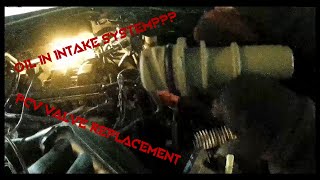
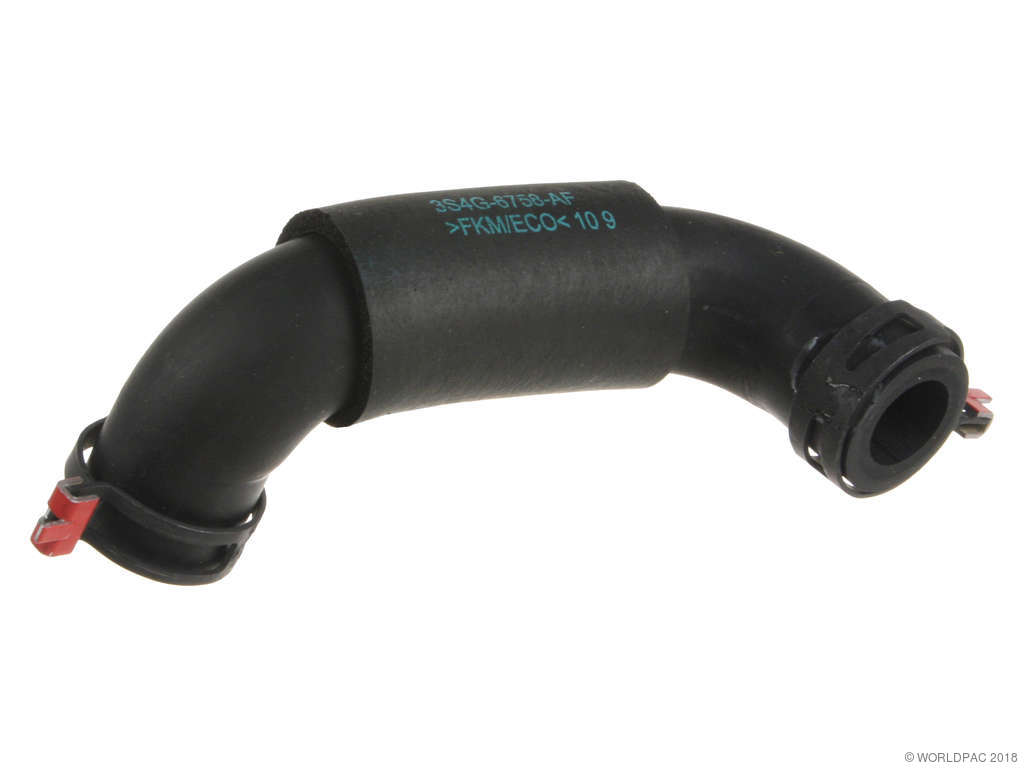
Typical fix: Replace the cracked hose or failed gasket. The upper and lower intake manifold gaskets and the PCV hose assembly are the most 🎬 See this walkthrough for replacing the PCV valve and hose. common repairs.
Est. part cost: $20-$100 - Dirty or Faulty Mass Airflow (MAF) Sensor 🟡 Medium Probability → Shop Fuel Injection Air Flow Meter The MAF sensor measures the air entering the engine. If it's dirty (especially from over-oiled aftermarket air filters), it can under-report the amount of air, causing the PCM to deliver less fuel than needed. While this usually affects both banks (P0171 & P0174), it can sometimes manifest on only one, especially if the lean condition is borderline.
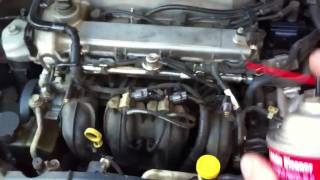
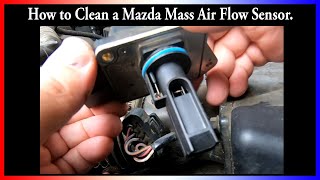
How to confirm: Remove the MAF sensor and inspect the delicate wires for contamination. You can try cleaning it with a dedicated MAF sensor cleaner. 🎬 Watch: How to safely clean your Mass Airflow sensor. If cleaning doesn't help, it may need replacement.
Typical fix: Clean the sensor with a specialized MAF sensor cleaner spray. If the problem persists, replace the sensor.
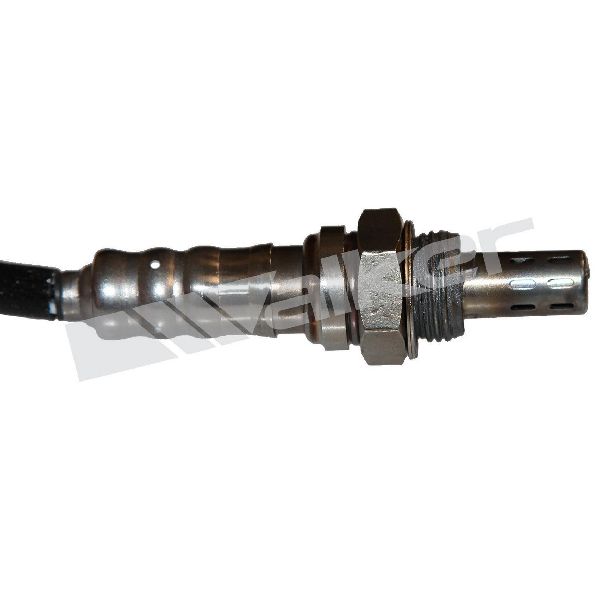
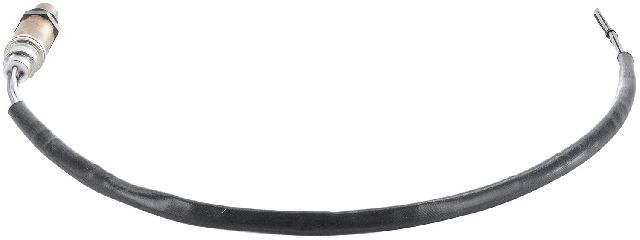
Est. part cost: $10 for cleaner, $70-$150 for a new sensor - Faulty Upstream Oxygen Sensor (Bank 2, Sensor 1) ⚪ Low Probability → Shop Oxygen Sensor O2 sensors are wear items and can become lazy or biased over time, sending incorrect data to the PCM. However, a lean code is more often the result of the O2 sensor correctly reporting a problem, not being the problem itself.
How to confirm: Use a scan tool to monitor the voltage of the Bank 2 Sensor 1 O2 sensor. It should fluctuate rapidly between approximately 0.1 and 0.9 volts. If it's stuck low or slow to respond compared to the Bank 1 sensor, it may be faulty.
Typical fix: Replace the Bank 2, Sensor 1 (upstream) oxygen sensor.
Est. part cost: $50-$120 - Clogged or Failing Fuel Injector(s) on Bank 2 ⚪ Low Probability → Shop Fuel Injector An injector on one of the Bank 2 cylinders (2, 4, or 6) may become clogged with deposits or fail electronically, preventing it from delivering enough fuel to that cylinder.
How to confirm: This is more difficult to diagnose. It may involve checking injector resistance or performing a flow test. Often, a misfire code for a specific cylinder (e.g., P0302, P0304, P0306) will accompany the P0174.
Typical fix: Replace the faulty fuel injector.
Est. part cost: $50-$150 per injector
Rare But Worth Checking
- Low Fuel Pressure: A weak fuel pump or clogged fuel filter can cause lean conditions, but this typically affects both engine banks and would likely set a P0171 code as well.
- Exhaust Leak: A crack or gasket leak in the exhaust manifold for Bank 2, before the upstream O2 sensor, can allow outside air to be drawn in. This fools the sensor into thinking the engine is running lean, causing the PCM to add unnecessary fuel.
Diagnosis Steps
- Check for other stored trouble codes that could provide more clues.
- Perform a visual inspection of the engine bay. Look for any obviously cracked, disconnected, or broken vacuum hoses, especially the PCV hose that connects to the rear of the intake manifold.
- Inspect the large rubber air intake snorkel between the air filter box and the throttle body for cracks or tears, particularly in the accordion sections.
- With the engine running, listen for hissing sounds that indicate a vacuum leak.
- If a leak isn't obvious, perform a smoke test. This is the most reliable way to find small leaks in the intake manifold gaskets and vacuum lines.
- If no vacuum leaks are found, remove and clean the Mass Airflow (MAF) sensor using a dedicated MAF sensor cleaner. Let it dry completely before reinstalling.
- Use a scan tool to monitor long-term fuel trims (LTFT) for Bank 1 and Bank 2. If Bank 2 LTFT is high (e.g., >15%) while Bank 1 is normal, it confirms the problem is isolated to Bank 2. If both are high, suspect a MAF or major vacuum leak affecting both banks.
- Check fuel pressure to rule out a weak fuel pump or clogged filter, especially if both banks are lean.
- If all else fails, investigate the Bank 2 upstream O2 sensor and the fuel injectors on that bank.
Parts You'll Likely Need
- Intake Manifold Gasket Set (Upper and Lower)
(OEM #AJF8-13-111 (Lower Set, Example))— These gaskets are a very common failure point for vacuum leaks on the 3.0L V6 engine, directly causing a P0174 code.
Trusted brands: Fel-Pro (MS 92586-1), Mahle 🎬 Watch: Step-by-step guide to installing new intake manifold gaskets., Victor Reinz
OEM price range: $60-$100
Aftermarket price range: $25-$50 - PCV Valve Hose
(OEM #W0133-1808857 (PCV to Intake Hose))— This hose, especially the rubber elbows, is exposed to oil vapor and heat, causing it to become brittle, collapse, and crack, creating a significant vacuum leak.
Trusted brands: Genuine Mazda, Motorcraft, Gates
OEM price range: $40-$55
Aftermarket price range: $15-$30 - Mass Airflow (MAF) Sensor Cleaner — A dirty MAF is a common cause of lean codes and cleaning it is an inexpensive first step before considering replacement.
Trusted brands: CRC, WD-40
Aftermarket price range: $10-$15 - Upstream Oxygen Sensor (Bank 2, Sensor 1) — If diagnostics confirm the sensor is faulty, it will need to be replaced to restore proper fuel control.
Trusted brands: Denso, NGK/NTK, Bosch
OEM price range: $100-$150
Aftermarket price range: $50-$120
Related Codes That Often Appear With This One
- P0171 — System Too Lean (Bank 1). If both P0171 and P0174 are present, it strongly suggests a problem common to both banks, like a MAF sensor issue, a large vacuum leak on the main intake snorkel, or low fuel pressure.
- P0300, P0302, P0304, P0306 — Misfire codes. A severe lean condition on Bank 2 can lead to misfires in one or more of its cylinders (Cylinders 2, 4, 6).
- P2011 — Intake Manifold Runner Control Circuit/Open (Bank 2). A fault in the IMRC system, especially if the flaps are stuck open, can cause a lean condition at low RPMs and may trigger a P0174 code.
Technical Service Bulletins (TSBs) & Recalls
- TSB 01-007/06: Affects 2004-2006 Mazda3 for a no-start condition in extreme cold due to a freezing main relay. Not relevant to the Mazda 6 or P0174.
- TSB 01-007/19: Addresses rough idle and misfire codes (P030x) on newer Mazdas (2013+) in cold weather due to frozen water in the muffler. Not relevant to this vehicle or code.
- TSB 01-014/16: Pertains to premature ignition coil failure on 2014-2016 Mazda 6 models, which is a different generation.
Platform-Specific Known Issues
- The intake manifold on the 3.0L V6 has both upper and lower gaskets that can fail. Often, a leak in the lower gaskets is the root cause, but both sets should be replaced if the manifold is removed.
- A real-world owner experience highlights the frustration of tracking down issues on the V6: 'The only engineering flaw I found is that the engine is mounted transversely in a small engine compartment and rear spark plugs are not easily servicable. The heat on the rear side of the engine has caused a few of the coils on the spark plugs to fail...' This heat also contributes to the degradation of rubber and plastic vacuum components.
Mechanic-Grade Diagnostic Values
- Long-Term Fuel Trim (LTFT) — expected: Ideally within +/- 5%; values consistently above +10% to +15% indicate a problem.. Failure: A high positive LTFT on Bank 2 (e.g., +25%) with a normal Bank 1 LTFT points to a problem isolated to Bank 2, such as a vacuum leak on that bank's intake runners or a faulty Bank 2 O2 sensor.
- Mass Airflow (MAF) Sensor Reading at Idle — expected: Approximately 1 gram/second per liter of engine displacement. For the 3.0L V6, this is roughly 3.0 g/s, with a normal range between 3.0 and 6.0 g/s at a stable, warmed-up idle.. Failure: A reading significantly lower than 3.0 g/s at idle suggests the sensor is under-reporting airflow (prompting the PCM to deliver less fuel, causing a lean condition) or there is a large vacuum leak downstream of the sensor.
- Upstream Oxygen Sensor (O2) Voltage — expected: Rapidly fluctuating between approximately 0.1V (lean) and 0.9V (rich) on a warmed-up engine in closed loop.. Failure: A sensor that is stuck low (e.g., < 0.2V) or is very slow to switch indicates a potential sensor failure. However, it can also be correctly reporting a true lean condition.
- Fuel Injector Resistance — expected: Approximately 12 to 16 Ohms.. Failure: A reading of 0 Ohms (short circuit) or infinite/OL (open circuit) indicates a failed injector coil. A reading significantly different from the other injectors on the same bank also points to a problem.
Wiring & Ground Locations
- Main Engine Ground Strap — Typically connects from the engine block to the chassis/frame near the passenger side headlight or on the firewall.. A poor engine ground can cause erratic voltage readings from sensors, including the O2 sensors and MAF sensor. This can lead to incorrect data being sent to the PCM, potentially causing it to misinterpret the air/fuel ratio and set a lean code. Ensuring this connection is clean and tight is a crucial, often overlooked, electrical check.
- PCM Ground — There is a ground on the firewall directly for the PCM housing.. A compromised ground specifically for the Powertrain Control Module can cause a host of unpredictable issues, including incorrect processing of sensor inputs. This could lead to the false setting of fuel trim codes like P0174.
Real Owner Repair Stories
- 2CarPros forum user (2003 Mazda 6 with P0171 and P0174) — Check engine light with lean codes for both banks, slight RPM bouncing at idle.
❌ Tried (didn't work) Initial diagnosis was unclear.
✅ What actually fixed it The user was advised to check for vacuum leaks using carb cleaner, focusing on vacuum lines and the intake manifold area. This is the most common cause for dual lean codes on this platform.
"I Checked Everything" — The Actual Cause
- A leaking brake booster check valve. While a smoke test pressurizes the intake system, it may not always reveal a leak in the brake booster or its one-way check valve. If a smoke test is clean but fuel trims are still high at idle and improve with RPM, a technician might disconnect and plug the vacuum line to the brake booster. If the fuel trims normalize, the leak is in the booster circuit. This is missed because the booster is considered a separate system by some, even though it's a major vacuum-operated component.
Model Year Variations Within This Range
- 2006-2008: A minor facelift for the 2006 model year included cosmetic changes. The 3.0L V6 engine was slightly detuned from 220 hp to 215 hp to reduce emissions. This change is unlikely to affect the diagnosis of a P0174 code, as the underlying causes (vacuum leaks, sensor failures) remain identical.
- 2003-2005 vs 2006-2008: The optional automatic transmission for the V6 was a 5-speed automatic for 2003-2005. For the 2006 model year, this was upgraded to a 6-speed automatic in some configurations. This does not affect the engine or its fuel control system related to P0174.
Diagnostic Flowchart
Other Known Issues on This Vehicle
Issues unrelated to this code that are worth knowing about as an owner of this generation:
- Pre-Catalytic Converter Failure 🔴 High — A widely-documented and serious problem. The ceramic honeycomb material can break apart, get sucked back into the combustion chambers, and destroy the engine.
- Automatic Transmission Faults 🟠 Medium — Early models of the generation are noted for transmission problems, including shifting issues and potential wiring harness damage.
- Ignition Coil Failure 🟠 Medium — Ignition coils, particularly on the rear bank of the V6, are a common failure item. Heat from the engine and difficult access for the rear bank are contributing factors.
- Valve Cover Gasket Oil Leaks 🟡 Low → Shop Engine Valve Cover — The V6 is known for developing oil leaks from the valve cover gaskets, which can sometimes drip onto exhaust components causing a burning smell. Leaks into the spark plug tubes can also cause premature ignition coil failure.
- Takata Airbag Recalls 🔴 High — This entire generation was subject to the massive Takata airbag recall. The NHTSA has issued a "do not drive" warning for unrepaired vehicles. (Ref: NHTSA Recalls 13V-130, 14V-362, 14V-773)
Used vs. New Parts: Buying Guide for This Vehicle
When a used part is the smart pick: For this vehicle, obtaining used parts like a complete intake manifold assembly (if cracked), engine wiring harness sections, or brackets from a junkyard can be cost-effective. These are generally durable components where failure is not typical.
Donor-vehicle mileage cap: roughly under 120000 miles for the part to have meaningful remaining life.
What to inspect on the donor part:
- For intake components, check for any visible cracks, especially around bolt holes and seams.
- Ensure plastic components are not excessively brittle or discolored from heat.
- Verify any included sensors or hoses are from a vehicle that was not in a front-end collision.
OEM-only on this vehicle (don't cheap out):
- Mass Airflow (MAF) Sensor: While aftermarket MAF sensors exist, they are notoriously problematic and can cause persistent, hard-to-diagnose fuel trim issues. A genuine Mazda/Ford or a reputable OEM-supplier part is highly recommended.
- PCV Valve: The specific flow rate of the PCV valve is critical. A cheap, incorrect aftermarket valve can itself cause lean or rich conditions. Using an OEM part is a low-cost way to avoid this variable.
Aftermarket brands forum-validated for this vehicle:
- Intake Gaskets: Fel-Pro, Mahle, and Victor Reinz are well-regarded for providing reliable gasket sets that meet or exceed OEM quality.
- Oxygen Sensors: Denso and NGK/NTK are the primary OEM suppliers for many Japanese vehicles and are considered the gold standard for replacement O2 sensors.
- PCV Hoses: Gates is a reputable brand for replacement rubber hoses and belts.
Brands owners have reported issues with on this vehicle:
- Unbranded/No-Name MAF Sensors: Avoid generic, low-cost MAF sensors from online marketplaces, as they are a very common source of new, more confusing problems.
- Dorman (for some components): While Dorman makes a wide range of parts, some forum users report mixed quality on certain items like their PCV hose kits. It's often better to opt for an OEM or a brand like Gates for critical rubber components.
Real Owner Stories
Aggregated from forums and TSBs cited above. Mileages and costs reflect what owners reported in those sources.
2003-2008 Mazda 6 3.0L V6
Symptoms: The engine is mounted transversely in a small engine compartment and rear spark plugs are not easily servicable. The heat on the rear side of the engine has caused a few of the coils on the spark plugs to fail.
What fixed it: Replacement of ignition coils on the rear bank (Bank 1) which were damaged by engine heat.
Source hint: vehicle_specific_issues
Related OBD-II Codes
Frequently Asked Questions
Does TSB 01-007/06 regarding freezing main relays apply to my 2003-2008 Mazda 6 P0174 issue?
I have a P0174 on my 3.0L V6; could this be related to the muffler issues described in TSB 01-007/19?
Is there a specific vacuum hose on the MZI 3.0L V6 known for causing this lean code?
Can I use any cleaner to fix my MAF sensor on the Mazda 6?
Why is the rear bank of my V6 engine more prone to component failure?
Should I replace both intake gaskets if I only have a leak on one side?
Helpful Videos
We Have This Part in Stock


The information in this article is provided for general reference and educational purposes only. Vehicle specifications, procedures, and part compatibility can vary by production date, trim level, and region. Always consult your vehicle's factory service manual and verify part numbers before purchasing or performing repairs. Safety-critical components such as airbags, seat belts, and braking systems should be installed by a qualified professional.
- Mazda 6:
- 🧭 Diagnostic Flowchart
- 🎬 Helpful Videos
- 🛍️ Shop This Part
- What's Unique About the 2003-2008 Mazda 6
- Symptoms You May Notice
- Most Likely Causes
- Rare But Worth Checking
- Diagnosis Steps
- Parts You'll Likely Need
- Related Codes That Often Appear With This One
- Technical Service Bulletins (TSBs) & Recalls
- Platform-Specific Known Issues
- Mechanic-Grade Diagnostic Values
- Wiring & Ground Locations
- Real Owner Repair Stories
- "I Checked Everything" — The Actual Cause
- Model Year Variations Within This Range
- Other Known Issues on This Vehicle
- Used vs. New Parts: Buying Guide for This Vehicle
- Real Owner Stories
- 2003-2008 Mazda 6 3.0L V6
- Related OBD-II Codes
- Frequently Asked Questions
- 🎟️ Get 5% Off