

P0174 on 2002-2006 Mazda MPV 3.0L V6: Causes for System Too Lean (Bank 2)
P0174 on a Mazda MPV 3.0L V6 is most often caused by vacuum leaks from deteriorated rubber components. The most common culprits are a cracked PCV hose or failed intake manifold gaskets. A smoke test is the fastest way to find the leak.
- P0174 on the 2002-2006 Mazda MPV almost always indicates a vacuum leak.
- The most likely sources of the leak are the PCV hose, intake manifold gaskets, or the IMRC actuator seal.
- A smoke test is the most efficient and accurate way to diagnose the exact location of the leak.
- Do not replace the O2 sensor until all potential vacuum leaks and MAF sensor issues have been ruled out.
- Accessing some of these components, particularly the PCV hose, can be difficult due to tight space at the rear of the engine.
What's Unique About the 2002-2006 Mazda MPV
The AJ 3.0L V6 in this generation of MPV is well-known for developing vacuum leaks as it ages. The rubber and plastic components in the engine bay, particularly the PCV hoses and various intake gaskets, become hard and brittle over time, leading to cracks that allow unmetered air to enter the engine. While lean codes can occur on any vehicle, the high frequency of these specific leak points makes them the first place to look on an MPV. This issue is also common on its Ford Duratec and Jaguar AJ-V6 engine relatives.
Symptoms You May Notice
- Check Engine Light is on
- Rough or unstable idle
- Engine hesitation or stumbling on acceleration
- Reduced fuel economy
- Engine stalling in some cases
- A 'hissing' sound from the engine bay at idle
- Replacing the oxygen sensor first. While an O2 sensor can be the cause, it's far more likely on this vehicle that a vacuum leak is the root problem. The O2 sensor is just reporting the lean condition it sees. A forum user shared a story of replacing O2 sensors and a MAF to no avail before a mechanic found a leaking IMRC seal.
Most Likely Causes
- Cracked or Collapsed PCV Hose 🔴 High Probability → Shop PCV Valve Hose The PCV hose is routed in a high-heat area at the back of the engine, causing it to become brittle, crack, or collapse internally. This is a very common failure point on the MPV 3.0L V6.
How to confirm: Visually inspect the U-shaped rubber hose connected to the PCV valve for cracks, mushiness, or collapse. A smoke test will definitively show a leak. Sometimes the engine RPM will change if carb cleaner is sprayed near the leak. A bad o-ring on the oil dipstick can also be a minor vacuum leak source.
Typical fix: Replace the PCV hose and PCV valve. Access is tight, often requiring removal of the upper intake plenum for easier access. 🎬 Watch: Step-by-step guide to replacing the PCV hose.
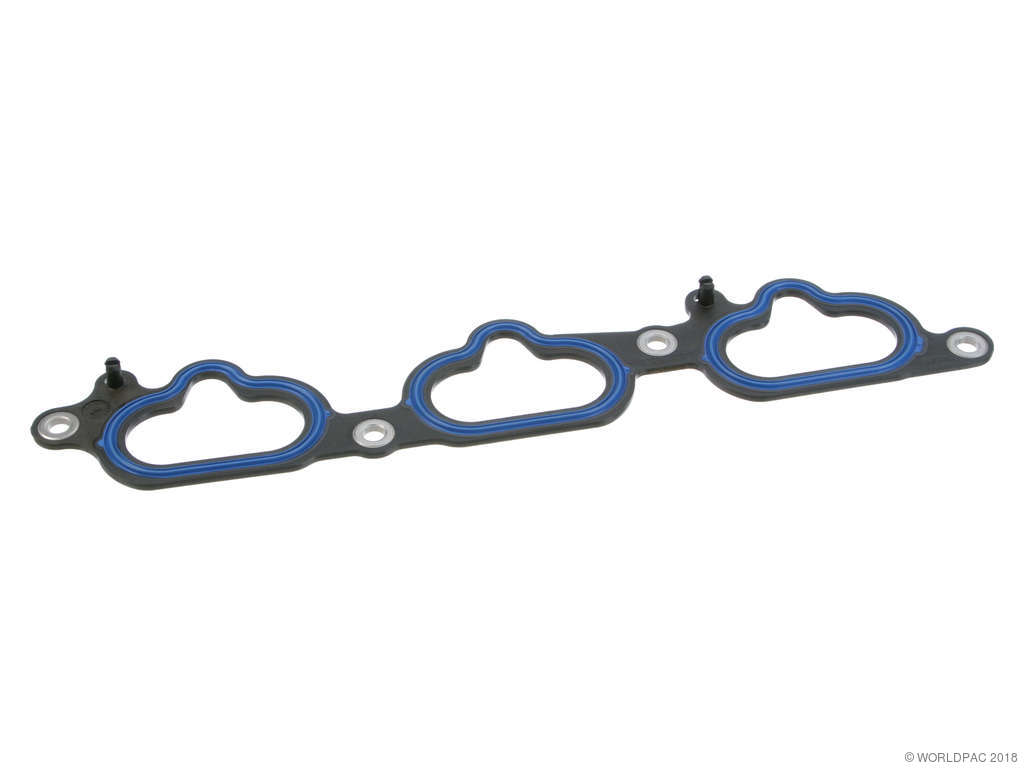
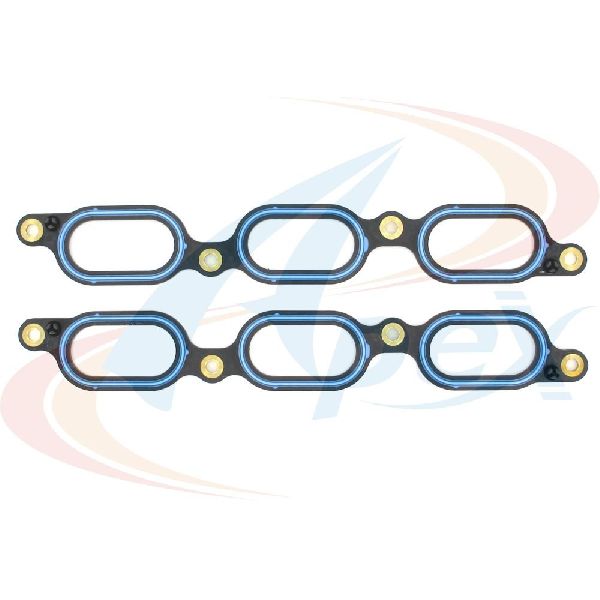
Est. part cost: $15-$40 - Leaking Intake Manifold Gaskets 🔴 High Probability → Shop Engine Intake Manifold The gaskets between the upper and lower intake manifold sections (plenum gaskets) and between the lower manifold and cylinder heads can dry out, shrink, and fail, creating a significant vacuum leak.
How to confirm: A smoke test is the most effective method. With the engine running, carefully spraying carb cleaner or a propane torch (unlit) around the gasket mating surfaces may cause a change in engine RPM, indicating a leak.
Typical fix: Replace the upper and lower intake manifold gaskets. This is a more involved job but is a common fix for persistent lean codes. Many owners perform this repair themselves.
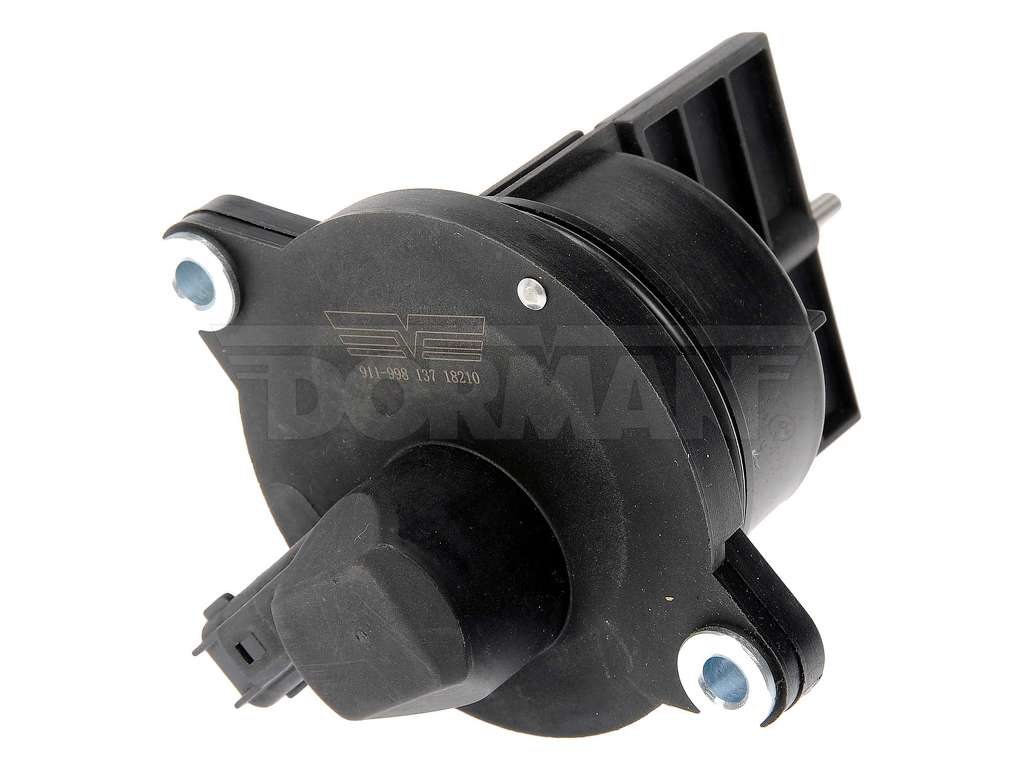
Est. part cost: $40-$80 - Leaking Intake Manifold Runner Control (IMRC) Actuator Seal 🟡 Medium Probability → Shop Engine Intake Manifold The o-ring seal on the IMRC actuator, which is mounted on the intake manifold, can degrade and cause a significant vacuum leak. This is a known issue that can be difficult to diagnose without a smoke test.
How to confirm: Perform a smoke test on the intake system. Smoke will be seen escaping from the body of the IMRC actuator if the seal has failed, 🎬 See this video for a real-world IMRC leak diagnosis. as shown in a YouTube repair video.
Typical fix: Replace the IMRC actuator or, if possible, just the o-ring seal. A forum user noted a mechanic diagnosed this after they had already replaced O2 sensors and the MAF. The o-ring was often not sold separately by Mazda, requiring the purchase of the entire actuator.
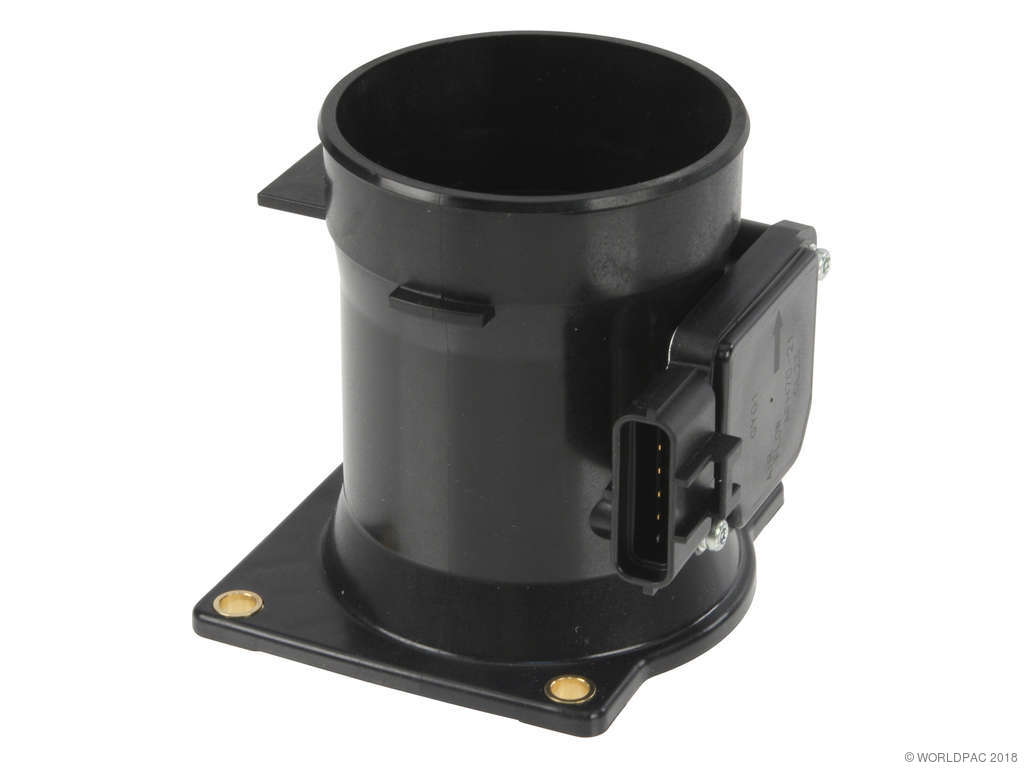
Est. part cost: $5-$50 - Dirty or Faulty Mass Airflow (MAF) Sensor 🟡 Medium Probability → Shop Fuel Injection Air Flow Meter The MAF sensor can become contaminated with dirt and oil, causing it to under-report the amount of air entering the engine. The PCM then commands too little fuel, creating a lean condition.
How to confirm: Clean the sensor's delicate wires with a dedicated MAF sensor cleaner spray. Do not use a Q-tip or touch the wires. If cleaning doesn't work, monitor MAF sensor readings (grams/second) with a scan tool to see if they are within the expected range for the given RPM.
Typical fix: Clean the MAF sensor. If the problem persists, replace the sensor.
Est. part cost: $10 (cleaner) or $70-$150 (sensor) - Cracked Air Intake Boot ⚪ Low Probability → Shop Engine Air Intake Resonator The flexible rubber boot between the MAF sensor and the throttle body can develop cracks, especially in the accordion sections, allowing unmetered air to enter.
How to confirm: Visually inspect the entire intake boot for cracks or tears, flexing it by hand to reveal hidden splits. This is a common failure point on other Mazda models.
Typical fix: Replace the air intake boot.
Est. part cost: $30-$60
Rare But Worth Checking
- Leaking EGR Valve Gasket: A video from a mechanic showed a minor leak from the EGR valve gasket contributing to a lean code. While less common than other intake leaks, it's worth checking during a smoke test.
- Weak Fuel Pump or Clogged Fuel Filter: → Shop Fuel Pump If fuel trims are high under load (not just at idle) and no vacuum leaks are found, low fuel pressure could be the cause. This would typically set both P0171 and P0174.
- Faulty Upstream Oxygen (O2) Sensor: → Shop Oxygen Sensor A lazy or failing O2 sensor can incorrectly report a lean condition. However, this is less common than vacuum leaks and should be suspected only after all other possibilities are ruled out. Often, a failing O2 sensor will have its own trouble code.
Diagnosis Steps
- Check for other codes. If P0171 is also present, suspect a cause common to both banks (MAF, fuel delivery, large vacuum leak).
- Using a scan tool, observe Long-Term Fuel Trim (LTFT) and Short-Term Fuel Trim (STFT) for Bank 2 at idle and at 2500 RPM. High positive numbers (e.g., >15%) confirm the lean condition.
- Perform a thorough visual inspection of all vacuum hoses and the air intake tube for obvious cracks, disconnections, or damage. Pay close attention to the PCV hose at the back of the engine.
- The most effective next step is to perform a smoke test. Introduce smoke into the intake system via a vacuum line and look for leaks from the intake manifold gaskets, IMRC actuator seal, PCV hoses, or the air intake boot.
- If no leaks are found, remove and clean the Mass Airflow (MAF) sensor using a dedicated MAF sensor cleaner. Do not touch the sensor wires. Allow it to dry completely before reinstalling.
- If cleaning the MAF doesn't resolve the issue, test fuel pressure to rule out a weak fuel pump or clogged filter. Pressure should be within the manufacturer's specification.
- As a final step, test the Bank 2 upstream O2 sensor's operation with a scan tool to ensure it is switching correctly and not stuck in a lean reading. A failing O2 sensor will often have its own specific DTC.
Parts You'll Likely Need
- PCV Hose
(OEM #AJ51-13-89YB (for 2002-2003 models))— This hose is a very frequent failure point, becoming brittle and cracking, causing a major vacuum leak.
Trusted brands: Genuine Mazda, Motorcraft
OEM price range: $25-$40
Aftermarket price range: $15-$30 - Intake Manifold Gasket Set (Upper/Plenum)
(OEM #GY01-13-111)— The plenum gaskets are a primary source of vacuum leaks on the 3.0L V6 as they age and compress.
Trusted brands: Fel-Pro (Part #MS96841), Mahle, Victor Reinz
OEM price range: $50-$80
Aftermarket price range: $20-$40 - Mass Airflow (MAF) Sensor — If cleaning the original sensor doesn't fix incorrect readings that cause lean conditions, replacement is necessary.
Trusted brands: Hitachi, Denso, Bosch
OEM price range: $150-$250
Aftermarket price range: $70-$150
Related Codes That Often Appear With This One
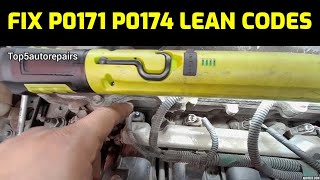
- P0171 — System Too Lean (Bank 1). When P0171 and P0174 appear together, it strongly suggests a problem affecting both cylinder banks, such as a faulty MAF sensor, a large vacuum leak before the intake manifold plenum 🎬 Watch: How to troubleshoot P0171 and P0174 lean codes. (like the air intake boot), or a fuel delivery issue.
Technical Service Bulletins (TSBs) & Recalls
- TSB 01-007/05 - This TSB is often mis-cited for this issue online, but it actually pertains to other models and issues like frozen main relays or exhaust noises on different Mazda vehicles. No specific TSB for P0174 on the MPV is widely documented, as the causes are typically age-related vacuum leaks.
Platform-Specific Known Issues
- A recall was issued for some early models related to a foam-covered PCV hose (Recall 2204H). The replacement part is a more durable rubber design. Even if not covered by the recall, this hose is a primary suspect.
- A forum member on MPVClub.com spent over a year chasing P0171/P0174, replacing O2 sensors and the MAF sensor, before a mechanic correctly identified a leaking 'Intake Runner Control Actuator Seal' as the culprit for a total repair cost of $245.
Mechanic-Grade Diagnostic Values
- Mass Airflow (MAF) Sensor Reading at Idle — expected: Approximately 3.0 grams/second (g/s) for the 3.0L engine.. Failure: A reading significantly below 3.0 g/s at idle suggests the sensor is under-reporting airflow, which can be caused by contamination or sensor failure. A reading of 0.4V at idle has also been reported as a reasonable value.
- Mass Airflow (MAF) Sensor Reading at 2500 RPM (No Load) — expected: Approximately 15-25 g/s.. Failure: Readings that are not proportional to RPM increases or are significantly outside the expected range can indicate a faulty sensor. One owner reported their reading was 15% below spec at 2500 RPM before cleaning.
- Mass Airflow (MAF) Sensor Voltage at Wide-Open Throttle (WOT) — expected: Should be above 4.0V.. Failure: A user on a diagnostic forum reported a reading of 3.8V at WOT, which was considered low and pointed towards a faulty MAF sensor.
- Upstream Oxygen (O2) Sensor Voltage — expected: Should constantly fluctuate between approximately 0.1V (lean) and 0.9V (rich) once the engine is in closed loop.. Failure: A sensor that is stuck low (e.g., below 0.45V) is indicating a lean condition. If it's stuck and not switching, the sensor itself may be faulty, though it's more likely reporting an actual lean condition from a vacuum leak.
- Long-Term Fuel Trim (LTFT) — expected: Ideally between -10% and +10%.. Failure: Sustained positive values above +15% to +25% indicate the PCM is adding a significant amount of fuel to compensate for a lean condition, which will trigger the P0174 code.
Wiring & Ground Locations
- MAF Sensor Connector — Located on the air intake tube, right after the air filter box.. A poor connection or corroded pins at the MAF sensor connector can cause incorrect readings, leading to lean codes. Technicians will back-probe this connector to test for power, ground, and signal voltage to verify sensor operation.
- PCM Ground — While specific MPV locations are not detailed, poor PCM grounds can cause erratic sensor readings. On some Mazda vehicles, cleaning grounds under the carpet beneath the driver's and passenger's seats has resolved persistent electronic issues.. A faulty ground can disrupt the reference voltage for sensors like the MAF and O2 sensors, leading to incorrect data and subsequent lean codes.
Real Owner Repair Stories
- mazda-forums.com user 'azkev' (2003 Mazda MPV) — P0171 and P0174 codes, Check Engine Light.
❌ Tried (didn't work) Replaced PCV valve and hose, Replaced all O2 sensors, Replaced MAF sensor
✅ What actually fixed it A diagnostic test from a new mechanic pinpointed a leaking 'Intake Runner Control Actuator Seal'. Replacing the seal resolved the codes for a total cost of $245. - YouTube channel 'Gearmo Auto' (2004 Mazda MPV) — P0174 code, System Too Lean Bank 2.
✅ What actually fixed it A smoke test revealed multiple vacuum leaks. The final fixes were replacing the o-ring on the IMRC actuator, replacing the EGR valve gasket, and replacing a leaking vacuum hose elbow. The mechanic noted the IMRC o-ring was worn and the EGR gasket showed signs of leakage. - ScannerDanner Forum user 'adrian.c' (2002 Mazda MPV) — P0171 and P0174 codes. Freeze frame data showed high positive fuel trims.
❌ Tried (didn't work) Initial cleaning of MAF sensor with isopropyl alcohol.
✅ What actually fixed it After analysis on the forum suggested a low MAF reading (3.8V at WOT), the owner cleaned the sensor again with dedicated CRC MAF sensor cleaner. This brought the sensor's readings back into the specified range at 2500 RPM and resolved the check engine light.
"I Checked Everything" — The Actual Cause
- A technician on a diagnostic forum noted that the rubber PCV elbows on these engines can collapse and suck in air in a way that doesn't always show up during a smoke test and may not be audible.
When the Usual Fixes Don't Work
- In one well-documented case, a 2003 MPV owner replaced nearly all the common culprits for P0171/P0174, including the PCV hose, all oxygen sensors, and the MAF sensor, but the codes persisted. The problem was only solved when a mechanic diagnosed a leaking IMRC (Intake Manifold Runner Control) actuator seal, which is a less-common and harder-to-find vacuum leak. This highlights that even after addressing the highest probability causes, hidden leaks can be the true root of the problem.
OEM Part Supersession History
Unknown (Foam-covered design)→AJ51-13-89YB (Molded rubber design)— The original foam-covered PCV hose was prone to rapid deterioration and collapse. The updated part is a more durable, molded rubber hose to improve longevity.
Model Year Variations Within This Range
- 2002-2003 vs 2004-2006: The valve cover gaskets have different part numbers for 2002-2003 models (e.g., Fel-Pro VS 50551 R) versus 2004-2006 models (e.g., Fel-Pro VS 50579 R), indicating a design change. This could potentially affect sealing with the intake manifold.
- 2002-2003: The PCV hose part number AJ51-13-89YB is specifically listed for 2002-2003 models. While it may fit later models, owners of 2004-2006 vans should verify the correct part number for their specific vehicle, as a design revision may have occurred.
- 2002: The 2002 model year was the first to feature the 3.0L V6 and 5-speed automatic transmission, replacing the previous 2.5L V6. As an introductory year, it may have unique parts or TSBs compared to later models in the generation.
Diagnostic Flowchart
Other Known Issues on This Vehicle
Issues unrelated to this code that are worth knowing about as an owner of this generation:
- Automatic Transmission Failure 🔴 High — Widespread issue, often occurring between 60,000 and 100,000 miles. Symptoms include harsh shifting ('gear slamming'), slipping, or complete failure to engage gears. (Ref: No recall, but some owners reported dealers reprogramming the transmission computer for shift quality issues, sometimes under warranty.)
- Pre-Catalytic Converter Disintegration 🔴 High — A critical and well-documented failure. The ceramic honeycomb inside the front pre-catalysts (the ones integrated with the exhaust manifolds) can break apart. These particles can be sucked back into the engine, causing catastrophic engine failure. Codes P0420/P0430 are an urgent warning sign.
- Power Sliding Door Malfunctions 🟠 Medium — Common for doors to fail to open/close, make grinding noises, or have the latch cycle randomly. Issues can stem from worn contacts, faulty latches, or cable problems. (Ref: A known cause for the driver's side sliding door not opening is the fuel door being slightly ajar, which activates a safety interlock.)
- Ignition Coil Failure 🟠 Medium — Failure of the coil-on-plug units is common, leading to misfires (P030x codes), rough idle, and poor performance. The rear bank (Bank 1) coils are more difficult to access.
Used vs. New Parts: Buying Guide for This Vehicle
When a used part is the smart pick: For this repair, used parts are generally not recommended for the common failure items. Rubber components like hoses and gaskets (PCV hose, intake gaskets, IMRC seal) should always be purchased new, as age and heat are the primary causes of failure. A used part will have the same liabilities as the one being replaced. Structural components like a complete intake manifold could be sourced from a low-mileage donor if the original is physically cracked, but the gaskets must be replaced.
Donor-vehicle mileage cap: roughly under 60000 miles for the part to have meaningful remaining life.
What to inspect on the donor part:
- For a MAF sensor, ensure the donor vehicle had no lean/rich codes.
- Visually inspect any used electronic part for corrosion on the pins.
- For hard parts like an intake manifold, check for cracks, especially around bolt holes and mating surfaces.
OEM-only on this vehicle (don't cheap out):
- Mass Airflow (MAF) Sensor: Many forum users and mechanics report issues with aftermarket MAF sensors causing incorrect readings, poor performance, or new codes. It is strongly recommended to use a genuine OEM (Mazda) or the original equipment manufacturer (e.g., Denso, Hitachi) part.
- PCV Hose: While aftermarket is available, the genuine Mazda part (especially the updated design) is known to fit correctly and is made of durable material. Given the tight access, using a guaranteed-fit OEM part is wise.
Aftermarket brands forum-validated for this vehicle:
- Fel-Pro: Widely regarded as a high-quality choice for intake manifold gaskets (Part #MS96841 or MS95727).
- Denso / NTK: If an oxygen sensor is suspected, these are the trusted OEM-equivalent brands.
Brands owners have reported issues with on this vehicle:
- Unbranded/white-box MAF sensors: These are frequently cited as being poorly calibrated and a common cause of persistent or new issues after replacement.
Real Owner Stories
Aggregated from forums and TSBs cited above. Mileages and costs reflect what owners reported in those sources.
2004 Mazda MPV 3.0L V6
Symptoms: Lean codes P0171 and P0174; owner had already replaced O2 sensors and the MAF sensor without success.
What fixed it: A mechanic identified a leaking Intake Runner Control Actuator Seal using a smoke test.
Cost: $245-$245
Source hint: mpvclub.com/topic/9834-p0171-p0174-lean-codes-solved/
2004 Mazda MPV 3.0L V6
Symptoms: P0174 code present; symptoms often include a 'hissing' sound from the engine bay at idle.
What fixed it: Replacement of the IMRC actuator (or its o-ring seal) after smoke was seen escaping the body of the actuator during a smoke test.
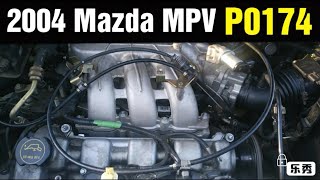
Source hint: youtube.com/watch?v=k_ia-g24U-I (2004 Mazda Mpv P0174)
Related OBD-II Codes
Frequently Asked Questions
Does TSB 01-007/05 provide a fix for the P0174 lean code on my Mazda MPV?
Is there a recall for the PCV hose on the 2002-2006 Mazda MPV?
Can a bad oil dipstick cause a P0174 code on the 3.0L V6 engine?
Why is the IMRC actuator seal mentioned as a specific problem for the MPV?
I've already cleaned my MAF and checked hoses; what else commonly fails on this Mazda engine?
Helpful Videos
We Have This Part in Stock


The information in this article is provided for general reference and educational purposes only. Vehicle specifications, procedures, and part compatibility can vary by production date, trim level, and region. Always consult your vehicle's factory service manual and verify part numbers before purchasing or performing repairs. Safety-critical components such as airbags, seat belts, and braking systems should be installed by a qualified professional.
- Mazda MPV:
- 🧭 Diagnostic Flowchart
- 🎬 Helpful Videos
- 🛍️ Shop This Part
- What's Unique About the 2002-2006 Mazda MPV
- Symptoms You May Notice
- Most Likely Causes
- Rare But Worth Checking
- Diagnosis Steps
- Parts You'll Likely Need
- Related Codes That Often Appear With This One
- Technical Service Bulletins (TSBs) & Recalls
- Platform-Specific Known Issues
- Mechanic-Grade Diagnostic Values
- Wiring & Ground Locations
- Real Owner Repair Stories
- "I Checked Everything" — The Actual Cause
- When the Usual Fixes Don't Work
- OEM Part Supersession History
- Model Year Variations Within This Range
- Other Known Issues on This Vehicle
- Used vs. New Parts: Buying Guide for This Vehicle
- Real Owner Stories
- 2004 Mazda MPV 3.0L V6
- 2004 Mazda MPV 3.0L V6
- Related OBD-II Codes
- Frequently Asked Questions
- 🎟️ Get 5% Off