

P0174 on 2006-2012 Mitsubishi Eclipse: System Too Lean (Bank 2) Causes and Fixes
On the 3.8L V6 Eclipse, P0174 is most often caused by a failed O-ring on the intake manifold butterfly valve shaft, creating a vacuum leak. This is a very common issue for the 6G75 engine found in the Eclipse, Galant, and Endeavor. Owners often find this inexpensive O-ring has become rock-hard and brittle, causing a significant vacuum leak. Checking this O-ring before replacing expensive sensors can save significant time and money.
- Before buying any parts for a P0174 code on a 3.8L Eclipse, check for a vacuum leak at the intake manifold butterfly actuator shaft; it's the most likely cause.
- If both P0171 and P0174 are present, suspect a problem that affects the entire engine, like the MAF sensor or a large vacuum leak.
- Cleaning the MAF sensor with a dedicated cleaner is a cheap and easy diagnostic step.
- A lean condition means too much air is entering the engine or not enough fuel is being supplied. The problem is almost always un-metered air from a vacuum leak.
- Do not replace the O2 sensor unless you have confirmed it is failing through scan tool data; it is often just reporting the problem, not causing it.
What's Unique About the 2006-2012 Mitsubishi Eclipse
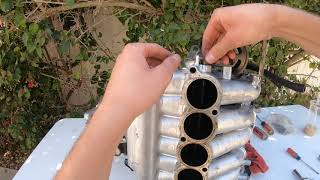
The Mitsubishi 6G75 V6 engine, used in the Eclipse GT, has a well-documented and extremely common failure point that causes lean codes like P0174 and P0171. A small O-ring on the actuator shaft for the intake manifold's internal butterfly valves becomes brittle and fails, creating a significant vacuum leak. Many owners and mechanics point to this specific, inexpensive O-ring as the primary culprit, often after misdiagnosing the issue as a bad sensor. Videos and forum posts for the Montero/Pajero with the same engine detail this exact failure, showing the O-ring breaking into pieces upon removal. 🎬 Watch: How to fix these lean codes on the 3.8L engine. The 6G75 engine is also noted to have issues with intake manifold swirl flaps, which can wedge or fail, though the O-ring is the more common cause of this specific code.
Symptoms You May Notice
- Check Engine Light is on
- Rough or unstable idle, sometimes fluctuating
- Engine hesitation or stumbling during acceleration
- Reduced power
- Decreased fuel economy
- Engine misfires (in some cases), which may trigger a P0300 code
- Audible hissing sound from the engine bay, particularly around the intake manifold area
- Replacing the oxygen sensor first. While an O2 sensor can be the cause, vacuum leaks and MAF issues are more common on this platform. It's crucial to diagnose before replacing parts, especially given the high probability of the intake manifold O-ring leak.
- Replacing the fuel pump. Unless both P0171 and P0174 are present and a fuel pressure test confirms low pressure, the pump is unlikely to be the cause for a single-bank lean code.
Most Likely Causes
- Failed Intake Manifold Butterfly Valve Shaft O-ring 🔴 High Probability → Shop Engine Intake Manifold This is a very common failure on the 6G75 engine across multiple Mitsubishi models. The rubber O-ring is exposed to significant heat cycles, causing it to become hard, brittle, and crack over time, creating a vacuum leak. Owners describe the old O-ring as 'rock solid' and chipping away in chunks.
How to confirm: With the engine running, carefully spray short bursts of brake cleaner or flammable fluid around the actuator for the intake butterflies on the lower intake manifold (near the throttle body). If the engine RPM changes or stumbles, a leak is present. A smoke test is a safer and more definitive way to confirm the leak. The leak source is specifically the shaft that the butterfly valve actuator controls.
Typical fix: Replace the small O-ring on the butterfly valve shaft. This requires removing the throttle body and intake plenum, driving out a small pin to release the actuator arm, removing the plastic shaft piece, replacing the O-ring, and reassembling. 🎬 See this walkthrough for repairing the lower intake manifold shaft. Some owners use a generic O-ring from an assortment kit (e.g., a 9.8mm x 2.4mm O-ring was used in one documented repair).
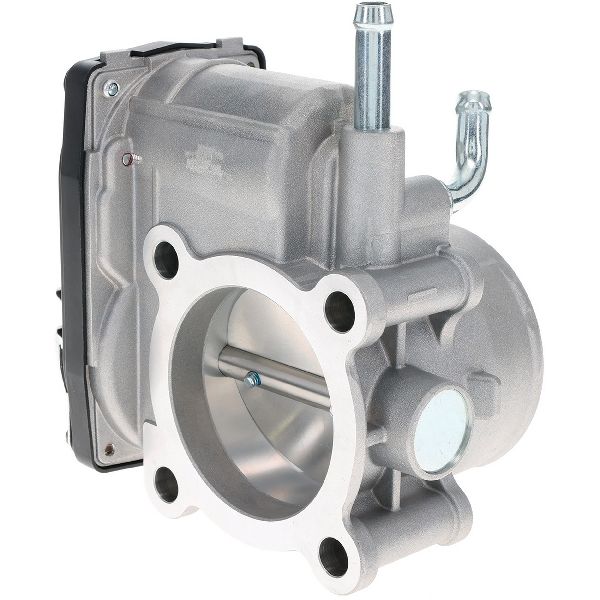
Est. part cost: $1-$10 for the O-ring - Vacuum Leak (Other) 🟡 Medium Probability Beyond the common O-ring failure, vacuum hoses can become cracked and brittle with age. Intake manifold gaskets and the throttle body gasket can also fail, though this is less common than the butterfly shaft O-ring. An incorrectly installed throttle body gasket can also cause a significant leak.
How to confirm: Perform a visual inspection of all vacuum lines connected to the intake manifold. A smoke test is the most effective method to find hidden leaks from hoses, the PCV system, or intake gaskets.
Typical fix: Replace the cracked hose or failed gasket. The upper intake manifold (plenum) gasket OEM part number is often cited as 1540A193 for this engine family.
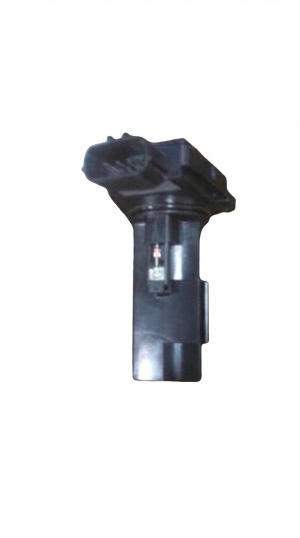
Est. part cost: $5-$100 depending on the hose or gasket set - Dirty or Faulty Mass Airflow (MAF) Sensor 🟡 Medium Probability → Shop Fuel Injection Air Flow Meter The MAF sensor can become contaminated with dirt or oil (especially from over-oiled aftermarket air filters), causing it to under-report the amount of air entering the engine. The ECU then commands less fuel than necessary, creating a lean condition.
How to confirm: Inspect the sensor for contamination. You can try cleaning it with a dedicated MAF sensor cleaner spray; do not touch the delicate sensor wires. If cleaning doesn't resolve the issue, monitoring the sensor's readings with an OBD-II scanner at various RPMs can show if it's performing correctly. If fuel trims are highly positive at idle but normalize at higher RPM, a vacuum leak is more likely than a bad MAF.
Typical fix: Clean the MAF sensor with a dedicated cleaner. If cleaning fails, replace the sensor.
Est. part cost: $70-$150 for a quality aftermarket sensor - Failing Upstream Oxygen (O2) Sensor ⚪ Low Probability → Shop Oxygen Sensor
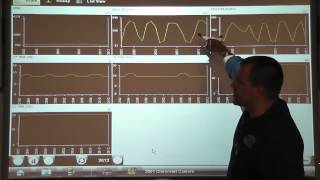
How to confirm: A failing O2 sensor can get 'lazy' and send slow or incorrect signals to the ECU, tricking it into thinking the mixture is lean. This should be diagnosed by graphing the O2 sensor voltage with a scan tool. A healthy sensor will switch rapidly between approximately 0.1V and 0.9V. A sensor stuck in a low voltage state would falsely report a lean condition.
Typical fix: Replace the Bank 2, Sensor 1 (upstream) oxygen sensor.
Est. part cost: $50-$120
Rare But Worth Checking
- Low Fuel Pressure / Clogged Fuel Injectors: → Shop Fuel Injector If the lean condition happens on both banks (P0171 and P0174), a fuel delivery issue like a weak fuel pump or clogged filter is more likely. If it's only P0174, it could be a clogged injector on Bank 2, but this is far less common than vacuum leaks or sensor issues on this platform.
- Exhaust Leak: A crack or leak in the exhaust manifold before the upstream O2 sensor can draw in outside air, making the sensor read a false lean condition.
Diagnosis Steps
- Check for other codes. If P0171 is also present, focus on causes that affect the whole engine. The intake manifold butterfly O-ring is a prime suspect for both codes appearing together.
- Inspect for the common 6G75 vacuum leak. With the engine running, carefully spray carb cleaner around the intake manifold butterfly actuator shaft to check for the common O-ring leak. An RPM surge confirms the leak. A smoke test is a safer and more definitive method.
- Check for other vacuum leaks. Visually inspect all vacuum hoses for cracks or disconnection. Perform a smoke test on the entire intake system to find any other leaks. Pay attention to the air intake hose between the MAF sensor and throttle body, and the throttle body gasket itself.
- Clean and test the MAF sensor. Remove the MAF sensor and inspect its wires for debris. Clean it using only dedicated MAF sensor cleaner. Do not touch the wires.
- Analyze fuel trims. Use an OBD-II scanner to monitor short-term (STFT) and long-term (LTFT) fuel trims for Bank 2. High positive numbers (e.g., >12.5%) confirm the lean condition. If trims are high at idle but decrease and normalize as RPMs increase, it strongly indicates a vacuum leak. 🎬 Learn how to use fuel trims to identify the leak source.
- Test the O2 Sensor. Graph the Bank 2, Sensor 1 voltage. It should fluctuate rapidly between approximately 0.1V and 0.9V. If it's slow, stuck, or biased low, it may be faulty.
- Check fuel pressure. If other causes are ruled out, connect a fuel pressure gauge to the fuel rail to ensure it's within specification. This is less likely to be the cause if only P0174 is present.
Parts You'll Likely Need
- Intake Manifold Runner Control Valve Shaft O-Ring
(OEM #Not sold separately by Mitsubishi. Requires sourcing a generic O-ring.)— This is the most probable cause of a vacuum leak triggering P0174 on the 6G75 engine due to a high failure rate from heat degradation.
Trusted brands: Generic Viton or Nitrile O-ring assortments
OEM price range: N/A
Aftermarket price range: $1-$10 - Throttle Body Gasket
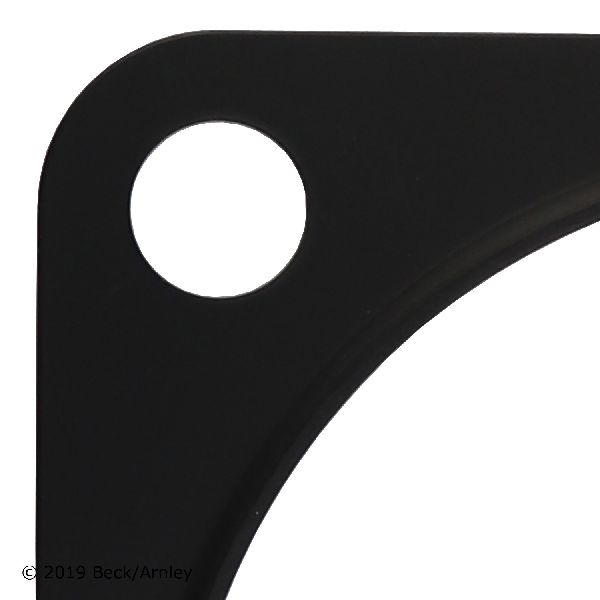
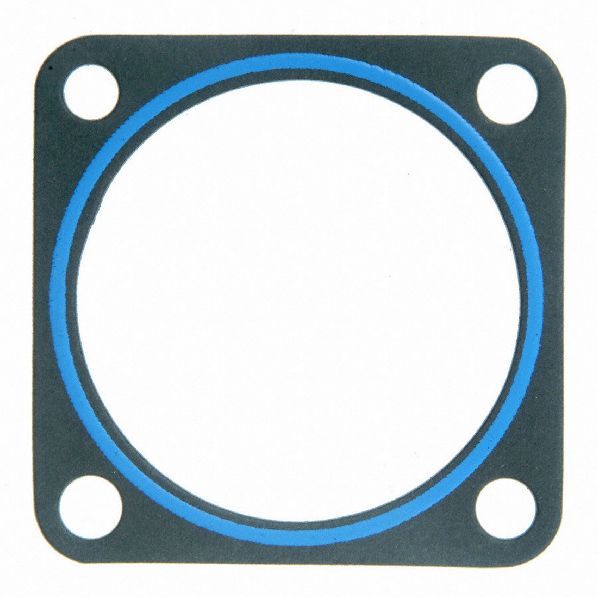
(OEM #MD619923)— This gasket may be damaged during the intake manifold O-ring repair or could be a separate source of a vacuum leak.
Trusted brands: Mitsubishi (OEM), Fel-Pro, Mahle
OEM price range: $10-$20
Aftermarket price range: $5-$15 - Mass Air Flow (MAF) Sensor — A dirty or failed MAF sensor is a common cause of lean codes on many vehicles, as it provides the primary airflow measurement to the ECU.
Trusted brands: Denso, Hitachi, Bosch
OEM price range: $200-$300
Aftermarket price range: $70-$150 - Intake Manifold Gasket Set
(OEM #1540A193 (Upper/Plenum Gasket))— If a vacuum leak is traced to the intake manifold mating surfaces, these gaskets will be needed. The upper plenum gasket (1540A193) is often replaced when accessing the butterfly valve O-ring.
Trusted brands: Mitsubishi (OEM), Fel-Pro
OEM price range: $20-$30
Aftermarket price range: $10-$25
Related Codes That Often Appear With This One
- P0171 — System Too Lean (Bank 1). This code often appears with P0174. When both are present, it strongly suggests a problem affecting both cylinder banks, such as a major vacuum leak (like the butterfly shaft O-ring), a faulty MAF sensor, or a fuel delivery issue.
- P0300 — Random/Multiple Cylinder Misfire. A severe lean condition can cause combustion instability, leading to misfires across one or more cylinders.
Platform-Specific Known Issues
- The 3.8L 6G75 V6 is widely known for developing a vacuum leak at the O-ring for the intake manifold's butterfly valve shaft. This issue is documented across multiple Mitsubishi platforms using this engine, including the Galant, Endeavor, and Montero/Pajero.
- The repair involves significant disassembly of the intake plenum and requires driving out a pin to access the plastic shaft holding the O-ring, making it a moderately involved DIY job.
Mechanic-Grade Diagnostic Values
- Fuel Pressure at Idle — expected: Approx. 270 kPa (38 psi). Failure: Significantly lower pressure indicates a fuel delivery problem (pump, filter).
- Fuel Pressure at Idle (Vacuum hose to regulator disconnected) — expected: 330 - 350 kPa (47 - 50 psi). Failure: Pressure not rising to this range can indicate a faulty fuel pressure regulator.
- Long-Term Fuel Trim (LTFT) - Bank 2 — expected: Close to 0% (ideally +/- 5%). Failure: Sustained value greater than +12.5% will trigger the DTC.
- Short-Term Fuel Trim (STFT) - Bank 2 — expected: Fluctuating around 0%. Failure: Sustained value greater than +25% will trigger the DTC.
- Mass Airflow Sensor Reading at Idle — expected: Typically 3-5 g/s for a 3.8L engine at normal idle RPM.. Failure: A reading significantly lower than expected while fuel trims are high suggests a dirty or failing MAF sensor.
Scan Tool Commands That Help
- Mitsubishi M.U.T.-III: Data List Monitoring — To view manufacturer-specific PIDs like fuel trims (Item 22, 23), MAF sensor readings (Item 10), and O2 sensor data to diagnose the root cause of P0174 according to the factory diagnostic procedure.
- Mitsubishi M.U.T.-III: Actuator Test - Fuel Pump Drive — To manually operate the fuel pump when checking for fuel leaks or testing fuel pressure without starting the engine.
Wiring & Ground Locations
- Engine Compartment Grounds — Multiple points: Near the ECU assembly, on the firewall, on both driver and passenger side strut towers, a strap near the engine mount, and a heavy wire on the side of the front valve cover.. Poor grounds can cause erratic voltage signals from critical sensors like the MAF and O2 sensors, leading to incorrect readings and false lean codes. Cleaning these ground points is a low-cost maintenance step that can resolve mysterious electrical issues.
- ETACS ECU — Attached to the back of the interior fuse box, under the driver's side dash.. While not directly related to fuel control, the Electronic Time and Alarm Control System (ETACS) is a central hub for many vehicle electronics. Knowing its location is useful for comprehensive electrical diagnosis.
- Engine Control Module (ECM) — Located in the engine compartment, on the left side, forward of the relay box.. This is the main computer that receives all sensor inputs and controls the fuel system. All sensor wiring (MAF, O2, etc.) terminates here, making it a central point for any advanced wiring checks or pinout testing.
Real Owner Repair Stories
- Mitsubishi Forum user (2010 Mitsubishi Outlander 3.0L V6 (engine family relative)) — P0174 code, occasional near-stall when stopping in cold weather.
❌ Tried (didn't work) Initial diagnosis pointed towards spark plugs or vacuum leaks.
✅ What actually fixed it The user added a bottle of fuel injector cleaner to the gas tank. While they were continuing to diagnose for vacuum leaks, the code cleared on its own, suggesting the issue was a dirty or partially clogged fuel injector on bank 2. - YouTube video by 'BnR Laser Designs' (4th Generation Mitsubishi Eclipse 3.8L V6) — General advice for rough idling, poor mileage, and strange codes.
✅ What actually fixed it The video demonstrates cleaning all major engine bay ground points. The creator states that the 4G Eclipse is very sensitive to voltage and that cleaning corroded or loose grounds can cure a wide range of electrical-related running issues and codes for free.
Model Year Variations Within This Range
- 2009-2012: The 6G75 engine was reportedly upgraded around 2009 to address an issue with premature bearing failure caused by oil pressure problems. While not directly related to the P0174 code, this indicates a significant mid-cycle engine revision.
- 2011-2012: The manual transmission option was deleted for the GT (V6) models in the 2011 model year. This does not affect the cause of the P0174 code but is a notable powertrain variation.
Diagnostic Flowchart
Other Known Issues on This Vehicle
Issues unrelated to this code that are worth knowing about as an owner of this generation:
- Cracked/Deteriorating Interior Dash Panels 🟡 Low — Very common, especially in warmer climates. The plastic dashboard and chrome trim around the gauges can crack and peel over time.
- Automatic Transmission Issues 🟠 Medium — Can occur at higher mileage, especially if not maintained. Symptoms include hard shifts or slipping gears. Manual transmissions are considered more robust.
- Valve Cover Gasket Oil Leaks 🟠 Medium → Shop Engine Valve Cover — A fairly common issue on the 3.8L V6 models as they age. The gaskets degrade, leading to oil leaks that can drip onto other components.
- Timing Belt Replacement Interval 🔴 High — This is a critical maintenance item, not a failure. The V6 engine is an interference design, and the timing belt must be replaced at the recommended interval (typically every 60,000 miles) to prevent catastrophic engine failure.
Used vs. New Parts: Buying Guide for This Vehicle
When a used part is the smart pick: For this repair, obtaining a used intake manifold from a lower-mileage donor vehicle could be a viable option if the entire manifold needs replacement, as it's a large mechanical part. However, for the most common failure points, new parts are inexpensive and recommended.
Donor-vehicle mileage cap: roughly under 80000 miles for the part to have meaningful remaining life.
What to inspect on the donor part:
- When buying a used intake manifold, inspect the area around the butterfly valve shaft for any signs of cleaning or tampering, which might indicate the donor had the same issue.
- Check all plastic components for brittleness or cracking.
- Ensure all vacuum nipples are intact and not broken off.
OEM-only on this vehicle (don't cheap out):
- While not strictly 'OEM-only', using a genuine Mitsubishi throttle body gasket (MD619923) and plenum gasket (1540A193) is highly recommended to ensure a perfect seal, as the cost is low and the labor to re-do the job is high.
Aftermarket brands forum-validated for this vehicle:
- Denso or Hitachi for MAF and O2 sensors, as they are often the original equipment manufacturers.
- Fel-Pro for gaskets if OEM is unavailable.
Brands owners have reported issues with on this vehicle:
- Avoid unbranded, 'white-box' electronic sensors (MAF, O2) from online marketplaces, as their calibration and longevity are often poor and can cause persistent diagnostic headaches.
Real Owner Stories
Aggregated from forums and TSBs cited above. Mileages and costs reflect what owners reported in those sources.
2006 Mitsubishi Montero 3.8L V6 (6G75)
Symptoms: The owner encountered P0171 and P0174 codes and found the intake manifold butterfly valve shaft O-ring was brittle and failing.
What fixed it: Replaced the failed O-ring on the butterfly valve shaft using a generic O-ring from an assortment kit.
Cost: $1-$10
Source hint: YouTube video by 'L22446G-2pY' showing 3.8L Montero brittle O-ring failure
2006-2012 Mitsubishi Eclipse GT 3.8L V6
Symptoms: Vacuum leak detected specifically around the throttle body area.
What fixed it: Addressed air leak issues around the throttle body and intake plenum area.
Source hint: MitsubishiForum.com thread 'Throttle body air leak please help'
2003-2006 Mitsubishi Montero 3.8L V6 (6G75)
Symptoms: P0171 and P0174 codes present; the old O-ring was described as 'rock solid' and chipping away in chunks.
What fixed it: Disassembled the intake plenum, drove out the actuator arm pin, and replaced the small O-ring on the butterfly valve shaft.
Source hint: YouTube video '5g5p8g_2eGk' detailing 6G75 butterfly valve shaft O-ring replacement
Documented NHTSA Reports
Mitsubishi Galant (Platform Relative)
Symptoms: An owner reported a cluster of diagnostic trouble codes including P0174, P0171, P0431, P0441, P0335, and P0300 as documented in NHTSA ODI #10679585.
What fixed it: This report highlights that P0174 often appears alongside other lean and misfire codes on this manufacturer's platforms, requiring a comprehensive electrical and vacuum system inspection.
Related OBD-II Codes
Frequently Asked Questions
I hear a hissing sound near the intake manifold of my 3.8L V6 Eclipse; is this related to P0174?
Is there a specific part number for the intake plenum gasket if I need to pull it to find the leak?
How can I tell if my P0174 code is a vacuum leak or a bad MAF sensor on my Eclipse GT?
Can I use a generic O-ring to fix the butterfly valve shaft leak on the 6G75 engine?
Why does my Eclipse 3.8L V6 struggle to idle and hesitate when I accelerate?
Is the P0174 issue unique to the Mitsubishi Eclipse?
Helpful Videos

![How to Fix P0174 Engine Code in 2 Minutes [2 DIY Methods / Only $8.99]](https://img.youtube.com/vi/Mc4ajz3DM7s/mqdefault.jpg)
Used OEM Parts in Stock
New Aftermarket Parts Available


The information in this article is provided for general reference and educational purposes only. Vehicle specifications, procedures, and part compatibility can vary by production date, trim level, and region. Always consult your vehicle's factory service manual and verify part numbers before purchasing or performing repairs. Safety-critical components such as airbags, seat belts, and braking systems should be installed by a qualified professional.
- Mitsubishi Eclipse:
- 🧭 Diagnostic Flowchart
- 🎬 Helpful Videos
- 🛍️ Shop This Part
- What's Unique About the 2006-2012 Mitsubishi Eclipse
- Symptoms You May Notice
- Most Likely Causes
- Rare But Worth Checking
- Diagnosis Steps
- Parts You'll Likely Need
- Related Codes That Often Appear With This One
- Platform-Specific Known Issues
- Mechanic-Grade Diagnostic Values
- Scan Tool Commands That Help
- Wiring & Ground Locations
- Real Owner Repair Stories
- Model Year Variations Within This Range
- Other Known Issues on This Vehicle
- Used vs. New Parts: Buying Guide for This Vehicle
- Real Owner Stories
- 2006 Mitsubishi Montero 3.8L V6 (6G75)
- 2006-2012 Mitsubishi Eclipse GT 3.8L V6
- 2003-2006 Mitsubishi Montero 3.8L V6 (6G75)
- Documented NHTSA Reports
- Mitsubishi Galant (Platform Relative)
- Related OBD-II Codes
- Frequently Asked Questions
- 🎟️ Get 5% Off