

P0174 on 2016-2018 Nissan Altima 3.5L V6: Lean Condition Causes and Fixes
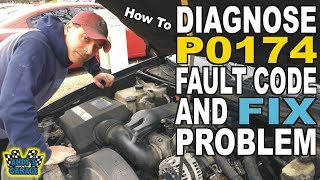
This code on a 2016-2018 Altima almost exclusively applies to the 3.5L V6 engine and indicates a lean fuel mixture on Bank 2. The most common causes are vacuum leaks from aged intake manifold gaskets or a dirty Mass Airflow (MAF) sensor. An ECM software update may also be required per Nissan TSB NTB19-030, which addresses this and other related fuel trim codes.
- P0174 on a 2016-2018 Altima is a V6-only problem, indicating a lean condition on the rear cylinder bank.
- Before buying parts, inspect for vacuum leaks (especially intake gaskets) and clean the MAF sensor.
- Check for eligibility for a free or low-cost ECM software update from a Nissan dealer per TSB NTB19-030.
- If P0171 is also present, the cause is likely something that affects the whole engine, like the MAF sensor or fuel pump.
- A smoke test is the most effective way to find hard-to-see vacuum leaks.
What's Unique About the 2016-2018 Nissan ALTIMA
This code is specific to the 3.5L V6 (VQ35DE) engine in the Altima, as four-cylinder engines do not have a "Bank 2". Nissan has issued Technical Service Bulletins (TSBs) for this exact issue on V6 models, indicating that the solution can sometimes be a simple dealer-performed software update for the engine control module (ECM) rather than a part replacement. This makes checking for applicable TSBs a critical first step before beginning repairs, especially TSB NTB19-030 which directly references P0174 for these models.
Diagnostic Flowchart
Tap your situation to follow the diagnostic path that matches what you're seeing on this vehicle.
Symptoms You May Notice
- Check Engine Light is on
- Rough or fluctuating idle.
- Hesitation or stumbling during acceleration.
- Reduced engine power
- Slight decrease in fuel economy.
- Engine running hotter than usual
- A 'hissing' sound from the engine bay, indicating a vacuum leak
- Replacing the oxygen sensor (A/F sensor) without proper diagnosis. While it can be the cause, vacuum leaks and dirty MAF sensors are more common and should be ruled out first using methods like a smoke test or sensor cleaning.
Most Likely Causes
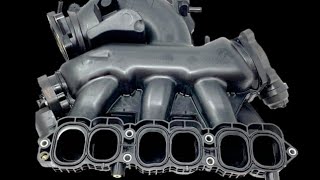
- Vacuum Leak (Intake Manifold Gaskets) 🔴 High Probability The VQ35DE engine's intake manifold gaskets, particularly the upper plenum gasket, can become hard and brittle over time from engine heat cycles, causing unmetered air to leak into the engine. This is a well-documented cause for lean codes on this engine family.
How to confirm: Perform a smoke test by introducing smoke into the intake system and watching for leaks around the intake manifold sealing area. Alternatively, with the engine running, carefully spray short bursts of carburetor cleaner or a propane torch (unlit) around the gasket area; a noticeable change in engine RPM or fuel trims indicates a leak is present.
Typical fix: Replace the upper and lower intake manifold gaskets. The upper gasket is often the primary culprit.
Est. part cost: $30-$80 - Dirty or Faulty Mass Airflow (MAF) Sensor 🟡 Medium Probability → Shop Fuel Injection Air Flow Meter The MAF sensor's delicate wires can become contaminated with dirt, oil from aftermarket air filters, or other debris, causing it to inaccurately measure the air entering the engine. This leads the computer to calculate the wrong amount of fuel. Cleaning is often a successful first step.
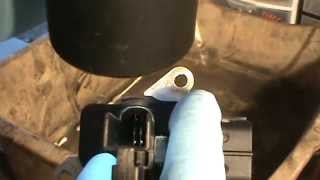
How to confirm: Remove the MAF sensor and inspect the sensing wires for contamination. Cleaning it with a dedicated MAF sensor cleaner is a good first step. If the problem persists, monitor MAF sensor readings (g/s) with a scan tool to see if they are erratic or out of specification at idle and under load. A faulty sensor may not always set a specific MAF code.
Typical fix: Clean the MAF sensor with a specialized cleaner. If cleaning doesn't resolve the issue or the sensor is proven faulty, it must be replaced. It is highly recommended to use an OEM or OEM-supplier (Hitachi) part.
Est. part cost: $10-$20 for cleaner, $100-$250 for a new sensor - Outdated Engine Control Module (ECM) Software 🟡 Medium Probability
How to confirm: A Nissan dealership or a properly equipped independent shop can check the current ECM software part number against the numbers listed in TSB NTB19-030. This bulletin applies to 2016-2018 Altimas with the VQ35 engine.
Typical fix: The ECM needs to be reprogrammed (reflashed) with the updated software provided by Nissan. This must be done by a dealer or qualified shop with a CONSULT-III plus tool. The TSB advises performing standard diagnostics first before reprogramming.
Est. part cost: $0 (parts), $100-$200 for labor/reprogramming - Faulty Air/Fuel Ratio Sensor (Front Oxygen Sensor) ⚪ Low Probability → Shop Oxygen Sensor The A/F sensor is the primary sensor the ECM uses to determine the air-fuel mixture for a given bank. A lazy or failing sensor can send incorrect data, causing the lean code. It should be tested before replacement.
How to confirm: Use a scan tool to graph the sensor's voltage and response time. A healthy sensor should fluctuate rapidly. TSB NTB19-022 provides a specific diagnostic procedure to test the A/F sensor before replacing it, which involves checking for other codes after clearing the self-learning values.
Typical fix: Replace the Bank 2, Sensor 1 Air/Fuel Ratio Sensor.
Est. part cost: $80-$180
Rare But Worth Checking
- Low Fuel Pressure: A weak fuel pump or clogged fuel filter can starve the engine of fuel, causing a lean condition across both banks (P0171 and P0174). Check fuel pressure at the fuel rail to confirm it meets manufacturer specifications.
- Cracked Air Intake Boot: → Shop Engine Air Intake Resonator A crack or tear in the flexible intake tube between the MAF sensor and the throttle body can allow unmetered air to enter the system. This is a type of vacuum leak that is easy to visually inspect.
- Exhaust Leak: An exhaust leak upstream of or near the Bank 2 A/F ratio sensor can draw outside air into the exhaust stream. This causes the sensor to detect excess oxygen and incorrectly report a lean condition to the ECM.
- Faulty PCV Valve or Hose: → Shop PCV Valve A stuck-open PCV valve or a cracked PCV hose can create a significant vacuum leak, leading to lean codes. This is a relatively inexpensive part to check and replace.
Diagnosis Steps
- Check for any other stored DTCs. If P0171 is also present, focus on causes that affect both banks (MAF sensor, fuel pressure, large vacuum leak before the intake manifold).
- Visually inspect the entire air intake system from the air filter box to the throttle body for cracks, loose clamps, or disconnected hoses.
- With the engine running, listen for hissing sounds that could indicate a vacuum leak around the intake manifold or vacuum lines.
- Perform a smoke test to definitively identify any vacuum leaks. Pay close attention to the intake manifold gaskets, PCV hoses, and the air intake boot.
- If no leaks are found, remove and clean the Mass Airflow (MAF) sensor using a dedicated MAF sensor cleaner. Let it dry completely for at least 30 minutes before reinstalling. Do not touch the sensor wires.
- Use a scan tool to monitor long-term and short-term fuel trims for Bank 2 (LTFT B2, STFT B2). Consistently high positive numbers (e.g., >15-20%) confirm the lean condition the ECM is trying to correct.
- Check with a Nissan dealer if TSB NTB19-030 applies to your vehicle's VIN and if an ECM reprogram has been performed.
- If all else fails, test the Bank 2 Air/Fuel Ratio sensor's performance using a scan tool to ensure it is responding correctly and its voltage is fluctuating as expected. Follow the diagnostic procedure in TSB NTB19-022 if applicable.
Parts You'll Likely Need
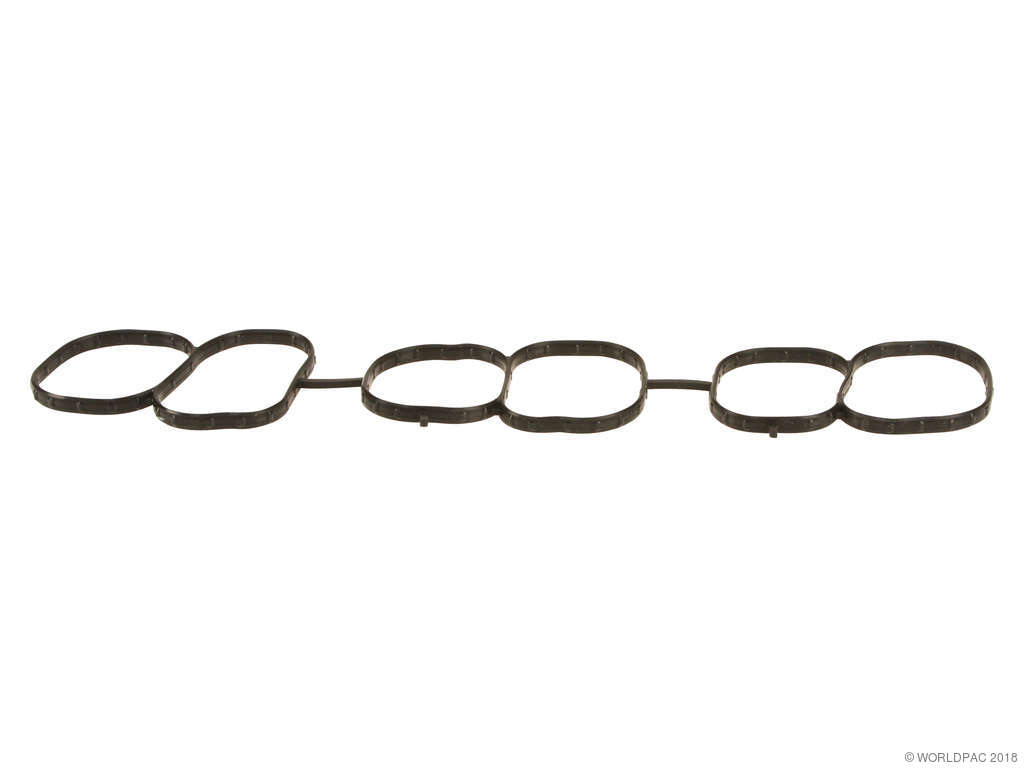
- Intake Manifold Gasket Set (Plenum Gasket)
(OEM #14032-JA10A)— This upper intake gasket is a very common failure point on the VQ35DE engine, leading to vacuum leaks that cause lean codes. It fits a wide range of Nissan vehicles with this engine.
Trusted brands: Nissan OE, Fel-Pro, Mahle
OEM price range: $25-$40
Aftermarket price range: $15-$30 - Mass Airflow (MAF) Sensor
(OEM #22680-7S000)— A dirty or failed MAF sensor is a frequent cause of incorrect air-fuel mixture calculations, leading to P0174. This part number is widely used across many Nissan models and may be superseded by 22680-7S00A or 22680-7S00B.
Trusted brands: Hitachi (OEM supplier), Denso, Bosch
OEM price range: $200-$250
Aftermarket price range: $80-$150 - Air/Fuel Ratio Sensor (Bank 2, Sensor 1)
(OEM #22693-9HP0A)— If other causes are ruled out, a failing A/F sensor can provide false lean readings to the computer. Bank 2 Sensor 1 is the upstream sensor on the firewall side.
Trusted brands: Denso (OEM Supplier), Bosch, NGK/NTK
OEM price range: $150-$250
Aftermarket price range: $80-$160
Related Codes That Often Appear With This One
- P0171 — This is the identical 'System Too Lean' code but for Bank 1. When both P0171 and P0174 appear together, it strongly suggests a problem affecting the entire engine, such as a dirty MAF sensor, a major vacuum leak before the intake splits (e.g., intake boot), or low fuel pressure.
- P2099 — This code means 'Post Catalyst Fuel Trim System Too Lean Bank 2'. It often appears with P0174 and is mentioned in Nissan TSB NTB19-030, indicating the lean condition is also being detected by the downstream oxygen sensor.
Technical Service Bulletins (TSBs) & Recalls
- NTB19-030: MIL ON WITH DTC P0171, P0174, P2097, AND/OR P2099
- NTB19-022: P0171 AND P0174 SERVICE INFORMATION
Platform-Specific Known Issues
- Nissan Technical Service Bulletin NTB19-030 specifically addresses P0174 (and P0171, P2097, P2099) on 2016-2018 Altimas with the VQ35 engine, indicating a potential need for an ECM software update.
- Nissan TSB NTB19-022 revises the diagnostic procedure for P0171 and P0174, instructing technicians to use a specific test to confirm A/F sensor functionality before replacement.
Mechanic-Grade Diagnostic Values
- Mass Airflow (MAF) Sensor Reading at Idle — expected: 2 to 7 grams/second (g/s) for a typical engine. A 3.5L V6 would be in the upper end of this range, approximately 3.5-5 g/s.. Failure: Readings that are significantly lower (suggesting a vacuum leak downstream) or erratic/stuck at a certain value.
- Mass Airflow (MAF) Sensor Reading at 2500 RPM — expected: 15 to 25 grams/second (g/s).. Failure: A reading that doesn't rise linearly with RPM, rises too slowly, or rises too quickly can indicate a faulty sensor or other air intake issues.
- Fuel Pressure — expected: Typically between 45 and 65 PSI for many port-injected vehicles.. Failure: Pressure that is significantly lower than the manufacturer's specification for the VQ35DE engine.
- Battery Voltage Pre-Check — expected: 11 volts or more at idle.. Failure: Low battery voltage can affect sensor readings and diagnostic results.
Scan Tool Commands That Help
- Nissan CONSULT-II / CONSULT-III plus: SELF-LEARNING CONT (Clear) — After performing a repair for a lean condition, such as replacing an intake gasket or MAF sensor. This function clears the long-term fuel trim adaptations and forces the ECM to relearn the fuel strategy immediately, preventing the code from returning while the system slowly adapts on its own.
Wiring & Ground Locations
- Engine Harness Ground — On the VQ35DE family, a key ground strap runs from the engine timing cover area to the chassis, often located under or behind the power steering reservoir.. A poor or corroded engine ground can cause a host of electrical issues, including incorrect readings from sensors like the MAF and A/F sensors, which rely on a stable ground reference. While not a primary cause, it should be checked if other electrical gremlins are present or if sensor readings are erratic.
Real Owner Repair Stories
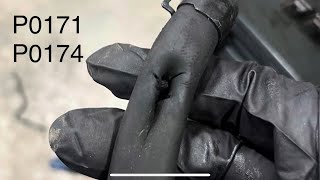
- Reddit user 'unknown_baby_daddy' on r/MechanicAdvice (2007 Nissan Altima 3.5L SE (L32 generation, but same VQ35DE engine family and common issue)) — P0171 and P0174 codes with a high idle around 1000 RPM, occurring suddenly after an oil change.
❌ Tried (didn't work) Initial thought was a bad MAF or other vacuum hoses.
✅ What actually fixed it The main air intake hose (bellows) between the air box and throttle body had a large gash/tear. A temporary fix with electrical tape resolved the high idle and power response issues, confirming a major vacuum leak was the cause.
OEM Part Supersession History
22680-7S000→22680-7S00A, 22680-7S00B— Part revision and update by the manufacturer.
Heads up: The newer part numbers (ending in A or B) are generally backward compatible and replace the original. However, it is always critical to verify the correct part for your specific vehicle's VIN.
Model Year Variations Within This Range
- 2016: The 2016 model year marked a significant mid-cycle refresh for the L33 Altima, introducing revised styling including the 'V-motion' grille, new headlights, and taillights.
- 2018: For the 2018 model year, Nissan made Automated Emergency Braking and Forward Collision Warning standard on all trims. The top 3.5 SL trim gained standard adaptive cruise control and navigation.
Helpful Videos

We Have This Part in Stock




The information in this article is provided for general reference and educational purposes only. Vehicle specifications, procedures, and part compatibility can vary by production date, trim level, and region. Always consult your vehicle's factory service manual and verify part numbers before purchasing or performing repairs. Safety-critical components such as airbags, seat belts, and braking systems should be installed by a qualified professional.
- Nissan ALTIMA:
- 🧭 Diagnostic Flowchart
- 🎬 Helpful Videos
- 🛍️ Shop This Part
- What's Unique About the 2016-2018 Nissan ALTIMA
- Symptoms You May Notice
- Most Likely Causes
- Rare But Worth Checking
- Diagnosis Steps
- Parts You'll Likely Need
- Related Codes That Often Appear With This One
- Technical Service Bulletins (TSBs) & Recalls
- Platform-Specific Known Issues
- Mechanic-Grade Diagnostic Values
- Scan Tool Commands That Help
- Wiring & Ground Locations
- Real Owner Repair Stories
- OEM Part Supersession History
- Model Year Variations Within This Range
- 🎟️ Get 5% Off