

P0174 on 2017-2019 Nissan Armada: Causes for System Too Lean Bank 2
If P0174 appears alone on a 2017-2019 Armada, the most likely cause is an ECM software issue, per Nissan TSBs NTB20-009 and NTB20-009A. This requires a dealer visit for an ECM reprogram. If other codes are present, suspect a vacuum leak or a faulty Mass Airflow (MAF) sensor.
- If the Check Engine Light is on with only code P0174, the most likely fix is a software update for the engine computer from a Nissan dealer.
- If P0174 is accompanied by P0171 (lean on both banks), the problem is likely a vacuum leak or a bad MAF sensor.
- Check the plastic air intake tube between the air filter box and the engine for cracks; this is a common failure point.
- Do not replace the oxygen (A/F) sensor unless specific diagnostic tests have proven it has failed.
What's Unique About the 2017-2019 Nissan ARMADA
For this specific generation of Nissan Armada, the P0174 code has a very well-documented, non-mechanical cause. Nissan issued multiple Technical Service Bulletins (TSBs), most notably NTB20-009A, indicating that if the P0174 code appears by itself, the root cause is often a software glitch in the Engine Control Module (ECM). This is a crucial distinction from the typical causes like vacuum leaks or sensor failures that affect most other vehicles.
Diagnostic Flowchart
Tap your situation to follow the diagnostic path that matches what you're seeing on this vehicle.
Symptoms You May Notice
- Check Engine Light is on
- Rough or unstable idle
- Engine hesitation or stumbling during acceleration
- Reduced fuel economy
- Hissing or whistling noise from the engine bay
- Replacing the Bank 2 Air/Fuel Ratio (O2) sensor without proper diagnosis. The TSBs from Nissan suggest this is often not the root cause, especially if P0174 is the only code present.
Most Likely Causes
- ECM Software Requires Update 🔴 High Probability Nissan identified a software logic issue and issued TSBs NTB20-009 and NTB20-009A to address it. This is the primary documented cause when P0174 is the *only* code stored.
How to confirm: Confirm that only DTC P0174 is stored in the ECM. A Nissan dealer or a shop with advanced scan tools can check the current ECM part number against the list in the TSB.
Typical fix: Reprogramming the ECM with updated software. This must be performed by a Nissan dealership or a qualified repair shop with the appropriate CONSULT-III plus diagnostic tool.
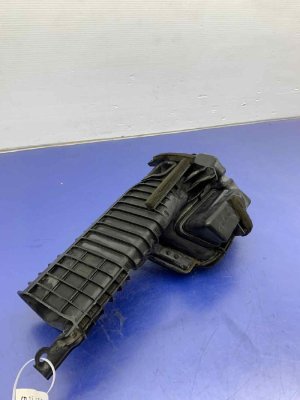
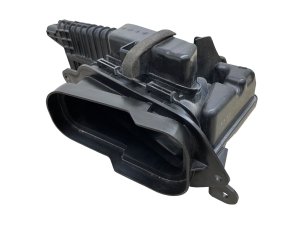
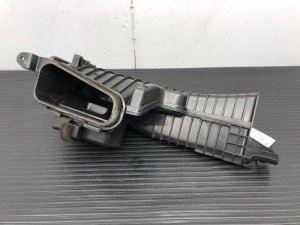
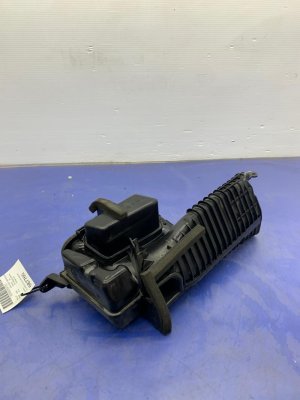
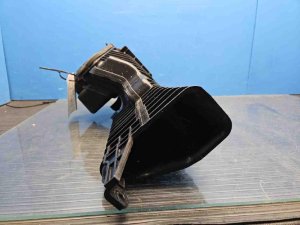
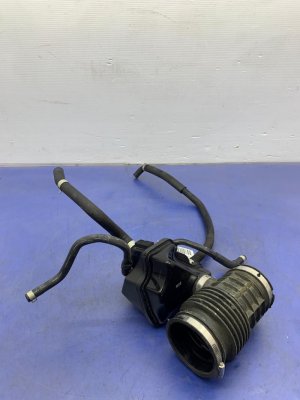
Est. part cost: $0 - Cracked or Leaking Air Intake Duct/Resonator 🟡 Medium Probability → Shop Engine Air Intake Resonator The plastic and rubber components of the air intake system, located after the MAF sensor, can become brittle from heat and age, leading to cracks.
How to confirm: Visually inspect the entire air intake boot and resonator assembly for cracks. Listen for a distinct hissing sound at idle. A smoke test is the most definitive way to find a leak.
Typical fix: Replace the cracked air intake duct assembly.
Est. part cost: $40-$75 (Used), $150-$250 (New OEM) - Dirty or Faulty Mass Airflow (MAF) Sensor 🟡 Medium Probability → Shop Fuel Injection Air Flow Meter A dirty MAF sensor is a common cause of lean codes on many Nissan vehicles. It under-reports the amount of air entering the engine, causing the ECM to command too little fuel.
How to confirm: Remove and inspect the sensor. If the sensing wires are dirty, clean them carefully with a dedicated MAF sensor cleaner. Do not touch the wires. If cleaning doesn't resolve the issue, the sensor may need replacement.
Typical fix: Clean the MAF sensor with a specialized cleaner. If the problem persists, replace the MAF sensor.
Est. part cost: $10-$15 (Cleaner), $150-$300 (Sensor) - Intake Manifold Gasket Leak ⚪ Low Probability → Shop Engine Intake Manifold The intake manifold gaskets can fail over time, creating a vacuum leak that allows unmetered air into the engine, often triggering lean codes for both banks (P0171 and P0174).
How to confirm: Perform a smoke test. Smoke will be visibly escaping from the area where the intake manifold meets the cylinder head if a leak is present.
Typical fix: Replace the intake manifold gaskets.
Est. part cost: $50-$100
Rare But Worth Checking
- Failing Bank 2 Air/Fuel Ratio Sensor (Sensor 1): → Shop Oxygen Sensor While a possibility, Nissan's TSB NTB19-022 outlines a specific diagnostic procedure to confirm if the A/F sensor is truly at fault before replacing it. It's often misdiagnosed.
- Weak Fuel Pump or Clogged Fuel Injector: → Shop Fuel Injector A fuel delivery issue can cause a lean condition, but it would typically affect both engine banks or present with other symptoms like difficulty starting or poor performance under load.
Diagnosis Steps
- Use an OBD-II scanner to check for stored codes. Confirm if P0174 is the only code present.
- If P0174 is the ONLY code: The most probable cause is the ECM software issue. Consult Nissan TSB NTB20-009A. This step will likely require a trip to a dealer for confirmation and reprogramming.
- If other codes are present, or to check other possibilities: Start with a visual inspection. Look for obvious cracks in the air intake hose between the MAF sensor and the throttle body. Listen for hissing sounds at idle.
- Inspect and clean the Mass Airflow (MAF) sensor using a dedicated MAF sensor cleaner. Allow it to dry completely before reinstalling.
- If a leak is suspected but not visible, perform a smoke test to definitively locate any vacuum leaks from gaskets or hoses.
- Check fuel trims with a capable scan tool. Long-term fuel trims on Bank 2 approaching +20% or higher confirm the lean condition.
- As a final step, test the Bank 2, Sensor 1 (upstream Air/Fuel ratio) sensor's response. Follow the diagnostic procedure in TSB NTB19-022 to avoid unnecessary replacement. This involves a specific drive cycle to check if secondary codes like P2098 appear.
Parts You'll Likely Need
- Mass Airflow (MAF) Sensor — A dirty or failing MAF sensor is a common cause of incorrect air-fuel mixture calculations on Nissan vehicles.
Trusted brands: Hitachi, Denso, Bosch
OEM price range: $200-$300
Aftermarket price range: $75-$150 - Engine Air Intake Hose / Duct — The plastic duct can crack from age and heat, creating a vacuum leak after the MAF sensor.
Trusted brands: Nissan OE
OEM price range: $150-$250
Aftermarket price range: $50-$100 - Air/Fuel Ratio Sensor (Bank 2, Sensor 1) — If the sensor itself fails, it can send false lean signals to the ECM. It should only be replaced after proper diagnosis confirms it is faulty.
Trusted brands: Denso, Bosch, NGK/NTK
OEM price range: $180-$250
Aftermarket price range: $80-$150
Related Codes That Often Appear With This One
- P0171 — System Too Lean (Bank 1). If both P0171 and P0174 are present, it strongly suggests a problem affecting the entire engine, such as a faulty MAF sensor or a major vacuum leak near the throttle body, rather than a Bank 2-specific issue.
Technical Service Bulletins (TSBs) & Recalls
- NTB20-009A: "MIL ON WITH DTC P0174" - Supersedes the previous version and confirms the ECM reprogram fix if P0174 is the only code.
- NTB20-009: "2017-2019 ARMADA; MIL ON WITH DTC P0174" - The original bulletin detailing the action to confirm the ECM part number and reprogram it.
- NTB19-022: "NISSAN; P0171 AND P0174 SERVICE INFORMATION" - Details revised diagnostic procedures for lean codes, advising how to properly test A/F sensors before replacement.
Platform-Specific Known Issues
- A known ECM software issue can cause P0174 to be stored without any actual mechanical fault. Nissan addressed this with TSBs NTB20-009 and NTB20-009A, which call for an ECM reprogram.
Mechanic-Grade Diagnostic Values
- Long-Term Fuel Trim (LTFT) at idle — expected: Close to 0% (+/- 5%). Failure: Sustained values at or approaching +20% to +25% on Bank 2.
- Mass Airflow (MAF) Sensor Reading — expected: Approximately 4 g/s at idle, 13 g/s at 2500 RPM.. Failure: Significantly lower readings, which indicates the sensor is under-reporting airflow and causing a lean condition.
- Air/Fuel Ratio Sensor (Bank 2, Sensor 1) Voltage PID on Scan Tool — expected: On Nissan V8s with 6-wire sensors, the scan tool often shows a converted value hovering around 1.5V for a stoichiometric mixture.. Failure: Voltage that is stuck, does not respond to induced rich/lean conditions, or is significantly different from the Bank 1 sensor under similar conditions.
- Air/Fuel Ratio Sensor Heater Resistance — expected: 2 to 5 Ohms at room temperature (approx. 77°F).. Failure: An open circuit (infinite resistance) or a reading far outside the specified range. The reading will be higher when the sensor is cold.
Hidden / Shadow Codes Worth Checking
- P2098 or P2099: Post Catalyst Fuel Trim System Too Lean (P2098 is Bank 2). While not truly 'hidden', Nissan TSB NTB19-022 instructs technicians to perform a specific drive cycle and then check for these codes. (see via After clearing self-learn values and performing a specific 20-minute drive cycle, scan for codes again. The presence of P2098 confirms a faulty A/F sensor, while its absence suggests the sensor is good and the issue lies elsewhere.)
Scan Tool Commands That Help
- Nissan CONSULT-III plus: SELF-LEARNING CONT > CLEAR — This must be performed at the beginning of diagnosis for P0171/P0174, per TSB NTB19-022. It resets the engine's long-term fuel adaptations, allowing the technician to see the immediate effect of the raw fault condition on short-term fuel trims.
- Nissan CONSULT-III plus or capable scan tool: Idle Air Volume Learning — This procedure is required after replacing the ECM or electronic throttle body, or after clearing memory. It teaches the ECM the correct throttle plate position for a stable idle. An incorrect idle air volume can contribute to lean conditions.
- Nissan CONSULT-III plus: ECM Reprogramming — This is the specific fix for a 2017-2019 Armada that has DTC P0174 stored by itself, with no other codes present, as detailed in TSB NTB20-009A.
Wiring & Ground Locations
- G01 (Example) — Generic Nissan schematics show engine compartment grounds, such as G01, located in the left fender area.. A poor ground for the ECM or critical engine sensors (like the MAF or A/F sensors) can cause incorrect readings, leading to fuel trim issues. Verifying the integrity of main engine and chassis grounds is a crucial step in diagnosing elusive electronic faults.
- A/F Sensor Connector — On the exhaust manifold for Bank 2 (driver's side), before the catalytic converter.. This is the primary connector for testing the A/F sensor's heater resistance and checking for power/ground signals from the ECM. Corrosion or damage here can mimic a failed sensor.
Real Owner Repair Stories
- BobIsTheOilGuy forum user (Nissan (model not specified, but V-engine with P0171/P0174)) — Check Engine Light with lean codes P0171 and P0174.
❌ Tried (didn't work) Initial visual inspection.
✅ What actually fixed it The user found a cracked three-way vacuum coupling/hose. Although it appeared to only serve one bank, a lower hose from the same fitting fed the other bank, causing a lean condition on both. Replacing the small plastic/rubber fitting resolved the codes.
"I Checked Everything" — The Actual Cause
- The most common scenario for this vehicle is a clean smoke test when only P0174 is present. Technicians may spend hours looking for a vacuum leak that doesn't exist. The actual cause, as documented in Nissan TSB NTB20-009A, is an ECM software logic error that requires reprogramming, not a physical repair.
Model Year Variations Within This Range
- 2017-2019: The ECM software issue addressed by TSB NTB20-009 affects different ECM part numbers for each model year. For example, affected 2017 units have part numbers starting with 5ZTxx or 5ZWxx, while 2018 units start with 6GYxx, and 2019 units start with 6JDxx. A dealer must cross-reference the specific part number to confirm if the TSB applies.
Helpful Videos
![How to Fix P0174 Engine Code in 2 Minutes [2 DIY Methods / Only $8.99]](https://img.youtube.com/vi/Mc4ajz3DM7s/mqdefault.jpg)
We Have This Part in Stock

The information in this article is provided for general reference and educational purposes only. Vehicle specifications, procedures, and part compatibility can vary by production date, trim level, and region. Always consult your vehicle's factory service manual and verify part numbers before purchasing or performing repairs. Safety-critical components such as airbags, seat belts, and braking systems should be installed by a qualified professional.
- Nissan ARMADA:
- 🧭 Diagnostic Flowchart
- 🎬 Helpful Videos
- 🛍️ Shop This Part
- What's Unique About the 2017-2019 Nissan ARMADA
- Symptoms You May Notice
- Most Likely Causes
- Rare But Worth Checking
- Diagnosis Steps
- Parts You'll Likely Need
- Related Codes That Often Appear With This One
- Technical Service Bulletins (TSBs) & Recalls
- Platform-Specific Known Issues
- Mechanic-Grade Diagnostic Values
- Hidden / Shadow Codes Worth Checking
- Scan Tool Commands That Help
- Wiring & Ground Locations
- Real Owner Repair Stories
- "I Checked Everything" — The Actual Cause
- Model Year Variations Within This Range
- 🎟️ Get 5% Off