

P0174 on 2016-2019 Nissan Murano: Lean Condition Causes and Fixes
P0174 on a 2016-2019 Nissan Murano usually means there's a vacuum leak from a cracked intake hose or failed intake manifold gasket. A dirty or faulty Mass Airflow (MAF) sensor is the next most likely cause. A Reddit user with a 2016 Murano experienced this, finding large tears in the intake hose which, after replacement, fixed the drivability issues but the lean codes (P0171 & P0174) intermittently returned, suggesting other underlying vacuum leaks. Expect to pay $100-$400 for a smoke test and r
- P0174 means Bank 2 (front side of the engine) is running lean (too much air).
- The most likely cause on a 2016-2019 Murano is a vacuum leak from a cracked air intake hose or a bad intake manifold gasket.
- Before replacing any parts, especially expensive sensors, perform a thorough inspection for vacuum leaks. A smoke test is the most reliable method.
- Cleaning the Mass Airflow (MAF) sensor with a dedicated cleaner is a cheap and easy diagnostic step.
- If both P0171 and P0174 are present, the problem is almost certainly a vacuum leak or MAF sensor issue affecting the whole engine.
What's Unique About the 2016-2019 Nissan MURANO
The 3.5L V6 engine (VQ35DE) used in the 2016-2019 Murano is a workhorse for Nissan, also found in models like the Altima, Maxima, and Pathfinder. While generally reliable, a very common issue leading to lean codes like P0174 is unmetered air entering the engine after the Mass Airflow (MAF) sensor. This is often due to cracks in the flexible air intake duct, which can become brittle from engine heat and movement. Intake manifold gaskets can also fail, creating vacuum leaks. Nissan issued TSB NTB19-022, which revises the diagnostic procedure. Instead of immediately suspecting the A/F sensor, the bulletin advises technicians to clear self-learning values, run the engine under specific conditions for 20 minutes, and check for new post-catalyst lean codes (like P2097/P2099) to determine if the A/F sensor is the true cause.
Diagnostic Flowchart
Tap your situation to follow the diagnostic path that matches what you're seeing on this vehicle.
Symptoms You May Notice
- Check Engine Light is on
- Rough or high idle
- Hesitation or stumbling during acceleration
- Reduced fuel economy
- Engine misfires, sometimes making the vehicle run rough
- Engine stalling, especially when coming to a stop or when the engine is hot
- Replacing the oxygen sensor without testing it first. Often, the sensor is correctly reporting a lean condition caused by a vacuum leak or MAF issue, and is not the root cause itself.
- Replacing the MAF sensor without first checking for vacuum leaks, especially the intake air duct, which is a more common failure point.
Most Likely Causes
- Vacuum Leak (Cracked Intake Air Duct) 🔴 High Probability The flexible rubber air intake boot (duct) between the MAF sensor and the throttle body is a well-documented failure point. The accordion-like ribs of the hose crack from age, heat, and engine vibration, allowing unmetered air to enter. This is a very common issue across many Nissan models with the VQ35DE engine.
How to confirm: Visually inspect the air intake hose, pulling apart the flexible ribs to look for hidden cracks. A professional smoke test is the most effective method for finding this and other, less obvious leaks. Carefully spraying brake cleaner around suspected areas while the engine is running and listening for a change in idle RPM can also pinpoint a leak.
Typical fix: Replace the cracked air duct hose. 🎬 Watch: This video shows how to fix P0171 and P0174 codes. This is a straightforward DIY job for many owners.
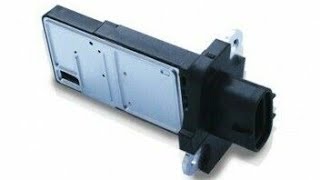
Est. part cost: $40-$120 - Dirty or Faulty Mass Airflow (MAF) Sensor 🟡 Medium Probability → Shop Fuel Injection Air Flow Meter The MAF sensor can become contaminated with dirt, oil, or debris, especially if an aftermarket (oiled) air filter is used or if the stock filter is ill-fitting. This causes it to under-report the amount of air entering the engine, leading the ECM to command less fuel and create a lean condition. In some cases, the wiring or connector to the MAF sensor can become faulty, causing an intermittent signal loss.
How to confirm: Unplug the MAF sensor with the engine off, then start the engine. If the drivability problem improves, the sensor is likely faulty. Monitor MAF sensor readings on a scan tool; at idle on a warm 3.5L VQ35DE, readings should be around 3.5-4.5 g/s and increase smoothly with RPM. A diagnostic video for a 2010 Murano with P0171/P0174 traced the issue to a bad wire in the MAF sensor harness, which was found by wiggling the connector and watching the live data on a scan tool.
Typical fix: First, try cleaning the sensor with a dedicated MAF sensor cleaner spray; 🎬 See how to safely clean your Mass Air Flow sensor. do not touch the delicate wires. If cleaning doesn't work or if the wiring is faulty, the sensor or connector pigtail must be replaced. Using an OEM or Hitachi sensor is highly recommended, as aftermarket sensors can cause issues.
Est. part cost: $10-$20 (cleaner), $100-$240 (new sensor) - Vacuum Leak (Intake Manifold Gaskets) 🟡 Medium Probability The upper and lower intake manifold gaskets can degrade over time due to heat cycles, becoming hard and brittle, which allows unmetered air to leak into the intake ports. This is a common issue on higher-mileage VQ engines.
How to confirm: A smoke test is the most reliable way to confirm a leaking intake manifold gasket. The 'brake cleaner' method can also work but is less precise and can be a fire hazard if not done carefully. The leak is often accompanied by both P0171 and P0174 codes.
Typical fix: Replace the upper and lower intake manifold gaskets. This is a more involved repair, and it's highly recommended to replace the spark plugs at the same time, as accessing the rear bank requires removing the manifold.
Est. part cost: $25-$80 - Faulty Air/Fuel Ratio Sensor (Bank 2, Sensor 1) ⚪ Low Probability → Shop Oxygen Sensor This sensor, also known as the upstream oxygen sensor, measures the oxygen content in the exhaust. A failing or slow-to-respond sensor can send incorrect lean readings to the ECM. However, it's more common for the sensor to be correctly reporting a lean condition caused by something else.
How to confirm: Use a scan tool to graph the sensor's voltage. A healthy sensor should show rapidly fluctuating voltage. A lazy or flat-lined sensor is faulty. TSB NTB19-022 provides a specific procedure to confirm if the A/F sensor is truly the cause by checking for related codes after a drive cycle.
Typical fix: Replace the Bank 2, Sensor 1 Air/Fuel Ratio Sensor. Bank 2 is on the front of the engine, near the radiator, making it more accessible than Bank 1's sensor.
Est. part cost: $100-$250 - Low Fuel Pressure ⚪ Low Probability
How to confirm: Connect a fuel pressure gauge to the fuel system and check that the pressure is within the manufacturer's specifications at idle and under load. Symptoms of a failing fuel pump include engine cranking but not starting, sudden stalling, and hesitation.
Typical fix: If pressure is low, diagnose the cause, which could be a weak fuel pump, a clogged fuel filter (often part of the pump assembly), or a faulty fuel pressure regulator.
Est. part cost: $200-$600 (fuel pump assembly)
Rare But Worth Checking
- Exhaust Leak: A crack or leak in the exhaust manifold or pipe before the first oxygen sensor on Bank 2 can allow outside air to be drawn in. This will cause the sensor to detect extra oxygen and report a false lean condition.
- Clogged Fuel Injectors: → Shop Fuel Injector While less common to affect an entire bank at once, multiple partially clogged injectors on Bank 2 can lead to a lean code. This is more likely on higher-mileage vehicles and can sometimes be resolved with a quality fuel system cleaner additive.
- PCV System Leak: A cracked PCV valve or a leaking PCV hose can create a vacuum leak that is difficult to detect. A user on a forum for a related Nissan vehicle found a cracked hose for their oil catch can, connected to the PCV system, was the source of their P0171/P0174 codes. The PCV valve itself can get stuck open or clogged, disrupting the crankcase ventilation and causing lean issues.
Diagnosis Steps
- Read all fault codes with an OBD-II scanner. Note if P0171 is also present, as this points to a shared engine issue.
- Check the freeze frame data to see the engine conditions (RPM, load, temperature) when the code was set.
- Thoroughly inspect the entire air intake system, especially the flexible intake duct between the air filter box and throttle body. Bend the hose to reveal hidden cracks.
- Inspect all accessible vacuum and PCV hoses for cracks or poor connections.
- If no obvious leaks are found, perform a smoke test to find hidden vacuum leaks in the intake manifold, gaskets, or hoses. This is the most definitive test for vacuum leaks.
- If no vacuum leaks are found, use a scan tool to monitor MAF sensor readings in grams/second (g/s). A VQ35DE should read approximately 3.5-4.5 g/s at warm idle. Wiggle the MAF sensor connector and harness to check for intermittent wiring faults while watching the live data.
- Clean the Mass Airflow (MAF) sensor using dedicated MAF sensor cleaner. Re-evaluate performance.
- Use a scan tool to monitor short-term (STFT) and long-term (LTFT) fuel trims for Bank 2. Consistently high positive numbers (e.g., adding up to >20-25%) confirm a lean condition that the ECM is trying to correct.
- Test the fuel pressure to rule out a weak fuel pump or clogged filter.
- Graph the Bank 2, Sensor 1 (A/F sensor) voltage to check for proper operation. If it's slow, stuck, or biased lean, it may be faulty, but only after ruling out all other causes.
Parts You'll Likely Need
- Intake Air Duct Hose
(OEM #16576-4RA0A (Note: This part number is for the Maxima with the same engine, cross-reference for Murano is needed but likely the same or similar))— This flexible hose is a very common failure point, developing cracks that cause unmetered air leaks.
Trusted brands: Nissan OEM, Dorman (e.g., 696-039 for similar models)
OEM price range: $80-$120
Aftermarket price range: $40-$70 - Mass Airflow (MAF) Sensor
(OEM #22680-3VA0A or 22680-5RB0A (Verify by VIN, multiple may apply))— A dirty or failed MAF sensor is a frequent cause of lean codes on these engines.
Trusted brands: Hitachi (OEM supplier, e.g., MAF0102 or MAF0123), Denso, Bosch
OEM price range: $200-$300
Aftermarket price range: $80-$180 - Air/Fuel Ratio Sensor (Bank 2 Sensor 1)
(OEM #22693-CD700 (Example part number, verify by VIN))— If the sensor itself fails, it can send false lean readings to the computer. Usually replaced after other causes are ruled out.
Trusted brands: Denso, Bosch, NGK/NTK
OEM price range: $180-$250
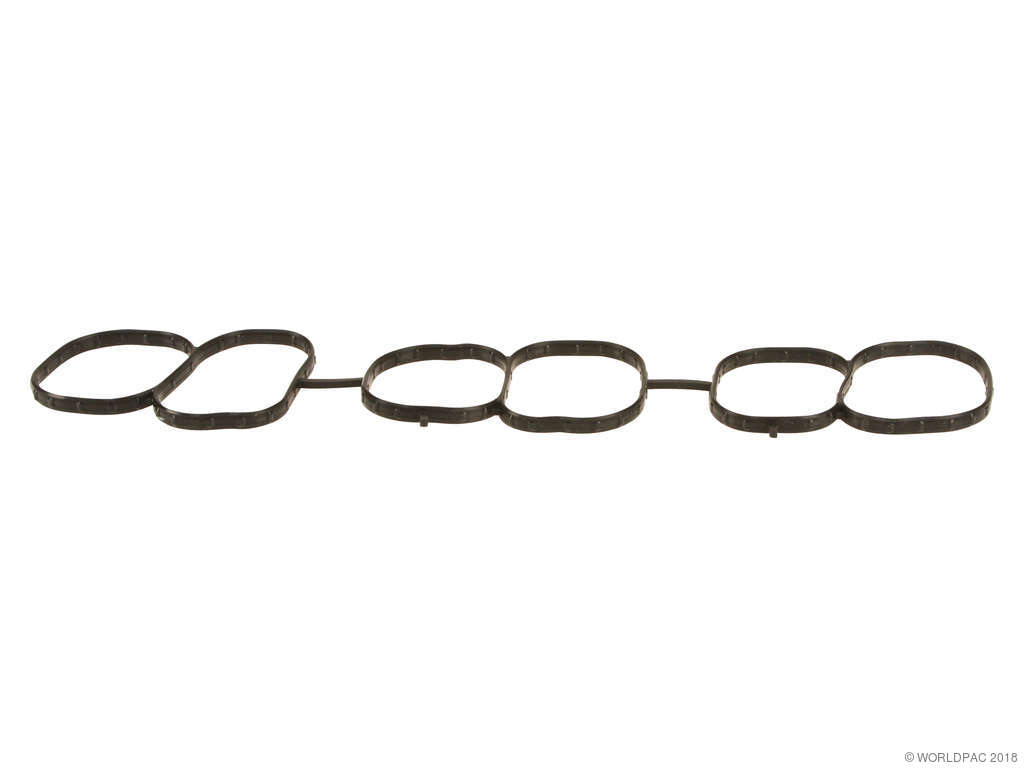
Aftermarket price range: $100-$160 - Intake Manifold Gasket Set
(OEM #14035-8J10A (Lower), 14032-EA200 (Upper) (Example part numbers, verify by VIN))— These gaskets can fail with age and heat, creating a significant vacuum leak affecting one or both banks.
Trusted brands: Fel-Pro, Mahle, Victor Reinz
OEM price range: $50-$80
Aftermarket price range: $25-$50
Related Codes That Often Appear With This One
- P0171 — This is the 'System Too Lean' code for Bank 1. If both P0171 and P0174 are present, it strongly suggests a problem that affects the entire engine, such as a major vacuum leak (intake duct, manifold gasket), a faulty MAF sensor, or low fuel pressure.
- P0300-P0306 — These are misfire codes (P0300 for random misfire, P0301-P0306 for specific cylinders). A lean condition can cause misfires due to an improper air/fuel mixture, which may trigger these codes alongside P0174.
Technical Service Bulletins (TSBs) & Recalls
- NTB19-022: NISSAN; P0171 AND P0174 SERVICE INFORMATION
- NTB19-030: 2016-2018 NISSAN; MIL ON WITH DTC P0171, P0174, P2097, AND/OR P2099
Platform-Specific Known Issues
- The provided TSB NTB19-022 indicates that Nissan has revised the official service information for diagnosing P0171 and P0174. The procedure involves clearing fuel trim learning, running the engine for an extended period (20 minutes at 2500-3000 RPM), and then checking for P2097/P2099 codes. If these codes appear, the A/F sensor is the likely culprit. If not, diagnosis should continue for other causes like vacuum leaks, excluding the A/F sensor.
- TSB NTB19-030, while written for the Altima with the same VQ35 engine, points to potential issues that could be shared with the Murano. It's worth noting that manufacturer-level service updates exist for this family of codes on this engine.
Mechanic-Grade Diagnostic Values
- Mass Airflow (MAF) Sensor Reading at Idle — expected: Approximately 3.5 g/s to 4.5 g/s at warm idle with no loads. Some technicians report a voltage of around 1.4V.. Failure: Readings significantly lower than 3.5 g/s at idle may indicate a vacuum leak or a dirty sensor. Unstable or non-linear readings when increasing RPM can indicate a failing sensor or wiring issue.
- Fuel Pressure — expected: Approximately 51 psi (350 kPa) at idle.. Failure: Pressure that is significantly below specification can indicate a weak fuel pump, clogged fuel filter, or faulty fuel pressure regulator.
- Short-Term and Long-Term Fuel Trims (STFT/LTFT) — expected: As close to 0% as possible, with a normal operating range typically within +/- 10%.. Failure: Sustained positive values for Bank 2 (e.g., STFT + LTFT > 25%) confirm the ECM is compensating for a lean condition by adding excess fuel.
Scan Tool Commands That Help
- Nissan CONSULT-III: A/F SEN LEAN CLR (A/F Sensor Learning Value Clear) — This function, found in 'WORK SUPPORT' mode, should be performed after replacing the A/F ratio sensor (Bank 2, Sensor 1) or the ECM. It clears the old learned compensation values, allowing the system to adapt to the new sensor correctly.
- Nissan CONSULT-III: Idle Air Volume Learn (IAVL) — This procedure is required after ECM reprogramming or after disconnecting/replacing the throttle body or MAF sensor. It helps the ECM relearn the correct idle position and airflow characteristics to prevent a high or unstable idle, which can be a symptom of P0174.
Wiring & Ground Locations
- ECM Location — In the engine room on the left side, near the battery.. Knowing the physical location is essential for performing pinout tests on sensor circuits (MAF, A/F Sensor) to diagnose wiring faults, which can mimic sensor failures.
- MAF Sensor Connector — On the air intake duct, immediately after the air filter housing.. The harness and connector for the MAF sensor are a known point of failure. Wiggling the connector while monitoring live data can reveal intermittent open or short circuits that cause lean codes.
Real Owner Repair Stories
- YouTube channel 'Advanced Level Automotive' (2010 Nissan Murano 3.5L V6) — Intermittent rough running, engine misfires, stalling, and high idle. Codes P0171 and P0174 were present with fuel trims maxing out at +25% under load.
❌ Tried (didn't work) Initial diagnosis pointed towards a vacuum leak or MAF sensor failure based on symptoms. The problem was intermittent and worsened when the vehicle was put into gear.
✅ What actually fixed it The technician found a broken wire within the MAF sensor harness. By wiggling the harness, the sensor signal on the scan tool would drop out and reappear. The final fix was to cut out the bad section of wire and splice in a new piece, which restored a stable MAF signal and resolved the lean condition. - Reddit user 'Buffplantguy' on r/MechanicAdvice (2016 Nissan Murano) — Jumpy, wanting to stall, Check Engine Light with misfire and lean codes (P0171 & P0174).
❌ Tried (didn't work) The owner replaced spark plugs, all filters, and cleaned the MAF sensor. Replacing a badly torn intake hose fixed the immediate drivability issues (stalling/jumping), but the P0171/P0174 codes continued to return intermittently.
✅ What actually fixed it The story is a partial success. The primary cause of severe symptoms was the torn intake hose. The lingering codes suggest a secondary, smaller vacuum leak, with other users recommending a smoke test and checking the PCV valve/hoses and intake plenum gaskets as the next steps.
OEM Part Supersession History
Not specified→22693-9HP0A— This is the current OEM part number for the Air/Fuel Ratio Sensor (Bank 2, Sensor 1) for this vehicle range.
Heads up: This part fits a wide range of Nissan vehicles with V6 engines from 2014-2021, including the Murano, Maxima, and Pathfinder.
Helpful Videos



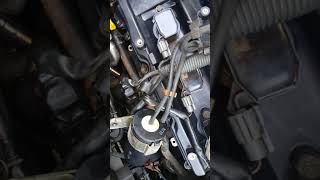
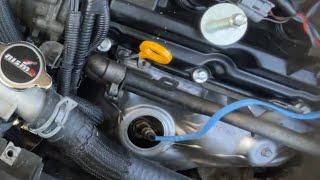
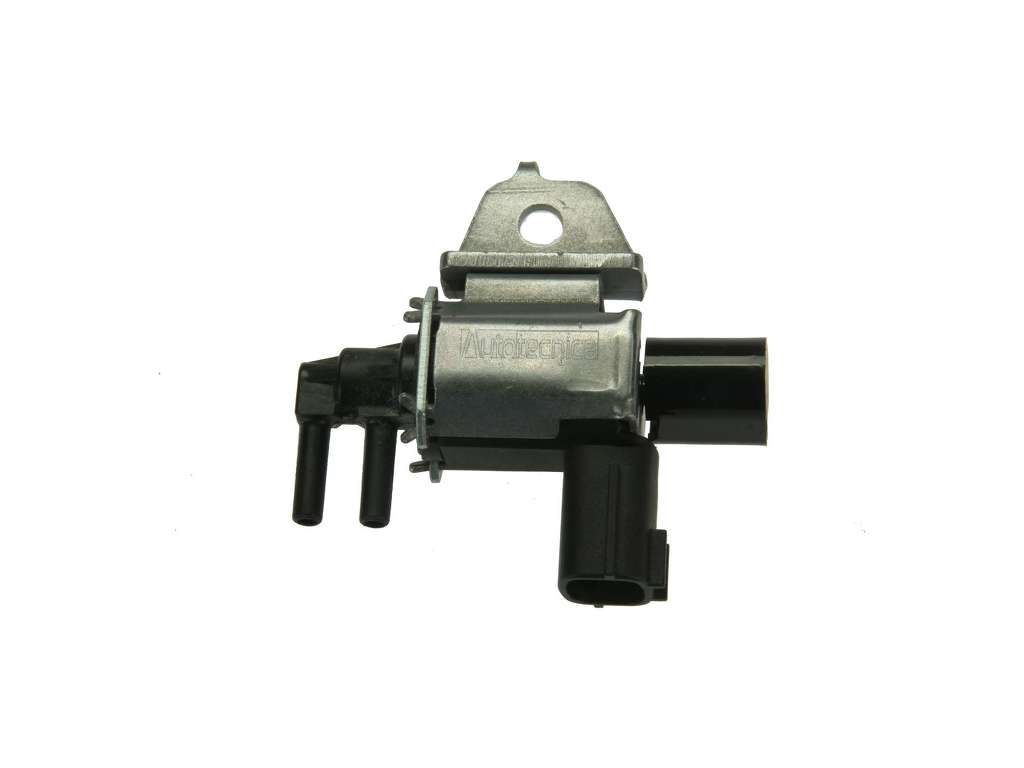
We Have This Part in Stock


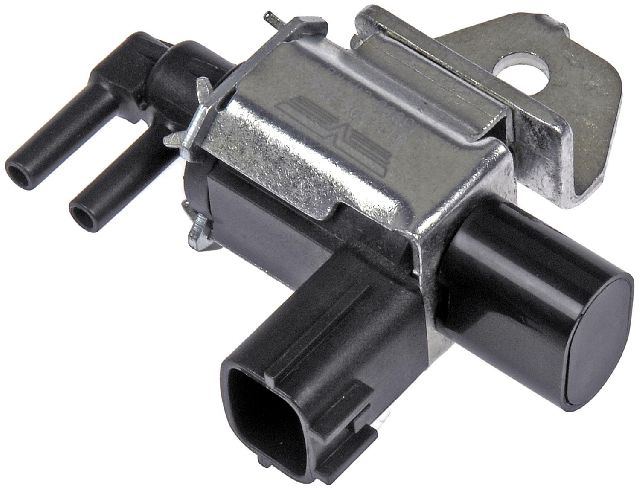


The information in this article is provided for general reference and educational purposes only. Vehicle specifications, procedures, and part compatibility can vary by production date, trim level, and region. Always consult your vehicle's factory service manual and verify part numbers before purchasing or performing repairs. Safety-critical components such as airbags, seat belts, and braking systems should be installed by a qualified professional.
- Nissan MURANO:
- 🧭 Diagnostic Flowchart
- 🎬 Helpful Videos
- 🛍️ Shop This Part
- What's Unique About the 2016-2019 Nissan MURANO
- Symptoms You May Notice
- Most Likely Causes
- Rare But Worth Checking
- Diagnosis Steps
- Parts You'll Likely Need
- Related Codes That Often Appear With This One
- Technical Service Bulletins (TSBs) & Recalls
- Platform-Specific Known Issues
- Mechanic-Grade Diagnostic Values
- Scan Tool Commands That Help
- Wiring & Ground Locations
- Real Owner Repair Stories
- OEM Part Supersession History
- 🎟️ Get 5% Off