

P0174 on 2003-2009 Toyota 4Runner: Causes and Fixes for Lean Condition (Bank 2)
P0174 on a 4th Gen 4Runner almost always points to a dirty Mass Airflow (MAF) sensor or a vacuum leak. Cleaning the MAF sensor with a dedicated cleaner is a very common, cheap, and easy first step that often fixes the problem. If that doesn't work, suspect a cracked vacuum hose (especially the PCV hose) or a bad intake manifold gasket.
- Start by cleaning the Mass Airflow (MAF) sensor with a dedicated cleaner; this is a cheap, easy, and highly effective first step.
- If cleaning the MAF doesn't fix it, your next step is to hunt for a vacuum leak, especially around the intake manifold gaskets and PCV hose.
- Do not replace the Air/Fuel (O2) sensor unless you have definitively proven it is faulty by observing its data on a scan tool.
- If you have both P0174 (Bank 2) and P0171 (Bank 1) codes, the problem is almost certainly something that affects both banks, like the MAF sensor or a major vacuum leak.
What's Unique About the 2003-2009 Toyota 4Runner
The 4th generation 4Runner's 1GR-FE V6 is a very reliable engine, and a P0174 code is rarely a sign of a major internal failure. More often than not, the issue is simple and related to unmetered air entering the engine. 🎬 Watch this full diagnosis and repair for 4th gen 4Runners. The most frequent culprit is a dirty Mass Airflow (MAF) sensor, which can get contaminated over time, especially if an oiled aftermarket air filter is used. The second most common cause is age-related vacuum leaks from brittle plastic hoses or failing intake manifold gaskets. Specifically, the PCV hose is a known weak point that can crack and cause these codes.
Symptoms You May Notice
- Check Engine Light is on
- VSC and TRAC OFF lights may also illuminate (often requires a zero point calibration after the main issue is fixed)
- Rough or unstable idle
- Hesitation or loss of power during acceleration
- Decreased fuel economy
- Engine misfires, which may trigger other codes like P0300, P0302, P0304, P0306
- A hissing sound from the engine bay, indicating a vacuum leak
- Replacing the Air/Fuel Ratio (O2) sensor without first cleaning the MAF sensor and thoroughly checking for vacuum leaks. A bad sensor is less common than a dirty MAF or a vacuum leak. The sensor is often just doing its job by reporting the lean condition.
Most Likely Causes
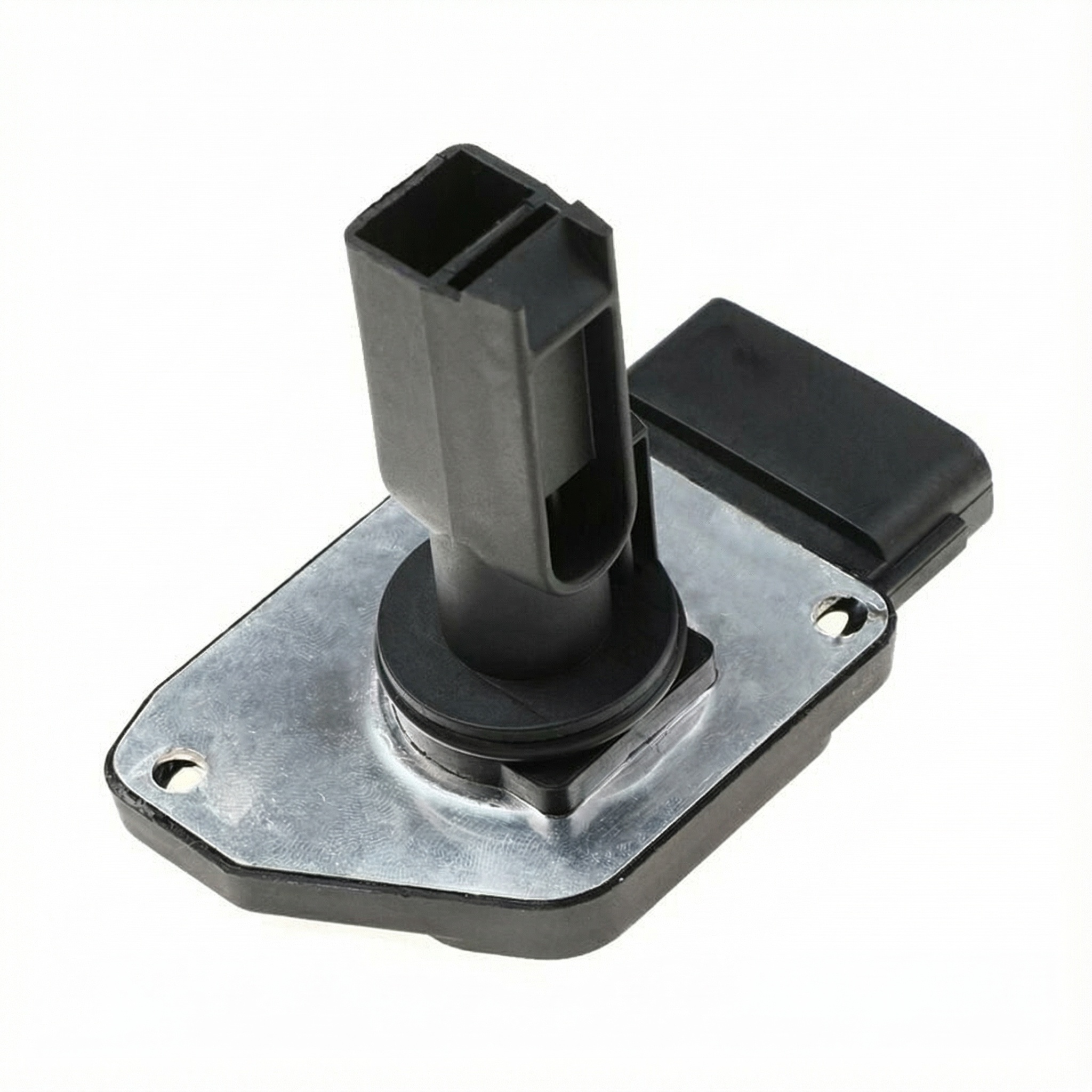
- Dirty Mass Airflow (MAF) Sensor 🔴 High Probability → Shop Fuel Injection Air Flow Meter The MAF sensor wire is sensitive to contamination from dirt, debris, or oil from aftermarket air filters. Over time, this buildup causes it to under-report the amount of air entering the engine, leading the ECM to command an insufficient amount of fuel.
How to confirm: Use an OBD-II scanner to monitor MAF sensor readings (g/s). At a warm idle, it should be around 2.5-4.5 g/s. If readings are abnormally low or don't increase smoothly with RPM, the sensor is likely dirty or faulty. Often, cleaning it is the easiest confirmation.
Typical fix: Remove the sensor (held by two Phillips head screws) and clean it carefully with a dedicated MAF sensor cleaner spray. Do not touch the sensor wires. Allow it to dry completely before reinstalling.
Est. part cost: $10-$15 for cleaner spray - Vacuum Leak 🟡 Medium Probability With age, rubber vacuum hoses and plastic intake components can become brittle and crack. The intake manifold gaskets and the PCV hose are known failure points, causing unmetered air to enter the engine after the MAF sensor.
How to confirm: With the engine running, listen for hissing sounds. You can also spray short bursts of brake cleaner or carb cleaner around vacuum lines and the intake manifold gasket area. If the engine RPM changes or stumbles, you've found the leak. A smoke test is the most definitive and safest method to find hard-to-see leaks.
Typical fix: Replace the cracked hose or leaking gasket. The PCV hose is a simple replacement. Intake manifold gaskets are a more involved repair but common on higher mileage 1GR-FE engines.
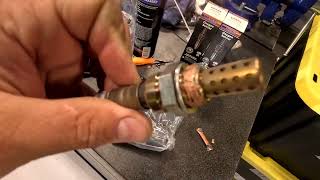
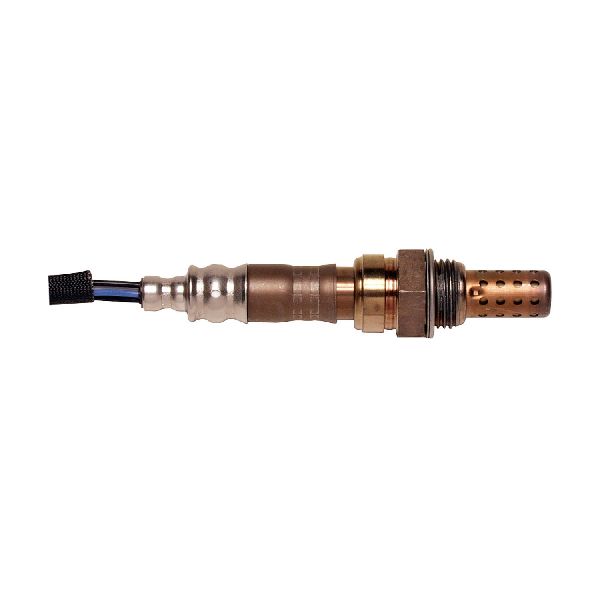
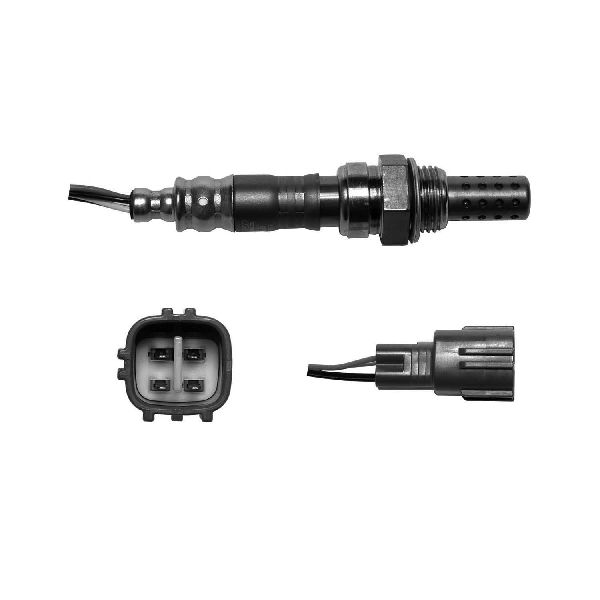
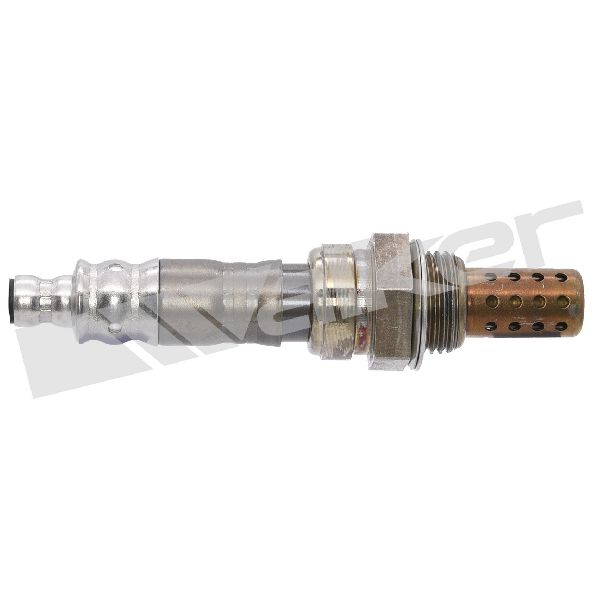
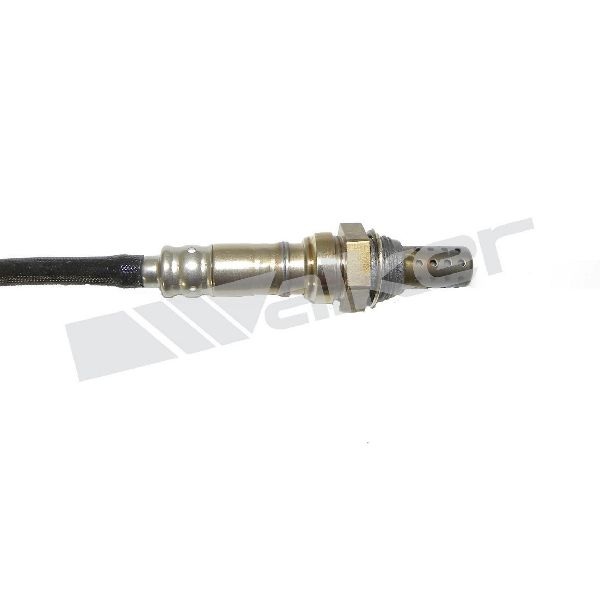
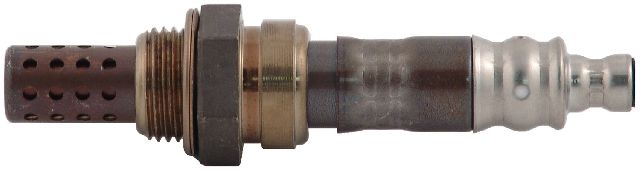
Est. part cost: $10-$50 for hoses, $30-$60 for intake gaskets - Faulty Air/Fuel Ratio Sensor (Upstream O2 Sensor) ⚪ Low Probability → Shop Oxygen Sensor Sensors have a finite lifespan and can fail or become slow to respond, sending incorrect data to the ECM. However, they are often replaced when the real problem is a vacuum leak or MAF issue. The sensor is usually just accurately reporting the lean condition.
How to confirm: Use a scanner to graph the voltage of the Bank 2, Sensor 1 A/F sensor. A healthy sensor will fluctuate rapidly. A lazy or stuck sensor needs replacement. A sensor that is stuck reading low voltage correctly indicates a lean condition, meaning the problem is elsewhere.
Typical fix: Replace the Bank 2, Sensor 1 Air/Fuel Ratio sensor. This is the sensor on the driver's side exhaust manifold, before the catalytic converter.
Est. part cost: $100-$200
Rare But Worth Checking
- Weak Fuel Pump or Clogged Fuel Filter: → Shop Fuel Pump This is less common for a single-bank lean code but can happen. It's more likely if you are also getting a P0171 code (lean on both banks) and experiencing hard starting or loss of power under load. Toyota's fuel system can be difficult to test for pressure as it often lacks a Schrader valve on the fuel rail.
- Clogged Fuel Injector on Bank 2: → Shop Fuel Injector An injector on one of the Bank 2 cylinders (2, 4, or 6) may be clogged, preventing it from delivering enough fuel. This would typically be accompanied by a misfire on a specific cylinder and is less common than a vacuum leak or MAF issue.
- Exhaust Leak Before the A/F Sensor: A crack in the exhaust manifold or a leaking gasket before the primary A/F sensor can draw in outside air, tricking the sensor into reading a lean condition. This is a common cause on many vehicles but less so on the 4Runner than MAF/vacuum issues.
Diagnosis Steps
- Read Codes: Use an OBD-II scanner to confirm P0174 and check for other codes like P0171.
- Analyze Fuel Trims: Observe the Long-Term Fuel Trim (LTFT) and Short-Term Fuel Trim (STFT) for both banks. High LTFT (>15-20%) on Bank 2 confirms the lean condition. If both banks are high, suspect a global issue (MAF, fuel pressure, large vacuum leak).
- Differentiate Leak vs. MAF: Check fuel trims at idle and then hold the engine at 2500 RPM. If the fuel trims decrease significantly at higher RPM, a vacuum leak is the most likely cause. If the trims stay high across the RPM range, 🎬 See how to diagnose and fix the P0174 fault code. a dirty MAF sensor or fuel delivery issue is more likely.
- Clean the MAF Sensor: As this is the most common and cheapest fix, start here. Disconnect the battery, remove the MAF sensor, spray it thoroughly with dedicated MAF cleaner, let it dry completely, and reinstall. Clear codes and drive.
- Inspect for Vacuum Leaks: Visually inspect all vacuum hoses connected to the intake manifold for cracks or disconnections. Pay close attention to the PCV hose and the air intake tube between the MAF and throttle body.
- Perform a Leak Test: With the engine idling, carefully spray short bursts of brake cleaner or use an unlit propane torch around the intake manifold gaskets and vacuum hose connections. If the engine idle speed changes, you have found a leak. A professional smoke test is the most reliable method.
- Test the Air/Fuel Sensor: If the MAF is clean and there are no vacuum leaks, use a scanner to monitor the Bank 2, Sensor 1 voltage. It should fluctuate rapidly. If it's stuck or slow, it may need replacement.
- Check Fuel System: If all else fails, investigate fuel delivery. This is less likely for a single-bank code but could be a clogged injector on Bank 2 or, more rarely, a failing fuel pump.
Parts You'll Likely Need
- Mass Air Flow (MAF) Sensor Cleaner — This is the most common and cheapest first step, as a dirty MAF sensor is the leading cause of P0174 on this vehicle.
Trusted brands: CRC, WD-40 Specialist
Aftermarket price range: $10-$15 - Mass Air Flow (MAF) Sensor
(OEM #22204-22010)— If cleaning the sensor does not resolve the issue, the sensor itself may have failed and requires replacement. This part number is widely used across many Toyota vehicles.
Trusted brands: Denso (OEM Manufacturer), Toyota Genuine Parts
OEM price range: $120-$180
Aftermarket price range: $50-$90 - Intake Manifold Gasket Set
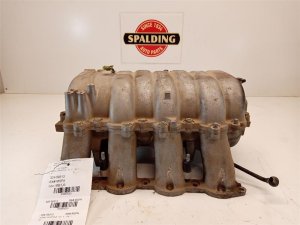
(OEM #17176-0P010)— These gaskets can fail over time, creating a vacuum leak that is a common cause for a lean code on one or both banks. This part is for the surge tank to intake manifold.
Trusted brands: Fel-Pro, Mahle, Toyota Genuine Parts
OEM price range: $25-$40
Aftermarket price range: $15-$30 - Air/Fuel Ratio Sensor (Bank 2, Sensor 1)
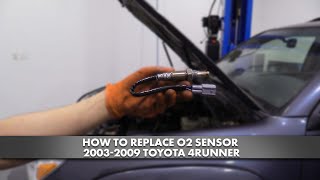
(OEM #89467-35110)— If diagnostics confirm the sensor is faulty, it must be replaced to restore proper fuel trim control. This is the upstream sensor on the driver's side. 🎬 Watch: How to replace your upstream and downstream O2 sensors.
Trusted brands: Denso (OEM Manufacturer), Toyota Genuine Parts
OEM price range: $150-$220
Aftermarket price range: $80-$150
Related Codes That Often Appear With This One
- P0171 — System Too Lean (Bank 1). If both P0171 and P0174 are present, it strongly suggests a problem affecting the entire engine, not just one bank. The most likely cause in this case is a dirty MAF sensor or a large vacuum leak at the intake plenum or PCV system.
- P0087 — Fuel Rail / System Pressure – Too Low. While more formally documented in TSBs for later models, if this code appears with P0171/P0174, it is a strong indicator of a failing fuel pump or clogged fuel filter, overriding the lower probability of a fuel issue.
Technical Service Bulletins (TSBs) & Recalls
- While no specific TSBs for the 2003-2009 4Runner for P0174 were found, TSB Bulletin #TSB000923 notes that Toyota vehicles may exhibit a hard start and/or MIL ON condition with DTC P0171 and/or P0174 (System Too Lean Bank 1/Bank 2) and DTC P0087 (Fuel Rail / System Pressure – Too Low). This can be a useful diagnostic clue for high-mileage 4th generation models as well.
Platform-Specific Known Issues
- Cracked PCV Hose: → Shop PCV Valve Hose The rubber hose for the Positive Crankcase Ventilation (PCV) system, which connects to the intake manifold, is known to become brittle and crack over time. This creates a significant vacuum leak and is a very common, yet simple, cause for P0171 and P0174 codes on the 1GR-FE engine.
Mechanic-Grade Diagnostic Values
- Mass Airflow (MAF) Sensor Reading — expected: At warm idle: 2.5 - 3.5 g/s. At 2500 RPM: 8.0 - 12.0 g/s. On snap throttle: 30 - 50 g/s.. Failure: Readings that are significantly higher or lower than the expected range for a given RPM. A faulty sensor in one documented case read high at idle (4.56 g/s) and slightly high at 2500 RPM (12.88 g/s), causing high positive fuel trims.
- Fuel Injector Resistance — expected: 11.6 to 12.4 Ω at 20°C (68°F) between the terminals.. Failure: Resistance outside of the specified range indicates a faulty injector coil.
- Fuel Trim Malfunction Threshold — expected: The sum of short-term and long-term fuel trim should be within ±35% during normal operation (coolant temp > 75°C / 167°F).. Failure: A DTC is set when the average fuel trim learning value exceeds +35%, indicating the ECM has reached its maximum authority to add fuel.
- Fuel Pressure — expected: 44 - 50 psi for Toyota models 1998 and later.. Failure: Pressure significantly below 44 psi indicates a potential issue with the fuel pump, filter, or pressure regulator.
Scan Tool Commands That Help
- Toyota Techstream: Active Test: A/F Control — This function is used to diagnose a lazy or faulty A/F sensor. It allows the technician to manually command the fuel injection volume to be richer (+25%) or leaner (-12.5%) and observe if the A/F sensor voltage responds quickly and correctly. A slow or non-responsive sensor would fail this test.
Wiring & Ground Locations
- Bank 2 Component Locations — Bank 2 is the driver's side of the 1GR-FE engine. This includes cylinders 2, 4, and 6, along with their corresponding ignition coils (I2, I4, I11), the Bank 2 Knock Sensor (K4), and the Bank 2 A/F sensor (pre-catalyst).. Correctly identifying Bank 2 is the first step in any diagnosis for P0174, ensuring you are testing the correct sensors, injectors, and wiring.
Real Owner Repair Stories
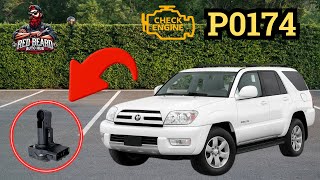
- YouTube channel 'Red Beard Auto Hub' (Novo Motorworks) (2005 Toyota 4Runner V6) — Check Engine Light, VSC and TRAC lights on, P0174 code stored.
❌ Tried (didn't work) Initial diagnosis focused on a potential vacuum leak due to the single-bank code.
✅ What actually fixed it The technician analyzed live data and found Long Term Fuel Trims were very high (+21% on Bank 2, +17% on Bank 1) and the MAF sensor was reading high at idle (4.56 g/s). Replacing the MAF sensor resolved the issue, with fuel trims returning to normal single-digit values. - Reddit user in r/4thGen4Runner (2006 Toyota 4Runner) — Persistent P0174 code for about 6 months.
❌ Tried (didn't work) Cleaning the MAF sensor, Replacing the MAF sensor, Using fuel system cleaner, Performing vacuum leak checks with starter fluid
✅ What actually fixed it The problem was only resolved after the vehicle finally threw a specific code for the A/F sensor. Replacing the Bank 2, Sensor 1 (upstream) Air/Fuel Ratio sensor made the system work more efficiently than it had since the owner bought the truck.
"I Checked Everything" — The Actual Cause
- In some cases, standard diagnostic procedures like checking for vacuum leaks (even with smoke or spray) may not reveal the root cause. One owner performed multiple common fixes, including vacuum leak checks, without success. The actual cause was a 'lazy' but not completely failed Bank 2, Sensor 1 A/F sensor that was sending inaccurate lean signals to the ECM.
When the Usual Fixes Don't Work
- While cleaning the MAF sensor and checking for vacuum leaks are the most common fixes, they are not guaranteed solutions. In a documented case, an owner performed both of these steps, and even replaced the MAF sensor, with no success. The ultimate fix was replacing the Bank 2 upstream A/F sensor, which had become lazy and was sending incorrect lean readings without setting a specific sensor fault code for months.
OEM Part Supersession History
89467-35110→89467-04060— Standard part revision and consolidation by the manufacturer.
Model Year Variations Within This Range
- 2003-2004 vs. 2005-2009: The 1GR-FE V6 in 2003-2004 models was paired with a 4-speed automatic transmission, while 2005-2009 models received a 5-speed automatic. More significantly, there are differences in engine sensors and wiring between these ranges (e.g., cam sensor wiring), making a direct engine swap between an early and late 4th Gen problematic without swapping harnesses and other components.
Diagnostic Flowchart
Real Owner Stories
Aggregated from forums and TSBs cited above. Mileages and costs reflect what owners reported in those sources.
Gen 4 Toyota 4Runner
Symptoms: Experienced rough running and heard a distinct 'burst of air sound' coming from the engine bay.
What fixed it: Identified and repaired a large vacuum leak, specifically an intake manifold gasket.
Source hint: Reddit r/4thGen4Runner thread titled 'Need help diagnosing my Gen 4 4Runner — P0171 & P0174'
Toyota Tacoma 4.0L V6
Symptoms: Diagnosed a severe lean condition with Long-Term Fuel Trims (LTFT) running extremely high at +25-33%.
What fixed it: Traced the issue back to an intake leak after cleaning the MAF sensor provided no fix.
Source hint: Tacoma World thread 'P0171/0174, lean #1&2, fuel related??'
Toyota V6 engine
Symptoms: Dealt with elusive vacuum leaks triggering P0171 and P0174 codes that resisted basic diagnosis.
What fixed it: Required a definitive smoke test to find the leak after unnecessarily replacing O2 sensors, gaskets, and injectors.
Source hint: ClubLexus thread 'FINALLY SOLVED! P0171 and P0174 Codes!!!!'
Related OBD-II Codes
Frequently Asked Questions
Why did my VSC and TRAC OFF lights come on with the P0174 code on my 4Runner?
Is there a specific TSB for the P0174 code on the 2003-2009 4Runner?
Should I replace my Bank 2 Sensor 1 O2 sensor to fix this code?
What is the most common vacuum leak location on the 1GR-FE 4.0L engine?
How can I tell if my 4Runner's P0174 is caused by a dirty MAF sensor or a vacuum leak?
Helpful Videos
Used OEM Parts in Stock
New Aftermarket Parts Available


The information in this article is provided for general reference and educational purposes only. Vehicle specifications, procedures, and part compatibility can vary by production date, trim level, and region. Always consult your vehicle's factory service manual and verify part numbers before purchasing or performing repairs. Safety-critical components such as airbags, seat belts, and braking systems should be installed by a qualified professional.
- Toyota 4Runner:
- 🧭 Diagnostic Flowchart
- 🎬 Helpful Videos
- 🛍️ Shop This Part
- What's Unique About the 2003-2009 Toyota 4Runner
- Symptoms You May Notice
- Most Likely Causes
- Rare But Worth Checking
- Diagnosis Steps
- Parts You'll Likely Need
- Related Codes That Often Appear With This One
- Technical Service Bulletins (TSBs) & Recalls
- Platform-Specific Known Issues
- Mechanic-Grade Diagnostic Values
- Scan Tool Commands That Help
- Wiring & Ground Locations
- Real Owner Repair Stories
- "I Checked Everything" — The Actual Cause
- When the Usual Fixes Don't Work
- OEM Part Supersession History
- Model Year Variations Within This Range
- Real Owner Stories
- Gen 4 Toyota 4Runner
- Toyota Tacoma 4.0L V6
- Toyota V6 engine
- Related OBD-II Codes
- Frequently Asked Questions
- 🎟️ Get 5% Off