

P0174 on 2007-2017 Toyota Camry 3.5L V6: System Too Lean Bank 2 Causes and Fixes
For a 2007-2017 Camry V6, code P0174 is most often caused by a vacuum leak from a cracked intake air hose or a bad intake manifold gasket. A dirty Mass Airflow (MAF) sensor is the next most likely culprit. Start by cleaning the MAF sensor and inspecting the intake for leaks before replacing any parts, as these are the most common and cost-effective solutions.
- Always start with the cheapest and easiest fixes: inspect the intake hose for cracks and clean the MAF sensor with dedicated cleaner.
- If P0174 appears alone, the problem is specific to Bank 2 (front/radiator side). A vacuum leak from the intake manifold gasket on that bank is a strong possibility.
- If P0174 appears with P0171 (both banks lean), the cause is something that affects the whole engine, most likely the MAF sensor, a large vacuum leak, or a fuel delivery issue.
- Do not replace the Air/Fuel (O2) sensor unless you have ruled out vacuum leaks and MAF sensor problems first.
- A smoke test is the most effective way to find hard-to-see vacuum leaks from hoses or gaskets.
What's Unique About the 2007-2017 Toyota Camry
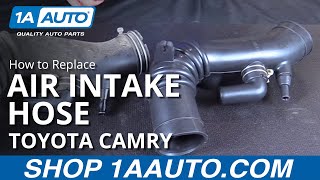
The 2GR-FE V6 engine is known for its reliability, but like many V-engines, its intake manifold gaskets can become brittle with age, causing vacuum leaks that are a primary cause of a single-bank lean code like P0174. Additionally, a very common and easy-to-fix cause is a simple crack in the large rubber air intake hose between the air filter box and the throttle body. These cracks often form in the ribbed, flexible sections and can be hard to see without removing the hose. While the Air/Fuel ratio sensors (O2 sensors) can fail, they are often mistakenly replaced when the true cause is a vacuum leak or a dirty MAF sensor.
Generation note: This range covers the XV40 (2007-2011) and XV50 (2012-2017) generations of the Toyota Camry. Both used the 2GR-FE 3.5L V6 engine, and the common causes and diagnostic procedures for P0174 are consistent across both generations.
🎬 Watch: A complete overview of P0174 causes and fixes.Symptoms You May Notice
- Check Engine Light is on
- Rough or unstable idle, especially when stopped
- Hesitation or stumbling during acceleration
- Reduced fuel economy
- Engine may feel down on power
- In rare cases, stalling at stops
- A hissing or whistling sound from the engine bay, indicating a vacuum leak.
- Replacing the Air/Fuel (Oxygen) Sensor before thoroughly checking for vacuum leaks or cleaning the MAF sensor. The sensor is often just doing its job by reporting the lean condition caused by unmetered air or a dirty MAF.
Most Likely Causes
- Vacuum Leak (Cracked Intake Air Hose or Intake Manifold Gasket) 🔴 High Probability The large rubber intake hose can crack with age, especially in the accordion-like ribs, allowing unmetered air to enter past the MAF sensor. The intake manifold gaskets on the 2GR-FE engine are also a known failure point, hardening over time and causing leaks.
How to confirm: Visually inspect the large rubber air intake hose for cracks, squeezing and flexing it to reveal hidden tears. For the intake gasket, the most effective method is a smoke test, 🎬 Watch: How to perform a smoke test for Bank 2 leaks. which will reveal air leaking from the gasket seals. A DIY alternative is to carefully spray short bursts of brake cleaner or starter fluid near the gasket with the engine running; a noticeable change in engine RPM indicates a leak.
Typical fix: Replace the cracked intake air hose or replace the intake manifold gaskets. The upper plenum gasket is often the culprit. Ensure all mating surfaces are thoroughly cleaned before installing new gaskets.
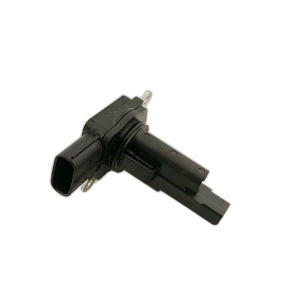
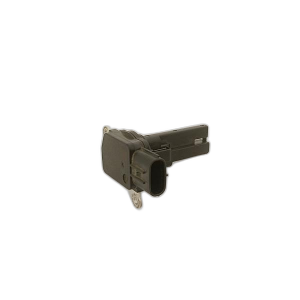
Est. part cost: $30-$150 for an intake hose, $25-$70 for intake gaskets. - Dirty or Faulty Mass Airflow (MAF) Sensor 🔴 High Probability → Shop Fuel Injection Air Flow Meter The MAF sensor wire can become contaminated with dust, oil from aftermarket filters, and other debris, causing it to under-report the amount of air entering the engine. This leads the computer to inject too little fuel, creating a lean condition.
How to confirm: Remove the sensor (typically held by two screws) and inspect the small wires inside. If they appear dirty, cleaning is the first step. A scan tool showing MAF readings lower than 2-7 g/s at a stable warm idle can also indicate a problem. A full-throttle reading below 80% calculated load is another sign of a faulty sensor.
Typical fix: Clean the sensor using a dedicated MAF sensor cleaner spray. Do not touch the wires or use aggressive cleaners like brake cleaner, which can damage the plastic components. Let it dry completely before reinstalling. 🎬 See how to clean the MAF sensor and throttle body. If cleaning does not resolve the issue, the sensor must be replaced, preferably with an OEM Denso unit.
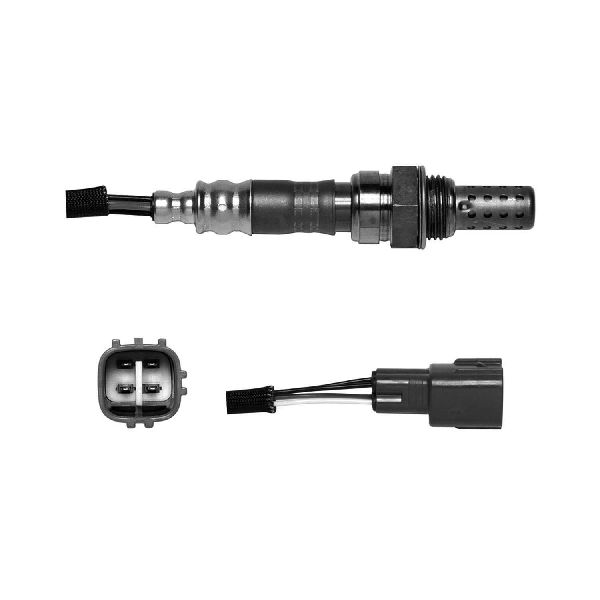
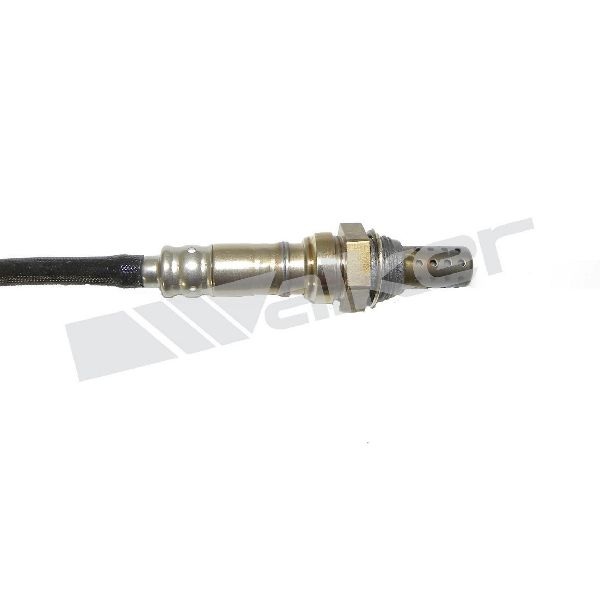
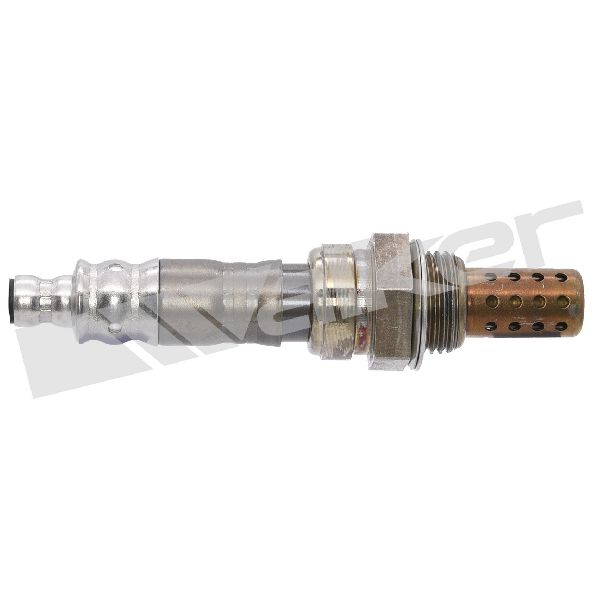
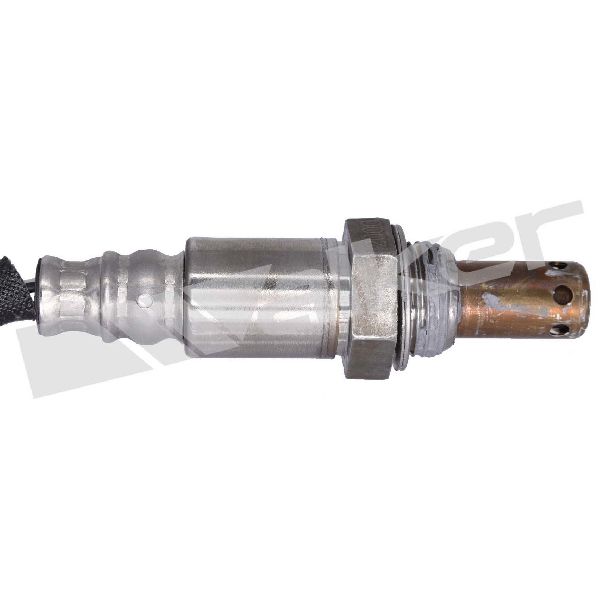
Est. part cost: $10-$15 for cleaner, $70-$200 for a new sensor. - Failing Air/Fuel Ratio Sensor (Bank 2, Sensor 1) 🟡 Medium Probability → Shop Oxygen Sensor This sensor, also known as the upstream oxygen sensor, degrades over time. However, it often correctly reports a lean condition rather than being the cause itself. It's a common misdiagnosis to replace this part first.
How to confirm: After ruling out vacuum leaks and MAF issues, use a scan tool to graph the sensor's voltage. A healthy sensor will fluctuate rapidly. A slow, lazy, or stuck reading indicates failure. Compare its readings to the Bank 1 sensor; they should behave similarly.
Typical fix: Replace the Bank 2, Sensor 1 Air/Fuel Ratio sensor. Bank 2 is on the front (radiator side) of the engine, making this sensor easier to access than Bank 1's.
Est. part cost: $80-$180 - Low Fuel Pressure / Weak Fuel Pump ⚪ Low Probability → Shop Fuel Pump While less common, a failing fuel pump or clogged fuel filter can restrict fuel flow, causing a lean condition. Toyota issued a Technical Service Bulletin (TSB-0009-23) for some 2014-2020 models linking lean codes with low fuel pressure, indicating it's a known issue on the platform.
How to confirm: Check for a companion code P0087 (Fuel Rail / System Pressure – Too Low). A definitive diagnosis requires a fuel pressure test using a mechanical gauge connected to the fuel rail. Toyota vehicles often do not have a convenient Schrader valve for testing, requiring special adapters.
Typical fix: Replace the fuel pump assembly or clogged fuel filter. Check if your vehicle falls under any service campaigns or warranty extensions before paying for the repair.
Est. part cost: $200-$500
Rare But Worth Checking
- Clogged Fuel Injectors on Bank 2: → Shop Fuel Injector If the lean condition is isolated to Bank 2 and all other causes have been ruled out, one or more fuel injectors on that bank could be restricted, preventing adequate fuel delivery. This is uncommon on this platform but possible with high mileage or poor fuel quality.
- Exhaust Leak: A crack or leak in the exhaust manifold or pipe before the Bank 2 A/F sensor can pull in outside air, tricking the sensor into reading a false lean condition. This is more likely on high-mileage vehicles or those from rust-prone areas.
Diagnosis Steps
- Use an OBD-II scanner to confirm code P0174 and check for any other codes like P0171 or P0087.
- Check long-term fuel trims (LTFT) for Bank 2. A reading of +15% or higher confirms the lean condition. Compare it to Bank 1; a large discrepancy points to a Bank 2-specific issue.
- Visually inspect the entire air intake system, especially the large rubber hose between the air filter box and throttle body. Flex the hose to check for hidden cracks in the ribs.
- Remove and clean the Mass Airflow (MAF) sensor using a dedicated MAF sensor cleaner. Let it dry completely before reinstalling. Clear the code and drive to see if it returns.
- If the code persists, perform a smoke test to find hidden vacuum leaks. This is the most reliable method. Pay close attention to the intake manifold gaskets and all vacuum hose connections.
- If no vacuum leaks are found, test the fuel system. If code P0087 is present, suspect the fuel pump. Otherwise, connect a fuel pressure gauge to verify pressure is within specification.
- As a final step, if all other tests are inconclusive, test the Bank 2, Sensor 1 Air/Fuel Ratio sensor by monitoring its voltage with a scan tool to ensure it is responding correctly and not stuck.
Parts You'll Likely Need
- Mass Airflow (MAF) Sensor Cleaner — Cleaning a dirty MAF sensor is the easiest and cheapest first step and often resolves the issue.
Trusted brands: CRC, WD-40 Specialist
Aftermarket price range: $10-$15 - Intake Manifold Gasket Set
(OEM #17176-0P021)— These gaskets are a common failure point for vacuum leaks on the 2GR-FE engine as it ages. An alternate part number may be 17176-31040.
Trusted brands: Fel-Pro, Mahle, Victor Reinz
OEM price range: $50-$80
Aftermarket price range: $25-$50 - Mass Airflow (MAF) Sensor
(OEM #22204-0P020)— If cleaning the original sensor doesn't work, a faulty sensor is the next likely cause. The OEM part is made by Denso.
Trusted brands: Denso (OEM), Hitachi, NTK
OEM price range: $150-$220
Aftermarket price range: $70-$150 - Air Intake Hose
(OEM #17881-0P080)— This large rubber hose is a very common failure point, developing cracks in its flexible ribs that create a significant vacuum leak.
Trusted brands: Toyota (OEM), Dorman, Gates
OEM price range: $100-$150
Aftermarket price range: $30-$70 - Air/Fuel Ratio Sensor (Bank 2, Sensor 1)
(OEM #89467-06080)— If confirmed faulty after other checks, this sensor must be replaced. Bank 2 is the front bank. The OEM part is made by Denso, with Denso aftermarket part number 234-9060 often being a direct equivalent.
Trusted brands: Denso (OEM/Aftermarket), NTK
OEM price range: $150-$250
Aftermarket price range: $80-$180
Related Codes That Often Appear With This One
- P0171 — System Too Lean (Bank 1). If both P0171 and P0174 are present, it points to a problem affecting the entire engine, like the MAF sensor, a large vacuum leak before the throttle body (like the main intake hose), or low fuel pressure.
- P0300, P0302, P0304, P0306 — Misfire codes for Bank 2 cylinders. A severe lean condition can prevent proper combustion, leading to misfires on the affected bank.
- P0087 — Fuel Rail / System Pressure – Too Low. On later models, a Toyota TSB specifically links this code with P0174, strongly suggesting a failing fuel pump is the root cause.
Technical Service Bulletins (TSBs) & Recalls
- T-SB-0009-23 (NHTSA ID 10235216): While officially for 2014-2020 models, this TSB links lean codes P0171/P0174 with low fuel pressure code P0087, pointing to potential fuel pump issues as a root cause.
- TSB Bulletin #TSB000923: Notes that vehicles may exhibit a hard start and/or MIL ON condition with DTC P0171, P0174, and P0087, where Techstream data analysis may reveal positive fuel trims.
Mechanic-Grade Diagnostic Values
- Fuel Injector Resistance — expected: 11.6 to 12.4 Ω at 20°C (68°F). Failure: Resistance outside of this range indicates an internal electrical fault in the injector. If resistance is good but a lean condition persists on one cylinder, the injector may be clogged.
- Air/Fuel Ratio Sensor Heater Resistance — expected: 1.8 to 3.4 Ω at 20°C (68°F) between terminals HA1A and +B.. Failure: Resistance outside this range indicates a failed heater circuit within the sensor, which can cause slow response and trigger codes.
- Mass Air Flow (MAF) Sensor Reading at Idle — expected: 2 to 7 g/s at stable, warm idle.. Failure: A reading significantly below this range suggests the sensor is dirty or failing, under-reporting airflow and causing a lean condition.
- Mass Air Flow (MAF) Sensor Reading at 2500 RPM — expected: 15 to 25 g/s (no load).. Failure: A non-linear or sluggish response that doesn't rise appropriately with RPM indicates a faulty sensor.
- Long-Term Fuel Trim (LTFT) - Bank 2 — expected: Within +/- 10%.. Failure: Sustained readings above +15% to +20% indicate the ECM is adding significant fuel to compensate for a lean condition, which will eventually trigger code P0174.
Scan Tool Commands That Help
- Toyota Techstream: Active Test: A/F Control — After checking for vacuum leaks, this test allows a technician to manually command the fuel injection volume richer or leaner (e.g., +25% or -12.5%). By observing the live data response of the A/F sensors (AFS B2S1) and O2 sensors (O2S B2S2), a technician can confirm if the sensors are responding correctly to mixture changes, helping to isolate a faulty sensor from a true fuel delivery or air leak problem.
Wiring & Ground Locations
- Engine Harness Ground (Bank 2 side) — On the front cylinder head (Bank 2), on a boss located underneath the throttle body assembly.. A poor ground connection at this point can affect the signals from sensors on Bank 2, including the A/F sensor and fuel injectors, potentially causing erratic readings or performance that could contribute to a P0174 code.
- Engine Harness Ground (Bank 1 side) — On the rear cylinder head (Bank 1), on the side of the head.. While less likely to cause an isolated P0174, knowing this location is critical for overall engine electronics health. Comparing ground integrity between banks can be a diagnostic step in confusing cases.
- Main Body ECU Ground — Varies by model year, but typically located behind the dashboard or kick panels. A wiring diagram is essential for precise location.. The main body ECU communicates with the engine ECU (ECM). A poor ground can disrupt this communication, though it would likely cause multiple, more widespread electrical issues beyond just a P0174 code.
Real Owner Repair Stories
- Toyota Nation Forum User (2007 Toyota Camry V6) — P0171 and P0174 codes, rough idle, hesitation.
❌ Tried (didn't work) Cleaned MAF sensor, Replaced air filter, Smoke tested for vacuum leaks (none found)
✅ What actually fixed it The PCV valve was stuck open, creating a large, unmetered air leak that the smoke test did not reveal. Replacing the PCV valve and grommet resolved both lean codes. - NHTSA ODI #10481255 — An owner reported that the check engine light came on with codes P0171 and P0174. They noted a hissing noise when pressing the brake pedal, and the pedal would go all the way to the floor.
"I Checked Everything" — The Actual Cause
- A stuck-open PCV valve was found to be the cause. A smoke test may not always reveal a bad PCV valve because the valve is part of the system being pressurized and may not leak externally. The valve itself was internally failed, allowing excessive, unmetered air from the crankcase to enter the intake manifold, causing the lean condition.
Model Year Variations Within This Range
- 2014-2017 (and later): Later models are more explicitly covered by Toyota Technical Service Bulletin T-SB-0009-23, which links lean codes P0171/P0174 with low-fuel-pressure code P0087. This points more strongly to a failing fuel pump as the root cause on these newer vehicles within the specified range.
Diagnostic Flowchart
Other Known Issues on This Vehicle
Issues unrelated to this code that are worth knowing about as an owner of this generation:
- Rupturing VVT-i Oil Line (Bank 1) 🔴 High — Common on early 2GR-FE engines (approx. 2006-2010). A rubber section of the oil line degrades and can burst, causing rapid and catastrophic oil loss, leading to engine seizure. (Ref: LSC 90K / TSB-0094-09 Rev1. Toyota issued a Limited Service Campaign to replace the original rubber/metal line with an all-metal line (Part No. 15772-31030). Many vehicles may still have the old part.)
- Melting / Sticky Dashboard 🟡 Low — Very common on 2007-2011 models, especially in hot, humid climates. The dashboard material degrades, becoming sticky, shiny, and prone to cracking. (Ref: Warranty Enhancement Program ZE6. Toyota offered an extended warranty to replace affected dashboards, but the program had deadlines and part supply issues.)
- Harsh Shifting / Transmission Issues (U660E) 🟠 Medium — Reported on 2007-2009 models with the 6-speed automatic transmission. Owners report hesitation, jerking, and shift flares, particularly when the transmission is cold. (Ref: Multiple TSBs exist for software updates to the transmission control module to improve shift logic. In some cases, torque converter or solenoid replacement was required.)
- Failing Idler Pulley 🟠 Medium — Primarily affects earlier 2GR-FE engines (approx. 2005-2009). The original idler pulley bearing can fail, causing noise and potential belt damage. Toyota later updated the part to a more robust design.
- Water Pump Failure 🟠 Medium — A wear-and-tear item, but early 2GR-FE models (approx. 2005-2009) had a water pump design that was more prone to premature failure (leaking or bearing failure). The design was updated around 2010.
Used vs. New Parts: Buying Guide for This Vehicle
When a used part is the smart pick: For this repair, used parts are generally not recommended for sensors or gaskets. However, a used Air Intake Hose from a low-mileage donor vehicle in good condition can be a cost-effective alternative to a new OEM part, provided it is thoroughly inspected for cracks.
Donor-vehicle mileage cap: roughly under 60000 miles for the part to have meaningful remaining life.
What to inspect on the donor part:
- For an intake hose, check for flexibility; it should not be hard or brittle.
- Squeeze and bend the ribbed sections of the hose to reveal any hidden cracks or perishing rubber.
- Ensure all mounting points and hose clamp areas are intact and not stripped or damaged.
OEM-only on this vehicle (don't cheap out):
- Mass Airflow (MAF) Sensor: Aftermarket MAF sensors are notoriously unreliable and can cause persistent or new drivability issues. It is strongly recommended to use a Denso (OEM) part.
- Air/Fuel Ratio Sensor: Similar to the MAF, using a Denso or NTK sensor is critical for accurate readings and longevity. Cheap aftermarket sensors often fail quickly or are not calibrated correctly for the vehicle.
Aftermarket brands forum-validated for this vehicle:
- Denso (for A/F and MAF sensors - this is the OEM supplier)
- NTK (for A/F sensors)
- Mahle or Fel-Pro (for intake gaskets, though some technicians prefer OEM for fitment)
Brands owners have reported issues with on this vehicle:
- Unbranded, 'white-box' electronic sensors (MAF, A/F sensors) from online marketplaces are a common source of failed repairs and new problems.
Real Owner Stories
Aggregated from forums and TSBs cited above. Mileages and costs reflect what owners reported in those sources.
2019 Toyota Camry V6
Symptoms: Lean codes P0171 and P0174 along with a significant drop in fuel economy.
What fixed it: The owner was seeking diagnostic help for the classic combination of dual lean codes and bad MPG.
Source hint: Reddit r/MechanicAdvice - P0171 + P0174 + bad MPG. Help with diagnosing? [2019 Camry V6]
2007 Toyota Camry
Symptoms: The intake hose was found to be cracked.
What fixed it: Owners discussed DIY fixes such as using duct tape as a temporary measure for the cracked intake hose.
Source hint: Camry Forums - intake hose cracked
Lexus GS (2GR-FE engine family)
Symptoms: P0171 and P0174 codes present simultaneously.
What fixed it: A diagnostic process that identified a vacuum leak as the root cause.
Source hint: ClubLexus - FINALLY SOLVED! P0171 and P0174 Codes!!!!
NHTSA ODI #10481255
Symptoms: Check engine light with codes P0171 and P0174 accompanied by a hissing noise when the brake pedal was depressed.
What fixed it: The owner reported that the brake pedal would go all the way to the floor during these symptoms, suggesting a possible brake booster vacuum leak.
Related OBD-II Codes
Frequently Asked Questions
Does T-SB-0009-23 apply to my 2007-2017 Toyota Camry V6?
Where is Bank 2 located on my 3.5L V6 Camry engine?
Can I use brake cleaner to clean the MAF sensor on my 2GR-FE engine?
What are the common failure points for the intake system on this specific vehicle?
What should the MAF sensor readings be for a healthy Camry 3.5L V6 at idle?
Is there a specific brand of MAF sensor recommended for the Camry V6?
Helpful Videos
Used OEM Parts in Stock

New Aftermarket Parts Available


The information in this article is provided for general reference and educational purposes only. Vehicle specifications, procedures, and part compatibility can vary by production date, trim level, and region. Always consult your vehicle's factory service manual and verify part numbers before purchasing or performing repairs. Safety-critical components such as airbags, seat belts, and braking systems should be installed by a qualified professional.
- Toyota Camry:
- 🧭 Diagnostic Flowchart
- 🎬 Helpful Videos
- 🛍️ Shop This Part
- What's Unique About the 2007-2017 Toyota Camry
- Symptoms You May Notice
- Most Likely Causes
- Rare But Worth Checking
- Diagnosis Steps
- Parts You'll Likely Need
- Related Codes That Often Appear With This One
- Technical Service Bulletins (TSBs) & Recalls
- Mechanic-Grade Diagnostic Values
- Scan Tool Commands That Help
- Wiring & Ground Locations
- Real Owner Repair Stories
- "I Checked Everything" — The Actual Cause
- Model Year Variations Within This Range
- Other Known Issues on This Vehicle
- Used vs. New Parts: Buying Guide for This Vehicle
- Real Owner Stories
- 2019 Toyota Camry V6
- 2007 Toyota Camry
- Lexus GS (2GR-FE engine family)
- NHTSA ODI #10481255
- Related OBD-II Codes
- Frequently Asked Questions
- 🎟️ Get 5% Off