

P0174 on 2017-2020 Toyota Sienna: System Too Lean Bank 2 Causes and Fixes
Code P0174 on a 2017-2020 Sienna indicates the engine is running lean on Bank 2. The most common causes are a dirty Mass Airflow (MAF) sensor or a vacuum leak, particularly a disconnected hose near the intake after recent service. Cleaning the MAF sensor is a simple first step. If accompanied by code P0087 and hard starts, suspect a fuel delivery issue as highlighted in Toyota TSB-0009-23.
- P0174 means Bank 2 (front cylinder bank) is getting too much air or not enough fuel.
- Start your diagnosis by cleaning the Mass Airflow (MAF) sensor and inspecting for obvious vacuum leaks; this fixes the problem in many cases.
- If codes P0171 and P0174 are present together, focus on causes that affect the entire engine, like the MAF sensor, fuel pump, or a large vacuum leak.
- Pay close attention if code P0087 is also present, as a Toyota TSB indicates this combination likely points to a failing fuel pump or clogged filter.
- Do not replace the Air/Fuel (O2) sensor unless you have ruled out all other possibilities, as it is often just reporting the lean condition correctly.
What's Unique About the 2017-2020 Toyota SIENNA
The 2017-2020 Sienna uses the 2GR-FKS 3.5L V6 engine, which features a sophisticated D-4S fuel system with both port and direct injection. While common lean code culprits like vacuum leaks and dirty MAF sensors are still primary suspects, this specific platform has two well-documented issues. First, Toyota Technical Service Bulletin T-SB-0009-23 directly links P0174 with P0087, pointing to a potentially weak fuel pump. Second, owner forums and repair videos frequently cite a stuck-open EVAP purge valve as a cause for lean codes on both banks, making it a vehicle-specific item to check.
Diagnostic Flowchart
Tap your situation to follow the diagnostic path that matches what you're seeing on this vehicle.
Symptoms You May Notice
- Check Engine Light is on
- Rough or unstable idle, sometimes fluctuating between 1,000 and 2,000 RPM
- Hesitation or stumbling during acceleration
- Reduced fuel economy
- Hard starting, especially when accompanied by other fuel-related codes like P0087 or after refueling if the EVAP purge valve is at fault
- Replacing the Air/Fuel Ratio (O2) sensor without first checking for vacuum leaks or cleaning the MAF sensor. The sensor is often just accurately reporting a lean condition caused by another component.
Most Likely Causes
- Dirty Mass Airflow (MAF) Sensor 🔴 High Probability → Shop Fuel Injection Air Flow Meter The MAF sensor measures all air entering the engine. If it's contaminated with dirt or oil, it will under-report the amount of air, causing the computer to inject too little fuel. This is one of the most common and easiest-to-fix causes for lean codes.
How to confirm: Inspect the sensor's delicate wires for contamination. A common diagnostic step is to clean it with a dedicated MAF sensor cleaner, clear the codes, and see if they return. A healthy MAF on a 3.5L engine should read approximately 5-7 g/s at idle.
Typical fix: Clean the MAF sensor. If cleaning doesn't resolve the issue, the sensor may need to be replaced.
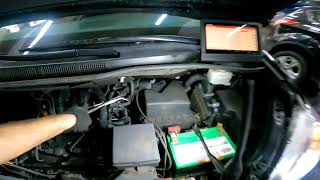
Est. part cost: $10-$15 for cleaner, $70-$150 for a new sensor - Vacuum Leak 🔴 High Probability Cracked or disconnected vacuum hoses, or a leaking intake manifold gasket, allow unmetered air to enter the engine after the MAF sensor, disrupting the air-fuel ratio. A frequently reported issue on these Siennas is a vacuum hose near the throttle body becoming disconnected, often after other engine service like a battery replacement. 🎬 Watch: How to fix a common disconnected vacuum hose for free
How to confirm: Visually inspect all vacuum lines, the PCV hose, and the intake air boot for cracks or loose connections. The most effective method is to have a professional perform a smoke test, which forces smoke into the intake to reveal the exact location of any leaks. Spraying brake cleaner near suspected areas and listening for an engine idle change is a common DIY method.
Typical fix: Replace the cracked hose or failed gasket. Reconnect any disconnected hoses.
Est. part cost: $10-$100 depending on the hose or gasket - Failing Fuel Pump or Low Fuel Pressure 🟡 Medium Probability → Shop Fuel Pump Toyota TSB-0009-23 specifically identifies a potential link between P0174 and P0087 (Fuel Rail / System Pressure – Too Low), pointing to a weak fuel pump or clogged filter as a root cause on this and other Toyota models. The 2GR-FKS has both a low-pressure and high-pressure fuel system.
How to confirm: Check for code P0087. A fuel pressure test is required. The low-pressure side should be 196 to 833 kPa (28 to 121 psi). The high-pressure side should be 2,400 to 19,500 kPa (348 to 2828 psi) at 3000 rpm. Toyota vehicles often lack a Schrader valve, making this test more difficult for a DIYer.
Typical fix: Replace the in-tank fuel pump assembly, which often includes the fuel filter.
Est. part cost: $200-$500 - Faulty Air/Fuel Ratio Sensor (Bank 2, Sensor 1) ⚪ Low Probability → Shop Oxygen Sensor The A/F sensor (upstream O2 sensor) can degrade over time and send inaccurate lean readings to the ECM. However, it's more common for the sensor to be correctly reporting a problem caused by something else. Misdiagnosing this part is common, so rule out vacuum leaks and MAF issues first.
How to confirm: Use a scan tool to observe the sensor's voltage readings. A lazy or non-responsive sensor is a sign of failure. Swapping the Bank 1 and Bank 2 sensors to see if the code follows (to P0171) is a definitive diagnostic step. The sensor's internal heater resistance can be tested and should be between 1.8 to 3.4 Ω at 20°C (68°F).
Typical fix: Replace the Bank 2, Sensor 1 Air/Fuel Ratio sensor.
Est. part cost: $100-$200
Rare But Worth Checking
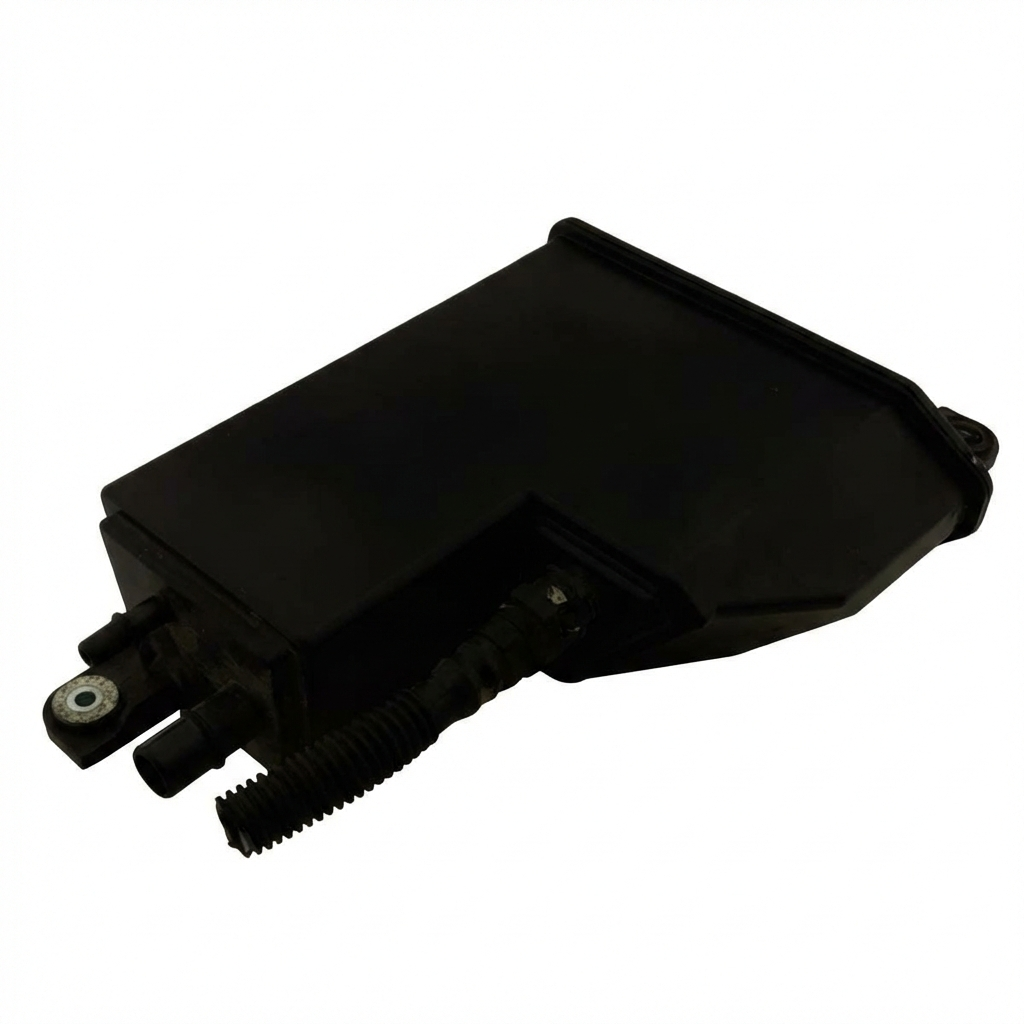
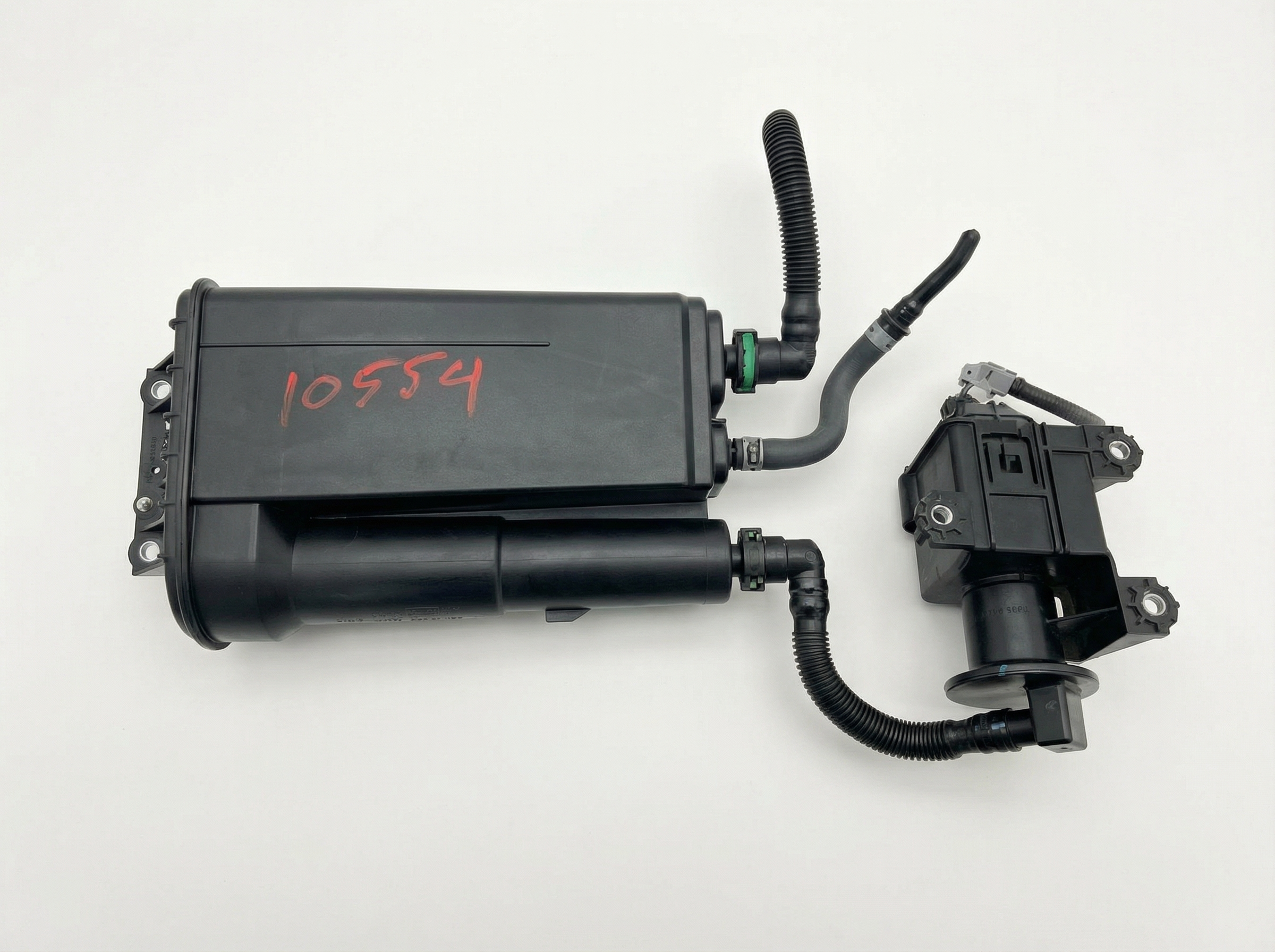
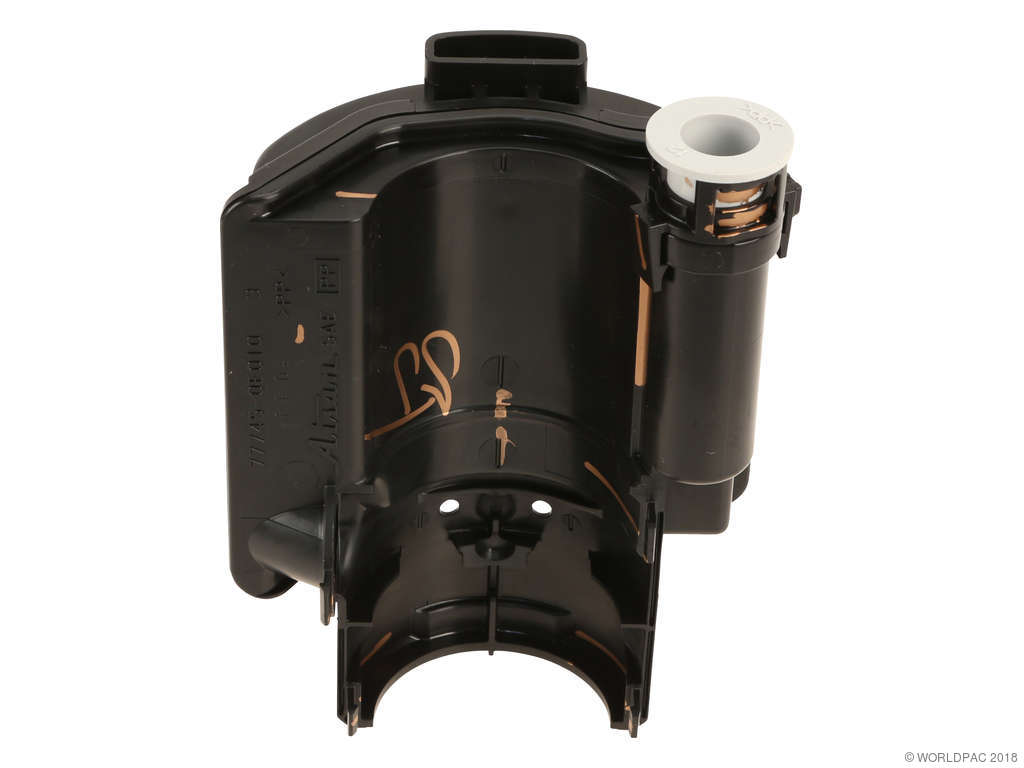
- Stuck Open EVAP Purge Valve: → Shop Vapor Canister A purge valve stuck open creates a constant vacuum leak, drawing unmetered fuel vapors into the intake manifold. This is a documented cause on the 2020 Sienna, often presenting with P0171 and EVAP codes like P0441/P0455, and can cause hard starts after refueling. 🎬 See how a defective purge valve causes these specific lean codes
- Clogged Fuel Injectors: → Shop Fuel Injector On the 2GR-FKS engine with both direct and port injection, carbon buildup can clog the injectors on Bank 2, restricting fuel flow and causing a lean condition. This often requires professional ultrasonic cleaning or replacement of both the port and direct injectors.
- Cracked Upper Intake Manifold (Plenum): → Shop Engine Intake Manifold The plastic upper intake manifold on the 2GR-FKS engine contains an ACIS flap that can fail. While this typically causes misfires at high RPM, a crack in the manifold housing itself can develop, creating a hard-to-diagnose vacuum leak that won't be solved by replacing gaskets.
Diagnosis Steps
- Read all stored fault codes with an OBD-II scanner. Note if P0171, P0087, P117B, or any EVAP codes are present alongside P0174.
- Inspect the engine bay for obvious issues. Pay close attention to the air intake system between the MAF sensor and the throttle body for any cracks, loose clamps, or disconnected hoses. A common culprit is a small hose near the throttle body being knocked off during other maintenance.
- Visually inspect all accessible vacuum hoses connected to the intake manifold for cracks or disconnections, including the PCV hose.
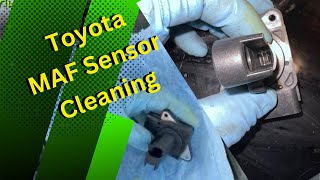
- Remove and inspect the Mass Airflow (MAF) sensor. If it appears dirty, clean it using only dedicated MAF sensor cleaner. Let it dry completely before reinstalling. 🎬 Watch: Step-by-step guide to cleaning your Toyota MAF sensor
- Clear the codes and drive the vehicle to see if the code returns. If it does, proceed with further diagnosis.
- Use a scan tool to monitor long-term and short-term fuel trims for both banks. High positive numbers (e.g., > +20%) confirm a lean condition. If trims are high at idle but improve with RPM, a vacuum leak is likely. If they are high across all RPMs, a MAF or fuel delivery issue is more probable.
- If a vacuum leak is suspected, perform a smoke test to accurately locate the source. Pay special attention to the intake manifold gaskets and the EVAP purge valve.
- If fuel delivery is suspected (especially if P0087 is present), test the fuel pressure with a mechanical gauge to ensure it meets Toyota's specifications. Low side should be 28-121 psi, high side 348-2828 psi. This may require special adapters as Toyota engines often lack a test port.
- If all other causes are ruled out, test the Bank 2 Air/Fuel Ratio sensor for proper operation. A good diagnostic step is to swap it with the Bank 1 sensor and see if the code changes to P0171.
Parts You'll Likely Need
- Mass Airflow (MAF) Sensor Cleaner — Often, the MAF sensor is just dirty and cleaning it is a very common, low-cost first step that resolves the issue.
Trusted brands: CRC, WD-40 Specialist
Aftermarket price range: $10-$15 - Mass Airflow (MAF) Sensor
(OEM #22204-0P020)— If cleaning doesn't work, the sensor itself may have failed and is under-reporting airflow, a primary cause of lean codes.
Trusted brands: Denso (OEM), Hitachi
OEM price range: $120-$180
Aftermarket price range: $70-$120 - Air/Fuel Ratio Sensor (Bank 2, Sensor 1)
(OEM #89467-0E100)— This sensor, located on the front exhaust manifold, can fail and send incorrect lean signals. It should only be replaced after ruling out vacuum leaks and MAF/fuel delivery issues.
Trusted brands: Denso (OEM)
OEM price range: $150-$220
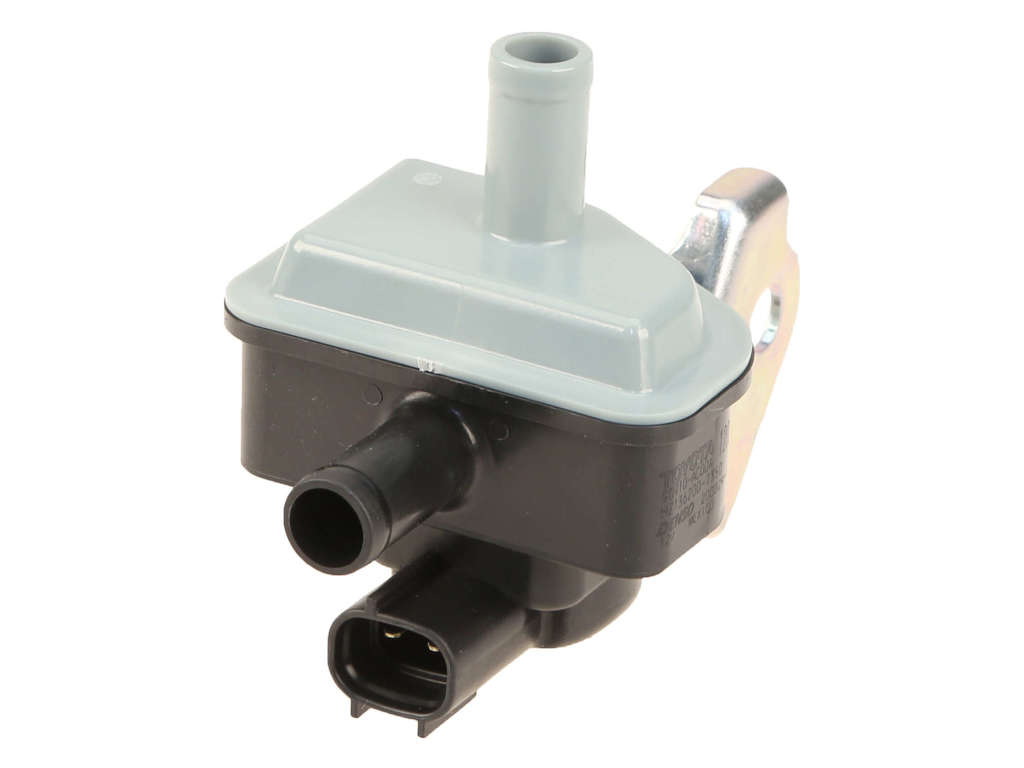
Aftermarket price range: $100-$180 - Vapor Canister Purge Solenoid Valve
(OEM #25860-0P090)— A common failure on this platform where the valve sticks open, creating a large vacuum leak and causing lean codes for both banks, often with EVAP codes and hard starting after refueling.
Trusted brands: Toyota (OEM), Dorman
OEM price range: $70-$100
Aftermarket price range: $30-$60
Related Codes That Often Appear With This One
- P0171 — System Too Lean (Bank 1). When both P0171 and P0174 appear together, it strongly suggests a problem common to both cylinder banks, such as a dirty MAF sensor, a major vacuum leak at the intake manifold (like a stuck purge valve), or low fuel pressure.
- P0087 — Fuel Rail / System Pressure – Too Low. As cited in TSB-0009-23, this code directly points to a fuel delivery problem, such as a failing fuel pump, as the likely cause of the lean condition.
- P0441 / P0455 — EVAP System Incorrect Purge Flow / Gross Leak Detected. These codes can appear if the EVAP purge valve is stuck open, creating a vacuum leak that contributes to the lean condition. Several owner reports confirm this combination of codes was solved by replacing the purge valve.
- P117B — Direct Injection Fuel Performance (Bank 2). This manufacturer-specific code can appear alongside P0174 if the issue is related to clogged direct fuel injectors on Bank 2. It has also been documented in cases of large vacuum leaks from a stuck purge valve or disconnected hose.
Technical Service Bulletins (TSBs) & Recalls
- TSB-0009-23: Published Feb 9, 2023, this TSB links P0171/P0174 with P0087 (Fuel Rail / System Pressure – Too Low) and hard starting conditions across many 2014-2020 Toyota models, including the Sienna. It points towards a fuel delivery issue, likely a weak fuel pump, as the root cause.
Platform-Specific Known Issues
- Disconnected Vacuum Hose Post-Service: → Shop Vacuum Hose A recurring theme in owner forums is the discovery of a small vacuum hose disconnected from the air intake system, right near the throttle body. In one documented case with a 2020 Sienna, this was found after a battery replacement, suggesting it was accidentally knocked off by a technician. This simple mechanical fault can trigger both P0171 and P0174 and should be one of the first visual checks.
- Stuck Open EVAP Purge Valve: → Shop Vapor Canister On the 2017-2020 Sienna, a stuck-open EVAP purge valve is a known cause for lean codes on both banks (P0171/P0174), often accompanied by EVAP codes (P0441/P0455) and sometimes hard starting after refueling. A technician demonstrated diagnosing this on a 2020 Sienna by smoke testing the valve and observing it was stuck open, creating a significant vacuum leak.
Mechanic-Grade Diagnostic Values
- Low-Pressure Fuel System — expected: 196 to 833 kPa (28 to 121 psi). Failure: Pressure below this range indicates a weak in-tank fuel pump or clogged filter.
- High-Pressure Fuel System (at 3000 rpm) — expected: 2,400 to 19,500 kPa (348 to 2828 psi). Failure: Pressure below this range could indicate a failing high-pressure fuel pump.
- Air/Fuel Ratio Sensor Heater Resistance — expected: 1.8 to 3.4 Ω at 20°C (68°F) between terminals 1 (HA1A) and 2 (+B). Failure: Resistance outside this range indicates a faulty sensor heater, requiring sensor replacement.
- Mass Airflow (MAF) Sensor Reading at Idle — expected: Approximately 5.0 to 7.0 g/s for a 3.5L engine at normal operating temperature.. Failure: A significantly lower reading (e.g., < 4.0 g/s) at idle suggests a vacuum leak (unmetered air entering). A significantly higher reading can indicate a contaminated sensor.
- Fuel Trim Malfunction Threshold — expected: Average fuel trim learning value should be below +35%. Failure: When the ECM calculates an average fuel trim learning value of 35% or more, it interprets this as a fuel system malfunction and sets the DTC.
Hidden / Shadow Codes Worth Checking
- Mode 6 Misfire Data (EWMA): Techstream provides detailed misfire history data (EWMA - Exponentially Weighted Moving Average) and a current misfire 'rate' for each cylinder. This is more granular than a standard P030x code and can show intermittent misfires that contribute to a lean condition before a hard code is set. (see via Using Toyota's Techstream software, navigate to the Engine ECU data list and select the misfire monitor utility.)
Scan Tool Commands That Help
- Techstream: A/F Control Active Test — To directly test the A/F sensor's response. This function allows the technician to command the fuel injection volume richer (+25%) or leaner (-12.5%) and watch the A/F sensor voltage on the live data graph to confirm it is reacting correctly.
- Techstream (or other advanced scanner): EVAP System Purge VSV Control — To test if the EVAP purge valve is stuck open. With the engine idling, command the valve 'Off' (closed). If fuel trims remain high and pinching the valve's vacuum hose causes trims to drop, the valve is mechanically stuck open and needs replacement.
Real Owner Repair Stories
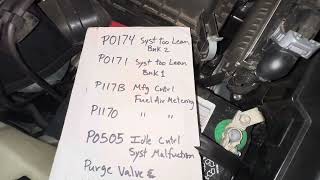
- YouTube channel 'ALL VEHICLE OWNERS' (2020 Toyota Sienna) — Check Engine Light with codes P0174, P0171, P117B, P1170, P0505. The issue started immediately after having the battery replaced.
❌ Tried (didn't work) The owner was researching the issue and about to purchase an EVAP purge valve based on common advice.
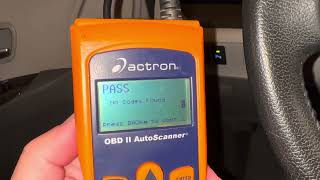
✅ What actually fixed it A thorough visual inspection revealed a vacuum hose was completely disconnected from its port on the air intake system, right behind the throttle body. Reconnecting the hose resolved all codes at no cost. - YouTube channel 'Irfan Chaudhry' (2020 Toyota Sienna) — Check Engine Light with codes P0171, P0174, P0505, P1170. Long term fuel trims were confirmed to be very high (+33% and +39%).
❌ Tried (didn't work) The vehicle had reportedly already had the purge valve replaced at another shop, causing initial diagnostic confusion.
✅ What actually fixed it The technician confirmed the lean condition by pinching the purge valve hose and seeing fuel trims immediately drop. A smoke test then proved the (previously replaced) purge valve was stuck in the open position. Replacing the defective purge valve with a new one fixed the issue. - YouTube channel 'My Tech Channel' (2020 Toyota Sienna with 42,000 miles) — Hard start/no-start after refueling. Check Engine Light with codes P0174, P0171, P117B, P1170, P0505, P0455, P0441.
❌ Tried (didn't work) Initial symptoms were mistaken for a weak battery.
✅ What actually fixed it The owner replaced the Vapor Canister Purge Solenoid Valve with a $55 aftermarket part from Amazon. This resolved both the hard starting after refueling and all stored trouble codes.
When the Usual Fixes Don't Work
- Multiple owner-documented repairs show that a combination of lean codes (P0171/P0174) and other performance codes (P1170, P0505) on the 2017-2020 Sienna are frequently caused by issues other than the primary sensors. In one case, a simple disconnected vacuum hose after a battery replacement was the root cause, costing nothing to fix. In another well-documented case, a faulty EVAP purge valve caused identical symptoms and was resolved with a ~$55 part. This provides strong evidence against immediately replacing expensive components like A/F sensors or fuel pumps without first performing a thorough visual inspection and testing simpler components like the purge valve.
OEM Part Supersession History
22204-0T020 (MAF Sensor)→22204-0V020— Part revision by manufacturer.
Heads up: The OEM part number listed in Pass 2 (22204-0P020) may be for a different application. Always verify the correct part number for your specific vehicle's VIN before ordering.
Helpful Videos
Used OEM Parts in Stock
New Aftermarket Parts Available


The information in this article is provided for general reference and educational purposes only. Vehicle specifications, procedures, and part compatibility can vary by production date, trim level, and region. Always consult your vehicle's factory service manual and verify part numbers before purchasing or performing repairs. Safety-critical components such as airbags, seat belts, and braking systems should be installed by a qualified professional.
- Toyota SIENNA:
- 🧭 Diagnostic Flowchart
- 🎬 Helpful Videos
- 🛍️ Shop This Part
- What's Unique About the 2017-2020 Toyota SIENNA
- Symptoms You May Notice
- Most Likely Causes
- Rare But Worth Checking
- Diagnosis Steps
- Parts You'll Likely Need
- Related Codes That Often Appear With This One
- Technical Service Bulletins (TSBs) & Recalls
- Platform-Specific Known Issues
- Mechanic-Grade Diagnostic Values
- Hidden / Shadow Codes Worth Checking
- Scan Tool Commands That Help
- Real Owner Repair Stories
- When the Usual Fixes Don't Work
- OEM Part Supersession History
- 🎟️ Get 5% Off