

OBD-II Code P0174: System Too Lean (Bank 2)
The Ultimate Guide to Diagnosing and Fixing P0174
- P0174 indicates Bank 2 of your engine is running lean, meaning it has over 15% too much air or insufficient fuel.
- Vacuum leaks from cracked hoses, intake gaskets, or faulty PCV valves cause over 50% of P0174 codes.
- Never replace the oxygen sensor first; it is usually accurately reporting a lean condition caused by an upstream issue.
- Seeing P0171 alongside P0174 confirms a system-wide issue like a contaminated MAF sensor or a weak fuel pump producing under 50 PSI.
- Driving with an active P0174 code for more than 100 miles risks destroying your catalytic converter, adding up to $2,500 to your repair bill.
What Does P0174 Mean?
The trouble code P0174 means your car's Engine Control Module (ECM) detects too much air and not enough fuel on 'Bank 2'. Bank 2 is the engine side opposite cylinder #1. The computer constantly adjusts fuel injection ('fuel trim'). When it detects a lean condition, it adds more fuel. If the ECM must add over 15-25% extra fuel over a sustained period, it triggers the Check Engine Light and code P0174.
Technical definition: The official SAE/OBD-II definition 🎬 Watch: A deep dive into why Bank 2 runs lean. is "System Too Lean (Bank 2)". This indicates the long-term fuel trim for engine Bank 2 has reached its maximum enrichment limit. The powertrain control module (PCM) can no longer compensate for excess unmetered air or insufficient fuel delivery.
Can I Drive With P0174?
Yes, But With Caution. You can drive short distances to a repair shop, but prolonged driving destroys components. A lean condition spikes combustion temperatures, causing engine knocking, piston damage, and catalytic converter overheating. Driving over 100 miles with this code permanently damages the catalytic converter, adding $800-$2,500 to your repair bill.
Common Causes
- Vacuum Leaks (Hoses, Gaskets, PCV) (Very Common) — Unmetered air enters the engine after the MAF sensor through cracked vacuum hoses, leaking intake manifold gaskets, or a stuck-open PCV valve. This extra air bypasses the computer's measurement, causing a severe lean mixture.
- Dirty or Faulty Mass Airflow (MAF) Sensor (Common) — Contaminated with dirt or oil, the MAF sensor under-reports incoming air, causing the computer to inject too little fuel. A skewed MAF sensor frequently causes lean codes without triggering a MAF-specific code.
- Fuel Delivery Issues (Pump, Filter, Injectors) (Common) — A failing fuel pump, clogged fuel filter, or dirty fuel injectors restrict fuel flow. This starves the engine, preventing it from matching the incoming air volume and dropping fuel pressure below specifications.
- Exhaust Leaks (Before the O2 Sensor) (Less Common) — Cracks in the exhaust manifold or pipes upstream of the O2 sensor suck outside air into the exhaust stream. This tricks the O2 sensor into reading a false lean condition, forcing the computer to add unnecessary fuel.
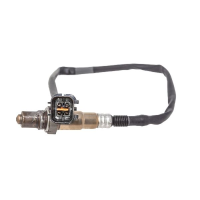
- Faulty Upstream Oxygen (O2) Sensor (Less Common) — A failing Air/Fuel Ratio or O2 sensor gets stuck, sending an incorrect lean signal. This is heavily misdiagnosed; the sensor usually correctly reports a problem existing elsewhere.
- Outdated PCM Software (Rare) — Manufacturers occasionally release Powertrain Control Module (PCM) software updates to fix overly sensitive fuel trim logic. Check for Technical Service Bulletins (TSBs) if mechanical tests pass.
Symptoms
- Check Engine Light is On — The ECM illuminates the malfunction indicator lamp immediately after logging the P0174 code.
- Rough or Unstable Idle — The engine shakes, surges, or idles unevenly because the lean mixture prevents smooth combustion at low speeds.
- Reduced Power and Hesitation — The vehicle feels sluggish, hesitates, or stumbles during acceleration due to insufficient fuel delivery.
- Decreased Fuel Economy — Gas mileage drops significantly as the ECM injects maximum fuel to compensate for the lean condition.
- Engine Knocking or Pinging — High combustion temperatures cause pre-ignition (detonation), heard as a 'knock' or 'ping' during acceleration, which damages internal components.
- Engine Misfires (also visible on scanner) — The lean mixture fails to ignite properly, causing misfires and triggering codes like P0300, P0302, P0304, or P0306.
- High Positive Fuel Trims (scan-tool only — no driver-felt sign) — Scan tools show Long-Term Fuel Trim for Bank 2 (LTFT B2) elevated above +15%, confirming the computer is adding excess fuel.
Diagnostic Flowchart
Tap your situation to follow the diagnostic path that matches what you're seeing on this code.
Common Fixes & Costs
- Repairing a Vacuum Leak (Hose, PCV, Gasket) — Parts: $10-$150, Labor: $100-$800, ~1.5 hr book time (DIY)
- Cleaning or Replacing the Mass Airflow (MAF) Sensor — Parts: $10-$300, Labor: $50-$150, ~0.8 hr book time (DIY)
- Replacing the Fuel Pump or Filter — Parts: $50-$800, Labor: $200-$1,200, ~3.5 hr book time (Professional)
- Replacing Intake Manifold Gaskets — Parts: $50-$150, Labor: $500-$1,200, ~5.5 hr book time (Professional)
- Replacing the Upstream Oxygen (O2) Sensor — Parts: $50-$250, Labor: $100-$250, ~1.2 hr book time (Intermediate)
DIY vs Professional
- Cleaning the MAF Sensor — Beginner: Yes
Tools: Screwdriver or Torx bit set, dedicated MAF sensor cleaner spray. - Replacing a Cracked Vacuum Hose — Beginner: Yes
Tools: Pliers, flashlight, hose pick tool. - Replacing an Upstream O2 Sensor — Beginner: Maybe
Tools: O2 sensor socket, ratchet, penetrating oil, anti-seize lubricant. - Replacing Intake Manifold Gaskets — Beginner: No
Tools: Extensive socket set, torque wrench, gaskets, coolant, RTV sealant, scrapers. - Replacing the Fuel Pump — Beginner: No
Tools: Fuel line disconnect tools, extensive socket set, lift. Dropping the fuel tank is required.
Used vs. New Parts: Buying Guide
When a used part is worth it: For electronic components like MAF or O2 sensors, buy new. A used catalytic converter from a low-mileage donor vehicle is viable but carries risks. Selling used catalytic converters is illegal in some states.
Donor-vehicle mileage cap: roughly under 80000 miles for the part to have meaningful remaining life.
Donor quality checklist:
- Verify the donor vehicle was not scrapped for an emissions-related failure.
- Match the part number exactly; similar-looking parts have different calibrations.
- Avoid parts from rust belt regions to prevent seized hardware.
Decision logic:
- If The part is an electronic sensor (MAF, O2) or a wear item (fuel pump). → Buy new. Savings from used parts are erased by premature failure and repeated labor costs.
- If The part is a catalytic converter and the vehicle is over 150,000 miles. → A used part from a verified low-mileage donor is a budget-conscious choice.
- If The part has a known high failure rate (e.g., plastic intake manifolds). → Buy a new part, preferably an updated aftermarket design (e.g., Fel-Pro gaskets).
Warranty tradeoff: Used parts carry a 30-90 day warranty. New aftermarket parts offer 1-year to limited lifetime warranties. OEM parts offer a 1-year warranty.
Worst-case if a used part fails: $400-$1500 if a used part fails, primarily due to repeated labor costs.
What Happens If You Wait — Timeline
- 0-1 month: Check Engine Light is on. Long-term fuel trim for Bank 2 is elevated (+15-25%). Slight rough idle when cold. (MPG impact: 3-5%% · Added cost: $0-$50 in wasted fuel)
- 1-3 months: Rough idle is consistent, with hesitation during acceleration. The lean condition causes higher combustion temperatures. (MPG impact: 5-10%% · Added cost: $50-$150 in wasted fuel, plus increased stress on spark plugs and valves.)
- 3-6 months: Sustained high exhaust temperatures damage the catalytic converter. A P0430 code appears. Engine misfires become frequent. (MPG impact: 10-15%% · Added cost: $800-$2,500 for catalytic converter replacement.)
- 6+ months: Catastrophic damage occurs. Extreme heat burns exhaust valves, damages pistons, and scores cylinder walls. (MPG impact: 15-25%+% · Added cost: $3,000-$8,000+ for engine repair or replacement.)
Cost of Not Fixing It
- 0-1 month: Drop in fuel economy (5-15%), rough idle, and hesitation during acceleration. Increased NOx emissions. (Added cost: Negligible, other than increased fuel costs.)
- 1-6 months: Excessive exhaust heat overheats and damages the catalytic converter's internal structure, leading to failure and a P0430 code. (Added cost: $1200-$2800 for catalytic converter replacement.)
- 6+ months: Prolonged high combustion temperatures burn exhaust valves, damage pistons, and score cylinder walls. (Added cost: $3,000-$8,000+ for engine repair or replacement.)
Diagnosis Steps
- Check for Other Trouble Codes
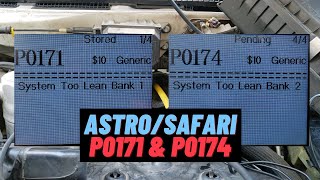
Use an OBD-II scanner to read all stored codes. The presence of P0171 (Lean Bank 1) alongside P0174 confirms a system-wide problem like the MAF sensor or fuel pump. Misfire codes (P030x) or MAF codes (P0101) provide critical diagnostic shortcuts.
Tools: OBD-II Scanner (Beginner) - Analyze Live Data (Fuel Trims)
Monitor Long Term Fuel Trim (LTFT) and Short Term Fuel Trim (STFT). Positive numbers above +15% on LTFT B2 confirm the lean condition. If trims are high at idle but drop below +10% at 2,500 RPM, a vacuum leak is the culprit. If trims remain high across all RPMs, suspect a fuel delivery or MAF issue.
Tools: OBD-II Scanner with Live Data (Intermediate) - Visually Inspect for Vacuum Leaks
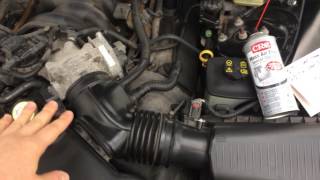
Thoroughly inspect all vacuum hoses, the PCV system, and the air intake boot between the MAF sensor and the throttle body. Look for cracks, loose clamps, or mushy, oil-soaked hoses.
Tools: Flashlight (Beginner) - Clean the Mass Airflow (MAF) Sensor
Carefully remove the sensor and spray the delicate wire ONLY with dedicated MAF sensor cleaner. Never touch the sensing element. Let it air dry completely before reinstalling. This resolves skewed readings causing lean codes.
Tools: Screwdriver/Socket Set, MAF Sensor Cleaner (Beginner) - Perform a Smoke Test
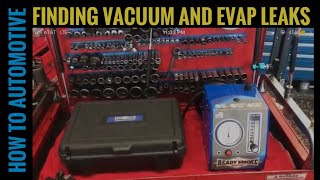
A smoke machine forces low-pressure smoke into the intake system. Smoke visibly escapes from cracked gaskets, seals, or hidden hoses, pinpointing the exact location of vacuum leaks.
Tools: Smoke Machine (Intermediate) - Test Fuel Pressure
Connect a fuel pressure gauge to the fuel rail's test port. Verify the pressure matches manufacturer specifications (typically 55-65 PSI with key on, engine off). Low pressure confirms a weak fuel pump or clogged filter.
Tools: Fuel Pressure Gauge (Intermediate) - Analyze MAF Sensor Data (Grams/Second)
Monitor the MAF sensor's reading in grams per second (g/s) at idle. A healthy MAF sensor on a warmed-up engine shows a g/s reading roughly equal to the engine's displacement in liters (e.g., 3.5 g/s for a 3.5L engine). Lower readings confirm a faulty MAF sensor.
Tools: Advanced OBD-II Scanner (Advanced) - Test for Pre-O2 Exhaust Leaks
With the engine cold, start it and carefully feel for puffs of air around the exhaust manifold gasket and flange. Spray soapy water on these areas and look for bubbles. Black soot trails also indicate a leak drawing in outside air.
Tools: Gloves, Soapy Water Spray Bottle (Intermediate) - Check Oxygen Sensor Data
Graph the Bank 2, Sensor 1 (upstream) O2 sensor voltage. A healthy zirconia sensor fluctuates rapidly between 0.1V and 0.9V. If it stays below 0.45V or responds sluggishly, it requires replacement—but only after ruling out vacuum and fuel issues.
Tools: OBD-II Scanner with Live Data (Advanced) - EVAP Purge Solenoid Test
A stuck-open EVAP purge solenoid creates a constant vacuum leak. Disconnect the solenoid and use a hand vacuum pump on the port leading to the intake manifold; it must hold vacuum. If it leaks, replace it.
Tools: Hand Vacuum Pump (Advanced) - O2 Sensor Circuit Integrity Test
Unplug the B2S1 O2 sensor. With the key on, check the signal wire on the harness side for a bias voltage of around 450mV. Jump the signal wire to battery positive through your body; the scan tool voltage must jump over 1V, confirming intact wiring to the PCM.
Tools: Multimeter, T-pins, Advanced OBD-II Scanner (Advanced)
When This Code Triggers (Freeze-Frame Conditions)
- Engine Coolant Temp: 180-210°F (Fully warmed up, closed-loop operation.)
- RPM: 1500-2500 RPM (Sets during steady-state cruise or light acceleration, rarely at idle.)
- Engine Load: 20-60% (Indicates the engine is under a moderate workload.)
- Vehicle Speed: 45-65 mph (Commonly triggered during highway driving.)
Related Codes
- P0171 — Identical code for Bank 1. Having both P0171 and P0174 confirms a system-wide issue like a faulty MAF sensor, low fuel pressure, or a major intake vacuum leak.
- P0300-P0308 — Misfire codes. A severe lean condition prevents combustion. If misfires isolate to Bank 2 (e.g., P0302, P0304), the lean condition is the root cause.
- P0101-P0104 — MAF sensor circuit codes. Their presence alongside P0174 makes the MAF sensor the primary suspect.
- P0430 — Catalyst System Efficiency Below Threshold (Bank 2). This is a consequence, not a cause. A long-term lean condition destroys the catalytic converter. Fix P0174 first.
Climate & Environmental Factors
- Cold Weather: Freezing temperatures cause plastic and rubber vacuum hoses, PCV elbows, and intake gaskets to become brittle and crack. The code often appears when the engine is cold and disappears as materials expand to seal the crack upon warming.
- High Altitude: Less dense air at high altitudes pushes borderline issues (like a slightly weak fuel pump or dirty MAF sensor) past the computer's compensation threshold, triggering the code.
- High Humidity: High humidity displaces oxygen, causing the MAF sensor to read a marginally lower air mass. It accelerates corrosion on electrical connectors, including the O2 sensor harness.
How to Talk to a Mechanic About This Code
Say this: "I have a P0174 code. Please check the long-term fuel trims at idle versus 2,500 RPM and perform a smoke test to check for vacuum leaks before recommending any part replacements."
This signals you understand proper diagnostic steps for a lean code. It prevents a shop from immediately replacing the expensive oxygen sensor and pushes them toward data-driven diagnosis.
Avoid saying:
- 'Just fix whatever's wrong'
- 'My check engine light is on, can you look at it?'
- 'Whatever you recommend'
Questions to ask before authorizing the repair:
- What were the long-term fuel trim readings for Bank 2 at idle and at 2,500 RPM?
- If you found a vacuum leak, can you show me where it was?
- If you suspect the MAF sensor, what was its grams/second reading at idle?
- If you suspect a fuel delivery issue, what was the fuel pressure reading?
- What is the warranty on this specific repair, including parts and labor?
Where to Take It: Dealer vs Independent vs Chain
- Dealer:
Best for: Vehicles under powertrain or emissions warranty, Vehicles with known TSBs requiring software updates (e.g., Nissan), Complex diagnostics on European brands (BMW, VW, Audi)
Downsides: Highest labor rate, Recommends replacing whole assemblies instead of small components (Typical cost: +50% vs. baseline) - Independent Shop:
Best fit. A competent independent shop with a smoke machine efficiently diagnoses and repairs a P0174 code.
Best for: Most out-of-warranty vehicles, Diagnosing vacuum leaks, MAF sensor faults, and fuel pump problems
Downsides: Quality varies; look for ASE certifications and good reviews (Typical cost: +0% vs. baseline) - Chain Shop:
Use with caution. Acceptable for a simple, visible fix, but AVOID for comprehensive diagnosis.
Best for: Simple, obvious repairs like a visible cracked vacuum hose
Downsides: High pressure to upsell; lacks experienced diagnosticians, leading to unnecessary O2 sensor replacements. (Typical cost: -10% vs. baseline)
When to Walk Away From the Repair
If the estimated repair cost for the P0174 code exceeds 40-50% of your car's private-party value, consider your options.
- Car worth $4000, fix is $2000: Borderline. The repair is 50% of the car's value. Get a second opinion, as this cost represents a worst-case scenario like intake manifold gaskets plus a fuel pump.
- Car worth $12000, fix is $1800: Fix it. The repair cost is 15% of the vehicle's value.
- Car worth $2500, fix is $1500: Walk away. The repair is 60% of the car's value. It is not economical to proceed.
What Scan Tool You Need for This Code
Minimum: An OBD-II reader that displays live sensor data, specifically Short-Term Fuel Trim (STFT) and Long-Term Fuel Trim (LTFT).
A $20 basic code reader only tells you the P0174 code is present. Without seeing how fuel trims react at idle versus higher RPMs, you are guessing between a vacuum leak, a MAF sensor issue, or a fuel delivery problem.
Budget: BlueDriver Pro (~$100) — Streams live fuel trims to your smartphone, graphs O2 sensor activity, and provides repair reports based on your specific vehicle.
Mid-range: Foxwell NT510 Elite (~$180) — Offers live data plus manufacturer-specific codes. Provides limited bidirectional controls to test components like EVAP purge solenoids.
Professional: Autel MaxiCOM MK808S (~$500) — Provides full bidirectional control to command components, extensive live data graphing, and access to all vehicle modules for in-depth diagnosis.
Rent vs buy: For a one-time repair, auto parts stores loan basic OBD-II scanners for free. Buy a scanner with live data capabilities if you perform diagnostics more than once a year.
How to Clear the Code After You Fix It
- Use an OBD-II scan tool to clear the P0174 code.
- Ensure the fuel tank is between 1/4 and 3/4 full.
- Perform a complete drive cycle to run readiness monitors.
Drive cycle (~30 minutes): Start the engine cold and idle for 3 minutes. Drive for 10 minutes at a steady 55-60 mph. Drive for 15 minutes in stop-and-go city traffic. Idle for 3 minutes before shutting off.
Readiness monitors affected: Catalyst (CAT) Monitor, Oxygen (O2) Sensor Monitor, Evaporative (EVAP) System Monitor
Before emissions retest: drive at least 100 miles to fully set monitors.
Watch out for:
- Disconnecting the battery clears the code but resets all readiness monitors to 'Not Ready', guaranteeing an emissions test failure.
- The code returns within 50-100 miles if the root cause remains unfixed.
Will This Fail Emissions / State Inspection?
Yes — this code typically fails an OBD-II emissions inspection.
- California: An active P0174 code is an automatic smog check failure. A full drive cycle must set all OBD-II readiness monitors before a re-test.
- New York: The NYS DMV emissions inspection includes an OBD-II scan. Code P0174 results in an automatic failure.
- Texas: In the 17 counties requiring emissions testing, an illuminated Check Engine Light for P0174 causes an inspection failure.
Most Commonly Affected Vehicles
- Ford F-150 / Expedition / Explorer (V6/V8) (1997-2008) — Extremely common due to a leaking PCV valve hose elbow at the back of the intake manifold. Also prone to dirty MAF sensors and failing intake manifold gaskets.
- Chevrolet / GMC Silverado / Sierra / Tahoe / Suburban (1999-2007) — Prone to failing intake manifold gaskets on Vortec engines, causing significant vacuum leaks. Faulty fuel pressure regulators or weak fuel pumps are also frequent culprits.
- BMW 3-Series (E46), 5-Series (E39), X5 (E53) (1999-2006) — Frequently caused by a cracked lower intake boot or a failing crankcase ventilation (CCV) system. The plastic CCV components become brittle and require replacement as a complete kit.
- Toyota / Lexus Camry / Highlander (V6), ES300 / RX300 (1999-2011) — Common causes include faulty upstream Air/Fuel Ratio Sensors and dirty mass airflow sensors. Weak fuel pumps cause issues on higher mileage vehicles.
- Nissan / Infiniti Armada / Titan / Murano / G35 (2004-2019) — For 2017-2019 Armada and Titan models, check TSB NTB20-009A. If P0174 is the only code present, the fix is an ECM software update, not a mechanical repair.
- Volkswagen / Audi Jetta / Passat / A4 (1.8T, 2.0T, VR6) (2000-2012) — Highly susceptible to vacuum leaks from the complex PCV and breather hose system, which becomes brittle and cracks. A smoke test is mandatory for diagnosis.
Manufacturer-Specific Notes
- Ford: On 1997-2008 V8 and V6 engines, a hidden vacuum leak occurs in a PCV hose elbow at the back of the intake manifold. Contaminated MAF sensors are also a frequent cause.
- GM (Chevrolet/GMC): Intake manifold gaskets are a massive failure point on 1999-2007 Vortec V8 engines, causing vacuum leaks that set P0171 and P0174. If fuel trims are high at idle but improve with RPM, replace the gaskets.
- BMW: The crankcase ventilation (CCV) system is the primary suspect. Plastic hoses become brittle and crack. Replace the entire CCV system as a kit, not just individual parts.
- Toyota: Toyota refers to the upstream oxygen sensor as an 'Air/Fuel Ratio Sensor.' TSB-0092-23 points to failing fuel pumps causing lean codes on a range of 2014-2020 models.
- Nissan: TSB NTB20-009A states that for 2017-2019 Armada/Titan models, if P0174 is the only code present, the fix is an ECM reprogram. Always check for TSBs before replacing parts.
Real Owner Stories
2004 Ford F-150 5.4L V8 with 150K miles
Check engine light came on with P0171 and P0174. The engine had a rough idle, a faint whistling sound, and fuel economy dropped by 3 MPG.
What they tried:
- Cleaned the MAF sensor three times.
- Dealership misdiagnosed a bad O2 sensor and charged $400 without fixing the issue.
- Sprayed starter fluid around the engine bay to find a vacuum leak.
Outcome: The owner discovered a disconnected PCV hose elbow at the back of the intake manifold. Reconnecting the hose resolved the issue completely.
Lesson: On Ford trucks, the PCV hose system is the primary suspect for dual lean codes. Visually inspect the entire PCV assembly before replacing sensors.
2005 BMW 330ci (E46) with 120K miles
Car threw P0171 and P0174 codes simultaneously with a shaky idle and a whistling noise during acceleration.
What they tried:
- Replaced the MAF sensor based on a YouTube video.
- Replaced the entire intake boot assembly after finding a visible crack.
Outcome: Replacing the cracked intake boot fixed the codes. The owner later learned the entire Crankcase Ventilation (CCV) system becomes brittle and causes vacuum leaks.
Lesson: For older BMWs, P0171 and P0174 almost always point to a vacuum leak in the intake boots or CCV system. Replace the whole CCV system as a kit ($80-$150).
2017 Hyundai Santa Fe 3.3L V6
Check Engine Light appeared with only a P0174 code. There were no noticeable driving symptoms.
What they tried:
- Swapped the MAF sensor with a known good one.
- Visually inspected all intake tubes.
- Sprayed carb cleaner around the intake manifold gasket.
- Replaced the Bank 2 upstream O2 sensor.
Outcome: The owner remained stumped. The next logical step was inspecting the Bank 2 fuel injectors and lower intake manifold gasket, as these are bank-specific issues.
Lesson: When only one bank has a lean code, and common causes are ruled out, the problem isolates to that specific bank (e.g., a faulty fuel injector or bank-specific gasket leak).
How to Prevent This Code From Triggering
- Use Top Tier certified gasoline (Every fill-up) — Top Tier gasolines contain detergents that prevent carbon deposits on fuel injectors, preventing restricted fuel flow and lean conditions.
- Clean the MAF sensor (Every 30,000 miles or 2 years) — Oil vapor and dust coat the MAF sensor, causing it to under-report airflow. Cleaning restores accuracy.
- Replace the engine air filter (Every 15,000-30,000 miles) — A clogged air filter strains the intake system, exacerbating existing weaknesses and damaging components.
- Replace the fuel filter (Every 30,000-60,000 miles) — The fuel filter traps sediment. A clogged filter restricts fuel flow and reduces fuel pressure, directly causing a lean condition.
- Don't run the fuel tank empty (Daily habit) — Gasoline cools the fuel pump. Running on a low tank overheats the pump and sucks up sediment, clogging the filter and injectors.
Frequently Asked Questions
What is Bank 2?
On a V-shaped engine, cylinders split into two 'banks'. Bank 1 contains cylinder #1, and Bank 2 is the opposite side. On transverse engines, Bank 2 is typically closer to the radiator or firewall depending on the manufacturer.
Should I just replace the O2 sensor to fix a P0174 code?
No, this is a costly mistake. The O2 sensor usually works correctly by reporting the lean mixture. Replacing it without fixing the underlying vacuum leak or fuel issue will not clear the code.
I have P0171 and P0174. What does that mean?
Getting P0171 and P0174 simultaneously means the problem affects the entire engine. This points to a shared component like a contaminated MAF sensor, a weak fuel pump, or a large intake vacuum leak.
Can an exhaust leak cause a P0174 code?
Yes. A leak in the exhaust manifold or pipe before the upstream oxygen sensor draws in fresh air. The O2 sensor incorrectly reads this outside air as a lean condition, triggering the code.
Can a bad PCV valve cause P0174?
Absolutely. A PCV valve stuck open or a cracked PCV hose acts as a massive unmetered vacuum leak. This is one of the most frequent causes of a P0174 code.
My MAF sensor isn't showing a code, so it's good, right?
Not necessarily. A contaminated MAF sensor provides skewed readings within its normal electronic range, avoiding a MAF-specific code like P0101. Cleaning the MAF is a mandatory, low-cost diagnostic step.
Can a bad gas cap cause a P0174 code?
No. A loose gas cap triggers an EVAP code (like P0440 or P0455) related to fuel vapor leaks. It does not affect the engine's air-fuel mixture and will not cause a P0174 code.
What should my fuel trims look like with a P0174 code?
Live data will show high positive fuel trims on Bank 2. Long-Term Fuel Trim (LTFT B2) typically exceeds +15% and often maxes out at +25%. This confirms the computer is adding maximum fuel to correct the lean condition.
Key Takeaways
- P0174 indicates Bank 2 of your engine is running lean, meaning it has over 15% too much air or insufficient fuel.
- Vacuum leaks from cracked hoses, intake gaskets, or faulty PCV valves cause over 50% of P0174 codes.
- Never replace the oxygen sensor first; it is usually accurately reporting a lean condition caused by an upstream issue.
- Seeing P0171 alongside P0174 confirms a system-wide issue like a contaminated MAF sensor or a weak fuel pump producing under 50 PSI.
- Driving with an active P0174 code for more than 100 miles risks destroying your catalytic converter, adding up to $2,500 to your repair bill.
Helpful Videos
Shop the Parts Behind P0174
Below are the parts most often responsible for code P0174, ranked by how frequently each one is the actual culprit (per the diagnosis above). Tap any to see what we have for your vehicle.






The information in this article is provided for general reference and educational purposes only. Vehicle specifications, procedures, and part compatibility can vary by production date, trim level, and region. Always consult your vehicle's factory service manual and verify part numbers before purchasing or performing repairs. Safety-critical components such as airbags, seat belts, and braking systems should be installed by a qualified professional.
- 🧭 Diagnostic Flowchart
- 🎬 Helpful Videos
- 🛍️ Shop This Part
- What Does P0174 Mean?
- Can I Drive With P0174?
- Common Causes
- Symptoms
- Common Fixes & Costs
- DIY vs Professional
- Used vs. New Parts: Buying Guide
- What Happens If You Wait — Timeline
- Cost of Not Fixing It
- Diagnosis Steps
- When This Code Triggers (Freeze-Frame Conditions)
- Related Codes
- Climate & Environmental Factors
- How to Talk to a Mechanic About This Code
- Where to Take It: Dealer vs Independent vs Chain
- When to Walk Away From the Repair
- What Scan Tool You Need for This Code
- How to Clear the Code After You Fix It
- Will This Fail Emissions / State Inspection?
- Most Commonly Affected Vehicles
- Manufacturer-Specific Notes
- Real Owner Stories
- 2004 Ford F-150 5.4L V8 with 150K miles
- 2005 BMW 330ci (E46) with 120K miles
- 2017 Hyundai Santa Fe 3.3L V6
- How to Prevent This Code From Triggering
- Frequently Asked Questions
- What is Bank 2?
- Should I just replace the O2 sensor to fix a P0174 code?
- I have P0171 and P0174. What does that mean?
- Can an exhaust leak cause a P0174 code?
- Can a bad PCV valve cause P0174?
- My MAF sensor isn't showing a code, so it's good, right?
- Can a bad gas cap cause a P0174 code?
- What should my fuel trims look like with a P0174 code?
- Key Takeaways
- 🎟️ Get 5% Off