

P0175 on 2008-2011 Audi A5 3.2L V6: Causes for System Too Rich (Bank 2)
P0175 on your Audi A5 3.2L FSI most often points to a leaking fuel injector or severe carbon buildup on the intake valves, a common issue for this engine. Expect a professional diagnosis to cost between $150-$300, with repairs like injector replacement or carbon cleaning costing $800-$2000+.
- P0175 on the Audi A5 3.2L FSI means the driver's side of the engine is running too rich.
- The most likely causes are specific to the FSI engine: leaking fuel injectors or severe carbon buildup on the intake valves.
- Do not immediately replace the O2 sensor. A proper diagnosis involves checking fuel trims and visually inspecting for carbon buildup.
- Due to the high-pressure fuel system and the labor involved in carbon cleaning, this code is best diagnosed and repaired by a professional familiar with Audi vehicles.
- Ignoring this code can lead to very expensive damage to the catalytic converter and internal engine components.
What's Unique About the 2008-2011 Audi A5
The 3.2L FSI V6 engine uses Fuel Stratified Injection (FSI), a direct injection technology. Unlike traditional port injection, fuel is sprayed directly into the combustion chamber, not over the intake valves. This design means the intake valves are never washed by fuel, making the engine highly susceptible to heavy carbon buildup from oil and combustion byproducts. This buildup can restrict airflow or prevent valves from closing properly, leading to mixture problems. Additionally, the high-pressure fuel system, including the High-Pressure Fuel Pump (HPFP) and direct injectors, has unique failure modes that can lead to a rich condition like P0175.
Symptoms You May Notice
- Check Engine Light is on
- Rough or unstable idle, especially when cold
- Strong smell of gasoline from the exhaust
- Reduced fuel economy
- Hesitation or sluggish acceleration
- Black, sooty residue on the Bank 2 (driver's side) exhaust tips
- Engine misfires, which may feel like a stumble or shake
- Difficulty starting the engine, particularly when warm (a sign of leaking injectors)
- Replacing the O2 sensor first. While it's a possibility, a rich code on an FSI engine is more frequently caused by a fuel delivery issue (injector) or a mechanical issue (carbon buildup). Always diagnose fuel trims and check for these issues before replacing sensors.
Most Likely Causes
- Leaking or Stuck Fuel Injector(s) on Bank 2 🔴 High Probability → Shop Fuel Injector Direct injectors operate under very high pressure and can fail by leaking fuel into a cylinder even when closed, or by getting stuck open. This is a common failure point on FSI engines.
How to confirm: A mechanic can use a scan tool to monitor fuel trims while performing an injector balance test. A strong smell of fuel from the exhaust is a key indicator. Another method is to check fuel pressure, turn the car off, and see if the pressure drops quickly, which suggests a leak. Pulling the spark plugs on Bank 2 can also reveal a wet or excessively sooty plug corresponding to the leaking injector.
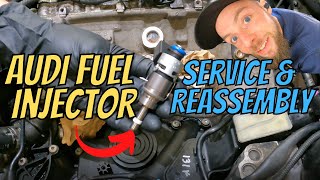
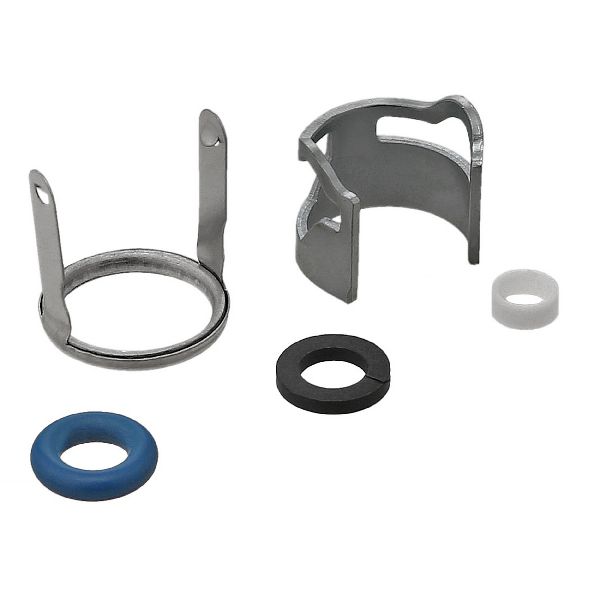
Typical fix: Replace the faulty fuel injector(s) on Bank 2. It is often recommended to replace all three injectors on the bank at the same time, along with their seals. 🎬 See how to remove injectors and install new seals.
Est. part cost: $100-$250 per injector - Severe Carbon Buildup on Intake Valves 🔴 High Probability The FSI direct injection design does not spray fuel over the intake valves, so oil and combustion byproducts from the PCV system bake onto the valves, restricting airflow. This is a very well-documented issue on this engine, often requiring cleaning every 40,000-60,000 miles.
How to confirm: Visually inspect the intake valves using a borescope after removing the intake manifold. Symptoms like rough cold starts, misfires, and sluggish performance are strong indicators.
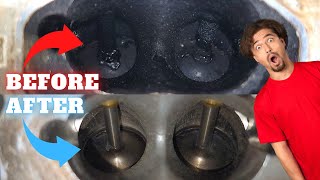
Typical fix: The intake manifold must be removed and the carbon deposits must be manually cleaned from the valves, typically through walnut shell blasting. 🎬 Watch: A professional walkthrough of the walnut blasting process. Audi has also released TSBs related to software updates to change valve timing to reduce buildup, but manual cleaning is often still required.
Est. part cost: $50-$100 for gaskets and seals - Faulty High-Pressure Fuel Pump (HPFP) or Fuel Pressure Sensor 🟡 Medium Probability → Shop Fuel Pump The HPFP is a critical component that can fail or degrade, leading to incorrect fuel pressure. While low pressure (P0087) is a more common failure code, a faulty regulator component of the pump or a bad sensor can cause pressure to be too high, creating a rich condition.
How to confirm: A technician must use a diagnostic tool (like VCDS) to monitor requested vs. actual fuel rail pressure. A significant deviation can indicate a problem with the pump or a sensor. A failing HPFP can also cause a rattling noise from the engine bay.
Typical fix: Replacement of the High-Pressure Fuel Pump (HPFP) or the relevant fuel pressure sensor.
Est. part cost: $300-$800 for HPFP, $50-$150 for sensor - Faulty Bank 2, Sensor 1 Oxygen (O2) Sensor ⚪ Low Probability → Shop Oxygen Sensor The O2 sensor is the primary sensor for measuring the air-fuel ratio. While they can fail, the ECU often runs checks on the sensor itself, making it a less common cause than fuel delivery or mechanical issues on this engine. Contamination from a rich condition can cause it to fail, but it's often a symptom rather than the root cause.
How to confirm: Use a scan tool to graph the voltage of the Bank 2 Sensor 1. A sensor that is slow to respond or has a fixed high voltage (indicating rich) is suspect. Comparing its reading to the Bank 1 sensor can also be revealing.
Typical fix: Replace the upstream O2 sensor on Bank 2 (driver's side).
Est. part cost: $100-$250
Rare But Worth Checking
- Faulty Mass Airflow (MAF) Sensor: → Shop Fuel Injection Air Flow Meter A dirty or failing MAF sensor can under-report the amount of air entering the engine, causing the ECU to inject too much fuel. This would typically cause a rich condition on BOTH banks (P0172 and P0175), so it's a rare cause for just P0175 alone. Cleaning the MAF sensor is a common first step in diagnosis.
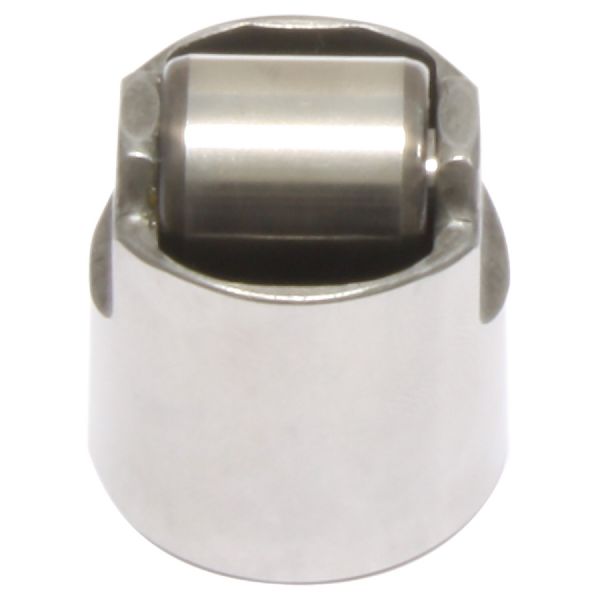
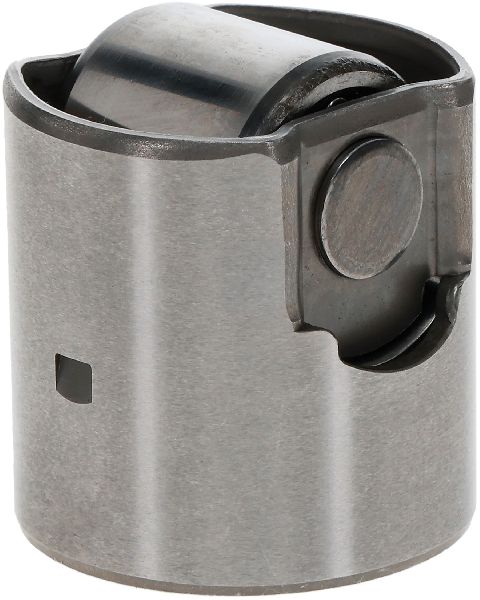
- Worn HPFP Cam Follower: → Shop Fuel Pump The cam follower is a small bucket tappet that rides on the camshaft lobe to drive the HPFP. While its failure more commonly leads to low fuel pressure (P0087), erratic pump action during the failure process could potentially contribute to fuel control issues. It is considered a wear item that should be inspected periodically.
- Faulty EVAP Purge Valve (N80): → Shop Vapor Canister If the EVAP purge valve sticks open, it can allow un-metered fuel vapors from the charcoal canister to enter the intake manifold, creating a rich condition. This would typically affect both banks, but a single-bank code is possible.
Diagnosis Steps
- Connect an OBD-II scanner and confirm P0175 is present. Check for any other codes, especially misfire or fuel pressure codes.
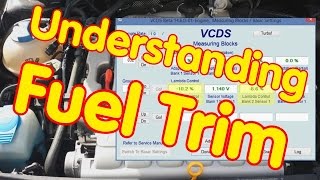
- Observe live data, specifically the Short-Term Fuel Trim (STFT) and Long-Term Fuel Trim (LTFT) for both Bank 1 and Bank 2. For P0175, you will see highly negative numbers for Bank 2 (e.g., -15% to -25% or more), indicating the ECU is trying to remove fuel.
- Compare Bank 2 fuel trims to Bank 1. If Bank 1 trims are normal, the problem is isolated to Bank 2 (injectors, O2 sensor). If both banks are rich, suspect a shared component like the MAF sensor or fuel pressure regulator.
- Inspect the air filter and intake system for any obvious blockages.
- If you have access to a borescope, remove the intake manifold and visually inspect the intake valves for carbon buildup. This is a primary suspect on this engine and a well-documented DIY and shop procedure.
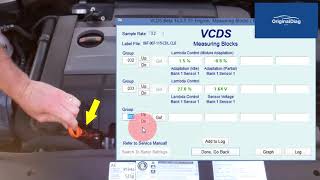
- Using an advanced scan tool (like VCDS), monitor the requested vs. actual high fuel pressure in the measuring blocks. A large discrepancy can point to the HPFP, its sensor, or the in-tank low-pressure pump.
- If carbon and fuel pressure are ruled out, focus on the Bank 2 fuel injectors. Perform a fuel pressure leak-down test. If pressure bleeds off quickly after shutdown, a leaking injector is likely.
- As a final check, inspect the Bank 2 upstream O2 sensor's operation via live data graphing. A lazy or biased sensor could be the cause, though it's less likely than the above issues.
Parts You'll Likely Need
- Fuel Injector
(OEM #06E906036F)— A leaking fuel injector is a primary cause of a rich condition on a single bank.
Trusted brands: Bosch, Hitachi
OEM price range: $180-$250
Aftermarket price range: $80-$150 - Intake Manifold Gasket Kit
(OEM #06E129717B)— Required when removing the intake manifold for carbon cleaning, which is a very common cause of issues on this engine.
Trusted brands: Victor Reinz, Elring
OEM price range: $80-$120
Aftermarket price range: $40-$70 - High-Pressure Fuel Pump (HPFP)
(OEM #06E127025M)— A failing HPFP or its internal regulator can cause excessive fuel pressure, leading to a rich condition.
Trusted brands: Hitachi (OEM), Bosch
OEM price range: $400-$800
Aftermarket price range: $250-$500
Related Codes That Often Appear With This One
- P0304, P0305, P0306 — These are misfire codes for the cylinders on Bank 2. A leaking injector or severe carbon on one of these cylinders can foul the spark plug and cause both a misfire and a rich condition for the entire bank.
- P2190 — This is another Audi-specific code for 'System Too Rich at Idle, Bank 2'. It often appears alongside P0175 and points to the same set of root causes.
- P0172 — System Too Rich, Bank 1. If both P0172 and P0175 are present, it points towards a problem common to both engine banks, such as a faulty MAF sensor, fuel pressure regulator, or HPFP.
- P1139 — This is a manufacturer-specific code for 'Fuel Trim: Bank 2 (Add) System Too Rich'. It is the VAG equivalent that often accompanies the generic P0175 and confirms the rich condition diagnosis.
Technical Service Bulletins (TSBs) & Recalls
- TSB 2019948: While not directly for P0175, this TSB is referenced for the procedure of removing carbon deposits from FSI engines when misfire codes (P0300-P0306) are present, which often accompany rich conditions.
- An unspecified TSB mentioned in forums changes valve timing overlap to help reduce the rate of carbon buildup, though manual cleaning is often still the ultimate fix.
Platform-Specific Known Issues
- The 3.2L FSI engine is well-known for requiring intake valve carbon cleaning every 60,000 to 80,000 miles. This service is often considered regular maintenance by enthusiasts and specialists.
- The cam follower for the high-pressure fuel pump is a known wear item. While it more commonly causes low-pressure issues, it's a critical part of the fuel system to be aware of.
Mechanic-Grade Diagnostic Values
- High-Pressure Fuel Rail Pressure (Actual vs. Specified) — expected: At idle, actual pressure should closely match specified pressure, typically in the range of 30 to 50 Bar. Under load, this can rise to over 100 Bar.. Failure: Actual pressure is significantly higher than specified pressure, or pressure bleeds off rapidly after engine shutdown (indicates a leak).
- Upstream Oxygen Sensor (Bank 2, Sensor 1) Voltage — expected: This engine uses a wideband O2 sensor. Instead of fluctuating between 0.1-0.9V, its voltage should remain relatively steady around 1.5V at idle when the air/fuel mixture is correct.. Failure: Voltage is stuck high (e.g., > 1.8V) indicating a persistent rich reading, or is unresponsive to changes in engine load.
- Low-Pressure Fuel Pump Duty Cycle — expected: Should be below 60% at idle.. Failure: A duty cycle consistently higher than 60% at idle suggests the in-tank pump is working too hard, possibly to compensate for a failing HPFP or a leak.
Hidden / Shadow Codes Worth Checking
- P1139: Fuel Trim, Bank 2 (Add): System Too Rich. This is an Audi/VW-specific code that directly corresponds to the generic P0175 and confirms the ECU's diagnosis. (see via VCDS or other advanced VAG-compatible scan tools.)
Scan Tool Commands That Help
- VCDS (VAG-COM): Engine -> Measuring Blocks -> Group 106 — To monitor requested vs. actual high fuel pressure and the low-pressure fuel pump duty cycle, which is critical for diagnosing HPFP issues.
- VCDS (VAG-COM): Engine -> Basic Settings -> Group 140 — To run the fuel pump and then depressurize the high-pressure rail before performing any physical repairs on the fuel system, such as replacing an injector or the HPFP. This is a critical safety step.
- VCDS (VAG-COM): Engine -> Output Tests — To cycle individual components like the intake manifold runner flaps to check for mechanical operation without disassembly. This can help confirm if a related fault code (like P2070) is due to a stuck flap or a vacuum line issue.
Wiring & Ground Locations
- Ground Point 12 — In the engine compartment on the left side, typically on the frame rail or inner fender structure.. A corroded or loose main engine ground can cause erratic voltage signals from critical sensors like the O2 sensors and MAF sensor, leading to incorrect fuel calculations.
- Ground Point 609 — Located in the plenum chamber (the area below the windshield wipers), on the right side.. This ground point serves various engine management components. Poor contact here can lead to intermittent sensor failures and difficult-to-diagnose codes, including fuel trim issues.
- Bank 2 O2 Sensor Connector — The upstream sensor is located on the driver's side exhaust manifold, before the catalytic converter. The connector is typically clipped to the firewall or a nearby bracket.. Allows for direct testing of the sensor's heater circuit resistance and voltage signals at the connector pins to rule out wiring issues between the sensor and the ECU.
Real Owner Repair Stories
- Ross-Tech Forums Professional User (2008 Audi A5 3.2L CALA) — Low power, CEL with fuel trim codes (P1137/P1139) and an intake manifold flap code (P2070).
❌ Tried (didn't work) Initial diagnosis was unclear.
✅ What actually fixed it An expert user identified a 'notorious/common' issue on these engines: a broken vacuum line that runs from the driver's side to a vacuum reservoir near the upper intake manifold. This leak starves the intake runner flap actuator of vacuum, causing it to set a fault and potentially affecting air/fuel mixture.
OEM Part Supersession History
06E127025G→06E127025AB— Likely an internal revision for improved reliability or performance.
Heads up: The CALA engine in the A5 often uses part number 06E127025M. It is critical to verify the part number on the existing pump before ordering, as different revisions may not be compatible.
Model Year Variations Within This Range
- 2008-2011: The High-Pressure Fuel Pump (HPFP) may have different part numbers within this range (e.g., 06E127025G vs. 06E127025M). The PCV (oil separator) design and location was also updated on the 3.2L FSI platform around this time, with later models having the unit located under the intake manifold.
Diagnostic Flowchart
Other Known Issues on This Vehicle
Issues unrelated to this code that are worth knowing about as an owner of this generation:
- Timing Chain Tensioner Failure 🔴 High — Common after 60,000-80,000 miles. Symptoms include a brief engine rattle on cold starts that progresses over time. The driver's side (Bank 2) tensioner is noted to fail more frequently due to its orientation allowing oil to drain out.
- Excessive Carbon Buildup 🟠 Medium — Inevitable on all FSI engines. Performance degradation is often noticed every 40,000-60,000 miles, requiring manual cleaning. (Ref: TSB 2019948 (procedure for cleaning))
- High Oil Consumption 🟠 Medium — Some 3.2L FSI engines, like their 2.0T counterparts, can suffer from oil consumption issues related to piston ring design, though it's more widely documented on the 2.0T.
- Water Pump / Thermostat Failure 🟠 Medium — The water pump and/or thermostat can fail, leading to coolant leaks and potential overheating. This is a common issue across many Audi models of this era.
Used vs. New Parts: Buying Guide for This Vehicle
When a used part is the smart pick: For non-wear items like the intake manifold, engine covers, or brackets, a used part from a reputable salvage yard is a cost-effective choice. A used PCV/oil separator from a low-mileage donor vehicle can also be considered.
Donor-vehicle mileage cap: roughly under 60000 miles for the part to have meaningful remaining life.
What to inspect on the donor part:
- Check for the vehicle's service history if possible.
- For electronic parts like sensors, ensure there is no visible corrosion on the pins.
- For mechanical parts like an intake manifold, check for cracks, warping, or signs of extreme heat.
- Avoid parts from vehicles that had a severe frontal impact or engine fire.
OEM-only on this vehicle (don't cheap out):
- High-Pressure Fuel Pump (HPFP): Due to the high pressures and precision required, aftermarket versions are risky. A seller explicitly warns against cheap Chinese copies. Stick with OEM (Hitachi) or a new part from a top-tier OES brand like Bosch.
- Fuel Injectors: Leaking is the primary cause of P0175. Used injectors are a major gamble. New OEM (Bosch/Hitachi) or OES injectors are strongly recommended. Always replace the PTFE seals.
Aftermarket brands forum-validated for this vehicle:
- Bosch (Fuel injectors, HPFP, O2 Sensors)
- Hitachi (OEM for HPFP, Injectors)
- Victor Reinz / Elring (Gaskets and seals)
- NTK / Denso (Oxygen Sensors)
Brands owners have reported issues with on this vehicle:
- Unbranded or 'white-box' electronic components from online marketplaces, especially for critical parts like fuel pumps, injectors, and sensors.
Real Owner Stories
Aggregated from forums and TSBs cited above. Mileages and costs reflect what owners reported in those sources.
2009 Audi A5 3.2L FSI
Symptoms: The owner experienced a P0175 code accompanied by a rough idle and a strong smell of fuel.
What fixed it: The owner suspected a stuck injector as the primary cause of the rich condition and fuel odor.
Source hint: https://www.audiworld.com/forums/a5-s5-rs5-coupe-cabrio-b8-222/p0175-2009-audi-a5-3-2-engine-code-3029449/
2008-2011 Audi A5 3.2L FSI — ~70000 miles
Symptoms: Rough cold starts, engine misfires, and sluggish acceleration/slight stumble.
What fixed it: Manual cleaning of carbon deposits from the intake valves using walnut shell blasting.
Source hint: vehicle_specific_issues and TSB 2019948
Related OBD-II Codes
Frequently Asked Questions
Does TSB 2019948 apply to my Audi A5 if I have a P0175 code?
How often should I perform carbon cleaning on my 3.2L FSI engine to prevent rich codes?
Is there a software update to help with the carbon buildup causing my P0175 code?
Why is my Bank 2 exhaust tip sooty compared to Bank 1?
Could a rattling noise from my engine bay be related to the P0175 code?
Can I check for a leaking injector on my A5 without removing it?
Helpful Videos
We Have This Part in Stock



The information in this article is provided for general reference and educational purposes only. Vehicle specifications, procedures, and part compatibility can vary by production date, trim level, and region. Always consult your vehicle's factory service manual and verify part numbers before purchasing or performing repairs. Safety-critical components such as airbags, seat belts, and braking systems should be installed by a qualified professional.
- Audi A5:
- 🧭 Diagnostic Flowchart
- 🎬 Helpful Videos
- 🛍️ Shop This Part
- What's Unique About the 2008-2011 Audi A5
- Symptoms You May Notice
- Most Likely Causes
- Rare But Worth Checking
- Diagnosis Steps
- Parts You'll Likely Need
- Related Codes That Often Appear With This One
- Technical Service Bulletins (TSBs) & Recalls
- Platform-Specific Known Issues
- Mechanic-Grade Diagnostic Values
- Hidden / Shadow Codes Worth Checking
- Scan Tool Commands That Help
- Wiring & Ground Locations
- Real Owner Repair Stories
- OEM Part Supersession History
- Model Year Variations Within This Range
- Other Known Issues on This Vehicle
- Used vs. New Parts: Buying Guide for This Vehicle
- Real Owner Stories
- 2009 Audi A5 3.2L FSI
- 2008-2011 Audi A5 3.2L FSI — ~70000 miles
- Related OBD-II Codes
- Frequently Asked Questions
- 🎟️ Get 5% Off