

P0175 on 2012-2018 Audi S8: System Too Rich Bank 2 Causes and Fixes
On the Audi S8 4.0T, P0175 is most often caused by a failing High-Pressure Fuel Pump (HPFP) leaking fuel into the oil, or a leaking fuel injector. First, check your oil for a strong gasoline smell. This is a serious code; do not drive the vehicle until it is fixed to avoid engine damage from oil dilution.
- P0175 on an Audi S8 4.0T is a critical code that should be addressed immediately. Do not continue to drive the vehicle.
- The most important first step is to check the engine oil for the smell of gasoline. This is the tell-tale sign of a failed High-Pressure Fuel Pump (HPFP), the most likely cause if both banks are running rich.
- If the oil is fine, the next most likely cause is one or more leaking fuel injectors on Bank 2.
- Do not replace the oxygen sensor; it is almost certainly doing its job correctly by reporting the rich condition.
- Due to the extreme labor involved in accessing the fuel system components in the engine's 'hot-V', it is wise to replace related wear items (both HPFPs, all injectors, PCV valve, turbo oil strainer) at the same time.
What's Unique About the 2012-2018 Audi S8
The Audi 4.0L TFSI V8 is a sophisticated 'hot-V' twin-turbo engine with a high-pressure direct injection fuel system. This design places the turbochargers, fuel injectors, and high-pressure fuel pumps (HPFPs) in the valley of the engine, making them labor-intensive to access. Failures in the HPFPs are common and can lead to fuel dangerously contaminating the engine oil. Additionally, the engine is known for a critical issue with a turbocharger oil strainer that can become clogged, leading to turbo failure. This issue was so widespread it prompted a recall (21H7).
Symptoms You May Notice
- Check Engine Light illuminated
- Strong smell of fuel from the exhaust or under the hood, especially after a hot soak.
- Rough or unstable idle
- Hesitation or loss of power during acceleration
- Poor fuel economy
- Hard starting, especially when the engine is warm (hot-soak issue).
- Black smoke from the exhaust in severe cases
- Chattering or rattling noise on startup
- Oil level reading high or 'overfilled' warning on dash
- Replacing the Bank 2 Oxygen (O2) Sensor. The O2 sensor is almost always functioning correctly and accurately reporting the rich condition caused by a fuel delivery issue. Diagnose the fuel system first.
- Replacing the Mass Airflow (MAF) Sensor. The 4.0T engine in the D4 S8 does not use a MAF sensor; it uses MAP (pressure) sensors, making this an impossible cause.
Most Likely Causes
- Failing High-Pressure Fuel Pump (HPFP) 🔴 High Probability → Shop Fuel Pump The seals within the camshaft-driven HPFPs on the 4.0T engine are a known failure point, allowing raw gasoline to leak directly into the crankcase and dilute the engine oil.
How to confirm: CRITICAL: Carefully check the engine oil. If the oil level is overfull and/or smells strongly of gasoline, an HPFP has almost certainly failed. This will often set rich codes for both banks (P0172 and P0175). An owner of a 2016 A8 4.0T with 118k miles confirmed this exact failure scenario with these codes.
Typical fix: Replace the failing High-Pressure Fuel Pump. It is highly recommended to replace both HPFPs at the same time, as they wear at a similar rate. An engine oil and filter change is mandatory to remove the contaminated oil.
Est. part cost: $400-$800 per pump - Leaking Fuel Injector(s) 🔴 High Probability → Shop Fuel Injector Direct fuel injectors operate under very high pressure and can fail over time, either becoming clogged or, in this case, leaking or sticking open. This is a well-documented issue covered by a Technical Service Bulletin (2046724).
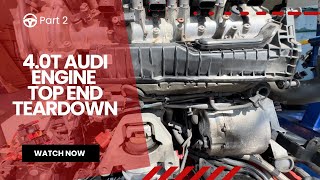
How to confirm: A classic symptom is difficulty starting when the engine is hot (a 'hot soak' issue for 15-60 minutes). An AudiWorld user with a 2013 S8 experienced this exact symptom along with P0172/P0175, which was diagnosed as leaking injectors. Pull the spark plugs on Bank 2 (cylinders 5-8) and inspect them. A plug that is black, sooty, or wet with fuel indicates a leaking injector in that cylinder. A technician can perform a fuel pressure leak-down test as outlined in TSB 2046724. 🎬 Watch: How to remove the intake manifold and fuel injectors.
Typical fix: Replace the faulty fuel injector(s) and their seals. It is often recommended to replace all injectors on the affected bank, or all eight, given the significant labor required to access them.
Est. part cost: $150-$300 per injector - Failed PCV / Oil Separator 🟡 Medium Probability The PCV (Positive Crankcase Ventilation) system, or oil separator, is located in the hot engine valley and is made of plastic components that can become brittle and fail, causing vacuum leaks, crankcase pressure issues, and incorrect fuel trims.
How to confirm: Symptoms include a high-pitched whining or whistling noise from the engine bay, excessive vacuum or pressure at the oil filler cap, and sometimes increased oil consumption. A failure can cause unmetered air to be drawn in, which the ECU may try to counteract, leading to fuel trim issues.
Typical fix: Replace the entire PCV / oil separator assembly. Due to its location, this is often done at the same time as other 'in-valley' work like injector or HPFP replacement.
Est. part cost: $250-$450
Rare But Worth Checking
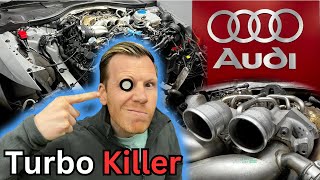
- Turbocharger Failure due to Oil Starvation: While not a direct cause of a rich condition, the symptoms of a failing turbo (rough idle, power loss, smoke) can be similar. The root cause is a clogged oil strainer screen, which was the subject of TSB 2044640 and later the more comprehensive Recall 21H7 (NHTSA 22V178000). 🎬 Watch: A detailed walkthrough of the turbo oil strainer replacement. A catastrophic turbo failure can damage other components and potentially affect intake gaskets, leading to fuel trim codes.
Diagnosis Steps
- Read all stored fault codes with an Audi-compatible scanner (like VCDS). Note if P0172 (Bank 1 Rich) is also present, which points to a shared problem.
- CRITICAL FIRST STEP: Open the oil filler cap or pull the dipstick and carefully smell the engine oil for a strong gasoline odor. Check the oil level. If it is high and smells of fuel, suspect HPFP failure. Do not start or drive the vehicle.
- If the oil seems normal, proceed with diagnosis. Use a scan tool to monitor live data for long-term and short-term fuel trims on both banks. For P0175, you will see highly negative values on Bank 2 (e.g., -15% to -30%).
- Investigate for leaking fuel injectors. Check for a history of hard starting when the engine is warm, a classic symptom detailed in owner forums and TSB 2046724.
- As a confirmatory step, remove the spark plugs from Bank 2 (cylinders 5, 6, 7, and 8). Inspect for heavy black soot or wetness from fuel, which would pinpoint a leaking injector in a specific cylinder.
- Inspect the PCV system for signs of failure, such as whistling noises or evidence of oil leaks around the assembly in the engine valley.
- While the intake system is disassembled for inspection, check the turbochargers for excessive shaft play or signs of oil leakage. Verify if Recall 21H7 for the turbo oil strainer has been performed by checking with an Audi dealer or the NHTSA website.
Parts You'll Likely Need
- High-Pressure Fuel Pump (HPFP)
(OEM #079127025AJ (supersedes 079127025T, AE, AH, AK))— This is a primary and very common cause of rich codes on the 4.0T engine due to internal seal failure leaking fuel into the engine oil.
Trusted brands: Bosch, Genuine Audi
OEM price range: $600-$800
Aftermarket price range: $400-$600 - Fuel Injector — A leaking or stuck-open injector is another primary cause of a rich condition on a single bank, often causing hot-start issues.
Trusted brands: Bosch, Genuine Audi
OEM price range: $250-$300
Aftermarket price range: $150-$200 - PCV Valve / Oil Separator Assembly
(OEM #079103542E)— This part is a common failure item located in the engine valley. It's often replaced preventatively during any major 'in-valley' service for injectors or HPFPs.
Trusted brands: Genuine Audi, Febi Bilstein
OEM price range: $350-$450
Aftermarket price range: $250-$350
Related Codes That Often Appear With This One
- P0172 — System Too Rich, Bank 1. If both P0172 and P0175 are present, it strongly points to a common issue affecting both banks, like failing HPFPs leaking fuel into the oil or a systemic fuel pressure problem.
- P0300, P0305-P0308 — Cylinder Misfire codes for Bank 2. An excessively rich mixture from a leaking injector can foul the spark plug, causing misfires on the affected cylinder(s).
Technical Service Bulletins (TSBs) & Recalls
- TSB 2046724/7: Addresses 'Engine sporadically difficult to start' due to leaking high-pressure fuel injectors, a direct cause of rich conditions.
- Recall 21H7 (NHTSA 22V178000): Supersedes TSB 2044640. Mandates replacement of the original, fine-mesh turbocharger oil strainer with an updated part to prevent oil starvation and catastrophic turbo failure.
- TSB 2044640/5: The original bulletin for 'Turbocharger damaged' due to the clogged oil strainer. Now superseded by the recall.
Platform-Specific Known Issues
- High-Pressure Fuel Pumps (HPFPs) are known to fail and leak fuel into the crankcase, causing oil dilution and over-reading oil levels.
- A Technical Service Bulletin (TSB 2046724/7) exists for sporadically difficult starting caused by leaking high-pressure fuel injectors after a hot soak.
- The infamous 'Turbo Oil Strainer' issue is the most critical known fault, leading to turbo failure from oil starvation. This is covered by NHTSA Recall 22V178000 (Audi code 21H7), which replaced the original TSB 2044640.
Mechanic-Grade Diagnostic Values
- Low-pressure fuel system holding pressure — expected: Pressure must rise above 6 bar within 5 minutes of engine off and hold for 10 minutes.. Failure: If pressure drops by more than 1.5 bar within 15 minutes, it suggests a leak in one or both HPFPs.
- High-pressure fuel system holding pressure (post-shutdown) — expected: Gradual rise to approximately 80 bar over 10 minutes after engine is switched off.. Failure: A different pressure development curve (e.g., faster or slower rise, or failure to reach target) can indicate a leaking fuel injector.
- Low-pressure fuel pressure (live data) — expected: Actual value should closely match specified value (e.g., 596.7 kPa).. Failure: A large deviation or a 'Fuel Pressure Outside Specification' code (P310B) points to a low-pressure side issue (in-tank pump, filter, or controller).
- Long Term Fuel Trim (Additive) at Idle, Bank 2 — expected: Typically within +/- 5%.. Failure: A value of -10% or more negative (e.g., -15%, -25%) confirms the ECM is compensating for a significant rich condition.
Hidden / Shadow Codes Worth Checking
- P310B: Low Pressure Fuel regulation: Fuel Pressure Outside Specification. This code often appears with HPFP issues, as a failing low-pressure pump can starve the high-pressure pumps. (see via VCDS (VAG-COM) or other advanced Audi-specific scanners.)
- P0088: Fuel Rail/System Pressure - Too High. A TSB (2035235/2) notes this can be set due to a software issue where low system voltage causes the fuel metering valve on the HPFP to default to full supply mode. (see via VCDS (VAG-COM) or standard OBD-II scanner.)
- P3043: Fuel Pump Mechanical Malfunction. This code directly points to a problem with a fuel pump, often logged intermittently before a complete failure. (see via VCDS (VAG-COM) or other advanced Audi-specific scanners.)
Scan Tool Commands That Help
- VCDS (VAG-COM): Engine -> Adaptation -> Reset Fuel Trim Values — After replacing fuel system components like injectors or HPFPs, this command forces the ECM to relearn the fuel maps from a baseline, preventing it from using old, incorrect learned adjustments.
- VCDS (VAG-COM): Engine -> Output Tests -> Fuel Pump Electronics — This activates the low-pressure in-tank fuel pump. It's used to prime the system after replacing a fuel filter or pump to prevent the HPFPs from running dry on initial startup.
- VCDS (VAG-COM) or ODIS: SVM Code for ECM software update — As per TSB 2035235/2, an ECM software update may be required to fix an issue where low system voltage can cause a P0088 (Fuel Pressure Too High) code by incorrectly commanding the HPFP. This is a dealer/specialist level task.
Wiring & Ground Locations
- Engine Wiring Harness — Runs through the 'hot-V' valley of the engine, underneath the intake manifold and between the turbochargers.. This location exposes the harness to extreme heat and potential oil/coolant leaks from the PCV, turbo lines, or coolant valves. Degraded insulation or cracked connectors can cause shorts or open circuits for fuel injectors or HPFP sensors, leading to rich/lean codes or misfires.
- Engine Ground Straps — Key ground points are typically located on the chassis rails in the engine bay and from the engine block to the frame. Specific locations for the D4 platform require consulting a service manual, but they are critical for stable sensor readings.. A corroded or loose engine ground can cause floating ground issues, leading to incorrect voltage readings from O2 sensors, pressure sensors, and affecting injector and pump control signals, potentially causing fuel trim codes.
- ECM (J623) Connectors — Typically located in the plenum area at the base of the windshield, protected from the elements.. While physically protected, this is the termination point for all sensor and actuator wiring. Pin-out testing for continuity or voltage drops for the Bank 2 O2 sensors, injectors (cylinders 5-8), and HPFP circuits would be performed here to rule out wiring issues.
Real Owner Repair Stories
- AudiWorld Forums user 'Audifastdaddy' (2016 Audi A8 4.0T, 118,000 miles) — Check Engine Light with codes P0172 (Rich Bank 1) and P0175 (Rich Bank 2).
❌ Tried (didn't work) The user went straight to the correct diagnosis.
✅ What actually fixed it The user diagnosed fuel in the oil, confirming HPFP failure. The final fix was replacing both High-Pressure Fuel Pumps. The user noted one pump's spring was severely worn and fell out upon removal. - AudiWorld Forums user 'slickNSX' (2013 Audi S8, 63,000 miles) — P0172 and P0175 codes, rough idle, stalling, and very difficult starting when warm (hot soak). Strong fuel smell under the hood after long cranking.
❌ Tried (didn't work) Dealer performed an ECM update for air/fuel mixture, which did not solve the problem., A shop initially misdiagnosed it as a low-pressure fuel pump issue, quoting $3k for the LPFP, FPR, and filter.
✅ What actually fixed it The symptoms (hot soak hard start, fuel smell) strongly pointed to leaking fuel injectors, as described in TSBs. The user's shop eventually diagnosed leaking injectors that were flooding the motor after shutdown.
OEM Part Supersession History
079127025T / AE / AH→079127025AJ / AK— Internal revisions to improve reliability and address seal failure issues.079906036D→079906036AC— Revisions to the fuel injector design to improve spray pattern and reliability.
Heads up: Always replace injectors in a full bank set with the same part number to ensure balanced fuel delivery. Mixing old and new revisions is not recommended.06E127248→WHT005184— Part number consolidation for the small O-ring seal used on the HPFP across many VW/Audi engines.
Heads up: This is a critical seal that should be replaced anytime the HPFP is removed. Using the old, compressed seal is a common cause of leaks.
Model Year Variations Within This Range
- 2016-2018 (S8 Plus): The S8 Plus used engine codes CTGF or CTGE, which were higher-output versions of the 4.0T. While the fundamental architecture and common failures (HPFP, injectors, PCV) are the same as the CEUC engine, some specific components and software calibrations may differ. Always verify part numbers by VIN.
- 2013-2014: An early TSB (2035235/2) addressed a software issue causing P0088 (Fuel Pressure Too High) codes due to low voltage sensitivity. Later model years received updated ECM software from the factory that resolved this.
Diagnostic Flowchart
Other Known Issues on This Vehicle
Issues unrelated to this code that are worth knowing about as an owner of this generation:
- Turbocharger Oil Strainer Clogging 🔴 High — Extremely common across all 2013-2017 4.0T engines, leading to a recall. Can occur at any mileage. (Ref: NHTSA Recall 22V178000 (Audi Code 21H7), supersedes TSB 2044640.)
- Adaptive Air Suspension Failure 🟠 Medium — Common on vehicles over 80,000 miles. Leaks in air struts/bladders or compressor/valve block failure.
- PCV / Oil Separator Failure 🔴 High — Common failure item due to high heat in the engine 'hot-V'. Plastic becomes brittle and cracks, causing vacuum leaks and oil consumption. Often replaced preventatively.
- Intake Valve Carbon Buildup 🟠 Medium — Inherent to all direct-injection engines. Typically requires cleaning every 60,000-80,000 miles to prevent misfires and rough running.
- Coolant Leaks (Water Pump/Thermostat) 🟠 Medium — The thermostat housing and water pump are known to develop leaks as the vehicle ages.
Used vs. New Parts: Buying Guide for This Vehicle
When a used part is the smart pick: For this specific repair, using used parts is generally not recommended for the core failure components. However, used parts can be a viable option for larger, non-wear items if a major service is being done, such as a complete engine wiring harness, intake manifold, or other 'in-valley' hardware that is not subject to internal wear.
Donor-vehicle mileage cap: roughly under 60000 miles for the part to have meaningful remaining life.
What to inspect on the donor part:
- For a wiring harness, it must be dry, flexible (not brittle), and have no cracked connectors or signs of pink/green coolant residue.
- For any part from the engine 'hot-V', it should be free of oil saturation and heat-related discoloration or warping.
- Verify the donor vehicle was not involved in a front-end collision, which could have stressed engine components and wiring.
OEM-only on this vehicle (don't cheap out):
- High-Pressure Fuel Pump (HPFP): Due to the catastrophic engine damage a failed pump can cause (fuel in oil), only use new Genuine Audi or OEM Bosch pumps. The risk of a used pump failing shortly after installation is too high.
- Fuel Injectors: Leaking injectors are a precision failure. Used injectors carry a high risk of having the same or other issues. Always buy new OEM (Bosch) or reputable aftermarket injectors and replace them as a set.
- PCV / Oil Separator: This is a known failure item made of plastic exposed to extreme heat. A used part has already been heat-cycled and is likely near the end of its life. Always install a new unit.
Aftermarket brands forum-validated for this vehicle:
- Bosch (for HPFP, Injectors - they are the OEM supplier)
- Febi Bilstein (for PCV / Oil Separator)
- 034Motorsport, Integrated Engineering (IE) (for performance-oriented HPFP internal upgrades, not standard replacement)
Brands owners have reported issues with on this vehicle:
- Unbranded, no-name HPFPs and fuel injectors from online marketplaces. The quality control is non-existent, and failure can lead to engine destruction, making the initial cost savings negligible.
Real Owner Stories
Aggregated from forums and TSBs cited above. Mileages and costs reflect what owners reported in those sources.
2016 Audi A8 4.0T — 118000 miles
Symptoms: The vehicle set rich codes for both banks (P0172 and P0175) and the oil level was overfull and smelled strongly of gasoline.
What fixed it: Replacement of the failing High-Pressure Fuel Pump (HPFP).
Source hint: common_causes section referencing a 2016 A8 4.0T owner
2013 Audi S8 4.0T — ~85000 miles
Symptoms: P0172/P0175 codes and a chattering or rattling noise on startup.
What fixed it: Diagnosis of leaking injectors and/or HPFP issues as discussed in the context of hot-soak symptoms.
Source hint: https://www.audiworld.com/forums/a8-s8-d4-platform-discussion-190/p0175-p0172-system-too-rich-2999914/
Related OBD-II Codes
Frequently Asked Questions
Is there a recall for the turbocharger issues on my 2012-2018 Audi S8?
My S8 is hard to start after sitting for 30 minutes when hot. Is this related to P0175?
Why is my oil level reading 'overfilled' on the dash alongside the P0175 code?
Should I replace both High-Pressure Fuel Pumps if only Bank 2 (P0175) is showing a rich code?
Can a whistling noise from the engine valley cause fuel trim codes like P0175?
What should I check first if I have P0175 and a strong smell of gas in the oil?
Helpful Videos
Used OEM Parts in Stock
New Aftermarket Parts Available


The information in this article is provided for general reference and educational purposes only. Vehicle specifications, procedures, and part compatibility can vary by production date, trim level, and region. Always consult your vehicle's factory service manual and verify part numbers before purchasing or performing repairs. Safety-critical components such as airbags, seat belts, and braking systems should be installed by a qualified professional.
- Audi S8:
- 🧭 Diagnostic Flowchart
- 🎬 Helpful Videos
- 🛍️ Shop This Part
- What's Unique About the 2012-2018 Audi S8
- Symptoms You May Notice
- Most Likely Causes
- Rare But Worth Checking
- Diagnosis Steps
- Parts You'll Likely Need
- Related Codes That Often Appear With This One
- Technical Service Bulletins (TSBs) & Recalls
- Platform-Specific Known Issues
- Mechanic-Grade Diagnostic Values
- Hidden / Shadow Codes Worth Checking
- Scan Tool Commands That Help
- Wiring & Ground Locations
- Real Owner Repair Stories
- OEM Part Supersession History
- Model Year Variations Within This Range
- Other Known Issues on This Vehicle
- Used vs. New Parts: Buying Guide for This Vehicle
- Real Owner Stories
- 2016 Audi A8 4.0T — 118000 miles
- 2013 Audi S8 4.0T — ~85000 miles
- Related OBD-II Codes
- Frequently Asked Questions
- 🎟️ Get 5% Off