

P0175 on 2007-2013 BMW M3: S65 Engine Too Rich (Bank 2) Causes and Fixes
P0175 on a BMW S65 engine means Bank 2 is running too rich. The most likely causes are a failing pre-catalyst oxygen sensor, a leaky fuel injector, or a faulty low-pressure fuel sensor. Expect to spend $60-$250 on parts for the most common fixes.
- P0175 means your M3's engine is running rich (too much fuel) on Bank 2 (cylinders 5-8).
- Start your diagnosis by checking or swapping the Bank 2 pre-catalyst O2 sensor; it's a very common failure point.
- If the O2 sensor is good, the next most likely culprits are a leaking fuel injector or a faulty low-pressure fuel sensor.
- Do not ignore this code. Continued driving can damage your catalytic converter, a very expensive repair.
- The S65 engine has two of many components (MAFs, O2 sensors, throttle actuators), which allows for swapping parts between banks to easily diagnose the faulty component.
What's Unique About the 2007-2013 BMW M3
The high-revving S65 V8 is a complex, motorsport-derived engine. Unlike many engines, it uses eight individual throttle bodies controlled by two separate throttle actuators—one for each bank. This design, along with dual Mass Air Flow (MAF) sensors, helps isolate a problem like P0175 to a specific side of the engine. While throttle actuator failures are a notorious S65 issue, they typically throw specific codes (like 2B16 for Bank 2) and are less commonly the direct cause of a solitary P0175 code. More often, owners on forums report issues with oxygen sensors, fuel injectors, or the low-pressure fuel sensor as the root cause.
Symptoms You May Notice
- Check Engine Light (or Service Engine Soon message) is on
- Reduced fuel economy
- Smell of unburnt fuel from the exhaust
- Rough or bouncy idle, especially on cold starts
- Hesitation or lack of power
- Black smoke from the exhaust in severe cases
- Hard starting, may require throttle input to keep running
- Replacing spark plugs without addressing the root cause. While a rich condition will foul spark plugs, the plugs themselves are the victims, not the cause of the problem.
Most Likely Causes
- Faulty Pre-Catalyst Oxygen (O2) Sensor 🔴 High Probability → Shop Oxygen Sensor
How to confirm: The primary O2 sensor on Bank 2 (pre-catalytic converter) provides the data for fuel trim. Use a diagnostic scanner to monitor the voltage of the Bank 1 and Bank 2 sensors. A failing sensor may have slow response times or a stuck voltage reading. The most definitive test is to swap the Bank 1 and Bank 2 pre-cat O2 sensors. If the code changes to P0172 (System Too Rich Bank 1), the O2 sensor is confirmed to be the faulty part.
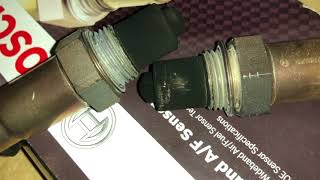
Typical fix: Replace the pre-catalyst oxygen sensor for Bank 2. 🎬 Watch: Step-by-step guide to replacing your O2 sensors
Est. part cost: $100-$200 - Leaking Fuel Injector(s) 🟡 Medium Probability → Shop Fuel Injector Fuel injectors can fail and stick open over time, dumping excess fuel into a cylinder. This is a growing concern for S65 owners, and in severe cases can lead to cylinder wall scoring from fuel washing oil away, resulting in loss of compression. The engine's lack of a user-serviceable fuel filter may contribute to injector issues.
How to confirm: After the engine has been off, pull the spark plugs on Bank 2 (cylinders 5-8). A plug that is black, sooty, or smells strongly of fuel points to a leaking injector in that cylinder. A professional can also perform a fuel injector flow test to confirm. Some owners on M3Post recommend replacing all eight injectors as a preventative maintenance item due to the risk of engine damage.
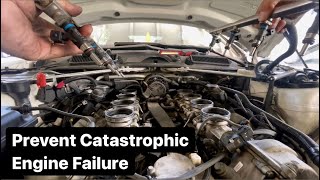
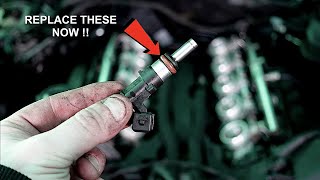
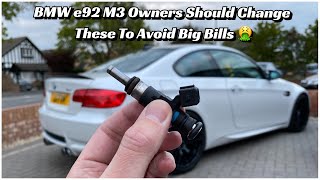
Typical fix: Replace the faulty fuel injector(s). It is often recommended to replace all injectors on the affected bank or all eight at once as a preventative measure.
Est. part cost: $20-$60 per injector (aftermarket), $150+ (OEM) - Faulty Low-Pressure Fuel Sensor 🟡 Medium Probability Numerous M3 owners have reported that replacing a faulty low-pressure fuel sensor resolved P0175, sometimes accompanied by P0172 (rich on both banks). A faulty sensor can send incorrect low-pressure readings to the DME, causing it to command longer injector pulse widths, leading to a rich condition.
How to confirm: This can be difficult to confirm without replacing the part, as the sensor itself is providing the data. If O2 sensors and injectors check out, and especially if you also have rough starts or both P0172 and P0175 codes, this sensor is a likely culprit given its low cost and ease of replacement.
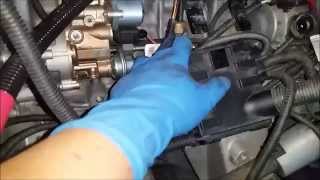
Typical fix: Replace the low-pressure fuel sensor. It is located near the airbox on the driver's side and is relatively easy to access.
Est. part cost: $60-$110 - Faulty Mass Air Flow (MAF) Sensor ⚪ Low Probability → Shop Fuel Injection Air Flow Meter
How to confirm: The S65 has two MAF sensors, one for each bank. A dirty or failing MAF on Bank 2 could under-report airflow, causing the DME to inject too much fuel. To diagnose, swap the MAF sensors between Bank 1 and Bank 2. If the code changes to P0172 (Bank 1), the MAF sensor is the problem.
Typical fix: Clean the MAF sensor with a dedicated MAF sensor cleaner. If cleaning does not resolve the issue, replace the sensor.
Est. part cost: $150-$300
Rare But Worth Checking
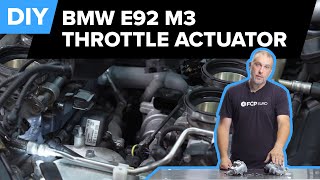
- Failing Throttle Actuator: The S65 is notorious for throttle actuator failure. While this usually throws specific codes like 2B16 or 2B26, some owners have reported P0175 as an early or accompanying symptom before total failure. If you also experience limp mode or DSC errors, the actuator should be investigated. 🎬 Watch: How to replace the S65 throttle body actuators
- Deteriorated Catalytic Converter: In high-mileage vehicles, the catalytic converter itself can begin to break down, which can disrupt exhaust flow and cause strange O2 sensor readings, leading to fuel trim codes. This is typically a last-resort diagnosis after all other fuel and air metering components have been checked.
- Faulty Engine Coolant Temperature Sensor or Thermostat: If the engine computer believes the engine is running colder than it is due to a faulty sensor or a stuck-open thermostat, it may command a richer fuel mixture, which can trigger a P0175 code.
Diagnosis Steps
- Read the code using an OBD-II scanner and confirm it is P0175. Check for any other codes that may be present, such as P0172 or fuel pressure codes.
- Using the scanner's live data function, observe the short-term and long-term fuel trims for both Bank 1 and Bank 2. For P0175, you will see a significant negative percentage on Bank 2 (e.g., -15% or lower), indicating the DME is removing fuel.
- Inspect the air intake system for Bank 2, including the air filter and MAF sensor, for any blockages or contamination.
- Swap the pre-catalyst O2 sensors between Bank 1 and Bank 2. Clear the codes and drive the vehicle. If the code returns as P0172 (Bank 1), the O2 sensor you moved is faulty.
- If the code remains P0175, swap the MAF sensors between banks. Clear codes and drive. If the code moves to P0172, the MAF sensor is faulty.
- If the code still remains P0175, inspect the fuel injectors on Bank 2. Pull the spark plugs from cylinders 5-8 and check for signs of excessive fuel (black, sooty, wet with fuel).
- If injectors and sensors appear fine, consider replacing the low-pressure fuel sensor. It is a well-documented failure point on this platform, is relatively inexpensive, and has fixed P0175 for many owners.
- If all else fails, test the fuel pressure to ensure it is within specification and check for exhaust leaks before the O2 sensor.
Parts You'll Likely Need
- Pre-Catalyst Oxygen Sensor (Bank 2)
(OEM #11787839138)— This sensor provides the primary reading for the air-fuel ratio on Bank 2. It is a common wear item and a frequent cause of this code. Bosch is the OEM supplier.
Trusted brands: Bosch, NTK
OEM price range: $180-$250
Aftermarket price range: $100-$150 - Low-Pressure Fuel Sensor
(OEM #13537614317)— A common failure point on the S65 that can cause incorrect fuel calculations, leading to rich codes on one or both banks. It's a relatively cheap and easy part to replace.
Trusted brands: Bosch, Genuine BMW
OEM price range: $80-$110
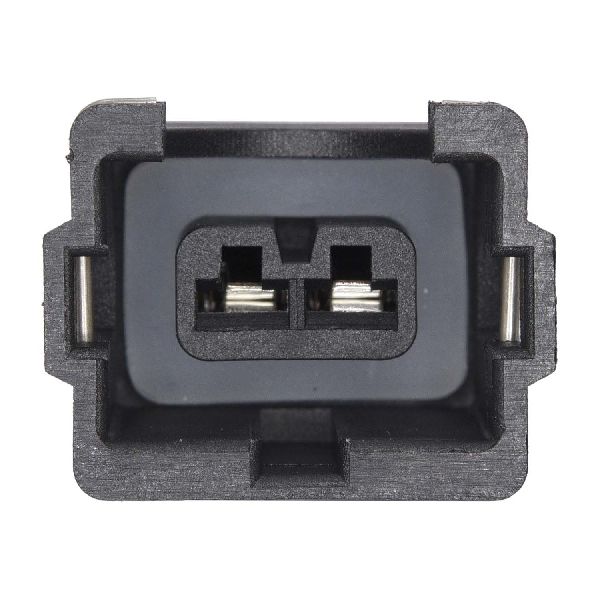
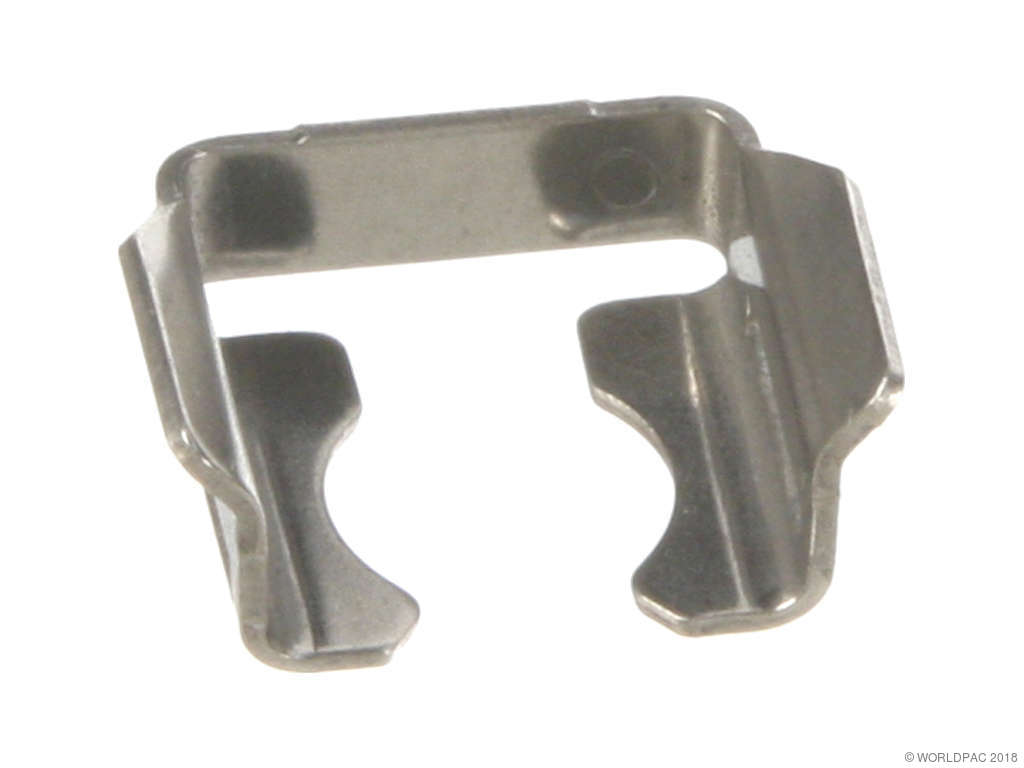
Aftermarket price range: $50-$80 - Fuel Injector
(OEM #13647838149)— An injector stuck open will dump excess fuel, causing a rich condition isolated to one cylinder but affecting the entire bank's O2 reading. This is a known failure mode that can cause serious engine damage.
Trusted brands: Bosch
OEM price range: $150-$200
Aftermarket price range: $20-$60
Related Codes That Often Appear With This One
- P0172 — System Too Rich (Bank 1). If both P0172 and P0175 are present, it points to a problem common to both banks, such as the low-pressure fuel sensor or a faulty MAP sensor. Several forum users have fixed both codes by replacing just the low-pressure fuel sensor.
- P0305, P0306, P0307, P0308 — Cylinder misfire codes for Bank 2. A severely rich condition from a leaking injector can cause incomplete combustion, leading to a misfire on one of the cylinders in that bank.
- 2722, 2788, 2796 — These are BMW-specific codes related to fuel pressure plausibility and control. Their presence alongside P0175 strongly points towards a failing low-pressure fuel sensor.
Platform-Specific Known Issues
- Non-Serviceable Fuel Filter: The S65 engine, unlike many vehicles, does not have a separate, easily serviceable fuel filter. The filter is integrated into the fuel pump assembly inside the tank. Over time, this can lead to debris reaching the fuel injectors, potentially causing them to stick open. This design is a suspected contributor to the increasing reports of injector failures on higher-mileage cars.
Mechanic-Grade Diagnostic Values
- Low-Pressure Fuel System — expected: 5 bar (72.5 psi), regulated by the DME.. Failure: A faulty sensor may provide an illogical reading, or pressure may deviate significantly from the 5 bar target, causing the DME to make incorrect fuel calculations.
- Pre-Catalyst (Wideband) O2 Sensor (Bank 2, Sensor 1) — expected: Voltage is not the primary metric; it reports a lambda value. A healthy sensor will react quickly to changes in throttle.. Failure: Slow response time, or a reading that is stuck. Swapping with Bank 1 sensor is the best diagnostic test.
- Post-Catalyst (Narrowband) O2 Sensor (Bank 2, Sensor 2) — expected: A steady voltage, typically around 0.6V to 0.8V, indicating the catalyst is working.. Failure: Fluctuating voltage similar to the pre-cat sensor (between 0.1V and 0.9V) suggests a failing catalytic converter, not necessarily a bad sensor.
- Long-Term Fuel Trim (LTFT) - Bank 2 — expected: Ideally close to 0%, but healthy values are typically within +/- 5%.. Failure: A reading of -10% or more negative indicates the DME is consistently removing fuel to counteract a rich condition. A P0175 code may trigger when trims exceed the DME's programmed limit (e.g., -25% to -30%).
Hidden / Shadow Codes Worth Checking
- 2788: Fuel pressure variance comparison at max pressure. This code indicates the fuel pressure is too high when compared to the DME's target value. (see via BMW-specific diagnostic tools like ISTA or advanced OBD-II scanners.)
- 2722: Fuel pressure sensor, electrical diagnostics. This code is set when the sensor's electrical signal is out of the expected range (e.g., higher than the maximum stored value). (see via BMW-specific diagnostic tools like ISTA or advanced OBD-II scanners.)
- 2B59: Coolant thermostat monitoring. If the engine takes too long to reach operating temperature, the DME may enrich the fuel mixture, potentially leading to a rich code like P0175 as a secondary fault. (see via BMW-specific diagnostic tools like ISTA or advanced OBD-II scanners.)
Scan Tool Commands That Help
- ISTA (BMW Dealer Software): Fuel System Test Plan — When diagnosing fuel pressure codes like 2722 or 2788. ISTA can guide the technician through a series of checks for the low-pressure fuel system, including sensor and pump evaluation.
- ISTA (BMW Dealer Software): Reset Fuel Adaptations — After replacing a component that affects fuel mixture, such as O2 sensors, MAF sensors, or fuel injectors. This clears the learned long-term fuel trim values and forces the DME to re-learn, preventing the old, incorrect values from masking the success of the repair.
Wiring & Ground Locations
- Main Engine Ground Strap — Located on the driver's side, connecting the engine block to the chassis, near the header-to-x-pipe connection. It is accessible after removing the large metal undertray.. A corroded or loose ground can cause erratic behavior in sensors that rely on a stable ground reference, including O2 sensors and the low-pressure fuel sensor. This can lead to incorrect readings and phantom rich/lean codes.
- Interference Suppression Ground Cable — Located on the passenger side at the top of the engine, attached to the cylinder head.. While less critical than the main ground, this cable helps suppress electrical noise. A poor connection could potentially interfere with sensitive sensor signals, although it's a less likely cause for P0175.
Real Owner Repair Stories
- Bimmerpost user 'Chris_08_M3' (2008 M3) — P0175 code (Bank 2 too rich).
❌ Tried (didn't work) Not specified, but the user was seeking DIY solutions.
✅ What actually fixed it Replacing the low-pressure fuel sensor. - Bimmerpost user 'Juano11' (2009 E92 M3, 45k miles) — P0172 & P0175 (both banks rich), later just P0175. Bouncy idle on cold start for 5-10 seconds.
❌ Tried (didn't work) Clearing the code multiple times.
✅ What actually fixed it The user was advised by others that the low-pressure fuel sensor was the likely culprit, which is a common fix for these symptoms. - Bimmerpost user 'flip' (E9x M3) — P0172 and P0175 codes, idle going up and down from 600rpm to 1200rpm.
❌ Tried (didn't work) Resetting the code multiple times.
✅ What actually fixed it Replacing the low-pressure fuel sensor. The user reported an immediate difference, with the idle stabilizing and the car driving like new.
OEM Part Supersession History
13537547883→13537614317, which was later superseded by 13539899007— The original low-pressure fuel sensor was prone to failure. The design was updated for better reliability.
Heads up: Some early replacements of the original brass-colored sensor with the newer silver sensor required an adapter cable, though most modern replacement kits account for this. Always verify fitment with the supplier.
Model Year Variations Within This Range
- 2008-2010 vs 2011-2013: Early models (pre-LCI) used connecting rod bearings with a copper-lead composition, while later models (2011+) switched to a tin-aluminum composition. This does not directly affect P0175 but is a critical reliability distinction for the S65 engine. There were also minor changes to accessories like the oil cooler and power steering pump routing around May 2008.
Diagnostic Flowchart
Other Known Issues on This Vehicle
Issues unrelated to this code that are worth knowing about as an owner of this generation:
- Premature Rod Bearing Wear 🔴 High — A widely documented issue. Proactive replacement is commonly recommended between 60,000 and 80,000 miles, as failure is catastrophic to the engine. The tight clearances and oil properties are cited as primary causes.
- Throttle Actuator Failure 🔴 High — Extremely common failure item, with an expected life of around 70,000 miles. Failure is caused by wear of internal plastic gears and/or failure of the internal circuit board. It triggers limp mode and specific fault codes like 2B15, 2B16, 2B21, and 2B57.
- Idle Control Valve (ICV) Failure 🟠 Medium — A common issue on higher-mileage cars, causing rough/surging idle, hard starts, and potential limp mode. The valve can become clogged with carbon buildup from the PCV system.
Used vs. New Parts: Buying Guide for This Vehicle
When a used part is the smart pick: For this specific code, used parts are generally not recommended for the primary failure items. Sensors (O2, Low-Pressure Fuel) and fuel injectors are wear items with a finite lifespan. A used part could fail shortly after installation, wasting time and labor. The only exception might be structural components if a rare cause like a cracked intake manifold were diagnosed, but this is highly unlikely for P0175.
Donor-vehicle mileage cap: roughly under 50000 miles for the part to have meaningful remaining life.
What to inspect on the donor part:
- For sensors or injectors, there are no reliable visual cues. It's a gamble.
- If considering a used part, obtain it from a reputable dismantler with a warranty and a clear return policy.
- Ask for the VIN of the donor car to verify its mileage and production date.
OEM-only on this vehicle (don't cheap out):
- Low-Pressure Fuel Sensor - While aftermarket versions exist, the OEM Bosch sensor is not significantly more expensive and is a proven fix for this common S65 issue.
- Oxygen (O2) Sensors - OEM supplier (Bosch) is highly recommended. Cheaper, no-name sensors are notorious for failing prematurely or providing inaccurate readings, causing persistent issues.
Aftermarket brands forum-validated for this vehicle:
- Bosch (for O2 sensors, fuel injectors, and low-pressure fuel sensor - they are the OEM supplier)
- NTK (for O2 sensors)
Brands owners have reported issues with on this vehicle:
- Unbranded, low-cost fuel injectors and sensors from online marketplaces. These often lack the precise calibration required for the S65's DME and can cause more problems than they solve.
Real Owner Stories
Aggregated from forums and TSBs cited above. Mileages and costs reflect what owners reported in those sources.
2009 E92 M3 — 45000 miles
Symptoms: CEL with 'Service engine soon, Increased Emissions!', codes P0172 and P0175. Bouncy idle for 5-10 seconds on cold start up.
What fixed it: Replacement of the low fuel pressure sensor.
Cost: $60
Source hint: Bimmerpost (m3post) thread titled 'CEL question P0172 & P0175'
2007-2013 BMW M3 S65 — ~75000 miles
Symptoms: Idle going up and down (600rpm to 1200rpm) for several months, followed by a Check Engine Light with codes P0172 and P0175.
What fixed it: Replacing the LOW PRESSURE SENSOR.
Source hint: Bimmerpost (m3post) forum report
Related OBD-II Codes
Frequently Asked Questions
Can I just clean the fuel filter on my 2008 M3 to fix the P0175 rich condition?
I have P0175 on Bank 2; how can I be sure it's the O2 sensor before buying a new one?
Why would a low-pressure fuel sensor cause a rich code like P0175?
Is it true that a P0175 code on the S65 could lead to engine failure?
Where is the low-pressure fuel sensor located on the E90/E92 M3?
Should I replace all my injectors if only one is causing the P0175 code?
Helpful Videos
We Have This Part in Stock
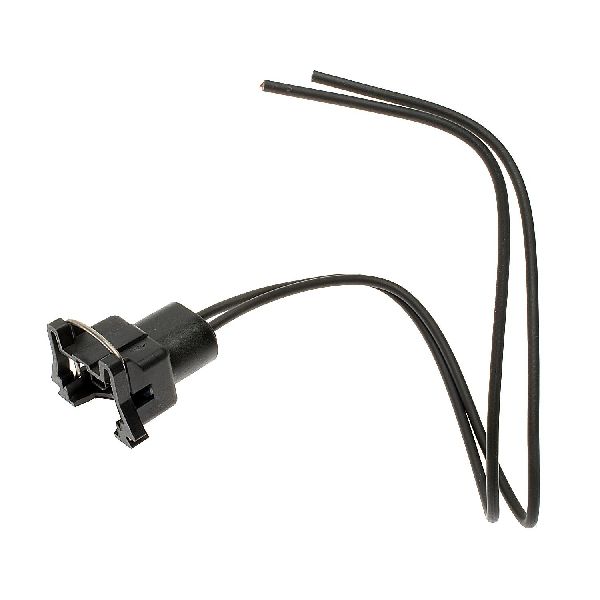


The information in this article is provided for general reference and educational purposes only. Vehicle specifications, procedures, and part compatibility can vary by production date, trim level, and region. Always consult your vehicle's factory service manual and verify part numbers before purchasing or performing repairs. Safety-critical components such as airbags, seat belts, and braking systems should be installed by a qualified professional.
- BMW M3:
- 🧭 Diagnostic Flowchart
- 🎬 Helpful Videos
- 🛍️ Shop This Part
- What's Unique About the 2007-2013 BMW M3
- Symptoms You May Notice
- Most Likely Causes
- Rare But Worth Checking
- Diagnosis Steps
- Parts You'll Likely Need
- Related Codes That Often Appear With This One
- Platform-Specific Known Issues
- Mechanic-Grade Diagnostic Values
- Hidden / Shadow Codes Worth Checking
- Scan Tool Commands That Help
- Wiring & Ground Locations
- Real Owner Repair Stories
- OEM Part Supersession History
- Model Year Variations Within This Range
- Other Known Issues on This Vehicle
- Used vs. New Parts: Buying Guide for This Vehicle
- Real Owner Stories
- 2009 E92 M3 — 45000 miles
- 2007-2013 BMW M3 S65 — ~75000 miles
- Related OBD-II Codes
- Frequently Asked Questions
- 🎟️ Get 5% Off