

P0175 on 2010-2017 Cadillac Escalade: System Too Rich Bank 2 Causes and Fixes
On a 2010-2017 Cadillac Escalade, P0175 is most often caused by an incorrect fuel alcohol reading on 2010-2014 models, which requires a scan tool reset. For 2015-2017 models, a failing high-pressure fuel pump is a common cause. Other possibilities include MAF sensor issues or leaking injectors.
- For 2010-2014 models, the first step should always be to check the learned Fuel Alcohol Content with a scan tool and reset it if it's incorrect.
- For 2015-2017 models, immediately suspect the high-pressure fuel pump; check the oil for a gasoline smell.
- Inspect the air intake tube near the MAF sensor for plastic flashing, as noted in a GM Technical Service Bulletin.
- Do not replace the oxygen sensor as a first step; it is most likely reporting the problem correctly.
- If both P0172 (Bank 1) and P0175 (Bank 2) are present, the cause is something that affects the entire engine, not a single injector.
What's Unique About the 2010-2017 Cadillac ESCALADE
This generation of Escalade has two very distinct, well-documented issues that cause this code. On the port-injected 2010-2014 models, the ECM can incorrectly 'learn' a high percentage of ethanol in the fuel, even if you only use regular gasoline, causing it to inject too much fuel as detailed in TSB PIP4792D. For the direct-injected 2015-2017 models, a failing high-pressure fuel pump (HPFP) can leak fuel into the engine oil, which then gets pulled into the intake via the PCV system, creating a rich condition that affects both banks.
Diagnostic Flowchart
Tap your situation to follow the diagnostic path that matches what you're seeing on this vehicle.
Generation note: The 2010-2017 range covers two Escalade generations. The 3rd Gen (2010-2014) uses a port-injected 6.2L L94 V8 and is prone to incorrect fuel alcohol content readings (TSB PIP4792D). The 4th Gen (2015-2017) uses a direct-injected 6.2L L86 V8, where high-pressure fuel pump failure is a more common cause for this code.
Symptoms You May Notice
- Check Engine Light is on
- Rough or unstable idle, sometimes stalling on a cold start
- Poor fuel economy
- Hesitation or sputtering when accelerating
- Black smoke or soot from the exhaust, especially on a cold start
- Strong smell of gasoline from the exhaust
- Engine 'dieseling' or running on for a few seconds after the key is turned off
- Hard shifting, particularly 1-2 and 2-3 shifts
- Replacing the oxygen (O2) sensor first. The O2 sensor is usually the messenger accurately reporting the rich condition, not the cause of it. Diagnosing the fuel system (HPFP, injectors, alcohol content) and air induction (MAF) first is critical.
Most Likely Causes
- Incorrect Fuel Alcohol Content Reading 🔴 High Probability Common on 2010-2014 Flex Fuel models. The ECM estimates alcohol content rather than using a physical sensor, and this value can become skewed, sometimes after running the tank very low on fuel. This causes the ECM to command excessive fuel delivery. TSB PIP4792D addresses this exact issue.
How to confirm: Use a scan tool to view the 'Fuel Alcohol Content' parameter. If it shows a value greater than 15% (e.g., 30% or even 57%) while using standard E10/E15 gasoline, it is incorrect.
Typical fix: Reset the Fuel Alcohol Content value using a capable bi-directional scan tool (e.g., GM GDS2 or high-end aftermarket). This often resolves the issue instantly without replacing any parts. An ECM reprogram with the latest calibrations may also be required per TSB PIP4792D.
Est. part cost: $0 - Failing High-Pressure Fuel Pump (HPFP) 🔴 High Probability → Shop Fuel Pump Specific to the 2015-2017 models with the direct-injected L86 engine. The pump is driven by the camshaft, and its internal seals can fail, leaking raw fuel directly into the crankcase. This was common enough to warrant a recall (GM #14745) for some 2015 models.
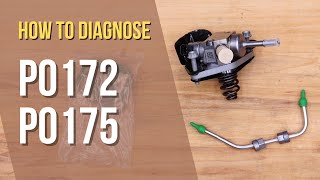
How to confirm: Check the engine oil dipstick for a strong gasoline smell and/or a rising oil level. A scan tool will show severely negative long-term fuel trims (e.g., -20% or more) on both banks. A definitive test is to disconnect the 'dirty' side PCV hose from the intake, plug the intake port, and watch fuel trims on the scanner. If they quickly return to normal (from ~-19% toward 0%), the HPFP is confirmed 🎬 Watch: Diagnosing P0172 and P0175 on a 2015 Escalade to be leaking fuel vapors into the crankcase.
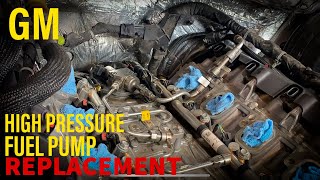
Typical fix: Replace the high-pressure fuel pump and the associated high-pressure fuel line. 🎬 See this complete guide to replacing the high pressure pump An engine oil and filter change is mandatory to remove the contaminated oil.
Est. part cost: $300-$600 - Mass Airflow (MAF) Sensor Issue 🟡 Medium Probability → Shop Fuel Injection Air Flow Meter GM issued TSB #PIP5446A for casting flash (excess plastic) in the air filter housing lid that can disrupt airflow and cause incorrect MAF readings. The sensor can also become dirty from over-oiled air filters or fail.
How to confirm: Visually inspect the air intake tube and air filter housing for any obstructions or plastic flashing near the MAF sensor, as shown in the TSB. Monitor MAF sensor g/s readings on a scan tool for erratic behavior. A normal reading for a warm 6.2L engine at idle is 6.0-8.0 g/s. Cleaning the sensor is a common first step.
Typical fix: Remove the casting flash or replace the air filter housing lid per TSB #PIP5446A. Clean the MAF sensor with a dedicated cleaner or replace it if faulty.
Est. part cost: $10-$250 - Leaking Fuel Injector(s) 🟡 Medium Probability → Shop Fuel Injector An injector can get stuck partially open or leak from its seals, dripping excess fuel into a cylinder on Bank 2. This can lead to oil dilution.
How to confirm: Perform a fuel pressure leak-down test. After shutting the engine off, the fuel rail pressure should hold steady. A rapid drop indicates a leak. You can also pull the spark plugs on Bank 2; a plug that is black and sooty compared to the others indicates a rich condition in that cylinder.
Typical fix: Identify and replace the leaking fuel injector(s) on Bank 2. It is often recommended to replace all injectors on that bank at the same time.
Est. part cost: $50-$150 per injector
Rare But Worth Checking
- Faulty Fuel Pressure Regulator: → Shop Fuel Injection Pressure Regulator If the regulator fails and provides excessive pressure to the fuel rail, it can cause a rich condition across both banks. This is less common than injector or sensor issues.
- Stuck Open EVAP Purge Solenoid: → Shop Vapor Canister If the purge valve sticks open, it can pull un-metered fuel vapors from the charcoal canister into the engine at idle, creating a rich condition.
Diagnosis Steps
- Connect an OBD-II scanner and confirm P0175 is present. Check for other codes, especially P0172, P0101, or P0300.
- View live data. Check Short-Term and Long-Term Fuel Trims for Bank 2. They will be significantly negative (e.g., -15% or lower). Check Bank 1 as well; if both are rich, the problem is likely systemic (HPFP, MAF, alcohol %).
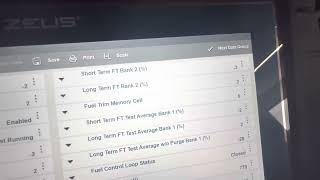
- (2010-2014 models) Check the 'Fuel Alcohol Content' PID. If it's above 15% with regular gas in the tank, perform a Fuel Composition Reset 🎬 Watch: Troubleshooting GM rich codes and fuel alcohol readings using a capable scan tool. This is the most common fix for these years.
- (2015-2017 models) Carefully check the engine oil on the dipstick for a strong gasoline smell or an overfull reading. This is a strong indicator of a failing high-pressure fuel pump.
- (2015-2017 models) To confirm a bad HPFP, disconnect the PCV line that runs to the intake manifold, plug the port on the manifold, and leave the line vented to the atmosphere. If fuel trims trend back towards 0%, the HPFP is leaking fuel into the crankcase.
- Inspect the entire air intake system from the filter to the throttle body for leaks or loose clamps. Specifically check for casting flash in the air filter housing near the MAF sensor per TSB #PIP5446A.
- Test the fuel pressure. Ensure it is within the manufacturer's specified range. Excessively high pressure could indicate a faulty fuel pressure regulator.
- If other causes are ruled out, suspect a leaking fuel injector on Bank 2. This can be confirmed with a fuel injector balance test or a fuel pressure leak-down test.
Parts You'll Likely Need
- High-Pressure Fuel Pump
(OEM #ACDelco HPM1005 (GM 12679090), superseded from 12642287, 12661058)— A primary cause of rich codes on 2015-2017 models with the L86 direct-injected engine due to internal leaks.
Trusted brands: ACDelco, Bosch, Delphi
OEM price range: $450-$600
Aftermarket price range: $300-$500 - Mass Air Flow (MAF) Sensor
(OEM #ACDelco 23256991 (for 2015-2017), ACDelco 213-4601 (for 2010-2014))— Can become dirty or fail, providing incorrect airflow data to the ECM. Also check for intake housing defects per TSB #PIP5446A.
Trusted brands: ACDelco, Delphi, Denso
OEM price range: $150-$250
Aftermarket price range: $80-$150 - Fuel Injector
(OEM #ACDelco 12668390 (for 2015-2017 L86), ACDelco 12613412 (for 2010-2014 L94))— A leaking injector on Bank 2 will cause a localized rich condition.
Trusted brands: ACDelco, Bosch
OEM price range: $90-$150
Aftermarket price range: $50-$100
Related Codes That Often Appear With This One
- P0172 — System Too Rich (Bank 1). This code for the opposite engine bank often appears with P0175 when the cause (like a faulty HPFP, MAF sensor, or incorrect fuel alcohol content) affects the entire engine.
- P0101 — Mass Air Flow (MAF) Circuit Range/Performance. This code can appear if the MAF sensor is the root cause, particularly if the issue is related to the intake housing flashing noted in TSB #PIP5446A.
- P0300 — Random/Multiple Cylinder Misfire. An extremely rich mixture can foul spark plugs and lead to incomplete combustion, causing misfires.
Technical Service Bulletins (TSBs) & Recalls
- PIP4792D
- PIP5446A
Platform-Specific Known Issues
- TSB #PIP4792D: Addresses incorrect fuel alcohol content learning on Flex Fuel models (primarily 2010-2014), leading to rich codes P0172 and P0175. The fix is a scan tool reset and potential ECM reprogram.
- TSB #PIP5446A: Identifies excessive casting flash in the air filter housing near the MAF sensor on 2015-2018 models, which can disrupt airflow and cause various fuel trim codes, including P0175.
Mechanic-Grade Diagnostic Values
- Long-Term Fuel Trim (LTFT) — expected: -10% to +10% at idle. Failure: Consistently negative, approaching -20% to -35%, indicating the ECM is removing a large amount of fuel.
- Mass Air Flow (MAF) Sensor Reading at Idle — expected: 6.0 to 8.0 grams/second (g/s) for a fully warm 6.2L V8 engine.. Failure: Readings are erratic, significantly lower, or higher than the expected range at a steady idle.
- High-Side Fuel Pressure (2015-2017 L86) — expected: ~300 PSI at idle, rising to over 2,000 PSI under load.. Failure: Pressure does not build appropriately with engine RPM or is significantly lower than commanded pressure.
- Low-Side Fuel Pressure (2010-2014 L94) — expected: 81-87 PSI.. Failure: Pressure is significantly below this range, indicating a weak in-tank fuel pump.
- Fuel Rail Pressure Sensor Voltage (KOEO) — expected: Signal wire voltage should be between 1.0V and 2.0V.. Failure: A reading near 5.0V on the signal wire indicates an open circuit or faulty sensor.
Scan Tool Commands That Help
- GDS2 / High-End Bidirectional Scanner: Fuel Composition Reset — For 2010-2014 models when the 'Fuel Alcohol Content' PID shows a high percentage (e.g., >15%) while using standard gasoline. This command resets the learned value in the ECM.
- GDS2 / High-End Bidirectional Scanner: Injector Balance Test — To test for a leaking or malfunctioning fuel injector on a specific cylinder after systemic issues have been ruled out.
- OBD-II Scanner with Live Data: PCV Isolation Fuel Trim Test (Manual Procedure) — On 2015-2017 models to definitively diagnose a high-pressure fuel pump (HPFP) leaking into the crankcase. Disconnect the PCV hose, plug the intake, and watch Long Term Fuel Trims. If they rapidly improve (move from highly negative toward 0%), the HPFP is the source of the unmetered fuel.
Wiring & Ground Locations
- G103 — On the front of the passenger side (right) cylinder head on GMT900 platforms (2010-2014).. A poor engine ground can cause erratic sensor readings for multiple components involved in fuel management, leading to incorrect fuel calculations.
- G104 — On the rear of the driver side (left) cylinder head on GMT900 platforms (2010-2014).. This is a primary engine-to-chassis ground. Corrosion or looseness can affect the entire engine management system.
- G101 — Located at the lower front of the engine block.. This ground is specified as the grounding point for the Mass Air Flow (MAF) sensor and Engine Control Module (ECM). A fault here could directly cause MAF-related rich codes.
Real Owner Repair Stories
- YouTube channel 'A&Z Garage' (2015 Cadillac Escalade) — P0172 and P0175 codes, running rich on both banks.
❌ Tried (didn't work) The technician went directly to the most likely cause.
✅ What actually fixed it A leaking high-pressure fuel pump (HPFP) was confirmed. The diagnosis involved unplugging the PCV hose from the valve cover to the intake, plugging the intake port, and observing the long-term fuel trims on a scan tool immediately correct from -19% back towards zero. The fix was replacing the HPFP. - YouTube user video (2010 Cadillac Escalade) — P0172 and P0175 codes, fuel trims pulling 18% of fuel.
✅ What actually fixed it The scan tool revealed the 'Fuel Alcohol Content' was incorrectly learned at 57%. Using the scan tool's special functions to perform a 'Fuel Composition Reset' instantly corrected the value to 3% and brought fuel trims back to normal without replacing any parts.
"I Checked Everything" — The Actual Cause
- On 2015-2017 models, it is common for a smoke test of the intake system to show no leaks, leading a technician to believe there are no sources of unmetered air. However, the actual cause is often unmetered FUEL VAPOR entering the intake from the crankcase via the PCV system. This occurs when the high-pressure fuel pump (HPFP) fails and leaks fuel internally into the engine oil. The diagnostic test is to isolate the PCV system and watch fuel trims, not to perform a smoke test.
OEM Part Supersession History
12642287, 12679090→12711668— Part has been updated multiple times by the manufacturer to improve reliability.
Heads up: The part numbers in the chain (12642287, 12673410, 12679090, 12694529, 12688607, 12711668) are generally interchangeable for the L86 engine family, but it is always best to use the latest available part number (12711668) for the most recent design improvements.
Model Year Variations Within This Range
- 2015: A mid-year change switched the transmission from a 6-speed automatic to an 8-speed automatic. While not directly causing P0175, it's a key service point difference.
- 2015: The first model year of the 4th generation (L86 engine) was subject to GM Voluntary Emission Recall #14745 for potential high-pressure fuel pump leaks, reinforcing the HPFP as a primary suspect for this year.
- 2016: Cadillac added Lane Keep Assist and an updated CUE infotainment system with Apple CarPlay capability.
Helpful Videos
Used OEM Parts in Stock
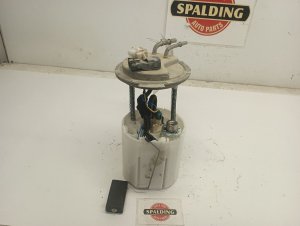
New Aftermarket Parts Available



The information in this article is provided for general reference and educational purposes only. Vehicle specifications, procedures, and part compatibility can vary by production date, trim level, and region. Always consult your vehicle's factory service manual and verify part numbers before purchasing or performing repairs. Safety-critical components such as airbags, seat belts, and braking systems should be installed by a qualified professional.
- Cadillac ESCALADE:
- 🧭 Diagnostic Flowchart
- 🎬 Helpful Videos
- 🛍️ Shop This Part
- What's Unique About the 2010-2017 Cadillac ESCALADE
- Symptoms You May Notice
- Most Likely Causes
- Rare But Worth Checking
- Diagnosis Steps
- Parts You'll Likely Need
- Related Codes That Often Appear With This One
- Technical Service Bulletins (TSBs) & Recalls
- Platform-Specific Known Issues
- Mechanic-Grade Diagnostic Values
- Scan Tool Commands That Help
- Wiring & Ground Locations
- Real Owner Repair Stories
- "I Checked Everything" — The Actual Cause
- OEM Part Supersession History
- Model Year Variations Within This Range
- 🎟️ Get 5% Off