

P0175 on 2016-2018 Chevrolet Corvette: Causes and Fixes for Rich Fuel Mixture (Bank 2)
On a C7 Corvette, P0175 is often caused by a faulty Bank 2 (driver's side) upstream oxygen sensor or a leaking fuel injector. Less commonly, a known issue with the high-pressure fuel pump can be the cause, as documented in GM service information. Expect to pay $50-$200 for a sensor or $100-$300+ for an injector.
- P0175 means the driver's side of your Corvette's engine is running too rich (too much fuel).
- The most likely culprits are a bad upstream O2 sensor or a leaking fuel injector on Bank 2.
- Always check for other codes; if P0172 (Bank 1 Rich) is also present, suspect a part that affects both banks, like the MAF sensor or high-pressure fuel pump.
- A special diagnostic step for this engine involves checking for an internally leaking high-pressure fuel pump by temporarily disconnecting the PCV system.
- Start with the simplest and cheapest diagnostics: check fuel trims with a scanner, inspect the air filter, and clean the MAF sensor.
What's Unique About the 2016-2018 Chevrolet Corvette
The direct-injection fuel system on the LT1 and LT4 engines is a key factor. A documented issue involves the high-pressure fuel pump (HPFP) leaking internally. This leak allows fuel vapor to be drawn into the intake manifold through the PCV system, creating a rich condition that can be difficult to diagnose through conventional means. GM technical document #20-NA-200 (which superseded earlier versions like PIE0413 and PIP5590A) outlines a specific diagnostic procedure for this failure on 2016-2018 Corvettes and other vehicles with LT1/LT4 engines.
Symptoms You May Notice
- Check Engine Light is on
- Reduced fuel economy
- Rough or unstable idle
- Black smoke from the exhaust, especially at idle
- A strong smell of gasoline from the exhaust
- Hesitation or sluggish acceleration
- Hard shifting or surging feeling
- Replacing the downstream (post-catalyst) O2 sensor instead of the upstream (pre-catalyst) sensor.
- Replacing the MAF sensor without first attempting to clean it.
- Replacing fuel injectors without performing a balance test or checking for leaks first.
- Overlooking the specific GM TSB regarding the high-pressure fuel pump leak, leading to unnecessary replacement of other components.
Most Likely Causes
- Leaking Fuel Injector(s) 🔴 High Probability → Shop Fuel Injector Direct injection systems operate at very high pressures, which can contribute to injector wear over time. A single injector stuck open or leaking on Bank 2 will dump excess fuel into its cylinder, causing a rich condition isolated to that bank.
How to confirm: Use a scan tool to perform a fuel injector balance test. Another method is to check fuel rail pressure with the engine off; if the pressure drops quickly, it indicates a leak. Pulling the spark plugs on Bank 2 (driver's side) may also reveal one that is black and sooty from excess fuel.
Typical fix: Replace the faulty fuel injector(s) on Bank 2. It is often recommended to replace all injectors on that bank at the same time.
Est. part cost: $100-$300 per injector - Faulty Upstream Oxygen (O2) Sensor 🔴 High Probability → Shop Oxygen Sensor O2 sensors are wear items and can degrade over time, providing slow or inaccurate readings. A faulty sensor might incorrectly tell the ECM that the engine is running lean (by being stuck at a low voltage), causing the computer to add more fuel than necessary until it becomes rich.
How to confirm: Use a scan tool to monitor the live data from the Bank 2, Sensor 1 O2 sensor. A healthy sensor should show rapidly fluctuating voltage. A sensor that is stuck at a low voltage (e.g., under 0.4V) or responds very slowly might be tricking the ECM into adding fuel. Conversely, a sensor stuck high (above 0.8V) would indicate a true rich condition.
Typical fix: Replace the Bank 2, Sensor 1 (upstream) oxygen sensor.
Est. part cost: $50-$150 - Dirty or Faulty Mass Airflow (MAF) Sensor 🟡 Medium Probability → Shop Fuel Injection Air Flow Meter The MAF sensor can become contaminated with dirt, oil, or debris (especially from over-oiled aftermarket air filters), causing it to under-report the amount of air entering the engine. This leads the ECM to calculate a fuel mixture that is too rich for the actual amount of air. While this usually affects both banks (P0172 & P0175), it can sometimes manifest on one bank first.
How to confirm: Inspect the MAF sensor for contamination. Cleaning the sensor with a dedicated MAF sensor cleaner is a good first step. If the problem persists, monitoring the MAF reading on a scan tool can confirm if it's reading incorrectly compared to specified values at various RPMs.
Typical fix: Clean the MAF sensor. If cleaning does not resolve the issue, replace the sensor.
Est. part cost: $10-$20 for cleaner, $150-$300 for a new sensor
Rare But Worth Checking
- Internally Leaking High-Pressure Fuel Pump (HPFP): → Shop Fuel Pump A GM diagnostic aid, TSB #20-NA-200, specifically mentions this issue for 2016-2018 Corvettes. Fuel can leak from the pump into the crankcase, and its vapors are then ingested through the PCV system, causing a rich condition on one or both banks. This is often accompanied by both P0172 and P0175 codes.
- Faulty EVAP Purge Valve: → Shop Vapor Canister If the evaporative emissions (EVAP) purge valve sticks open, it can allow unmetered fuel vapor to enter the intake manifold at the wrong time, leading to a rich mixture. This can be tested by capping the EVAP line to the intake and observing fuel trims.
- Air Intake Housing Defect: On some GM vehicles, an internal hydrocarbon pad in the air filter housing can detach and partially block the MAF sensor, causing erratic readings and rich codes. While more documented on the C6, it's a possibility to inspect. Additionally, TSB #PIP5446A notes that excess plastic 'cast flashing' in the C7's air intake tube can disrupt airflow and cause rich codes.
Diagnosis Steps
- Read the codes with an OBD-II scanner and check for any other pending or stored codes, paying close attention to whether P0172 is also present.
- Using the scanner, observe the short-term (STFT) and long-term fuel trim (LTFT) values for both banks at idle and under load. For P0175, you will see highly negative numbers on Bank 2 (e.g., -20% or more), indicating the ECM is removing fuel.
- Inspect the air intake system for any blockages or a severely clogged air filter. Specifically check for a dislodged hydrocarbon pad or plastic flashing inside the air cleaner housing near the MAF sensor, per TSB #PIP5446A.
- Inspect and clean the Mass Airflow (MAF) sensor using a dedicated cleaner. Re-evaluate fuel trims after cleaning.
- Monitor the live data from the Bank 2, Sensor 1 (upstream) O2 sensor. Confirm it is switching voltage correctly and not stuck low, which would falsely command more fuel.
- Perform a fuel pressure test. With the engine off, watch for a rapid drop in rail pressure, which indicates a leaking injector.
- If a leaking injector is suspected, an injector balance test can pinpoint the specific cylinder. Visually inspecting the spark plugs on Bank 2 can also help identify a single rich cylinder (black, sooty plug).
- If both banks are rich (P0172 and P0175 present) and other causes are ruled out, follow the procedure in GM TSB #20-NA-200: Disconnect the 'dirty air' side of the PCV system from the intake and plug the vacuum source. Start the engine and let it enter closed loop. If the fuel trims for both banks improve significantly (move toward 0%), it is a strong indicator that the high-pressure fuel pump is leaking internally.
Parts You'll Likely Need
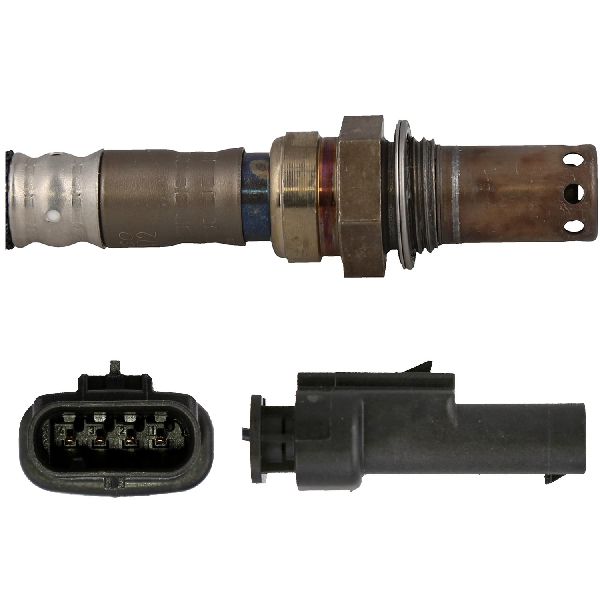
- Upstream Oxygen Sensor (Bank 2, Sensor 1)
(OEM #12661722)— This sensor provides the primary feedback for air-fuel ratio control on Bank 2. It is a common failure point that directly causes rich or lean conditions.
Trusted brands: ACDelco, Bosch, Denso
OEM price range: $100-$150
Aftermarket price range: $50-$100 - Fuel Injector
(OEM #12658401)— A leaking or stuck-open injector is a frequent cause of a rich condition isolated to one bank on direct-injected engines.
Trusted brands: ACDelco, Bosch
OEM price range: $150-$250
Aftermarket price range: $100-$180 - High-Pressure Fuel Pump
(OEM #12679090 (Supersedes older numbers))— A known failure point on LT1/LT4 engines where an internal leak introduces fuel vapor into the PCV system, causing rich codes on one or both banks. Replacement is labor-intensive.
Trusted brands: ACDelco
OEM price range: $400-$700
Aftermarket price range: $250-$500
Related Codes That Often Appear With This One
- P0172 — System Too Rich (Bank 1). If both P0172 and P0175 are present, it strongly suggests a problem affecting the entire engine, such as the MAF sensor, fuel pressure issues, or a leaking high-pressure fuel pump as described in GM TSB #20-NA-200.
- P0300-P0308 — Cylinder misfire codes. An excessively rich mixture can foul spark plugs and cause incomplete combustion, leading to misfires on the affected cylinders (P0302, P0304, P0306, P0308 for Bank 2).
- P0101 — Mass Air Flow (MAF) Circuit Range/Performance. This code often appears with P0172/P0175 when the issue is related to a faulty MAF sensor or a physical obstruction/defect in the air intake housing.
Technical Service Bulletins (TSBs) & Recalls
- GM TSB #20-NA-200: Describes diagnosis for DTC P0172/P0175 possibly caused by an internally leaking high-pressure fuel pump on various Gen V V8 engines, including the LT1/LT4.
- GM TSB #PIP5446A: Addresses rough idle and rich codes (P0172/P0175) caused by excess plastic flashing in the air intake tube near the MAF sensor.
- GM Preliminary Information #PIE0413: An earlier version of the diagnostic aid for the leaking high-pressure fuel pump issue, now superseded by 20-NA-200.
Platform-Specific Known Issues
- A GM diagnostic aid, TSB #20-NA-200 (superseding PIE0413 and others), points to the high-pressure fuel pump leaking internally. This causes fuel vapors to enter the PCV system and enrich the mixture, which can trigger P0172 and P0175. The fix requires replacing the pump, which is located under the intake manifold.
- TSB #PIP5446A identifies an issue where excess plastic 'cast flashing' from the manufacturing process inside the air cleaner outlet duct can disturb airflow across the MAF sensor, leading to rich codes P0172/P0175 and MAF code P0101. The fix is to inspect and remove the flashing or replace the air cleaner assembly.
Mechanic-Grade Diagnostic Values
- High-Pressure Fuel Rail Pressure (commanded by ECM) — expected: 2 to 15 MPa (290 to 2,176 psi), varying with engine speed and load.. Failure: Pressure that does not respond to commanded changes, or pressure that bleeds down quickly after engine shutoff (indicates a leak).
- Low-Pressure Fuel System Pressure (feeding HPFP) — expected: Approximately 50-65 psi, relatively stable.. Failure: Low or erratic pressure can starve the HPFP, though this typically causes lean codes.
- Upstream O2 Sensor Voltage (Bank 2, Sensor 1) — expected: Rapidly fluctuating between 0.1V (lean) and 0.9V (rich) in closed loop.. Failure: Stuck high (above 0.8V) confirms a rich condition. Stuck low (below 0.4V) may be a failed sensor tricking the ECM into adding fuel, causing the rich condition.
- Long Term Fuel Trim (LTFT) for Bank 2 — expected: Ideally within +/- 5% of 0. Acceptable up to +/- 10%.. Failure: A value of -15% or more negative indicates the ECM is consistently removing a large amount of fuel to correct a rich condition, which will set the P0175 code.
Scan Tool Commands That Help
- GM GDS2 (Global Diagnostic System 2): Fuel Injector Balance Test — To identify a leaking or stuck-open injector. This command individually fires each injector with the engine off and measures the corresponding pressure drop in the fuel rail. An injector with a greater pressure drop than the others is likely leaking.
- GM GDS2 (Global Diagnostic System 2): Fuel Pressure Control — To test the functionality of the high-pressure fuel pump and its internal regulator. The technician can command specific fuel pressures and observe if the system responds accurately, helping to diagnose a faulty HPFP.
- GM GDS2 (Global Diagnostic System 2): Reset Fuel Trim — After a repair is completed (e.g., replacing an O2 sensor or injector), this function should be used to clear the learned long-term fuel trim values. This forces the ECM to relearn the fuel strategy immediately, allowing for quick confirmation that the repair was successful.
Wiring & Ground Locations
- G107 — Located on the left side rear of the engine.. This is a primary engine harness ground. A loose or corroded G107 can cause erratic signals from various engine sensors, including oxygen sensors and injectors, potentially leading to incorrect fuel calculations and rich/lean codes.
- G102 — Located at the left rear of the engine.. This ground is specifically for the 8 ignition coils. While not a direct cause of a rich code, a poor ground here can lead to weak spark and incomplete combustion, which can be misinterpreted by the O2 sensors as a rich condition or lead to misfire codes alongside P0175.
- ECM (E92) Connectors — The Engine Control Module is located in the engine bay. Bank 2 O2 sensor wiring can be traced back to its specific pins on the ECM connectors.. When diagnosing a suspected faulty O2 sensor, checking for continuity and voltage directly at the ECM pins can rule out wiring harness issues between the sensor and the computer. A wiring diagram is essential for this step.
Real Owner Repair Stories
- CorvetteForum Member (2011 Corvette Grand Sport (C6, but same engine family principles apply)) — Check Engine Light with code P0175 after installing aftermarket headers and getting a tune.
❌ Tried (didn't work) Clearing the code (it returned after 50 miles).
✅ What actually fixed it The owner swapped the passenger side (Bank 2) O2 sensor, which made the P0175 code go away, but then both P0172 and P0175 appeared. A data log showed LTFTs at -23% for both banks. The final resolution was getting the tune adjusted to account for the new headers, which resolved the persistent rich condition. - CorvetteForum Member (2002 Z06 (C5)) — P0172 and P0175 (both banks rich) appeared intermittently on a car with headers, high-flow cats, and a CAI installed years prior.
❌ Tried (didn't work) Clearing the codes (they would stay off for a while but return)., Worrying about a bad batch of gas or a loose gas cap.
✅ What actually fixed it The issue only occurred in specific weather conditions (humid and chilly) during light-throttle cruising. The community consensus was that long-tube headers can cool the exhaust gases enough to cause the O2 sensor heaters to struggle, leading to inaccurate readings and temporary rich codes. The owner noted that after clearing the code, it did not return during normal driving conditions, confirming the intermittent nature related to specific atmospheric conditions affecting the aftermarket exhaust setup.
"I Checked Everything" — The Actual Cause
- The most significant 'smoke test clean' scenario for the C7 Corvette with P0172/P0175 is the internally leaking high-pressure fuel pump (HPFP) described in GM TSB #20-NA-200. A smoke test checks for external vacuum leaks, but this failure introduces fuel vapor internally from the crankcase into the PCV system and then into the intake. The system is perfectly sealed from the outside, so a smoke test will show no leaks, leading technicians to chase other components when the true cause is the HPFP.
OEM Part Supersession History
12679090→12711668— This is for the High-Pressure Fuel Pump. Part numbers are frequently updated by GM for revisions, supplier changes, or to consolidate inventory. The latest number is typically the most revised and reliable version.
Heads up: While multiple part numbers exist (12642287, 12673410, 12679090, 12688607, 12694529), they are generally interchangeable for the LT1/LT4 application, but it is always critical to verify the latest superseded part number with a dealer using the vehicle's VIN before ordering.
Model Year Variations Within This Range
- 2016 vs 2017-2019: For the base Stingray, 18-inch front and 19-inch rear wheels were standard in 2016. For 2017 and later, 19-inch front and 20-inch rear wheels became standard. This has no bearing on the P0175 code but is a notable model year difference.
Diagnostic Flowchart
Other Known Issues on This Vehicle
Issues unrelated to this code that are worth knowing about as an owner of this generation:
- Cracked/Bent Wheels (Z06/Grand Sport) 🔴 High — Very common, especially on Z06 and Grand Sport models. Can occur even with low mileage from road impacts like potholes. (Ref: No recall, but multiple class-action lawsuits were filed. GM initiated a reimbursement program in 2024 for some owners who paid for repairs within a specific timeframe.)
- A8 Automatic Transmission Shudder 🟠 Medium — A widespread problem on 2015-2019 models with the 8L90 automatic transmission, often appearing between 10,000-30,000 miles. (Ref: TSB #18-NA-355. The fix involves a 'triple flush' of the transmission fluid with an updated Mobil 1 Synthetic LV ATF HP fluid. If caught early, this often resolves the issue.)
- Torque Tube Bearing/Coupler Failure 🟠 Medium — Reported across C5, C6, and C7 generations. Heat from the exhaust and engine vibrations (especially AFM) can degrade the rubber couplers and bearings, causing vibration around 2500 RPM and eventually failure. (Ref: No specific TSB, but it's a well-known failure mode. GM released improved couplers for later models. Repair is labor-intensive.)
- Overheating on Track (Z06) 🔴 High — Common on 2015-2018 Z06 models during sustained high-performance driving or track use, leading to limp mode. (Ref: No recall, but led to class-action lawsuits. GM made improvements in later model years (2019+) with larger radiators and better cooling hardware.)
- Leather Dashboard Delamination 🟡 Low — Common on vehicles with the 3LT trim package. The leather covering on the dashboard can pull away and bubble, especially in hot climates. (Ref: No TSB or recall; typically an out-of-pocket repair if outside of the bumper-to-bumper warranty.)
Used vs. New Parts: Buying Guide for This Vehicle
When a used part is the smart pick: For this specific repair, used parts are generally not recommended for the most common failure items. However, if a structural component like the air cleaner outlet duct (related to TSB #PIP5446A) is confirmed to be the cause, a used part from a reputable salvage yard is a reasonable and cost-effective solution.
Donor-vehicle mileage cap: roughly under 50000 miles for the part to have meaningful remaining life.
What to inspect on the donor part:
- For an air intake duct, check for cracks, signs of warping, and ensure all mounting points are intact.
- Verify the donor vehicle was not in a front-end collision that could have stressed the plastic.
- Ask for the VIN of the donor car to check its history if possible.
OEM-only on this vehicle (don't cheap out):
- High-Pressure Fuel Pump (HPFP): Given the specific TSB and the critical nature of this part, using a new, genuine ACDelco part with the latest part number is crucial for reliability. Aftermarket or used units are a significant gamble.
- Fuel Injectors: Due to the high pressures of direct injection, new OEM or reputable high-performance aftermarket injectors are recommended. Used injectors have an unknown history and may be partially clogged or have a poor spray pattern.
Aftermarket brands forum-validated for this vehicle:
- Oxygen Sensors: ACDelco (OEM), Denso, NTK (a brand of NGK). These brands are often the original equipment manufacturers and provide reliable performance.
- MAF Sensor Cleaner: CRC Mass Air Flow Sensor Cleaner is the industry standard.
Brands owners have reported issues with on this vehicle:
- No-name/unbranded 'white box' electronic sensors (O2, MAF) from online marketplaces. These often have high failure rates, are not calibrated correctly, and can cause persistent diagnostic headaches.
Real Owner Stories
Aggregated from forums and TSBs cited above. Mileages and costs reflect what owners reported in those sources.
2010 Chevrolet Corvette Grand Sport
Symptoms: Fault codes P0172 and P0175 present.
What fixed it: Found a detached hydrocarbon filter pad in the airbox was blocking the MAF sensor.
Source hint: CorvetteForum.com thread titled 'fault codes p0172 p0175'
2016-2018 Chevrolet Corvette LT1/LT4
Symptoms: Rough idle and rich codes P0172/P0175.
What fixed it: Inspected the air cleaner assembly for excess plastic 'cast flashing' near the MAF sensor and removed the flashing.
Source hint: GM TSB #PIP5446A
2016-2018 Chevrolet Corvette LT1/LT4
Symptoms: Rich mixture on both banks (P0172 and P0175) caused by fuel vapors entering the PCV system.
What fixed it: Replacement of the high-pressure fuel pump located under the intake manifold.
Source hint: GM TSB #20-NA-200
Related OBD-II Codes
Frequently Asked Questions
My Corvette is idling rough and showing P0175; could this be related to the air cleaner housing issue mentioned in TSB #PIP5446A?
I have both P0172 and P0175 on my 2017 Corvette LT1. Does GM TSB #20-NA-200 apply to this situation?
How can I tell if a single leaking fuel injector is causing the P0175 code on Bank 2?
Can an aftermarket oiled air filter cause a P0175 code on my LT4 engine?
Is there a specific test to confirm if the high-pressure fuel pump is the cause of my rich condition?
If I replace the Bank 2 Sensor 1 O2 sensor, will it fix a P0175 code?
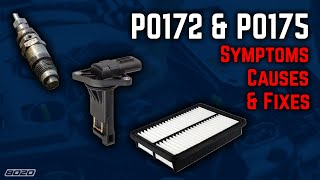
Helpful Videos

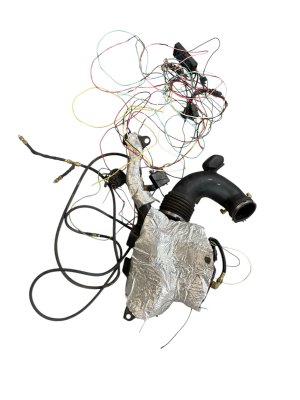
Used OEM Parts in Stock
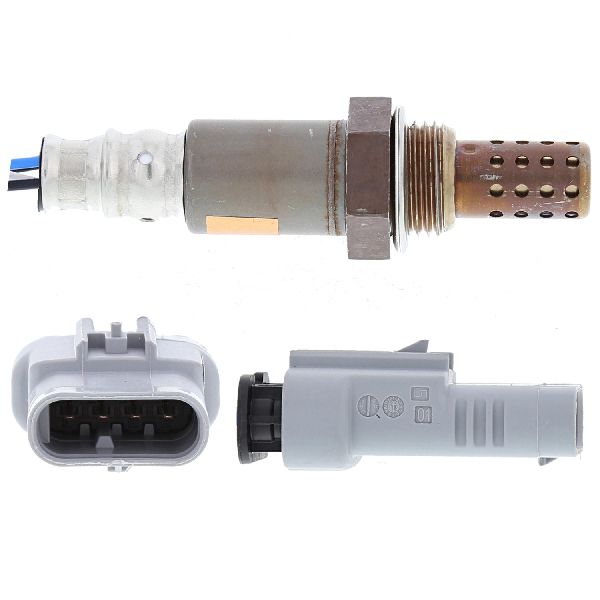
New Aftermarket Parts Available



The information in this article is provided for general reference and educational purposes only. Vehicle specifications, procedures, and part compatibility can vary by production date, trim level, and region. Always consult your vehicle's factory service manual and verify part numbers before purchasing or performing repairs. Safety-critical components such as airbags, seat belts, and braking systems should be installed by a qualified professional.
- Chevrolet Corvette:
- 🧭 Diagnostic Flowchart
- 🎬 Helpful Videos
- 🛍️ Shop This Part
- What's Unique About the 2016-2018 Chevrolet Corvette
- Symptoms You May Notice
- Most Likely Causes
- Rare But Worth Checking
- Diagnosis Steps
- Parts You'll Likely Need
- Related Codes That Often Appear With This One
- Technical Service Bulletins (TSBs) & Recalls
- Platform-Specific Known Issues
- Mechanic-Grade Diagnostic Values
- Scan Tool Commands That Help
- Wiring & Ground Locations
- Real Owner Repair Stories
- "I Checked Everything" — The Actual Cause
- OEM Part Supersession History
- Model Year Variations Within This Range
- Other Known Issues on This Vehicle
- Used vs. New Parts: Buying Guide for This Vehicle
- Real Owner Stories
- 2010 Chevrolet Corvette Grand Sport
- 2016-2018 Chevrolet Corvette LT1/LT4
- 2016-2018 Chevrolet Corvette LT1/LT4
- Related OBD-II Codes
- Frequently Asked Questions
- 🎟️ Get 5% Off