

P0175 on 2010-2017 Chevrolet Equinox 3.6L V6: Rich Fuel Causes and Fixes
On the Equinox 3.6L V6, code P0175 is most often caused by an internally leaking high-pressure fuel pump (HPFP) contaminating the oil with fuel. Check your oil dipstick for a strong gasoline smell. Other likely causes include a skewed fuel composition reading on Flex Fuel models or a dirty MAF sensor.
- For a P0175 code on this engine, your first and most important check is to smell the engine oil on the dipstick for gasoline. A fuel smell strongly indicates a failing high-pressure fuel pump.
- If your Equinox is a Flex Fuel model, the second check should be the fuel composition value on a scan tool. An incorrect reading can often be fixed with a simple scan tool reset.
- Do not replace the Bank 2 O2 sensor until you have ruled out all other causes. It is most likely doing its job correctly by reporting the rich condition.
- Cleaning the MAF sensor is an easy and inexpensive diagnostic step that should be performed before moving to more complex repairs.
- Driving for an extended time with this code can cause permanent damage to your catalytic converter and internal engine components due to oil dilution, leading to much more expensive repairs.
What's Unique About the 2010-2017 Chevrolet Equinox
The 3.6L LFX engine uses gasoline direct injection (GDI), which operates at very high fuel pressures. This introduces a common failure point not seen on older engines: the high-pressure fuel pump (HPFP). A frequent cause for P0175 on this and similar GM engines is the HPFP failing and leaking fuel internally into the engine crankcase. Additionally, many of these V6 Equinox models are Flex Fuel (E85) compatible, and a skewed fuel composition reading can trick the computer into injecting too much gasoline, causing this code.
Symptoms You May Notice
- Check Engine Light is on
- Strong smell of gasoline from the exhaust
- Black smoke from the tailpipe under acceleration
- Reduced fuel economy
- Rough idle or stalling, especially after idling for an extended period
- Engine hesitation or lack of power
- Hard shifting from the transmission or engine run-on (dieseling/sputtering for a moment after key-off)
- Flashing Check Engine Light if the rich condition causes a severe misfire (P0300)
- Immediately replacing the Bank 2 oxygen sensor. The O2 sensor is usually just the messenger reporting the rich condition. Diagnosing the fuel delivery system (HPFP, injectors, MAF) first is crucial to avoid wasting money on a sensor that is working correctly.
Most Likely Causes
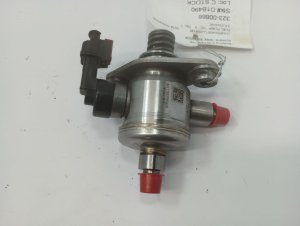
- Internally Leaking High-Pressure Fuel Pump (HPFP) 🔴 High Probability → Shop Fuel Pump The LFX direct injection engine's HPFP is mechanically driven by the camshaft. Seals inside the pump can fail, allowing high-pressure gasoline to leak directly into the engine crankcase, contaminating the oil. The fuel-laden oil vapor is then pulled into the intake via the PCV system, creating a rich condition the computer cannot compensate for. This is a well-documented issue on GM GDI engines.
How to confirm: The most definitive sign is a strong smell of raw gasoline on the engine oil dipstick. The oil level may also appear to be rising over time. A scan tool will show long-term fuel trims at -25% or worse at idle. GM TSB PIT-4730A also points to this failure mode for P0172/P0175 codes on the GM 3.0L/3.6L engine family.
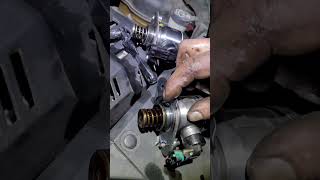
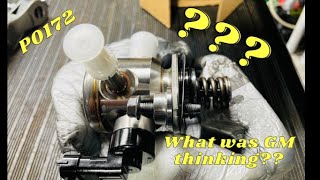
Typical fix: Replacement of the high-pressure fuel pump and an immediate oil and filter change are required. The pump is located in the engine valley under the intake manifold. 🎬 Watch: Step-by-step 3.6L high-pressure fuel pump replacement guide. The recommended OEM part is often an ACDelco HPM1043 for Flex Fuel models.
Est. part cost: $200-$450 - Incorrect Fuel Composition Reading (Flex Fuel Models) 🟡 Medium Probability Many 3.6L V6 Equinox models are Flex Fuel (E85) compatible. The system uses an algorithm to estimate the ethanol content of the fuel. This reading can become skewed, causing the PCM to believe it's running on E85 when it's actually gasoline, leading it to inject significantly more fuel and trigger P0172 and P0175. Manufacturer TSB Bulletin #PIP4792D notes that a technician may find P0172 or P0175 and should check the Fuel Alcohol Content parameter against the measured ethanol content, especially if symptoms like black exhaust color or cold start issues are present.
How to confirm: Use a capable OBD-II scan tool to view the "Fuel Alcohol Content" or "Fuel Composition" percentage. If the vehicle has regular gasoline in the tank, the reading should be under 15%. If it shows a high percentage (e.g., 30-85%), the reading is incorrect.
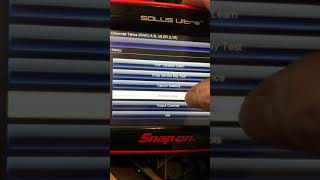
Typical fix: A "Fuel Composition Reset" or "Fuel Trim Reset" can be performed with a bi-directional scan tool like a GM Tech 2 or high-end aftermarket unit. This procedure requires no parts and recalibrates the system. 🎬 See how to perform a fuel composition reset. If the issue persists after a reset, investigate other causes before suspecting the sensor itself.
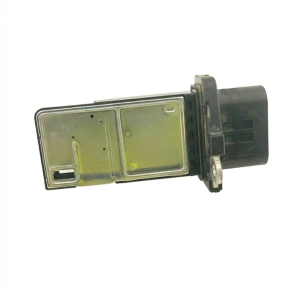
Est. part cost: $0-$120 - Dirty or Faulty Mass Air Flow (MAF) Sensor 🟡 Medium Probability → Shop Fuel Injection Air Flow Meter Oil from aftermarket air filters or fine dust can coat the delicate sensing elements of the MAF, causing it to under-report the amount of air entering the engine. The PCM then injects what it thinks is the correct amount of fuel, but it's too much for the actual airflow, creating a rich condition. Manufacturer service bulletins have identified physical obstructions as a factor; TSB Bulletin #PIP5446A suggests inspecting for cast flashing near the MAF sensor, while TSB Bulletin #PIP4813C recommends ensuring the hydrocarbon absorber pad inside the air cleaner lid is properly secured.
How to confirm: Unplug the MAF sensor and see if the engine runs better and fuel trims improve (it will run on default tables). The best method is to remove the sensor and inspect it for contamination. It is located in the air intake tube just after the air filter box. A scan tool should show 3.6-4.5 g/s at idle; a significantly higher reading (e.g., 7-8 g/s) can indicate a faulty sensor over-reporting air.
Typical fix: Clean the sensor using only dedicated MAF sensor cleaner spray. Do not touch the internal wires. If cleaning does not resolve the issue, the sensor must be replaced, preferably with an OEM or high-quality aftermarket brand like ACDelco or Delphi.
Est. part cost: $10-$150 - Leaking Fuel Injector(s) on Bank 2 ⚪ Low Probability → Shop Fuel Injector
How to confirm: Perform a fuel pressure leak-down test. With a fuel pressure gauge connected, turn the engine off and watch the pressure. If it drops quickly, an injector may be leaking. You can also pull the spark plugs on Bank 2 (cylinders 2, 4, 6) and check for one that is black and sooty, indicating excess fuel. GM TSB PIP4964F also advises checking for leaking injectors for rich codes on this engine family.
Typical fix: Replace the faulty fuel injector. Since this is a direct injection engine, this is a more involved job. It is often recommended to replace all injectors on that bank at the same time. A YouTube video on a 2011 Equinox showed physically leaking injectors causing P0172/P0175.
Est. part cost: $50-$150 per injector
Rare But Worth Checking
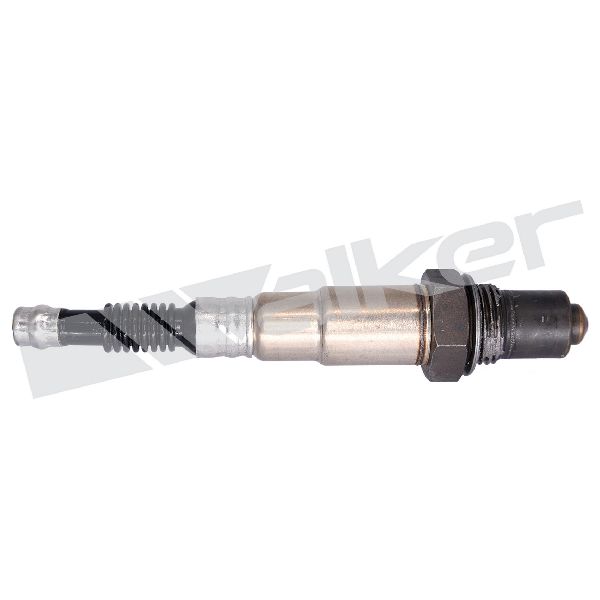
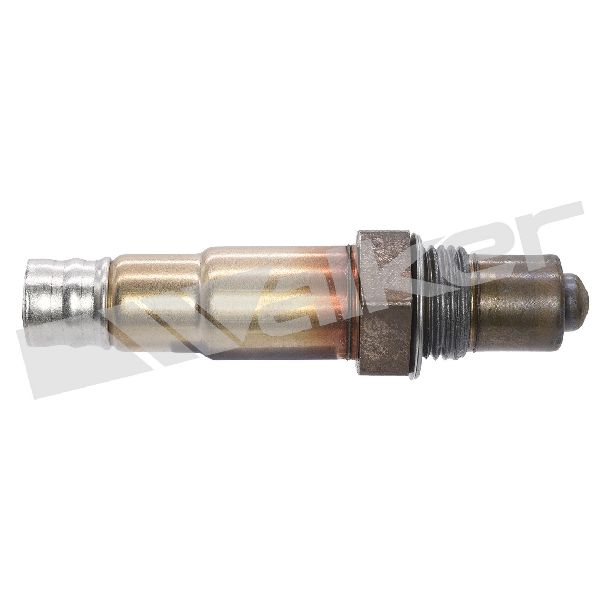
- Faulty Upstream Oxygen (O2) Sensor: → Shop Oxygen Sensor While the O2 sensor triggers the code, it's more often correctly reporting a problem than being the cause itself. However, a slow or biased sensor can get stuck on a rich reading, causing this code without a true rich condition.
- Stuck Open EVAP Purge Solenoid: → Shop Vapor Canister If the purge solenoid sticks open, it can allow un-metered fuel vapor from the gas tank to be drawn into the engine at idle, contributing to a rich mixture. This would typically affect both banks and set a P0172 as well. You can test this by disconnecting and plugging the vacuum line to the solenoid to see if fuel trims improve.
Diagnosis Steps
- Scan for Codes: Use an OBD-II scanner to confirm P0175 and check for any other codes, especially P0172 (rich on both banks) or P030x misfire codes.
- Check the Oil: Pull the engine oil dipstick and smell it carefully for a strong, raw gasoline odor. If fuel is present, the high-pressure fuel pump is the most likely cause.
- Check Fuel Composition (if applicable): If the vehicle is Flex Fuel compatible, use a scan tool to check the 'Fuel Alcohol Content' PID. If it's high (e.g., >20%) while running on standard gasoline, perform a fuel composition reset.
- Analyze Fuel Trims: Using a scan tool, monitor Short-Term (STFT) and Long-Term (LTFT) fuel trims for Bank 2 at idle and while driving. A reading of -10% or more negative confirms the computer is subtracting fuel. Note if the trims are worse at idle, which can point to a leaking component.
- Inspect and Clean the MAF Sensor: Visually inspect the Mass Air Flow sensor for dirt or oil residue. Clean it with dedicated MAF sensor cleaner. Also, check that the engine air filter is clean.
- Test Fuel Pressure: The LFX has both a low-pressure in-tank pump and a high-pressure mechanical pump. Testing the high-pressure side requires specialized tools and knowledge. A leak-down test can help identify leaking injectors.
- Inspect Spark Plugs: Remove and inspect the spark plugs from Bank 2 (cylinders 2, 4, 6). A plug that is black and sooty compared to the others can pinpoint a leaking injector in that cylinder.
- Test the Oxygen Sensor: While the engine is warm, use a scan tool to graph the Bank 2, Sensor 1 voltage. It should fluctuate rapidly between approximately 0.1V and 0.9V. If it is stuck high (above 0.8V), it indicates a rich condition or a faulty sensor.
Parts You'll Likely Need
- High-Pressure Fuel Pump
(OEM #12641847)— This is the most common cause of P0175 (often with P0172) on the 3.6L LFX engine due to internal seal failure leading to oil contamination.
Trusted brands: ACDelco, Bosch
OEM price range: $300-$450
Aftermarket price range: $150-$300 - Mass Air Flow (MAF) Sensor — A dirty MAF sensor is a common cause of incorrect fuel mixture calculations. Cleaning is often sufficient, but replacement may be necessary.
Trusted brands: ACDelco, Delphi, Denso
OEM price range: $100-$150
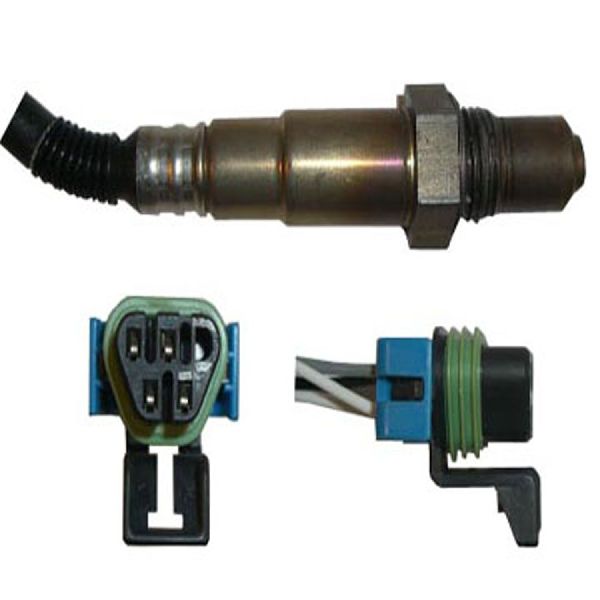
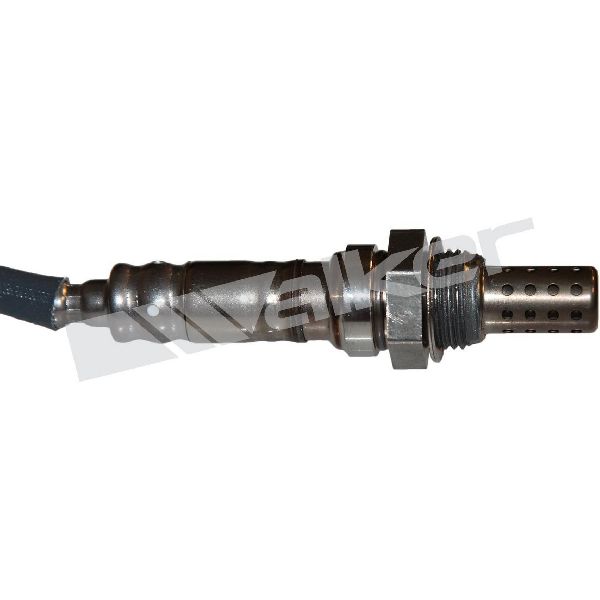
Aftermarket price range: $50-$100 - Upstream Oxygen Sensor (Bank 2, Sensor 1)
(OEM #12666729)— While less common than other causes, a failed or slow-responding O2 sensor can incorrectly report a rich condition. Bank 2 is the front bank, closer to the radiator.
Trusted brands: ACDelco, Denso, NGK/NTK
OEM price range: $70-$120
Aftermarket price range: $40-$80 - Engine Oil and Filter — Required after replacing a leaking high-pressure fuel pump to remove fuel-contaminated oil from the engine.
Trusted brands: ACDelco, Wix, Mobil 1
OEM price range: $40-$70
Aftermarket price range: $30-$50
Related Codes That Often Appear With This One
- P0172 — This is the same 'System Too Rich' code, but for Bank 1. If both P0172 and P0175 are present, it strongly points to a cause that affects the entire engine, such as the high-pressure fuel pump leaking into the crankcase, a skewed fuel composition reading, or a faulty MAF sensor.
- P0300, P0302, P0304, P0306 — These are misfire codes (P0300 for random, P030x for specific cylinders). An overly rich mixture can foul spark plugs and cause misfires on the affected bank (Bank 2 cylinders are 2, 4, and 6). A flashing check engine light often accompanies these codes.
Technical Service Bulletins (TSBs) & Recalls
- PIP4964F: Mentions leaking fuel injectors as a potential cause for rich condition codes on the GM 3.0L/3.6L engine family.
- PIT-4730A: Links P0172 and P0175 codes to a failed high-pressure fuel pump (HPFP) leaking fuel into the crankcase on the related 3.0L V6 engine.
- 12-06-01-009F: A general TSB regarding timing chain wear and diagnosis for the 3.6L engine family, a separate but critical issue for this platform.
- Bulletin #PIP5446A: Notes that P0175 can be set due to cast flashing near the Mass Air Flow sensor, which may also cause a rough idle and sputtering when applying throttle.
- Bulletin #PIP4813C: Describes instances where P0175 is set alongside rough running or lack of power, requiring an inspection of the hydrocarbon absorber pad inside the air cleaner lid.
- Bulletin #PIP4792D: Advises technicians to verify the Fuel Alcohol Content parameter when P0175 is present, particularly if the vehicle exhibits black exhaust or cold start issues.
Platform-Specific Known Issues
- A known issue on GM direct injection engines (including the LFX) is the high-pressure fuel pump leaking fuel into the crankcase, which directly leads to rich codes P0172 and P0175. Always check the oil for a fuel smell as a primary diagnostic step.
Mechanic-Grade Diagnostic Values
- Mass Air Flow (MAF) Sensor at Idle — expected: 3.6 to 4.5 g/s at warm idle with no accessories on.. Failure: A reading significantly higher than expected (e.g., 7-8 g/s) can indicate a faulty sensor over-reporting airflow, contributing to a rich condition. A reading much lower could indicate a vacuum leak.
- Low-Side Fuel Pressure (Key On, Engine Off) — expected: ~58 PSI (400 kPa).. Failure: Significantly higher pressure could indicate a faulty in-tank pump or regulator, though this is less common for a rich code than high-side issues.
- High-Side Fuel Rail Pressure at Idle — expected: Approximately 290 - 580 PSI, can vary with temperature and load.. Failure: While hard to measure without proper tools, erratic readings or pressure that doesn't respond to engine load could indicate a failing HPFP or rail pressure sensor.
- Upstream O2 Sensor (Bank 2, Sensor 1) Voltage — expected: Rapidly fluctuating between ~0.1V (lean) and ~0.9V (rich).. Failure: A signal that is stuck high (e.g., >0.8V) confirms the PCM is seeing a rich condition. If other inputs (MAF, fuel pressure) are normal, the sensor itself may be biased or faulty.
- Fuel Composition (Flex Fuel Models) — expected: <15% when using standard gasoline.. Failure: A reading significantly higher than 15% (e.g., 30-85%) on a tank of gasoline will cause the ECM to command excessive fuel, triggering P0172/P0175.
Scan Tool Commands That Help
- GM GDS2 / Tech 2 / High-End Aftermarket: Fuel Composition Reset — Use this function when the 'Fuel Alcohol Content' PID shows a high percentage despite having regular gasoline in the tank. This resets the learned value and can immediately resolve false rich conditions on Flex Fuel vehicles.
- GM GDS2 / High-End Aftermarket: Fuel Trim Reset — After replacing a component that caused the rich code (like an HPFP, MAF sensor, or fuel injector), this function must be used to clear the ECM's learned long-term fuel trim values, allowing for a faster re-learn and confirmation of the fix.
- GM GDS2 / High-End Aftermarket: Cylinder Power Balance — To help isolate a single leaking injector on Bank 2. The tool deactivates cylinders one by one and measures the RPM drop. A cylinder with a leaking injector may show a less significant RPM drop.
Wiring & Ground Locations
- G105 / G112 — On the 3.6L V6, both G105 and G112 are located on the left (driver's side) rear of the engine.. The Engine Control Module (ECM) and its critical sensors (MAF, O2 sensors) rely on these grounds for an accurate reference. A corroded or loose connection here can cause erratic sensor readings, leading to incorrect fuel calculations and false rich codes.
- G103 — Located on the left front of the engine compartment, under the battery.. This is another primary engine compartment ground. While less directly tied to the engine sensors than G105/G112, poor contact here can cause a range of electrical issues that can interfere with diagnosis.
- Bank 2 Upstream O2 Sensor Connector — The sensor is in the front exhaust manifold (closer to the radiator). The connector is on the harness nearby.. This is the primary connector for testing the sensor circuit that triggers P0175. The wiring is in a high-heat area and can be prone to melting or chafing, causing a short that could result in a false high voltage (rich) signal.
Real Owner Repair Stories
- YouTube channel 'The Klown's Garage' (2007 Chevrolet Impala 3.5L Flex Fuel (similar logic applies to Equinox)) — Check Engine Light with rich codes P0172 and P0175.
❌ Tried (didn't work) Checked for vacuum leaks, Checked for injector leaks, Verified fuel pressure was not too high, Checked for dirty air filter and MAF sensor
✅ What actually fixed it The scan tool showed a 'Fuel Alcohol Content' of 26% even though the car was filled with regular gasoline. Using a GM Tech 2 scan tool, a 'Fuel Composition Reset' was performed, which reset the value to a normal low percentage. This immediately corrected the fuel trims and the codes did not return. - Chevrolet Forum user 'codycole' (2015 Silverado 5.3L (different engine, but identical HPFP failure mechanism)) — P0172 and P0175 codes, especially after long idles, hard shifting, and engine run-on after key-off.
❌ Tried (didn't work) Cleaning MAF sensor, Replacing air filter
✅ What actually fixed it The user concluded the high-pressure fuel pump was leaking internally. Fuel vapors get sucked into the PCV system and re-sent into the intake, creating a rich condition the computer can't account for. This diagnosis was confirmed by another user who had the same codes and symptoms fixed by replacing the HPFP.
OEM Part Supersession History
12639694, 12633423, 12608371→12641847 (ACDelco HPM1043)— GM often updates part numbers to reflect design improvements, manufacturing changes, or supplier changes. Given the high failure rate of the HPFP, later part numbers may have improved seal materials or construction.
Heads up: While all these numbers lead to the current part 12641847, it's crucial to ensure you are buying the latest revision. Some sources list HPM1043 for Flex Fuel (LFX) and HPM1057 for non-Flex Fuel, so verifying by VIN is critical.
Model Year Variations Within This Range
- 2012-2017: The 3.0L V6 (LF1/LFW) was replaced by the 3.6L LFX V6 starting in the 2013 model year. The LFX engine features integrated exhaust manifold cylinder heads and other updates. Later in the generation (around 2016-2017), a slightly updated LFV version of the 3.6L was used. While the core diagnosis for P0175 remains the same (HPFP, Fuel Comp, MAF), part numbers for items like injectors or sensors could differ slightly between the 3.0L and 3.6L engines.
Diagnostic Flowchart
Other Known Issues on This Vehicle
Issues unrelated to this code that are worth knowing about as an owner of this generation:
- Premature Timing Chain Stretch 🔴 High — Very common on the 3.6L V6 family (LY7, LLT, and to a lesser extent, the LFX). Often occurs between 70,000 and 120,000 miles, exacerbated by extended oil change intervals. (Ref: Multiple TSBs exist, including #12-06-01-009F. GM also had special coverage programs for earlier engine versions.)
- Clogged PCV Orifice Causing Rear Main Seal Failure 🟠 Medium — More common in colder climates. The PCV orifice in the intake manifold can freeze or clog with deposits, causing excessive crankcase pressure that blows out the rear main oil seal. (Ref: GM bulletin 14882 addresses this issue with a special coverage program for some vehicles.)
- Excessive Oil Consumption 🟠 Medium — While more notorious on the 2.4L 4-cylinder, the 3.6L V6 can also consume oil. Owners are advised to check oil levels frequently, as low oil levels accelerate timing chain wear.
- Failing A/C Compressor 🟡 Low — A common failure point where the A/C system stops blowing cold air due to a weak or dead compressor.
Used vs. New Parts: Buying Guide for This Vehicle
When a used part is the smart pick: For this specific code, buying used parts is generally not recommended for the primary failure components. Used parts should be limited to basic, non-electronic hardware like brackets, intake plenums, or engine covers if needed during the repair.
Donor-vehicle mileage cap: roughly under 50000 miles for the part to have meaningful remaining life.
What to inspect on the donor part:
- For any used part, check for obvious signs of damage, cracks, or warping.
- Avoid parts from vehicles that show signs of overheating (discolored plastics, melted connectors).
- If considering a used engine component, ask for the VIN to check the donor vehicle's history for accidents or floods.
OEM-only on this vehicle (don't cheap out):
- High-Pressure Fuel Pump (HPFP): Due to the high failure rate and the critical nature of this part, using a new OEM (ACDelco/GM Genuine) or OEM-supplier (Bosch) pump is strongly advised. Aftermarket pumps have a very high rate of premature failure.
- Mass Air Flow (MAF) Sensor: Aftermarket MAF sensors are notoriously unreliable and can cause persistent fuel trim issues. Stick with ACDelco, Delphi, or Denso.
- Oxygen (O2) Sensors: Similar to the MAF, cheap aftermarket O2 sensors often have slow response times or incorrect calibration, leading to recurring codes. Use trusted brands like ACDelco, NTK, or Denso.
Aftermarket brands forum-validated for this vehicle:
- Sensors: NGK/NTK, Denso, Delphi
- Gaskets: Fel-Pro
- Filters: Wix, AMSOIL
Brands owners have reported issues with on this vehicle:
- Unbranded 'white-box' electronic parts (sensors, fuel pumps) from online marketplaces. These are the most common source of comeback repairs.
Real Owner Stories
Aggregated from forums and TSBs cited above. Mileages and costs reflect what owners reported in those sources.
2011 Chevrolet Equinox 3.6L V6
Symptoms: Physically leaking injectors causing rich condition codes P0172 and P0175.
What fixed it: Replacement of the faulty fuel injectors.
Source hint: YouTube video on a 2011 Equinox showing physically leaking injectors
2014-2018 Chevrolet Silverado (Shared LFX/L83 Tech)
Symptoms: Rich condition codes P0172 and P0175 appearing together.
What fixed it: Diagnosis and repair of the high-pressure fuel system components.
Source hint: https://chevroletforum.com/forum/2014-2018-gmt-k2-121/p0175-p0172-104313/
Related OBD-II Codes
Frequently Asked Questions
Does TSB PIT-4730A apply to my 3.6L Equinox if I have a P0175 code?
Why does my Equinox smell like gasoline and have a P0175 code after idling for a long time?
My Equinox is a Flex Fuel model; could that be causing the P0175 rich code?
What specific part should I use to replace the high-pressure fuel pump on my LFX engine?
Can a leaking fuel injector cause P0175 on just one side of the engine?
Is there a TSB for the timing chain on this 3.6L engine as well?
Helpful Videos

Used OEM Parts in Stock
New Aftermarket Parts Available


The information in this article is provided for general reference and educational purposes only. Vehicle specifications, procedures, and part compatibility can vary by production date, trim level, and region. Always consult your vehicle's factory service manual and verify part numbers before purchasing or performing repairs. Safety-critical components such as airbags, seat belts, and braking systems should be installed by a qualified professional.
- Chevrolet Equinox:
- 🧭 Diagnostic Flowchart
- 🎬 Helpful Videos
- 🛍️ Shop This Part
- What's Unique About the 2010-2017 Chevrolet Equinox
- Symptoms You May Notice
- Most Likely Causes
- Rare But Worth Checking
- Diagnosis Steps
- Parts You'll Likely Need
- Related Codes That Often Appear With This One
- Technical Service Bulletins (TSBs) & Recalls
- Platform-Specific Known Issues
- Mechanic-Grade Diagnostic Values
- Scan Tool Commands That Help
- Wiring & Ground Locations
- Real Owner Repair Stories
- OEM Part Supersession History
- Model Year Variations Within This Range
- Other Known Issues on This Vehicle
- Used vs. New Parts: Buying Guide for This Vehicle
- Real Owner Stories
- 2011 Chevrolet Equinox 3.6L V6
- 2014-2018 Chevrolet Silverado (Shared LFX/L83 Tech)
- Related OBD-II Codes
- Frequently Asked Questions
- 🎟️ Get 5% Off