

P0175 on 2014-2018 Chevy Silverado 1500: System Too Rich Bank 2 Causes and Fixes
P0175 on a 2014-2018 Silverado most often points to a leaking high-pressure fuel pump or a faulty Bank 2 (driver's side) upstream oxygen sensor. A GM Technical Service Bulletin also points to issues with the Mass Airflow (MAF) sensor. Expect to pay $80-$200 for a sensor or over $1000 for a fuel pump replacement at a dealer.
- P0175 means the engine is running too rich on the driver's side (Bank 2).
- On a 2014-2018 Silverado, the most likely causes are a leaking high-pressure fuel pump, a bad upstream O2 sensor, or a MAF sensor issue.
- Before replacing parts, check your engine oil for a gasoline smell, which strongly indicates a bad high-pressure fuel pump.
- Always inspect and clean the MAF sensor before replacing it. Check for the casting flash mentioned in TSB #PIP5446A.
- If both P0172 and P0175 codes are present, the problem is affecting the entire engine, making the high-pressure fuel pump or MAF sensor the most probable culprits.
What's Unique About the 2014-2018 Chevrolet SILVERADO 1500

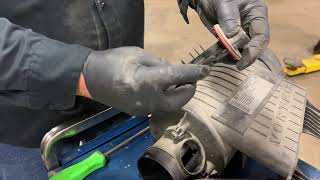
For the 2014-2018 Silverado with direct injection engines (5.3L L83 and 6.2L L86), a common and well-documented cause for rich codes like P0175 is an internally leaking high-pressure fuel pump (HPFP). This pump can leak fuel directly into the crankcase, where the vapors are then drawn into the intake via the PCV system, creating a rich condition that the Mass Airflow sensor doesn't account for. This is a known issue across GM's direct-injection truck and SUV lineup. Additionally, a specific GM TSB #PIP5446A mentions that 🎬 Watch: Diagnostic walkthrough for this TSB and rich fuel trims. casting flash in the air filter housing near the MAF sensor can disrupt airflow and cause this code. [27, ⭐ MANUFACTURER TSB — highest authority]
Diagnostic Flowchart

Tap your situation to follow the diagnostic path that matches what you're seeing on this vehicle.
Symptoms You May Notice

- Check Engine Light is on
- Poor fuel economy
- Rough or unstable idle
- Sputtering or hesitation when accelerating. [⭐ MANUFACTURER TSB — highest authority]
- Strong smell of gasoline from the exhaust
- Black smoke from the tailpipe in severe cases.
- Engine runs on or sputters for a few seconds after being turned off.
- Hard shifts or surging, sometimes accompanied by a Stabilitrak warning light.
- Replacing oxygen sensors when the actual cause is a leaking high-pressure fuel pump. The O2 sensor correctly reports the rich condition but is not the source of it.
- Replacing the MAF sensor without first attempting to clean it and inspecting for the TSB-related casting flash in the airbox.
- Replacing fuel injectors when the issue is an incorrect fuel alcohol composition value on a Flex Fuel vehicle.
Most Likely Causes

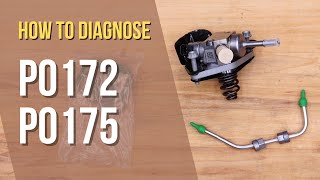
- Leaking High-Pressure Fuel Pump (HPFP) 🔴 High Probability → Shop Fuel Pump The direct injection fuel systems on the 5.3L and 6.2L EcoTec3 engines have a camshaft-driven high-pressure pump located in the engine valley. It's a widely reported failure point, known to develop internal seal leaks that dump fuel into the crankcase.
How to confirm: A strong, unmistakable smell of raw gasoline on the engine oil dipstick is the primary indicator. A diagnostic technique involves disconnecting the PCV foul air tube from the intake manifold and capping the port; if the fuel trims start to normalize, it confirms that un-metered fuel vapors from the crankcase are the cause, pointing to the HPFP.
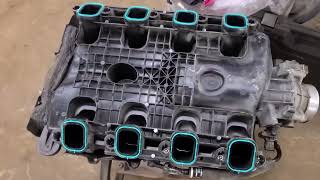
Typical fix: Replacement of the high-pressure fuel pump, the one-time-use high-pressure fuel line, and intake manifold gaskets. An oil change is mandatory to remove the fuel-contaminated oil. This is a labor-intensive job requiring removal of the intake manifold.
Est. part cost: $250-$500 - Faulty Upstream Oxygen Sensor (Bank 2, Sensor 1) 🟡 Medium Probability → Shop Oxygen Sensor O2 sensors are wear items that degrade over time. They can become 'lazy' or biased, sending slow or incorrect voltage signals to the ECM. It may falsely report a lean condition, causing the ECM to add too much fuel, or it may get contaminated by an overly rich mixture from another cause.
How to confirm: Use a scan tool to graph the live voltage data from the Bank 2 Sensor 1. Compare its waveform and switching frequency to the Bank 1 Sensor 1. A healthy sensor should switch rapidly between approximately 0.1V and 0.9V.
Typical fix: Replace the Bank 2, Sensor 1 (upstream) oxygen sensor, located on the driver's side exhaust manifold before the catalytic converter.
Est. part cost: $40-$130 - Mass Air Flow (MAF) Sensor Issue 🟡 Medium Probability → Shop Fuel Injection Air Flow Meter A dirty MAF sensor can under-report airflow, causing a rich condition. More specifically for this truck, TSB #PIP5446A notes that excess casting flash in the air filter housing near the MAF sensor can disrupt airflow readings, causing rich or lean codes. [27, ⭐ MANUFACTURER TSB — highest authority]
How to confirm: Inspect the MAF sensor wires for dirt or oil contamination. Carefully inspect the inside of the air filter housing for any plastic flashing or obstructions near where the sensor mounts, as described in TSB #PIP5446A. Cleaning the sensor with a dedicated MAF sensor cleaner may resolve the issue.
Typical fix: Clean the MAF sensor and/or carefully remove the casting flash from the air filter housing. If cleaning doesn't work or the housing is deformed, replace the MAF sensor or air filter housing lid.
Est. part cost: $80-$150 - Leaking Fuel Injector(s) ⚪ Low Probability → Shop Fuel Injector
How to confirm: A fuel injector balance test can be performed with a professional scan tool. Another method is to monitor fuel rail pressure with the engine off; a steady drop can indicate a leak. Visually inspecting the spark plugs on Bank 2 can also help; a plug that is black and sooty compared to the others indicates a rich condition in that specific cylinder.
Typical fix: Replace the faulty fuel injector(s) on Bank 2. It is recommended to replace the Teflon seals whenever an injector is removed.
Est. part cost: $50-$100 per injector
Rare But Worth Checking
- Incorrect Fuel Alcohol Content Reading: On Flex Fuel models (VIN 8th digit 'C' for the L83 5.3L), the ECM estimates the ethanol percentage in the fuel without a physical sensor. If this learned value becomes skewed (e.g., reading 40% ethanol when the tank is full of regular gasoline), the ECM will command a richer fuel mixture, leading to P0172 and P0175. A scan tool is required to view the 'Fuel Alcohol Percentage' PID and perform a 'Fuel Composition Reset'.
- Stuck Open EVAP Purge Valve: → Shop Vapor Canister If the purge valve sticks open, it can allow un-metered fuel vapors from the charcoal canister to enter the engine at idle, causing a rich condition. This usually affects both banks, triggering P0172 as well. This can be tested by disconnecting the purge line to the intake and monitoring fuel trims.
Diagnosis Steps
- Use an OBD-II scanner to confirm P0175 and check for any other codes, like P0172 or P0101.
- Check live data on the scanner. Look at the Long Term and Short Term Fuel Trims for Bank 2. A large negative number (e.g., -20% or more) at idle confirms the rich condition.
- Pull the engine oil dipstick and smell it. A very strong, obvious smell of raw gasoline is a classic sign of a leaking high-pressure fuel pump. You can also put a drop of oil on paper; a two-ring 'bullseye' pattern can indicate fuel contamination.
- Inspect the air intake system. Check the engine air filter and clean the MAF sensor with a dedicated cleaner. While the MAF is out, inspect the inside of the air filter housing for casting flash as per TSB #PIP5446A. [27, ⭐ MANUFACTURER TSB — highest authority]
- If the vehicle is Flex Fuel capable, check the 'Fuel Alcohol Percentage' reading on a capable scan tool. If it's abnormally high (e.g., >15%) and you've been using regular gasoline, perform a 'Fuel Composition Reset'.
- Observe the live data for the Bank 2, Sensor 1 (upstream) oxygen sensor. Compare its voltage and switching frequency to the Bank 1 sensor. A lazy or biased sensor should be replaced.
- To isolate the HPFP, disconnect the PCV line from the intake manifold, cap the intake port, and watch the fuel trims. If they improve significantly, the HPFP is the likely culprit.
- If the issue persists, test for a leaking EVAP purge valve or perform a fuel rail pressure leak-down test to check for leaking injectors.
Parts You'll Likely Need

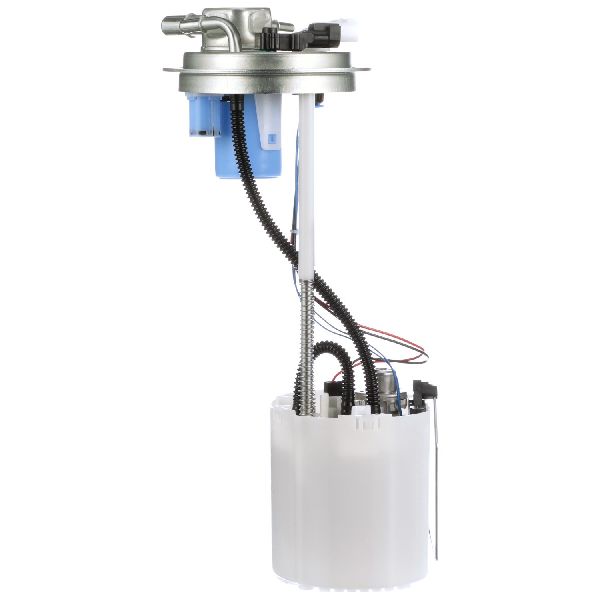
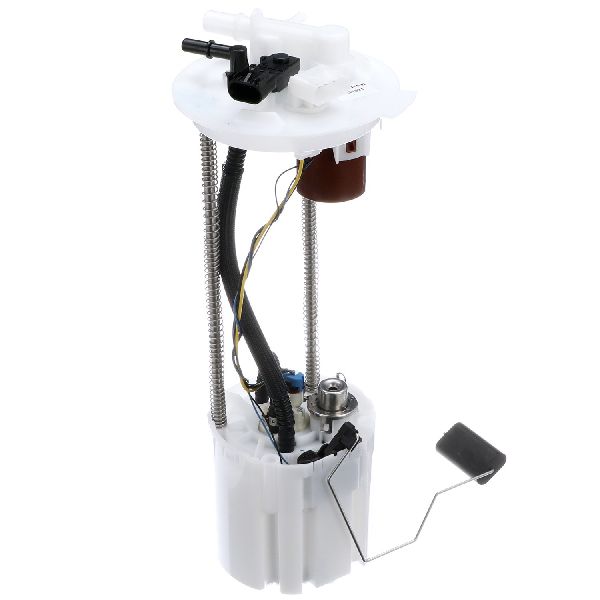
- High-Pressure Fuel Pump
(OEM #12694529 (supersedes 12642287, 12673410, 12679090, 12688607))— A common failure point on these direct-injection engines that leads directly to rich codes on both banks by leaking fuel into the crankcase.
Trusted brands: ACDelco (GM Genuine), Bosch
OEM price range: $300-$500
Aftermarket price range: $200-$350 - High-Pressure Fuel Pipe
(OEM #12679933)— This is a one-time-use, torque-to-yield part that connects the HPFP to the fuel rail. It must be replaced anytime the HPFP is serviced.
Trusted brands: ACDelco (GM Genuine)
OEM price range: $30-$50
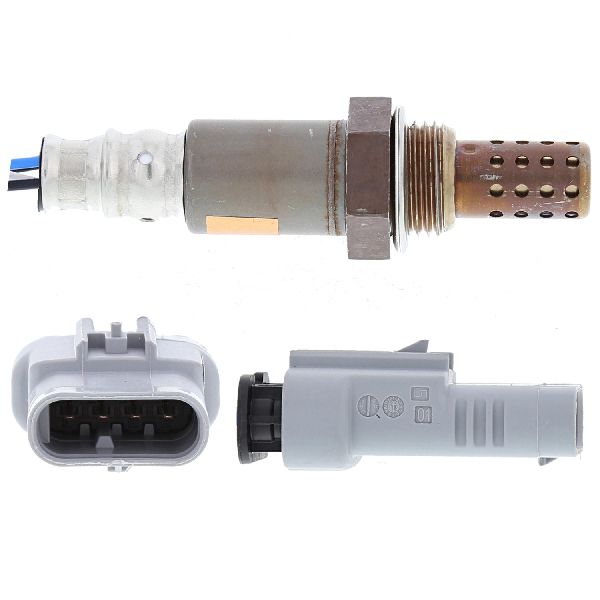
Aftermarket price range: $20-$40 - Upstream Oxygen Sensor (Bank 2, Sensor 1)
(OEM #12639692)— This sensor provides the primary feedback for the air-fuel mixture on Bank 2. If it fails, it can cause an incorrect mixture and trigger the P0175 code.
Trusted brands: ACDelco, Denso, Bosch
OEM price range: $80-$130
Aftermarket price range: $40-$90
Related Codes That Often Appear With This One
- P0172 — System Too Rich Bank 1. If both P0172 and P0175 are present, it points to a common problem affecting both engine banks, such as the MAF sensor, a leaking high-pressure fuel pump, incorrect fuel alcohol content, or an EVAP system issue.
- P0101 — Mass Air Flow (MAF) Circuit Range/Performance. This code can appear alongside P0175 if the MAF sensor is the root cause, as noted in TSB #PIP5446A. [27, ⭐ MANUFACTURER TSB — highest authority]
Technical Service Bulletins (TSBs) & Recalls
- PIP5446A: Notes that rough idle, sputtering, and rich/lean codes (including P0175) can be caused by excessive casting flash in the air filter housing near the MAF sensor. [27, ⭐ MANUFACTURER TSB — highest authority]
Platform-Specific Known Issues
- TSB #PIP5446A indicates that on some 2014-2018 models, excessive casting flash in the air filter housing near the Mass Air Flow sensor can disrupt airflow, leading to codes P0101, P0171, P0172, P0174, and/or P0175. The fix is to inspect for and remove the flash or replace the air filter housing lid. [27, ⭐ MANUFACTURER TSB — highest authority]
- The high-pressure fuel pump on the 5.3L and 6.2L EcoTec3 engines is a known failure point that can leak fuel into the crankcase, causing persistent rich codes (P0172 & P0175). This is a widely discussed issue in owner forums and demonstrated in multiple repair videos.
Mechanic-Grade Diagnostic Values
- Mass Air Flow (MAF) Sensor Reading at warm idle — expected: Approximately equal to the engine's displacement in liters (e.g., a 5.3L engine should read around 5.3 g/s).. Failure: A reading that is significantly lower or higher, erratic, or does not increase smoothly with RPM.
- Long-Term Fuel Trim (LTFT) — expected: Should not exceed ±10% under normal operating conditions.. Failure: For a P0175 code, the LTFT will be a large negative number, often exceeding -20%, as the ECM tries to remove excess fuel.
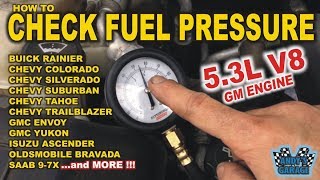
- Low-Side Fuel Pressure (Key On, Engine Off) — expected: 55 to 62 PSI.. Failure: Pressure significantly below this range could indicate a weak in-tank fuel pump, though this is not a primary cause of a rich condition.
- High-Side Fuel Rail Pressure at idle — expected: Approximately 500-900 PSI.. Failure: While not a direct cause of P0175, erratic or extremely high pressure (e.g., 2500 PSI) could indicate a faulty rail pressure sensor or HPFP issue.
- Fuel Alcohol Content (Flex Fuel vehicles) — expected: Should be 10% or less if running standard gasoline.. Failure: An incorrectly learned value significantly higher than the actual ethanol content will cause the ECM to command a rich mixture.
Scan Tool Commands That Help
- GDS2 / Professional Scan Tool: Fuel Composition Reset — Use this function when the 'Fuel Alcohol Percentage' PID is showing an incorrectly high value on a Flex Fuel vehicle that is causing a rich condition (P0172/P0175). This resets the learned value.
- GDS2 / Professional Scan Tool: Fuel Injector Balance Test — This command individually fires each injector while monitoring fuel pressure drop to identify a leaking or malfunctioning injector that could be causing a rich condition in a specific cylinder.
- GDS2: Camshaft Position Actuator System Test — While more related to timing and no-start issues, a stuck cam phaser can in rare cases affect engine running conditions. This function cycles the solenoid to test its operation.
Wiring & Ground Locations
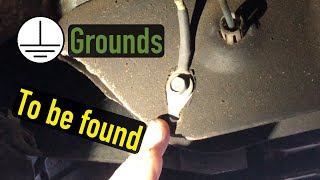
- G103 — On the front corner of the passenger side cylinder head, just below the valve cover.. This is a primary engine control ground. A poor connection here can cause erratic sensor readings for components involved in fuel management, leading to incorrect fuel trims.
- G104 — On the rear of the left (driver's side) cylinder head.. This ground is shared by multiple components, including sensors and relays. A faulty ground here can lead to a variety of electrical issues, potentially including incorrect signals from O2 sensors or MAF sensors.
- G102 — On the driver's side of the engine block, above the pan rail and in front of the motor mount.. Another critical engine control ground point. Ensuring it is clean and tight is a fundamental step in diagnosing any electronic engine control issue.
Real Owner Repair Stories
- YouTube user 'National Garage' (2014 Chevrolet Silverado 1500 5.3L) — Check Engine Light with codes P0172 and P0175 (System Too Rich on both banks).
❌ Tried (didn't work) The video focuses on the diagnosis confirming the cause, not on other parts replaced.
✅ What actually fixed it The high-pressure fuel pump was found to be leaking fuel into the crankcase. Replacing the high-pressure fuel pump and performing an oil change to remove the contaminated oil resolved the codes. - Chevrolet Forum user (2015 Silverado with 72k miles) — P0172 and P0175 codes, especially after extended idling. Hard shifting, surging, and the engine running on for a few seconds after shutoff.
❌ Tried (didn't work) The user was in the diagnostic phase, but the symptoms strongly align with the common HPFP failure.
✅ What actually fixed it The thread resolution pointed towards either a skewed fuel alcohol content reading (which was ruled out as it wasn't a flex-fuel vehicle) or the high-pressure fuel pump, the most likely culprit given the symptoms.
"I Checked Everything" — The Actual Cause
- In many cases for P0172/P0175 on this platform, a smoke test will come back clean. This is because the source of the extra fuel is not a vacuum leak (unmetered air), but rather unmetered fuel being introduced into the crankcase from a leaking high-pressure fuel pump and then drawn into the intake through the PCV system.
OEM Part Supersession History
12642287, 12673410, 12679090, 12688607→12694529— GM has updated the high-pressure fuel pump part number multiple times, likely to improve reliability and address the internal leaking issue.
Model Year Variations Within This Range
- 2016-2018: The 2016 model year received a mid-cycle refresh with a new front-end design and updated technology. More significantly, the 8-speed automatic transmission, previously limited, became more widely available with the 5.3L V8 engine, which could alter some diagnostic paths related to drivetrain communication but does not change the primary causes of P0175.
- 2016-2018: An eAssist mild hybrid system was offered on the 5.3L V8 engine, initially in California (2016) and then nationwide by 2018. While this system doesn't directly impact the core fuel system, it adds another layer of electronics to be aware of during diagnosis.
Helpful Videos



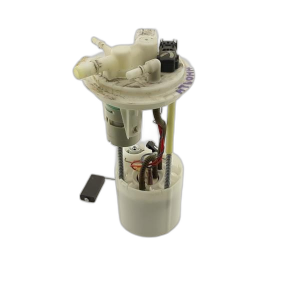
Used OEM Parts in Stock
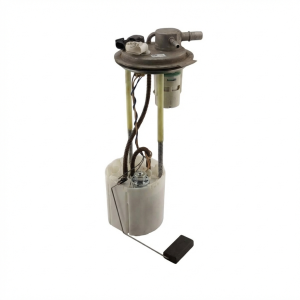
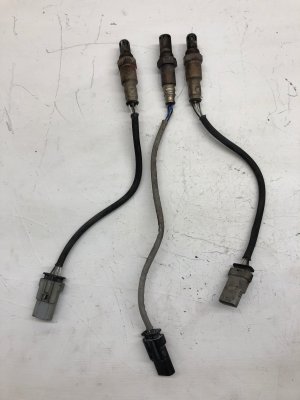
New Aftermarket Parts Available


The information in this article is provided for general reference and educational purposes only. Vehicle specifications, procedures, and part compatibility can vary by production date, trim level, and region. Always consult your vehicle's factory service manual and verify part numbers before purchasing or performing repairs. Safety-critical components such as airbags, seat belts, and braking systems should be installed by a qualified professional.
- Chevrolet SILVERADO 1500:
- 🧭 Diagnostic Flowchart
- 🎬 Helpful Videos
- 🛍️ Shop This Part
- What's Unique About the 2014-2018 Chevrolet SILVERADO 1500
- Symptoms You May Notice
- Most Likely Causes
- Rare But Worth Checking
- Diagnosis Steps
- Parts You'll Likely Need
- Related Codes That Often Appear With This One
- Technical Service Bulletins (TSBs) & Recalls
- Platform-Specific Known Issues
- Mechanic-Grade Diagnostic Values
- Scan Tool Commands That Help
- Wiring & Ground Locations
- Real Owner Repair Stories
- "I Checked Everything" — The Actual Cause
- OEM Part Supersession History
- Model Year Variations Within This Range
- 🎟️ Get 5% Off