

P0175 on 1996-2000 Chevrolet Tahoe 5.7L V8: Rich Condition Causes and Fixes
On a 1996-2000 Tahoe with the 5.7L V8, P0175 is almost always caused by a faulty fuel pressure regulator or leaking injectors inside the intake manifold. The computer is trying to pull fuel (as seen by negative fuel trims) but cannot compensate enough. The best fix is to replace the entire original 'spider' injector assembly with the updated Multi-Port Fuel Injection (MPFI) unit. Expect to pay $250-$350 for the upgraded part.
- P0175 on this Tahoe almost certainly means you have an internal fuel leak inside the intake manifold.
- The most likely cause is a failed fuel pressure regulator, which is part of the 'spider' injector assembly.
- Do not just replace the regulator; the best and most permanent fix is to install the complete updated Multi-Port Fuel Injection (MPFI) spider assembly (ACDelco part # 217-3028).
- A fuel pressure test that shows a rapid drop in pressure after the engine is shut off is the key diagnostic step to confirm the internal leak.
- While this can be a DIY job, it requires removing the upper intake manifold and is considered intermediate to advanced in difficulty.
What's Unique About the 1996-2000 Chevrolet Tahoe
The 1996-2000 Tahoe with the 5.7L Vortec V8 uses a Central Sequential Fuel Injection (CSFI) system, commonly known as a 'spider injector'. Unlike typical fuel injection systems, the fuel pressure regulator for this engine is located *inside* the upper intake manifold, integrated with the injector assembly. This design makes it a common and difficult-to-access failure point. The regulator's diaphragm can rupture, leaking raw fuel directly into the intake plenum. Additionally, the original poppet-style injector valves are notorious for sticking open or leaking, which also dumps unmetered fuel into the engine, directly causing the rich condition reported by P0175.
Symptoms You May Notice
- Illuminated Check Engine Light, often with P0172 as well
- Strong smell of raw gasoline from the exhaust
- Black, sooty residue on the bumper above the tailpipe
- Noticeably poor fuel economy, sometimes as low as 5 MPG
- Rough or unstable idle
- Engine hesitation or lack of power during acceleration
- Hard starting, especially when the engine is warm (due to flooding)
- Engine may continue to sputter for a few seconds after turning the key off ('dieseling')
- Replacing the oxygen sensor first. The O2 sensor is usually just the messenger, accurately reporting a rich condition caused by a fuel delivery problem. Always diagnose the fuel system first, especially on this platform.
Most Likely Causes
- Leaking Internal Fuel Pressure Regulator / Spider Injector Assembly 🔴 High Probability → Shop Fuel Injection Pressure Regulator The fuel pressure regulator is located inside the intake manifold as part of the CSFI 'spider' assembly. The diaphragm in the regulator fails, leaking raw fuel directly into the intake plenum, causing a severe rich condition affecting both banks. The original poppet-style injectors are also prone to leaking.
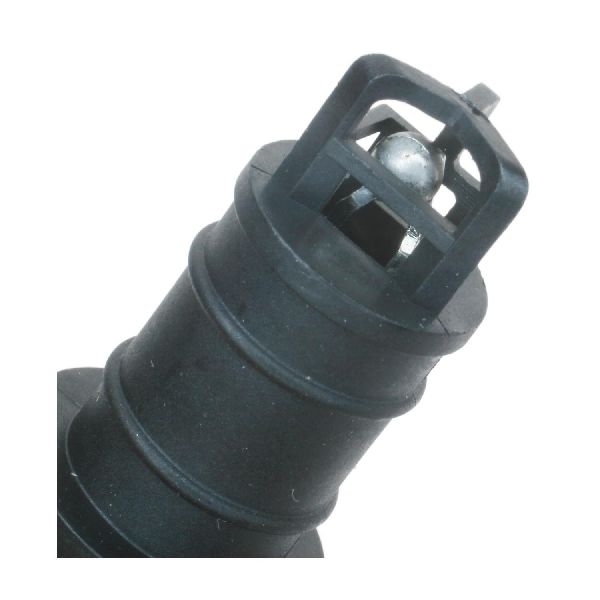
How to confirm: Perform a fuel pressure test. Connect a gauge to the Schrader valve on the fuel line. With the key on, engine off (KOEO), pressure should be 60-66 psi. Turn the key off. The pressure should not drop more than 5 psi in 10 minutes. A rapid pressure drop indicates an internal leak. 🎬 Watch this guide on performing a fuel pressure leak down test. After removing the upper intake manifold, you will often see clean, 'washed' areas where fuel has been spraying and cleaning off the normal carbon buildup.
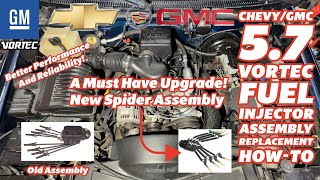
Typical fix: Replace the entire original CSFI spider assembly with the modern Multi-Port Fuel Injection (MPFI) upgrade kit. This kit includes a new spider assembly with improved electronic injectors and an integrated fuel pressure regulator. This is a permanent solution to the design flaw.
Est. part cost: $250 - $400 - Dirty or Faulty Mass Airflow (MAF) Sensor 🟡 Medium Probability → Shop Fuel Injection Air Flow Meter The MAF sensor measures the amount of air entering the engine. If it's dirty (especially from over-oiled aftermarket air filters) or failing, it can under-report airflow, causing the PCM to command a richer fuel mixture than necessary.
How to confirm: Inspect the sensor for contamination. You can try cleaning it first using only dedicated MAF sensor cleaner spray. A diagnostic test involves unplugging the MAF sensor and driving the vehicle; if the fuel trims improve and driveability returns to normal, the MAF sensor is likely faulty.
Typical fix: Clean the MAF sensor with a dedicated cleaner. If cleaning does not resolve the issue, replace the sensor.
Est. part cost: $10 - $15 (cleaner), $70 - $150 (new sensor) - Failing Upstream Oxygen (O2) Sensor ⚪ Low Probability → Shop Oxygen Sensor The O2 sensor is what detects the rich condition. While it can fail, it's more likely to be accurately reporting a problem caused by something else. However, a 'lazy' or contaminated sensor can become slow to respond or get stuck on a high voltage reading, tricking the PCM into thinking there's a rich condition when there isn't.
How to confirm: Use a scan tool to observe the O2 sensor voltage. A healthy upstream sensor should fluctuate rapidly between approximately 0.1 and 0.9 volts. A sensor that is stuck high (above 0.8v) or is very slow to respond may be faulty.
Typical fix: Replace the Bank 2, Sensor 1 (upstream) oxygen sensor.
Est. part cost: $40 - $80
Rare But Worth Checking
- Stuck Open Thermostat or Faulty Engine Coolant Temperature (ECT) Sensor: If the engine computer thinks the engine is always cold because of a faulty ECT sensor or a thermostat stuck open, it will command a richer fuel mixture intended for cold starts, which can trigger a P0175 code over time.
- Leaking EVAP Purge Solenoid: → Shop Vapor Canister A stuck-open EVAP purge solenoid can allow unmetered fuel vapors from the charcoal canister to be drawn into the intake manifold at the wrong time (like at idle), creating a rich condition. This can sometimes be caused by habitually overfilling the fuel tank.
Diagnosis Steps
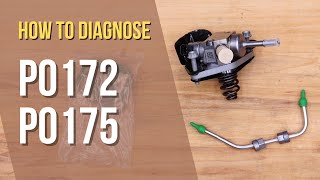
- Read the codes with an OBD-II scanner. Confirm P0175 and check for P0172 (very common to see both). Note the Long Term Fuel Trim (LTFT) values 🎬 See how to troubleshoot P0172 and P0175 codes on GM vehicles. for Bank 1 and Bank 2. Values of -15% to -25% confirm the PCM is trying to correct a severe rich condition.
- Perform a fuel pressure test. Connect a fuel pressure gauge to the test port on the fuel line. Key on, engine off (KOEO), pressure must be between 60-66 psi. Start the engine; pressure should hold steady. Turn the engine off and watch the gauge for 10-15 minutes. If pressure drops more than 5-10 psi, a leak is present. On this engine, a rapid drop almost certainly means the regulator or spider assembly is leaking inside the intake.
- If fuel pressure holds steady, inspect the Mass Airflow (MAF) sensor. Check if it's dirty and try cleaning it with dedicated MAF sensor cleaner. Do not touch the delicate wires inside.
- Visually inspect the upper intake manifold area. After removing the plastic engine cover, look for signs of fuel washing or wetness around the injector lines, though this is often hidden until disassembly.
- If the fuel pressure test is inconclusive, use a scan tool to monitor the live data from the Bank 2 upstream O2 sensor to check if it is functioning correctly or if it is stuck in a high-voltage (rich) reading.
- When the spider injector is replaced, inspect the inside of the upper intake plenum. Clean, washed-off areas are definitive proof of a fuel leak from the old unit.
Parts You'll Likely Need
- Multi-Port Fuel Injection (MPFI) Spider Injector Upgrade Kit
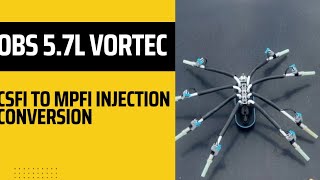
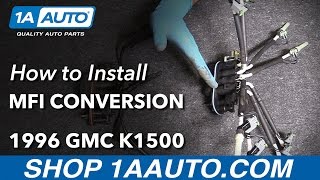
(OEM #ACDelco 217-3028 or GM 89060439 / 19210688)— This is the definitive fix. 🎬 Watch a step-by-step walkthrough of the MPFI conversion process. It replaces the entire problematic original CSFI assembly, including the failure-prone internal fuel pressure regulator and poppet injectors, with a modern, reliable multi-port injector system. Aftermarket versions like the Delphi FJ10565 are also highly regarded.
Trusted brands: ACDelco (OEM), Delphi (OEM supplier), Standard Motor Products
OEM price range: $300-$400
Aftermarket price range: $250-$350 - Upper Intake Manifold Gasket Set (Plenum Gasket)
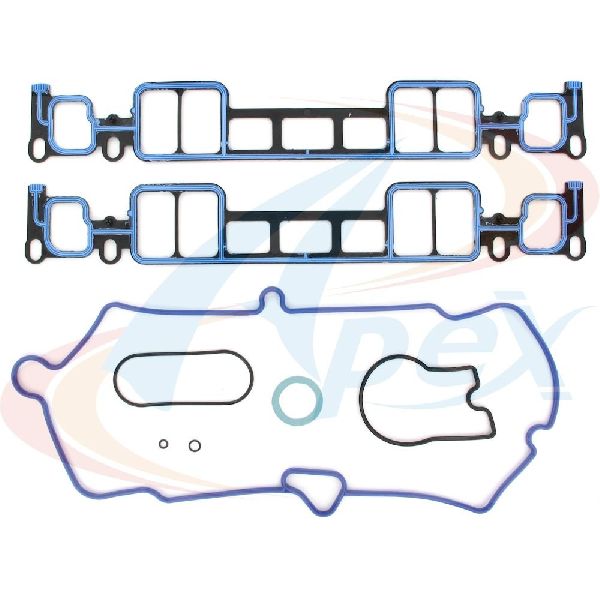
(OEM #Fel-Pro MS 98000 T)— This is a required part for replacing the spider injector assembly, as the upper intake manifold must be removed to access it. It is critical to replace these gaskets to prevent vacuum leaks after the repair. The Delphi and ACDelco MPFI kits often include this gasket.
Trusted brands: Fel-Pro, ACDelco
OEM price range: $40-$60
Aftermarket price range: $20-$40
Related Codes That Often Appear With This One
- P0172 — This is the identical 'System Too Rich' code, but for Bank 1 (driver's side). If both codes are present, it strongly points to a problem affecting the entire engine, like the fuel pressure regulator or MAF sensor, which is the most common scenario for this vehicle.
- P0300 — This code means 'Random/Multiple Cylinder Misfire'. A severe rich condition can foul spark plugs with black soot and cause misfires across several cylinders.
Technical Service Bulletins (TSBs) & Recalls
- While not a specific TSB for P0175, GM service bulletins exist for testing the CSFI/SCPI system. For example, some bulletins describe using a scan tool's injector balance test in conjunction with a fuel pressure gauge to identify leak-down rates for individual injectors, though this is often unnecessary as the entire unit is typically replaced.
Platform-Specific Known Issues
- CSFI to MPFI Upgrade is Essential: The Central Sequential Fuel Injection (CSFI) system on the 5.7L Vortec engine is a known weak point. The upgrade to the Multi-Port Fuel Injection (MPFI) system is considered a standard, necessary repair for long-term reliability. The MPFI unit provides better fuel atomization with its six-hole orifice design, leading to improved cold starts and better emissions control.
- Real Owner Repair Story: A user on the r/GMT400 subreddit with a 1997 5.7L truck reported intermittent P0172 and P0175 codes, reduced power (especially at high elevation), poor fuel economy (dropping from 19 MPG to 13 MPG), and light soot on the bumper. Other users immediately and correctly diagnosed a leaking fuel pressure regulator or spider injector assembly, recommending the full MPFI upgrade as the only reliable fix. This is a classic example of the failure pattern.
Mechanic-Grade Diagnostic Values
- Mass Airflow (MAF) Sensor Reading at Idle — expected: Approximately 5.7 to 7 g/s at warm idle (roughly matches engine displacement in liters).. Failure: Significantly lower readings can falsely indicate low airflow, causing the PCM to command a rich mixture. Readings that do not increase smoothly with RPM are also a sign of failure.
- Mass Airflow (MAF) Sensor Reading at 2500 RPM — expected: Approximately 15 to 25 g/s, depending on load.. Failure: A non-linear or flat response as RPMs increase indicates a faulty sensor.
- Fuel Pressure Leak-Down Test — expected: Pressure should not drop more than 5 psi in 10 minutes after shutting the engine off.. Failure: A rapid pressure drop (e.g., >10 psi in one minute) strongly indicates a leak within the intake manifold from the fuel pressure regulator or spider injector assembly.
- Injector Balance Test (Pressure Drop) — expected: The pressure drop for each injector should be within 1.5 PSI (10 kPa) of the average pressure drop across all cylinders.. Failure: An injector with a significantly larger pressure drop is leaking or stuck open. An injector with a smaller drop may be clogged.
Scan Tool Commands That Help
- GM Tech 2 / Professional Bidirectional Scanner: Fuel Injector Balance Test — This is a critical test if the fuel pressure leak-down test is inconclusive. The scan tool commands the PCM to pulse each injector individually while monitoring the drop in fuel rail pressure. This can pinpoint a single leaking injector within the spider assembly that is causing the rich condition, confirming the need to replace the unit without ambiguity.
- GM Tech 2 / Professional Bidirectional Scanner: EVAP Purge/Seal — To test the EVAP purge solenoid. With the engine at idle, a technician can command the purge solenoid to open and close. If monitoring fuel trims, they should see the short-term trim values go negative when the valve is commanded open (as unmetered fuel vapor enters) and return to normal when closed. If trims are already very negative and do not change, or if the valve doesn't respond, it may be stuck open.
Wiring & Ground Locations
- G103 — On the right front side of the engine, near the thermostat housing.. This is a primary engine ground. A poor connection here can affect the readings of critical sensors like the ECT (Engine Coolant Temperature) sensor. If the PCM gets a false 'cold' reading due to a bad ground, it will command a richer fuel mixture, potentially leading to a P0175 code.
- PCM Engine Grounds — The main PCM ground wires are typically black with a white stripe and are pinned to the PCM connectors. They ground to the engine block, often on a stud on the top rear or side of the engine.. A corroded or loose PCM ground can cause erratic sensor readings across the board, including from the O2 sensors, MAF, and ECT. This can lead to incorrect fuel calculations and is a common source of difficult-to-diagnose electrical issues and codes.
- PCM Connector C4, Pin 13 (Bank 2 O2 Sensor Signal) — This is the Dark Blue wire for the upstream O2 sensor signal for Bank 2 on the 1996-1997 Vortec PCM.. When diagnosing a stubborn P0175, a technician may need to test for voltage directly at the PCM connector to rule out a wiring issue between the sensor and the computer. A short to voltage on this wire could trick the PCM into seeing a constant rich condition.
Real Owner Repair Stories
- r/GMT400 Reddit User (1999 7.4L (Similar CSFI system issues)) — Oil pan gasket leak, rear main seal leak, transmission issues.
❌ Tried (didn't work) The user was performing multiple repairs at once.
✅ What actually fixed it In the context of comparing engines, the user noted having to replace an injector on their 7.4L, highlighting the commonality of injector issues on these CSFI systems. Another user in the thread confirmed the 5.7L is generally more reliable and easier to work on, reinforcing that when the 5.7L does have this issue, the spider injector is the primary culprit. - Summit Racing Reviewer (2001 S10 with 4.3L V6 (Same CSFI to MPFI upgrade path)) — Black smoke from exhaust, O2 sensor and catalytic converter codes, poor power and gas mileage.
❌ Tried (didn't work) Not specified, but symptoms were severe.
✅ What actually fixed it Upgraded the original CSFI system to the Standard Motor Products MPFI unit (FJ503). The user reported the truck fired right up, idled smoothly, had no more black smoke or codes, and power and gas mileage were noticeably improved. This confirms the effectiveness of the MPFI conversion for resolving severe rich conditions caused by the original injector design.
OEM Part Supersession History
GM 17091628 (and similar CSFI assemblies)→GM 89060439 / ACDelco 217-3028 / Delphi FJ10565 / Standard Motor Products FJ503— The original Central Sequential Fuel Injection (CSFI) poppet valve design was highly prone to sticking, leaking, and clogging. The superseding parts are a full Multi-Port Fuel Injection (MPFI) conversion with individual, more reliable electronic injectors.
Heads up: The Standard Motor Products FJ503 is for the V6 and V8 CSFI to MPFI conversion. The FJ504 is for vehicles that came with MPFI from the factory and may have different physical dimensions. Using the wrong one can lead to installation issues.
Model Year Variations Within This Range
- 1996-2000: While the core engine and fuel system are the same, there were minor PCM hardware and software differences between years (e.g., 96-97, 98-99, 00). This generally does not affect the diagnosis or repair of P0175, as the root cause is almost always the mechanical spider injector assembly, but it can be relevant for advanced tuning or PCM replacement.
Diagnostic Flowchart
Used vs. New Parts: Buying Guide for This Vehicle
When a used part is the smart pick: For this specific repair, buying a used spider injector assembly is NEVER recommended. The failure is due to a design flaw, and a used part is likely to have the same issue or fail shortly after installation. Used parts like a MAF sensor, throttle body, or EVAP solenoid from a low-mileage donor vehicle can be a cost-effective option if they are confirmed to be the cause of the problem.
Donor-vehicle mileage cap: roughly under 100000 miles for the part to have meaningful remaining life.
What to inspect on the donor part:
- For a MAF sensor, ensure the mesh screens are intact and the sensor wires are not visibly contaminated or damaged.
- For electrical components, check for clean, corrosion-free connectors.
- Ask for the VIN of the donor vehicle to verify mileage and check for a history of related codes if possible.
OEM-only on this vehicle (don't cheap out):
- While not OEM-only, the MPFI Spider Injector Upgrade is a part where sticking to reputable brands is critical for long-term reliability.
Aftermarket brands forum-validated for this vehicle:
- MPFI Spider Injector: Delphi (FJ10565), ACDelco (217-3028), Standard Motor Products (FJ503).
- Intake Gaskets: Fel-Pro (MS 98000 T).
Brands owners have reported issues with on this vehicle:
- Unnamed, no-brand 'white box' spider injector assemblies from online marketplaces. These often have high failure rates, poor quality control, and do not offer the same reliability as known brands.
Real Owner Stories
Aggregated from forums and TSBs cited above. Mileages and costs reflect what owners reported in those sources.
1997 Chevrolet C/K 5.7L V8
Symptoms: Intermittent P0172 and P0175 codes, reduced power, especially at high elevation, poor fuel economy dropping from 19 MPG to 13 MPG, and light soot on the bumper.
What fixed it: The community immediately and correctly diagnosed a leaking fuel pressure regulator or spider injector assembly, recommending the full MPFI upgrade as the only reliable fix.
Source hint: Reddit r/GMT400 - "P0172 and P0175 on 1997 5.7"
Chevrolet Tahoe 5.7L V8
Symptoms: P0175 & P0172, hard cold start, and scan tool data showing Long Term Fuel Trims at -19.5% on both banks.
What fixed it: Forum discussion and diagnosis circled back to the core fuel system problem, identifying the spider injector assembly as the cause.
Source hint: Tahoe Yukon Forum - "P0175 & P0172, Hard Cold Start..."
Related OBD-II Codes
Frequently Asked Questions
I have both P0175 and P0172 codes on my Tahoe. Is this normal?
What is the 'MPFI spider upgrade' and is it necessary for my 5.7L Vortec?
How can I confirm the fuel pressure regulator is leaking before taking everything apart?
My long-term fuel trims are reading -25%. What does that mean?
Could a dirty MAF sensor cause this code on my Tahoe?
Does my 1999 Cadillac Escalade have the same fuel injector problem?
Helpful Videos
We Have This Part in Stock


The information in this article is provided for general reference and educational purposes only. Vehicle specifications, procedures, and part compatibility can vary by production date, trim level, and region. Always consult your vehicle's factory service manual and verify part numbers before purchasing or performing repairs. Safety-critical components such as airbags, seat belts, and braking systems should be installed by a qualified professional.
- Chevrolet Tahoe:
- 🧭 Diagnostic Flowchart
- 🎬 Helpful Videos
- 🛍️ Shop This Part
- What's Unique About the 1996-2000 Chevrolet Tahoe
- Symptoms You May Notice
- Most Likely Causes
- Rare But Worth Checking
- Diagnosis Steps
- Parts You'll Likely Need
- Related Codes That Often Appear With This One
- Technical Service Bulletins (TSBs) & Recalls
- Platform-Specific Known Issues
- Mechanic-Grade Diagnostic Values
- Scan Tool Commands That Help
- Wiring & Ground Locations
- Real Owner Repair Stories
- OEM Part Supersession History
- Model Year Variations Within This Range
- Used vs. New Parts: Buying Guide for This Vehicle
- Real Owner Stories
- 1997 Chevrolet C/K 5.7L V8
- Chevrolet Tahoe 5.7L V8
- Related OBD-II Codes
- Frequently Asked Questions
- 🎟️ Get 5% Off