

P0175 on 2011-2014 Chrysler 200 3.6L: System Too Rich Bank 2 Causes and Fixes
P0175 on a 3.6L Chrysler 200 means the engine is running too rich on Bank 2 (the firewall side). The most common causes are a faulty upstream oxygen sensor or a leaking fuel injector. Using OEM Mopar parts for these components is critical. Addressing this promptly prevents expensive damage to the catalytic converter.
- P0175 means the rear cylinder bank (Bank 2) is getting too much fuel.
- Start your diagnosis by checking the Bank 2 upstream O2 sensor; it's the most common culprit and a standard wear item.
- If the O2 sensor is good, investigate for a leaking fuel injector on Bank 2, especially if you also have a misfire code.
- Always use high-quality OEM or OE-equivalent parts (Mopar, NTK, Denso) for sensors and injectors to avoid compatibility problems.
- Do not ignore this code, as it will decrease fuel economy and can lead to costly catalytic converter damage over time.
What's Unique About the 2011-2014 Chrysler 200
The 3.6L Pentastar V6 in the Chrysler 200 is a transverse (front-wheel drive) mounted engine, which places Bank 2 and its associated sensors in the tight space against the firewall, making access more difficult than on rear-wheel-drive applications. While the P0175 code has many potential causes, Chrysler vehicles are known to be sensitive to the brand of oxygen sensors and fuel injectors used; using non-OEM brands can sometimes cause persistent fuel trim issues. Additionally, early Pentastar engines (2011-2013) had a known cylinder head issue (TSB 09-002-14) that could cause misfires and related fuel trim codes, though this is a less common cause for an isolated P0175 code without accompanying misfire codes.
Symptoms You May Notice
- Check Engine Light is on
- Reduced fuel economy
- Rough or unstable idle
- Strong smell of gasoline from the exhaust
- Black smoke or soot from the exhaust pipe
- Hesitation or lack of power during acceleration
- Engine stalling, especially at idle
- Replacing the downstream (post-catalyst) O2 sensor instead of the upstream (pre-catalyst) sensor. The upstream sensor is the primary input for fuel trim adjustments.
- Using cheap, off-brand oxygen sensors or fuel injectors, which are known to cause compatibility issues with Chrysler's engine management system.
- Replacing parts without checking for relevant Technical Service Bulletins (TSBs), as some fuel trim issues can be resolved with a PCM software update.
Most Likely Causes
- Faulty Upstream Oxygen (O2) Sensor (Bank 2, Sensor 1) 🔴 High Probability → Shop Oxygen Sensor O2 sensors are wear-and-tear items that degrade over time. A failing sensor can send incorrect signals to the PCM, causing it to enrich the fuel mixture unnecessarily. The Pentastar platform is notoriously sensitive to sensor brands; non-OEM sensors can provide inaccurate readings even when new.
How to confirm: Use a scan tool to monitor the live data for the Bank 2, Sensor 1 O2 sensor. A healthy sensor's voltage should fluctuate rapidly between approximately 0.1V and 0.9V. If it's stuck at a high voltage (e.g., >0.8V), it is signaling a rich condition. Compare its readings to the Bank 1 sensor; if Bank 1 fluctuates normally while Bank 2 is stuck high, the sensor is highly suspect.
Typical fix: Replace the Bank 2, Sensor 1 (upstream) oxygen sensor. It is highly recommended to use an OEM (Mopar) or OE-equivalent (NTK, Denso) sensor to avoid compatibility issues.
Est. part cost: $40-$90 - Leaking Fuel Injector(s) on Bank 2 🟡 Medium Probability → Shop Fuel Injector Fuel injectors can become stuck partially open or develop leaks, allowing excess fuel to enter one or more cylinders on Bank 2. Aftermarket injectors are a known cause of P0172/P0175 codes on this platform if not perfectly matched to OEM flow rates.
How to confirm: If a misfire code (P0302, P0304, P0306) is also present, that cylinder's injector is highly suspect. A fuel pressure leak-down test can also point to a leaking injector; pressure should hold steady after the engine is off. Pulling the spark plugs on Bank 2 may reveal one that is black and sooty, indicating a rich condition in that cylinder. A definitive test involves swapping the suspected injector with one from Bank 1 to see if the rich code moves to the other bank (P0172).
Typical fix: Replace the faulty fuel injector(s) on Bank 2. It's often recommended to replace them as a set for that bank. Using OEM Mopar injectors is strongly advised to resolve the issue permanently.
Est. part cost: $50-$150 per injector - Faulty Manifold Absolute Pressure (MAP) Sensor ⚪ Low Probability The Pentastar engine uses a MAP sensor instead of a MAF sensor to measure engine load. If the MAP sensor provides an incorrect reading (suggesting higher engine load than actual), the PCM will command more fuel, which can cause a rich condition affecting both banks, but sometimes presenting on only one. Oil vapor from the PCV system can also foul the sensor over time.
How to confirm: With a scan tool, check the MAP sensor reading with the key on, engine off. It should match the barometric pressure (BARO) reading and show a voltage of ~4.5V. At idle, the voltage should drop to 1.0-2.0V. An erroneously high reading at idle will cause a rich condition.
Typical fix: Replace the MAP sensor. Check for related TSBs, as some MAP sensor issues on this platform were resolved with a PCM software update.
Est. part cost: $30-$70
Rare But Worth Checking
- High Fuel Pressure: This would typically cause a rich condition on both banks (P0172 and P0175), but it's worth checking. A faulty fuel pressure regulator (part of the in-tank fuel pump module) can cause this. Fuel pressure should be stable around 58 PSI +/- 2 PSI.
- Stuck-Open EVAP Purge Valve: → Shop Vapor Canister If the EVAP purge valve sticks open, it can allow unmetered fuel vapors to enter the intake manifold, creating a rich condition that is most noticeable at idle. This usually affects both banks but can manifest on one first, and may cause difficulty starting after refueling.
- Faulty Engine Coolant Temperature (ECT) Sensor: If the ECT sensor incorrectly tells the PCM that the engine is cold (stuck on a high resistance), the computer will command a richer fuel mixture, similar to a cold start.
- Left Cylinder Head Failure (2011-2013 models): Early Pentastar engines had a known issue with the left cylinder head (Bank 2) that could lead to misfires and, consequently, unburnt fuel in the exhaust, potentially triggering a rich code. This usually presents with misfire codes (P0302, P0304, P0306) as the primary symptom. Chrysler issued an extended warranty (X56 / 10 years, 150,000 miles) and TSB 09-002-14 REV. B to address this. Diagnosis requires a cylinder leak-down test.
- Low Engine Oil Level/Poor Oil Quality: Extremely low or degraded engine oil can affect the performance of the variable valve timing (VVT) system. In some cases, this can lead to improper valve timing that results in poor combustion and rich codes, often accompanied by camshaft position codes (P000D, P0018).
Diagnosis Steps
- Check for other trouble codes using an OBD-II scanner. Address any misfire or sensor codes first.
- Using the scanner, view live data. Observe the Short-Term (STFT) and Long-Term (LTFT) fuel trims for Bank 2. For P0175, you will see highly negative values (e.g., -20% or more) as the PCM attempts to remove fuel.
- Compare Bank 2 fuel trims to Bank 1. If Bank 1 trims are normal, the problem is isolated to Bank 2 (e.g., O2 sensor, injectors). If both banks are rich, look for a common cause (e.g., MAP sensor, fuel pressure).
- Inspect the air filter and intake system for any blockages that could restrict airflow and cause a rich condition.
- Test the Bank 2, Sensor 1 (upstream) O2 sensor. Watch its voltage on the scan tool. If it's lazy or stuck high (above 0.8V), it's likely faulty.
- Perform a fuel pressure test. For the 3.6L engine, pressure should be around 58 PSI (400 kPa). Check for leak-down after turning the engine off, which would indicate a leaking injector or faulty check valve.
- If a specific cylinder is suspected (e.g., from a P030x code), inspect its spark plug for black soot and test or swap the fuel injector with one from another cylinder to see if the problem follows the injector.
- For 2011-2013 models with persistent Bank 2 misfires, perform a cylinder leak-down test to check for the known cylinder head defect as outlined in TSB 09-002-14. Leakage of 25% or more confirms the issue.
Parts You'll Likely Need
- Upstream Oxygen Sensor (Bank 2, Sensor 1)
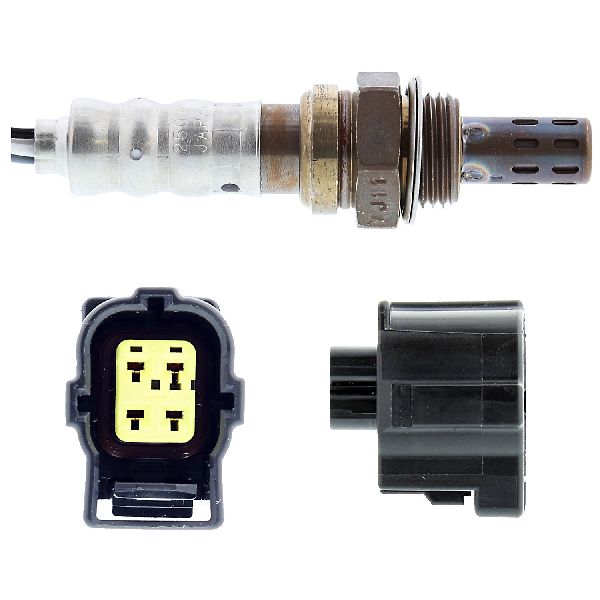
(OEM #5149171AA)— This is the most common failure point for an isolated P0175 code. It is a primary sensor for fuel mixture control and is a standard wear item. Using the OEM Mopar or specified OE brand is critical for proper function.
Trusted brands: Mopar, NTK, Denso
OEM price range: $70-$110
Aftermarket price range: $40-$90 - Fuel Injector
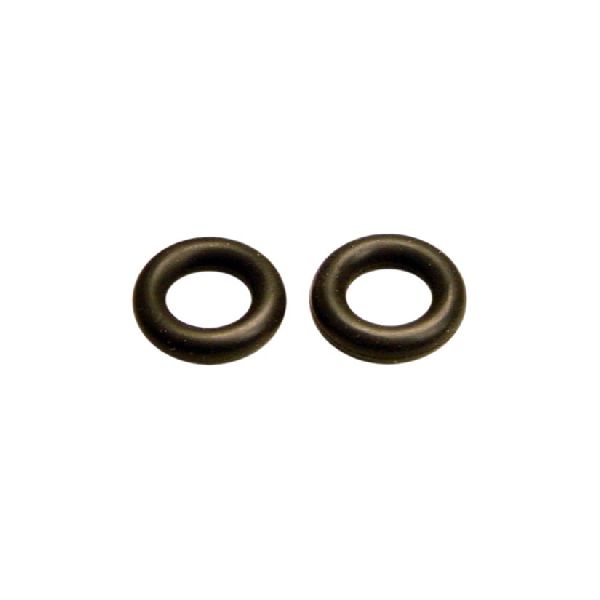
(OEM #05184085AD)— A leaking fuel injector is a frequent cause, especially if the rich code is accompanied by a misfire code for a specific cylinder on Bank 2. Aftermarket injectors are known to cause rich codes on this platform.
Trusted brands: Mopar, Standard Motor Products
OEM price range: $155-$225
Aftermarket price range: $50-$150
Related Codes That Often Appear With This One
- P0172 — This is the 'System Too Rich' code for Bank 1. If both P0172 and P0175 are present, the cause is likely a component common to both banks, such as a faulty MAP sensor, high fuel pressure, or an EVAP system issue.
- P0300, P0302, P0304, P0306 — These are misfire codes for the cylinders in Bank 2. A severely rich condition from a leaking injector can foul the spark plug in that cylinder, causing a misfire. These codes are also the primary symptom of the known left cylinder head failure on 2011-2013 models.
- P0152 — This code for 'O2 Sensor Circuit High Voltage (Bank 2, Sensor 1)' can appear with P0175. It indicates the sensor is constantly reading a high voltage, which is the signal for a rich condition, pointing directly at the sensor itself or a severe underlying rich problem.
Technical Service Bulletins (TSBs) & Recalls
- TSB 09-002-14 REV. B: Addresses MIL illumination for misfire codes P0300, P0302, P0304, or P0306 on 2011-2013 models. It instructs technicians to perform a cylinder leakage test on Bank 2 and replace the left cylinder head if leakage is 25% or greater. This is related to the X56 extended warranty.
- Warranty Bulletin D-14-12 (X56): Announces the extended warranty for the left cylinder head on select 2011-2013 vehicles with the 3.6L engine. The coverage is extended to 10 years or 150,000 miles.
- TSB 18-034-14 REV. A: Pertains to a P0520 (Engine Oil Pressure Sensor Circuit) code on 2013-2014 models and involves replacing the oil pressure sensor. While not directly for P0175, it highlights sensor issues on the platform.
Platform-Specific Known Issues
- Sensitivity to Aftermarket Parts: Many owner and technician experiences confirm that the 3.6L Pentastar's engine management system is very sensitive to the brand of electronic components. A YouTube video on a Dodge Grand Caravan with the same engine documented a lengthy and expensive diagnostic process for P0172/P0175 that was only resolved by replacing aftermarket fuel injectors with OEM Mopar parts. The issue followed the injectors when swapped to another vehicle.
Mechanic-Grade Diagnostic Values
- Fuel Pressure — expected: 58 psi +/- 2 psi (400 kPa +/- 14 kPa). Failure: Pressure significantly higher than 60 psi can cause a rich condition on both banks.
- MAP Sensor Voltage (Key On, Engine Off) — expected: ~4.5V - 5.0V. Failure: Voltage is significantly lower, or does not match the BARO sensor reading on a scan tool.
- MAP Sensor Voltage (Engine at Idle) — expected: 1.0V - 2.0V. Failure: Voltage remains high (near 4.5V), indicating it is not responding to engine vacuum and will cause a rich command.
- Upstream O2 Sensor (Bank 2, Sensor 1) Live Data — expected: Rapidly fluctuating between ~0.1V and ~0.9V. Failure: Voltage is stuck high (e.g., >0.8V), indicating the sensor is constantly reading rich (or has failed and is biased rich).
- Long Term Fuel Trim (LTFT) and Short Term Fuel Trim (STFT) for Bank 2 — expected: Combined value close to 0%, typically within +/- 10%.. Failure: Consistently high negative numbers, such as -20% to -30%, indicate the PCM is aggressively removing fuel to counteract a rich condition.
Scan Tool Commands That Help
- Professional Scan Tool (e.g., wiTECH): Fuel Injector Kill Test — If a leaking injector is suspected on Bank 2, disabling injectors one by one on that bank can help pinpoint the faulty one. When the leaking injector is disabled, the fuel trims for that bank should move from highly negative toward 0.
- Professional Scan Tool (e.g., wiTECH): EVAP Purge Solenoid Actuation — To test if the EVAP purge solenoid is sticking open. With the engine at idle, command the valve closed and monitor fuel trims. Then, command it to open and observe if the fuel trims shift negative, indicating fuel vapor is being introduced. If trims are already negative and don't change when the valve is commanded closed, it may be stuck open mechanically.
Wiring & Ground Locations
- Engine Harness Chafe Point — The main engine wiring harness can rub against the back of the cylinder head on 3.6L Pentastar engines.. Chafing can cause intermittent shorts or opens in the circuits for the Bank 2 O2 sensor or other engine sensors, leading to erratic signals and incorrect fuel adjustments. This is a known issue on the platform.
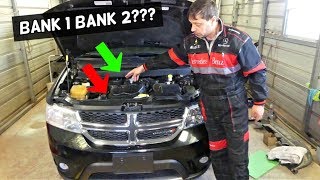
- Bank 2, Sensor 1 O2 Sensor Connector — On the V6, Bank 2 is the cylinder bank closer to the firewall. The upstream sensor is located in the exhaust manifold before the catalytic converter. Access is tight.. This is the primary connection point to test the O2 sensor's circuit. A visual inspection for melted plastic, corrosion, or damaged pins is a critical first step before replacing the sensor.
- G905A Ground Point — Located in the engine compartment, below the left (driver's side) headlight.. This is a major engine compartment ground. While not specific to one sensor, a poor connection here is known to cause various hard-to-diagnose electrical faults and erratic sensor readings on this platform.
Real Owner Repair Stories
- ScannerDanner Forum user (2013 Dodge Caravan 3.6L Pentastar) — P0175 and P0300 codes, stutter at idle.
❌ Tried (didn't work) Replacing injectors and coils with 'cheap amazon stuff'.
✅ What actually fixed it The owner experienced 'Amazon regret' and the problem persisted. After cleaning and reinstalling the original OEM injectors and coils, the rich condition and misfire codes were resolved, highlighting the platform's sensitivity to aftermarket part quality. - Reddit user r/MechanicAdvice (2012 Chrysler 200 3.6L, 146k miles) — P0172 and P0175 (both banks rich), will not stay running without throttle input, fuel trims at -33%.
❌ Tried (didn't work) Replaced coils and plugs with OEM parts, Checked coolant, MAP, and MAF sensors, Verified fuel pressure was in spec, Ohm-tested all fuel injectors, Checked injector spray patterns, Had exhaust and catalytic converters checked
✅ What actually fixed it The thread ends without a confirmed fix, serving as a cautionary tale for how difficult this code can be when the common causes are ruled out. The user was left considering a timing issue as the next step. - NHTSA ODI #11122266 — An owner reported experiencing codes P0153, P0175, P0300, and P0302. The report notes that the cylinder head problem in the Chrysler Pentastar 3.6L engine affects the left bank containing these cylinders.
- NHTSA ODI #11406732 — A vehicle owner reported that several error codes appeared including P0300, P0456, P0455, and P0175. A mechanic suggested the issue could be related to the manufacturer and noted the codes mentioned "EVP L".
OEM Part Supersession History
5149171AA→5149171AB— Standard part revision/update.
Heads up: Part 5149171AB also replaces 68066160AA. They are considered interchangeable for this application.5184085AC→05184085AD— Standard part revision/update.
Heads up: The part number format changed, but 05184085AD is the correct current replacement for injectors on this engine.
Model Year Variations Within This Range
- 2011-2013 only: These earlier Pentastar engines are susceptible to a left-side cylinder head failure which can cause misfires and rich codes on Bank 2. Chrysler issued an extended warranty to cover this known defect.
- Post-2016 (Not applicable to this vehicle): For reference, the Pentastar engine was significantly updated in 2016 with a higher compression ratio (11.3:1), two-stage variable valve lift (VVL), and a cooled EGR system. These changes improved power and efficiency but also introduced different potential failure points not relevant to the 2011-2014 models.
Diagnostic Flowchart
Other Known Issues on This Vehicle
Issues unrelated to this code that are worth knowing about as an owner of this generation:
- Cracked Oil Filter Housing/Cooler Assembly 🔴 High — Very common across all 3.6L Pentastar applications. The plastic housing becomes brittle from heat cycles and cracks, causing significant oil and/or coolant leaks.
- Rocker Arm Bearing Failure ('Pentastar Tick') 🔴 High — Widespread issue where needle bearings in the rocker arms fail, causing a distinct ticking sound, misfires, and potential camshaft damage if ignored.
- Left Cylinder Head Defect (2011-2013 Models) 🔴 High — Affected a small percentage (approx. 0.5%) of early engines built before mid-2012, causing excessive valve guide wear, compression loss, and misfires on Bank 2. (Ref: TSB 09-002-14 REV. B; Extended Warranty X56 (10yr/150k miles))
- Cooling System Failures (Water Pump/Radiator) 🟠 Medium — Failures of the water pump and radiator can lead to overheating conditions.
- Faulty Oil Pressure Sensor 🟡 Low — Common for the oil pressure sensor to fail, causing code P0520 and an erroneous oil pressure warning. (Ref: TSB 18-034-14 REV. A)
Used vs. New Parts: Buying Guide for This Vehicle
When a used part is the smart pick: For this repair, using used parts is generally not recommended, especially for the primary suspects like sensors and injectors. The only potential exception would be a larger mechanical component like an intake manifold if it were found to be cracked, but this is a very rare cause.
Donor-vehicle mileage cap: roughly under 80000 miles for the part to have meaningful remaining life.
What to inspect on the donor part:
- For any part, verify the donor vehicle was not in a front-end collision.
- Check for service records if possible to see if wear items have been replaced.
- Avoid parts from vehicles that show signs of engine sludge or poor maintenance (e.g., dark, thick oil under the oil cap).
OEM-only on this vehicle (don't cheap out):
- Upstream Oxygen Sensor: The Chrysler PCM is notoriously sensitive to the voltage signals from O2 sensors. Aftermarket sensors, even new ones, are a very common cause of persistent fuel trim codes. Use Mopar, NTK, or Denso.
- Fuel Injectors: Mismatched flow rates from aftermarket injectors are a known cause of rich/lean codes on the Pentastar engine. Only use OEM Mopar injectors to ensure correct fuel delivery.
- MAP Sensor: While less critical than O2 sensors, using an OEM MAP sensor is a safe bet to avoid signal inaccuracies.
Aftermarket brands forum-validated for this vehicle:
- NTK (for O2 Sensors - often the OE supplier to Mopar)
- Denso (for O2 Sensors - often the OE supplier to Mopar)
Brands owners have reported issues with on this vehicle:
- Unbranded or 'white box' sensors and injectors from online marketplaces like Amazon or eBay. These are frequently cited in forums as causing more problems than they solve.
Real Owner Stories
Aggregated from forums and TSBs cited above. Mileages and costs reflect what owners reported in those sources.
2012 Dodge Journey 3.6L
Symptoms: Persistent P0172 and P0175 codes even after a complete engine replacement with all new sensors.
What fixed it: The source highlights this as an extremely difficult diagnostic case where standard sensor and engine replacement did not immediately resolve the rich condition.
Source hint: Dodge Journey Forum - 'New Engine with Rich Issues' (2025-03-25)
2013 Jeep Wrangler 3.6L
Symptoms: Experiencing P0175 and P0300 (random misfire) together.
What fixed it: The combination points toward either a severe rich condition or the underlying cylinder head issue addressed in TSB 09-002-14.
Source hint: Reddit r/Jeep - 'Diagnose P0300 and P0175 engine codes on 2013 Wrangler' (2023-10-05)
2013 Dodge Grand Caravan 3.6L
Symptoms: P0175 along with P0152 (O2 Sensor High Voltage) and P0300.
What fixed it: Diagnostic analysis via scope captures confirmed a true rich condition rather than a sensor fault.
Source hint: ScannerDanner Forum - '2013 Dodge Grand Caravan' (2020-05-28)
2014 Dodge Journey 3.6L
Symptoms: A combination of codes including P000D, P0018, P0175, and P0300.
What fixed it: Topping up the engine oil, which was nearly 2 quarts low, resolving VVT system malfunction.
Source hint: Dodge Journey Forum - 'P000D P0018 P0175 P0300 - check your oil first' (2024-10-17)
2011-2014 Dodge Grand Caravan 3.6L
Symptoms: Lengthy and expensive diagnostic process for P0172/P0175.
What fixed it: Replacing aftermarket fuel injectors with OEM Mopar parts; the issue followed the aftermarket injectors when swapped to another vehicle.
Source hint: YouTube video on a Dodge Grand Caravan documented in 'Sensitivity to Aftermarket Parts' section
Chrysler 3.6L Pentastar Owner
Symptoms: Codes P0153, P0175, P0300, and P0302.
What fixed it: NHTSA ODI #11122266 notes that the cylinder head problem in the Chrysler Pentastar 3.6L engine affects the left bank containing these cylinders.
Source hint: NHTSA ODI #11122266
Chrysler Manufacturer Issue Report
Symptoms: Error codes P0300, P0456, P0455, and P0175.
What fixed it: NHTSA ODI #11406732 describes an owner whose mechanic suggested a manufacturer issue; the codes provided information regarding "EVP L".
Source hint: NHTSA ODI #11406732
Related OBD-II Codes
Frequently Asked Questions
Does TSB 09-002-14 apply to my 2012 Chrysler 200 with a P0175 code?
Is there an extended warranty for the cylinder head issues on the 2011-2014 Chrysler 200?
Can I use aftermarket fuel injectors to fix a P0175 on my Pentastar 3.6L?
What should the fuel pressure be on my 2014 Chrysler 200 3.6L?
Can low engine oil cause a P0175 rich code on this vehicle?
What brand of O2 sensor should I use for my Chrysler 200?
Helpful Videos

We Have This Part in Stock


The information in this article is provided for general reference and educational purposes only. Vehicle specifications, procedures, and part compatibility can vary by production date, trim level, and region. Always consult your vehicle's factory service manual and verify part numbers before purchasing or performing repairs. Safety-critical components such as airbags, seat belts, and braking systems should be installed by a qualified professional.
- Chrysler 200:
- 🧭 Diagnostic Flowchart
- 🎬 Helpful Videos
- 🛍️ Shop This Part
- What's Unique About the 2011-2014 Chrysler 200
- Symptoms You May Notice
- Most Likely Causes
- Rare But Worth Checking
- Diagnosis Steps
- Parts You'll Likely Need
- Related Codes That Often Appear With This One
- Technical Service Bulletins (TSBs) & Recalls
- Platform-Specific Known Issues
- Mechanic-Grade Diagnostic Values
- Scan Tool Commands That Help
- Wiring & Ground Locations
- Real Owner Repair Stories
- OEM Part Supersession History
- Model Year Variations Within This Range
- Other Known Issues on This Vehicle
- Used vs. New Parts: Buying Guide for This Vehicle
- Real Owner Stories
- 2012 Dodge Journey 3.6L
- 2013 Jeep Wrangler 3.6L
- 2013 Dodge Grand Caravan 3.6L
- 2014 Dodge Journey 3.6L
- 2011-2014 Dodge Grand Caravan 3.6L
- Chrysler 3.6L Pentastar Owner
- Chrysler Manufacturer Issue Report
- Related OBD-II Codes
- Frequently Asked Questions
- 🎟️ Get 5% Off