

P0175 on 2011-2014 Ford F-150 3.5L EcoBoost: Causes for System Too Rich Bank 2
On a 2011-2014 F-150 with the 3.5L EcoBoost, code P0175 is most often caused by a leaking direct fuel injector or a faulty high-pressure fuel pump/sensor. A less common but possible cause is a faulty upstream O2 sensor on the driver's side. Expect to pay $500-$1200 for injector replacement at a shop.
- P0175 on a 2011-2014 3.5L EcoBoost means the driver's side of the engine is running too rich.
- The most likely causes are specific to the direct injection fuel system: a leaking fuel injector or a problem with the high-pressure fuel sensor/pump.
- Do not replace the oxygen sensor as a first step; it is likely just reporting the problem. Test for leaking injectors first.
- If you have both P0172 and P0175, the problem is likely something that affects the whole engine, like the MAF sensor or fuel pressure regulator.
- Ignoring this code will lead to poor fuel economy and will eventually damage your catalytic converter, a much more expensive repair.
What's Unique About the 2011-2014 Ford F-150
The 3.5L EcoBoost is a direct-injection and twin-turbocharged engine, which makes its fuel system different from naturally aspirated V8s. Rich conditions are often tied to its high-pressure fuel system, including the high-pressure fuel pump (HPFP) and direct injectors. Unlike port-injected engines, a leaking direct injector can be a more common and significant cause of rich codes. A leaking DI injector can spray fuel directly into the cylinder when the engine is off, leading to fuel diluting the engine oil, which reduces its lubricating properties and can cause premature engine wear. Additionally, the PCV system on these early EcoBoost engines is known to sometimes contaminate the intake and sensors with oil vapor, leading to incorrect air-fuel calculations by the PCM.
Symptoms You May Notice
- Check Engine Light is on
- Poor fuel economy
- Rough or unstable idle
- Black smoke from the exhaust, especially at idle
- Strong smell of gasoline from the exhaust
- Hesitation or loss of power during acceleration
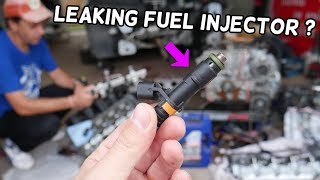
- Noticeable fuel smell in the engine oil 🎬 Watch: Learn how to identify symptoms of a leaking fuel injector.
- Replacing the Bank 2 oxygen sensor without first confirming it has failed. The O2 sensor is often correctly reporting a rich condition caused by another component, like a leaking fuel injector. A sensor stuck reading high voltage is doing its job; a sensor stuck reading low voltage is likely faulty.
Most Likely Causes
- Leaking Fuel Injector(s) 🔴 High Probability → Shop Fuel Injector The first-generation 3.5L EcoBoost uses a direct injection (DI) system. Leaking DI injectors are a well-documented cause of rich conditions on these engines. A leak allows excess fuel to enter the cylinder, causing a rich mixture on that bank. This can also lead to fuel contaminating the engine oil.
How to confirm: Perform a fuel pressure bleed-down test; a rapid drop in rail pressure after engine shutdown suggests a leak. A more definitive method is to pull the spark plugs on Bank 2 (driver's side, cylinders 4-5-6). A plug that is black, sooty, and smells strongly of fuel points to the leaking injector in that cylinder. You should also check the engine oil dipstick for a strong gasoline smell, which indicates fuel dilution.
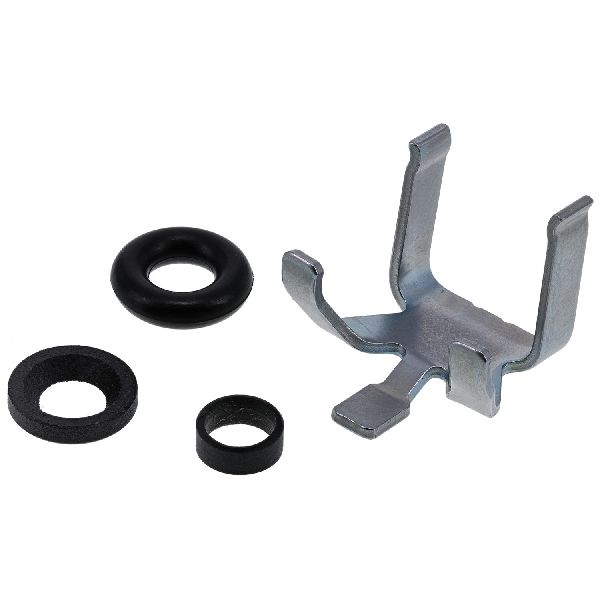
Typical fix: Replace the faulty fuel injector. It is highly recommended to replace all three injectors on Bank 2 🎬 See this walkthrough on how to replace your fuel injectors. at the same time, along with their seals. An oil change is also critical to remove fuel-contaminated oil.
Est. part cost: $60-$150 per injector - Faulty Fuel Pressure Sensor or High Pressure Fuel Pump (HPFP) 🟡 Medium Probability → Shop Fuel Pump The EcoBoost engine has a complex high-pressure fuel system. If the fuel rail pressure sensor provides incorrect (reading lower than actual) readings or the HPFP delivers excessive pressure, it will cause the engine to run rich. This issue can sometimes affect both banks, triggering P0172 as well.
How to confirm: Use a high-quality scan tool to monitor the 'Fuel Rail Pressure' PID and compare it to the 'Desired Fuel Rail Pressure' specified by the PCM. A significant deviation where the actual pressure is consistently higher than desired points to a problem with the sensor or pump.
Typical fix: Replace the faulty fuel rail pressure sensor or, in more serious cases, the high-pressure fuel pump.
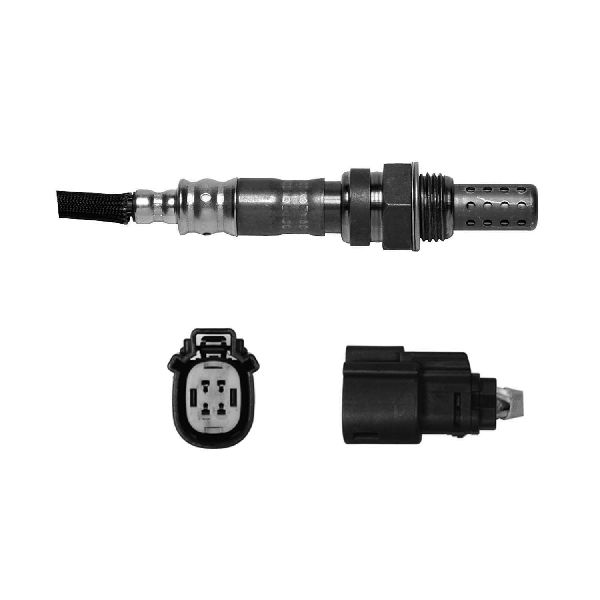
Est. part cost: $70-$150 for a sensor, $400-$800 for an HPFP - Faulty Upstream Oxygen (O2) Sensor 🟡 Medium Probability → Shop Oxygen Sensor The O2 sensor's job is to report the air-fuel mixture. If the Bank 2, Sensor 1 (upstream) sensor fails and gets stuck reading a false lean condition, it will command the PCM to add too much fuel, causing a rich condition. While often just reporting the problem, sensor failure is a possibility.
How to confirm: Use a scan tool to monitor the voltage of the Bank 2, Sensor 1 O2 sensor. A healthy sensor should fluctuate rapidly between approximately 0.1V and 0.9V. If it's stuck at a low voltage (e.g., <0.2V) despite a known rich condition (negative fuel trims), the sensor itself is likely faulty.
Typical fix: Replace the Bank 2, Sensor 1 (upstream) oxygen sensor. The connector can be difficult to access, located on top of the transmission housing. 🎬 Watch: A helpful guide to replacing the Bank 2 oxygen sensor.
Est. part cost: $50-$180 - Dirty or Faulty Mass Airflow (MAF) Sensor ⚪ Low Probability → Shop Fuel Injection Air Flow Meter The PCV system on early EcoBoost engines can vent oil vapors into the intake tract, which can contaminate the MAF sensor. A dirty sensor will under-report the amount of air entering the engine, causing the PCM to inject too much fuel. This usually causes rich codes on both banks (P0172 and P0175), making it a less likely cause for P0175 alone.
How to confirm: Inspect the MAF sensor's delicate wires for any signs of dirt, oil film, or debris. If both P0172 and P0175 are present, the MAF is a more likely suspect.
Typical fix: Clean the sensor with a dedicated MAF sensor cleaner spray. Do not touch the sensor wires. If cleaning does not resolve the issue, the sensor may need to be replaced.
Est. part cost: $10 for cleaner, $100-$200 for a new sensor
Rare But Worth Checking
- EVAP Purge Valve Stuck Open: → Shop Vapor Canister A stuck-open evaporative emissions (EVAP) purge valve can allow unmetered fuel vapors from the charcoal canister to enter the intake manifold at idle, creating a rich condition. This typically affects both banks, triggering P0172 and P0175 simultaneously.
- Collapsed or Severely Clogged Air Filter: → Shop Air Cleaner Assembly A severely restricted engine air filter can starve the engine of air, creating a rich air-fuel mixture. One owner on f150forum.com reported that a cheap aftermarket air filter had physically collapsed, causing rich codes. This is a simple but crucial inspection point.
Diagnosis Steps
- Check for other DTCs. If codes like P0172, P030x, or EVAP codes are present, they provide valuable clues. P0172 + P0175 points towards a system-wide issue (MAF, fuel pressure), while P0175 + P030x points towards an injector on Bank 2.
- Use a scan tool to observe Long Term Fuel Trim (LTFT) for Bank 2. A value of -20% or more negative confirms the rich condition the PCM is trying to correct.
- Inspect the Air Intake System. Check for a severely clogged or collapsed engine air filter, which can restrict airflow and cause a rich mixture.
- Inspect and Clean the MAF Sensor. Carefully remove the sensor and spray its wires with dedicated MAF cleaner. Check its wiring and connector for oil contamination.
- Analyze O2 Sensor Data. Watch the live data for the Bank 2, Sensor 1 O2 sensor. It should fluctuate rapidly between ~0.1V and ~0.9V. If it's stuck high (>0.8V), it's correctly reporting a rich condition. If it's stuck low (<0.2V), the sensor itself is likely bad.
- Check for Fuel in Oil. Pull the engine oil dipstick and smell it for a strong gasoline odor. This is a strong indicator of a leaking direct fuel injector.
- Test for Leaking Fuel Injectors. Perform a fuel pressure bleed-down test by watching fuel rail pressure after turning the engine off. If pressure drops quickly, pull the spark plugs on Bank 2 to identify the specific cylinder with a wet, fuel-fouled plug.
- Check Fuel Pressure. Use a scan tool to monitor the fuel rail pressure sensor data to ensure it's tracking with the PCM's desired pressure. Consistently high pressure may indicate a faulty sensor or HPFP.
Parts You'll Likely Need
- Direct Fuel Injector
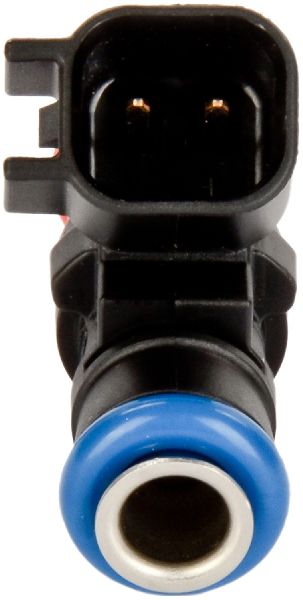
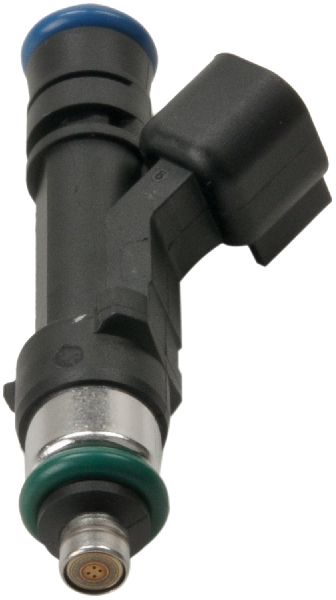
(OEM #BL3Z-9F593-B (Motorcraft CM-5211))— A leaking direct injector is a primary cause of a single-bank rich condition on the 3.5L EcoBoost engine.
Trusted brands: Motorcraft, Bosch
OEM price range: $90-$150
Aftermarket price range: $60-$100 - Upstream Oxygen Sensor (Bank 2, Sensor 1)
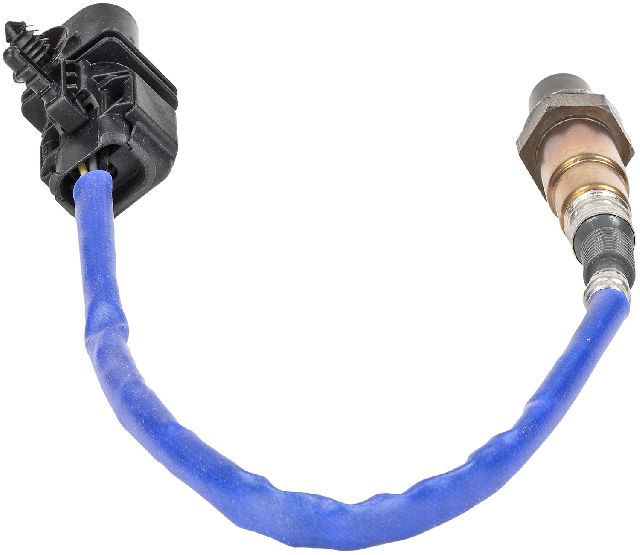
(OEM #BL3Z-9F472-A (Motorcraft DY-1184))— This sensor provides the primary air-fuel ratio reading for Bank 2. If it fails by reading falsely lean, it can cause this code. Bank 2 is the driver's side.
Trusted brands: Motorcraft, Bosch, Denso, NTK
OEM price range: $90-$180
Aftermarket price range: $50-$100 - Fuel Rail Pressure Sensor
(OEM #BU5Z-9F972-B (Motorcraft FPS-11))— A faulty sensor can report incorrect pressure to the PCM, leading to improper fueling and a rich condition, though this often affects both banks.
Trusted brands: Motorcraft, Bosch
OEM price range: $70-$150
Aftermarket price range: $50-$90
Related Codes That Often Appear With This One
- P0172 — System Too Rich (Bank 1). If both P0172 and P0175 are present, it points to a problem affecting the entire engine, such as a faulty MAF sensor, EVAP purge valve, or a fuel pressure regulation issue.
- P0300, P0304, P0305, P0306 — These are misfire codes for cylinders on Bank 2 (4, 5, and 6). A severely leaking fuel injector can foul the spark plug in its cylinder with excess fuel, leading to a misfire.
Technical Service Bulletins (TSBs) & Recalls
- TSB 20-2324 (for later models) - Identifies leaking direct fuel injectors as a cause for rich condition codes (P0172, P0175) and associated misfire codes (P0300), which is relevant context for this engine.
- TSB 12-6-4 - Addresses misfires and drivability concerns from intercooler condensation on 2011-2012 models by reprogramming the PCM and installing a deflector plate. While not a direct cause of P0175, it's a related fuel/air issue on this platform.
Platform-Specific Known Issues
- The direct injection system on the 3.5L EcoBoost makes it prone to issues with leaking injectors causing rich conditions, which can lead to fuel dilution of the engine oil.
- The PCV system can cause oil contamination of the MAF sensor, leading to incorrect airflow readings and a rich mixture, though this usually triggers codes for both banks.
- A user on f150forum.com reported a P0175 code that was ultimately resolved by replacing a collapsed, cheap aftermarket air filter that was restricting airflow.
Mechanic-Grade Diagnostic Values
- Low-Pressure Fuel System (In-tank pump) — expected: 40-60 PSI at idle. Failure: Pressure below this range indicates a weak in-tank pump or clogged filter, which can starve the High Pressure Fuel Pump (HPFP).
- High-Pressure Fuel System (HPFP) at Idle — expected: 200 - 500 PSI. Failure: Pressure that is erratic, significantly higher than desired, or fails to build from the low-pressure baseline.
- High-Pressure Fuel System (HPFP) Under Load — expected: 1,500 - 2,200+ PSI. Failure: If 'Actual' fuel rail pressure consistently lags 'Desired' pressure by more than 200 PSI, it suggests a weak HPFP.
- Fuel Rail Pressure (FRP) Sensor Voltage (KOEO) — expected: Approximately 0.5V. Failure: Voltage stuck near 0V suggests a short to ground or internal sensor failure.
- Fuel Rail Pressure (FRP) Sensor 5V Reference — expected: 4.8V - 5.2V (at connector, sensor unplugged, KOEO). Failure: Low or no voltage points to a wiring issue or a problem with the PCM's 5V reference circuit.
Hidden / Shadow Codes Worth Checking
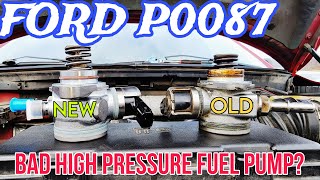
- Failure Type Codes (FTC): While no specific FTC for P0175 was found in research, Ford uses these to provide more detail. For example, a related code P0087 can have an FTC of '00-64' indicating a 'Signal Plausibility Failure'. This means the sensor value is possible, but not logical under current conditions. A technician should always check for these appended codes. (see via Ford Integrated Diagnostic System (IDS) or equivalent high-level scan tool.)
Scan Tool Commands That Help
- Ford IDS (or equivalent): Power Balance Test — To help isolate a rich condition to a single cylinder. The tool deactivates one cylinder at a time and measures the RPM drop. A cylinder with a severely leaking injector may show a smaller RPM drop when disabled.
- Ford IDS (or equivalent): Relative Injector Flow Test — To test for a leaking or poorly flowing injector without removing it. The tool pulses each injector individually and measures the corresponding drop in fuel rail pressure, then compares the results across all cylinders to find an outlier.
- Ford IDS (or equivalent): Reset Fuel Adaptations / Clear Fuel Trim Tables — This should be performed after replacing any major fuel system component like injectors or a fuel pump to force the PCM to relearn the fuel strategy from a baseline, rather than trying to adjust from old, incorrect learned values.
Wiring & Ground Locations
- Bank 2 O2 Sensor 1 Connector — Located on top of the transmission housing, near the back of the engine. It is notoriously difficult to access from underneath or from the engine bay.. This is the primary sensor reporting the rich condition. A poor connection or damaged wiring at this hard-to-reach connector can cause false signals, leading to misdiagnosis.
- PCM (Powertrain Control Module) — In the engine compartment, on the passenger-side firewall.. This is the source of the 5V reference for sensors and the location where all sensor data is processed. Verifying clean, tight connections here is a valid step in deep diagnosis.
- Engine Harness Ground — There is a critical ground connection for the main engine harness on the cylinder head.. A loose or corroded engine ground can cause erratic sensor readings, including from the O2 sensors and fuel pressure sensors, leading to incorrect fuel calculations by the PCM.
- Body-to-Frame Ground — Underneath the truck, connecting the main body to the frame. These are often unpainted from the factory and are highly susceptible to corrosion.. Poor grounding between major vehicle systems can introduce electrical noise and voltage offsets that can affect sensitive sensor readings and module communication.
Real Owner Repair Stories
- Reddit user in r/MechanicAdvice (Not specified, but general advice for a P0175 after injector replacement.) — P0175 code appeared after fuel injectors were replaced.
❌ Tried (didn't work) The new aftermarket injectors were the problem.
✅ What actually fixed it The owner re-installed the old OEM injectors, and the engine ran correctly again. The advice given was to question the quality of replacement injectors and not to use cheap aftermarket parts for this critical component. - Ford Expedition Forum user 'Airfix' (2016 Ford Expedition 3.5L EcoBoost (similar powertrain)) — P0172 and P0175 (rich on both banks), P0019, P0299.
❌ Tried (didn't work) Replaced spark plugs, Replaced air filter, Changed oil, Cleaned Air Inlet Temp Sensor, Replaced MAP sensor on top of engine
✅ What actually fixed it The user was still diagnosing but was strongly suspecting a stuck-open EVAP purge valve, which is a common cause for dual-bank rich codes on Fords. This highlights the diagnostic path when both banks are rich.
OEM Part Supersession History
BL3Z-9F593-A→BL3Z-9F593-B— Standard part revision and improvement by the manufacturer.
Heads up: The associated Motorcraft service part number for BL3Z-9F593-B is CM-5211. The part number CM-5138, sometimes confused with this application, is for the older 5.4L V8 engine and is incompatible.
Model Year Variations Within This Range
- 2011-2012: These early models used a Hitachi-supplied direct injection fuel system and smaller turbochargers. Diagnostic procedures and part numbers for fuel system components may differ from later years.
- 2013-2014: These models transitioned to a Bosch direct injection fuel system, larger turbos with an electronic blow-off valve, and a revised intercooler design to help mitigate water ingestion issues. When diagnosing fuel issues, it is critical to know whether the system is Hitachi or Bosch.
Diagnostic Flowchart
Other Known Issues on This Vehicle
Issues unrelated to this code that are worth knowing about as an owner of this generation:
- Timing Chain Stretch and Rattle on Cold Start 🔴 High — Very common on 2011-2015 models, often noticeable after 60,000 miles. Causes a loud rattle for 2-5 seconds after a cold start. (Ref: TSB 18-2305 (supersedes earlier versions like 14-0194 and 15-0131). The fix involves replacing the primary timing chain, tensioner, and all four VCT phasers.)
- Intercooler Condensation Buildup 🟠 Medium — Common on 2011-2014 models, especially in humid climates. Water and oil vapor collect in the intercooler and can be ingested during hard acceleration, causing a violent shudder or misfire. (Ref: TSB 12-6-4, TSB 13-8-1. Ford's fix involved a PCM reprogram and adding a deflector plate. A common owner modification is drilling a 1/16" weep hole in the bottom of the intercooler.)
- Carbon Buildup on Intake Valves 🟠 Medium — An inherent issue with all early direct-injection engines. Becomes problematic over 100,000 miles, causing reduced performance and potential misfires. The 2nd-gen EcoBoost (2017+) added port injection to mitigate this.
- Cracked Spark Plug Insulators 🟡 Low — These engines are sensitive to spark plug gap and quality. It's recommended to change plugs every 40-60k miles. Incorrect gaps or over-torquing can lead to cracked porcelain, causing misfires.
Used vs. New Parts: Buying Guide for This Vehicle
When a used part is the smart pick: For this specific repair, sourcing used parts is generally not recommended for the primary components. However, if needed, structural parts like the fuel rail itself (without injectors or sensors) or wiring harness connectors could be sourced from a donor vehicle.
Donor-vehicle mileage cap: roughly under 80000 miles for the part to have meaningful remaining life.
What to inspect on the donor part:
- For any electronic part, ensure the donor vehicle was not in a flood or fire.
- Check for signs of corrosion on connectors and pins.
- If sourcing a harness, inspect carefully for any cuts, abrasions, or brittle sections.
OEM-only on this vehicle (don't cheap out):
- Direct Fuel Injectors: Aftermarket injectors are a known source of issues, including incorrect flow rates that can cause persistent rich/lean codes. Sticking with OEM Motorcraft or the original manufacturer (Bosch for 2013+ models) is critical.
- High-Pressure Fuel Pump (HPFP): This is a precision, high-stress component. OEM is strongly recommended for reliability and correct pressure delivery.
Aftermarket brands forum-validated for this vehicle:
- Bosch (for O2 sensors and potentially as the OEM for 2013+ injectors)
- NTK/NGK (for O2 sensors)
- Denso (for O2 sensors)
Brands owners have reported issues with on this vehicle:
- Unnamed or 'white-box' fuel injectors and fuel pumps from online marketplaces. Forum reports frequently cite these as failing quickly or being out-of-spec from the start, causing more diagnostic headaches.
Real Owner Stories
Aggregated from forums and TSBs cited above. Mileages and costs reflect what owners reported in those sources.
2011-2014 Ford F-150 3.5L EcoBoost
Symptoms: The owner experienced a P0175 code and discovered the air filter was physically collapsed, restricting the air intake.
What fixed it: Replacing the collapsed aftermarket air filter with a quality part.
Source hint: f150forum.com: 'P0175 code resolved'
2011-2014 Ford F-150 3.5L EcoBoost
Symptoms: The owner dealt with a persistent P0175 code and went through a long diagnostic process involving the replacement of multiple parts to pinpoint the rich condition.
What fixed it: The user highlighted the importance of checking simple components first after a long diagnostic process.
Source hint: f150forum.com: 'P0175 fix'
Related OBD-II Codes
Frequently Asked Questions
Could a simple air filter issue cause a P0175 code on my 2011-2014 F-150 EcoBoost?
Why does my engine oil smell like gasoline when I have a P0175 code?
Does TSB 20-2324 apply to my rich condition and misfire issues?
I have P0175 and P0172 at the same time; does this change the diagnosis?
Where is the Bank 2, Sensor 1 O2 sensor located on the F-150 EcoBoost?
Is there a TSB for drivability issues on 2011-2012 F-150 models related to the intake system?
Helpful Videos
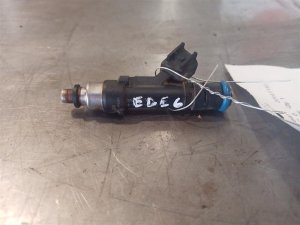
Used OEM Parts in Stock
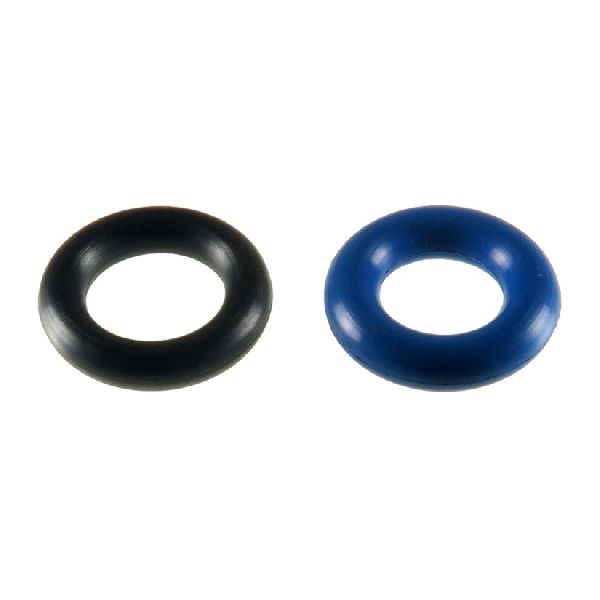
New Aftermarket Parts Available

The information in this article is provided for general reference and educational purposes only. Vehicle specifications, procedures, and part compatibility can vary by production date, trim level, and region. Always consult your vehicle's factory service manual and verify part numbers before purchasing or performing repairs. Safety-critical components such as airbags, seat belts, and braking systems should be installed by a qualified professional.
- Ford F-150:
- 🧭 Diagnostic Flowchart
- 🎬 Helpful Videos
- 🛍️ Shop This Part
- What's Unique About the 2011-2014 Ford F-150
- Symptoms You May Notice
- Most Likely Causes
- Rare But Worth Checking
- Diagnosis Steps
- Parts You'll Likely Need
- Related Codes That Often Appear With This One
- Technical Service Bulletins (TSBs) & Recalls
- Platform-Specific Known Issues
- Mechanic-Grade Diagnostic Values
- Hidden / Shadow Codes Worth Checking
- Scan Tool Commands That Help
- Wiring & Ground Locations
- Real Owner Repair Stories
- OEM Part Supersession History
- Model Year Variations Within This Range
- Other Known Issues on This Vehicle
- Used vs. New Parts: Buying Guide for This Vehicle
- Real Owner Stories
- 2011-2014 Ford F-150 3.5L EcoBoost
- 2011-2014 Ford F-150 3.5L EcoBoost
- Related OBD-II Codes
- Frequently Asked Questions
- 🎟️ Get 5% Off