

P0175 on 2012-2018 Ford Focus 2.0L: Understanding Rich Codes P0172 and P0175
The code P0175 (System Too Rich Bank 2) is not applicable to the 4-cylinder Ford Focus, which only has one bank. The correct code is P0172 (System Too Rich Bank 1). This is most often caused by a failing canister purge valve, a very common and easy DIY fix for around $50. Ford has acknowledged this with Customer Satisfaction Program 24N07. A less common but more severe cause is a leaking high-pressure fuel pump, which contaminates the engine oil.
- P0175 (Bank 2 Rich) is the wrong code for a 4-cylinder Ford Focus. The correct code is P0172 (Bank 1 Rich).
- The most likely cause is a faulty canister purge valve. This is a common, inexpensive, and easy part to replace.
- Before starting repairs, check your engine oil for the smell of gasoline. If a fuel smell is present, the high-pressure fuel pump has likely failed and the vehicle should not be driven.
- Check with a Ford dealer about your vehicle's eligibility for Customer Satisfaction Program 24N07 or recall 18S32, which relate to the faulty purge valve.
- Do not replace the oxygen sensor unless you have ruled out the purge valve and HPFP first.
What's Unique About the 2012-2018 Ford Focus
The 2012-2018 Ford Focus with the 2.0L GDI engine has two very common and well-documented issues that lead to a rich condition (P0172). The most frequent culprit is a faulty canister purge valve, which can stick open. This problem is so widespread that Ford issued a Customer Satisfaction Program (24N07) extending coverage for this part to 15 years/unlimited miles. The second major issue, unique to GDI engines, is the high-pressure fuel pump (HPFP) developing an internal leak, which allows gasoline to contaminate the engine oil, leading to a rich condition and potential for severe engine damage.
Generation note: The 2012-2018 model years cover the third generation (Mk3) of the Ford Focus in North America. The information here is specific to this generation with the 2.0L GDI engine, which produces 160 horsepower.
Symptoms You May Notice
- Check Engine Light is on
- Rough or unstable idle
- Engine stalling, especially after refueling
- Reduced fuel economy
- Hesitation or stumbling during acceleration
- Strong fuel smell from the exhaust or engine oil
- Black smoke from the exhaust
- Difficulty starting
- Replacing the oxygen sensor first. On this vehicle, the O2 sensor is usually correctly reporting a rich condition caused by the purge valve or HPFP. Always diagnose the more common causes first.
Most Likely Causes
- Faulty Canister Purge Valve 🔴 High Probability → Shop Vapor Canister This is a very common failure point on this specific vehicle, acknowledged by Ford through Safety Recall 18S32 and Customer Satisfaction Program 24N07. The valve gets stuck open, allowing un-metered fuel vapor to be constantly drawn into the intake manifold, creating a rich mixture and often causing a rough idle or stalling right after a fuel fill-up.
How to confirm: With the engine running, disconnect the vapor line from the purge valve and feel for vacuum at the valve's port. If vacuum is present at idle, the valve is stuck open and needs replacement. Another classic symptom is difficulty starting or a rough, stumbling idle immediately after filling the gas tank. This may be accompanied by code P1450.
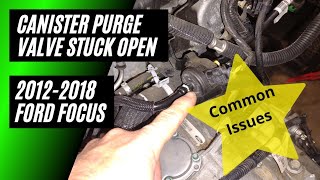
Typical fix: Replace the canister purge valve and hose assembly. Check eligibility for Ford's Customer Satisfaction Program 24N07 for a potential free one-time replacement at a dealership. The part is located on the driver's side of the engine and is accessible after removing the air intake ducting.
Est. part cost: $45-$65 - Leaking High-Pressure Fuel Pump (HPFP) 🟡 Medium Probability → Shop Fuel Pump The GDI engine uses a camshaft-driven high-pressure pump. The internal seals on this pump can fail, allowing raw gasoline to leak directly into the crankcase and mix with the engine oil, a failure mode specific to direct injection fuel systems.
How to confirm: Remove the oil filler cap or pull the dipstick and smell for a strong odor of gasoline in the engine oil. This is a definitive sign of HPFP failure. The oil level may also appear to be over-full as it becomes diluted with fuel.
Typical fix: Replace the high-pressure fuel pump immediately. An engine oil and filter change is mandatory to remove the fuel-contaminated oil. Driving with fuel in the oil will cause rapid and severe engine wear on bearings and other internal components.
Est. part cost: $200-$400 - Dirty or Faulty Mass Airflow (MAF) Sensor ⚪ Low Probability → Shop Fuel Injection Air Flow Meter Oil from aftermarket air filters or general dirt accumulation can contaminate the MAF sensor, causing it to under-report airflow. The PCM then calculates an incorrect (rich) fuel mixture.
How to confirm: Inspect the sensor for contamination. Use a scan tool to monitor the MAF reading at idle with the engine fully warmed up and no accessories on; it should be around 2.0-3.0 g/s for this engine. A reading significantly higher, such as 3.5 g/s or more, can indicate a fault leading to a rich condition.
Typical fix: Clean the sensor using a dedicated MAF sensor cleaner spray. If cleaning does not resolve the issue, the sensor must be replaced.
Est. part cost: $70-$150 - Faulty Upstream Oxygen (O2) Sensor ⚪ Low Probability → Shop Oxygen Sensor While possible, the O2 sensor is more often the messenger than the cause on this platform. It's more likely to be correctly reporting a rich condition caused by another component. A sensor that fails by reading consistently high will command the PCM to reduce fuel, but it's less common than the purge valve or HPFP issues.
How to confirm: Use a scan tool to monitor the live data from the upstream O2 sensor (Bank 1, Sensor 1). A sensor that is slow to respond or has a voltage signal that is stuck high (above 0.8v) even when the engine is forced to a lean condition may be faulty.
Typical fix: Replace the upstream oxygen sensor.
Est. part cost: $60-$120
Rare But Worth Checking
- Leaking Fuel Injectors: → Shop Fuel Injector A GDI injector can leak fuel directly into the cylinder. This can sometimes be identified by removing the spark plugs and checking for one that is black, sooty, and smells strongly of fuel. Manufacturer bulletin TSB 20-2324 notes that for some Ford models, rich codes like P0172 and P0175 may be due to software or direct injection fuel injectors.
- Faulty Fuel Rail Pressure Sensor: If this sensor sends an inaccurate low-pressure reading, the PCM may command the HPFP to work harder, creating an actual high-pressure and rich condition.
Diagnosis Steps
- Confirm the code with a scanner. Note that P0175 is incorrect for this car; the actual code should be P0172. Note any other codes, especially P1450 or P144C.
- Check the engine oil dipstick and oil fill cap for the smell of gasoline. If fuel is present, the High-Pressure Fuel Pump (HPFP) has failed. Stop diagnosis and replace the HPFP and change the oil immediately.
- If the oil is fine, locate the canister purge valve. With the engine idling, disconnect the vapor line and check for vacuum at the valve's port. If vacuum is present, the valve is stuck open and must be replaced.
- If the purge valve is not the issue, inspect the air intake system for any blockages or a severely dirty air filter. Note that TSB 19-2091, while for a different model, highlights that undesired water entry into the engine compartment can trigger codes like P0175 and P0172.
- Inspect and clean the Mass Airflow (MAF) sensor with a dedicated cleaner. Check live data with a scan tool.
- Using a scan tool, monitor the live data for the upstream oxygen sensor and long-term/short-term fuel trims to check for other anomalies.
- If all else fails, investigate less common causes like leaking fuel injectors or a faulty fuel pressure sensor.
Parts You'll Likely Need
- Canister Purge Valve / Vapor Management Valve
(OEM #BV6Z-9D289-D (Supersedes BV6Z-9D289-B))— This is the most common cause of a rich condition (P0172) on this vehicle due to a high failure rate of the original part. Ford's Customer Satisfaction Program 24N07 covers this part.
Trusted brands: Motorcraft, Dorman
OEM price range: $50-$70
Aftermarket price range: $40-$60 - High-Pressure Fuel Pump (HPFP)
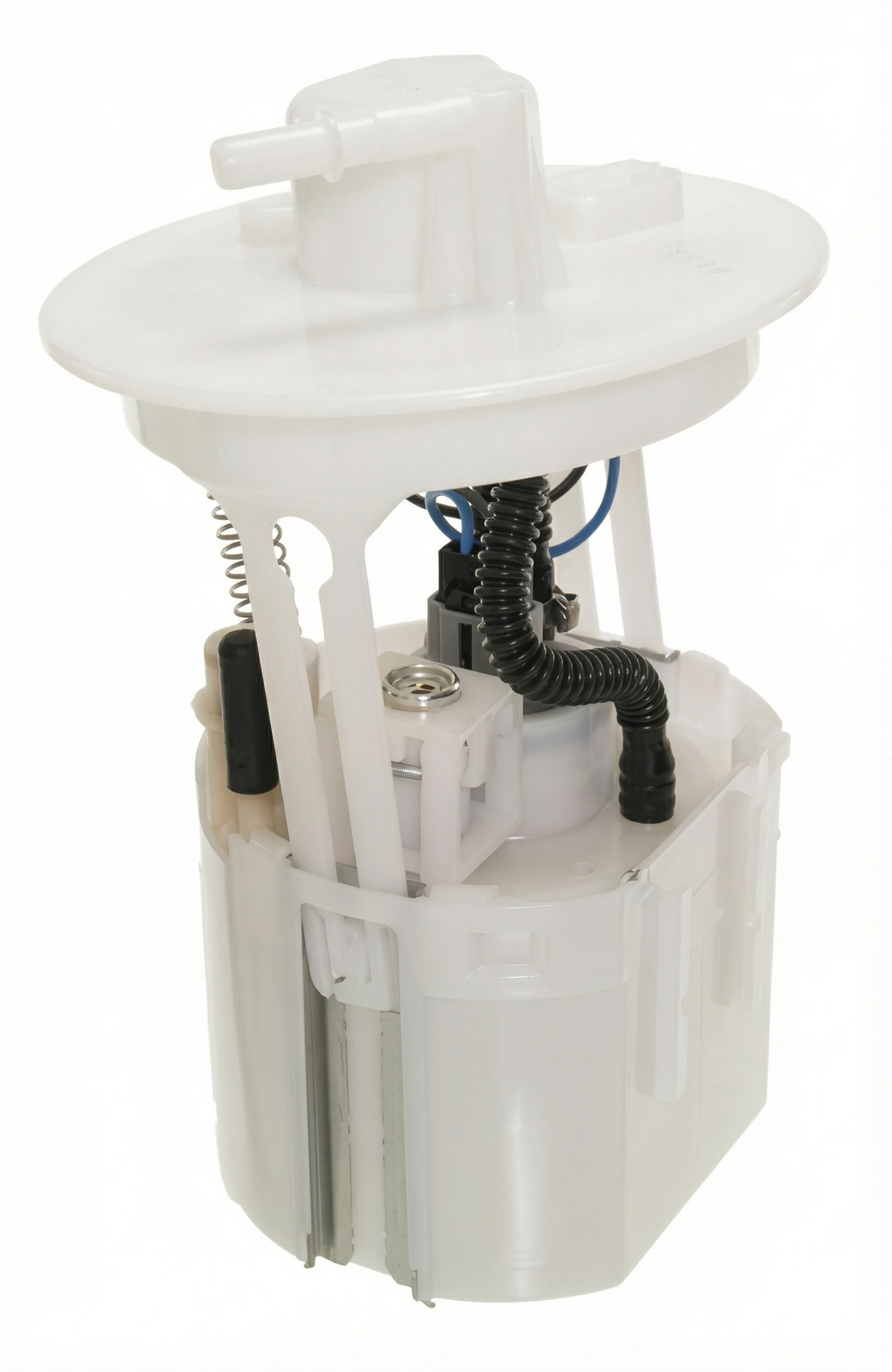
(OEM #CM5Z-9350-A)— The second most likely, and most severe, cause. The internal seals fail, leaking fuel into the engine oil.
Trusted brands: Motorcraft, Bosch
OEM price range: $350-$450
Aftermarket price range: $200-$350 - Upstream Oxygen Sensor
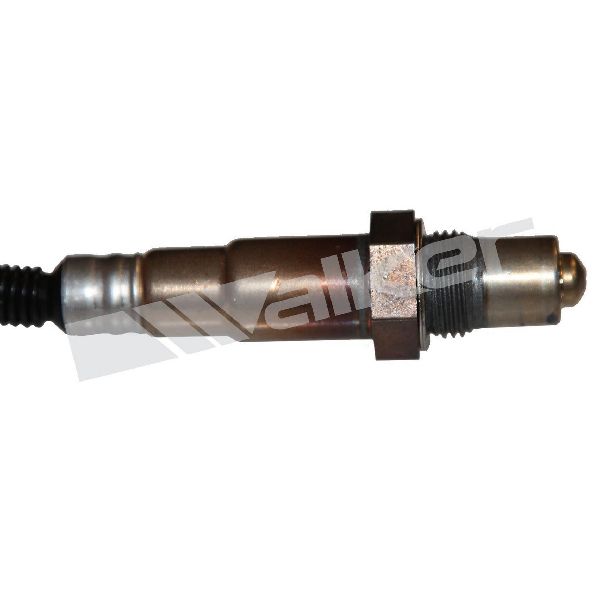
(OEM #8F9Z-9F472-H)— A less common cause, but can fail and send incorrect rich signals to the PCM.
Trusted brands: Motorcraft, Bosch, Denso
OEM price range: $80-$120
Aftermarket price range: $50-$90
Related Codes That Often Appear With This One
- P0172 — This is the correct code for a 'System Too Rich' condition on the Ford Focus's single-bank engine. P0175 is for Bank 2 and should not appear.
- P1450 — Stands for 'Unable to Bleed Up Fuel Tank Vacuum'. This code is often triggered alongside a rich code when the canister purge valve fails and creates excessive vacuum in the fuel system, which can even deform the plastic fuel tank.
- P0456 — Indicates a 'Very Small Evaporative Emission Leak'. A faulty purge valve can also cause various EVAP system codes.
- P144C — Stands for 'EVAP System Purge Flow Performance During Idle'. This code is another direct indicator of a canister purge valve that is stuck open or not functioning as commanded by the PCM.
Technical Service Bulletins (TSBs) & Recalls
- TSB 16-0062: Addresses inaccurate fuel gauge or distance-to-empty indications caused by a faulty evaporative emissions canister purge valve, which can also cause rich conditions.
- TSB 21-2154: Notes that an illuminated MIL with code P0175 may be due to various software parameters within the PCM, requiring a correction of the condition.
- TSB 22-2393: Indicates that vehicles may experience an illuminated malfunction indicator lamp with DTC P0175 stored in the powertrain control module.
Platform-Specific Known Issues
- Ford Customer Satisfaction Program 24N07 / Recall 18S32: Ford has acknowledged the high failure rate of the canister purge valve. Program 24N07 provides a one-time replacement for 15 years/unlimited miles. Recall 18S32 involved a PCM software update to better detect a stuck valve and prevent fuel tank deformation. Owners should check with a Ford dealer for eligibility, but be aware some dealers
Mechanic-Grade Diagnostic Values
- Long-Term Fuel Trim (LTFT) — expected: Close to 0%, within +/- 10%. Failure: Sustained negative values beyond -25% will trigger the P0172 code.
- Mass Airflow (MAF) Sensor at Idle — expected: 2.0-3.0 g/s (grams per second) with engine warm and no accessories on.. Failure: A reading significantly higher than 3.5 g/s can indicate a faulty sensor causing a rich condition.
- Upstream Oxygen (O2) Sensor Voltage — expected: Rapidly fluctuating between approximately 0.1V and 0.9V.. Failure: Voltage is stuck high (above 0.8V) or is slow to respond.
- Fuel Rail Pressure Sensor (FRP) - Key On, Engine Off — expected: 5.0V on the reference wire (VREF).. Failure: No or low voltage on the reference wire, which could be a broken wire or faulty PCM.
- Fuel Rail Pressure Sensor (FRP) - Ground Circuit — expected: Less than 100 millivolts (mV), ideally 20-40 mV.. Failure: High voltage reading indicates a poor ground connection.
Scan Tool Commands That Help
- FORScan / Ford IDS: EVAPCP (EVAP Canister Purge) Duty Cycle — This bidirectional control allows a technician to command the purge valve open by a specific percentage. At idle, the command should be 0%. If you command it to 0% and still feel vacuum on the valve's port, it confirms the valve is mechanically stuck open.
- FORScan / Ford IDS: Reset All Adaptations — After replacing a major fuel system component like the HPFP, MAF sensor, or O2 sensor, it is critical to reset the PCM's learned fuel trim values to allow it to relearn with the new part.
- FORScan / Ford IDS: Power Balance Test — Used to identify a potentially leaking fuel injector. This test deactivates one cylinder at a time and measures the RPM drop. A cylinder with a leaking injector might show a smaller RPM drop because the excess fuel is still combusting. NHTSA ODI #11098402 describes a technician performing a power balance test on a vehicle with codes P0172 and P0175.
Wiring & Ground Locations
- Fuel Rail Pressure Sensor Harness — On the wiring harness that runs over the intake manifold, there is a plastic barb that holds it down. The sharp edge of the intake manifold at this point can chafe through the harness loom.. A short or open in the Fuel Rail Pressure sensor wiring, particularly the 5V reference wire (often gray), can cause incorrect pressure readings, leading to fuel control issues and codes like P00C6 or contributing to a rich condition.
- Fuel Rail Pressure Sensor Connector — On the fuel rail, typically a 3-pin connector.. Pin 3 is the 5V reference (VREF), Pin 1 is the signal ground, and Pin 2 is the signal return to the PCM. Testing voltage at these pins can diagnose a faulty sensor or wiring issue without removing the part.
- G104 / G105 — Primary engine/PCM ground points located on the inner fender apron, near the battery or under the battery tray.. A corroded or loose ground at this location can cause erratic voltage signals from the MAF, O2, and other sensors, leading the PCM to make incorrect fuel adjustments and trigger a P0172 code.
Real Owner Repair Stories
- Focus Fanatics Forum (2012-2018 Ford Focus 2.0L) — Engine stumbling, running rough, and stalling immediately after filling up the fuel tank, with code P0172.
❌ Tried (didn't work) Checking for vacuum leaks (which would cause a lean code, not rich).
✅ What actually fixed it Replacing the canister purge valve resolved the stalling and the rich code. The owner confirmed the old valve was stuck open. - YouTube - 'Repairs101' (2013 Ford Focus) — Long crank time, no power, stalling, and codes P0192 (Fuel Rail Pressure Sensor Circuit Low) and P00C6 (Fuel Rail Pressure To Low - Engine Cranking).
❌ Tried (didn't work) Initial thought was a failed fuel pump or sensor.
✅ What actually fixed it The wiring harness running over the intake manifold had chafed on a sharp edge, severing the 5V reference wire to the fuel rail pressure sensor. Repairing and rerouting the damaged wire fixed all symptoms and codes. - NHTSA ODI #11098402 — An owner reported their vehicle had to be towed from a gas station; diagnostic codes included P0172 and P0175, along with several camshaft and misfire codes.
OEM Part Supersession History
BV6Z-9D289-B→BV6Z-9D289-D, Motorcraft CX2349— The original canister purge valve had a high failure rate, leading to it sticking open. The revised part is designed for better durability.
Diagnostic Flowchart
Other Known Issues on This Vehicle
Issues unrelated to this code that are worth knowing about as an owner of this generation:
- PowerShift (DPS6) Automatic Transmission Failure 🔴 High — Extremely common on 2012-2016 models. Symptoms include shuddering, hesitation, jerky shifts, and complete failure. Less prevalent after 2016 but still reported. (Ref: Multiple lawsuits, warranty extensions, and software update programs were issued, but no all-encompassing recall for all years.)
- Passenger-Side Engine Mount Collapse 🟠 Medium — Very common across all model years. The hydraulic mount fails, causing excessive engine vibration to be felt in the cabin, especially at idle or in gear at a stop.
- Electric Power Steering Rack Failure 🔴 High — Common failure leading to a sudden loss of power steering assist, making the vehicle very difficult to steer. Often accompanied by a 'Steering Assist Fault' warning. (Ref: Subject to recalls for some model years where Ford would update software or replace the steering gear.)
- Stalling/Rough Idle After Refueling 🟠 Medium — This is a direct symptom of the faulty canister purge valve, which is the primary cause of code P0172. It is extremely common. (Ref: Ford Customer Satisfaction Program 24N07, Recall 18S32)
Used vs. New Parts: Buying Guide for This Vehicle
When a used part is the smart pick: For this repair, using used parts is generally not recommended. The primary failure items are electronic sensors or mechanical parts with high wear rates. A used canister purge valve is likely to have the same design flaw as the part being replaced. A used High-Pressure Fuel Pump carries a significant risk as its remaining lifespan is unknown, and failure can cause catastrophic engine damage.
Donor-vehicle mileage cap: roughly under 30000 miles for the part to have meaningful remaining life.
What to inspect on the donor part:
- For a purge valve, visually inspect for cracks in the plastic housing.
- For an HPFP, check the donor vehicle's history for any signs of fuel system issues. Avoid if the oil smells of gas.
- For sensors (MAF, O2), avoid parts from vehicles with high mileage or visible signs of engine neglect (heavy oil leaks, etc.).
OEM-only on this vehicle (don't cheap out):
- High-Pressure Fuel Pump (HPFP): Due to the severe consequences of failure (fuel in oil), using a new OEM (Motorcraft) or reputable OEM-supplier (like Bosch) part is critical for reliability.
- Canister Purge Valve: While aftermarket is available, the OEM Motorcraft part is recommended given the known issues and subsequent part revisions. Check for warranty coverage under Ford's CSP 24N07 first.
Aftermarket brands forum-validated for this vehicle:
- Bosch (for HPFP and O2 Sensors)
- Denso (for O2 Sensors)
- NTK (for O2 Sensors)
Brands owners have reported issues with on this vehicle:
- Unnamed, 'white-box' electronic sensors and fuel pumps from online marketplaces should be avoided due to high rates of being dead-on-arrival or having a short service life.
Real Owner Stories
Aggregated from forums and TSBs cited above. Mileages and costs reflect what owners reported in those sources.
2014 Ford Focus 2.0L GDI
Symptoms: Owner received a letter regarding Customer Satisfaction Program 24N07 and was concerned about potential diagnostic fees if the purge valve wasn't the confirmed fault.
What fixed it: The program offers a one-time replacement of the canister purge valve.
Cost: $199-$199
Source hint: Reddit r/FordFocus: Customer Satisfaction Program- 24N07 for 2014 Ford Focus
2012-2018 Ford Focus 2.0L GDI — 22000 miles
Symptoms: Excessive vibration at idle due to premature failure of engine mounts.
What fixed it: Replacement of the engine mounts (original parts made by Lemforder).
Source hint: Ford Owners Club: MK3 Engine Mounts
2012-2018 Ford Focus 2.0L GDI
Symptoms: Heavy vibration transferred into the cabin caused by the passenger-side engine mount 'grounding out' on the bracket.
What fixed it: Replacing the passenger-side engine mount.
Source hint: YouTube: Easy Check For Bad Engine Mount 2012-2018 Ford Focus
Related OBD-II Codes
Frequently Asked Questions
Is there a recall for the canister purge valve on my 2012-2018 Ford Focus?
Why does my Focus struggle to start or idle roughly only after I fill up the gas tank?
My mechanic says P0175 is the wrong code for my car. Is that true?
Can a bad high-pressure fuel pump (HPFP) cause gasoline to get into my engine oil?
Does TSB 16-0062 apply to my rich condition and fuel gauge issues?
Will I have to pay a diagnostic fee at the Ford dealer for the 24N07 program?
Helpful Videos
Used OEM Parts in Stock

New Aftermarket Parts Available



The information in this article is provided for general reference and educational purposes only. Vehicle specifications, procedures, and part compatibility can vary by production date, trim level, and region. Always consult your vehicle's factory service manual and verify part numbers before purchasing or performing repairs. Safety-critical components such as airbags, seat belts, and braking systems should be installed by a qualified professional.
- Ford Focus:
- 🧭 Diagnostic Flowchart
- 🎬 Helpful Videos
- 🛍️ Shop This Part
- What's Unique About the 2012-2018 Ford Focus
- Symptoms You May Notice
- Most Likely Causes
- Rare But Worth Checking
- Diagnosis Steps
- Parts You'll Likely Need
- Related Codes That Often Appear With This One
- Technical Service Bulletins (TSBs) & Recalls
- Platform-Specific Known Issues
- Mechanic-Grade Diagnostic Values
- Scan Tool Commands That Help
- Wiring & Ground Locations
- Real Owner Repair Stories
- OEM Part Supersession History
- Other Known Issues on This Vehicle
- Used vs. New Parts: Buying Guide for This Vehicle
- Real Owner Stories
- 2014 Ford Focus 2.0L GDI
- 2012-2018 Ford Focus 2.0L GDI — 22000 miles
- 2012-2018 Ford Focus 2.0L GDI
- Related OBD-II Codes
- Frequently Asked Questions
- 🎟️ Get 5% Off