

P0175 on 2010-2019 Ford Taurus: System Too Rich Bank 2 Causes and Fixes
P0175 on a 2010-2019 Ford Taurus means the engine is running too rich on Bank 2. The most common causes are a leaking fuel injector, a faulty upstream O2 sensor, or a stuck-open EVAP purge valve. A single injector can cost $50-$150, while an O2 sensor is typically $50-$100.
- P0175 indicates too much fuel on the cylinder bank closer to the front of the vehicle.
- The most probable causes on a V6 Taurus are a leaking fuel injector, a bad upstream O2 sensor, or a stuck EVAP purge valve.
- Check fuel trims with a scan tool first. Highly negative numbers on Bank 2 point you in the right direction.
- Do not ignore this code. Driving for extended periods can damage your engine oil and catalytic converter, leading to much more expensive repairs.
- If you have the 3.5L EcoBoost engine, a leaking fuel injector is a particularly strong possibility due to the high-pressure direct injection system.
What's Unique About the 2010-2019 Ford Taurus
The 2010-2019 Taurus primarily uses V6 engines (3.5L Duratec or 3.5L EcoBoost), which is why a Bank 2-specific code like P0175 is possible. The 3.5L EcoBoost engine uses a high-pressure direct injection system, which can make its fuel injectors more prone to leaking over time compared to the port-injected Duratec V6. This can lead to fuel diluting the engine oil. A stuck-open EVAP purge valve is also a very frequent cause of rich conditions on this family of Ford engines and is a well-documented failure point.
Symptoms You May Notice
- Check Engine Light is on
- Reduced fuel economy
- A noticeable smell of raw gasoline from the exhaust
- Rough or unstable idle
- Engine hesitation or lack of power during acceleration
- Black smoke from the tailpipe, especially at idle or under heavy acceleration
- Engine oil level rising or smelling strongly of gasoline
- Replacing the downstream O2 sensor (Sensor 2). The upstream sensor (Sensor 1) is what measures the air-fuel mixture for fuel control; the downstream sensor primarily monitors catalytic converter efficiency.
Most Likely Causes
- Leaking Fuel Injector(s) on Bank 2 🔴 High Probability → Shop Fuel Injector Direct injection (DI) systems on the 3.5L EcoBoost engine operate under very high pressure (up to 2150 PSI), increasing the chance of injector wear and leaks over time. This is a known issue on the EcoBoost platform, sometimes addressed by TSBs on related vehicles like the F-150 (e.g., TSB 20-2324). Standard port injectors on the 3.5L Duratec can also fail.
How to confirm: Check short-term and long-term fuel trims for Bank 2 with an OBD-II scanner; they will be highly negative (e.g., -15% or more). Pull the spark plugs on Bank 2 (cylinders 1, 2, 3) and check for a wet, fuel-soaked appearance or heavy black soot compared to Bank 1. A professional can perform a fuel injector balance test.
Typical fix: Replace the faulty fuel injector(s) on Bank 2. It is often recommended to replace all injectors on that bank at the same time, and sometimes the high-pressure fuel line, as it's a one-time use part on EcoBoost models.
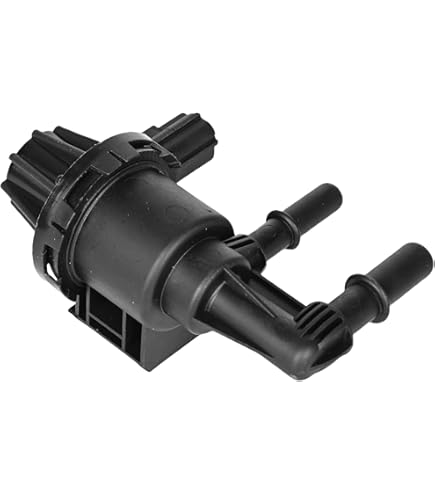
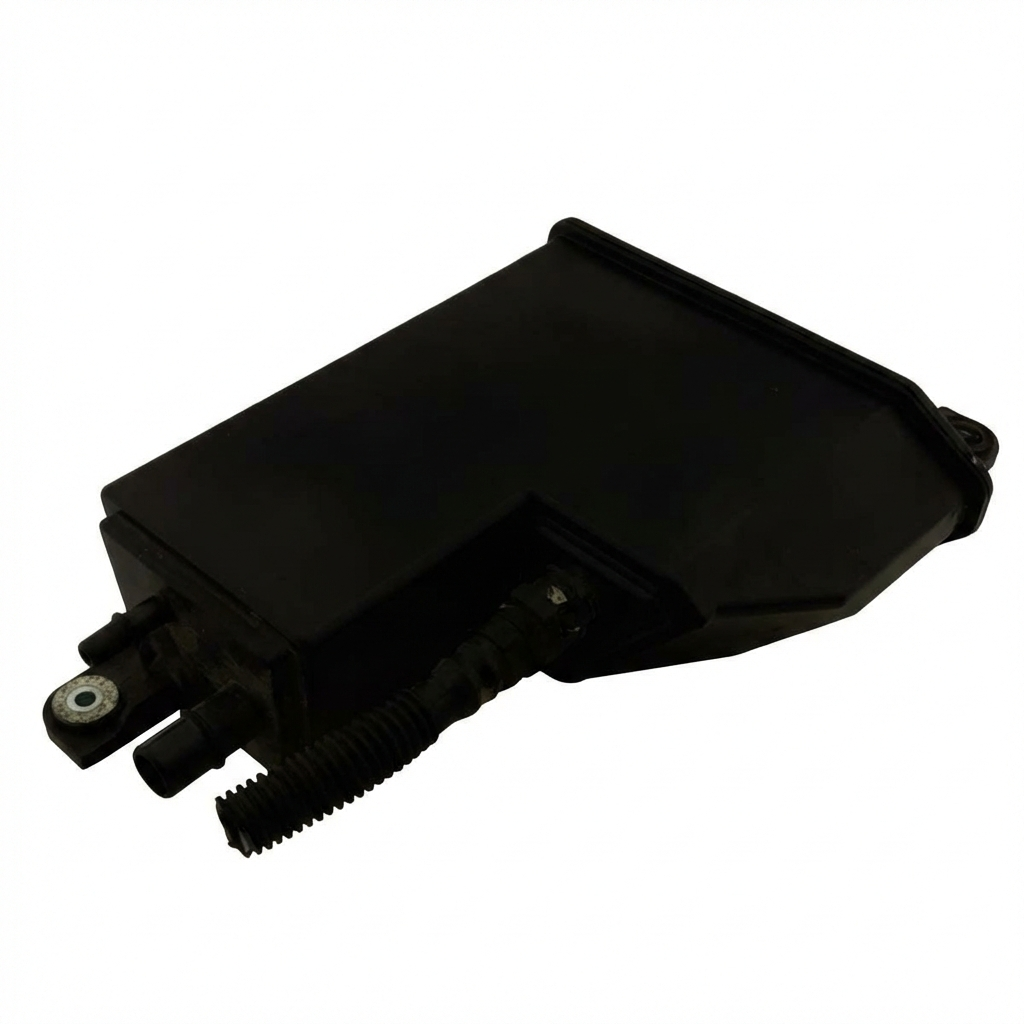
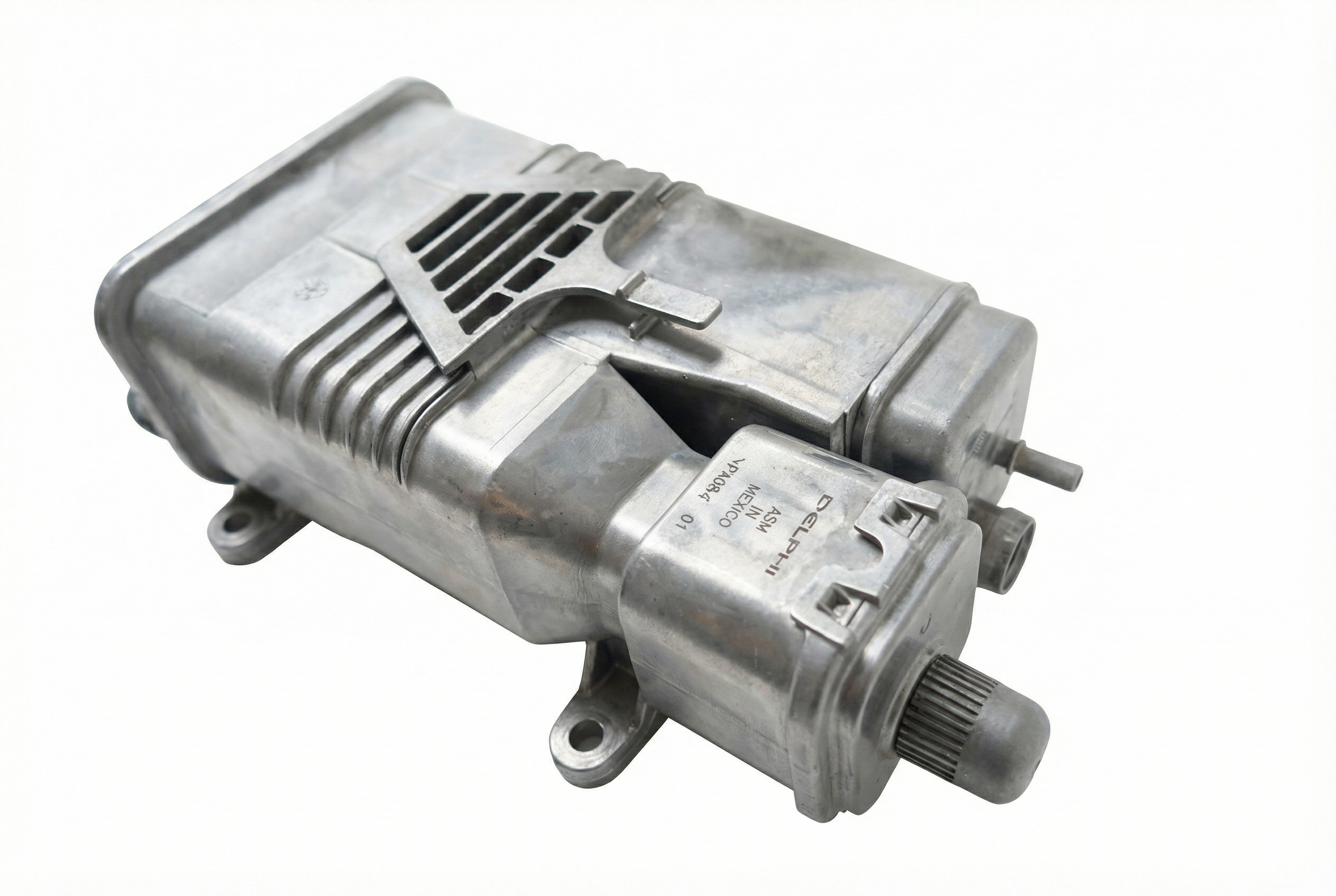
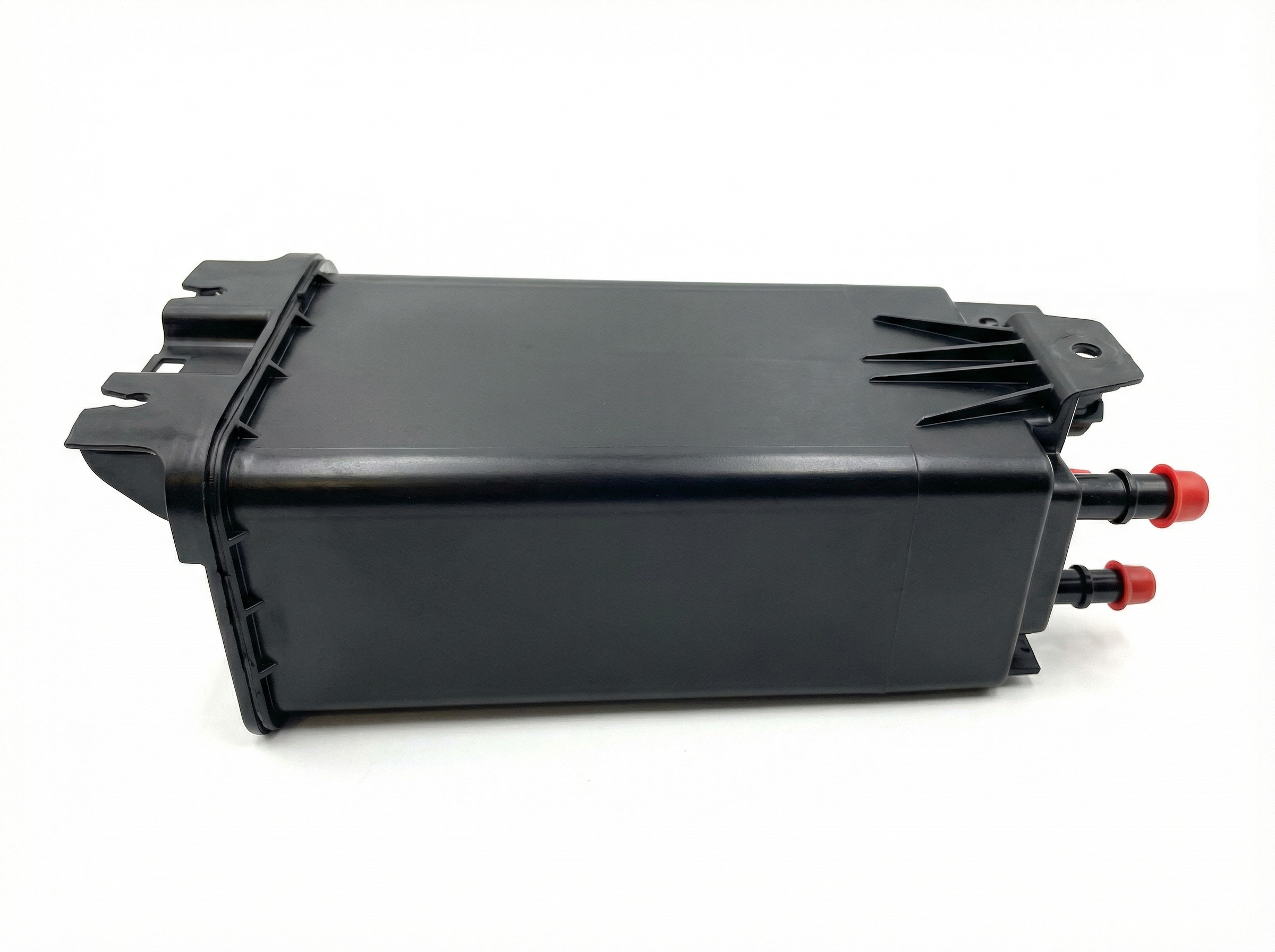
Est. part cost: $50-$180 per injector - Stuck-Open EVAP Purge Valve 🔴 High Probability → Shop Vapor Canister This is a very common failure point on many Ford vehicles, including the Taurus. The valve is supposed to be closed at idle and only open under specific conditions to draw fuel vapors from the charcoal canister into the engine. When stuck open, it creates a constant vacuum leak of fuel vapors, causing a rich condition that can affect one or both banks.
How to confirm: With the engine off, disconnect the vapor line from the purge valve. Start the engine. If you can feel vacuum from the valve port at idle, it is stuck open and needs to be replaced. Alternatively, remove the valve and try to blow through it; if air passes, it has failed.
Typical fix: Replace the EVAP canister purge valve. The part is often located on top of the engine near the intake manifold and is relatively easy to replace.
Est. part cost: $30-$70 - Faulty Upstream Oxygen (O2) Sensor 🟡 Medium Probability → Shop Oxygen Sensor O2 sensors are wear items and can fail by sending an inaccurate signal. A sensor that is biased or slow to respond can incorrectly tell the PCM the mixture is lean, causing the computer to add too much fuel until it hits the rich limit. On related platforms like the Transit, water intrusion from a leaking cowl panel is a known cause of O2 sensor failure, which could potentially affect the Taurus as well.
How to confirm: Use a scan tool to graph the voltage of the Bank 2, Sensor 1 O2 sensor. A healthy sensor's voltage should fluctuate rapidly between approximately 0.1V and 0.9V. A sensor that is stuck high (above 0.8V) or is very slow to switch indicates a problem.
Typical fix: Replace the Bank 2, Sensor 1 (upstream) oxygen sensor. Bank 2 is the bank closer to the radiator.
Est. part cost: $50-$120 - Dirty or Faulty Mass Air Flow (MAF) Sensor ⚪ Low Probability → Shop Fuel Injection Air Flow Meter The MAF sensor can become contaminated with dirt or oil, causing it to under-report the amount of air entering the engine. The PCM then injects what it thinks is the correct amount of fuel, but it's too much for the actual airflow, creating a rich condition.
How to confirm: This usually sets codes for both banks (P0172 and P0175). If only P0175 is present, it's less likely to be the MAF. The sensor can be carefully removed and cleaned with a dedicated MAF sensor cleaner spray. If cleaning doesn't help, it may need replacement.
Typical fix: Clean the MAF sensor with a dedicated cleaner. If the problem persists, replace the MAF sensor.
Est. part cost: $20 for cleaner, $70-$150 for a new sensor
Rare But Worth Checking
- High Fuel Pressure: A faulty fuel pressure regulator or, on EcoBoost models, a failing high-pressure fuel pump (HPFP) can cause excessive fuel pressure, forcing too much fuel through the injectors. This usually affects both banks but can manifest on one first.
- Stuck Open Thermostat: If the thermostat is stuck open, the engine may not reach its proper operating temperature. The PCM may then command a richer fuel mixture, assuming the engine is still in its warm-up phase. This would typically be accompanied by a low temperature reading on the dash.
- PCM Software Parameters: Manufacturer service bulletins such as TSB 21-2154 and TSB 22-2393 indicate that an illuminated MIL with P0175 may be due to various software parameters within the Powertrain Control Module (PCM).
Diagnosis Steps
- Scan for Codes: Use an OBD-II scanner to confirm P0175 and check for any other related codes like P0172 or P2198.
- Analyze Fuel Trims: Observe the short-term (STFT) and long-term (LTFT) fuel trim values for both Bank 1 and Bank 2. For P0175, you will see significantly negative numbers on Bank 2 (e.g., -15% to -30%), indicating the PCM is removing fuel. Compare to Bank 1 to see if the issue is isolated.
- Test the EVAP Purge Valve: This is a common and easy test. Locate the purge valve near the intake manifold. With the engine off, disconnect the vapor line. Start the engine. If you feel vacuum at the valve's port at idle, it is stuck open and must be replaced.
- Inspect for Fuel Odor: Check the engine oil dipstick for a strong gasoline smell, which indicates fuel is diluting the oil, often due to a leaking injector.
- Test the Upstream O2 Sensor: Graph the voltage for the Bank 2, Sensor 1 O2 sensor (front bank, pre-catalytic converter). It should switch rapidly between ~0.1V and ~0.9V. If it's stuck high (rich) or is very slow to respond compared to the Bank 1 sensor, it is likely faulty.
- Inspect the MAF Sensor: If both banks are running rich, or as a general check, inspect and clean the Mass Air Flow (MAF) sensor located in the air intake tube after the air filter. Use only dedicated MAF sensor cleaner.
- Isolate Leaking Injectors: If the steps above don't reveal the cause, the issue is likely a fuel injector on Bank 2. A fuel pressure gauge can be used to check if pressure holds after the engine is shut off; a drop can indicate a leak. A more definitive but advanced test is to swap the Bank 2 injectors with the Bank 1 injectors. If the rich code moves to Bank 1 (P0172), you have confirmed the issue is one or more of the injectors you moved.
Parts You'll Likely Need
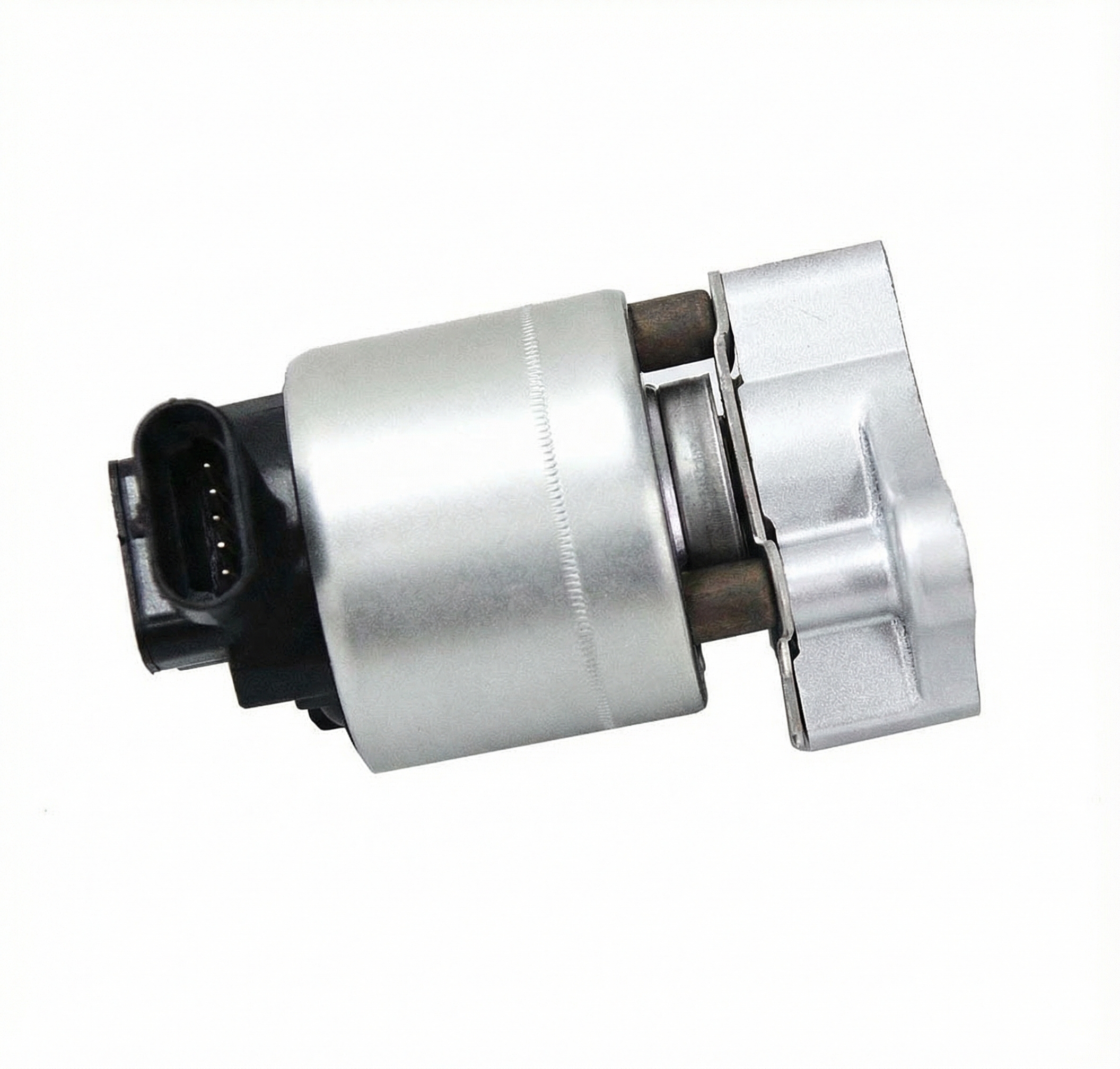
- EVAP Canister Purge Valve
(OEM #AU5Z-9C915-B (superseded by AU5Z-9C915-E))— Extremely common failure point on many Ford products causing rich conditions. Often the first and cheapest part to check.
Trusted brands: Motorcraft, Dorman
OEM price range: $40-$65
Aftermarket price range: $25-$50 - Fuel Injector (3.5L EcoBoost)
(OEM #CM-5248 (Ford Base P/N: BA5Z-9F593-B))— Leaking is a common failure on direct-injection engines, causing a rich condition isolated to one bank.
Trusted brands: Motorcraft, Bosch
OEM price range: $80-$150
Aftermarket price range: $50-$100 - Upstream Oxygen Sensor (Bank 2, Sensor 1)
(OEM #DY-1167)— This sensor provides the primary air-fuel ratio reading for Bank 2. A faulty sensor can send incorrect data, causing the rich condition. It is a common wear item.
Related Codes That Often Appear With This One
- P0172 — If P0172 (System Too Rich Bank 1) is also present, the cause is likely a component common to both banks, such as the MAF sensor, EVAP purge valve, or a fuel pressure issue.
- P0304, P0305, P0306 — These are misfire codes for cylinders on Bank 2. A severely leaking fuel injector can foul the spark plug in its cylinder, causing it to misfire.
- P2198 — This code means 'O2 Sensor Signal Stuck Rich (Bank 2 Sensor 1)'. It directly points to the upstream O2 sensor either being faulty or correctly detecting a persistent rich condition from another cause, like a leaking injector.
Technical Service Bulletins (TSBs) & Recalls
- TSB 20-2324 (F-150): Mentions leaking direct injectors as a primary cause for rich codes (P2196/P2198, related to P0172/P0175) on 2.7L and 3.5L EcoBoost engines. It notes these codes may be due to software in the PCM or the direct injection fuel injectors.
- TSB 19-2091 (Transit): Details a water leak from the cowl panel that damages the air filter and O2 sensors, leading to rich codes. While for a different vehicle, it highlights a potential Ford design issue where undesired water entry into the engine compartment occurs directly over engine components.
- TSB 21-2154: Notes that P0175 and other codes may be stored in the PCM due to various software parameters within the module.
- TSB 22-2393: Indicates that vehicles equipped with a 5.0L engine may experience an illuminated MIL with P0175 and a range of other codes including P2BEC through P2BF3 stored in the PCM.
Platform-Specific Known Issues
- While not a direct cause of P0175, the 3.5L Duratec and EcoBoost engines feature an internal, timing-chain-driven water pump. Failure of this pump can lead to coolant mixing with engine oil, causing catastrophic engine damage. It is critical to maintain the cooling system and use the correct coolant to prolong its life.
Mechanic-Grade Diagnostic Values
- Low-Pressure Fuel System (Duratec & EcoBoost) — expected: 40-60 PSI at idle. Failure: Pressure below this range indicates a weak in-tank pump or clogged filter, which can starve the high-pressure pump on EcoBoost models.
- High-Pressure Fuel System (EcoBoost) - Idle — expected: 200 - 500 PSI. Failure: Pressure that is erratic or significantly deviates from the 'Desired FRP' PID on a scan tool.
- High-Pressure Fuel System (EcoBoost) - Wide Open Throttle (WOT) — expected: 1,500 - 2,175+ PSI. Failure: If 'Actual' pressure consistently lags 'Desired' pressure by more than 200 PSI, it suggests a weak High-Pressure Fuel Pump (HPFP).
- GDI Fuel Injector Resistance (EcoBoost) — expected: 1 to 2 ohms. Failure: Readings outside this range indicate a faulty injector winding. Ford does not recommend backprobing the connector while running.
- Mode $06 Test ID $30 — expected: Varies. Failure: This test ID monitors the HO2S voltage for the rich limit test. A value that hits the test limit can confirm the PCM is seeing a rich condition as reported by the O2 sensor.
Hidden / Shadow Codes Worth Checking
- P2BEC through P2BF3: These are a range of fuel trim and cylinder imbalance codes that can be set in conjunction with P0172/P0175 on related Ford platforms. Their presence strongly suggests a PCM software calibration issue. (see via A professional scan tool like Ford IDS or a high-end consumer scanner. They may not show on basic code readers.)
Scan Tool Commands That Help
- Ford IDS (Integrated Diagnostic System): Power Balance Test — To identify underperforming or over-fueling cylinders. A cylinder with a leaking injector will show a significant deviation on the graph, helping to pinpoint the exact faulty injector without disassembly.
- Ford IDS (Integrated Diagnostic System): Fuel Injector/Pump Bidirectional Control — Allows the technician to manually command injectors and fuel pumps on and off (with key on, engine off) to test their function and listen for clicks, or to check for pressure drops.
- Ford IDS (Integrated Diagnostic System): PCM Reprogramming — If a Technical Service Bulletin (TSB) indicates that P0175 is caused by a software glitch, the IDS is used to flash the PCM with the updated calibration file.
"I Checked Everything" — The Actual Cause
- In some cases on related Ford V-engines, a smoke test for vacuum leaks comes back clean, but the vehicle still exhibits rich or lean codes. One documented, though rare, cause was a cracked plastic lower intake manifold, which a smoke test might not always reveal depending on the crack's location and engine temperature.
OEM Part Supersession History
BL3Z-9F593-B→BL3Z-9F593-D, CM-5254 (Motorcraft)— Part revision for improved reliability or manufacturing process change for the 3.5L EcoBoost fuel injector.AU5Z-9C915-B→AU5Z-9C915-E— Updated design for the EVAP canister purge valve to improve durability and prevent sticking.
Model Year Variations Within This Range
- 2010-2012: The standard 3.5L V6 produced 263 hp. The SHO model used the first-generation 3.5L EcoBoost V6.
- 2013-2019: The model received a facelift. The standard 3.5L V6 was updated and now produced 288 hp. The SHO continued with an updated 3.5L EcoBoost. A 2.0L EcoBoost I4 was also available from 2013-2017.
Diagnostic Flowchart
Other Known Issues on This Vehicle
Issues unrelated to this code that are worth knowing about as an owner of this generation:
- Internal Water Pump Failure (3.5L Duratec/EcoBoost) 🔴 High — Can occur anytime after 60,000 miles, but becomes more common over 100,000. Failure is catastrophic.
- Power Transfer Unit (PTU) Failure (AWD Models) 🔴 High — Commonly reported between 50,000 and 120,000 miles. The unit contains non-serviceable fluid that overheats and breaks down.
- Electronic Throttle Body (ETB) Failure 🟠 Medium — Widespread enough to prompt Customer Satisfaction Program 16B32. (Ref: 16B32)
Used vs. New Parts: Buying Guide for This Vehicle
When a used part is the smart pick: For this code, used parts are generally not recommended for fuel system or electronic components due to their high failure rates and unknown history. A used intake manifold could be a viable option if inspected thoroughly for cracks.
Donor-vehicle mileage cap: roughly under 50000 miles for the part to have meaningful remaining life.
What to inspect on the donor part:
- For electronic sensors (O2, MAF), check for physical damage, corrosion on pins, or signs of extreme heat.
- For mechanical parts like an intake manifold, ensure there are no visible cracks, especially around mounting points and seams.
- Avoid parts from vehicles that show signs of being in a flood or fire.
OEM-only on this vehicle (don't cheap out):
- High-Pressure Fuel Injectors (EcoBoost): Due to the extreme pressures (2150+ PSI) and precision required, aftermarket direct injectors have a poor reputation for reliability. Stick with OEM Motorcraft or Bosch parts.
- High-Pressure Fuel Pump (EcoBoost): This is another critical, high-stress component where OEM reliability is paramount.
- Mass Air Flow (MAF) Sensor: Many aftermarket MAF sensors are poorly calibrated and can cause persistent fuel trim issues. OEM or the original supplier (e.g., Bosch) is the safest bet.
Aftermarket brands forum-validated for this vehicle:
- NTK or Denso for Oxygen Sensors
- Bosch for Fuel Injectors (often the OEM supplier)
- Motorcraft (Ford's OEM parts line)
Brands owners have reported issues with on this vehicle:
- Unbranded or 'white box' electronic sensors and fuel injectors from online marketplaces are a significant gamble and often fail quickly or are defective out of the box.
Real Owner Stories
Aggregated from forums and TSBs cited above. Mileages and costs reflect what owners reported in those sources.
2014 Ford F-150 3.5L EcoBoost
Symptoms: Engine oil fuel dilution where the oil level was rising or smelling strongly of gasoline.
What fixed it: Addressing issues with the direct injection system which was allowing fuel to contaminate the engine oil.
Source hint: Ford F150 Forum thread titled 'EcoBoost 3.5 L Engine Oil Fuel Dilution - Problem Solved?'
2010-2019 Ford Taurus SHO
Symptoms: Owners discussing platform-specific failures, specifically focusing on the Power Transfer Unit (PTU) rather than engine codes.
What fixed it: Replacement of the PTU (though unrelated to P0175, it is a primary concern for owners of this specific model).
Source hint: Reddit r/TaurusSHO thread titled 'When did your PTU fail?'
Owner Reported Multi-Code Failure
Symptoms: A vehicle was towed from a gas station with an extensive list of codes including P0172, P0175, P0011, P0016, P0017, P0019, P0021, P0299, P0313, P0365, P0369, P0390, P0394, P0430, and P052C.
What fixed it: A technician performed a power balance test to identify the underlying mechanical or electrical failure (NHTSA ODI #11098402).
Related OBD-II Codes
Frequently Asked Questions
Does TSB 20-2324 apply to my Ford Taurus with the 3.5L EcoBoost engine?
Why is my 3.5L EcoBoost more prone to P0175 than the standard Duratec engine?
I have a P0175 on my Taurus SHO; could this be related to my PTU issues?
Could a water leak from my windshield cowl cause a P0175 code?
Is it true that the water pump on the 2010-2019 Taurus can cause engine damage related to these codes?
Which bank should I check first for a P0175 code on my Taurus?
Helpful Videos

Used OEM Parts in Stock
New Aftermarket Parts Available



The information in this article is provided for general reference and educational purposes only. Vehicle specifications, procedures, and part compatibility can vary by production date, trim level, and region. Always consult your vehicle's factory service manual and verify part numbers before purchasing or performing repairs. Safety-critical components such as airbags, seat belts, and braking systems should be installed by a qualified professional.
- Ford Taurus:
- 🧭 Diagnostic Flowchart
- 🎬 Helpful Videos
- 🛍️ Shop This Part
- What's Unique About the 2010-2019 Ford Taurus
- Symptoms You May Notice
- Most Likely Causes
- Rare But Worth Checking
- Diagnosis Steps
- Parts You'll Likely Need
- Related Codes That Often Appear With This One
- Technical Service Bulletins (TSBs) & Recalls
- Platform-Specific Known Issues
- Mechanic-Grade Diagnostic Values
- Hidden / Shadow Codes Worth Checking
- Scan Tool Commands That Help
- "I Checked Everything" — The Actual Cause
- OEM Part Supersession History
- Model Year Variations Within This Range
- Other Known Issues on This Vehicle
- Used vs. New Parts: Buying Guide for This Vehicle
- Real Owner Stories
- 2014 Ford F-150 3.5L EcoBoost
- 2010-2019 Ford Taurus SHO
- Owner Reported Multi-Code Failure
- Related OBD-II Codes
- Frequently Asked Questions
- 🎟️ Get 5% Off