

P0175 on 2010-2019 Ford Taurus 3.5L V6: Causes and Fixes for System Too Rich (Bank 2)
On a 2010-2019 Ford Taurus with the 3.5L V6, a P0175 code is most often caused by a stuck-open EVAP purge valve or a leaking fuel injector on Bank 2. The EVAP valve is a common Ford failure part and is relatively inexpensive and easy to replace, making it the best starting point for diagnosis. Bank 2 is the cylinder bank closer to the radiator.
- P0175 means the front cylinder bank (Bank 2) is running too rich.
- The most likely cause on this specific vehicle is a stuck-open EVAP purge valve, which is a common Ford problem and is relatively easy to test and replace.
- If the EVAP valve is good, suspect a leaking fuel injector on Bank 2 before assuming the oxygen sensor is bad.
- If you get codes for both banks running rich (P0175 and P0172), the problem is likely engine-wide, such as the EVAP valve, MAF sensor, or fuel pressure.
- Do not ignore this code, as continued driving can damage your catalytic converter, turning a small repair into a very expensive one.
What's Unique About the 2010-2019 Ford Taurus
While many issues can cause a rich condition, the Ford 3.5L V6 platform has two highly common culprits for code P0175. The most frequent is a failing EVAP purge valve that gets stuck open, a well-documented issue across many Ford models that allows unmetered fuel vapor into the engine. The second is a leaking fuel injector, which can drip excess fuel into a cylinder. It's important to diagnose these common Ford-specific issues before suspecting a less likely component like an oxygen sensor, which is often just correctly reporting the rich condition.
Symptoms You May Notice
- Check Engine Light is on
- Poor fuel economy, potentially a 20-30% decrease. 🎬 Watch: A breakdown of rich condition symptoms and causes.
- Rough or unstable idle
- Engine hesitation or lack of power during acceleration.
- Strong smell of gasoline from the exhaust.
- Black smoke from the tailpipe in severe cases.
- Engine may have trouble idling, especially when warm or at a stoplight.
- Immediately replacing the oxygen sensor. The O2 sensor is often just doing its job by reporting a rich condition. The code means the sensor's reading is *correctly* identifying a problem with the fuel mixture, which is usually caused by another component like a leaking injector or purge valve. Always diagnose the root cause before replacing the sensor.
Most Likely Causes
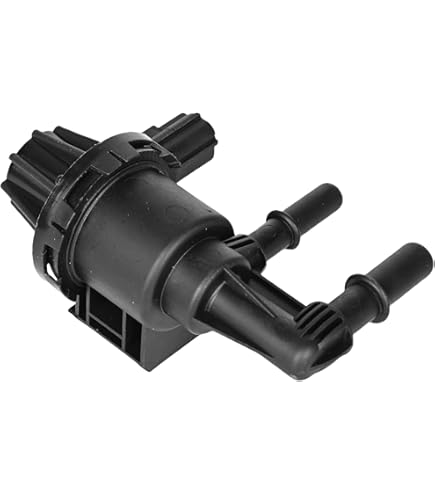
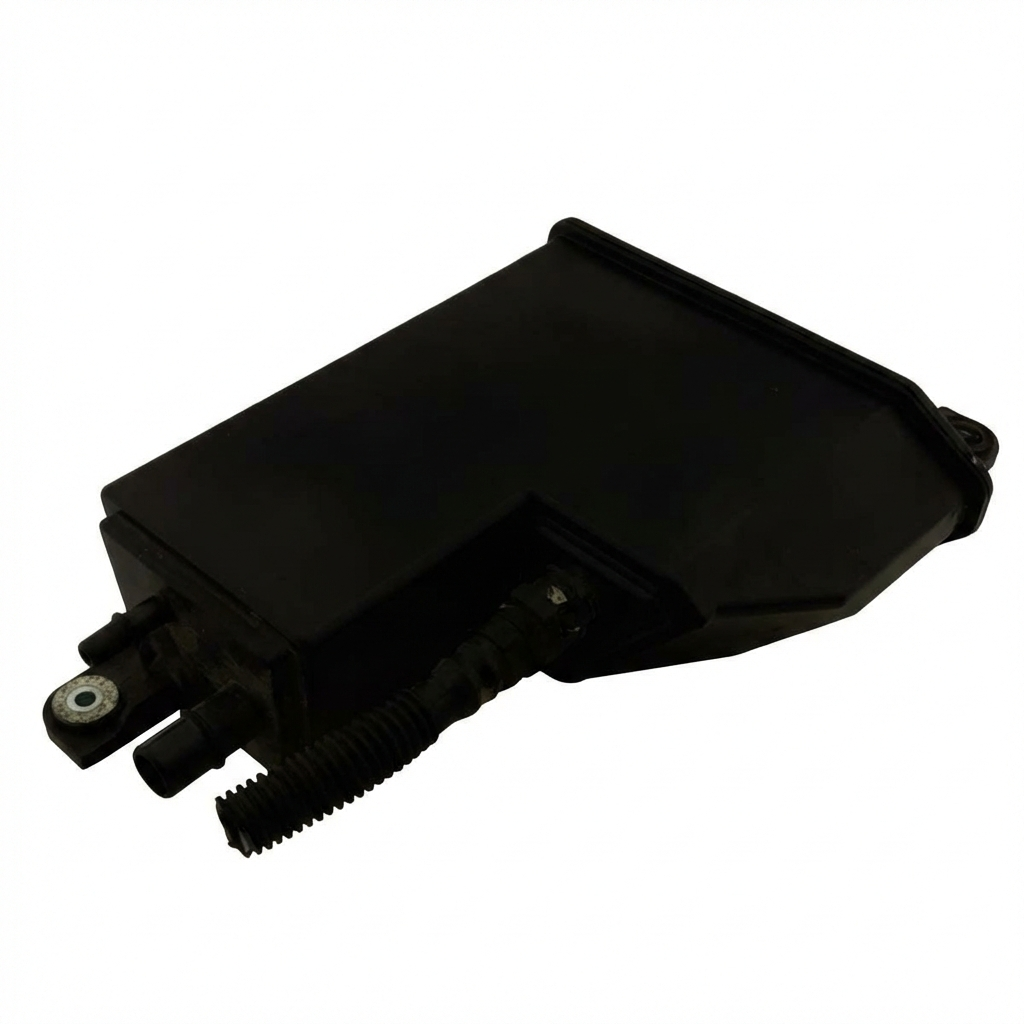
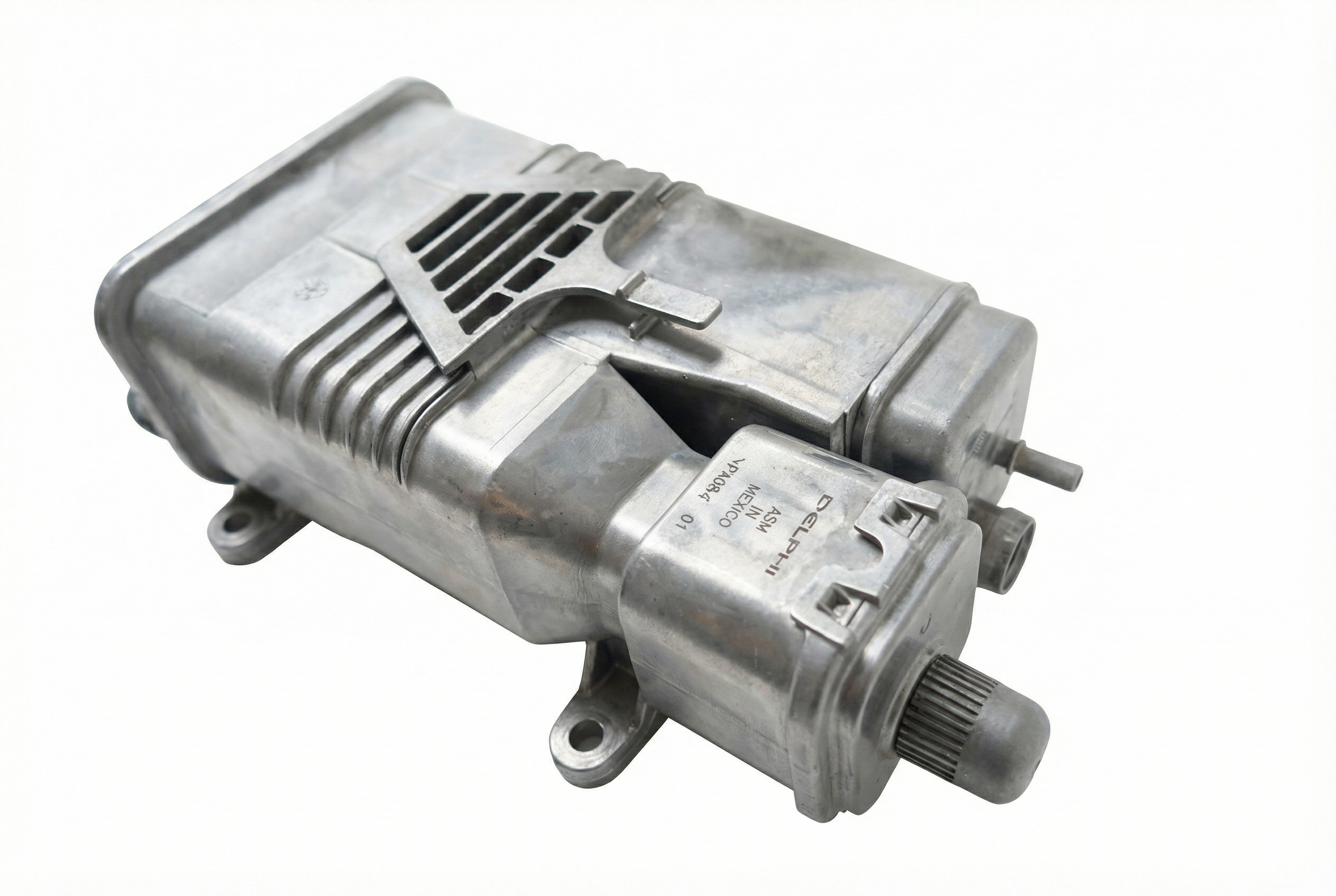
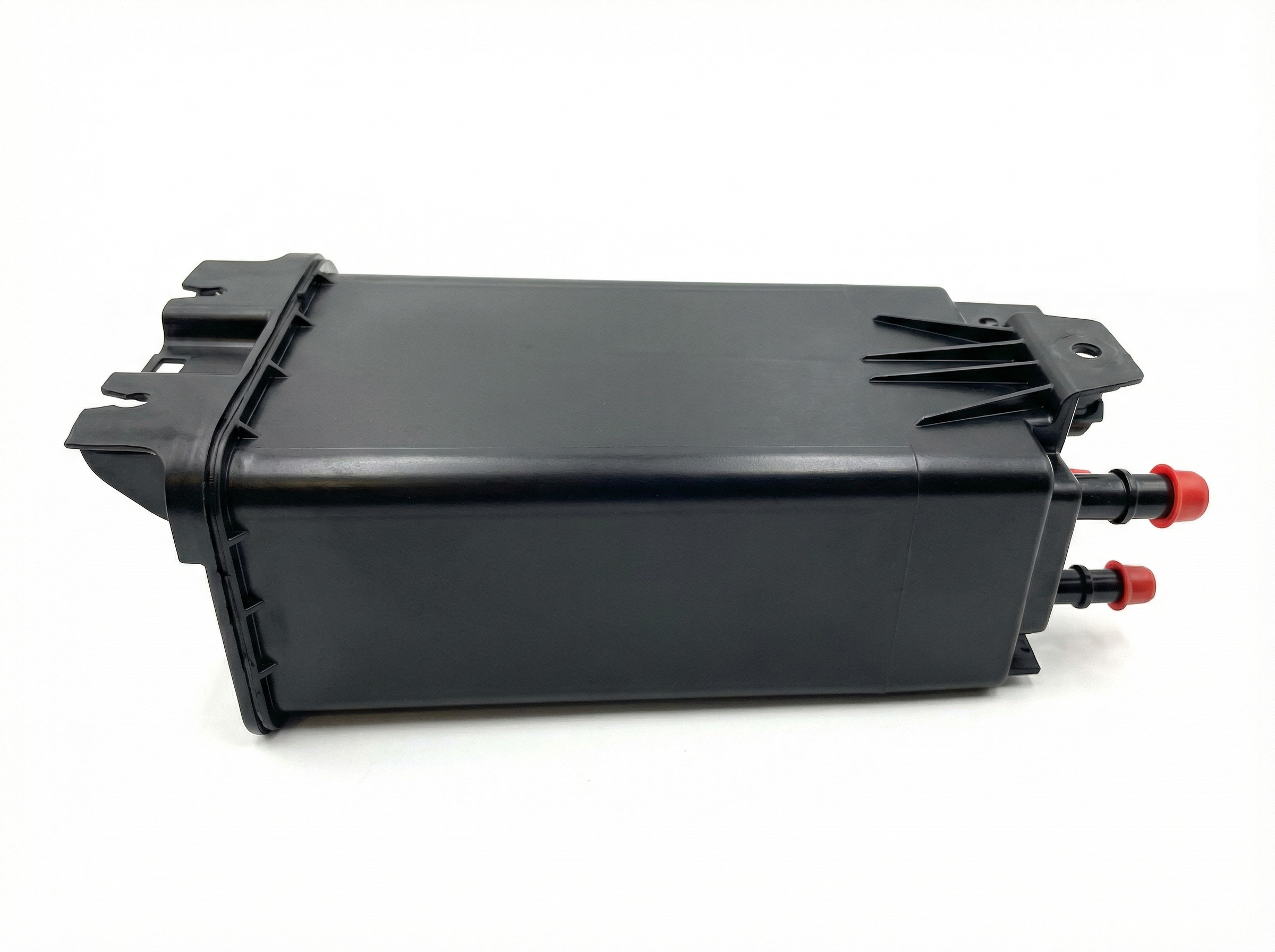
- Stuck-Open EVAP Purge Valve 🔴 High Probability → Shop Vapor Canister This is a very common failure part on many Ford vehicles, including those with the 3.5L V6. The valve fails internally and remains open, constantly feeding fuel vapors into the intake manifold, which causes a rich condition often affecting both banks.
How to confirm: With the engine off, disconnect the vapor line from the purge valve. Use a hand vacuum pump on the valve's intake port; it should hold vacuum. Alternatively, try to blow through it; if air passes, it is stuck open and has failed. A bidirectional scan tool can also command the valve closed to check for vacuum flow or command it open while checking for a clicking sound from the valve.
Typical fix: Replace the EVAP canister purge valve. This is typically a straightforward repair located on the driver's side of the engine.
Est. part cost: $30-$80 - Leaking Fuel Injector(s) on Bank 2 🟡 Medium Probability → Shop Fuel Injector Fuel injectors can fail mechanically or become clogged, leaking fuel into the cylinder even when closed. This can dilute the engine oil, causing further engine wear.
How to confirm: Perform a fuel pressure leak-down test. After turning the engine off, the fuel rail pressure should remain steady. A gradual drop in pressure suggests one or more injectors are leaking. You can also pull the spark plugs on Bank 2 (front three cylinders: 4, 5, 6) and inspect for one that is black and sooty, indicating a rich condition in that specific cylinder.
Typical fix: Replace the faulty fuel injector(s). It is often recommended to replace all three injectors on the affected bank at the same time.
Est. part cost: $50-$150 per injector - Faulty Upstream Oxygen (O2) Sensor 🟡 Medium Probability → Shop Oxygen Sensor While often misdiagnosed, the O2 sensor can fail. On some Ford platforms like the Transit with a similar engine, water intrusion from a leaking cowl is a known cause of O2 sensor failure, which could be a factor to inspect.
How to confirm: Use a scan tool to monitor the live data for the Bank 2, Sensor 1 O2 sensor. A healthy sensor's voltage should fluctuate rapidly between approximately 0.1 and 0.9 volts. If the sensor is stuck at a high voltage (e.g., >0.8V) and doesn't respond to induced lean conditions (like creating a vacuum leak), it may be faulty.
Typical fix: Replace the Bank 2, Sensor 1 (upstream) oxygen sensor. This sensor is located on the exhaust manifold of the cylinder bank closer to the radiator, making it relatively accessible.
Est. part cost: $50-$120 - Dirty or Faulty Mass Airflow (MAF) Sensor ⚪ Low Probability → Shop Fuel Injection Air Flow Meter An over-oiled aftermarket air filter is a common way to contaminate a MAF sensor, causing it to 'over-report' the amount of air entering the engine and leading to a rich mixture.
How to confirm: A faulty MAF sensor will typically set rich codes on BOTH banks (P0172 and P0175). If only P0175 is present, this is less likely. Inspect the sensor for dirt or debris. You can try cleaning it with a dedicated MAF sensor cleaner. If cleaning doesn't work, monitor the sensor's readings with a scan tool to see if they are rational for the given engine speed and load.
Typical fix: Clean the MAF sensor with a specialized cleaner. If the problem persists, replace the MAF sensor.
Est. part cost: $70-$150
Rare But Worth Checking
- Failing Internal Water Pump: The 3.5L Cyclone V6 has a timing chain-driven water pump located inside the engine. A known failure point is the pump seal, which can leak coolant directly into the engine oil. This contamination degrades the oil, causing a cascade of problems including timing chain wear and VCT phaser issues, which can lead to poor combustion and fuel trim codes. If you find milky, coolant-contaminated oil, or see coolant dripping from a weep hole behind the alternator, this is a critical, engine-out repair that must be addressed immediately to prevent catastrophic engine failure.
- High Fuel Pressure: A failing fuel pressure regulator or a problem with the fuel pump/fuel pump driver module can cause excessive fuel pressure across the entire system, leading to rich conditions on both banks (P0172 and P0175). This should be investigated if both codes are present and other causes have been ruled out. Fuel pressure should be around 40 PSI at idle.
Diagnosis Steps
- Use an OBD-II scanner to confirm the P0175 code and check for any other related codes (e.g., P0172, P2198, P030x).
- Check Long-Term Fuel Trim (LTFT) data for Bank 2. A value of -20% or more negative confirms the rich condition. If Bank 1 LTFT is also highly negative, suspect a global issue like the MAF or EVAP system.
- Inspect the EVAP Purge Valve: This is the most common and easiest part to test. Disconnect it and check if it's stuck open by blowing through it. If air passes, replace it. It is located on the driver's side of the engine bay.
- Inspect for a Bank-Specific Issue: If only P0175 is present, focus on Bank 2. Pull the spark plugs for cylinders 4, 5, and 6 (the front bank, near the radiator). Look for a plug that is black, wet, or sooty, which would indicate a leaking fuel injector in that cylinder.
- Test the Bank 2 O2 Sensor: Monitor the upstream O2 sensor's voltage on a scan tool. If it's stuck high (above 0.8V) and unresponsive, it may have failed. However, confirm it's not just reporting a true rich condition first.
- Check for Global Issues (if P0172 is also present): If both banks are rich, inspect the Mass Airflow (MAF) sensor for contamination and test fuel pressure to ensure it's within specification (approx. 40 PSI at idle).
- Check Engine Oil and Coolant: As a final check, inspect the engine oil on the dipstick. If it appears milky or is overfull and smells strongly of gasoline, you may have a severe issue like a leaking internal water pump or multiple leaking injectors. Check for coolant residue at the water pump weep hole behind the alternator. This requires immediate professional attention.
Parts You'll Likely Need
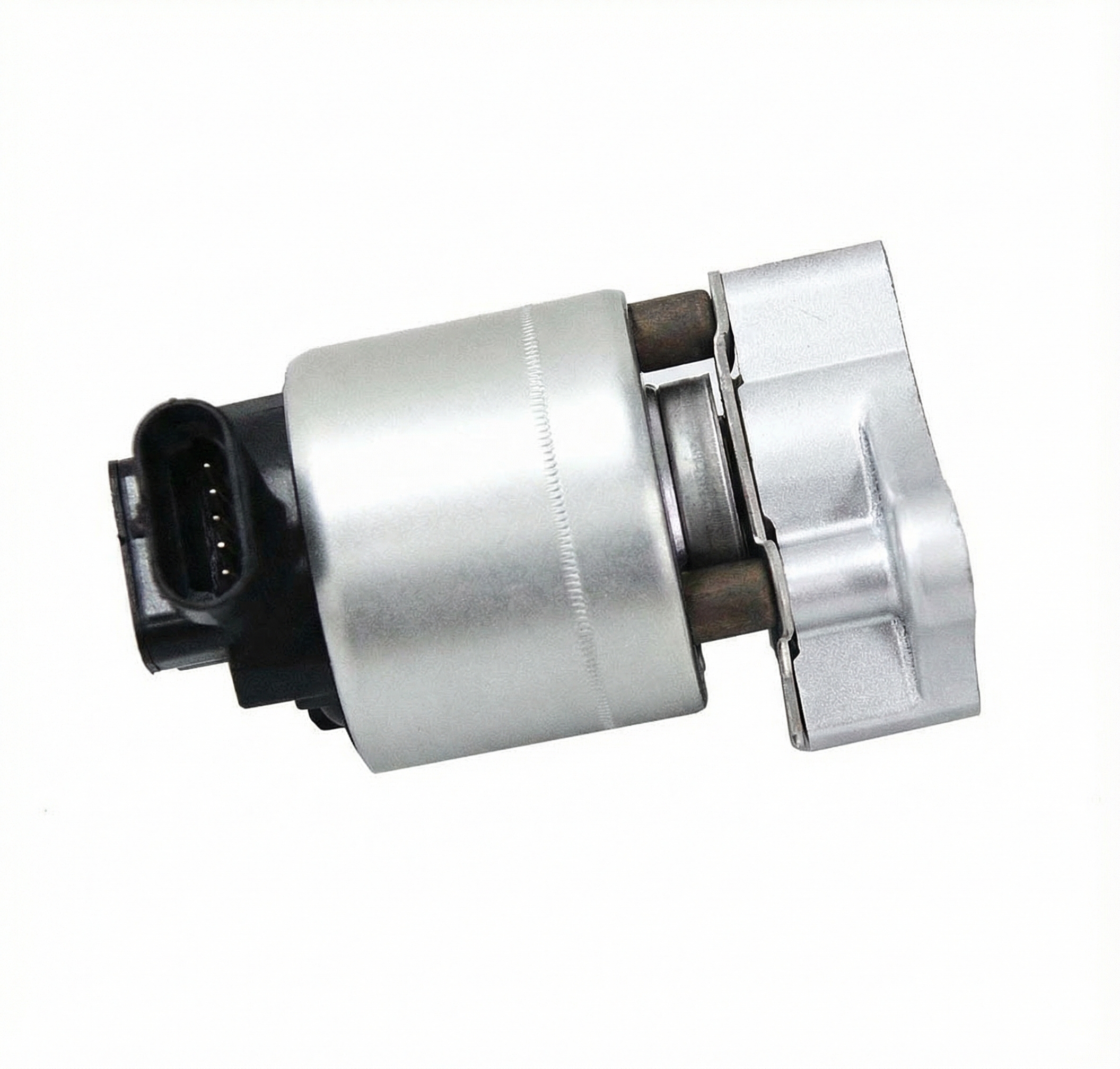
- EVAP Canister Purge Valve
(OEM #AU5Z-9C915-B / CX-2409 (Motorcraft))— This is a very common failure item on Ford vehicles that directly causes rich condition codes when it sticks open.
Trusted brands: Motorcraft, Dorman
OEM price range: $40-$70
Aftermarket price range: $25-$50 - Fuel Injector — A leaking fuel injector is a primary cause for a single-bank rich condition like P0175.
Related Codes That Often Appear With This One
- P0172 — System Too Rich (Bank 1). If both P0172 and P0175 are present, it points to a problem affecting the entire engine, such as a faulty MAF sensor, stuck EVAP purge valve, or high fuel pressure.
- P2198 — O2 Sensor Signal Biased/Stuck Rich (Bank 2, Sensor 1). This code is more specific and points directly to the O2 sensor reading being stuck high, which can be caused by the sensor itself failing or by a persistent rich condition from a leaking injector or other issue.
- P0300, P0304, P0305, P0306 — Cylinder Misfire. A severe rich condition can foul the spark plug in one or more cylinders on Bank 2 (cylinders 4, 5, 6), causing a misfire.
Technical Service Bulletins (TSBs) & Recalls
- Customer Satisfaction Program 13N03 & TSB 10-21-6: Related to electronic throttle body failures causing sudden power loss. Though expired, they acknowledge the widespread nature of the problem.
- Customer Satisfaction Program 16B32: Covered certain 2016 Taurus models for electronic throttle body repair or PCM reprogram due to contamination causing electrical resistance issues and codes like P2111/P2112.
- TSB SSM 46085: Advised technicians that certain PIDs should not be used for diagnosing electronic throttle bodies, indicating the complexity of the issue.
Mechanic-Grade Diagnostic Values
- Fuel Injector Resistance — expected: 11 - 14 Ohms. Failure: A reading of infinity (open circuit), near-zero (short circuit), or significantly outside the expected range confirms a failed injector coil.
- Mass Airflow (MAF) Sensor at Idle — expected: 3.0 - 5.0 g/s (grams per second) on a fully warmed engine at idle.. Failure: A reading that is stuck, erratic, or does not increase smoothly with throttle application suggests a faulty sensor or a vacuum leak post-MAF.
- Long Term Fuel Trim (LTFT) Bank 2 — expected: -10% to +10%. Failure: A P0175 code is typically triggered when the LTFT exceeds -20% to -25%, indicating the PCM is subtracting the maximum amount of fuel it can to correct the rich condition.
- VCT Solenoid Resistance — expected: 7 - 14 Ohms. Failure: A reading outside this range indicates a faulty solenoid. This is relevant if diagnosing a cascade failure from oil contamination (e.g., internal water pump leak).
- Fuel Pressure (KOER - Key On, Engine Running) — expected: ~40 PSI at idle. Failure: Significantly high pressure (e.g., >50 PSI) can indicate a faulty fuel pressure regulator or a restriction in the fuel return line, causing rich conditions on both banks.
Scan Tool Commands That Help
- Ford IDS (Integrated Diagnostic System): Power Balance Test — This is a critical dealer-level test to identify a specific misfiring or under-contributing cylinder. The tool disables one cylinder at a time and graphs the RPM drop. If disabling a cylinder on Bank 2 causes little or no RPM drop, it confirms that cylinder is the source of the problem, likely due to a fouled plug from a leaking injector.
- Ford IDS or high-end bidirectional scanner: EVAP Purge Valve Solenoid Control — Allows the technician to command the purge valve solenoid on and off with the engine running. While monitoring fuel trims, commanding the valve closed should cause highly negative fuel trims to return toward normal if the valve was stuck open. You should also hear an audible click from the valve.
Wiring & Ground Locations
- Bank 2 Fuel Injector Wiring — At the black 12-pin plug located at the top center of the engine (on GTDI models, likely similar on NA).. For testing injector circuits without removing the intake. The wires for injectors 4, 5, and 6 are typically Yellow/Orange, Brown, and Green/White at pins 2, 3, and 4. This allows for checking continuity and voltage signals from the PCM.
- G100 — Top rear of the engine block.. This is a primary engine ground point. A poor connection here can cause erratic behavior in multiple sensors, including the crankshaft position sensor and oxygen sensors, potentially leading to incorrect fuel calculations. While not a direct cause, it should be checked for corrosion and tightness during any electrical diagnosis.
Real Owner Repair Stories
- Ford F150 Forum user (2002 Ford F-150 5.4L V8 (different engine, but identical diagnostic logic for dual-bank rich codes)) — Check engine light with P0172 & P0175, rough running, stalling in hot weather.
❌ Tried (didn't work) Checked air filter
✅ What actually fixed it The user measured fuel pressure and found it was extremely high at 84 PSI (spec is ~30-40 PSI). The cause was a clogged inlet screen on the fuel pressure regulator. Cleaning the sediment from the regulator screen restored correct fuel pressure and resolved both rich codes.
"I Checked Everything" — The Actual Cause
- In cases where both banks are running rich (P0172 and P0175) and a smoke test reveals no vacuum or EVAP leaks, the root cause can be excessive fuel pressure. A fuel pressure gauge might show pressure far exceeding the typical 40 PSI spec. This can be caused by a faulty fuel pressure regulator or a restriction/kink in the fuel return line, forcing too much fuel past the injectors. This scenario would not be found with a smoke test.
OEM Part Supersession History
AU5Z-9C915-B (Motorcraft CX-2409)→AU5Z-9C915-E (Motorcraft CX-2695)— Design improvements to enhance durability and prevent sticking.
Heads up: The part has been through multiple revisions (A, B, C, D, E). While older versions may fit, it is critical to use the latest available revision (AU5Z-9C915-E) to get the most reliable part and avoid a repeat failure.
Model Year Variations Within This Range
- 2013-2019: For the 2013 model year refresh, the standard 3.5L Cyclone V6 received a power increase from 263 hp to 288 hp. This indicates a different PCM calibration and potentially minor revisions to fuel or air components to accommodate the new tuning. While the root causes of P0175 remain the same, replacement parts like injectors or the PCM itself must be matched to the correct year range.
Diagnostic Flowchart
Other Known Issues on This Vehicle
Issues unrelated to this code that are worth knowing about as an owner of this generation:
- Internal Water Pump Failure 🔴 High — Common after 80,000-120,000 miles. Failure can be catastrophic if coolant contaminates the engine oil.
- Power Transfer Unit (PTU) Failure (AWD Models) 🔴 High — Common due to fluid overheating and lack of a drain plug for servicing. Often neglected, leading to failure around 60,000-100,000 miles.
- Electronic Throttle Body (ETB) Failure 🟠 Medium — Widespread issue causing sudden 'limp mode' and loss of power. Can occur at various mileages. (Ref: Customer Satisfaction Program 13N03, 16B32; TSB 10-21-6)
- Transmission Failure / Shifting Issues 🟠 Medium — More common on early 2010-2012 models, but can affect later years. Symptoms include hard shifts, no reverse, or failure of specific gears.
- Worn Strut Mount Bearings 🟡 Low — A common annoyance causing a clunking or banging noise when turning the steering wheel at low speeds.
Used vs. New Parts: Buying Guide for This Vehicle
When a used part is the smart pick: Used parts are generally not recommended for fixing a P0175 code, as the common causes are wear-and-tear items. The only exception might be a large, expensive structural component like an intake manifold if it were found to be cracked, which is not a common cause for this code.
Donor-vehicle mileage cap: roughly under 50000 miles for the part to have meaningful remaining life.
What to inspect on the donor part:
- For any used part, verify the donor vehicle had low mileage and no signs of front-end collision or fire.
- Check plastic components for brittleness or cracking.
- Ensure electrical connectors are intact with no corrosion.
OEM-only on this vehicle (don't cheap out):
- Mass Airflow (MAF) Sensor
- Oxygen (O2) Sensors
- EVAP Purge Valve
- Fuel Injectors
Aftermarket brands forum-validated for this vehicle:
- For O2 Sensors: NTK or Denso are often the OE manufacturer and are highly trusted alternatives to Motorcraft.
- For Fuel System Components: Bosch is an OE supplier for many Ford fuel system parts and is a reliable choice.
Brands owners have reported issues with on this vehicle:
- Avoid unbranded, 'white-box' electronic sensors from major online retailers. Forum discussions frequently show these parts failing quickly or being dead-on-arrival, leading to wasted time and money.
Real Owner Stories
Aggregated from forums and TSBs cited above. Mileages and costs reflect what owners reported in those sources.
2002 Ford Taurus
Symptoms: The vehicle was running rich with both P0172 and P0175 codes present.
What fixed it: Diagnostic principles for these codes involve checking fuel trims and the relationship between the MAF sensor and rich conditions.
Source hint: https://www.reddit.com/r/MechanicAdvice/comments/tih33a/p0172_and_p0175_ford_taurus_2002_running_rich/
Ford 3.5L/3.7L Cyclone V6 Platform
Symptoms: Owner experienced rich codes and investigated the relationship between fuel trims and the MAF sensor.
What fixed it: The discussion highlighted how a faulty MAF sensor can 'over-report' air, leading to rich codes on both banks.
Source hint: https://www.ford-trucks.com/forums/1110543-changed-out-fuel-injectors-now-p0175.html
Ford Taurus 3.5L V6
Symptoms: The owner had both P0172 and P0175 codes and attempted to fix the issue by replacing an extensive number of parts.
What fixed it: The case highlighted the diagnostic challenge of dual-bank rich codes and the need to verify fuel pressure (approx. 40 PSI at idle) and fuel trims.
Source hint: https://www.cartalk.com/discussion/2330722/running-rich-p0172-p0175
Related OBD-II Codes
Frequently Asked Questions
Is there a TSB for the throttle body issues on my 2016 Ford Taurus that might be related to engine codes?
I have a P0175 on my 3.5L Taurus; could this be the internal water pump issue I've heard about?
Which cylinders should I check for a P0175 code on my Taurus 3.5L Cyclone V6?
My Taurus has both P0172 and P0175. Does this change the diagnosis?
Can I test the EVAP purge valve on my Taurus myself?
Are there any expired Ford programs regarding power loss and engine codes for the Taurus?
Helpful Videos
Used OEM Parts in Stock
New Aftermarket Parts Available



The information in this article is provided for general reference and educational purposes only. Vehicle specifications, procedures, and part compatibility can vary by production date, trim level, and region. Always consult your vehicle's factory service manual and verify part numbers before purchasing or performing repairs. Safety-critical components such as airbags, seat belts, and braking systems should be installed by a qualified professional.
- Ford Taurus:
- 🧭 Diagnostic Flowchart
- 🎬 Helpful Videos
- 🛍️ Shop This Part
- What's Unique About the 2010-2019 Ford Taurus
- Symptoms You May Notice
- Most Likely Causes
- Rare But Worth Checking
- Diagnosis Steps
- Parts You'll Likely Need
- Related Codes That Often Appear With This One
- Technical Service Bulletins (TSBs) & Recalls
- Mechanic-Grade Diagnostic Values
- Scan Tool Commands That Help
- Wiring & Ground Locations
- Real Owner Repair Stories
- "I Checked Everything" — The Actual Cause
- OEM Part Supersession History
- Model Year Variations Within This Range
- Other Known Issues on This Vehicle
- Used vs. New Parts: Buying Guide for This Vehicle
- Real Owner Stories
- 2002 Ford Taurus
- Ford 3.5L/3.7L Cyclone V6 Platform
- Ford Taurus 3.5L V6
- Related OBD-II Codes
- Frequently Asked Questions
- 🎟️ Get 5% Off