

P0175 on 2015-2019 Ford Transit 3.5L EcoBoost: Causes for System Too Rich (Bank 2)
For a 2015-2019 Ford Transit, P0175 (System Too Rich, Bank 2) is most often caused by a faulty upstream oxygen sensor on the driver's side, frequently damaged by a known water leak from the windshield cowl area. Check for moisture in the engine bay first. If dry, the O2 sensor itself is the likely culprit, costing $50-$140 for the part.
- For a P0175 code on a 2015-2019 Transit, immediately inspect for water leaks from the windshield cowl onto the driver's side of the engine.
- The most likely failed part is the Bank 2 (driver's side) upstream O2 sensor, often as a direct result of this water damage.
- If no water is found, standard rich-condition diagnostics apply, but the cowl leak is the single most important platform-specific issue to rule out first.
What's Unique About the 2015-2019 Ford Transit
On this specific generation of Ford Transit, a primary and well-documented cause for P0175 is not a typical sensor failure, but rather a design issue. Water can leak from the windshield cowl area directly into the engine bay, damaging electrical components. This water intrusion is specifically called out in Ford Technical Service Bulletins (TSBs) as a cause for rich condition codes, often by damaging the Bank 2 upstream O2 sensor or its wiring. While other causes are possible, this platform-specific issue should be the first thing investigated.
Symptoms You May Notice
- Check Engine Light is on
- Poor fuel economy
- Rough or unstable idle
- Smell of raw fuel or rich exhaust
- Black smoke from the exhaust pipe
- Reduced engine power or hesitation
- Replacing the catalytic converter. The converter can be damaged by a long-term rich condition, but it is not the cause of the P0175 code itself. A P0430 code would typically be present if the converter is failing.
Most Likely Causes
- Faulty Upstream Oxygen (O2) Sensor (Bank 2, Sensor 1) 🔴 High Probability → Shop Oxygen Sensor This is the most common cause, often triggered by a known water leak from the cowl area that damages the sensor or its connector, as noted in Ford TSB 19-2091.
How to confirm: Inspect the O2 sensor and connector on Bank 2 (driver's side, before the catalytic converter) for signs of water damage or corrosion. Use a scan tool to monitor the O2 sensor voltage; a sensor stuck high (above 0.8V) indicates a rich reading.
Typical fix: Replace the Bank 2, Sensor 1 (upstream) oxygen sensor. If water damage is evident, the source of the leak (cowl area) must be sealed with automotive sealant to prevent repeat failure.
Est. part cost: $50-$140 - Leaking Fuel Injector(s) 🟡 Medium Probability → Shop Fuel Injector Direct injection (DI) systems like the EcoBoost operate under very high pressure. An injector can fail by sticking partially open or developing a poor seal, allowing excess fuel to enter a cylinder.
How to confirm: This is harder to confirm. A professional may perform a fuel pressure leak-down test or use a scan tool to look at fuel trims per cylinder (if available). Pulling the spark plugs on Bank 2 may reveal one that is black and sooty, indicating a rich condition in that specific cylinder.
Typical fix: Replace the faulty fuel injector(s). It is often recommended to replace all injectors on the affected bank at the same time for balanced performance.
Est. part cost: $50-$200 per injector - Stuck Open EVAP Purge Valve ⚪ Low Probability → Shop Vapor Canister The evaporative emissions (EVAP) purge valve can get stuck open, allowing un-metered fuel vapors from the gas tank to be drawn into the intake manifold at the wrong time, creating a rich condition.
How to confirm: With the engine off, disconnect the purge valve and try to blow through it. If air passes through, it is stuck open. You can also use a scan tool to command the valve closed and apply a vacuum to see if it holds.
Typical fix: Replace the EVAP purge valve.
Est. part cost: $40-$100 - Dirty or Faulty Mass Airflow (MAF) Sensor ⚪ Low Probability → Shop Fuel Injection Air Flow Meter While possible, a MAF sensor issue typically affects both engine banks and would likely set a P0172 code along with P0175. However, an over-oiled aftermarket air filter or contamination can cause incorrect readings.
How to confirm: Inspect the MAF sensor wires for dirt, oil, or debris. Use a scan tool to monitor MAF readings; if P0175 is the only code, this is an unlikely cause.
Typical fix: Clean the sensor with a dedicated MAF sensor cleaner spray. If cleaning fails, replace the sensor, preferably with an OEM Motorcraft part.
Est. part cost: $10 for cleaner, $150-$250 for sensor
Rare But Worth Checking
- High Fuel Pressure: A failing fuel pressure regulator or an issue with the high-pressure fuel pump (HPFP) specific to EcoBoost engines could cause excessive fuel pressure system-wide, leading to rich conditions. This would usually trigger codes for both banks (P0172 and P0175).
Diagnosis Steps
- Use an OBD-II scanner to confirm P0175 is present and check for any other codes.
- Visually inspect the engine bay on the driver's side, particularly around the Bank 2 upstream O2 sensor and its wiring, for any signs of moisture, corrosion, or water trails coming from the windshield cowl area.
- Inspect the engine air filter. If it is wet or water-logged, this is a strong indicator of the cowl leak issue and is the likely cause of the rich condition.
- If no water is found, use the scanner to observe live data for the Bank 2, Sensor 1 O2 sensor. A voltage consistently stuck above 0.8V points to a rich condition or a faulty sensor.
- Check fuel trims. Long-term fuel trim for Bank 2 will be highly negative (e.g., -15% to -30%) as the PCM tries to correct the rich mixture.
- If the O2 sensor appears to be switching normally, investigate other potential causes. Test the EVAP purge valve for being stuck open.
- If both P0172 and P0175 are present, investigate shared components like the MAF sensor (check for cleanliness and correct readings) and fuel pressure.
- As a more advanced step, check for leaking fuel injectors by examining spark plugs on Bank 2 for black soot or performing a fuel pressure leak-down test.
Parts You'll Likely Need
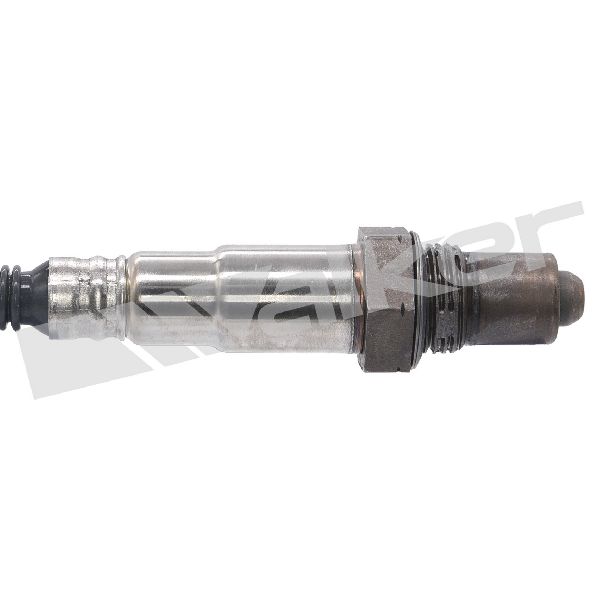
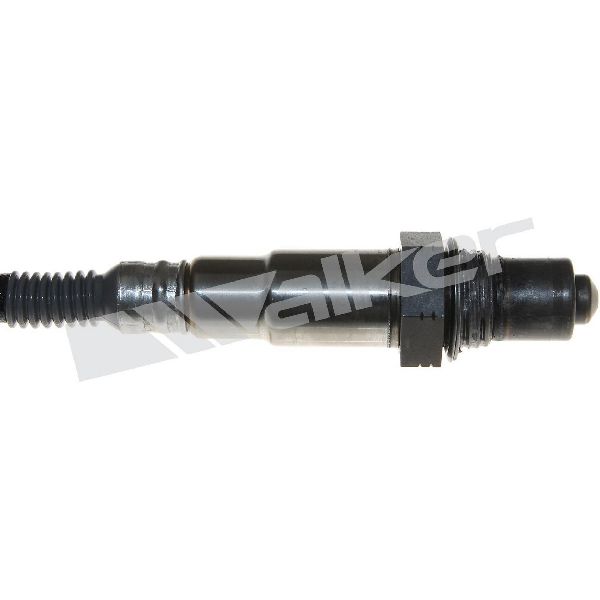
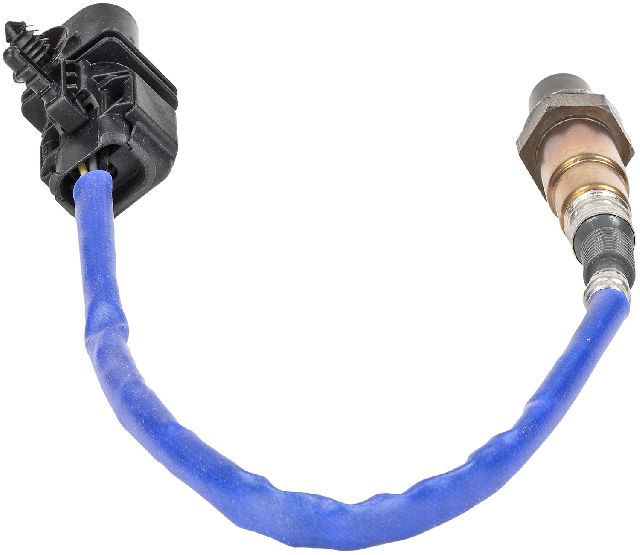
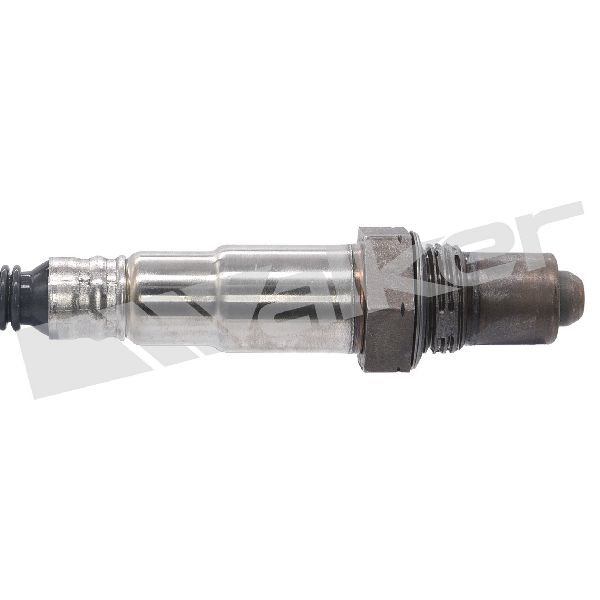
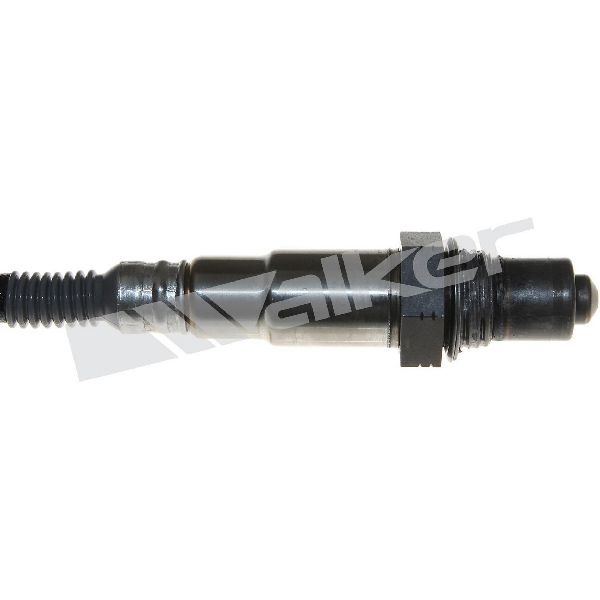
- Upstream Oxygen Sensor (Bank 2, Sensor 1)
(OEM #DY-1337)— This is the most common failure for this code on this vehicle, often due to water intrusion from a cowl leak or simple wear. It is the primary sensor for monitoring the air-fuel ratio on Bank 2.
Trusted brands: Motorcraft, Bosch, Denso, NTK
OEM price range: $90-$140
Aftermarket price range: $50-$100 - Automotive Silicone Sealant
(OEM #TA-30)— If the root cause is the common water leak, the cowl area must be sealed to prevent the new O2 sensor from being damaged. TSB 19-2091 specifies using sealant for the repair.
Trusted brands: Motorcraft, Permatex, 3M
OEM price range: $20-$40
Aftermarket price range: $10-$25
Related Codes That Often Appear With This One
- P0172 — System Too Rich (Bank 1). If both P0172 and P0175 are present, it points to a problem affecting the entire engine, like a MAF sensor, fuel pressure issue, or a water-soaked air filter from the known cowl leak.
- P2198 — O2 Sensor Signal Stuck Rich (Bank 2 Sensor 1). This code directly points to the upstream oxygen sensor on Bank 2 sending a continuous rich signal, strongly suggesting the sensor itself is faulty or reading a true rich condition. It is often listed in the same TSBs as P0175.
- P0430 — Catalyst System Efficiency Below Threshold (Bank 2). If the P0175 condition persists for too long, unburned fuel can overheat and damage the catalytic converter, leading to this code.
Technical Service Bulletins (TSBs) & Recalls
- TSB 19-2091: Addresses drivability concerns and DTCs (P0172, P0175, P2198, etc.) due to water entry into the engine compartment from the cowl area.
Platform-Specific Known Issues
- TSB 19-2091 (superseding 18-2321 and 17-0014) explicitly details a water leak from the cowl area causing drivability issues and setting multiple DTCs, including P0175 and P2198, by damaging O2 sensors and other components.
Mechanic-Grade Diagnostic Values
- Long-Term Fuel Trim (LTFT) Bank 2 — expected: Within +/- 10%. Failure: Sustained negative values of -15% to -25% or more will trigger the P0175 code.
- Low-Side Fuel Pressure (at idle) — expected: 40-60 PSI. Failure: Pressure significantly above this range can indicate a faulty fuel pressure regulator or return line issue, forcing a rich condition.
- High-Side Fuel Pressure (HPFP output, under load) — expected: 1,500 - 2,150+ PSI. Failure: If actual pressure lags desired pressure by more than 200 PSI, it can indicate a failing HPFP. Conversely, a stuck regulator could cause excessive pressure.
- Upstream O2 Sensor (Bank 2, Sensor 1) Voltage — expected: Fluctuating between ~0.1V (lean) and ~0.9V (rich). Failure: Voltage stuck high, consistently above 0.8V, indicates the sensor is reading rich or is faulty/shorted.
- Mass Air Flow (MAF) Sensor at idle — expected: Approximately 3.5-3.7 grams/second for a 3.5L engine.. Failure: Incorrect values suggest a fault, but this would typically cause codes on both banks (P0172 & P0175).
Hidden / Shadow Codes Worth Checking
- Mode 6 Data: Mode 6 is not a code but a diagnostic mode that provides test results for non-continuously monitored systems, like O2 sensor response rates and catalyst efficiency. A technician can view these results to see if a component is borderline or degrading before it fails badly enough to trigger a Check Engine Light. (see via Advanced OBD-II scan tools (like FORScan for Fords) can access and display Mode 6 test results. The data is presented with Monitor IDs (MIDs) and Component IDs (CIDs) which must be cross-referenced with Ford-specific charts.)
Scan Tool Commands That Help
- FORScan / Ford IDS / High-End Scanner: Live Data: Fuel Rail Pressure (FRP) vs. Desired FRP — This is critical for diagnosing the high-pressure fuel system. Comparing the computer's requested pressure to the actual sensor reading can quickly identify a failing HPFP or a pressure sensor issue.
- FORScan / Ford IDS / High-End Scanner: Live Data: O2 Sensor Voltage (O2S12 for Bank 2 Sensor 1) — Used to confirm if the O2 sensor is stuck rich (high voltage) or if it is actively switching as expected. This helps differentiate a sensor failure from an actual rich condition.
- FORScan / Ford IDS / High-End Scanner: Injector Balance Test — This function commands each injector to fire for a set duration and measures the corresponding drop in fuel pressure. An injector that causes a smaller or larger drop than the others may be clogged or leaking. This helps pinpoint a single faulty injector on Bank 2.
Wiring & Ground Locations
- Bank 2 Upstream O2 Sensor Connector — On the driver's side of the engine, follow the exhaust manifold back from the engine block. The upstream sensor is located before the catalytic converter. The connector is typically attached to a nearby bracket.. This is the primary location to inspect for water damage from the cowl leak. Corrosion or moisture inside this connector is a direct cause of faulty sensor readings leading to P0175.
- Windshield Cowl Panel Seam — The plastic and metal panels at the base of the windshield. Specifically, the seams and the area around the center wiper motor stud are known leak points.. This is the source of the water intrusion detailed in TSB 19-2091. Water gets behind the channel and drips directly onto the Bank 2 side of the engine, damaging the O2 sensor and wiring.
Real Owner Repair Stories
- Ford Transit Forum & YouTube diagnostic videos (2015-2019 Ford Transit (various)) — Check Engine Light with P0175, sometimes with P0172. Rough idle, poor fuel economy.
❌ Tried (didn't work) Replacing the Bank 2 O2 sensor without addressing the water leak, causing the code to return., Replacing the MAF sensor., Focusing only on vacuum leaks.
✅ What actually fixed it The definitive fix for many owners was identifying the water leak from the windshield cowl. The repair involved removing the cowl panels, cleaning the area, and applying a bead of clear silicone sealant along the seams, especially around the wiper motor area, to prevent water from dripping onto the engine. After sealing the leak and replacing any damaged sensors, the code was resolved permanently.
"I Checked Everything" — The Actual Cause
- A common pattern for P0175 on the 2015-2019 Transit is for a technician to perform a smoke test to find a vacuum leak and find nothing. The system holds pressure perfectly, leading to confusion. The actual cause is often the cowl water leak, which doesn't introduce unmetered air but instead damages the Bank 2 O2 sensor or its connector with moisture, causing it to send a false 'rich' signal to the PCM. This is an electrical failure, not a vacuum leak, which is why a smoke test would come back clean.
OEM Part Supersession History
DY-1337→N/A— DY-1337 appears to be the current and correct Motorcraft part number for the upstream oxygen sensor for this application. No supersession information indicating a problematic revision was found during research.
Model Year Variations Within This Range
- 2015-2019: The core 3.5L EcoBoost V6 powertrain and its related components remained largely consistent throughout the first North American generation. The primary causes for P0175, especially the cowl water leak issue (covered in TSBs for models built before mid-2018), apply across this entire year range. No significant mid-cycle changes have been noted that would alter the diagnostic approach for this specific code.
Diagnostic Flowchart
Real Owner Stories
Aggregated from forums and TSBs cited above. Mileages and costs reflect what owners reported in those sources.
2016 Ford Transit 3.5L EcoBoost
Symptoms: Check Engine Light with P0172 and P0175 (both banks rich).
What fixed it: The user found a small, hard-to-see crack in the plastic PCV hose elbow where it connects to the intake manifold. Replacing the PCV tube assembly resolved the codes.
Source hint: Go-Parts article summarizing Ford Transit USA Forum post on P0172/P0175
Related OBD-II Codes
Frequently Asked Questions
Is there a known issue with water leaks causing the P0175 code on the 2015-2019 Ford Transit?
Which oxygen sensor usually fails to cause P0175 on the 3.5L EcoBoost Transit?
Why should I check my engine air filter when diagnosing P0175 on my Transit?
Can the direct injection system on the 3.5L EcoBoost cause a P0175 code?
What does it mean if my Transit has both P0172 and P0175 codes?
We Have This Part in Stock


The information in this article is provided for general reference and educational purposes only. Vehicle specifications, procedures, and part compatibility can vary by production date, trim level, and region. Always consult your vehicle's factory service manual and verify part numbers before purchasing or performing repairs. Safety-critical components such as airbags, seat belts, and braking systems should be installed by a qualified professional.
- Ford Transit:
- 🧭 Diagnostic Flowchart
- 🛍️ Shop This Part
- What's Unique About the 2015-2019 Ford Transit
- Symptoms You May Notice
- Most Likely Causes
- Rare But Worth Checking
- Diagnosis Steps
- Parts You'll Likely Need
- Related Codes That Often Appear With This One
- Technical Service Bulletins (TSBs) & Recalls
- Platform-Specific Known Issues
- Mechanic-Grade Diagnostic Values
- Hidden / Shadow Codes Worth Checking
- Scan Tool Commands That Help
- Wiring & Ground Locations
- Real Owner Repair Stories
- "I Checked Everything" — The Actual Cause
- OEM Part Supersession History
- Model Year Variations Within This Range
- Real Owner Stories
- 2016 Ford Transit 3.5L EcoBoost
- Related OBD-II Codes
- Frequently Asked Questions
- 🎟️ Get 5% Off