

P0175 on 2015-2018 GMC Yukon: System Too Rich (Bank 2) Causes and Fixes
On 2015-2018 Yukons, P0175 is most often caused by a failing high-pressure fuel pump (HPFP) leaking fuel into the engine oil. Check the oil dipstick for a strong gasoline smell. Other common causes include a dirty MAF sensor (sometimes due to casting flash in the air filter housing per TSB PIP5446A) or an incorrect fuel alcohol reading on Flex Fuel models.
- For a P0175 code on a 2015-2018 Yukon, your first check should be the engine oil. A strong smell of gas is a major clue that the high-pressure fuel pump has failed.
- If the oil seems fine, the next easiest and cheapest steps are to clean the MAF sensor and, if you have a Flex Fuel model, check the fuel alcohol content with a scan tool.
- Do not immediately replace the Bank 2 oxygen sensor; it is almost always just reporting the rich condition correctly.
- Driving with this code can lead to very expensive damage to your catalytic converters and internal engine components due to oil dilution. Address it promptly.
What's Unique About the 2015-2018 GMC Yukon
The 2015-2018 Yukon uses the Gen V direct-injected L83 and L86 engines. Unlike older port-injected engines, these feature a camshaft-driven high-pressure fuel pump (HPFP). This specific pump is a well-documented failure point; its internal seals can fail, causing raw fuel to leak directly into the crankcase. This fuel contaminates the oil and the vapors get pulled into the intake through the Positive Crankcase Ventilation (PCV) system, creating a severe rich condition that often triggers P0175, especially after extended idling.
Symptoms You May Notice
- Check Engine Light is on
- Poor fuel economy
- Rough or unstable idle, especially after idling for a while
- Strong smell of fuel from the exhaust or on the oil dipstick
- Engine continues to run or sputters for a few seconds after being turned off ('dieseling')
- Black smoke from the exhaust in severe cases
- Hesitation or lack of power during acceleration
- Hard shifting, particularly 1-2 and 2-3 shifts, if related to the MAF sensor issue in TSB PIP5446A
- Replacing the oxygen sensor first. The O2 sensor is usually the messenger, not the cause. It is correctly detecting the rich condition created by another part, like a leaking fuel pump or dirty MAF sensor.
Most Likely Causes
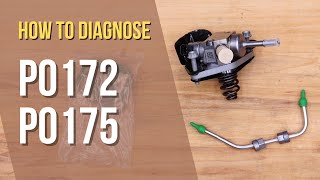
- Leaking High-Pressure Fuel Pump (HPFP) 🔴 High Probability → Shop Fuel Pump The direct-injection L83/L86 engines in this generation have a known, widespread issue with the HPFP's internal seals failing, which leaks fuel directly into the crankcase. This is the most common cause for P0172 and P0175 on this platform.
How to confirm: Check the engine oil dipstick. A rising oil level and/or a strong smell of raw gasoline in the oil are definitive signs. A technician can also temporarily disconnect the 'dirty' side of the PCV system and plug the intake port; if fuel trims immediately improve towards 0, it confirms fuel vapors are entering the crankcase from a leaking HPFP.
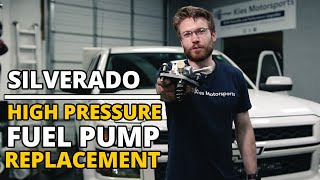
Typical fix: Replacement of the high-pressure fuel pump, its associated high-pressure fuel line (which is a one-time-use part), and intake manifold gaskets. 🎬 Watch: Step-by-step guide to replacing the high-pressure fuel pump. A complete oil and filter change is mandatory to remove the contaminated oil.
Est. part cost: $300-$600 - Dirty or Faulty Mass Airflow (MAF) Sensor 🟡 Medium Probability → Shop Fuel Injection Air Flow Meter The MAF sensor can get contaminated with dirt or oil, causing it to under-report airflow and leading the ECM to command a rich mixture. GM also issued TSB #PIP5446A for 'excessive casting flash' (excess plastic) in the air filter housing lid that can create air turbulence and disrupt MAF sensor readings, causing rich or lean codes.
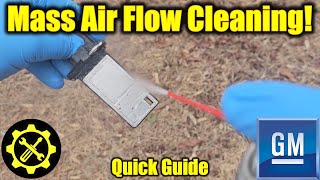
How to confirm: Visually inspect the MAF sensor's hot wires for contamination. Clean it with a dedicated MAF sensor cleaner spray. 🎬 See how to properly clean your MAF sensor. Inspect the air filter housing lid near the sensor for any plastic flashing as shown in TSB PIP5446A.
Typical fix: Clean the sensor with MAF sensor cleaner. If cleaning doesn't work, replace the sensor. If casting flash is found, replace the air filter housing lid.
Est. part cost: $10-$20 for cleaner, $80-$150 for a new sensor. - Incorrect Fuel Alcohol Content Reading 🟡 Medium Probability If the vehicle is Flex Fuel (E85) capable, the ECM estimates the ethanol percentage in the fuel without a physical sensor. This 'virtual sensor' can become skewed, causing the ECM to think there is high-ethanol fuel in the tank (e.g., E85) and command a richer mixture appropriate for that fuel. TSB #PIP4792D addresses this exact issue.
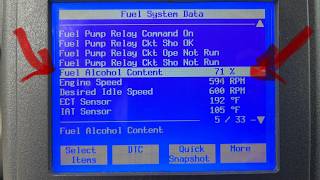
How to confirm: Use a scan tool to view the 'Fuel Alcohol Content' parameter. If you are using standard gasoline (E10/E15), the reading should be low (under 15%). If it shows a high percentage (e.g., over 20-30%), the reading is incorrect. The TSB specifies that if the scan tool value is 17% or more different than the actual measured fuel, this procedure applies.
Typical fix: Use a capable scan tool to perform a 'Fuel Composition Reset' or 'Alcohol Content Reset' procedure. In some cases, the ECM may need to be reprogrammed with the latest calibration per the TSB.
Est. part cost: $0 (requires a specific scan tool) - Leaking Fuel Injector(s) ⚪ Low Probability → Shop Fuel Injector
How to confirm: Perform a fuel pressure leak-down test. With a gauge connected, turn the key on and then off. The pressure should hold steady. If it drops quickly, it may indicate a leaking injector. Pulling the spark plugs on Bank 2 may also reveal one that is black and sooty, indicating the leaking cylinder.
Typical fix: Replace the faulty fuel injector(s) on Bank 2. It is often recommended to replace all injectors on that bank at the same time.
Est. part cost: $50-$150 per injector
Rare But Worth Checking
- Stuck Open EVAP Purge Valve: → Shop Vapor Canister A purge valve stuck open can pull unmetered fuel vapors from the charcoal canister into the intake at idle, creating a rich condition. This would typically cause codes for both banks (P0172 and P0175). A diagnostic video shows how to isolate the EVAP system to test this. 🎬 Watch: How to troubleshoot rich codes and test the purge valve.
- Faulty Upstream Oxygen Sensor (Bank 2, Sensor 1): → Shop Oxygen Sensor While possible, the O2 sensor is often just accurately reporting the rich condition caused by another component. It's more common for other parts to fail than the sensor itself. Misdiagnosing this is common.
Diagnosis Steps
- Use an OBD-II scanner to confirm P0175 and check for other codes, especially P0172. Note the long-term fuel trim values, which will be highly negative (e.g., -25% or more).
- Perform a sensory check: Smell the engine oil on the dipstick for a strong gasoline odor. A rising oil level is a definitive sign of HPFP failure.
- If the vehicle is Flex Fuel capable, use a scan tool to check the 'Fuel Alcohol Content' percentage. If it's incorrectly high, perform a fuel composition reset.
- Inspect the air intake system. Check for a dirty air filter. Carefully remove and inspect the MAF sensor for contamination. Clean it with dedicated MAF cleaner spray.
- Inspect the air filter housing lid near the MAF sensor for any plastic casting flash as described in TSB PIP5446A.
- To isolate the HPFP, disconnect the PCV hose from the intake manifold and plug the port. If fuel trims quickly return to normal, the HPFP is leaking fuel into the crankcase.
- If the above steps do not resolve the issue, test for a leaking fuel injector using a fuel pressure gauge or by checking for sooty spark plugs.
- Test the EVAP purge solenoid to ensure it is not stuck open.
Parts You'll Likely Need
- High-Pressure Fuel Pump
(OEM #12679090 (superseded by 12697949, 12710481, or 12711668; verify by VIN))— This is the most common major failure causing P0175 on this platform due to internal seals leaking fuel into the crankcase.
Trusted brands: ACDelco, Bosch
OEM price range: $400-$600
Aftermarket price range: $250-$450 - High-Pressure Fuel Line
(OEM #12679089 (Verify by VIN))— This is a one-time-use, torque-to-yield part that connects the HPFP to the fuel rail and must be replaced any time it is disconnected to ensure a safe seal.
Trusted brands: ACDelco
OEM price range: $30-$50
Aftermarket price range: $20-$40 - Mass Airflow (MAF) Sensor
(OEM #12671610 (ACDelco 23262343; Verify by VIN))— A dirty or faulty MAF sensor is a frequent cause of incorrect fuel mixture calculations. Cleaning is often sufficient, but replacement may be necessary.
Trusted brands: ACDelco, Delphi, Denso
OEM price range: $100-$150
Aftermarket price range: $60-$100 - MAF Sensor Cleaner — This is the first and cheapest step for addressing a potential MAF sensor issue.
Trusted brands: CRC, WD-40
Aftermarket price range: $10-$20
Related Codes That Often Appear With This One
- P0172 — System Too Rich (Bank 1). This code often appears with P0175 if the cause is system-wide, such as a failing high-pressure fuel pump, a faulty MAF sensor, or an incorrect fuel alcohol reading.
- P0101 — Mass Air Flow (MAF) Circuit Range/Performance. This can appear alongside P0175 if the cause is related to the MAF sensor, particularly the casting flash issue described in TSB #PIP5446A.
- P0300-P0308 — Misfire codes. A severely rich condition from a leaking injector or fuel-fouled oil can foul the spark plugs, causing a misfire.
Technical Service Bulletins (TSBs) & Recalls
- TSB PIP5446A: Harsh Shift, Sputter, Rough Idle, and various Fuel Trim Codes: Addresses an issue on 2014-2018 GM trucks/SUVs where excessive plastic 'casting flash' in the air filter housing lid creates turbulence for the MAF sensor. This can cause P0101, P0171, P0172, P0174, and P0175. The fix is to inspect and replace the air filter housing lid if the defect is present.
- TSB PIP4792D: Cold Extended Crank, Rough Running, and Rich Codes P0172/P0175: For Flex Fuel vehicles, this TSB describes how the ECM can incorrectly learn a high fuel alcohol content, causing a rich condition. The fix is to compare the scan tool reading to a physical fuel sample; if the difference is >17%, a fuel composition reset and possible ECM reprogram are required.
- TSB Bulletin #PIP5446: Notes that technicians may find P0101, P0171, P0172, P0174, and/or P0175 along with a sputter when applying throttle between 0 and 30% or a rough idle. The bulletin advises inspecting for cast flashing near the Mass Air Flow sensor.
- TSB Bulletin #PIP4792D: Reports that a cold start, black exhaust color, and/or a Service Engine Soon Malfunction Indicator Lamp may be present with codes P0172 and/or P0175. Technicians are instructed to check the Fuel Alcohol Content parameter in the scan tool's Fuel Trim Data List.
Platform-Specific Known Issues
- Failure of the high-pressure fuel pump (HPFP) is a widely documented problem on the 2015+ GM trucks and SUVs with direct injection, leading to fuel-in-oil contamination and rich codes P0172/P0175.
- An incorrect fuel alcohol content reading is a common software-related issue on Flex Fuel models that can cause this code.
Mechanic-Grade Diagnostic Values
- Mass Airflow (MAF) Sensor Reading at Idle — expected: 4-7 grams/second (g/s) for a 5.3L V8 at normal operating temperature.. Failure: Significantly higher readings (e.g., over 8-10 g/s) at idle can indicate a faulty sensor causing a rich condition. Significantly lower readings could indicate a vacuum leak.
- Low-Side Fuel Pressure (In-tank pump) — expected: 48-62 PSI (Key On, Engine Off).. Failure: Pressure outside this range indicates a problem with the in-tank fuel pump or its control module, though this is less likely to cause a rich condition than a high-side issue.
- High-Side Fuel Pressure (HPFP) — expected: Approximately 350-750 PSI at idle, increasing to 2,000-2,900 PSI under load.. Failure: While hard to measure without a specific scan tool, if the desired pressure and actual pressure deviate significantly, it points to an HPFP or sensor issue. However, the primary failure mode (leaking into crankcase) won't show up as a pressure reading problem.
- Long-Term Fuel Trim (LTFT) - Bank 2 — expected: Within +/- 5% at idle and steady cruise.. Failure: A reading of -20% to -30% or more negative indicates the ECM is pulling a large amount of fuel to compensate for a severe rich condition, which is a key symptom of this code.
Scan Tool Commands That Help
- GDS2 (GM Dealer/Professional): Fuel Composition Reset — Use this after refueling with standard gasoline if the 'Fuel Alcohol Content' PID shows an erroneously high percentage. This is a primary step for Flex Fuel vehicles before assuming a mechanical fault.
- GDS2 or equivalent high-end scanner: Fuel Trim Reset — After performing a repair (like replacing an HPFP or cleaning a MAF sensor), resetting fuel trims forces the ECM to relearn the fuel strategy immediately, rather than waiting for the old learned values to slowly adjust.
- GDS2 or equivalent high-end scanner: Cylinder Power Balance Test — This test can help determine if a single cylinder is contributing less than others, which could point to a leaking or clogged injector on Bank 2 if the rich condition is isolated to one cylinder.
- GDS2 or equivalent high-end scanner: PCV 'Dirty Side' Isolation Test — As described in GM diagnostic aids, disconnect the PCV hose from the intake, plug the intake port, and monitor fuel trims. If LTFTs quickly move from highly negative (e.g., -25%) toward 0%, it confirms fuel vapors are entering the intake from the crankcase, strongly indicating a leaking HPFP.
Wiring & Ground Locations
- G103 — On the front of the passenger side cylinder head.. This is a primary engine ground. A poor connection here can affect various sensors, including those used by the ECM for fuel calculations. While not a common cause for this specific code, checking major grounds is a fundamental step if electronic issues are suspected.
- G104 — On the rear of the passenger side cylinder head, near the firewall.. This ground point is shared by numerous components, including the Vehicle Control Module (VCM) and fuel pump relay trigger side in some GMT400 applications, and similar logic applies to newer trucks. A loose or corroded G104 can cause erratic behavior in the fuel and ignition systems.
- ECM Connector X2 — At the Engine Control Module (ECM).. The MAF sensor, O2 sensors, and fuel pump control module all send signals to the ECM through its connectors. Checking for corrosion or backed-out pins at the ECM connector is a valid step if multiple sensor-related codes are present or if direct sensor testing is inconclusive.
Real Owner Repair Stories
- YouTube Channel 'The Sundae Drive' (2014 Chevrolet Silverado 5.3L L83) — Check Engine Light with codes P0172 and P0175. Strong smell of fuel on the oil dipstick.
❌ Tried (didn't work) The diagnosis was direct. The owner identified the fuel smell in the oil, and a dealer confirmed the issue by monitoring fuel trims.
✅ What actually fixed it Replacement of the high-pressure fuel pump (HPFP) and the high-pressure fuel line, followed by a complete oil and filter change. The codes cleared after the repair. - YouTube Channel 'House Doctor Ray' (GM Truck/SUV with 5.3L/6.2L engine) — P0172 and P0175 codes, very high negative long-term fuel trims at idle (-25% or more).
❌ Tried (didn't work) Isolating the EVAP system (no change in fuel trims)., Performing a fuel pressure leak-down test (pressure held steady, ruling out leaking injectors).
✅ What actually fixed it The diagnostic process confirmed the fix. By disconnecting the PCV hose from the intake and capping the port, the fuel trims immediately started correcting towards zero. This proved that excess fuel vapors were entering the intake from the crankcase, confirming the high-pressure fuel pump was leaking internally and needed replacement.
"I Checked Everything" — The Actual Cause
- A common scenario for P0172/P0175 on these direct-injected engines is that a smoke test for vacuum leaks will come back clean. This is because the issue is not unmetered air entering the system, but un-commanded fuel. The fuel leaks from the HPFP into the crankcase, vaporizes, and is then drawn into the intake manifold via the PCV system. This adds fuel *after* the MAF sensor has measured the air, causing the exact rich condition the code describes. A smoke test will never find this type of fault.
OEM Part Supersession History
12679090, 12697949, 12710481→12711668— GM periodically updates parts to improve reliability. For the HPFP, these revisions are intended to address the internal seal failure that causes fuel-in-oil contamination. The latest part number is generally considered the most robust version.
Heads up: The LT4 high-pressure fuel pump (e.g., 12711668) is a popular upgrade for L83/L86 engines, providing higher flow for performance applications, but requires specific ECU tuning to function correctly. For a stock repair, use the direct replacement part number specified for the vehicle's VIN.
Model Year Variations Within This Range
- 2015-2019: The L83 engine was used through the 2019 model year in some applications before being fully replaced by the L82 and L84 engines. While the fundamental design and HPFP issue remain the same, later model years (2018+) may have received updated pump designs from the factory, though failures can still occur. Always verify part numbers by VIN.
Diagnostic Flowchart
Other Known Issues on This Vehicle
Issues unrelated to this code that are worth knowing about as an owner of this generation:
- Active Fuel Management (AFM) Lifter Failure 🔴 High — Widespread issue, can occur at various mileages, sometimes as low as 35,000 miles. Particularly noted in 2015-2017 models. The issue has led to class-action lawsuits. (Ref: TSB 15-06-01-002H, TSB 21-NA-199)
- 8L90 Transmission Torque Converter Shudder 🟠 Medium — Very common problem on 2015-2019 models, typically felt as a vibration or 'rumble strip' feeling between 25-60 mph under light throttle. It is caused by moisture-contaminated transmission fluid. (Ref: TSB 18-NA-355)
- A/C Condenser Failure 🟠 Medium — Commonly reported on 2015-2017 models, leading to the A/C blowing warm air. The condenser is prone to leaks or fractures.
- Cracked Radiator / Coolant Leak 🟠 Medium — Some owners report stress fractures in the radiator, leading to coolant leaks and potential overheating. This is attributed to thermostat cycling. (Ref: TSB PI1513F)
- Vacuum Pump Failure (Braking Assist) 🔴 High — The belt-driven vacuum pump, which provides power assist for the brakes, can fail internally, leading to a hard brake pedal and reduced braking performance. A recall (18V586000) was issued for a related power steering issue that can occur simultaneously. (Ref: Recall 18V586000)
- Leaking Magnetic Ride Control (Magneride) Shocks 🟠 Medium — On Denali models, the magnetic ride control shock absorbers are known to leak fluid, causing a rough ride and bottoming out. This can occur around 60,000-70,000 miles.
Used vs. New Parts: Buying Guide for This Vehicle
When a used part is the smart pick: For this specific repair, using a used part is strongly discouraged for the high-pressure fuel pump (HPFP). Given that the failure is a known, widespread defect related to internal seal wear, a used pump from a junkyard carries a very high risk of having the same problem or failing shortly after installation. Used parts are only viable for external components like the air filter housing lid if the 'casting flash' issue is the cause.
Donor-vehicle mileage cap: roughly under 30000 miles for the part to have meaningful remaining life.
What to inspect on the donor part:
- If forced to consider a used HPFP, source it from the lowest-mileage, latest-model-year donor possible (e.g., a 2018 over a 2015).
- There is no reliable way to visually inspect a used HPFP for the internal seal leak.
OEM-only on this vehicle (don't cheap out):
- High-Pressure Fuel Pump (HPFP): Due to the critical nature of the part and the high failure rate of early designs, using a new OEM (ACDelco) part with the latest part number is the safest choice to ensure a lasting repair.
- High-Pressure Fuel Line: This is a one-time-use part and must be purchased new (OEM is recommended) to prevent dangerous high-pressure fuel leaks.
Aftermarket brands forum-validated for this vehicle:
- Bosch: Bosch is often the original equipment manufacturer for many GM fuel system components. A Bosch-branded HPFP is generally considered a high-quality equivalent to the ACDelco part.
Brands owners have reported issues with on this vehicle:
- Unnamed/white-box brands from online marketplaces. Forum discussions and mechanic reports frequently warn against using cheap, no-name HPFPs for direct injection systems, as they have a very high rate of premature failure and can lead to catastrophic engine damage.
Real Owner Stories
Aggregated from forums and TSBs cited above. Mileages and costs reflect what owners reported in those sources.
2016 GMC Yukon (L83 5.3L)
Symptoms: Fuel in the crankcase and P0172/P0175 codes; owner continued to have issues even after replacing the HPFP.
What fixed it: Suspected leaking fuel injector after HPFP replacement did not fully resolve the rich condition.
Source hint: https://www.gm-trucks.com/forums/topic/259698-fuel-in-crankcase-l83-tahoe/
2015 GMC Sierra 1500 (L83 5.3L)
Symptoms: Failed HPFP causing P0172/P0175 and fuel contamination in the engine oil.
What fixed it: Replacement of the high-pressure fuel pump (HPFP).
Source hint: https://www.gm-trucks.com/forums/topic/221371-guide-how-to-fix-high-pressure-fuel-pump-failure-codes-p0172-p0175/
2015 Chevrolet Suburban (L83 5.3L)
Symptoms: Rich codes P0172 and P0175.
What fixed it: Diagnosis identified the high-pressure fuel pump (HPFP) as the most likely cause due to internal seal failure.
Source hint: https://www.tahoeyukonforum.com/threads/2015-suburban-p0172-p0175.140889/
Related OBD-II Codes
Frequently Asked Questions
My 2015 Yukon has a rough idle and smells like gas; could TSB PIP5446A be the cause?
I'm seeing P0175 on my Flex Fuel Yukon but I only use regular gas. Does TSB PIP4792D apply?
How can I tell if my High-Pressure Fuel Pump (HPFP) is the reason for the P0175 code?
Why is my Yukon shifting hard between 1st, 2nd, and 3rd gears along with the Check Engine Light?
What parts are required to fix a leaking HPFP on the L83 5.3L engine?
Is there a way to reset the alcohol percentage without replacing parts?
Helpful Videos
Used OEM Parts in Stock
New Aftermarket Parts Available


The information in this article is provided for general reference and educational purposes only. Vehicle specifications, procedures, and part compatibility can vary by production date, trim level, and region. Always consult your vehicle's factory service manual and verify part numbers before purchasing or performing repairs. Safety-critical components such as airbags, seat belts, and braking systems should be installed by a qualified professional.
- GMC Yukon:
- 🧭 Diagnostic Flowchart
- 🎬 Helpful Videos
- 🛍️ Shop This Part
- What's Unique About the 2015-2018 GMC Yukon
- Symptoms You May Notice
- Most Likely Causes
- Rare But Worth Checking
- Diagnosis Steps
- Parts You'll Likely Need
- Related Codes That Often Appear With This One
- Technical Service Bulletins (TSBs) & Recalls
- Platform-Specific Known Issues
- Mechanic-Grade Diagnostic Values
- Scan Tool Commands That Help
- Wiring & Ground Locations
- Real Owner Repair Stories
- "I Checked Everything" — The Actual Cause
- OEM Part Supersession History
- Model Year Variations Within This Range
- Other Known Issues on This Vehicle
- Used vs. New Parts: Buying Guide for This Vehicle
- Real Owner Stories
- 2016 GMC Yukon (L83 5.3L)
- 2015 GMC Sierra 1500 (L83 5.3L)
- 2015 Chevrolet Suburban (L83 5.3L)
- Related OBD-II Codes
- Frequently Asked Questions
- 🎟️ Get 5% Off