

P0175 on 2009-2016 GMC Yukon XL: Causes for System Too Rich (Bank 2) and Fixes
For a 2009-2016 GMC Yukon XL, code P0175 is most often caused by a skewed fuel composition sensor on Flex Fuel models, leading to a false high ethanol reading (e.g., 40-60%). A simple 'Fuel Composition Reset' with a scan tool often provides an immediate fix. Another key cause, especially on 2015+ models, is casting flash obstructing the MAF sensor, as noted in TSB #PIP5446A. If both banks are rich (P0172 & P0175), these two causes are the primary suspects.
- For Flex Fuel models, the first and most important check is the 'Fuel Alcohol Content' reading on a scan tool; a reset often solves the problem.
- Inspect the air intake tube for plastic obstructions near the MAF sensor, especially on 2015 models, as noted in a GM Technical Service Bulletin.
- If the above checks are normal, proceed with standard rich-condition diagnostics: cleaning the MAF sensor, checking for leaking fuel injectors, and testing the upstream O2 sensor on Bank 2.
- The code P0175 is often accompanied by P0172 (Bank 1 Rich), which points to a problem affecting the entire engine, not just one side.
What's Unique About the 2009-2016 Gmc YUKON XL
On this generation of GMC Yukon XL, two specific issues are well-documented causes for rich conditions. For Flex Fuel models (often with the 5.3L engine), the fuel composition sensor can incorrectly report high levels of ethanol in the gasoline, causing the ECM to inject too much fuel. This is detailed in TSB #PIP4792D. Additionally, TSB #PIP5446A points to a manufacturing defect on some 2015-2018 models where plastic casting flash inside the air filter housing can disrupt airflow across the Mass Air Flow (MAF) sensor, leading to incorrect fuel calculations and rich or lean codes.
Diagnostic Flowchart
Tap your situation to follow the diagnostic path that matches what you're seeing on this vehicle.
Generation note: This range covers the end of the third generation (GMT900, 2009-2014) and the start of the fourth generation (K2XX, 2015-2016). The fuel composition sensor issue is extremely common on GMT900 Flex Fuel models. The TSB regarding MAF sensor flashing (#PIP5446A) specifically applies to 2015-2018 K2XX models. The 2015+ models also introduced direct injection, which adds the high-pressure fuel pump as a potential failure point for rich conditions.
Symptoms You May Notice
- Check Engine Light is on
- Poor fuel economy
- Rough or surging idle, especially on cold starts
- Hesitation or lack of power during acceleration
- Black smoke from the exhaust
- Strong smell of fuel from the exhaust
- Engine may "diesel" or run on for a few seconds after turning the key off
- Harsh transmission shifting (as the ECM uses incorrect torque values)
- Replacing oxygen sensors immediately without checking fuel composition data on Flex Fuel models, which is the most common cause.
- Replacing the MAF sensor on a 2015+ model without first inspecting the air intake tube for the casting flash mentioned in TSB #PIP5446A.
- Condemning fuel injectors when the actual problem is a skewed fuel alcohol reading or a faulty MAF sensor affecting both banks.
Most Likely Causes
- Incorrect Fuel Alcohol Content Reading (Flex Fuel Models) 🔴 High Probability As documented in TSB #PIP4792D, the system that determines the ethanol percentage in the fuel can become skewed, especially after short trips, refueling with the engine running, or using fuel additives. The ECM falsely believes the tank contains a high ethanol blend (like E85) and commands a richer fuel mixture, causing P0172 and P0175 with regular gasoline.
How to confirm: Use a scan tool to view the 'Fuel Alcohol Content' or 'Fuel Composition' parameter. If you are using regular gasoline (E10/E15), the reading should be 15% or less. If the scan tool shows a significantly higher value (e.g., 30%, 57%, 67%), this is the confirmed cause.
Typical fix: Perform a 'Fuel Composition Reset' using a capable bidirectional scan tool (many consumer-grade tools now have this function). It is also critical to perform a 'Fuel Trim Reset' at the same time. If the problem repeatedly returns, the ECM may need a software update from a dealer per the TSB, or the fuel composition sensor itself may be failing.
Est. part cost: $0 (for reset) - $150 (for sensor) - Mass Air Flow (MAF) Sensor Obstruction or Failure 🔴 High Probability → Shop Fuel Injection Air Flow Meter TSB #PIP5446A specifically identifies excess plastic 'cast flashing' in the air filter housing near the MAF sensor on 2015-2018 models, which disrupts airflow readings. More generally, these sensors can become dirty (especially with oiled air filters) or fail, providing inaccurate airflow data to the ECM.
How to confirm: Visually inspect the inside of the air filter housing/lid for any plastic obstructions near where the MAF sensor mounts. Remove the sensor and inspect its wires for dirt or contamination. A scan tool showing unusually high airflow at idle (e.g., over 6-7 g/s) can also be an indicator.
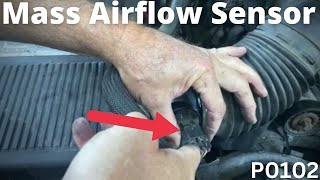
Typical fix: Carefully remove any plastic flashing with a blade or file. If found, the TSB recommends replacing the air filter housing lid. Clean the sensor wires with dedicated MAF sensor cleaner. If cleaning doesn't resolve the issue, replace the MAF sensor with a quality OEM or equivalent part. 🎬 See this guide on cleaning or replacing your MAF sensor.
Est. part cost: $10 (cleaner) - $100 (sensor) - Leaking Fuel Injector(s) 🟡 Medium Probability → Shop Fuel Injector Injectors can wear out and leak fuel into a cylinder when closed. On 2015+ K2XX models with direct injection, a failing high-pressure fuel pump (HPFP) can leak fuel internally into the crankcase, contaminating the oil and causing a system-wide rich condition that sets both P0172 and P0175.
How to confirm: Perform a fuel pressure leak-down test; after shutting the engine off, the pressure on the fuel rail should hold steady. A rapid drop indicates a leak. You can also pull the spark plugs on Bank 2 and check for one that is black and sooty. For a suspected HPFP failure, check the engine oil for a strong gasoline smell.
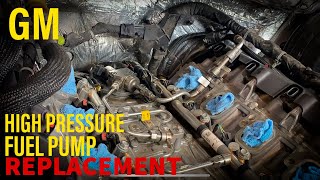
Typical fix: Replace the identified leaking fuel injector. It's often recommended to replace all injectors on that bank. If the HPFP is leaking into the crankcase, it must be replaced and an oil change must be performed. 🎬 Watch: Complete walkthrough for replacing the high-pressure fuel pump.
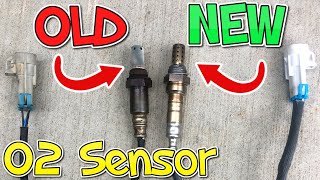
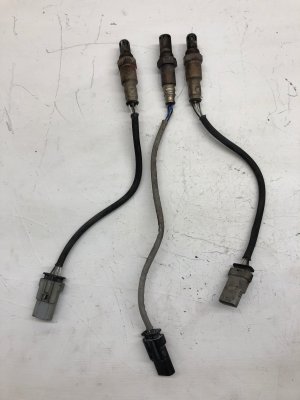
Est. part cost: $50-$150 per injector, $300-$500 for HPFP - Faulty Upstream Oxygen (O2) Sensor 🟡 Medium Probability → Shop Oxygen Sensor The O2 sensor is the primary input for fuel trim. A lazy, contaminated, or failing sensor can send a false 'lean' signal to the ECM, which then incorrectly adds more fuel, creating a rich condition.
How to confirm: Use a scan tool to graph the voltage of the Bank 2, Sensor 1 O2 sensor. It should switch rapidly between approximately 0.1V and 0.9V. If it is stuck low, switching very slowly, or has a biased reading, it is likely faulty.
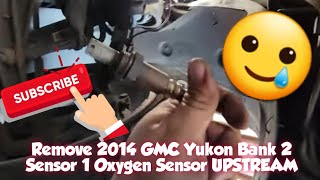
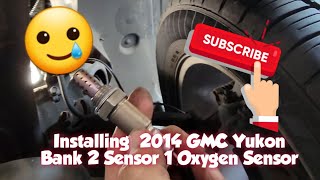
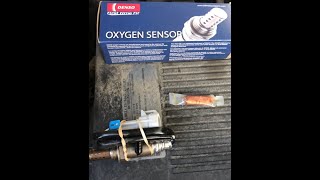
Typical fix: Replace the Bank 2, Sensor 1 (upstream) oxygen sensor. Bank 2 is the driver's side on a GMC V8.
Est. part cost: $50-$120
Rare But Worth Checking
- Leaking EVAP Purge Valve / Saturated Canister: → Shop Vapor Canister An EVAP purge valve stuck open can allow unmetered fuel vapors from the gas tank to be drawn into the engine at idle, creating a rich condition. In some cases, the charcoal canister itself can become saturated with fuel and continuously release vapors, causing persistent P0172/P0175 codes even with a functioning purge valve.
- High Fuel Pressure: A failing fuel pressure regulator (on GMT900 models) or a faulty fuel pump driver module can cause excessive pressure in the fuel rail, forcing too much fuel through the injectors. This should be checked if fuel trims are rich on both banks and other causes are ruled out.
Diagnosis Steps
- Read all fault codes with an OBD-II scanner. Note if P0172 is also present, as this strongly suggests a common cause for both banks.
- Using the scanner's live data, check the 'Fuel Alcohol Content' parameter (for Flex Fuel vehicles). If it reads above 15% (e.g., 30-70%) with regular gas in the tank, perform a 'Fuel Composition Reset' and a 'Fuel Trim Reset'.
- Drive the vehicle for at least 7 miles to see if trims normalize and codes stay off.
- If the alcohol content is normal, inspect the air intake tube and air filter housing lid for obstructions or plastic 'casting flash' near the MAF sensor, per TSB #PIP5446A (especially on 2015+ models).
- Monitor the live data for Short-Term (STFT) and Long-Term (LTFT) Fuel Trims. P0175 will show LTFT on Bank 2 at a large negative number, often pegged at -19.5% or lower.
- Graph the Bank 2, Sensor 1 (upstream) O2 sensor voltage. Ensure it is switching correctly (approx. 0.1V to 0.9V) and not stuck or slow.
- Check fuel pressure to ensure it is within OEM specifications. Perform a leak-down test by turning the engine off and watching for a pressure drop, which would indicate a leaking injector.
- On 2015+ models, if oil smells strongly of gasoline, suspect a leaking high-pressure fuel pump (HPFP).
- Isolate the EVAP system by disconnecting and capping the purge line to the intake manifold to see if fuel trims improve.
Parts You'll Likely Need
- Fuel Composition Sensor (Flex Fuel Sensor)
(OEM #13577394 (supersedes 13507129))— This sensor can fail or provide skewed readings on Flex Fuel models, directly causing rich conditions as noted in TSB #PIP4792D. However, a reset is usually the first and only step needed. Replacement is only for recurring issues.
Trusted brands: ACDelco
OEM price range: $120-$160
Aftermarket price range: $70-$100 - Mass Air Flow (MAF) Sensor
(OEM #12670356 (ACDelco 23262343))— A dirty or faulty MAF sensor is a common cause of incorrect fuel mixture calculations. TSB #PIP5446A also points to issues related to this sensor's readings on 2015+ models.
Trusted brands: ACDelco, Delphi
OEM price range: $80-$120
Aftermarket price range: $45-$75 - Upstream Oxygen Sensor (Bank 2, Sensor 1)
Related Codes That Often Appear With This One
- P0172 — System Too Rich (Bank 1). This code almost always appears with P0175 when the cause is a system-wide issue affecting both engine banks, such as a faulty MAF sensor, incorrect fuel alcohol content, or high fuel pressure.
- P0101 — Mass Air Flow (MAF) Circuit Range/Performance. This code is specifically mentioned in TSB #PIP5446A as potentially appearing alongside P0175 when the casting flash issue is present on 2015+ models.
Technical Service Bulletins (TSBs) & Recalls
- PIP4792D: Addresses incorrect fuel alcohol content readings causing rich codes P0172/P0175 on Flex Fuel models.
- PIP5446A: Addresses casting flash in the air filter housing causing MAF sensor issues and multiple codes including P0175 on 2015-2018 models.
Platform-Specific Known Issues
- TSB #PIP4792D: Notes that on cold starts, vehicles may exhibit a Service Engine Soon light with codes P0172 and/or P0175 due to a skewed Fuel Alcohol Content parameter. A reset via a scan tool is the first step.
- TSB #PIP5446: For 2015 models, this bulletin warns of rough idle and rich codes (P0172, P0175) caused by plastic casting flash in the air intake tube near the MAF sensor, which disrupts airflow.
Mechanic-Grade Diagnostic Values
- Low-Side Fuel Pressure (2009-2014 GMT900, Key On Engine Off) — expected: 48-54 PSI for Flex Fuel (LC9) models; 55-62 PSI for non-Flex Fuel models.. Failure: Pressure below the specified range indicates a weak fuel pump or clogged filter. Pressure that drops quickly after the pump primes indicates a leak in the system (injector, check valve, etc.).
- High-Side Fuel Pressure (2015-2016 K2XX, at idle) — expected: Approximately 290-725 PSI (2-5 MPa). Pressure will increase significantly under load.. Failure: A leaking high-pressure fuel pump (HPFP) may not show a pressure fault, but will cause fuel to dilute the engine oil, resulting in a strong gasoline smell on the dipstick and system-wide rich codes (P0172 & P0175).
- Mass Air Flow (MAF) Sensor Reading — expected: At warm idle: 4-8 g/s for a 5.3L V8. At 2500 RPM: 15-25 g/s.. Failure: A reading significantly higher than expected at idle can trick the ECM into adding too much fuel, causing a rich condition. A reading that does not increase smoothly with RPM indicates a faulty sensor.
- Flex Fuel Sensor Frequency Output — expected: Normal operating frequency is between 50-150 Hz. The frequency corresponds to the ethanol percentage.. Failure: An output frequency between 180-190 Hz indicates fuel contamination, not necessarily a sensor failure. A skewed frequency (leading to an incorrect percentage on the scan tool) is the primary cause of P0172/P0175 on these models.
Scan Tool Commands That Help
- GDS2 / Tech2 or capable aftermarket scanner: Fuel Composition Reset — This is the primary fix when a Flex Fuel vehicle is showing a high alcohol percentage (e.g., >15%) on a scan tool when only standard gasoline is in the tank. This single step often resolves P0172 and P0175 codes immediately.
- GDS2 / Tech2 or capable aftermarket scanner: Fuel Trim Reset — This should be performed immediately after a 'Fuel Composition Reset' or after replacing any component that affects fuel mixture (MAF, O2 sensors, injectors). This clears the learned long-term fuel trim values, forcing the ECM to relearn based on the new sensor readings or correct alcohol content.
- GDS2 or capable aftermarket scanner: Isolate EVAP System / PCV System — To diagnose a persistent rich condition, a technician can command the EVAP purge valve closed. If fuel trims improve, the valve is leaking. Similarly, the PCV hose can be physically capped; if trims improve, it points towards crankcase fuel contamination, often from a leaking HPFP on DI models.
Wiring & Ground Locations
- G102 / G103 — G102 is located at the left rear of the engine and grounds the ignition coils. G103 is located on the cowl at the left rear of the engine compartment, above the brake booster.. G103 is a critical ground for the Body Control Module (BCM), Instrument Panel Cluster (IPC), and the Data Link Connector (DLC). While not a direct engine ground, poor grounding here can cause a host of communication and module errors that could indirectly affect sensor readings or diagnostics.
- Main Engine Ground — Part of the main negative battery cable harness, located at the left front of the engine block on many V8 models.. This is the primary ground for the engine block. A loose or corroded connection here can cause erratic behavior from any sensor that uses the block as its ground reference, including the O2 sensors and ECT sensor, potentially leading to incorrect fuel calculations.
Real Owner Repair Stories
- YouTube channel 'ThePracticalMechanic' (GM 5.3L Flex Fuel Truck (year not specified, but applicable to 2009-2014)) — Hard start, rough running, Check Engine Light with codes P0172 and P0175.
❌ Tried (didn't work) Initial diagnosis confirmed a rich condition with long-term fuel trims at -25%.
✅ What actually fixed it The scan tool showed a fuel alcohol content of 53%, but a physical test of the fuel showed <10%. The fix was to use a scan tool to perform a 'Fuel Composition Reset' and a 'Fuel Trim Reset'. After the reset, the alcohol content showed 3% and fuel trims returned to normal. - YouTube channel 'BL Automotive' (2007 Chevy Tahoe (GMT900 platform, similar to Yukon)) — No codes present at the time, but long-term fuel trims were very negative (-11% and -12%), indicating an impending rich code.
❌ Tried (didn't work) The vehicle was running rich but had not yet hit the threshold to trigger the CEL.
✅ What actually fixed it The scan tool showed a fuel alcohol content of 26% despite using regular gas. A physical test confirmed low ethanol content. A 'Fuel Composition Reset' was performed with a scan tool, which changed the reading to 3% and corrected the fuel trims.
"I Checked Everything" — The Actual Cause
- A common scenario for P0172/P0175 on these trucks is that a smoke test will reveal no vacuum leaks. The root cause is not unmetered air (a leak), but rather the ECM commanding too much fuel. This is most often due to a skewed fuel alcohol reading on Flex Fuel models or, on 2015+ DI models, a high-pressure fuel pump leaking fuel into the crankcase, which then gets drawn into the intake via the PCV system. A smoke test will not identify either of these conditions.
OEM Part Supersession History
13507129→13577394— Standard revision and update by the manufacturer (ACDelco/GM).
Heads up: The newer part number 13577394 is the correct and current replacement for the older 13507129 Flex Fuel sensor and is considered a reliable part.
Model Year Variations Within This Range
- 2009-2014 (GMT900): These models use Gen IV V8 engines (e.g., 5.3L LC9) with port fuel injection. The most dominant cause for P0175 is a skewed fuel alcohol reading that requires a scan tool reset. Fuel pressure is regulated by a returnless low-pressure system with specs around 48-62 PSI.
- 2015-2016 (K2XX): These models use the newer Gen V V8 engines (e.g., 5.3L L83) with direct injection (DI). This introduces a high-pressure fuel pump (HPFP) and DI injectors as major potential causes for P0175. A leaking HPFP can fill the crankcase with fuel, causing rich codes. The MAF sensor obstruction noted in TSB #PIP5446A is also specific to this generation.
Helpful Videos

![How to Fix P0175 Engine Code in 2 Minutes [2 DIY Methods / Only $8.99]](https://img.youtube.com/vi/pxuKkkqqvSs/mqdefault.jpg)
We Have This Part in Stock

The information in this article is provided for general reference and educational purposes only. Vehicle specifications, procedures, and part compatibility can vary by production date, trim level, and region. Always consult your vehicle's factory service manual and verify part numbers before purchasing or performing repairs. Safety-critical components such as airbags, seat belts, and braking systems should be installed by a qualified professional.
- Gmc YUKON XL:
- 🧭 Diagnostic Flowchart
- 🎬 Helpful Videos
- 🛍️ Shop This Part
- What's Unique About the 2009-2016 Gmc YUKON XL
- Symptoms You May Notice
- Most Likely Causes
- Rare But Worth Checking
- Diagnosis Steps
- Parts You'll Likely Need
- Related Codes That Often Appear With This One
- Technical Service Bulletins (TSBs) & Recalls
- Platform-Specific Known Issues
- Mechanic-Grade Diagnostic Values
- Scan Tool Commands That Help
- Wiring & Ground Locations
- Real Owner Repair Stories
- "I Checked Everything" — The Actual Cause
- OEM Part Supersession History
- Model Year Variations Within This Range
- 🎟️ Get 5% Off