

P0175 on 2003-2008 Honda Pilot: Causes and Fixes for System Too Rich (Bank 2)
P0175 on a first-generation Honda Pilot most often points to a faulty Bank 2 Air/Fuel Ratio sensor, leaking/clogged fuel injectors, or tight valve clearances. Replacing the A/F sensor is a common first step and costs around $65-$150 for the part. However, if the code returns, a valve adjustment is a frequently cited final solution.
- P0175 means your Pilot's front cylinder bank is running too rich (too much fuel).
- The most likely cause is a failing Air/Fuel Ratio sensor on the front exhaust manifold (Bank 2, Sensor 1).
- The second most likely cause is one or more leaking fuel injectors on that same bank.
- Start your diagnosis by checking fuel trims with a scanner. Highly negative numbers on Bank 2 confirm the rich condition.
- Do not replace the downstream (post-catalytic converter) O2 sensor to fix this code; it will not solve the problem.
What's Unique About the 2003-2008 Honda Pilot
For the first-generation Honda Pilot with the J35A engine, rich conditions like P0175 are frequently traced back to either the upstream Air/Fuel ratio sensor or issues with the fuel injectors. However, a significant number of owner experiences indicate that tight exhaust valve clearances are a common underlying cause that is often misdiagnosed. Over time, the exhaust valves can recede into the cylinder head, eliminating the valve lash (gap). This prevents the valve from closing completely, allowing unburned fuel into the exhaust and tricking the A/F sensor into reading a rich condition. A service manual for a similar model explicitly suggests checking valve clearances and replacing injectors if fuel pressure is normal when this code appears.
Symptoms You May Notice
- Check Engine Light is on
- VTM-4 light may also illuminate
- Reduced fuel economy
- Smell of gasoline from the exhaust
- Engine hesitation or stumbling on acceleration
- Rough idle
- Black smoke from the exhaust in severe cases
- Replacing the downstream (Sensor 2) oxygen sensor. The downstream sensor's primary role is to monitor catalytic converter efficiency, not to control the primary fuel mixture. The upstream (Sensor 1) A/F sensor is the one that provides fuel trim feedback.
Most Likely Causes
- Faulty Bank 2 Air/Fuel Ratio Sensor (Sensor 1) 🔴 High Probability → Shop Oxygen Sensor A/F sensors have a finite lifespan and can fail by sending slow or incorrect signals. They can get 'lazy' or stuck, tricking the computer into thinking the engine is lean when it's not, causing it to add excess fuel until the trim limits are exceeded.
How to confirm: Use a scan tool to monitor the live data for the Bank 2, Sensor 1 voltage. A sensor stuck reading a low voltage (indicating lean) when the engine is actually rich is a sign of failure. You can also swap the Bank 1 and Bank 2 sensors (if they are identical and accessible) to see if the code follows to the other bank (P0172).
Typical fix: Replace the Bank 2, Sensor 1 Air/Fuel Ratio sensor. Bank 2 is the front bank, near the radiator. The sensor is located on the exhaust manifold before the catalytic converter. The OEM supplier is Denso. 🎬 Watch: How to replace an Air / Fuel Ratio Sensor
Est. part cost: $65-$150 - Leaking or Clogged Fuel Injectors 🟡 Medium Probability → Shop Fuel Injector Injectors can become clogged with deposits or develop internal leaks, causing them to drip fuel when they are supposed to be closed. While Honda issued warranty extensions for injector issues on later models (2016-2019 Pilots), this specific generation is not covered, but failures still occur due to age and fuel quality.
How to confirm: Perform a fuel pressure leak-down test. After pressurizing the fuel rail, turn the engine off and watch the pressure gauge. A steady drop in pressure indicates a leak, likely from one or more injectors. You can also remove the spark plugs on Bank 2 and inspect them; a plug that is black and sooty indicates a rich condition in that specific cylinder.
Typical fix: Replace the faulty fuel injector(s). It is highly recommended to replace all three injectors on Bank 2 as a set to ensure balanced performance and flow rates.
Est. part cost: $50-$150 per injector - Faulty Fuel Pressure Regulator ⚪ Low Probability → Shop Fuel Injection Pressure Regulator The regulator can fail and cause excessive fuel pressure, forcing too much fuel through the injectors.
How to confirm: Connect a fuel pressure gauge to the fuel rail's service port. Check if the pressure is above the manufacturer's specification (typically 47-54 psi for this model with the vacuum hose disconnected from the regulator).
Typical fix: Replace the fuel pressure regulator.
Est. part cost: $40-$100
Rare But Worth Checking
- Tight Valve Clearances: This is a well-documented issue on J-series engines. Over many miles, the exhaust valves can wear into the cylinder head, reducing the clearance (lash) to zero. This prevents the valve from fully closing, causing compression loss and allowing unburned fuel into the exhaust, which triggers a rich code. Many owners report this as the ultimate fix after replacing sensors. A valve adjustment is often recommended around 100k miles as preventative maintenance.
- Faulty Engine Coolant Temperature (ECT) Sensor: If the ECT sensor is stuck reading cold, the ECM will continuously run a rich fuel mixture, as it would during a cold start. This usually affects both banks (P0172 & P0175), but can sometimes trigger a code on one bank first.
- Leaking EVAP Purge Valve: → Shop Vapor Canister If the purge valve sticks open, it can allow unmetered fuel vapors from the charcoal canister to enter the intake manifold, creating a rich condition. This typically affects both banks but can manifest on one first.
Diagnosis Steps
- Use an OBD-II scanner to confirm the P0175 code and check for any other pending or active codes.
- Review the freeze frame data to understand the engine conditions (RPM, load, temperature) when the code was set.
- Inspect the engine bay for obvious issues like disconnected sensor wires, vacuum leaks, or a strong smell of raw fuel.
- Use the scanner to monitor live data. Pay close attention to the Short-Term Fuel Trim (STFT) and Long-Term Fuel Trim (LTFT) for Bank 2. For a P0175 code, you will see highly negative numbers (e.g., -15% or more) as the ECM tries to subtract fuel.
- Test the Bank 2, Sensor 1 (A/F Sensor). A healthy sensor should show fluctuating voltage. A stuck or lazy sensor is likely faulty. Consider swapping with Bank 1 sensor to see if the code moves to P0172.
- Test the fuel pressure using a fuel pressure gauge. The specification is typically 47-54 psi with the vacuum hose disconnected from the regulator. For 2006+ models, the spec is 57-64 psi.
- Perform a fuel injector leak-down test. If pressure drops after the engine is off, suspect leaking injectors.
- Remove and inspect the spark plugs on Bank 2 (front cylinders). Black, sooty plugs are a clear sign of a rich condition in those cylinders.
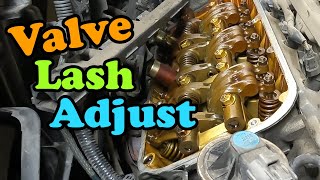
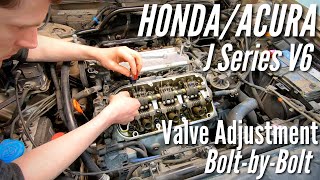
- If sensors and fuel system components test good, perform a valve clearance (lash) adjustment. 🎬 Watch: DIY Honda Pilot valve lash adjustment guide This is a known issue on the J35A engine and often the final solution.
Parts You'll Likely Need
- Air/Fuel Ratio Sensor (Bank 2, Sensor 1)
(OEM #36531-RCA-A02)— This is the primary sensor that measures the air-fuel mixture for Bank 2 and is a very common failure point leading to this code.
Trusted brands: Denso (OEM Supplier, Part #234-9040), NGK
OEM price range: $120-$180
Aftermarket price range: $65-$150 - Fuel Injector
(OEM #06164-P8E-A00)— Leaking or clogged injectors are another primary cause of a rich condition on a single bank.
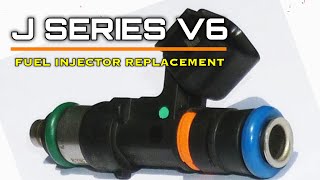
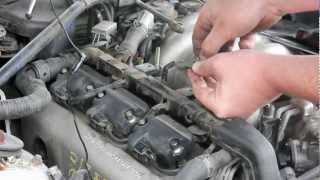
Trusted brands: Keihin (OEM), Bosch, Standard Motor Products (Part #FJ982) 🎬 See this walkthrough for replacing your fuel injectors
OEM price range: $100-$160
Aftermarket price range: $50-$90 - Valve Cover Gasket Set
(OEM #12050-P8E-A00 (Bank 2 Front))— Required if performing a valve adjustment, which is a common fix for this code on the J35A engine.
Trusted brands: Fel-Pro, Honda (OEM)
OEM price range: $30-$50
Aftermarket price range: $15-$30
Related Codes That Often Appear With This One
- P0172 — System Too Rich (Bank 1). If both P0172 and P0175 are present, it points to a problem affecting the entire engine, such as a faulty fuel pressure regulator, MAP sensor, or tight valve clearances on both banks, rather than a component specific to one bank.
- P0304, P0305, P0306 — Cylinder misfire codes for Bank 2. A very rich condition can foul the spark plugs and cause misfires on the affected bank.
Technical Service Bulletins (TSBs) & Recalls
- While no TSBs directly address P0175 on the 2003-2008 Pilot, Honda has issued TSBs 20-100 and 21-010 for later model V6 vehicles (e.g., 2016-2019 Pilot, Odyssey) which extend the warranty on fuel injectors for related issues. This demonstrates a history of injector problems in the J-series engine family.
Platform-Specific Known Issues
- A very common repair path reported by owners is replacing the Bank 2 A/F sensor, which may fix the problem temporarily. When the P0175 code returns, the root cause is often found to be tight valve clearances. Performing a valve adjustment frequently resolves the issue permanently.
Mechanic-Grade Diagnostic Values
- Fuel Pressure (2006+ models) — expected: 390 - 440 kPa (57 - 64 psi). Failure: Pressure significantly above this range indicates a faulty fuel pressure regulator or restricted return line.
- Valve Clearance (Lash) - Cold Engine — expected: Intake: 0.20-0.24 mm (0.008-0.009 in), Exhaust: 0.28-0.32 mm (0.011-0.013 in). Failure: Zero or near-zero clearance on exhaust valves is a common cause of P0175. Any measurement outside the specified range requires adjustment.
- Long Term Fuel Trim (LTFT) - Bank 2 — expected: Typically within +/- 5% at idle on a healthy engine.. Failure: Sustained negative values of -10% or more indicate the ECM is consistently removing fuel to correct a rich condition, triggering the code.
Hidden / Shadow Codes Worth Checking
- Mode $06 Data: While not a specific 'shadow code', Mode $06 provides raw data from the ECM's self-tests for various components before a full-blown DTC is set. A technician can analyze the test values and limits for Oxygen Sensor Monitors and Fuel System Monitors to see if a component is trending towards failure. (see via Requires an advanced OBD-II scan tool that supports Mode $06 functionality. The data is presented as Monitor IDs (OBDMID) and Test IDs (TID).)
Scan Tool Commands That Help
- Honda HDS or equivalent professional scanner: Idle Learn Procedure — This function must be performed after replacing or cleaning the throttle body, or after a valve adjustment, to allow the ECM to relearn the engine's idle characteristics. Failure to do so can cause erratic idle and incorrect fuel trim calculations.
- Advanced OBD-II Scanner: Clear/Reset Fuel Trims — After a repair (like replacing an A/F sensor or injector), clearing the learned fuel trim values forces the ECM to start fresh. This provides an immediate confirmation if the repair was successful by observing if the new fuel trims stay within a normal range.
Wiring & Ground Locations
- G101 — On the engine block, typically attached to the thermostat housing.. This is a primary engine ground. Corrosion or a loose connection at G101 can cause incorrect readings from multiple sensors, including the Engine Coolant Temperature (ECT) sensor and potentially the A/F sensors, leading to improper fueling and rich codes.
- Bank 2 A/F Sensor Harness — Runs from the A/F sensor on the front exhaust manifold (near the radiator) towards the main engine harness.. This harness is exposed to significant heat. Inspect for melted insulation, brittle wires, or damage at the connector, which can cause an incorrect signal to the ECM, mimicking a sensor failure.
Real Owner Repair Stories
- Honda-Tech forum user 'Honda_Enjineer' (Honda Pilot 4WD EX, 73,000 miles) — P0175 code returned after a previous EGR valve replacement. LTFT on Bank 2 was in excess of -10%.
❌ Tried (didn't work) Replacing the EGR valve (only worked temporarily), Replacing spark plugs
✅ What actually fixed it A valve clearance adjustment. The owner reported the exhaust valves had receded and had 'absolutely NO gap left.' After the adjustment, all fuel trim values returned to normal. - Honda-Tech forum user 'Honda_Enjineer' (different occasion) (2006 Honda Pilot EX 4WD, 71,000 miles) — P0175 code and VTM-4 light on. LTFT for Bank 2 was -11% to -15%.
✅ What actually fixed it Replacing the EGR valve. The user noted the old valve had significant carbon buildup. After replacement, LTFT values returned to a normal range of -1% to -2.5%.
"I Checked Everything" — The Actual Cause
- While a smoke test is for vacuum leaks (lean codes), the equivalent pattern for a rich code is 'fuel system tests good, but the code persists'. In this scenario, the most common culprit for the J35A engine is tight valve clearances. Fuel pressure may be in spec, injectors may not be leaking, and the A/F sensor may respond correctly, but the mechanical state of the valves allows unburned fuel into the exhaust, creating a rich condition that electronic tests cannot pinpoint.
When the Usual Fixes Don't Work
- While replacing the Bank 2 A/F sensor is the most common first step, multiple owner accounts show this is often not the final fix. A recurring P0175 code on a J35A engine with over 70,000 miles strongly points towards a mechanical issue, specifically tight exhaust valve clearances, which requires a valve adjustment rather than further parts replacement in the fuel or sensor systems.
OEM Part Supersession History
36531-RCA-A01→36531-RCA-A02— Standard part revision by the manufacturer for improvements or supplier changes.
Heads up: The parts are interchangeable; 36531-RCA-A02 is the correct current replacement for the original.
Model Year Variations Within This Range
- 2005: The engine was updated to the J35A6, which featured a drive-by-wire throttle system and a power increase to 255 hp. The fuel tank was also enlarged.
- 2006-2008: A major refresh occurred. 4WD models used the J35A9 engine (244 hp). For the first time, a 2WD model was offered, which used the J35Z1 engine equipped with Variable Cylinder Management (VCM). VCM systems can introduce their own unique issues (e.g., oil consumption, spark plug fouling) that could potentially contribute to or be mistaken for fuel system problems.
Diagnostic Flowchart
Real Owner Stories
Aggregated from forums and TSBs cited above. Mileages and costs reflect what owners reported in those sources.
2006 Honda Pilot EX 4wd — 71000 miles
Symptoms: MIL on with P0175 and VTM-4 light ON, especially on cold start.
What fixed it: Replaced the EGR valve. The old valve had quite a bit of carbon buildup in it.
Source hint: honda-tech.com - '2006 Honda Pilot EX 4wd - VTM-4 ON and P0175 - HELP!'
2003-2008 Honda Pilot (J35A V6) — 73000 miles
Symptoms: P0175 code returns after other fixes failed.
What fixed it: Performed a valve adjustment. Found that every single one of the exhaust valves on both banks had ZERO gap (receded). Adjusted and re-gapped the valves.
Source hint: Honda-Tech - 'P0175 returns.... ANY HOT TIPS'
2006 Honda Pilot — 132000 miles
Symptoms: P0175 and P0172 codes present.
What fixed it: Checked and adjusted valve lash, which is a known common fix for this code on J-series engines.
Source hint: BobIsTheOilGuy.com - 'P0175 and P0172 Codes: 06 Honda Pilot 132K Miles'
Related OBD-II Codes
Frequently Asked Questions
Does the fuel injector warranty extension from TSB 20-100 or 21-010 apply to my 2003-2008 Honda Pilot?
Why did my VTM-4 light come on at the same time as the P0175 code?
I replaced the Bank 2 Air/Fuel ratio sensor, but the P0175 code came back. What should I check next?
What should the fuel pressure be on my Pilot when diagnosing a P0175?
Which sensor is Bank 2 Sensor 1 on the J35A engine?
Can a bad EGR valve cause a P0175 on my Pilot?
Helpful Videos
We Have This Part in Stock


The information in this article is provided for general reference and educational purposes only. Vehicle specifications, procedures, and part compatibility can vary by production date, trim level, and region. Always consult your vehicle's factory service manual and verify part numbers before purchasing or performing repairs. Safety-critical components such as airbags, seat belts, and braking systems should be installed by a qualified professional.
- Honda Pilot:
- 🧭 Diagnostic Flowchart
- 🎬 Helpful Videos
- 🛍️ Shop This Part
- What's Unique About the 2003-2008 Honda Pilot
- Symptoms You May Notice
- Most Likely Causes
- Rare But Worth Checking
- Diagnosis Steps
- Parts You'll Likely Need
- Related Codes That Often Appear With This One
- Technical Service Bulletins (TSBs) & Recalls
- Platform-Specific Known Issues
- Mechanic-Grade Diagnostic Values
- Hidden / Shadow Codes Worth Checking
- Scan Tool Commands That Help
- Wiring & Ground Locations
- Real Owner Repair Stories
- "I Checked Everything" — The Actual Cause
- When the Usual Fixes Don't Work
- OEM Part Supersession History
- Model Year Variations Within This Range
- Real Owner Stories
- 2006 Honda Pilot EX 4wd — 71000 miles
- 2003-2008 Honda Pilot (J35A V6) — 73000 miles
- 2006 Honda Pilot — 132000 miles
- Related OBD-II Codes
- Frequently Asked Questions
- 🎟️ Get 5% Off