

P0175 on 2007-2015 Mazda CX-9: Causes and Fixes for Rich Fuel Mixture (Bank 2)
On the 2008-2015 Mazda CX-9 with the 3.7L V6, code P0175 is frequently caused by a failed PCV valve that is integrated into the front (Bank 2) valve cover. This failure, often documented under Mazda TSB 01-007/16, allows oil to be ingested into the intake, fouling the Bank 2 oxygen sensor. Other common causes are a leaking fuel injector or a faulty upstream oxygen sensor. The required valve cover replacement can cost between $150 and $400 in parts.
- P0175 means your engine is running too rich on Bank 2, the cylinder bank near the radiator.
- On the 2008-2015 3.7L V6, the most likely cause is a failed PCV system inside the front valve cover, especially if you've noticed increased oil consumption. The fix is a new valve cover.
- Other common causes are a leaking fuel injector or a bad upstream O2 sensor on Bank 2.
- Do not immediately replace the O2 sensor; it is often just doing its job of reporting a problem caused by something else.
- Driving with this code for an extended period can damage your catalytic converter, leading to a much more expensive repair.
What's Unique About the 2007-2015 Mazda CX-9
While many issues can cause a rich condition, the 3.7L V6 engine used from 2008-2015 has a specific design weakness that often leads to this code. The Positive Crankcase Ventilation (PCV) valve is integrated into the front valve cover (which corresponds to Bank 2) and is not a separately serviceable part. When the internal PCV valve diaphragm ruptures, it allows engine oil to be sucked into the intake manifold, which then fouls the Bank 2 oxygen sensor, causing it to send a false rich signal to the computer. This is a very common failure pattern for this specific engine, as noted in Mazda TSB 01-007/16.
Symptoms You May Notice
- Reduced fuel economy
- Rough or unstable idle
- Strong smell of gasoline from the exhaust
- Black smoke or soot from the tailpipe, especially at idle
- Sluggish acceleration or hesitation
- Check Engine Light is on 🎬 Watch: A quick overview of P0175 causes and fixes.
- Immediately replacing the oxygen sensor without checking for underlying causes. The O2 sensor is often correctly reporting a rich condition caused by another component, like a leaking injector or a failed PCV system. The new O2 sensor will quickly become fouled if the root cause isn't fixed.
Most Likely Causes
- Failed PCV Valve (Integrated in Front Valve Cover) 🔴 High Probability This is a well-documented failure point on the 3.7L MZI V6 engine, also shared with Ford and Lincoln platform mates. The PCV diaphragm ruptures, causing high oil consumption and forcing oil into the intake, which fouls the Bank 2 O2 sensor. Mazda addressed this with TSB 01-007/16.
How to confirm: Check for unusually high oil consumption between oil changes. Inspect the intake hose and throttle body for excessive oil residue. A smoke test introduced into the crankcase will often show smoke exiting into the intake manifold, confirming a failed diaphragm. The issue is almost certainly the valve cover if significant oil consumption is present with this code.
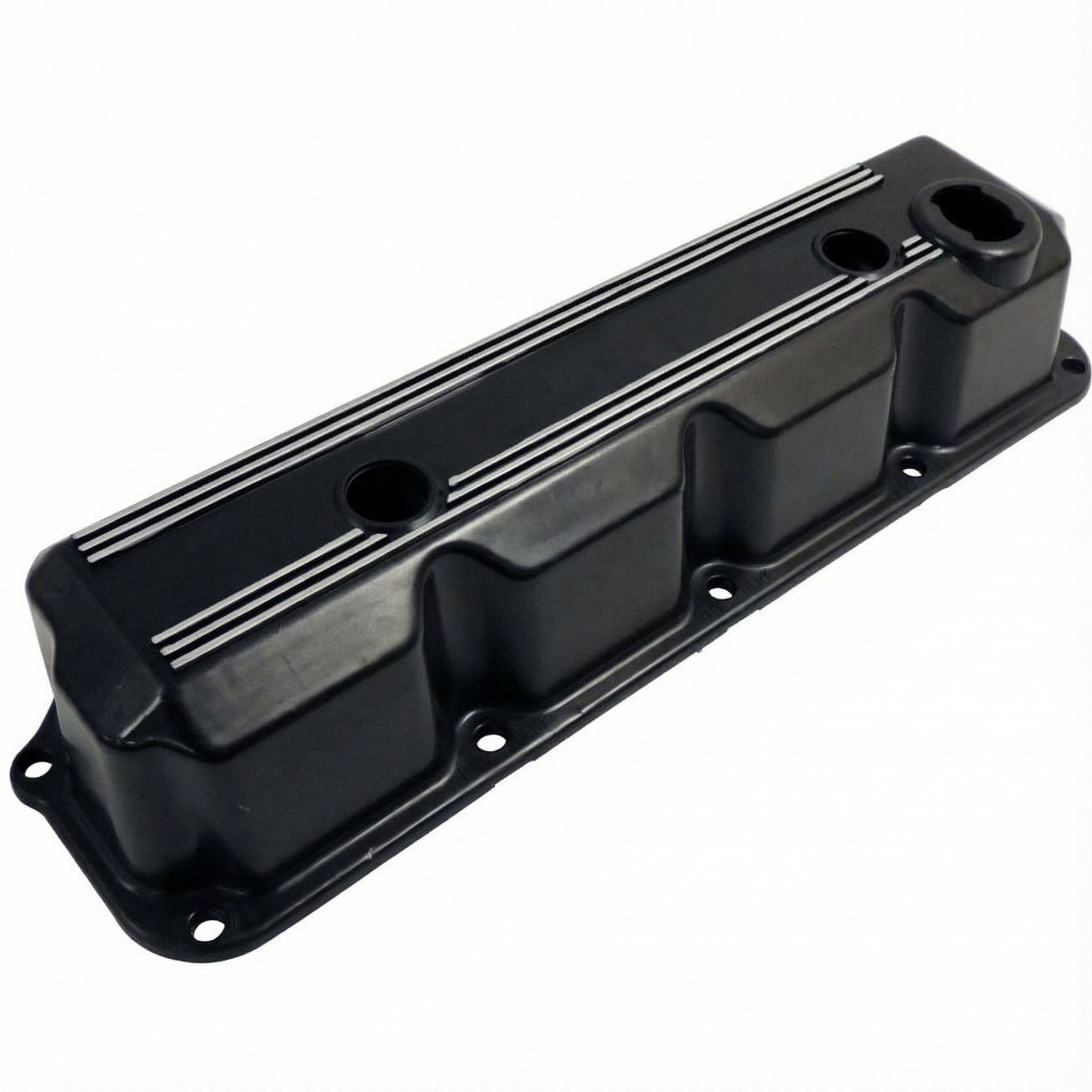
Typical fix: Replace the entire front (Bank 2) valve cover assembly. The PCV valve is not sold separately. The OEM part number is CY01-10-2J0C. 🎬 See this walkthrough for an easy valve cover replacement.
Est. part cost: $100-$250 - Leaking Fuel Injector(s) on Bank 2 🔴 High Probability → Shop Fuel Injector
How to confirm: Pull the spark plugs from Bank 2 (cylinders 4, 5, 6). A leaking injector will cause the corresponding plug to be black, wet, and sooty. A professional can perform a fuel injector balance test to measure flow rates. Sometimes, swapping injectors between banks and seeing if the code follows (e.g., to P0172) can confirm a bad injector.
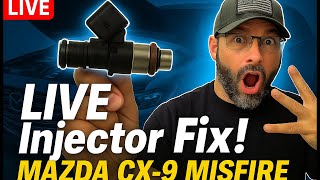
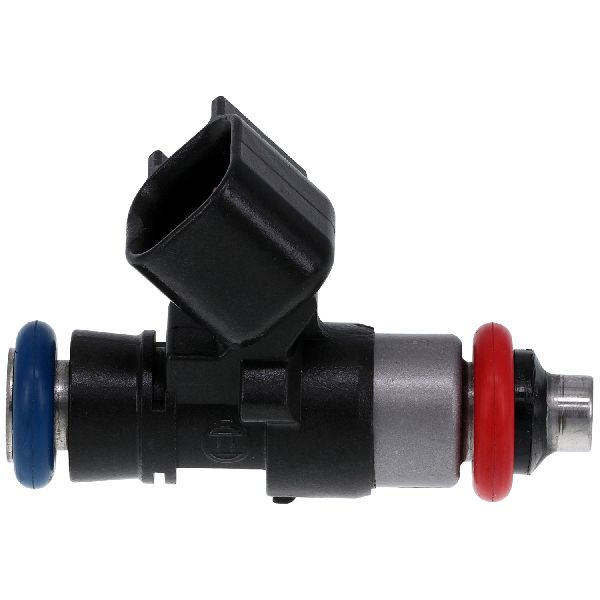
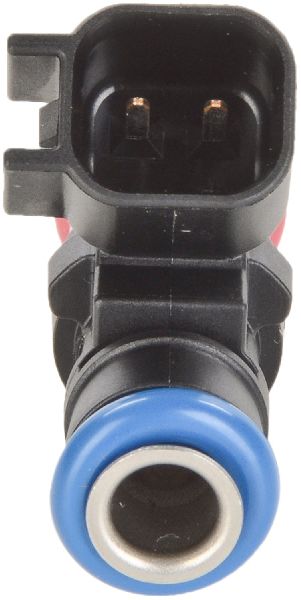
Typical fix: Replace the faulty fuel injector(s). It is often recommended to replace all three injectors on the bank at the same time. Using high-quality OEM or equivalent replacements is crucial to avoid further issues.
Est. part cost: $50-$150 per injector - Faulty Upstream Oxygen (A/F) Sensor (Bank 2, Sensor 1) 🟡 Medium Probability → Shop Oxygen Sensor The sensor can fail on its own, but it is often fouled by oil from a failed PCV valve. It's a common misdiagnosis to replace the sensor without addressing the root cause.
How to confirm: Use an OBD-II scanner to monitor the live data for the Bank 2, Sensor 1 voltage. If the sensor is faulty, its voltage will often be stuck high (around 0.9V) and will not fluctuate as it should during normal operation. A healthy sensor will oscillate rapidly. If it's just oil-fouled, the reading may be erratic or biased high.
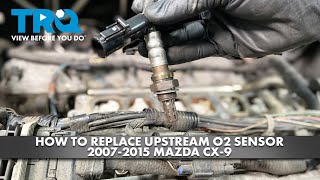
Typical fix: Replace the Bank 2 upstream oxygen sensor. It is located on the exhaust manifold on the radiator side of the engine. 🎬 Watch: How to replace the Bank 2 upstream O2 sensor. Crucially, confirm the PCV system is healthy first to avoid fouling the new sensor.
Est. part cost: $60-$120 - Dirty or Faulty Mass Airflow (MAF) Sensor 🟡 Medium Probability → Shop Fuel Injection Air Flow Meter
How to confirm: A contaminated MAF sensor under-reports the amount of air entering the engine, causing the PCM to add too much fuel. This usually sets rich codes on both banks (P0172 & P0175), but can sometimes appear on one first. Remove and clean the MAF sensor with a dedicated MAF sensor cleaner. Inspect the live data from the MAF sensor at idle and compare it to specified values.
Typical fix: Clean the MAF sensor. If cleaning does not resolve the issue, the sensor may need to be replaced.
Est. part cost: $15-$25 for cleaner, $80-$150 for a new sensor - Stuck-Open EVAP Purge Solenoid Valve ⚪ Low Probability → Shop Vapor Canister
How to confirm: A stuck-open purge valve allows un-metered fuel vapor from the gas tank to enter the intake manifold, creating a rich condition. You can test it by removing the valve and attempting to blow through it; if air passes, it's stuck open. A vacuum test can also confirm if it's holding vacuum. This usually affects both banks.
Typical fix: Replace the EVAP purge solenoid valve.
Est. part cost: $30-$80
Rare But Worth Checking
- High Fuel Pressure: A failing fuel pressure regulator or a restricted fuel return line can cause excessive fuel pressure system-wide. This is less common for a single-bank code, as it would typically trigger P0175 and P0172 (Bank 1 Rich) simultaneously.
- Leaking Cold Start Injector: If equipped, a leaking cold start injector can add extra, un-commanded fuel, leading to a rich condition, though this is a less common cause.
Diagnosis Steps
- Connect an OBD-II scanner and confirm P0175 is the primary code. Check long-term fuel trim (LTFT) for Bank 2; it will be highly negative (e.g., -15% or lower). Note any accompanying codes.
- (3.7L V6) Assess oil consumption. If the engine is using a significant amount of oil, the integrated PCV valve in the front valve cover is the most likely culprit. Inspect the throttle body and intake for oil residue.
- Perform a smoke test. Introduce smoke into the crankcase via the oil fill cap. If smoke appears in the intake tract, the PCV diaphragm inside the valve cover is confirmed to be ruptured.
- Inspect the air intake system for a dirty air filter and clean the MAF sensor using dedicated MAF cleaner. Check MAF readings with a scanner.
- Test the EVAP purge solenoid valve to ensure it is not stuck open, which would allow unmetered fuel vapors into the intake.
- Using the scanner's live data, observe the Bank 2, Sensor 1 (upstream) oxygen sensor voltage. If it's stuck high (above 0.8V) and not fluctuating, the sensor may be bad or is being saturated by excess fuel/oil.
- Remove the spark plugs from Bank 2 (front bank, cylinders 4-5-6). Inspect them for heavy black soot or being wet with fuel, which indicates a leaking fuel injector in that cylinder.
- If other causes are ruled out, test the fuel pressure to ensure it is within the manufacturer's specification.
Parts You'll Likely Need
- Front Valve Cover (with integrated PCV)
(OEM #CY01-10-2J0C)— For the 3.7L V6, the integrated PCV valve is a common failure point that causes oil to foul the Bank 2 O2 sensor, triggering a P0175 code. This is the official fix per Mazda TSB 01-007/16.
Trusted brands: Mazda OE, Fel-Pro, Dorman
OEM price range: $150-$250
Aftermarket price range: $80-$150 - Fuel Injector — A leaking or stuck-open fuel injector is a primary cause of excess fuel being dumped into a cylinder.
Trusted brands: Bosch, Hitachi, Standard Motor Products
OEM price range: $120-$200
Aftermarket price range: $50-$100 - Upstream Oxygen Sensor (Bank 2) — The sensor itself can fail and send a false rich signal, or it can be fouled by oil from a bad PCV system.
Trusted brands: Denso, Bosch, NGK/NTK
OEM price range: $100-$180
Aftermarket price range: $60-$120
Related Codes That Often Appear With This One
- P0172 — System Too Rich (Bank 1). If both codes are present, it points to a problem affecting the entire engine, like a faulty MAF sensor, EVAP purge valve, or fuel pressure regulator.
- P2198 — O2 Sensor Signal Stuck Rich (Bank 2 Sensor 1). This is a more specific version of P0175, indicating the sensor is not just reading rich, but is completely unresponsive. This often occurs when the sensor is saturated with oil from the failed PCV valve.
- P0300, P0304, P0305, P0306 — Cylinder misfire codes for Bank 2. A severely rich condition from a leaking injector can foul the spark plug and cause misfires on that bank.
Technical Service Bulletins (TSBs) & Recalls
- TSB 01-007/16: Addresses the failed PCV valve integrated into the valve cover causing oil consumption and related rich codes. The fix is to replace the valve cover assembly.
Platform-Specific Known Issues
- The 3.7L V6 engine (2008-2015) features a PCV valve that is built into the front valve cover and cannot be replaced separately. Failure of this valve is a common cause of P0175.
Mechanic-Grade Diagnostic Values
- Long Term Fuel Trim (LTFT) for Bank 2 — expected: -10% to +10%. Failure: Consistently more negative than -15%, often in the -20% to -30% range.
- Fuel Pressure (at fuel rail) — expected: 55-65 PSI. Failure: Pressure significantly above 65 PSI indicates a potential regulator or return line issue.
- Mass Airflow (MAF) Sensor Reading at Idle — expected: 3.5 - 5.0 g/s (for 3.7L V6). Failure: Readings significantly outside this range, or that don't increase smoothly with RPM, suggest a faulty or dirty sensor. A generic range for engines is 2-7 g/s.
- Fuel Injector Coil Resistance — expected: ~13 ohms (when cold). Failure: A reading that is significantly different from the other injectors, or one that reads very high (e.g., 2000+ ohms) when the engine is hot, indicates a failing injector.
- Upstream O2 Sensor (Bank 2, Sensor 1) Voltage — expected: Rapidly fluctuating between ~0.1V and ~0.9V. Failure: Stuck high, near 0.9V, indicates a persistent rich condition or a failed/fouled sensor.
Scan Tool Commands That Help
- Mazda IDS / FORScan / High-End Scanners: Clear KAM (Keep Alive Memory) / Reset Fuel Trims — This should be performed after a repair (e.g., replacing an O2 sensor, injector, or valve cover) to force the PCM to relearn the fuel strategy immediately. Without this step, the old learned negative fuel trims can persist, masking the success of the repair.
- Mazda IDS / FORScan / High-End Scanners: Injector Balance Test — To identify a leaking or poorly flowing fuel injector without physically removing it. The tool commands each injector to fire and measures the corresponding drop in fuel pressure, highlighting inconsistencies between cylinders.
Wiring & Ground Locations
- Shared PCM/Sensor Ground — Multiple sensors and modules often share common ground points on the engine block, cylinder head, or chassis near the battery.. According to wiring diagrams, the PCM and the MAF sensor share a common ground point. A corroded or loose ground at this location can create a slight voltage offset, causing the MAF to under-report airflow and the PCM to misinterpret sensor data, leading to a false rich condition. Always check and clean main engine and chassis grounds during diagnosis.
Real Owner Repair Stories
- Mazdas247 Forum, user 'jjw6455' (Mazda CX-9, 71,000 miles) — Check engine light, issue only appeared after the engine warmed up.
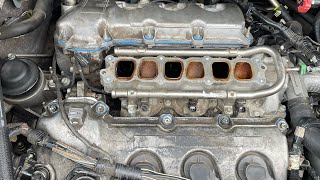
✅ What actually fixed it The user diagnosed a faulty #5 fuel injector (Bank 2, middle cylinder). When cold, the injector resistance was 20 ohms while others were 13 ohms. When hot, the faulty injector's resistance shot up to 2000 ohms. Replacing the single faulty injector resolved the problem. The user noted that the intake manifold must be removed for access.
Model Year Variations Within This Range
- 2007: The 2007 model used a 3.5L Ford-sourced V6 engine. The common PCV valve failure integrated into the valve cover is primarily associated with the Mazda-built 3.7L V6 used from 2008-2015.
- 2008-2015: These models use the 3.7L MZI V6, which is prone to the Bank 2 (front) valve cover PCV failure that is the most common cause of P0175 on this platform.
Diagnostic Flowchart
Other Known Issues on This Vehicle
Issues unrelated to this code that are worth knowing about as an owner of this generation:
- Internal Water Pump Failure 🔴 High — Common at higher mileage (typically 80,000-120,000 miles). Failure can be catastrophic.
- AWD Transfer Case (PTU) Failure 🔴 High — Common issue, especially on earlier models. Can occur under 100,000 miles. (Ref: SSP 92 (Warranty Extension))
- Power Brake Booster Failure 🔴 High — Common enough to prompt a NHTSA investigation and a warranty extension program. (Ref: SSP 93 (Warranty Extension))
- Ignition Coil Failure 🟠 Medium — A common cause for misfires as the vehicle ages.
Used vs. New Parts: Buying Guide for This Vehicle
When a used part is the smart pick: For this specific repair, using used parts is generally not recommended. The primary failure parts (PCV valve cover, O2 sensor, fuel injectors) are all wear items. A used part from a salvage yard carries a high risk of having the same fault or a very short remaining service life.
Donor-vehicle mileage cap: roughly under 80000 miles for the part to have meaningful remaining life.
What to inspect on the donor part:
- If forced to use a salvage part, avoid any donor vehicle that shows signs of front-end collision damage, as this can damage components on Bank 2.
- Request the vehicle's VIN to check its service history for related repairs.
- For a valve cover, inspect the plastic for any hairline cracks or warping, especially around bolt holes.
OEM-only on this vehicle (don't cheap out):
- Valve Cover Assembly: While not strictly 'OEM-only', using a cheap, unbranded aftermarket valve cover is a significant risk. Stick with Mazda OE or a reputable aftermarket brand known for improving on OEM weaknesses.
Aftermarket brands forum-validated for this vehicle:
- Valve Cover: Dorman is a well-regarded option, often cited as redesigning the part to be more durable than the original.
- O2 Sensors: Denso, NGK/NTK
- Fuel Injectors: Bosch
Brands owners have reported issues with on this vehicle:
- Unbranded 'white box' valve covers and sensors from online marketplaces. Fitment issues and premature failure are common complaints with these parts.
Real Owner Stories
Aggregated from forums and TSBs cited above. Mileages and costs reflect what owners reported in those sources.
2008-2015 Mazda CX-9 3.7L V6
Symptoms: The engine was experiencing high oil consumption and the P0175 code was triggered because oil was being forced into the intake, fouling the Bank 2 O2 sensor.
What fixed it: Replacement of the front (Bank 2) valve cover assembly (OEM part CY01-10-2J0C) as the integrated PCV diaphragm had ruptured.
Source hint: TSB 01-007/16
2010-2015 Mazda CX-9 3.7L V6
Symptoms: P0175 code that won't go away; rich condition on Bank 2.
What fixed it: The owner had to investigate Bank 2 components specifically, including the upstream oxygen sensor and fuel injectors.
Source hint: Reddit r/MechanicAdvice thread titled 'P0175 that won't go away'
Related OBD-II Codes
Frequently Asked Questions
Does TSB 01-007/16 apply to my 3.7L Mazda CX-9 if I have a P0175 code?
Can I just replace the PCV valve on my 2012 CX-9 to fix this rich condition?
Why is my CX-9 smelling like gasoline and blowing black smoke from the tailpipe?
Is the P0175 code related to the internal water pump failure common on these engines?
Could a dirty MAF sensor cause a P0175 on just one bank?
Helpful Videos

Used OEM Parts in Stock
New Aftermarket Parts Available


The information in this article is provided for general reference and educational purposes only. Vehicle specifications, procedures, and part compatibility can vary by production date, trim level, and region. Always consult your vehicle's factory service manual and verify part numbers before purchasing or performing repairs. Safety-critical components such as airbags, seat belts, and braking systems should be installed by a qualified professional.
- Mazda CX-9:
- 🧭 Diagnostic Flowchart
- 🎬 Helpful Videos
- 🛍️ Shop This Part
- What's Unique About the 2007-2015 Mazda CX-9
- Symptoms You May Notice
- Most Likely Causes
- Rare But Worth Checking
- Diagnosis Steps
- Parts You'll Likely Need
- Related Codes That Often Appear With This One
- Technical Service Bulletins (TSBs) & Recalls
- Platform-Specific Known Issues
- Mechanic-Grade Diagnostic Values
- Scan Tool Commands That Help
- Wiring & Ground Locations
- Real Owner Repair Stories
- Model Year Variations Within This Range
- Other Known Issues on This Vehicle
- Used vs. New Parts: Buying Guide for This Vehicle
- Real Owner Stories
- 2008-2015 Mazda CX-9 3.7L V6
- 2010-2015 Mazda CX-9 3.7L V6
- Related OBD-II Codes
- Frequently Asked Questions
- 🎟️ Get 5% Off