

P0175 on 2001-2006 Mazda Tribute 3.0L V6: System Too Rich Bank 2 Causes and Fixes
Code P0175 on a 3.0L V6 Mazda Tribute most often means you have a leaking fuel injector on Bank 2 (the cylinder bank near the radiator). Other likely causes include a faulty fuel pressure regulator or pulse damper, or a dirty Mass Airflow (MAF) sensor. A single replacement injector costs around $60-$120.
- P0175 means Bank 2 (front cylinders, by the radiator) is running too rich.
- The most likely cause is a leaking fuel injector on one of the front three cylinders.
- Before replacing parts, perform a fuel pressure leak-down test to confirm a leaking injector and try cleaning the MAF sensor as an inexpensive first step.
- Do not immediately replace the oxygen sensor; it is likely just reporting the problem correctly.
- Ignoring this code can lead to a damaged catalytic converter, a much more expensive repair.
What's Unique About the 2001-2006 Mazda Tribute
The 2001-2006 Mazda Tribute with the 3.0L V6 is a mechanical twin to the Ford Escape. While this Ford Duratec engine is generally robust, it is known for specific issues that can mislead diagnosis. Vacuum leaks from deteriorated PCV hoses and intake manifold gaskets are extremely common, but these typically cause lean codes (P0171/P0174). For a rich code like P0175, the focus should be on the fuel delivery system. Leaking fuel injectors are a frequent culprit on higher-mileage engines. Because Bank 2 is easily accessible at the front of the engine bay, diagnosis and repair are much simpler than for Bank 1 (firewall side), which requires removing the upper intake manifold.
Symptoms You May Notice
- Reduced fuel economy
- Rough or unstable idle, sometimes worse when cold
- Hesitation or stumbling during acceleration
- Strong smell of raw gasoline from the exhaust
- Black smoke from the tailpipe in severe cases
- Illuminated Check Engine Light
- Engine may be hard to start when warm (hot soak), due to fuel pressure bleeding off into a cylinder from a leaky injector.
- Replacing the oxygen sensor without testing it first. A rich code is often caused by an issue 'upstream' of the O2 sensor; the sensor is simply doing its job by reporting the rich condition.
- Assuming a vacuum leak is the cause. While very common on this engine, vacuum leaks typically cause lean codes (P0171/P0174), not rich codes.
Most Likely Causes
- Leaking Fuel Injector(s) on Bank 2 🔴 High Probability → Shop Fuel Injector As the vehicle ages, injector seals can fail or the injector can become stuck partially open due to internal wear or deposits, constantly dripping fuel into the intake.
How to confirm: Perform a fuel pressure leak-down test. After pressurizing the fuel rail, turn the engine off and watch the pressure gauge. A rapid drop in pressure suggests a leak. You can also remove the Bank 2 spark plugs (cylinders 4, 5, 6); a plug that is black, sooty, or wet with fuel indicates the corresponding injector is leaking.
Typical fix: Replace the faulty fuel injector(s) on Bank 2. It is often recommended to replace all three injectors on the bank at the same time to ensure balanced fuel delivery and prevent future failures.
Est. part cost: $60-$120 per injector - Faulty Fuel Pressure Regulator or Damper 🟡 Medium Probability → Shop Fuel Injection Pressure Regulator This vehicle uses a returnless fuel system where the primary pressure regulator is in the fuel tank with the pump. However, the fuel rail has a pulse damper to smooth out pressure fluctuations. If the diaphragm inside this damper ruptures, it can leak raw fuel directly into its vacuum line, which connects to the intake manifold, causing a rich condition on all cylinders, but potentially flagging one bank first.
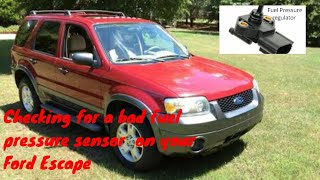
How to confirm: Check the fuel pressure at the fuel rail's Schrader valve; it should be within the manufacturer's specification (see Specific Diagnostic Values). Disconnect the small vacuum hose from the fuel rail pulse damper; if raw fuel is present in the hose or there is a strong smell of fuel, the damper has failed and must be replaced. 🎬 See how to check for a bad fuel pressure regulator.
Typical fix: If fuel pressure is excessively high, the in-tank fuel pump module (which contains the regulator) may need replacement. If the pulse damper is leaking fuel into the vacuum line, it must be replaced.
Est. part cost: $200-$400 for a fuel pump module, $40-$100 for a pulse damper. - Dirty or Faulty Mass Airflow (MAF) Sensor 🟡 Medium Probability → Shop Fuel Injection Air Flow Meter Oil from aftermarket oiled air filters or general dirt can contaminate the sensor's delicate wire, causing it to under-report the amount of air entering the engine. The PCM then injects too much fuel based on this faulty data.
How to confirm: A good first step is to remove and clean the MAF sensor using a dedicated MAF sensor cleaner spray. 🎬 Watch: Two quick DIY methods to clear a P0175 code. Do not touch the sensor wires. If cleaning doesn't resolve the issue, the sensor may need replacement. A faulty MAF sensor will typically set rich codes for both banks (P0172 & P0175), but it's possible for one bank to trigger first.
Typical fix: Clean the MAF sensor. If the problem persists, replace the sensor.
Est. part cost: $10 for cleaner, $70-$150 for a new sensor - Faulty Bank 2 Upstream Oxygen Sensor ⚪ Low Probability → Shop Oxygen Sensor The sensor can become lazy or fail, sending an incorrect signal (stuck reading a high voltage) to the PCM, tricking it into thinking the engine is running rich. The PCM then leans out the mixture, but if the sensor signal doesn't respond, it may set a rich code based on the faulty sensor data.
How to confirm: Use a scan tool to monitor the live voltage data from the Bank 2, Sensor 1 O2 sensor. A healthy sensor's voltage should fluctuate rapidly between approximately 0.1 and 0.9 volts. If it is stuck high (above 0.8v) or not fluctuating, it has likely failed.
Typical fix: Replace the Bank 2, Sensor 1 (upstream) oxygen sensor. This sensor is located on the front exhaust manifold, making it relatively easy to access.
Est. part cost: $40-$90
Rare But Worth Checking
- Leaking Intake Manifold Gaskets: While this is a very common failure on the 3.0L Duratec engine, it almost always causes a *lean* code (P0171/P0174) due to unmetered air entering the intake. However, in very rare cases, the resulting poor combustion and misfires could be misinterpreted by the PCM. It should only be investigated for a rich code if all other fuel-related causes are ruled out.
Diagnosis Steps
- Read the trouble codes with an OBD-II scanner and check the freeze frame data to see the engine conditions (RPM, load, temp) when the code was set. Note the Long Term Fuel Trim (LTFT) value for Bank 2; it will be highly negative (e.g., -20% or more).
- Inspect the engine bay for the smell of raw fuel, particularly around the front fuel rail (Bank 2) and the vacuum line connected to the fuel pulse damper.
- Check the vacuum line on the fuel pulse damper (on the fuel rail). Pull the line off and check for the presence or smell of raw fuel. If fuel is found, the damper has failed and is the cause.
- Inspect the air intake system for any obvious cracks or loose connections between the MAF sensor and the throttle body. Check the air filter to ensure it is not excessively dirty or clogged.
- Remove and clean the Mass Airflow (MAF) sensor using a dedicated MAF sensor cleaner. Allow it to dry completely before reinstalling.
- Connect a fuel pressure gauge to the test port on the fuel rail (2001-2004 models only). Verify the pressure is within spec. Turn the engine off and monitor the gauge for at least 10-15 minutes; a quick drop in pressure indicates a likely leak from an injector.
- If a leak is suspected, remove the spark plugs from Bank 2 (cylinders 4, 5, 6 at the front). Inspect them for signs of being fuel-fouled (black, sooty, or wet). The condition of the plugs can help pinpoint a specific leaking injector.
- Use a scan tool to observe the live data from the Bank 2, Sensor 1 oxygen sensor. If the voltage is stuck high (above 0.8v) and does not fluctuate, the sensor itself may be faulty. Compare it to the Bank 1 sensor to see if the behavior is different.
- If a specific injector is suspected, you can confirm by swapping it with an injector from an adjacent cylinder on the same bank to see if a corresponding misfire code (e.g., P0304 moves to P0305) 🎬 Watch this breakdown of common causes and fixes for Bank 2. follows the injector.
Parts You'll Likely Need
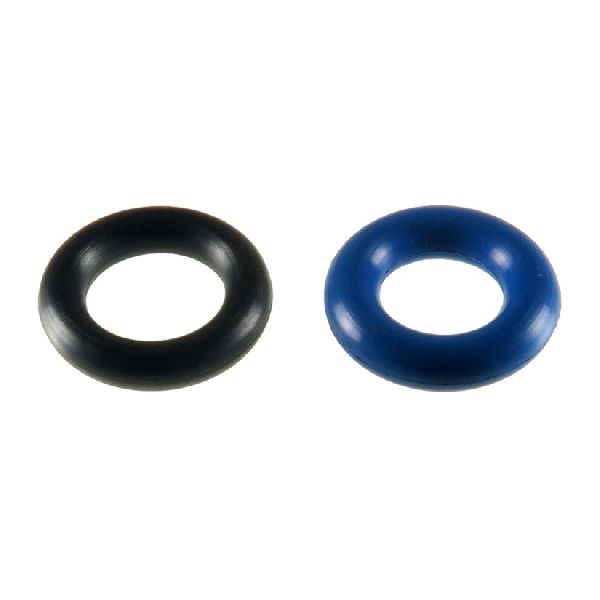
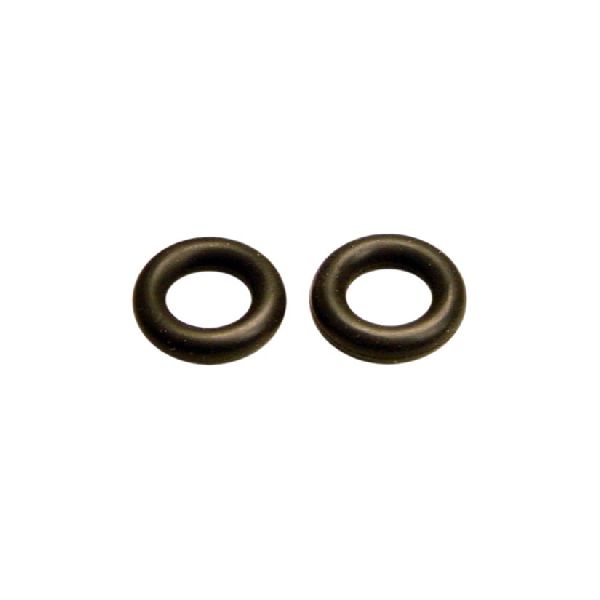
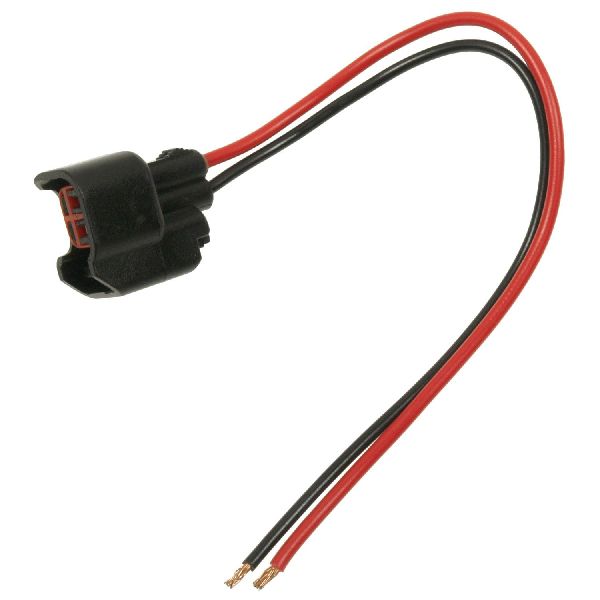
- Fuel Injector
(OEM #AJ03-13-250A)— This is the most common cause for a single-bank rich code on an aging engine. An injector gets stuck open or leaks, dumping excess fuel.
Trusted brands: Motorcraft, Bosch, Standard Motor Products (FJ830)
OEM price range: $100-$180
Aftermarket price range: $50-$110
Related Codes That Often Appear With This One
- P0172 — System Too Rich (Bank 1). If both P0172 and P0175 are present, it points to a problem affecting the entire engine, such as a faulty MAF sensor, a leaking fuel pressure regulator/damper, or excessively high fuel pressure, rather than a single leaking injector.
- P0304, P0305, P0306 — Cylinder Misfire Detected (on Bank 2 cylinders). A severely leaking fuel injector can foul the spark plug for that cylinder, leading to a misfire code alongside the rich code.
- P0300 — Random/Multiple Cylinder Misfire. This can occur if the rich condition is severe enough to affect multiple cylinders or if a global issue like a bad MAF sensor is causing instability.
Technical Service Bulletins (TSBs) & Recalls
- Recall 12V016000 / Mazda 6812G: Addresses inadequate clearance for the speed control cable which can cause a stuck throttle. Relevant for any job requiring engine cover removal.
Mechanic-Grade Diagnostic Values
- Fuel Pressure (2001-2004 models, KOEO) — expected: 55-65 PSI. Failure: Pressure significantly above or below this range indicates a pump or regulator issue. A rapid drop after shutoff indicates a leak.
- Fuel Pressure (2005-2006 models, KOEO/KOER) — expected: 39 PSI. Failure: Pressure below 35 PSI, especially under load, indicates a fuel delivery problem. Note: These models lack a Schrader test valve and require a special T-fitting adapter.
- Fuel Injector Coil Resistance — expected: Approx. 12 Ohms (High Impedance). Failure: A reading significantly outside the 10-18 Ohm range, or a reading of infinity (open circuit), indicates a failed injector coil.
- DPFEGR PID Voltage (Scan Tool, KOEO) — expected: 0.2 - 1.3 V. Failure: Voltage outside this range with no vacuum applied suggests a faulty DPFEGR sensor or circuit.
- DPFEGR PID Voltage (Scan Tool, 8-9 inHg vacuum applied) — expected: > 4.0 V. Failure: Voltage does not rise above 4.0V, indicating the sensor is not responding to vacuum.
Scan Tool Commands That Help
- Ford/Mazda IDS/PDS: Post-Repair Verification Drive Cycle — After clearing codes from a repair, this specific drive cycle is used to allow the PCM to re-run its monitors and confirm the fix. Procedure: From a stop, accelerate to 45 MPH at 1/2 to 3/4 throttle, then coast. Repeat 3 times.
- Ford/Mazda IDS/PDS or equivalent: View DPFEGR PID — To actively test the Differential Pressure Feedback EGR sensor's voltage response to vacuum, which can help rule out EGR system faults without physical removal.
Wiring & Ground Locations
- G1 — At the left rear of the engine compartment.. This is a primary engine ground. A poor connection here can affect the PCM, crankshaft position sensor, and mass air flow sensor, all of which are critical for fuel calculations.
- PCM Ground — A ground strap from the firewall directly to the PCM housing, located at the upper center of the firewall.. The PCM requires a clean, solid ground to function. A corroded or loose ground here can cause erratic behavior and incorrect fuel trim calculations, leading to false rich or lean codes.
- Intake Manifold Ground — A ground strap runs from just below the main PCM ground on the firewall, under the upper intake manifold, and bolts to the lower intake manifold.. Provides a ground path for various sensors mounted to the engine block and intake. A compromised connection could cause faulty readings from sensors that rely on it for a reference.
Real Owner Repair Stories
- Reddit user in r/MechanicAdvice (Not specified, but general advice for a P0175 after injector replacement.) — Persistent rich or lean codes after replacing fuel injectors with aftermarket parts.
❌ Tried (didn't work) Replacing original fuel injectors with a new aftermarket set.
✅ What actually fixed it Reinstalling the original OEM fuel injectors. The aftermarket injectors were found to flow too much fuel for the PCM to compensate, even though they were new.
When the Usual Fixes Don't Work
- While a leaking fuel injector is the most common cause, do not immediately assume a new injector will fix the problem, especially if it is an inexpensive aftermarket part. One owner reported that after installing a set of new aftermarket injectors, the rich/lean codes persisted. The problem was only resolved by reinstalling the original, aged OEM injectors, which proved that the aftermarket parts were not flowing at the correct rate for the vehicle's computer. This highlights the importance of using OEM or high-quality, flow-matched remanufactured injectors for this repair.
OEM Part Supersession History
aj0313250→AJ03-13-250A— Standard part revision.
Heads up: This part number (and its cross-references like YL8E-C7B) is generally for the 2001-2004 model years.YL8E-C7B (2001-2004)→4L8E-A4A (2005-2006)— Change in fuel system design for the 2005 model year refresh.
Heads up: The injectors for 2001-2004 and 2005-2006 models are different and likely not interchangeable due to the change in the fuel system's operating pressure. Using the wrong year's injector could cause significant fuel trim issues.
Model Year Variations Within This Range
- 2005-2006: The fuel system was changed for the 2005 model year refresh. These later models operate at a lower fuel pressure (39 PSI vs 55-65 PSI) and do not have a Schrader valve test port on the fuel rail, requiring a special adapter for pressure testing.
- 2005-2006: The fuel injectors changed for the 2005 model year. Part number YL8E-C7B (or equivalent) is for 2001-2004 models, while 4L8E-A4A is listed for 2005-2006 models. This is critical when sourcing replacements.
- 2005-2006: The vehicle received a mid-cycle refresh with updated exterior styling (new grille, headlights) and improved interior materials.
Diagnostic Flowchart
Other Known Issues on This Vehicle
Issues unrelated to this code that are worth knowing about as an owner of this generation:
- Leaking Intake Manifold Gaskets 🔴 High — Extremely common on higher mileage (80k+) Duratec 3.0L engines. Gaskets become brittle and crack.
- Ignition Coil Failure 🔴 High — Very common, especially after 100,000 miles. Often exacerbated by oil leaks from valve cover gaskets contaminating the spark plug wells.
- Alternator Failure 🟠 Medium — Common failure item, often occurring between 100k-150k miles. Its location makes replacement difficult.
- Stuck Throttle Body / Accelerator Cable 🔴 High — Affects 2001-2006 models with 3.0L V6. (Ref: Recall 12V016000 / Mazda Recall 6812G)
- Transmission Failure 🟠 Medium — Reported more frequently on earlier models (2001-2004), but can occur at any point, especially if fluid is not maintained.
Used vs. New Parts: Buying Guide for This Vehicle
When a used part is the smart pick: For this repair, used parts are generally not recommended for the primary failure components (injectors, sensors, regulators). A used part might be a cost-effective choice for purely mechanical or structural items like a fuel rail (bare) or mounting brackets if they were damaged during repair.
Donor-vehicle mileage cap: roughly under 100000 miles for the part to have meaningful remaining life.
What to inspect on the donor part:
- For injectors, check for cracks in the plastic body and ensure the nozzle end is clean and free of heavy carbon buildup.
- Inspect electrical connectors on any used sensor for corrosion or damage.
- Look at the overall condition of the donor vehicle's engine bay for signs of poor maintenance, oil leaks, or overheating.
OEM-only on this vehicle (don't cheap out):
- Fuel Injectors: Strongly recommended to use OEM (Motorcraft) or professionally remanufactured and flow-matched injectors. Inexpensive aftermarket sets are known to have incorrect flow rates, causing persistent fuel trim problems.
- Mass Airflow (MAF) Sensor: Cheap aftermarket MAF sensors are a common source of new problems. Stick with OEM or a trusted major brand like Bosch or Denso if available.
Aftermarket brands forum-validated for this vehicle:
- Oxygen Sensors: NTK or Denso are the OEM suppliers for many Japanese vehicles and are considered a reliable choice.
- Fuel Injectors: If not buying new OEM, 'Standard Motor Products' is a generally respected aftermarket brand. Alternatively, a service that cleans and flow-tests your original injectors can be a good option.
Brands owners have reported issues with on this vehicle:
- Unbranded, no-name fuel injector 'sets' from online marketplaces (e.g., eBay, Amazon). These are frequently the cause of unresolved P0172/P0175 codes after a repair attempt.
Real Owner Stories
Aggregated from forums and TSBs cited above. Mileages and costs reflect what owners reported in those sources.
2001-2004 Ford Escape 3.0L V6
Symptoms: Owner experienced a rich condition on Bank 2.
What fixed it: Diagnosis pointed towards a faulty fuel injector.
Source hint: Ford-trucks.com thread titled 'p0175-rich-on-bank-2-a.html'
2001-2006 Mazda Tribute 3.0L V6 — ~120000 miles
Symptoms: Engine won't start when warmed up (stumped), experiencing P0175 with misfires.
What fixed it: Identified as a heat-soaked rich condition related to the 3.0L engine family.
Source hint: Ranger-forums.com thread titled '3-0-wont-start-when-warmed-up-stumped-156540/'
Related OBD-II Codes
Frequently Asked Questions
Does the Mazda Recall 6812G apply to my 3.0L V6 Tribute when I'm fixing a P0175 code?
Why is my Tribute hard to start when the engine is already warm?
Can I just clean the MAF sensor on my Tribute instead of replacing it?
Where is the Bank 2 Oxygen Sensor located on the 3.0L V6 engine?
Is the P0175 code on my Mazda Tribute the same as a P0175 on a Ford Escape?
Could a vacuum leak cause this rich code on my Tribute?
Helpful Videos
![How to Fix P0175 Engine Code in 2 Minutes [2 DIY Methods / Only $8.99]](https://img.youtube.com/vi/pxuKkkqqvSs/mqdefault.jpg)

We Have This Part in Stock


The information in this article is provided for general reference and educational purposes only. Vehicle specifications, procedures, and part compatibility can vary by production date, trim level, and region. Always consult your vehicle's factory service manual and verify part numbers before purchasing or performing repairs. Safety-critical components such as airbags, seat belts, and braking systems should be installed by a qualified professional.
- Mazda Tribute:
- 🧭 Diagnostic Flowchart
- 🎬 Helpful Videos
- 🛍️ Shop This Part
- What's Unique About the 2001-2006 Mazda Tribute
- Symptoms You May Notice
- Most Likely Causes
- Rare But Worth Checking
- Diagnosis Steps
- Parts You'll Likely Need
- Related Codes That Often Appear With This One
- Technical Service Bulletins (TSBs) & Recalls
- Mechanic-Grade Diagnostic Values
- Scan Tool Commands That Help
- Wiring & Ground Locations
- Real Owner Repair Stories
- When the Usual Fixes Don't Work
- OEM Part Supersession History
- Model Year Variations Within This Range
- Other Known Issues on This Vehicle
- Used vs. New Parts: Buying Guide for This Vehicle
- Real Owner Stories
- 2001-2004 Ford Escape 3.0L V6
- 2001-2006 Mazda Tribute 3.0L V6 — ~120000 miles
- Related OBD-II Codes
- Frequently Asked Questions
- 🎟️ Get 5% Off