

P0175 on 2011 Saab 9-4X 3.0L: Causes and Fixes for System Too Rich (Bank 2)
On the 2011 Saab 9-4X, code P0175 is most often caused by a leaking fuel injector on Bank 2 or a failing high-pressure fuel pump (HPFP) leaking fuel into the oil. First, check your oil dipstick for a strong gasoline smell, which indicates a bad HPFP. If not, suspect a leaking injector. This issue is common across all vehicles using the GM 3.0L LF1 engine, such as the Cadillac SRX.
- For code P0175 on this specific vehicle, your first and most important check is to smell the engine oil for gasoline. This is a simple, no-cost check that can quickly identify a failed high-pressure fuel pump.
- Do not immediately assume the oxygen sensor is bad. It is far more likely to be a fuel delivery problem from a leaking injector or the high-pressure fuel pump.
- This vehicle is a rebadged General Motors product (Cadillac SRX), so parts and repair information for the SRX are directly applicable.
- If you also have code P0172 (Bank 1 Rich), the problem is almost certainly engine-wide, pointing strongly to the MAF sensor or the high-pressure fuel pump.
- Accessing the fuel injectors or the high-pressure fuel pump is labor-intensive, making professional diagnosis a cost-effective step before buying parts.
What's Unique About the 2011-2011 Saab 9-4X
The Saab 9-4X is a unique, single-model-year vehicle built on a General Motors platform, sharing its 3.0L LF1 direct-injection V6 engine with the 2010-2011 Cadillac SRX. This Spark Ignition Direct Injection (SIDI) engine has two well-documented failure points that directly cause a rich condition: leaking high-pressure fuel injectors and failing high-pressure fuel pumps (HPFP) that leak fuel into the crankcase. Unlike many port-injected vehicles where a bad oxygen sensor or vacuum leak is a common cause for rich codes, on this SIDI platform, the issue is almost always fuel delivery related. The high-pressure components are known failure points, making it critical to diagnose the fuel system first.
Symptoms You May Notice
- Check Engine Light is on
- Poor fuel economy
- Strong smell of gasoline from the exhaust or engine bay
- Rough or unstable idle
- Hesitation or loss of power during acceleration
- Black smoke from the tailpipe in severe cases
- Hard starting, especially after the engine has been sitting for a short period (hot soak)
- Engine oil level appears to be rising and smells strongly of gasoline
- Replacing the oxygen sensor without proper diagnosis. The O2 sensor is usually the messenger, not the culprit. The Saab service manual specifically warns against this.
- Replacing the high-pressure fuel pump or injectors for a normal ticking sound. The SIDI fuel system has a characteristic ticking noise that is normal. GM issued TSB 07-06-04-025I to inform technicians and customers that this sound is not a sign of a fault.
Most Likely Causes
- Leaking Fuel Injector(s) on Bank 2 🔴 High Probability → Shop Fuel Injector The direct injection (SIDI) fuel injectors on the LF1 engine operate under very high pressure and are a known failure point, prone to leaking fuel directly into a cylinder after the engine is shut off. This causes a rich condition and hard starting on the next startup.
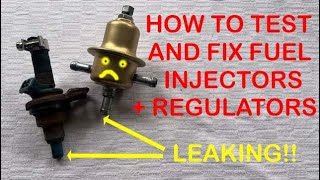
How to confirm: A professional can perform a fuel injector balance test. A DIY method is to watch the high-pressure fuel rail pressure on a scan tool after shutting off the warm engine; a rapid drop in pressure indicates a leak in the high-pressure system, likely an injector. 🎬 See how to test for leaking fuel injectors using simple tools. Conversely, as the engine heat soaks the fuel rail, a healthy system may show a temporary *increase* in pressure after shutdown. Another method is to remove the Bank 2 spark plugs after the engine has sat; a plug that is wet with fuel or excessively black and sooty indicates a leak in that cylinder.
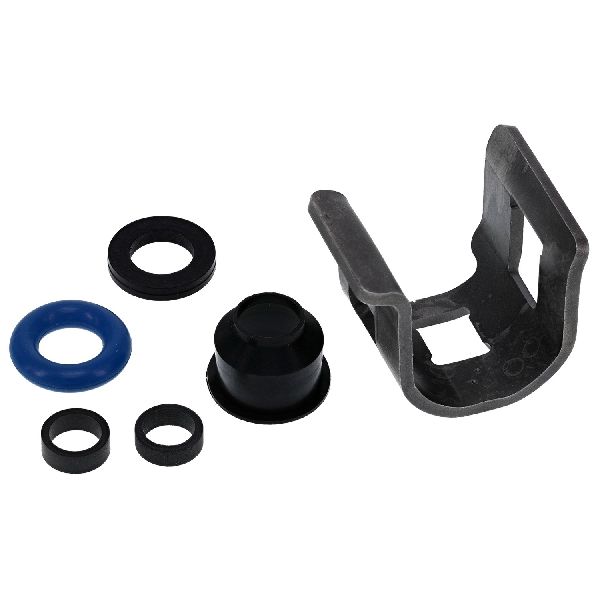
Typical fix: Replace the leaking fuel injector(s) on Bank 2. Since accessing them requires removing the intake manifold, it is highly recommended to replace all three injectors on that bank at the same time, along with their Teflon seals.
Est. part cost: $60-$120 per injector - Failing High-Pressure Fuel Pump (HPFP) 🟡 Medium Probability → Shop Fuel Pump The camshaft-driven HPFP can develop a leak in its internal diaphragm, allowing raw gasoline to be pumped directly into the engine crankcase and mix with the oil. This fuel contaminates the oil, and the vapors are then ingested by the engine through the PCV system, causing a rich condition on *both* banks, which will set P0172 and P0175 together.
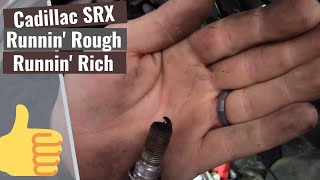
How to confirm: The most definitive sign is a strong smell of gasoline on the engine oil dipstick. The oil level may also appear to be overfull. If you smell gas in your oil, stop driving immediately. This is a critical failure that can lead to severe engine damage. 🎬 Watch: Diagnosing a rich condition and hard start on this engine.
Typical fix: Replace the high-pressure fuel pump and change the engine oil and filter. It is crucial to change the oil to remove the fuel contamination.
Est. part cost: $200-$400 - Faulty or Dirty Mass Airflow (MAF) Sensor 🟡 Medium Probability → Shop Fuel Injection Air Flow Meter
How to confirm: A dirty MAF sensor can under-report airflow, causing the ECM to calculate an incorrect (rich) fuel mixture. Inspect the sensor element for dirt or debris. Cleaning it with a dedicated MAF sensor cleaner may resolve the issue. If cleaning doesn't work, monitor the sensor's readings with a scan tool to see if they are rational for the given engine speed and load.
Typical fix: Clean the MAF sensor with a specialized cleaner. If the problem persists, replace the sensor.
Est. part cost: $70-$150 - Stuck Open EVAP Purge Solenoid ⚪ Low Probability → Shop Vapor Canister
How to confirm: A purge valve stuck open will constantly feed unmetered fuel vapors into the engine, causing a rich condition, especially at idle. You can test this by disconnecting the EVAP line from the purge solenoid at the intake manifold and temporarily plugging the port on the manifold. If the fuel trims start to correct themselves back toward zero at idle, the purge solenoid is faulty.
Typical fix: Replace the EVAP purge solenoid/valve.
Est. part cost: $25-$60
Rare But Worth Checking
- Faulty Upstream Oxygen (O2) Sensor: → Shop Oxygen Sensor While the O2 sensor reports the rich condition, it can fail and send false signals. However, the official Saab/GM diagnostic information advises against replacing the O2 sensor for this code unless a specific O2 sensor fault code is also present. A lazy sensor that doesn't switch quickly can contribute to fuel trim issues.
- Excessive Fuel Pressure (Low-Pressure Side): A failing fuel pressure regulator (part of the in-tank fuel pump module) could cause system-wide high fuel pressure, but this is less common than HPFP or injector failure on this platform. This would typically affect both banks, setting P0172 and P0175.
Diagnosis Steps
- Use an OBD-II scanner to confirm P0175 is present. Check if P0172 (Rich Bank 1) is also present. If both are stored, the cause is likely global (affecting both banks).
- Check live data on the scanner. Observe the Long-Term Fuel Trim (LTFT) for Bank 2. It will be highly negative, likely -20% or more.
- Crucial Step: Turn off the engine, pull the oil dipstick, and smell the oil. If it smells strongly of gasoline, the high-pressure fuel pump (HPFP) has failed and is leaking fuel into the crankcase. This is the most likely cause if P0172 is also present. Do not drive the vehicle further.
- If the oil is fine, the next most likely cause is a leaking fuel injector on Bank 2. Monitor the 'Fuel Rail Pressure' PID on a scan tool after shutting off the warm engine. If the pressure drops rapidly from several hundred PSI, it confirms a leak in the high-pressure system, most likely an injector.
- Inspect the air intake system for a dirty or restrictive air filter. Aftermarket 'oiled' air filters can contaminate the MAF sensor if over-oiled.
- Locate and inspect the Mass Airflow (MAF) sensor. If it appears dirty, clean it with dedicated MAF sensor cleaner and re-evaluate.
- Test the EVAP purge valve to ensure it is not stuck open by disconnecting its intake manifold line at idle and checking for vacuum.
- As a final check, inspect the Bank 2 upstream O2 sensor's operation via scan tool data, but do not replace it unless a specific O2 sensor code is present or it shows clear signs of failure (e.g., stuck voltage).
Parts You'll Likely Need
- Fuel Injector
(OEM #12629927)— This is a very common failure point on the 3.0L LF1 engine that directly causes a rich condition on a single bank. Verified to fit this engine.
Trusted brands: ACDelco, Standard Motor Products
OEM price range: $90-$140
Aftermarket price range: $50-$90 - High-Pressure Fuel Pump
(OEM #12641847 (Supersedes 12639694, 12633423); also related to 12677329 which is superseded by 12691016)— A known issue for this engine family. An internal failure leaks fuel into the engine oil, causing rich codes on both banks. Part number 12641847 is a common replacement for the LF1 engine. Other numbers like 12677329 have also been used and superseded.
Trusted brands: ACDelco, Bosch
OEM price range: $300-$450
Aftermarket price range: $180-$300 - Mass Airflow (MAF) Sensor — A dirty or faulty MAF sensor is a common cause for fuel trim issues on many vehicles, including this one, though less specific to the platform than fuel system parts.
Related Codes That Often Appear With This One
- P0172 — System Too Rich (Bank 1). If both P0172 and P0175 are present, it points to a problem affecting the entire engine, such as a faulty MAF sensor, a stuck EVAP purge valve, or a failing high-pressure fuel pump leaking fuel into the crankcase.
- P0300-P0306 — Cylinder Misfire codes. A severely rich condition from a leaking injector can foul the spark plug in that cylinder, leading to a misfire code (e.g., P0302, P0304, P0306 for Bank 2).
Technical Service Bulletins (TSBs) & Recalls
- 07-06-04-025I: Information on Clicking/Ticking Sound/Noise Heard During Cold Start. This TSB clarifies that the ticking noise from the SIDI engine is a normal characteristic of the high-pressure fuel system and not a sign of a problem.
- PIP4924D: This Preliminary Information bulletin addresses the potential for the fuel injector wiring harness to chafe against the cylinder head, leading to intermittent electrical issues with the injectors.
- PIP4964F: (Incomplete in Pass 1) This bulletin often relates to DTC P0171, P0172, P0174, P0175 and provides a diagnostic checklist, emphasizing checking for fuel contamination (especially high ethanol content), crankcase fuel saturation from a leaking HPFP, and ruling out vacuum leaks or MAF issues before replacing components.
Platform-Specific Known Issues
- The 3.0L LF1 V6 engine is known for premature timing chain stretch, which is a very expensive repair. While it typically sets timing correlation codes (like P0017/P0019), be aware of any startup rattles as it could be a sign of this larger problem.
- GM issued TSB #PIP4924D regarding chafed fuel injector wiring harnesses on these engines, which can cause various injector-related electrical codes. While not a direct cause for P0175, it points to a general vulnerability in the engine's wiring.
- The direct injection system is inherently noisy. A ticking sound from the engine bay, especially when cold, is normal operation of the HPFP and injectors. Do not mistake this for a fault.
Mechanic-Grade Diagnostic Values
- Fuel Injector Coil Resistance — expected: 11 - 14 Ohms. Failure: A reading of OL (open circuit), near 0 (short circuit), or significantly outside the expected range indicates a failed injector.
- Mass Airflow (MAF) Sensor Reading at Idle (Warm) — expected: ~3.0 g/s. Failure: A reading significantly different from the engine's displacement in liters (3.0L) suggests a faulty sensor or a large unmetered air/fuel source.
- Low-Side Fuel Pressure (at idle) — expected: 300-400 kPa (43-58 psi). Failure: Pressure significantly below this range indicates a weak in-tank fuel pump or clogged filter, though this typically causes lean codes.
- High-Pressure Fuel Rail Pressure (Key-On, Engine-Off, after warm shutdown) — expected: Pressure should hold steady or even rise slightly as the engine heat-soaks the fuel rail.. Failure: A steady and rapid drop in pressure indicates a leak in the high-pressure system, most likely a fuel injector.
- Long Term Fuel Trim (LTFT) at Idle — expected: -10% to +10%. Failure: A value of -25% or more negative indicates the ECM is removing a large amount of fuel to compensate for a rich condition.
Hidden / Shadow Codes Worth Checking
- Incorrect Fuel Alcohol Content Percentage: On FlexFuel-capable versions of the LF1 engine, the ECM can incorrectly learn a high alcohol percentage (e.g., 50%+) when only standard gasoline is used. This causes the ECM to command a much richer mixture, leading to P0172/P0175. This value is not a typical fault code but a learned parameter visible in the scan tool's live data. (see via View 'Fuel Alcohol Content' PID using a capable scan tool like a GM Tech2, GDS2, or high-end aftermarket scanner.)
Scan Tool Commands That Help
- GM Tech2 / GDS2: Fuel System > Fuel Injector Balance Test — This function allows a technician to individually command each injector to fire and measures the corresponding pressure drop in the fuel rail. It is the most precise way to identify a single injector that is flowing more or less fuel than the others.
- GM Tech2 / GDS2: Special Functions > Fuel Trim Reset — After replacing a component that was causing a rich condition (like a leaking injector or HPFP), this function should be used to clear the learned long-term fuel trim values, forcing the ECM to relearn fuel delivery strategy immediately.
- GM Tech2 / GDS2: Special Functions > Fuel Alcohol Content Reset — If the 'Fuel Alcohol Content' PID shows a high value but the vehicle has only been filled with regular gasoline, this reset function can correct the mixture instantly. This can be a zero-cost fix for P0172/P0175 codes on FlexFuel models.
Wiring & Ground Locations
- Engine Harness Chafe Points — The engine wiring harness may chafe against the corner of the ECM/TCM bracket, the driver's side upper control arm, and a shock tower bolt.. Chafing can cause shorts or opens in circuits for fuel injectors or their power supply, leading to erratic injector behavior or fault codes. GM issued TSB #21-NA-149 and PIP4924D regarding this issue on the SRX platform.
- G201 — Located on the left kick panel, inside the passenger compartment.. This is a major interior ground point. While not directly for the engine sensors, it grounds modules like the BCM which communicate with the ECM. A poor ground here can cause a wide range of communication errors.
- ECM Grounds (G101/G102) — Typically bolted directly to the engine block or cylinder head on GM platforms.. A poor ground connection for the Engine Control Module (ECM) can cause incorrect sensor readings and faulty calculations for fuel mixture, potentially leading to rich or lean codes.
Real Owner Repair Stories
- Reddit user 'zuverza' on r/MechanicAdvice (2011 Cadillac SRX (3.0L LF1 V6)) — P0172 and P0175 codes present. Check engine light comes on after 15 minutes of idling and goes off after 15 minutes of driving. 'Popcorn' sounds from the engine on a cold start. Long Term Fuel Trims were very negative at idle.
❌ Tried (didn't work) Checked for vacuum leaks, Checked MAF sensor, Checked MAP sensor, Cleaned the throttle body
✅ What actually fixed it The user did not post a final confirmed fix, but the symptoms (rich on both banks, worse at idle, popcorn sound on startup) are classic indicators of a failing High-Pressure Fuel Pump (HPFP) leaking fuel into the crankcase, which was the top suggestion from other users.
OEM Part Supersession History
12639694, 12633423→12641847— GM updated the High-Pressure Fuel Pump (HPFP) multiple times to improve reliability and address internal seal failures that lead to fuel-in-oil contamination.12642021→12629927— The fuel injector part number was updated by GM for performance and reliability.
Heads up: The 3.0L LF1 engine uses high-impedance injectors (~12 Ohms). These are NOT interchangeable with the low-impedance injectors (~1.6 Ohms) used in the later 3.6L LFX engine, though they may appear physically similar.
Diagnostic Flowchart
Real Owner Stories
Aggregated from forums and TSBs cited above. Mileages and costs reflect what owners reported in those sources.
2011 Cadillac SRX 3.0L LF1 V6
Symptoms: Experienced dual rich codes (P0172 and P0175) and had a hard time diagnosing the system.
What fixed it: Diagnostic process pointed towards fuel system issues as the root cause.
Source hint: Reddit r/MechanicAdvice - 'Having a hard time on P0172 and p0175 (System too rich)'
2012 Cadillac SRX 3.0L LF1 V6
Symptoms: Received P0172 and P0175 codes, experienced reduced engine power, and discovered the engine oil smelled strongly of gasoline.
What fixed it: Identified as a classic symptom of High-Pressure Fuel Pump (HPFP) failure leaking fuel into the crankcase.
Source hint: CarComplaints.com - '2012 Cadillac SRX Fuel Trim System Rich Bank 1 And 2'
2011 Cadillac SRX 3.0L LF1 V6
Symptoms: Vehicle was running rich (P0172) and was hard to start.
What fixed it: Diagnosed a leaking high-pressure fuel system by observing fuel rail pressure drop on a scan tool after shutdown, pointing to a leaking fuel injector.
Source hint: YouTube - South Main Auto Repair LLC - 'Cadillac SRX: Running Rich P0172 / Hard To Start'
Related OBD-II Codes
Frequently Asked Questions
I have a 2011 Saab 9-4X with P0175 and my oil smells strongly of gas. Is this normal?
My 3.0L LF1 engine makes a loud ticking noise when cold, and I have a P0175 code. Are they related?
Could an electrical issue cause my fuel injectors to trigger this code on my 9-4X?
Why is my Saab 9-4X hard to start after sitting for a short period (hot soak) with this code?
My scanner shows both P0172 and P0175. What does this mean for my 3.0L V6?
I have a startup rattle along with my check engine light. Could this be related to the P0175?
Helpful Videos
We Have This Part in Stock



The information in this article is provided for general reference and educational purposes only. Vehicle specifications, procedures, and part compatibility can vary by production date, trim level, and region. Always consult your vehicle's factory service manual and verify part numbers before purchasing or performing repairs. Safety-critical components such as airbags, seat belts, and braking systems should be installed by a qualified professional.
- Saab 9-4X:
- 🧭 Diagnostic Flowchart
- 🎬 Helpful Videos
- 🛍️ Shop This Part
- What's Unique About the 2011-2011 Saab 9-4X
- Symptoms You May Notice
- Most Likely Causes
- Rare But Worth Checking
- Diagnosis Steps
- Parts You'll Likely Need
- Related Codes That Often Appear With This One
- Technical Service Bulletins (TSBs) & Recalls
- Platform-Specific Known Issues
- Mechanic-Grade Diagnostic Values
- Hidden / Shadow Codes Worth Checking
- Scan Tool Commands That Help
- Wiring & Ground Locations
- Real Owner Repair Stories
- OEM Part Supersession History
- Real Owner Stories
- 2011 Cadillac SRX 3.0L LF1 V6
- 2012 Cadillac SRX 3.0L LF1 V6
- 2011 Cadillac SRX 3.0L LF1 V6
- Related OBD-II Codes
- Frequently Asked Questions
- 🎟️ Get 5% Off