

P0175 on 2008-2014 Subaru Tribeca: System Too Rich Bank 2 Causes and Fixes
P0175 on a 2008-2014 Subaru Tribeca means the driver's side of the engine (Bank 2) is running too rich. The most common causes are a faulty front air/fuel ratio sensor or a leaking fuel injector. Cleaning the Mass Airflow (MAF) sensor is a good first step before replacing parts, but the A/F sensor is the most probable culprit.
- P0175 means the driver's side of your Tribeca's engine is getting too much fuel.
- The most likely culprits are the front air/fuel ratio sensor on the driver's side or a leaking fuel injector.
- Before replacing any parts, a simple and inexpensive first step is to clean the Mass Airflow (MAF) sensor.
- Driving for an extended period with this code can damage your catalytic converter, a much more expensive repair.
- Using a scan tool to watch live fuel trim data is the most effective way to diagnose the root cause.
What's Unique About the 2008-2014 Subaru Tribeca
The Subaru EZ36D is a horizontally-opposed six-cylinder engine, meaning Bank 1 and Bank 2 are on opposite sides, not in a 'V' shape. Bank 2 is specifically the driver's side. This layout can sometimes make accessing sensors or injectors on one side slightly different than the other. While the causes for P0175 are common across many vehicles, Subarus are known for their sensitivity to air/fuel ratio sensor performance and grounding issues. The ECU grounds itself to the intake manifold, so any modifications or poor connections there can cause strange electrical issues. The EZ36 engine uses a timing chain, not a belt, which is a key maintenance difference from older Subaru engines.
Symptoms You May Notice
- Check Engine Light is on
- Rough or unstable idle
- Reduced fuel economy
- Hesitation or sluggish acceleration
- Strong smell of gasoline or unburnt fuel from the exhaust
- Black smoke from the exhaust pipe, especially at idle
- Slight 'hiccup' at idle, sometimes corresponding with a voltage drop.
- Replacing the downstream (Sensor 2) oxygen sensor. The downstream sensor's primary role is to monitor catalytic converter efficiency, not control the air-fuel mixture. The upstream (Sensor 1) Air/Fuel Ratio sensor is the one that provides primary feedback for fuel trim.
- Immediately replacing fuel injectors without performing a leak-down test or checking spark plugs. The A/F sensor is a more common and easier part to replace first.
Most Likely Causes
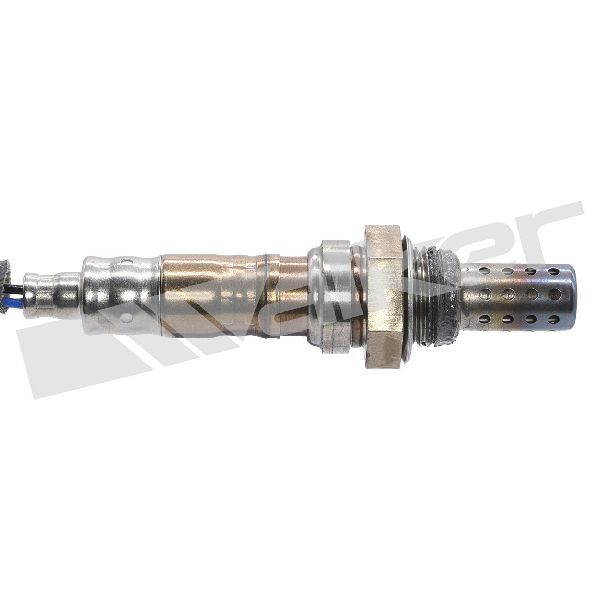
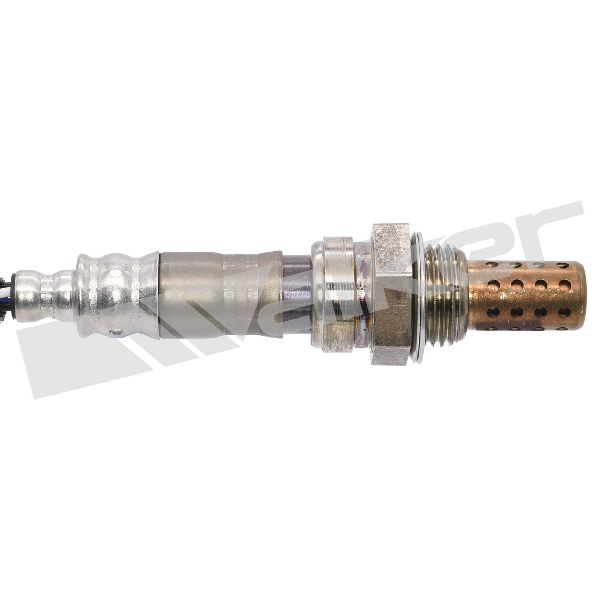
- Faulty Bank 2 Front Air/Fuel Ratio Sensor 🔴 High Probability → Shop Oxygen Sensor Air/fuel sensors (a type of wideband oxygen sensor) are a very common failure point on modern Subarus and directly impact fuel trim. They degrade over time and can send false rich signals to the ECM.
How to confirm: Use a scan tool to monitor the live data for the Bank 2, Sensor 1 (A/F Sensor). A healthy sensor should show a voltage that fluctuates rapidly. A faulty sensor might be stuck at a high voltage (e.g., >0.8V) or a low voltage (<2.2V on some Subaru systems), falsely indicating a rich or lean condition, or respond very slowly. Compare its behavior to the Bank 1 sensor; they should be similar.
Typical fix: Replace the Bank 2 (driver's side) front air/fuel ratio sensor. This is often the first and only part needed.
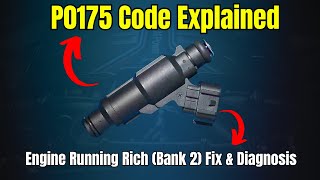
Est. part cost: $100-$250 - Leaking Fuel Injector(s) on Bank 2 🟡 Medium Probability → Shop Fuel Injector Fuel injectors can become stuck partially open due to age or contaminants, allowing excess fuel to enter one or more cylinders. This can wash oil from cylinder walls and dilute the engine oil.
How to confirm: Perform a fuel pressure leak-down test. After shutting the engine off, the fuel rail pressure should hold steady. A rapid drop indicates a leak, likely from an injector. You can also pull the spark plugs on Bank 2 (cylinders 2, 4, 6) and check for one that is excessively black and sooty compared to the others.
Typical fix: Replace the faulty fuel injector(s) on Bank 2. It's often recommended to replace them as a set for that bank.
Est. part cost: $70-$150 per injector - Dirty or Faulty Mass Airflow (MAF) Sensor 🟡 Medium Probability → Shop Fuel Injection Air Flow Meter The MAF sensor can become contaminated, especially if using an over-oiled aftermarket air filter, causing it to under-report the amount of air entering the engine. The ECM then calculates an incorrect (too high) fuel amount for both banks.
How to confirm: Inspect the MAF sensor element for dirt or debris. A good first step is to clean it with dedicated MAF sensor cleaner. If cleaning doesn't help, monitor the MAF reading (g/s) on a scan tool and compare it to specified values. A 3.6L engine should read roughly 3.6 to 5.6 g/s at a stable, warmed-up idle. If both P0172 (Bank 1 Rich) and P0175 are present, the MAF is a much stronger suspect.
Typical fix: Clean the MAF sensor with a dedicated cleaner. If the problem persists, replace the MAF sensor.
Est. part cost: $15-$25 for cleaner, $150-$300 for a new sensor - High Fuel Pressure ⚪ Low Probability A failing fuel pressure regulator can cause system-wide high fuel pressure, forcing too much fuel through the injectors on both banks.
How to confirm: Connect a fuel pressure gauge to the fuel rail's test port. Compare the measured pressure to the manufacturer's specification (typically 40-60 PSI for many port-injected vehicles). Pressure that is too high indicates a faulty regulator or a restriction in the fuel return line.
Typical fix: Replace the fuel pressure regulator.
Est. part cost: $50-$150
Rare But Worth Checking
- Stuck-Open Thermostat or Faulty Coolant Temp Sensor: If the engine doesn't reach proper operating temperature, the ECM will intentionally run a richer mixture for a prolonged period, which could trigger the code. This would likely be accompanied by a low temperature gauge reading or a specific coolant-related trouble code like P0117.
- Exhaust Leak Before the A/F Sensor: An exhaust leak between the cylinder head and the Bank 2 A/F sensor can pull in fresh air, making the sensor read a false lean condition. The ECM then overcompensates by adding fuel, causing an actual rich condition. This is less common but possible.
- Stuck-Open EVAP Purge Solenoid: → Shop Vapor Canister The EVAP purge solenoid controls the flow of fuel vapors from the charcoal canister to the intake manifold. If it gets stuck open, it can create a vacuum leak and allow unmetered fuel vapors into the intake, causing a rich condition. This may also be accompanied by EVAP-related codes like P0442 or P0455.
Diagnosis Steps
- Check for other DTCs. If codes for both banks (P0172 & P0175) are present, start by investigating components common to the whole engine, like the MAF sensor or fuel pressure.
- Use a scan tool to view live data. Observe the Short-Term Fuel Trim (STFT) and Long-Term Fuel Trim (LTFT) for both Bank 1 and Bank 2. For P0175, you will see significantly negative numbers on Bank 2 (e.g., -15% or lower) as the ECM tries to remove fuel.
- Inspect the air intake system. Check for a dirty air filter or any obstructions before the MAF sensor. Ensure all connections are tight.
- Clean the MAF sensor. Disconnect it, remove it, and spray it thoroughly with dedicated MAF sensor cleaner. Let it dry completely before reinstalling. This is a cheap and easy diagnostic step.
- Analyze the Bank 2 Air/Fuel Ratio Sensor (Sensor 1). Graph its voltage on a scan tool. Compare its behavior directly to the Bank 1 sensor. If the Bank 2 sensor is lazy, stuck, or reading significantly different from Bank 1 under similar conditions, it is the likely culprit. A stuck rich sensor will often read a steady high voltage (e.g., 0.8V-0.9V).
- Check fuel pressure. Connect a gauge and verify the pressure is within the OEM specified range (typically 40-60 PSI). Check for pressure drop after shutdown to look for leaking injectors.
- Inspect Bank 2 spark plugs. Remove the plugs from cylinders 2, 4, and 6. If one plug is significantly more black and sooty than the others, it points to a leaking injector in that specific cylinder.
- Check engine oil. Smell the engine oil on the dipstick for a strong gasoline odor, which can indicate that a severe rich condition (like a leaking injector) is diluting the oil. If this is the case, an oil change is mandatory after the repair.
Parts You'll Likely Need
- Bank 2 Front Air/Fuel Ratio Sensor
(OEM #22641AA460)— This is the primary sensor that controls the air-fuel mixture for Bank 2. It is a common wear item and the most frequent cause of this code. Denso is the original equipment manufacturer.
Trusted brands: Denso (OEM), NTK
OEM price range: $180-$250
Aftermarket price range: $100-$160 (Denso P/N: 234-9073) - Mass Airflow Sensor
(OEM #22680AA380)— A dirty or failing MAF sensor can cause rich conditions on both banks. It's a common cause if P0172 is also present.
Trusted brands: Denso, Hitachi
OEM price range: $200-$300
Aftermarket price range: $80-$150 - Fuel Injector
(OEM #16611AA740)— A leaking injector will dump excess fuel into a single cylinder, causing the entire bank to read as rich.
Trusted brands: Subaru OE, Bosch
OEM price range: $100-$150
Aftermarket price range: $50-$90
Related Codes That Often Appear With This One
- P0172 — System Too Rich (Bank 1). If both P0172 and P0175 are present, it strongly suggests a problem that affects both engine banks, such as a faulty MAF sensor, high fuel pressure, or a faulty coolant temperature sensor.
- P0302, P0304, P0306 — Cylinder Misfire on Bank 2. An excessively rich condition can foul the spark plugs on cylinders 2, 4, or 6, leading to misfires on that bank.
- P0442, P0455 — EVAP System Leak Detected. If the EVAP purge solenoid is stuck open, it can cause both a rich condition and set EVAP leak codes.
Technical Service Bulletins (TSBs) & Recalls
- TSB 16-132-20R: This Technical Service Bulletin relates to diagnosing CVT chain slip, judder, and shudder concerns, which is a common complaint on this platform but is unrelated to the P0175 code.
Platform-Specific Known Issues
- A/F Sensor Replacement Nuance: On the EZ36 engine, the front A/F sensors are located in the exhaust manifolds before the catalytic converters. Bank 2 is the driver's side. Access can be tight, but it is a manageable DIY job with an O2 sensor socket. Due to heat cycling, the sensor can be difficult to remove; using a penetrating oil beforehand is recommended. Many owners and technicians strongly advise using a Denso or OEM sensor, as Subarus can be sensitive to aftermarket sensor brands like Bosch.
Mechanic-Grade Diagnostic Values
- Mass Airflow (MAF) Sensor Reading at Idle — expected: Approximately 3.6 to 5.6 g/s for a 3.6L engine at normal operating temperature with no load. A common rule of thumb is engine displacement in liters multiplied by a factor of 1 to 1.2.. Failure: A significantly higher reading suggests the sensor is over-reporting airflow, causing the ECM to inject too much fuel. A significantly lower reading could indicate a vacuum leak downstream of the sensor.
- Long-Term Fuel Trim (LTFT) for Bank 2 — expected: Close to 0%, typically within +/- 5%.. Failure: A P0175 code is typically set when the LTFT reaches its negative limit, often between -15% and -30%, indicating the ECM is consistently removing the maximum amount of fuel it can.
- Bank 2, Sensor 1 Air/Fuel Sensor Voltage (Subaru Specific) — expected: On many Subarus, the A/F sensor voltage should hover around 2.2V at idle.. Failure: A voltage reading significantly below 2.2V may indicate a rich condition, while a reading significantly above could indicate lean. A bad sensor might show a reading below 0.5V or above 4.5V.
- Fuel Pressure (Port Injection) — expected: Generally between 40-60 PSI at the fuel rail test port.. Failure: Pressure significantly above the specified range indicates a faulty fuel pressure regulator or a restricted fuel return line, forcing too much fuel into the injectors.
Scan Tool Commands That Help
- Subaru Select Monitor (SSM) or equivalent professional scan tool: EVAP Purge Solenoid Duty Cycle Control — If a stuck EVAP purge solenoid is suspected (especially if P0442/P0455 codes are also present), this bidirectional command allows a technician to manually open and close the valve to test its function. You can command it closed and check for vacuum at the intake port to see if it's leaking.
- Subaru Select Monitor (SSM) or equivalent professional scan tool: Fuel Trim Reset / A/F Learning Value Reset — After replacing a component that affects the air/fuel mixture (like an A/F sensor or MAF sensor), resetting the learned fuel trim values is crucial. This forces the ECM to start learning the new fuel adjustments from a neutral baseline, preventing it from applying old, incorrect adjustments to the new, functioning part.
Wiring & Ground Locations
- ECM (Engine Control Module) Location — On the passenger side, under the carpet and floorboard, protected by a metal plate with 10mm screws.. Water intrusion or physical damage to the ECM can cause this and many other codes. Knowing its location is the first step in checking its connectors and integrity if all sensors and wiring test good.
- ECM Main Ground — The ECU grounds itself to a point on the intake manifold.. Subarus are notoriously sensitive to grounding issues. A poor ground connection at the intake manifold can cause erratic sensor readings, including from the A/F sensors, leading to incorrect fuel calculations and codes like P0175. This is especially important to check if TGV deletes or manifold spacers have been installed.
- Bank 2 A/F Sensor Connector — Near the top of the engine, to the left of the upper radiator hose. It is one of two similar connectors; the Bank 2 (driver's side) sensor connector is typically located here for easy access.. This is the primary connection point to test the A/F sensor's heater resistance and signal wire integrity without having to access the sensor itself, which can be difficult to reach.
Diagnostic Flowchart
Other Known Issues on This Vehicle
Issues unrelated to this code that are worth knowing about as an owner of this generation:
- Torque Converter Shudder 🟠 Medium — Common on 2008-2009 models, especially during light acceleration between 20-40 mph. Many owner complaints online. (Ref: Subaru issued TSB 16-132-20R to help diagnose transmission judder issues, though owners reported mixed success with dealer fixes like computer reflashes or torque converter replacement.)
- Oil Leaks from Timing Chain Cover/Cam Carriers 🟠 Medium — Can develop with age and mileage. The large front timing chain cover provides a large sealing surface prone to leaks over time.
- Faulty Puddle Lights in Side Mirrors 🟡 Low — Common on 2008-2012 models. A design flaw allowed water to collect in the side mirror housing, shorting out the puddle light. (Ref: A recall was issued to seal the wiring harness to prevent corrosion.)
- Hood Latch Failure 🔴 High — Reported on 2010-2014 models, where a faulty latch could cause the hood to open while driving. (Ref: A recall was issued to inspect, clean, and replace defective hood latch components.)
- Overheating due to Radiator Issues 🟠 Medium — The stock radiator can be a weak point. Owners report that upgrading to an all-aluminum radiator is a common preventative measure.
Used vs. New Parts: Buying Guide for This Vehicle
When a used part is the smart pick: For this repair, used parts are generally not recommended for sensors or injectors. However, a used structural component like an intake manifold or fuel rail from a low-mileage donor vehicle could be a cost-effective choice if they were damaged during repair.
Donor-vehicle mileage cap: roughly under 75000 miles for the part to have meaningful remaining life.
What to inspect on the donor part:
- For any electronic part, check for corrosion on pins.
- For mechanical parts like injectors, look for signs of heavy carbon buildup or rust.
- Verify the part number on the donor part matches the required OEM number exactly.
OEM-only on this vehicle (don't cheap out):
- Air/Fuel Ratio Sensor: Subarus are notoriously sensitive to the brand of A/F sensor. Using the OEM supplier (Denso) or a genuine Subaru part is strongly advised to avoid compatibility issues, even if aftermarket brands are cheaper.
- Mass Airflow (MAF) Sensor: Similar to the A/F sensor, using an OEM (Denso/Hitachi) or genuine Subaru MAF is the safest bet to ensure accurate airflow readings.
Aftermarket brands forum-validated for this vehicle:
- Denso (for A/F and MAF sensors - often the OEM supplier)
- NTK (for Air/Fuel sensors)
- Bosch (for fuel injectors)
Brands owners have reported issues with on this vehicle:
- Generic, unbranded 'white-box' sensors from online marketplaces. These often have high failure rates or incorrect calibration, leading to a repeat of the same code.
Real Owner Stories
Aggregated from forums and TSBs cited above. Mileages and costs reflect what owners reported in those sources.
2016 Subaru Legacy 3.6R (EZ36D)
Symptoms: The owner utilized detailed diagnostic processes to analyze sensor data and test injectors for a Bank 2 fuel trim issue.
What fixed it: Analysis and replacement of the Bank 2 Air/Fuel sensor based on live data comparison with Bank 1.
Source hint: subaruoutback.org thread titled '2016 Subaru Liberty (Legacy) 3.6R (EZ36D) P0174 - System Too Lean (Bank 2)'
2008-2009 Subaru B9 Tribeca
Symptoms: Transmission judder and torque converter shudder, especially during light acceleration between 20-40 mph.
What fixed it: Dealer fixes included computer reflashes or torque converter replacement, though results were mixed.
Source hint: edmunds.com Car Forums thread titled 'Subaru B9 Tribeca Transmisson Problems'
Related OBD-II Codes
Frequently Asked Questions
Does TSB 16-132-20R explain why my Tribeca is throwing a P0175 code?
Which side of my EZ36D engine is Bank 2 for the P0175 code?
Can I use a Bosch air/fuel sensor to fix the P0175 on my Tribeca?
What should the MAF sensor reading be at idle for the 3.6L engine?
If I have both P0172 and P0175, what is the most likely cause?
Why does my oil smell like gasoline when the P0175 code is active?
Helpful Videos


Used OEM Parts in Stock
New Aftermarket Parts Available


The information in this article is provided for general reference and educational purposes only. Vehicle specifications, procedures, and part compatibility can vary by production date, trim level, and region. Always consult your vehicle's factory service manual and verify part numbers before purchasing or performing repairs. Safety-critical components such as airbags, seat belts, and braking systems should be installed by a qualified professional.
- Subaru Tribeca:
- 🧭 Diagnostic Flowchart
- 🎬 Helpful Videos
- 🛍️ Shop This Part
- What's Unique About the 2008-2014 Subaru Tribeca
- Symptoms You May Notice
- Most Likely Causes
- Rare But Worth Checking
- Diagnosis Steps
- Parts You'll Likely Need
- Related Codes That Often Appear With This One
- Technical Service Bulletins (TSBs) & Recalls
- Platform-Specific Known Issues
- Mechanic-Grade Diagnostic Values
- Scan Tool Commands That Help
- Wiring & Ground Locations
- Other Known Issues on This Vehicle
- Used vs. New Parts: Buying Guide for This Vehicle
- Real Owner Stories
- 2016 Subaru Legacy 3.6R (EZ36D)
- 2008-2009 Subaru B9 Tribeca
- Related OBD-II Codes
- Frequently Asked Questions
- 🎟️ Get 5% Off