

P0175 on 2003-2009 Toyota 4Runner 4.0L V6: Causes, Fixes, and Parts Guide
P0175 on a 4th Gen 4Runner usually points to a faulty driver's side Air/Fuel ratio sensor or a dirty Mass Airflow (MAF) sensor. Start by cleaning the MAF sensor for about $15, a common and easy first step. If that fails, the A/F sensor is the next likely culprit, costing around $150 for an OEM Denso part. Leaking fuel injectors are another significant possibility if sensors check out.
- P0175 means the driver's side of your engine is running too rich.
- The easiest and cheapest first step is to clean the MAF sensor with dedicated cleaner.
- The most common fix is replacing the Bank 2, Sensor 1 (upstream driver's side) Air/Fuel Ratio sensor. Always use a quality Denso part.
- Before replacing the A/F sensor, swap it with the passenger side sensor to confirm it's faulty. If the code doesn't move, you likely have a leaking fuel injector.
- Ignoring this code can lead to a damaged catalytic converter, a much more expensive repair.
What's Unique About the 2003-2009 Toyota 4Runner
The 1GR-FE engine in the 4th generation 4Runner is known for its durability, and this code rarely indicates a catastrophic engine failure. The diagnostic challenge is often determining whether the Air/Fuel ratio sensor has failed and is sending a false 'rich' signal, or if it's correctly reporting a genuine rich condition caused by another component, like a leaking fuel injector. While a dirty MAF sensor is a common cause for rich codes on many vehicles, owners of this platform frequently find a faulty A/F sensor or a leaking injector to be the root cause after cleaning the MAF yields no results.
Symptoms You May Notice
- Noticeably reduced fuel economy
- Rough or unstable idle, sometimes feeling like it might stall
- Strong smell of gasoline or rich exhaust fumes
- Black smoke from the tailpipe, especially under acceleration
- Engine hesitation or lack of power
- Difficulty starting the engine
- Check Engine Light is on 🎬 Watch: A deep dive into P0172 and P0175 causes and fixes
- Replacing the oxygen (O2) sensor without testing. The A/F sensor is often just accurately reporting a problem caused by something else, like a leaking injector. The sensor swap test is crucial to avoid wasting money on a new sensor you don't need.
- Assuming the A/F sensor is bad when the MAF sensor is simply dirty. Cleaning the MAF is a cheap and easy first step that solves many fuel trim issues.
Most Likely Causes
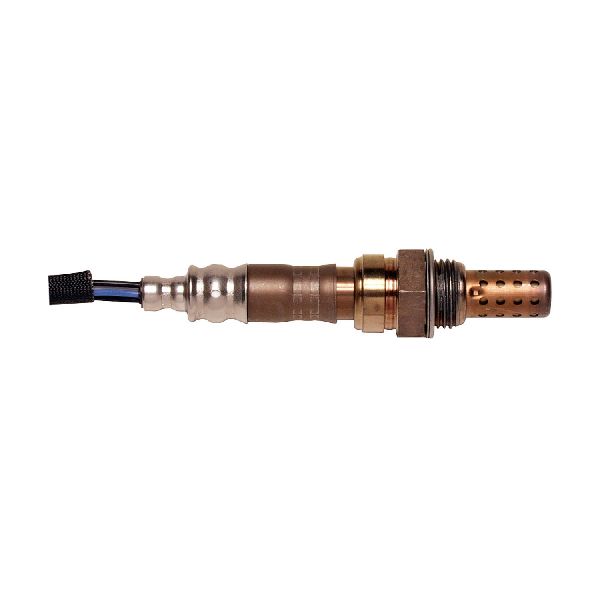
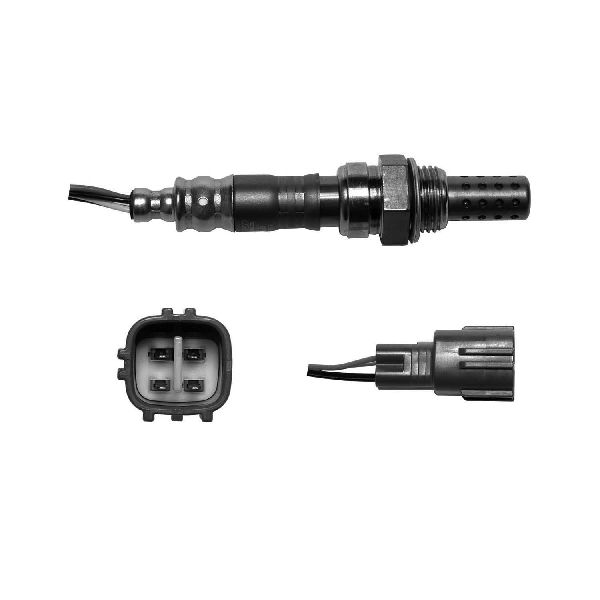
- Faulty Air/Fuel Ratio Sensor (Bank 2, Sensor 1) 🔴 High Probability → Shop Oxygen Sensor The upstream A/F sensor (an advanced type of oxygen sensor) is a sensitive component that wears out over time. It can fail and send incorrect 'rich' signals to the computer. The 1GR-FE is also known to be sensitive to the signal quality of non-OEM sensors, making the OEM Denso part highly recommended.
How to confirm: Swap the upstream A/F sensors from Bank 1 (passenger side) and Bank 2 (driver side). They are the same part number. Clear the codes and drive. If the code changes to P0172 (System Too Rich Bank 1), the sensor is confirmed bad. If P0175 returns, the sensor is likely good and is correctly reporting a rich condition.
Typical fix: Replace the Bank 2, Sensor 1 Air/Fuel Ratio sensor. It is strongly recommended to use the OEM Denso part to avoid compatibility issues.
Est. part cost: $120-$180 - Dirty or Faulty Mass Airflow (MAF) Sensor 🔴 High Probability → Shop Fuel Injection Air Flow Meter The MAF sensor wire can become contaminated with dirt, debris, or oil from aftermarket oiled air filters, causing it to inaccurately measure the amount of air entering the engine. This leads the computer to miscalculate the fuel needed. This is a very common starting point for diagnosis due to the ease and low cost of cleaning.
How to confirm: Unplug the MAF sensor and see if the idle quality improves (the engine will run on default values). A better test is to remove the sensor and inspect the small wires for contamination. Use a scan tool to monitor MAF readings at idle and under load to see if they are logical. A dirty sensor will often read lower than actual airflow, causing the ECU to under-fuel (lean), but a faulty one can send erratic signals causing a rich condition.
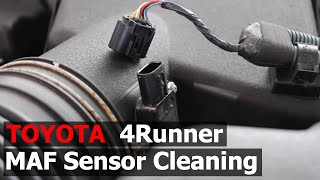
Typical fix: Clean the sensor wires carefully with a dedicated MAF sensor cleaner spray. 🎬 See how to safely clean your Toyota's mass airflow sensor Do not touch the wires. Allow it to dry completely before reinstalling. If cleaning does not resolve the issue, replace the sensor with an OEM Denso part.
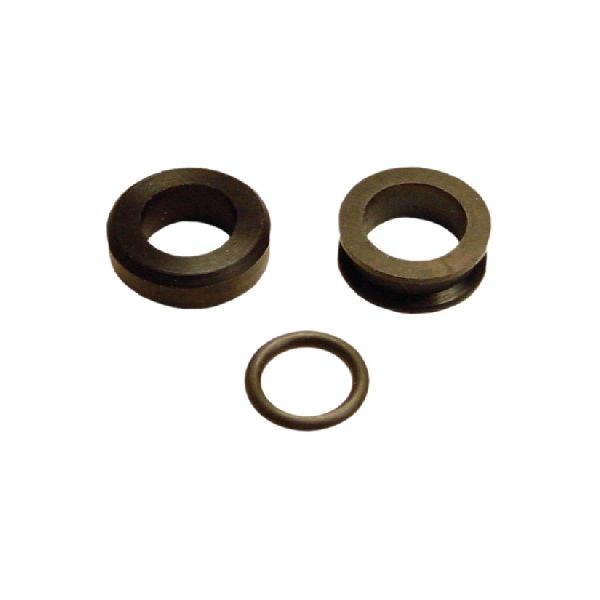
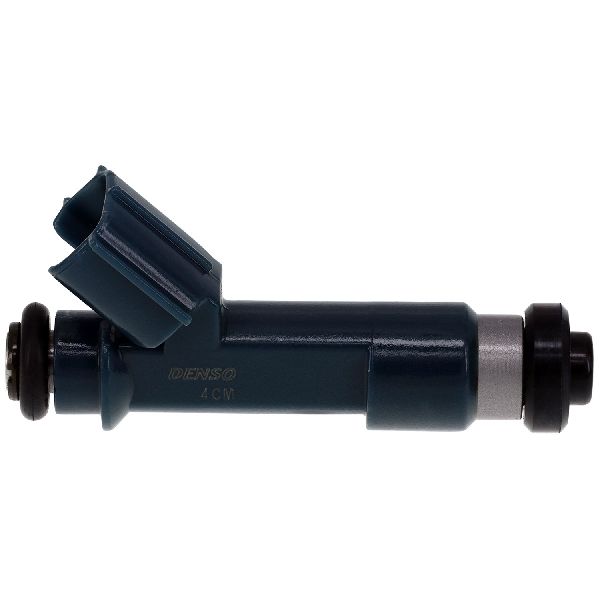
Est. part cost: $15 for cleaner, $70-$120 for a new sensor - Leaking Fuel Injector(s) on Bank 2 🟡 Medium Probability → Shop Fuel Injector An injector can become stuck partially open or develop a poor seal from age or fuel deposits, causing it to leak excess fuel into one or more cylinders on Bank 2 (driver's side cylinders 2, 4, 6). Forum discussions suggest early models (2003-2006) may have cooling issues in the rear cylinders, potentially leading to heat-soaked and leaking injectors, particularly in cylinder 6.
How to confirm: Perform a fuel pressure leak-down test. After pressurizing the rail, turn the engine off and watch the pressure gauge. A rapid drop indicates a leak, which could be an injector. You can also pull the spark plugs on Bank 2 and check for a plug that is black, sooty, or wet with fuel, which would pinpoint the leaking cylinder.
Typical fix: Replace the faulty fuel injector. It is often recommended to replace all three injectors on the affected bank as a balanced set to ensure even fuel delivery.
Est. part cost: $50-$150 per injector - High Fuel Pressure ⚪ Low Probability The fuel pressure regulator is integrated into the fuel pump assembly in the tank. A failure can cause system-wide high fuel pressure, forcing too much fuel through the injectors.
How to confirm: Connect a fuel pressure gauge to the fuel rail's service port. Check the pressure at idle and compare it to the manufacturer's specification, which is 281 to 287 kPa (40.8 to 41.7 psi) for the 1GR-FE. If the pressure is significantly higher, the regulator/pump assembly is suspect.
Typical fix: Replace the fuel pump assembly which contains the integrated fuel pressure regulator.
Est. part cost: $200-$400 for the assembly
Rare But Worth Checking
- Stuck-Open Thermostat or Faulty ECT Sensor: If the engine's computer believes the engine is always cold (due to a stuck-open thermostat or a faulty Engine Coolant Temperature sensor), it will continuously command a rich fuel mixture intended for warm-up. This is worth checking if you notice the temperature gauge is not reaching its normal position after driving.
- Leaking EVAP Purge Valve: → Shop Vapor Canister A purge valve stuck open can allow unmetered fuel vapor from the charcoal canister to enter the intake manifold at the wrong time, creating a rich condition. This usually affects both banks, but can sometimes manifest on one side first.
Diagnosis Steps
- Connect an OBD-II scanner and confirm P0175 is the primary code. Note any other codes present, especially P0172 or misfire codes.
- Observe live data. Check the Short-Term (STFT) and Long-Term Fuel Trim (LTFT) for Bank 2. For a P0175, you will see highly negative numbers (e.g., -15% to -30%) as the ECM tries to remove fuel. Compare with Bank 1 trims to see if the issue is isolated.
- Start with the easiest and cheapest step: Clean the MAF sensor. Remove the sensor located on the air intake tube, spray the delicate wires with dedicated MAF sensor cleaner, and let it dry completely before reinstalling. Do not touch the wires. Clear codes and re-test.
- If the code returns, perform a sensor swap. Exchange the Bank 1 (passenger side) and Bank 2 (driver side) upstream Air/Fuel sensors. They are located in the exhaust manifold before the catalytic converter. 🎬 Watch: Step-by-step guide to replacing your 4Runner's oxygen sensors Clear the codes and drive the vehicle. If the code returns as P0172 (Bank 1 Rich), the sensor you moved is faulty. If P0175 returns, the sensor is good and you have a real rich condition on Bank 2.
- Check fuel pressure. Connect a fuel pressure gauge to the fuel rail. Pressure at idle should be stable between 40.8 and 41.7 psi. Shut the engine off and monitor for rapid pressure drop. Per service data, pressure should remain above 21 psi for at least 5 minutes. A fast drop indicates a leak, likely from an injector or the fuel pump check valve.
- If a leak is suspected from the pressure test, inspect the spark plugs on Bank 2 (cylinders 2, 4, 6 on the driver's side). A plug that is wet with fuel or covered in heavy black soot points to a leaking injector in that specific cylinder.
- Check the engine coolant temperature (ECT) sensor reading on your scan tool to ensure the engine is reaching and maintaining normal operating temperature (around 180-200°F). A reading that stays low suggests a stuck-open thermostat.
Parts You'll Likely Need
- Air/Fuel Ratio Sensor (Bank 2, Sensor 1 - Upstream Driver's Side)
(OEM #89467-35110 (Denso 234-9051 is a common cross-reference))— This is the most common electrical component to fail and cause a false rich signal on this specific engine. Using the OEM Denso part is critical for proper function.
Trusted brands: Denso (OEM)
OEM price range: $150-$200
Aftermarket price range: $80-$140 - Fuel Injector
(OEM #23209-39015 (superceded by 23209-39075))— The second most likely cause, where an injector leaks excess fuel into a cylinder, causing a true rich condition.
Trusted brands: Denso (OEM), Aisin
OEM price range: $150-$250
Aftermarket price range: $80-$120
Related Codes That Often Appear With This One
- P0172 — System Too Rich (Bank 1). If both P0172 and P0175 are present, it points to a global issue affecting both banks, such as a faulty MAF sensor, high fuel pressure, or a leaking EVAP purge valve.
- P0300, P0302, P0304, P0306 — Misfire codes for Bank 2 cylinders (2, 4, 6). An excessively rich mixture can foul spark plugs and cause misfires on the affected bank. A P0306 (Cylinder 6 Misfire) is particularly noteworthy on 2003-2005 models as it can be an early sign of the known head gasket issue.
- P1604 — Startability Malfunction. According to TSB Bulletin #T-SB-0166-19, this code may appear alongside P0175 and negative fuel trims when a rich condition is present.
Technical Service Bulletins (TSBs) & Recalls
- While no TSBs directly address P0175 on the 4Runner, related TSBs for the 1GR-FE engine exist. T-SB-0044-14 addresses a spark knock condition on 2012-2014 Tacomas via an ECM update, showing Toyota has issued logic updates for fuel/ignition control. EG011-07 was issued for an intermittent no-start on 2005-2007 Tacomas, also resolved with an ECM calibration update. These indicate that in rare cases, an ECM software issue could be a factor.
- Manufacturer TSB Bulletin #T-SB-0166-19_Rev notes that for similar Toyota platforms, a rich condition (DTC P0172 and/or P0175) may be accompanied by negative fuel trims and an elevated alcohol density reading in the Techstream data list.
- TSB Bulletin #T-SB-0166-19 confirms that a System Too Rich condition on Bank 1 or Bank 2 can be associated with a P1604 Startability Malfunction code.
Platform-Specific Known Issues
- A user on Reddit with a 2005 4Runner experienced both P0172 and P0175 codes. After trying multiple fixes, the problem was ultimately resolved by replacing the MAF sensor with a new Hitachi-branded unit.
- On Toyota-4Runner.org, a thread titled 'Finally fixed my P0172 and P0175 codes' details a user's long diagnostic journey. After replacing O2 sensors and cleaning the MAF with no luck, the issue was traced to leaking fuel injectors. Replacing all six injectors resolved the rich codes.
- Another Reddit user was stumped by recurring P0172 and P0175 codes. They first cleaned the throttle body, which temporarily fixed it. The codes returned with a strong fuel smell. Cleaning and then replacing the MAF sensor made fuel trims look much better and cleared the Check Engine Light.
Mechanic-Grade Diagnostic Values
- Mass Airflow (MAF) Sensor Reading at Idle (Warm) — expected: 2.5 to 4.7 g/s.. Failure: Readings that are consistently high (e.g., >5.0 g/s) can cause the ECU to inject too much fuel, leading to a rich condition. Readings that don't spike to 20-50 g/s on a sharp throttle snap can also indicate a faulty sensor.
- Air/Fuel Ratio Sensor Heater Resistance — expected: 1.8 to 3.4 Ω at 20°C (68°F) between terminals +B and HT of the sensor connector.. Failure: Resistance outside this range, or an open circuit, indicates a failed heater element, which will delay the sensor's ability to provide accurate readings and can contribute to fuel trim issues.
- Fuel Injector Coil Resistance — expected: 11.6 to 12.4 Ω at 20°C (68°F).. Failure: Resistance outside this range indicates a fault in the injector's electrical coil. However, this test will not identify a mechanical issue like leaking or a poor spray pattern.
- Fuel Pressure at Idle — expected: 281 to 287 kPa (40.8 to 41.7 psi).. Failure: Pressure significantly higher than this range points towards a faulty fuel pressure regulator, which is integrated into the fuel pump assembly.
- Heated Oxygen Sensor (Downstream) Heater Resistance — expected: 11 to 16 Ω at 20°C (68°F) between terminals +B and HT.. Failure: Resistance outside this range indicates a failed heater element in the downstream sensor. While this won't directly cause P0175, a faulty downstream sensor can mask other issues or fail to confirm catalytic converter efficiency.
Hidden / Shadow Codes Worth Checking
- Mode $06 Data: While Toyota doesn't use public 'shadow codes', a professional scan tool like Techstream can access Mode $06 data. This shows the results of the ECU's self-tests on various components. A technician can view the raw test values for A/F sensors and injectors (e.g., Test ID $81 for O2 sensor data) and compare them against minimum/maximum limits. A component that is consistently near its limit but hasn't failed outright can be identified here before it triggers a standard DTC. (see via Professional OBD-II scanner with Mode $06 support (e.g., Toyota Techstream, high-end Autel/Launch scanners).)
Scan Tool Commands That Help
- Toyota Techstream: Active Test: Control the Injection Volume — This function allows a technician to increase or decrease the fuel injection volume for a specific bank. When diagnosing P0175, a technician can command a decrease in fuel on Bank 2 and watch the A/F sensor and fuel trim data. If the engine smooths out and trims return to normal, it strongly suggests a component was delivering too much fuel (like a leaking injector), rather than a sensor providing a false signal.
- Toyota Techstream: Active Test: EVAP Purge VSV — To test for a leaking EVAP purge valve without disassembly. With the engine at idle, a technician can command the valve to be 'OFF' (closed). If fuel trims are still negative and smelling fuel vapors at the intake port, the valve is likely stuck open mechanically, allowing un-metered fuel vapor to enter the engine and cause a rich condition.
Wiring & Ground Locations
- A/F Sensor Bank 2 Connector — Located on the driver's side of the engine, accessible from underneath the vehicle, just behind the front wheel well area. The wiring harness runs up from the sensor in the exhaust manifold to a connector mounted on the chassis.. This connector is a primary test point. A technician can check for reference voltage, ground, and the signal from the sensor here. Corrosion or damage to the pins can cause erratic readings, mimicking a failed sensor.
- ECM A/F Sensor Pins (Connector B2, B3) — At the Engine Control Module (ECM). Bank 2 Sensor 1 signals are on specific pins: A2A+ (Pin B2-23), A1A- (Pin B2-22), and heater +B (Pin B2-2).. For advanced diagnosis, a technician can back-probe these pins to verify signal integrity directly at the computer. This definitively rules out any wiring issues between the sensor and the ECM. For example, checking for 2.9V on A1A- and 3.3V on A2A+ can confirm the sensor's internal reference voltages are correct.
Real Owner Repair Stories
- Tacoma World Forum User (Multiple 1GR-FE engines from 2004-2008 Tacomas and FJs (same engine as 4Runner)) — Gasoline smell in engine oil, recurring rich conditions, and in some cases, head gasket failure.
❌ Tried (didn't work) Initial diagnoses often focused on sensors or other common causes without success.
✅ What actually fixed it The user discovered a pattern where insufficient cooling of the rear cylinders (especially cylinder #6 on the driver's side, Bank 2) on pre-2007 engines was causing the fuel injectors to become heat-soaked and leak or get stuck open. This created a persistent rich condition on that bank that was not caused by a sensor. The ultimate fix was replacing the leaking fuel injector(s) on the affected bank. The user theorized this was a design flaw that Toyota later addressed with cooling jacket revisions.
"I Checked Everything" — The Actual Cause
- A common scenario for P0175 is a leaking fuel injector. A standard smoke test, which pressurizes the intake manifold with smoke to find vacuum leaks, will come back clean because the leak is internal to the engine (fuel leaking into a cylinder), not external (un-metered air entering the intake).
- A small crack in the exhaust manifold or a leaking exhaust manifold gasket located *before* the Bank 2 A/F sensor can cause a P0175 code. During the exhaust stroke, the crack can pull in a small amount of fresh air (venturi effect). The A/F sensor sees this oxygen, interprets it as a lean condition, and the ECU responds by adding excessive fuel to Bank 2, causing a genuine rich condition. This is often missed because technicians smoke test the intake, not the exhaust manifolds.
OEM Part Supersession History
23209-39015→23209-39075— Likely minor internal improvements or manufacturing process changes.
Heads up: The parts are interchangeable. Other compatible part numbers for the same injector include 23209-39035 and 23250-31060.89467-35050→89467-35110— Updated sensor design for improved accuracy or longevity.
Heads up: While both may fit, it is critical to use the part number specified for the vehicle's VIN and calibration. Using the wrong sensor, even if it's a genuine Denso part, can cause persistent fuel trim issues. 89467-35110 is the correct part for most 2005-2009 models.
Model Year Variations Within This Range
- 2003-2004: These early models were equipped with a 4-speed automatic transmission (A340E/F) paired with the V6. The 5-speed (A750F) became standard for the V6 in 2005. This does not directly affect P0175 causes but is a key vehicle difference.
- 2003-2005: These pre-facelift models are more frequently cited in forum discussions regarding head gasket failures and potential cooling-related issues in the rear cylinders that may contribute to injector problems. While not a guaranteed failure, the risk may be slightly higher than on 2006+ models.
- 2006-2009: These are 'facelift' models which included cosmetic updates (projector headlights, LED taillights) and other refinements. While the core 1GR-FE engine remained the same single VVT-i design, it's possible minor revisions to engine management or cooling were made, as reports of the heat-soak injector issue seem less common for these years.
Diagnostic Flowchart
Other Known Issues on This Vehicle
Issues unrelated to this code that are worth knowing about as an owner of this generation:
- Premature Head Gasket Failure 🔴 High — Most common on 2003-2005 models, typically appearing between 120k-150k miles. The failure often occurs near cylinder #6, potentially causing a P0306 misfire code. Toyota updated the gasket design for the 2006 model year (build dates after 10/2005).
- Frame Rust and Corrosion 🔴 High — Widespread issue, especially in regions using road salt. Unlike the Tacoma and Tundra, the 4th Gen 4Runner was not covered by Toyota's frame replacement warranty program. A class-action lawsuit regarding this issue was ultimately dismissed in early 2023. Inspection is critical before purchase. (Ref: No recall, but a class-action lawsuit was attempted.)
- Seized Front Brake Caliper Pistons 🟠 Medium — Very common issue where the caliper pistons corrode and seize, causing brake drag, pulling, a burning smell, and uneven pad wear. It is so common that many owners replace calipers in pairs when one fails, and some upgrade to the slightly larger calipers from the 5th Gen 4Runner as a direct bolt-on replacement.
- Water Pump Failure 🟡 Low — The water pump is considered a wear item that can fail prematurely on some 1GR-FE engines, though often after 100k+ miles. Symptoms include coolant leaks from the front of the engine and overheating.
Used vs. New Parts: Buying Guide for This Vehicle
When a used part is the smart pick: For this repair, used parts are generally not recommended for the primary suspects (sensors, injectors). However, if a diagnosis leads to a larger component like a fuel rail, engine wiring harness, or intake manifold, a quality-inspected used part from a reputable auto recycler is a viable cost-saving option.
Donor-vehicle mileage cap: roughly under 150000 miles for the part to have meaningful remaining life.
What to inspect on the donor part:
- For any used part, check for excessive corrosion, a common issue on 4Runners from rust-belt states.
- If possible, check the donor vehicle's oil cap for signs of milky sludge, indicating a potential head gasket issue.
- Avoid parts from vehicles that show signs of fire, flood, or a severe frontal collision.
OEM-only on this vehicle (don't cheap out):
- Air/Fuel Ratio Sensor
- Mass Airflow (MAF) Sensor
Aftermarket brands forum-validated for this vehicle:
- Denso (This is the Original Equipment Manufacturer for the electronics; always the best choice)
- Aisin (An OEM for Toyota, particularly for fuel system components like the fuel pump assembly)
Brands owners have reported issues with on this vehicle:
- Unbranded, 'white-box' sensors from online marketplaces.
- Any brand that does not explicitly state it is a direct replacement for the specific OEM part number. The 1GR-FE is known to be very sensitive to sensor signal quality.
Real Owner Stories
Aggregated from forums and TSBs cited above. Mileages and costs reflect what owners reported in those sources.
2005 Toyota 4Runner 1GR-FE 4.0L V6
Symptoms: Experienced both P0172 and P0175 codes simultaneously.
What fixed it: Replacing the MAF sensor with a new Hitachi-branded unit.
Source hint: Reddit user report mentioned in vehicle_specific_issues
2003-2009 Toyota 4Runner 4.0L V6
Symptoms: Check Engine Light with P0172 and P0175 codes; owner replaced O2 sensors and cleaned the MAF with no success.
What fixed it: Replacing all six fuel injectors after tracing the issue to leaks.
Source hint: Toyota-4Runner.org thread titled 'Finally fixed my P0172 and P0175 codes'
2003-2009 Toyota 4Runner 4.0L V6
Symptoms: Recurring P0172 and P0175 codes accompanied by a strong fuel smell. A throttle body cleaning only provided a temporary fix.
What fixed it: Cleaning and then eventually replacing the MAF sensor.
Source hint: Reddit user report mentioned in vehicle_specific_issues
Related OBD-II Codes
Frequently Asked Questions
Should I use an aftermarket Air/Fuel Ratio sensor for my 1GR-FE engine?
Is there a TSB for fuel logic issues on the 2005-2007 4Runner or Tacoma?
How can I tell if my Bank 2 A/F sensor is actually bad without buying a new one?
Could a dirty air filter cause this rich condition on my 4Runner?
What are the specific fuel pressure specs for the 2003-2009 4Runner 4.0L?
Which cylinders should I check for leaking injectors if I have a P0175 code?
Helpful Videos

We Have This Part in Stock


The information in this article is provided for general reference and educational purposes only. Vehicle specifications, procedures, and part compatibility can vary by production date, trim level, and region. Always consult your vehicle's factory service manual and verify part numbers before purchasing or performing repairs. Safety-critical components such as airbags, seat belts, and braking systems should be installed by a qualified professional.
- Toyota 4Runner:
- 🧭 Diagnostic Flowchart
- 🎬 Helpful Videos
- 🛍️ Shop This Part
- What's Unique About the 2003-2009 Toyota 4Runner
- Symptoms You May Notice
- Most Likely Causes
- Rare But Worth Checking
- Diagnosis Steps
- Parts You'll Likely Need
- Related Codes That Often Appear With This One
- Technical Service Bulletins (TSBs) & Recalls
- Platform-Specific Known Issues
- Mechanic-Grade Diagnostic Values
- Hidden / Shadow Codes Worth Checking
- Scan Tool Commands That Help
- Wiring & Ground Locations
- Real Owner Repair Stories
- "I Checked Everything" — The Actual Cause
- OEM Part Supersession History
- Model Year Variations Within This Range
- Other Known Issues on This Vehicle
- Used vs. New Parts: Buying Guide for This Vehicle
- Real Owner Stories
- 2005 Toyota 4Runner 1GR-FE 4.0L V6
- 2003-2009 Toyota 4Runner 4.0L V6
- 2003-2009 Toyota 4Runner 4.0L V6
- Related OBD-II Codes
- Frequently Asked Questions
- 🎟️ Get 5% Off