

P0175 on 2017-2020 Toyota Sienna: System Too Rich (Bank 2) Causes and Fixes
On a 2017-2020 Toyota Sienna, code P0175 most often points to a dirty or faulty Mass Airflow (MAF) sensor or a failing Bank 2 Air-Fuel Ratio sensor. Cleaning the MAF sensor is a good first step, but replacement with a quality OEM part (Denso) is often required to resolve the issue permanently. Bank 2 is the rear cylinder bank, closer to the firewall.
- P0175 on your Sienna means the engine is running too rich on the cylinder bank near the firewall.
- The most likely causes are a dirty/faulty Mass Airflow (MAF) sensor or a bad Air-Fuel Ratio sensor.
- Start your diagnosis by cleaning the MAF sensor with a dedicated cleaner; this is a cheap and easy first step.
- This engine is sensitive to sensor quality. Use OEM (Denso) parts for MAF and A/F sensors to avoid repeat issues.
- Check if your vehicle is affected by the fuel pump recall, as this involves the fuel delivery system.
What's Unique About the 2017-2020 Toyota Sienna
While the causes for a rich code are universal, this Sienna's 2GR-FKS engine appears particularly sensitive to the Mass Airflow (MAF) sensor's accuracy. Diagnostic evidence from a similar Toyota V6 engine showed that an improperly designed aftermarket MAF sensor was the root cause of P0172/P0175 codes, as it miscalculated airflow at idle and under load. This highlights the importance of using high-quality, OEM-spec sensors on this platform to avoid misdiagnosis and repeat repairs. The D-4S dual injection system (port and direct) also adds complexity, as issues can arise from either the low-pressure or high-pressure fuel systems and their respective injectors.
Symptoms You May Notice
- Check Engine Light is on
- Reduced fuel economy
- Rough or unstable idle
- Hesitation or lack of power during acceleration
- Strong smell of gasoline from the exhaust
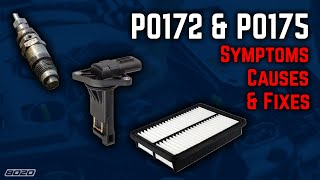
- Black smoke from the exhaust pipe in severe cases 🎬 Watch: P0172 & P0175 symptoms and common causes explained.
- Replacing the Air-Fuel Ratio (O2) sensor when the actual fault is a dirty or incorrect aftermarket Mass Airflow (MAF) sensor.
Most Likely Causes
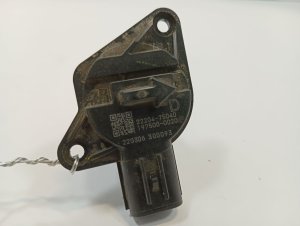
- Dirty or Faulty Mass Airflow (MAF) Sensor 🔴 High Probability → Shop Fuel Injection Air Flow Meter These engines are sensitive to airflow readings. A dirty sensor or a poorly designed aftermarket sensor can provide incorrect data, causing the ECM to command too much fuel. Contamination from oil on an aftermarket air filter can also foul the sensor.
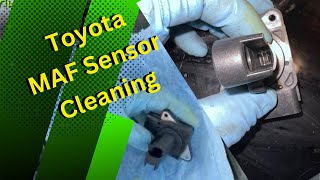
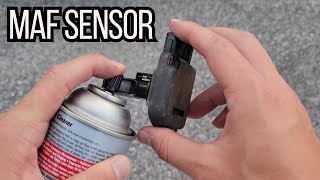
How to confirm: Inspect the sensor for dirt or debris. Clean it using only dedicated MAF sensor cleaner. 🎬 See how to properly clean a Toyota MAF sensor. If the problem persists, monitor MAF readings (g/s) with a scan tool to see if they are stable and logical for the engine RPM. Compare the physical design of the sensor to an OEM part if it's suspected to be a cheap replacement. A faulty aftermarket sensor may cause rich idle but lean conditions under load.
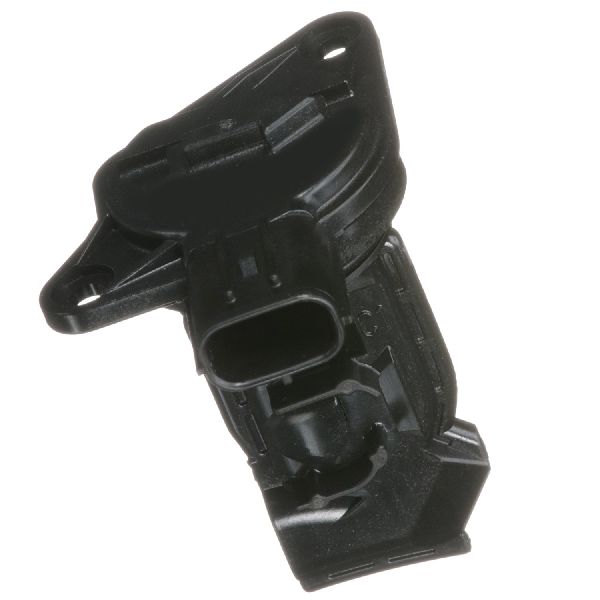
Typical fix: First, attempt to clean the sensor. If that fails, replace the MAF sensor with a high-quality OEM or equivalent brand like Denso (Part No. 22204-F0030).
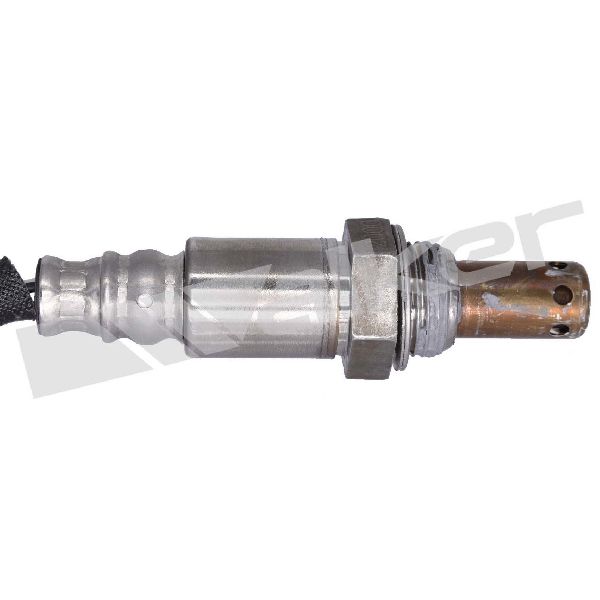
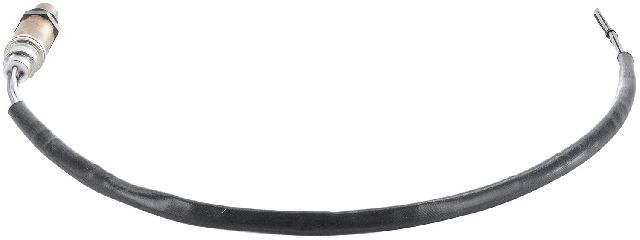
Est. part cost: $20 for cleaner, $100-$200 for a new sensor - Failing Air-Fuel Ratio Sensor (Bank 2, Sensor 1) 🟡 Medium Probability → Shop Oxygen Sensor A/F sensors are wear items and can become lazy or biased over time, sending inaccurate data to the ECM. Bank 2 is the rear bank, and its sensor may be exposed to slightly different heat cycles.
How to confirm: Use a scan tool to graph the voltage or current of the Bank 2, Sensor 1 A/F sensor. Compare its readings to the Bank 1, Sensor 1. A lazy, biased, or unresponsive sensor that is stuck rich is faulty.
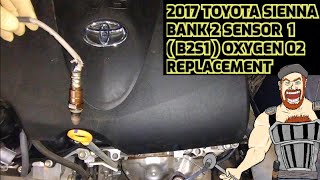
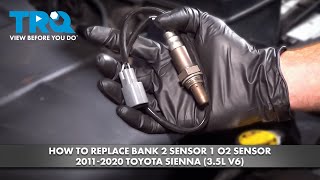
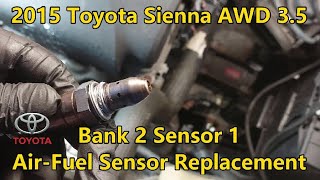
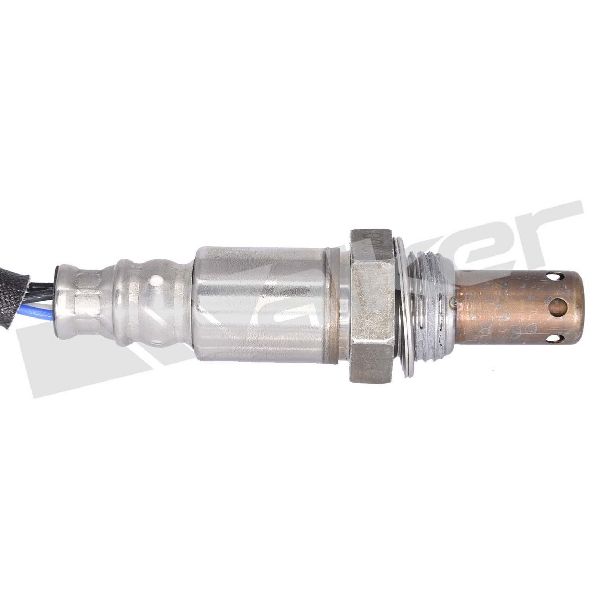
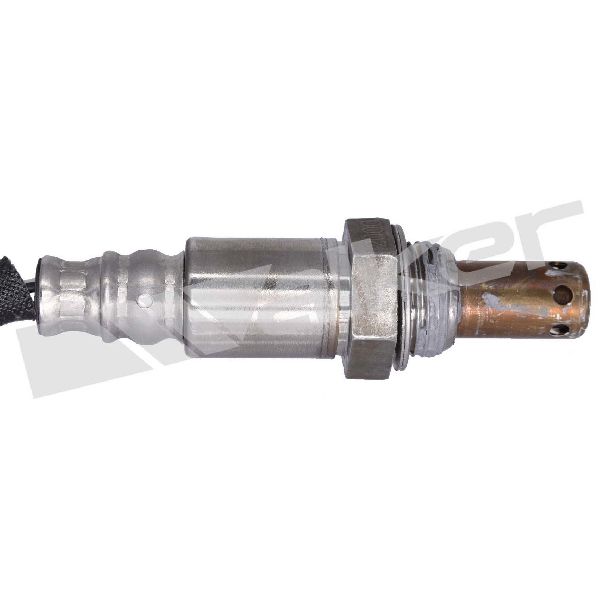
Typical fix: Replace the Bank 2, Sensor 1 Air-Fuel Ratio sensor. This is the upstream sensor located on the exhaust manifold of the cylinder bank near the firewall. The OEM equivalent is typically Denso P/N 234-9155. 🎬 Watch this step-by-step Bank 2 Sensor 1 replacement guide.
Est. part cost: $120-$250 - Leaking Fuel Injector(s) ⚪ Low Probability → Shop Fuel Injector The 2GR-FKS has both port and direct injectors, and either type can become clogged or leak over time. Carbon buildup on the injector tips can disrupt the spray pattern or cause a leak.
How to confirm: After a fuel pressure test, turn the engine off and watch for a rapid drop in pressure, which could indicate a leak. You can also remove the spark plugs on Bank 2 (rear bank) and check for one that is wet with fuel or excessively black and sooty. A professional diagnosis may involve using a scan tool's bidirectional controls to perform an injector balance test.
Typical fix: Replace the leaking fuel injector. It is often recommended to replace all injectors on that bank as a set. On the 2GR-FKS, this could mean replacing the port injectors or the more complex direct injectors.
Est. part cost: $80-$200 per injector - High Fuel Pressure ⚪ Low Probability A recall (20TA02) was issued for a faulty low-pressure fuel pump on these models. While failure typically causes a stall, a malfunction within the fuel pump assembly could potentially affect pressure regulation.
How to confirm: Connect a fuel pressure gauge to the low-pressure fuel system and test the pressure at idle. Compare the reading to the manufacturer's specification of 196 to 833 kPa (28 to 121 psi). Pressure that is too high indicates a problem with the regulator or pump assembly.
Typical fix: Replace the faulty component, which is often the fuel pressure regulator (part of the pump module) or the entire fuel pump module.
Est. part cost: $200-$500 for a fuel pump assembly
Rare But Worth Checking
- Stuck-Open Thermostat or Faulty Coolant Temperature Sensor: If the ECM thinks the engine is constantly cold, it will continuously command a rich fuel mixture to aid in warm-up. This can trigger a P0175 code if the engine never reaches proper operating temperature.
- PCV System Fault: A faulty PCV valve or clogged PCV hose can alter crankcase pressure and allow unmetered air or oil vapor into the intake manifold, disrupting the air-fuel ratio and potentially leading to a rich condition if the ECM overcorrects.
Diagnosis Steps
- Read the codes with an OBD-II scanner and check the freeze frame data to see the engine conditions when the code was set.
- Use the scanner to monitor long-term and short-term fuel trims for Bank 2. A significant negative number (e.g., -15% or more) confirms the rich condition.
- Inspect the engine air filter. A severely clogged filter can restrict airflow and cause a rich condition.
- Carefully remove and inspect the Mass Airflow (MAF) sensor. Clean it with dedicated MAF sensor cleaner and allow it to dry completely before reinstalling. Ensure no oil residue is present from an aftermarket filter.
- Check your vehicle's VIN for the open fuel pump recall (Toyota recall 20TA02) on the NHTSA or Toyota website. While this recall is for a stalling condition, it's a critical safety check for the fuel system.
- With the scan tool, graph the live data for the Bank 1 and Bank 2 upstream A/F sensors. Compare their patterns. The Bank 2 sensor should not be stuck high (rich) or show a lazy response compared to Bank 1.
- Perform a fuel pressure test to ensure it is within the OEM specified range.
- If other causes are ruled out, investigate for leaking fuel injectors on Bank 2 by checking spark plugs for fouling or performing a fuel pressure leak-down test.
Parts You'll Likely Need
- Mass Airflow (MAF) Sensor
(OEM #Denso 22204-F0030)— This is a highly probable cause for this code on this engine, either from being dirty or being a faulty/incorrect aftermarket unit.
Trusted brands: Denso (OEM)
OEM price range: $150-$220
Aftermarket price range: $50-$120 - Air-Fuel Ratio Sensor (Bank 2, Sensor 1)
(OEM #Denso 234-9155)— This is the primary sensor that detects the rich condition. If it fails, it can send false signals to the ECM.
Trusted brands: Denso (OEM)
OEM price range: $180-$250
Aftermarket price range: $100-$160 - MAF Sensor Cleaner — This is a low-cost first step to try and resolve the issue before replacing expensive parts.
Trusted brands: CRC, WD-40
Aftermarket price range: $15-$25
Related Codes That Often Appear With This One
- P0172 — This is the code for "System Too Rich (Bank 1)". If both P0172 and P0175 are present, it points to a problem affecting both cylinder banks, such as the MAF sensor, fuel pressure issue, or a major vacuum leak.
Technical Service Bulletins (TSBs) & Recalls
- Toyota Recall 20TA02 / Lexus 20LA01 - Low-Pressure Fuel Pump May Fail, potentially causing the engine to stall.
- T-SB-0016-18 - Addresses a chirping noise from the high-pressure fuel pump on some 2017 Siennas, indicating a mid-year part change.
- TSB Bulletin #T-SB-0166-19_Rev - Notes that a rich condition (P0172/P0175) may be accompanied by a P1604 Startability Malfunction and negative fuel trims.
- TSB Bulletin #T-SB-0166-19 - Indicates that Techstream data list analysis may reveal negative fuel trims and elevated alcohol density in cases involving P0172 and P0175.
Platform-Specific Known Issues
- A recall (20TA02) was issued for the low-pressure fuel pump in 2017-2020 Siennas. A failing pump can cause the engine to stall unexpectedly. While not a direct cause of a rich code, it is a critical safety issue for the fuel system that owners must verify is completed.
- The location of Bank 2 (rear bank, near firewall) makes accessing the A/F sensor and fuel injectors more difficult than for Bank 1.
Mechanic-Grade Diagnostic Values
- Low-Pressure Fuel System — expected: 196 to 833 kPa (28 to 121 psi) at idle.. Failure: Pressure significantly above this range can cause a rich condition.
- High-Pressure Fuel System — expected: 2,400 to 19,500 kPa (348 to 2,828 psi) at 3000 RPM (warmed up).. Failure: While low pressure is more common, a faulty high-pressure pump or sensor could theoretically cause issues, though it typically sets other codes.
- Fuel Pressure Leak-Down Test — expected: Pressure should remain at 98 kPa (14.2 psi) or more for 5 minutes after turning the engine off.. Failure: A rapid drop in pressure indicates a leak in the system, possibly from a fuel injector.
- Mass Airflow (MAF) Sensor Rate — expected: Approximately 2 to 5 g/sec at idle, and 8 to 19 g/sec at 2,500 RPM (no load).. Failure: Readings that are illogically high at idle or do not increase smoothly with RPM suggest a faulty sensor.
- Upstream A/F Sensor Voltage (Sensor 1) — expected: Should fluctuate within a range of approximately 2.8 to 3.8 V at idle on a warmed-up engine.. Failure: A voltage that is stuck high (e.g., above 3.8V) or is slow to respond indicates a sensor that is biased rich or has failed.
- Fuel Injector Pulse Width — expected: 1.2 to 2.4 milliseconds (ms) at idle.. Failure: A pulse width significantly lower than this range indicates the ECM is trying to compensate for an extreme rich condition by drastically cutting fuel.
Hidden / Shadow Codes Worth Checking
- P017500: This is a more specific version of the P0175 code. The extra '00' is a Failure Type Code (FTC) that can be read by Toyota's Techstream software, providing more granular data for dealership technicians. (see via Toyota Techstream diagnostic software or other high-end professional scan tools.)
Scan Tool Commands That Help
- Toyota Techstream: Active Test: 'Control the Injection Mode' — This is a critical test for the 2GR-FKS D-4S engine. It allows a technician to manually command the ECM to switch between using only the port injectors and only the direct injectors. This helps isolate whether a rich condition is coming from a specific set of injectors. A specific procedure must be followed to avoid inducing other fault codes.
- Toyota Techstream: Utility: 'Reset Memory' (Fuel Trim Reset) — After replacing a component that affects the air-fuel ratio (like a MAF sensor or A/F sensor), resetting the learned fuel trim values forces the ECM to relearn the fuel strategy immediately, which can confirm the fix and turn off the check engine light faster.
Wiring & Ground Locations
- Engine/ECM Grounds — Specific ground points (e.g., 'EB', 'EC' on older models) are located on the engine block, cylinder heads, and chassis near the engine bay. Precise locations for the 2017-2020 Sienna require a factory wiring diagram.. A poor ground connection for the ECM or its sensors (A/F, MAF) can introduce electrical noise or voltage offsets, causing the sensor to send incorrect data that leads to a false rich condition.
Real Owner Repair Stories
- Reddit user in r/MechanicAdvice (Not specified, but general auto repair context) — Persistent rich and lean codes after a shop replaced fuel injectors.
❌ Tried (didn't work) Installed a new set of aftermarket fuel injectors.
✅ What actually fixed it The owner re-installed the original, old OEM fuel injectors, which resolved the fuel trim problems. The aftermarket injectors were flowing an incorrect amount of fuel that the PCM could not compensate for. - YouTube channel 'P117B,P0174 Lean (Bank 2) Resolved on Toyota Lexus 2GR-FKS Fuel Injector Fix' (Lexus with 2GR-FKS engine (same family as Sienna)) — Lean codes P0174 and P117B (direct injector performance).
✅ What actually fixed it The technician removed both the port and direct fuel injectors and found them heavily clogged with carbon deposits. A thorough ultrasonic cleaning of all 12 injectors restored proper function and resolved the codes. This shows that even with D-4S, injector fouling is a real-world problem.
"I Checked Everything" — The Actual Cause
- A common scenario for P0172/P0175 on this platform is chasing vacuum leaks or replacing A/F sensors when the root cause is an out-of-spec aftermarket Mass Airflow (MAF) sensor. A diagnostic video on a Sienna showed that the physical design of a non-OEM MAF sensor caused incorrect airflow readings, creating a rich condition that a smoke test would never find.
OEM Part Supersession History
Multiple older MAF sensor part numbers→Varies by year, but 22204-F0030 is correct for many 2GR-FKS applications.— Part consolidation and design updates.
Heads up: Using a MAF sensor from a different engine family (even if it physically fits) or a poorly designed aftermarket unit can cause persistent rich/lean codes.
Model Year Variations Within This Range
- 2017: A Technical Service Bulletin (T-SB-0016-18) was issued for a chirping noise from the high-pressure fuel pump on 2017 Siennas built before engine number 2GR F376960. This indicates a running production change to the HPFP during the first model year of the 2GR-FKS engine in the Sienna.
Diagnostic Flowchart
Other Known Issues on This Vehicle
Issues unrelated to this code that are worth knowing about as an owner of this generation:
- 8-Speed (UA80) Transmission Hesitation/Harsh Shifting 🟠 Medium — Common complaint on 2017 and some 2018 models. Often described as hesitation from a stop or harsh/delayed shifts. Some cases led to transmission failure, while many were addressed with a software update (TSB-0197-17) or were considered normal characteristics by dealers. (Ref: TSB-0197-17)
- Power Sliding Door Failure 🟠 Medium — A very common issue across Sienna generations. The drive cable is prone to fraying and breaking, or the motor can fail, preventing the door from opening or closing automatically.
- Low-Pressure Fuel Pump Failure (Recall) 🔴 High → Shop Fuel Pump — Subject to a major safety recall (20TA02). A faulty Denso fuel pump can fail, leading to the engine stalling while driving, which increases crash risk. All vehicles in this range should have their VIN checked. (Ref: Toyota Recall 20TA02)
- VVT-i Cam Gear Rattle on Cold Start 🟡 Low — Some 2GR engines can develop a brief (1-2 second) rattle on cold startup. This is often caused by oil pressure bleeding down from the VVT-i cam gear actuators. While alarming, it is often considered benign if it disappears immediately, though in rare cases it can be a symptom of a failing gear. (Ref: T-SB-0094-09 (for older 2GR engines, but explains the mechanism))
Used vs. New Parts: Buying Guide for This Vehicle
When a used part is the smart pick: For major mechanical, non-wear items like an intake manifold, fuel rails, or a complete engine assembly from a verified low-mileage donor vehicle.
Donor-vehicle mileage cap: roughly under 70000 miles for the part to have meaningful remaining life.
What to inspect on the donor part:
- Check for obvious signs of damage, corrosion, or sludge.
- For a complete engine, ask for documentation of the mileage if possible.
- Ensure the donor vehicle matches the exact year range and engine code (2GR-FKS).
OEM-only on this vehicle (don't cheap out):
- Mass Airflow (MAF) Sensor
- Air-Fuel Ratio (A/F) Sensor
- Fuel Injectors (Port or Direct)
Aftermarket brands forum-validated for this vehicle:
- Denso (This is the Original Equipment Manufacturer for Toyota and is the most reliable choice)
Brands owners have reported issues with on this vehicle:
- Unbranded, 'white-box' electronic sensors, particularly MAF sensors, have been documented to have incorrect calibrations or physical designs that cause persistent fuel trim codes on this platform.
Real Owner Stories
Aggregated from forums and TSBs cited above. Mileages and costs reflect what owners reported in those sources.
2017 Toyota Sienna XLE AWD 3.5L V6
Symptoms: The vehicle triggered both P0172 and P0175 codes simultaneously, indicating a rich condition on both engine banks.
What fixed it: After cleaning the MAF sensor failed to resolve the issue, a full replacement of the MAF sensor fixed the problem.
Source hint: SiennaChat Forum: '2017 Sienna XLE AWD - P0172 & P0175'
Related OBD-II Codes
Frequently Asked Questions
Is there a recall for the fuel system on my 2017-2020 Toyota Sienna that could be related to P0175?
My 2017 Sienna has a chirping noise coming from the engine along with the check engine light. Is this a known issue?
Which replacement MAF sensor should I use for my 2GR-FKS engine to ensure the P0175 doesn't return?
Why is the Bank 2 sensor more difficult to diagnose or replace on this vehicle?
Can a software update fix the hesitation I'm feeling alongside the P0175 code?
Could my aftermarket air filter be causing the P0175 code on my Sienna?
Helpful Videos


Used OEM Parts in Stock
New Aftermarket Parts Available


The information in this article is provided for general reference and educational purposes only. Vehicle specifications, procedures, and part compatibility can vary by production date, trim level, and region. Always consult your vehicle's factory service manual and verify part numbers before purchasing or performing repairs. Safety-critical components such as airbags, seat belts, and braking systems should be installed by a qualified professional.
- Toyota Sienna:
- 🧭 Diagnostic Flowchart
- 🎬 Helpful Videos
- 🛍️ Shop This Part
- What's Unique About the 2017-2020 Toyota Sienna
- Symptoms You May Notice
- Most Likely Causes
- Rare But Worth Checking
- Diagnosis Steps
- Parts You'll Likely Need
- Related Codes That Often Appear With This One
- Technical Service Bulletins (TSBs) & Recalls
- Platform-Specific Known Issues
- Mechanic-Grade Diagnostic Values
- Hidden / Shadow Codes Worth Checking
- Scan Tool Commands That Help
- Wiring & Ground Locations
- Real Owner Repair Stories
- "I Checked Everything" — The Actual Cause
- OEM Part Supersession History
- Model Year Variations Within This Range
- Other Known Issues on This Vehicle
- Used vs. New Parts: Buying Guide for This Vehicle
- Real Owner Stories
- 2017 Toyota Sienna XLE AWD 3.5L V6
- Related OBD-II Codes
- Frequently Asked Questions
- 🎟️ Get 5% Off