

P0175 on 2007-2015 Volvo S80 3.2L: System Too Rich Bank 2 Causes & Fixes
This code on a Volvo S80 3.2L most often points to a faulty upstream oxygen sensor for Bank 2 or a leaking fuel injector. Less commonly, a dirty Mass Airflow (MAF) sensor or a failing PCV oil trap can be the cause. Expect to pay $100-$250 for an O2 sensor or MAF sensor replacement.
- P0175 means cylinders 4-6 are running with too much fuel.
- Start your diagnosis by checking live fuel trim data with a scanner. If both banks are rich, suspect the MAF sensor. If only Bank 2 is rich, focus on its O2 sensor and fuel injectors.
- The most likely culprits are a bad upstream O2 sensor on Bank 2 or a leaking fuel injector.
- Do not ignore this code, as it can lead to costly catalytic converter damage.
- On this specific Volvo 3.2L engine, always consider the PCV system as a potential, though less common, cause for any fuel trim code.
What's Unique About the 2007-2015 Volvo S80
The Volvo S80 from this era uses a transverse-mounted inline-6 engine. Bank 2 (cylinders 4-6) is located on the firewall side of the engine bay, which can make accessing the Bank 2 oxygen sensor and fuel injectors more challenging than on Bank 1. A notable issue on this specific 3.2L engine is the PCV oil trap (sometimes called the breather box), which can fail and cause various air/fuel mixture problems. While a vacuum leak from a torn diaphragm more commonly causes lean codes (P0171/P0174) and a whistling noise, a clogged system can increase crankcase pressure and disrupt normal engine breathing, sometimes leading to rich conditions.
Symptoms You May Notice
- Check Engine Light is on
- Reduced fuel economy
- Rough or unstable idle
- Strong smell of gasoline from the exhaust
- Engine hesitation or lack of power
- Black smoke from the tailpipe in severe cases
- Failed emissions test
- Sooty or oil-fouled spark plugs on Bank 2 cylinders
- Replacing the catalytic converter. A rich condition can damage the converter, but the converter itself is not the cause of the P0175 code.
- Replacing the wrong oxygen sensor. P0175 refers to Bank 2, which is the firewall side. The sensor is Sensor 1, which is the upstream/pre-catalyst sensor.
Most Likely Causes
- Faulty Upstream Oxygen Sensor (Bank 2, Sensor 1) 🔴 High Probability → Shop Oxygen Sensor Oxygen sensors are wear items with a finite lifespan, typically degrading over 100,000 miles. A sensor that fails by reading falsely lean (low voltage) will cause the ECM to command more fuel, creating a genuinely rich condition.
How to confirm: Use an OBD-II scanner to graph the live data for the Bank 2 Sensor 1 voltage. A healthy sensor will show voltage fluctuating rapidly between approximately 0.1V and 0.9V. A sensor that is stuck, biased high (above 0.8V), or responds very slowly is likely faulty.
Typical fix: Replace the Bank 2, Sensor 1 (upstream) oxygen sensor. Due to access on the firewall side, this may be more difficult than the Bank 1 sensor and may require specific O2 sensor sockets. 🎬 Watch: This guide shows how to access the firewall-side oxygen sensor.
Est. part cost: $80-$180 - Leaking Fuel Injector(s) on Bank 2 🟡 Medium Probability → Shop Fuel Injector Injectors can fail internally or their O-rings can degrade, causing them to drip fuel even when not commanded to open. This adds extra, un-metered fuel to one or more cylinders.
How to confirm: After the engine has been run and is warm, let it sit for an hour (hot soak). A long crank time on restart can indicate a leaking injector bleeding down fuel pressure. A more definitive test is to remove the fuel rail with injectors attached, prime the system, and watch for drips. Alternatively, inspect the spark plugs on Bank 2 (cylinders 4-6); a plug that is black and sooty compared to others points to a rich condition in that cylinder.
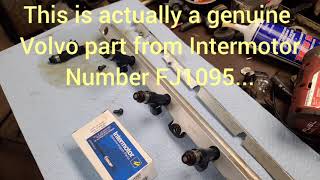
Typical fix: Replace the leaking fuel injector(s). It is often recommended to replace all three injectors on Bank 2 at the same time for balanced fueling.
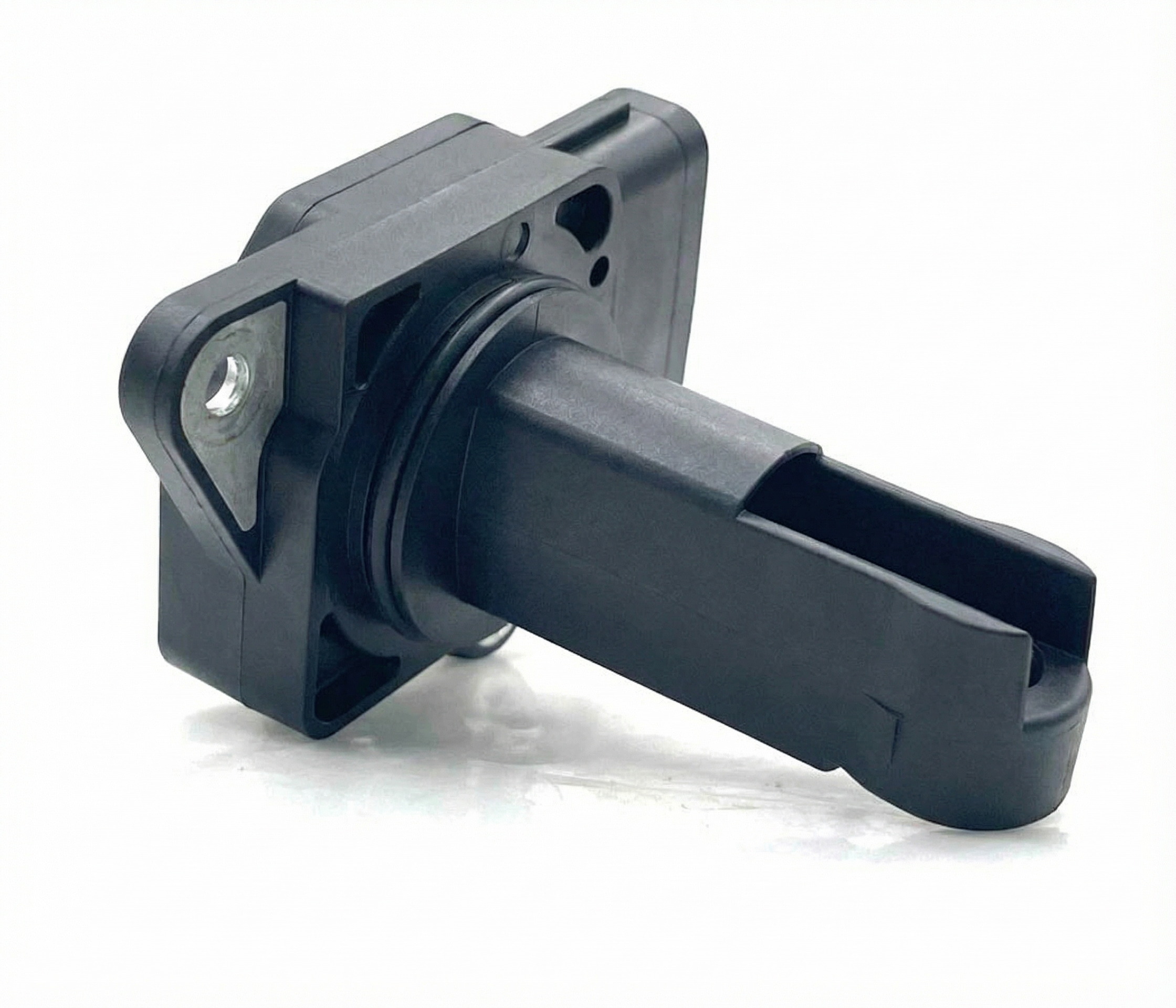
Est. part cost: $50-$150 per injector - Dirty or Faulty Mass Airflow (MAF) Sensor 🟡 Medium Probability → Shop Fuel Injection Air Flow Meter The MAF sensor's hot wire can become contaminated with dirt and oil over time, especially if an over-oiled aftermarket air filter is used. This contamination causes it to under-report the amount of air entering the engine. The ECM then injects the standard amount of fuel for the reported (low) air, resulting in a rich mixture.
How to confirm: This usually affects both banks, so check for a pending or active P0172 (Bank 1 Rich) code. Inspect the sensor for visible contamination. Cleaning the sensor with a dedicated MAF sensor cleaner is a good first step.
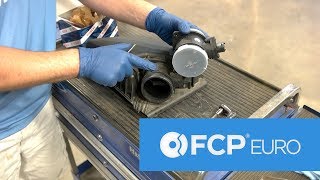
Typical fix: Clean the MAF sensor with a specific MAF cleaner spray. Do not touch the sensor wires. If cleaning does not resolve the issue, replace the MAF sensor. 🎬 See this quick walkthrough for replacing your Volvo's MAF sensor.
Est. part cost: $100-$250 - Failing PCV Oil Trap / Breather Box ⚪ Low Probability The diaphragm inside the PCV housing on the 3.2L engine is a known failure point. While it more commonly causes a vacuum leak and lean codes (P0171/P0174), certain failure modes or a fully clogged system can disrupt crankcase ventilation and affect the air-fuel mixture in unpredictable ways, sometimes leading to rich codes.
How to confirm: Listen for a loud whistling or squealing noise from the engine at idle. A common test is to place a rubber glove over the oil filler opening with the engine running; if the glove inflates or gets sucked in violently, it indicates incorrect crankcase pressure and a failed PCV system. Removing the oil dipstick and hearing the whistle stop is another indicator.
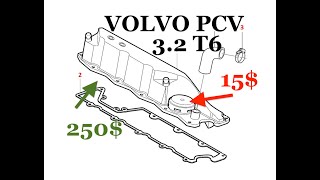
Typical fix: Replace the entire PCV oil trap assembly. On this engine, it is a large black plastic housing on top of the valve cover. 🎬 Watch: Step-by-step replacement of the PCV oil trap assembly.
Est. part cost: $150-$300
Rare But Worth Checking
- High Fuel Pressure: A faulty fuel pressure regulator or a failing fuel pressure sensor can cause system-wide high fuel pressure, forcing too much fuel through the injectors. This would typically affect both banks, throwing P0172 as well.
- Leaking EVAP Purge Valve: → Shop Vapor Canister If the EVAP purge valve sticks open, it can allow un-metered fuel vapors from the charcoal canister to be drawn into the intake manifold at the wrong time, causing a rich condition that can affect one or both banks.
Diagnosis Steps
- Read the codes with an OBD-II scanner. Confirm P0175 is present and check for any other codes, especially P0172 or misfire codes.
- Check live data on the scanner. Observe the Short-Term (STFT) and Long-Term (LTFT) fuel trims for both Bank 1 and Bank 2. For P0175, you will see highly negative numbers for Bank 2 (e.g., -15% or more). If Bank 1 trims are normal, the issue is isolated to Bank 2. If both are negative, suspect a common cause like the MAF sensor.
- Inspect the air intake system from the air filter to the throttle body for any restrictions or blockages. Check that the air filter is clean.
- If both banks are rich, clean the Mass Airflow (MAF) sensor with dedicated MAF cleaner spray. Allow it to dry completely before reinstalling.
- If only Bank 2 is rich, test the Bank 2, Sensor 1 (upstream) oxygen sensor. Graph its voltage; it should switch rapidly between ~0.1V and ~0.9V. If it's stuck or slow, it's the primary suspect.
- Test for high fuel pressure. Connect a fuel pressure gauge to the fuel rail's service port (if available). Compare the reading at idle to the manufacturer's specification. A faulty fuel pressure sensor can also cause issues.
- Inspect for leaking fuel injectors on Bank 2. Check spark plugs for signs of richness (black, sooty deposits). Perform a hot-soak test (long crank after sitting warm).
- Check the PCV system. With the engine running, listen for a distinct whistling noise. Perform the 'rubber glove test' on the oil filler neck to check for excessive pressure or vacuum.
Parts You'll Likely Need
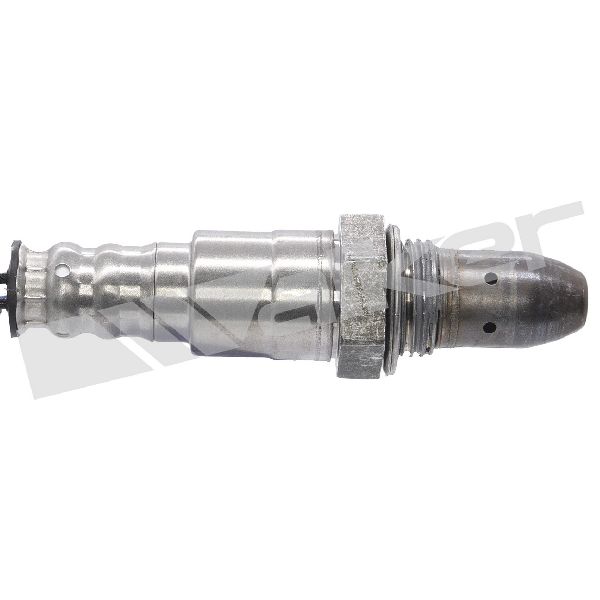
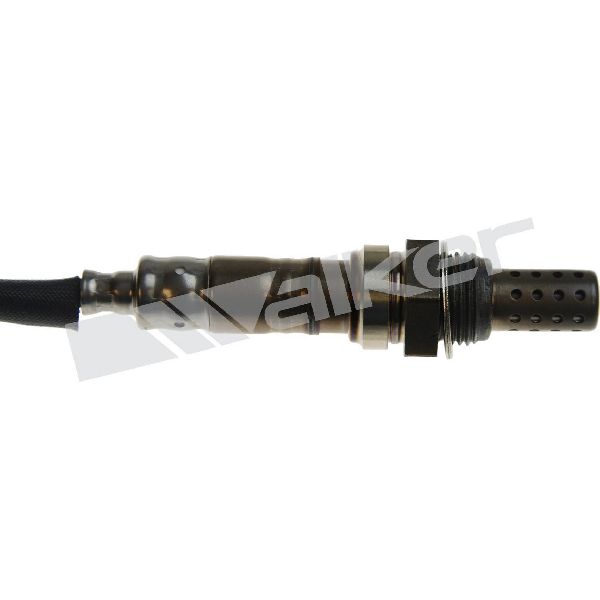
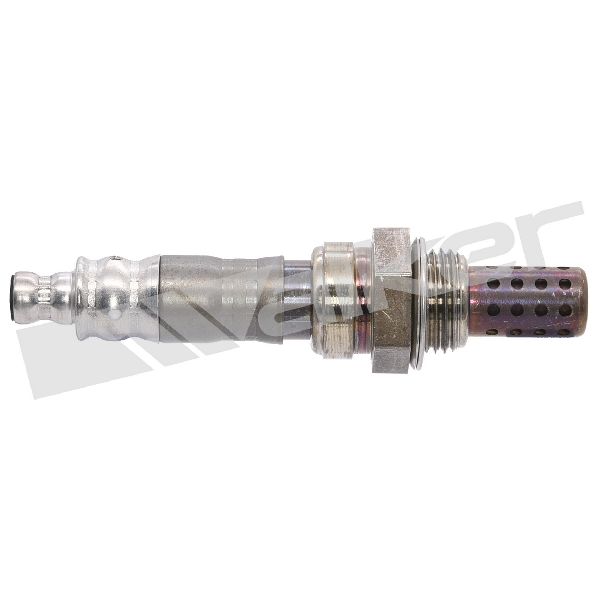
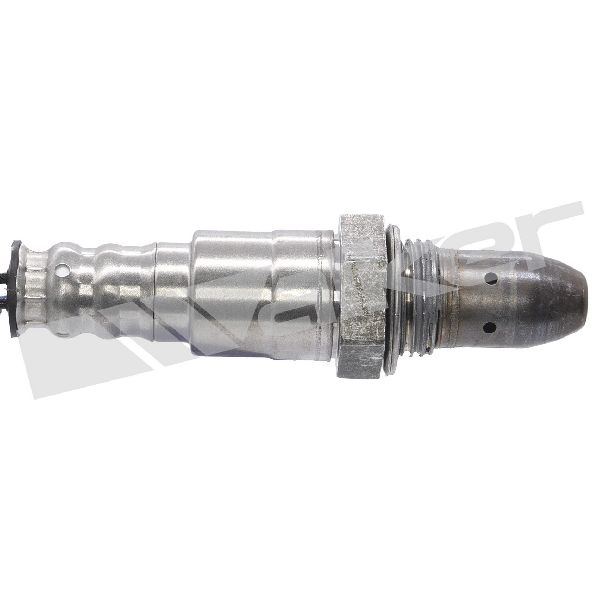
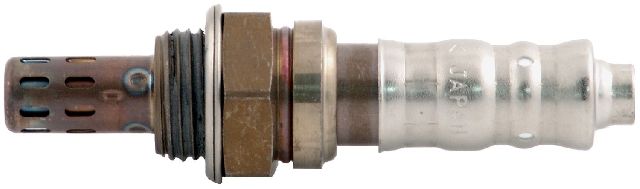
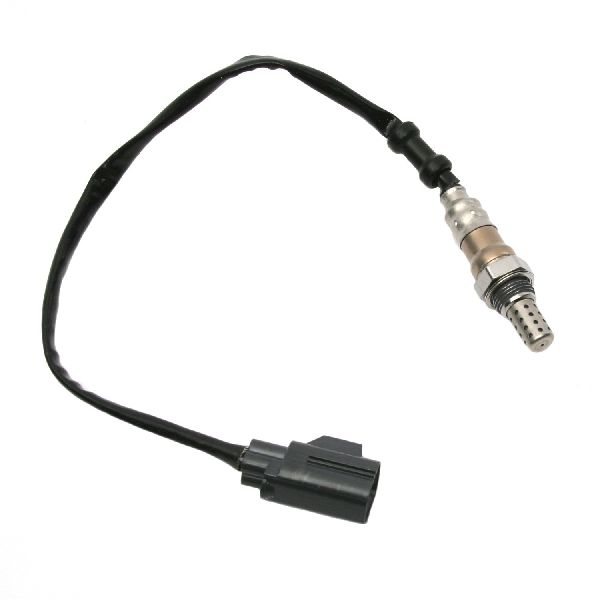
- Upstream Oxygen Sensor (Bank 2, Sensor 1)
(OEM #30774563)— This sensor provides the primary feedback for the air-fuel mixture on Bank 2. It is a common failure point and a direct cause of this code if it malfunctions. Bank 2 is the firewall side.
Trusted brands: Bosch, Denso, Genuine Volvo
OEM price range: $180-$250
Aftermarket price range: $80-$150 - Mass Airflow (MAF) Sensor
(OEM #30713512)— If dirty or faulty, it can cause the ECM to miscalculate airflow, leading to a rich condition on both banks. It's a common cause when P0172 is also present.
Trusted brands: Bosch, Genuine Volvo
OEM price range: $250-$350
Aftermarket price range: $100-$200 - PCV Oil Trap / Valve Cover Assembly
(OEM #31319642)— A known issue on the Volvo 3.2L engine. A failed diaphragm can cause incorrect crankcase pressure, leading to air-fuel mixture problems.
Trusted brands: Genuine Volvo, Vaico, URO Parts
OEM price range: $250-$350
Aftermarket price range: $150-$250
Related Codes That Often Appear With This One
- P0172 — System Too Rich, Bank 1. If both P0172 and P0175 are present, it points to a problem common to the entire engine, such as a faulty MAF sensor, high fuel pressure, or a leaking EVAP purge valve.
- P0304, P0305, P0306 — Cylinder Misfire codes for Bank 2. An excessively rich mixture can foul spark plugs and cause misfires in the affected cylinders.
Platform-Specific Known Issues
- The PCV system on the B6324S engine is integrated into a large housing on top of the engine. A torn internal diaphragm is very common and typically produces a loud whistle at idle, which disappears if the oil dipstick is removed.
- Access to Bank 2 (firewall side) components like the O2 sensor and fuel injectors is significantly more restricted than Bank 1, requiring more labor time and potentially the removal of other components for access.
Mechanic-Grade Diagnostic Values
- Mass Airflow (MAF) Sensor Reading at Idle — expected: 3.0 - 4.5 g/s. Failure: Readings that are frozen, fluctuating wildly, or significantly outside the expected range at a steady, warm idle.
- Long Term Fuel Trim (LTFT) for Bank 2 — expected: Within +/- 10%. Failure: A strongly negative value, such as -15% to -30%, indicates the ECM is removing a large amount of fuel to compensate for a rich condition.
- Fuel Rail Pressure at Idle — expected: ~380 kPa (~55 PSI). Failure: Significantly higher pressure (e.g., >450 kPa) could indicate a faulty fuel pressure regulator or restricted return line, forcing too much fuel into the injectors. A forum user reported a reading of 375 kPa during a P0175 event.
- Upstream O2 Sensor (Heater Circuit Resistance) — expected: Varies by manufacturer, but typically between 2 and 16 Ohms.. Failure: An open circuit (infinite resistance) or a dead short (zero resistance) indicates a failed heater element within the sensor, which will slow its response time and can contribute to fuel trim issues, especially on cold starts.
Scan Tool Commands That Help
- Volvo VIDA/DiCE or compatible advanced scanner: Resetting of adaptation values / Resetting of fuel and air mixture — This should be performed after replacing a major fuel system component like an O2 sensor, MAF sensor, or fuel injectors. It forces the ECM to erase its stored long-term fuel trim adjustments and re-learn the new parameters from scratch. Failing to do this can cause the old, incorrect adaptations to persist and continue to trigger the code.
- Volvo VIDA/DiCE: Read vehicle and erase all codes — Unlike generic OBD-II scanners, VIDA can access and clear codes from all modules (ECM, TCM, SRS, etc.). After a repair, it's crucial to use the 'Erase All' function in the 'Delivery' tab to ensure all fault flags are cleared, especially for systems that can influence engine management.
Wiring & Ground Locations
- Bank 2 Front Oxygen Sensor — Located in the right exhaust manifold, which is on the firewall (rear) side of the engine.. This is the primary sensor for Bank 2 fuel control. Its location is difficult to access, leading to higher labor costs and potential for misdiagnosis by replacing the easier-to-reach Bank 1 sensor by mistake.
- Engine Control Module (ECM) — Located on the left rear of the engine compartment.. This is the brain of the system. Knowing its location is critical for checking connectors and wiring integrity if a communication issue is suspected.
- Engine Compartment Fuse/Relay Box — Located on the left side of the engine compartment, forward of the strut tower.. This box contains fuses for the heated oxygen sensors, injectors, and the ECM itself. A fuse check here is a basic but critical step. Specifically, fuse F39 (Heated oxygen sensor) and F41 (Injectors) are relevant.
- Main Engine Ground Strap — A common ground point for Volvo engines of this era is a strap from the engine block to the chassis, often near the starter or transmission. A wiring diagram notes ground point G95 at the left front of the engine compartment.. A corroded or loose ground strap can cause erratic behavior from sensors, including the O2 and MAF sensors, leading to incorrect readings and fuel trim problems. Checking the main grounds is a crucial step when electronic components seem to fail without reason.
Real Owner Repair Stories
- Volvo Owners Club Forum user (2008 Volvo XC70 3.2L) — P0175 code, Long Term Fuel Trim on Bank 2 at -11.72%.
❌ Tried (didn't work) The user first gathered data showing the rich condition on Bank 2.
✅ What actually fixed it The final advice given and confirmed as a solution was to use a scan tool (VIDA or an advanced alternative like Launch) to perform a 'resetting adaptive values' function in the ECM. This clears the learned fuel trims and forces the car to start fresh. The user had likely fixed the underlying hardware issue but the old, bad data was still stored in the ECM, causing the code to persist.
OEM Part Supersession History
30731234, 30757662, 30788481→31319642— Standard design revision and consolidation by Volvo over the years for the PCV Oil Trap / Valve Cover assembly.
Heads up: The newest part number, 31319642, is the correct replacement for all previous versions on this engine.
Model Year Variations Within This Range
- 2007-2010 vs 2011-2015: The B6324S engine had several revisions. The initial B6324S (2007-2010) was followed by PZEV versions (B6324S2) and later the B6324S4/S5 (2011+). While the core architecture is the same, there can be minor differences in software and emissions components. However, for the purpose of diagnosing P0175, the common causes (O2, MAF, PCV, injectors) are consistent across all versions within the 2007-2015 S80 range.
Diagnostic Flowchart
Other Known Issues on This Vehicle
Issues unrelated to this code that are worth knowing about as an owner of this generation:
- Rear End Accessory Drive (READ) Bearing Failure 🔴 High — A well-documented weak point on all SI6 engines. A whining or growling noise from the transmission-side of the engine is the primary symptom. Failure to address can lead to very expensive repairs, sometimes requiring engine/transmission removal. (Ref: Volvo TSB 21-9 is noted in forums as describing this issue.)
- Brake Vacuum Pump Oil Leak 🟠 Medium — Extremely common issue where the seals on the camshaft-driven vacuum pump degrade, causing a significant oil leak onto the driver's side of the transmission. (Ref: No official recall, but widely available and improved Viton seal kits (e.g., from IPD) are the common fix.)
- Alternator Decoupler Pulley (ADP) / Overrunning Alternator Pulley (OAP) Failure 🟠 Medium — The one-way clutch pulley on the alternator can seize. This can cause belt chatter/squeal, and in some cases, can cause the alternator drive coupling bolt on the READ unit to loosen, resulting in a no-charge condition that can be misdiagnosed as a failed alternator.
- Oil Consumption (Pre-2012 Models) 🔴 High — Early B6324S engines (before 2012) were known for oil consumption issues due to piston and ring design. Most affected engines were repaired under warranty with updated parts, but it's a known issue for the model years. (Ref: Internal service campaigns addressed this; not a formal public recall.)
Used vs. New Parts: Buying Guide for This Vehicle
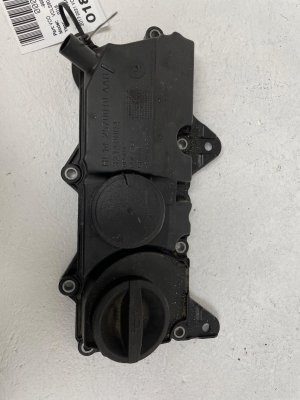
When a used part is the smart pick: For this code, used parts are generally not recommended for the primary electronic sensors (O2, MAF) as their remaining lifespan is unknown. A used fuel injector can be a cost-effective choice if it comes from a low-mileage, reputable donor vehicle and is professionally cleaned and tested before installation. Large mechanical assemblies like the intake manifold could be sourced used if damaged.
Donor-vehicle mileage cap: roughly under 80000 miles for the part to have meaningful remaining life.
What to inspect on the donor part:
- For fuel injectors, look for no signs of external corrosion or damage to the plastic connector.
- Check the donor vehicle's history for any signs of engine fire, flood, or major front-end collision.
- When possible, get the VIN to check for service history or reported issues.
OEM-only on this vehicle (don't cheap out):
- PCV Oil Trap Assembly: While aftermarket versions from brands like URO exist, forum discussions often highlight premature failures or fitment issues. Given the labor involved in replacement, using the Genuine Volvo part (31319642) is highly recommended to ensure longevity.
Aftermarket brands forum-validated for this vehicle:
- Oxygen Sensor: Denso and Bosch are the Original Equipment Manufacturers (OEM) for Volvo. Buying a Denso (e.g., DOX-0529 for PN 30774563) or Bosch equivalent is identical to the Genuine Volvo part without the dealership markup.
- Mass Airflow Sensor: Bosch is the OEM supplier. A Bosch-branded aftermarket sensor is a reliable alternative to the more expensive Genuine Volvo part.
Brands owners have reported issues with on this vehicle:
- Unbranded/No-Name Sensors: Avoid generic, unbranded oxygen sensors and MAF sensors from online marketplaces. They often use lower-quality materials, are not calibrated correctly for the vehicle, and can fail quickly or provide inaccurate readings, making diagnosis even more difficult.
Real Owner Stories
Aggregated from forums and TSBs cited above. Mileages and costs reflect what owners reported in those sources.
2007-2015 Volvo S80 3.2L — ~100000 miles
Symptoms: The oxygen sensor failed by reading falsely lean (low voltage), which caused the ECM to command more fuel, creating a genuinely rich condition.
What fixed it: Replace the Bank 2, Sensor 1 (upstream) oxygen sensor.
Source hint: common_causes section regarding Upstream Oxygen Sensor failure
2007-2015 Volvo S80 3.2L
Symptoms: Loud whistling or squealing noise from the engine at idle; rubber glove over the oil filler opening inflates or gets sucked in violently.
What fixed it: Replace the entire PCV oil trap assembly (large black plastic housing on top of the valve cover).
Source hint: common_causes and vehicle_specific_issues regarding PCV Oil Trap / Breather Box
Related OBD-II Codes
Frequently Asked Questions
My 3.2L S80 is making a loud whistling noise at idle that stops when I pull the dipstick. Is this related to P0175?
Does Volvo TSB 21-9 address the P0175 rich condition on my S80?
Why is the Bank 2 oxygen sensor more expensive to replace on the S80 3.2L than Bank 1?
Can I just clean the sensor to fix P0175 on my Volvo?
How can I tell if my P0175 code is caused by a leaking injector without a shop visit?
Is the P0175 code common on other Volvos with the same engine?
Helpful Videos


Used OEM Parts in Stock
New Aftermarket Parts Available

The information in this article is provided for general reference and educational purposes only. Vehicle specifications, procedures, and part compatibility can vary by production date, trim level, and region. Always consult your vehicle's factory service manual and verify part numbers before purchasing or performing repairs. Safety-critical components such as airbags, seat belts, and braking systems should be installed by a qualified professional.
- Volvo S80:
- 🧭 Diagnostic Flowchart
- 🎬 Helpful Videos
- 🛍️ Shop This Part
- What's Unique About the 2007-2015 Volvo S80
- Symptoms You May Notice
- Most Likely Causes
- Rare But Worth Checking
- Diagnosis Steps
- Parts You'll Likely Need
- Related Codes That Often Appear With This One
- Platform-Specific Known Issues
- Mechanic-Grade Diagnostic Values
- Scan Tool Commands That Help
- Wiring & Ground Locations
- Real Owner Repair Stories
- OEM Part Supersession History
- Model Year Variations Within This Range
- Other Known Issues on This Vehicle
- Used vs. New Parts: Buying Guide for This Vehicle
- Real Owner Stories
- 2007-2015 Volvo S80 3.2L — ~100000 miles
- 2007-2015 Volvo S80 3.2L
- Related OBD-II Codes
- Frequently Asked Questions
- 🎟️ Get 5% Off