

P0191 on 2005-2008 Audi A4 2.0T FSI: Cam Follower, Fuel Sensor, and HPFP Guide
On a 2005-2008 (B7) Audi A4 with the 2.0T FSI engine, code P0191 is almost always caused by a worn-out High-Pressure Fuel Pump (HPFP) cam follower. This is an inexpensive part (around $50) that should be inspected immediately to prevent catastrophic damage to the fuel pump and camshaft. Enthusiasts recommend inspecting it every 10,000-20,000 miles as preventative maintenance.
- For a P0191 code on a 2005-2008 Audi A4 2.0T, your first and most important diagnostic step is to physically inspect the HPFP cam follower.
- The cam follower is an inexpensive wear item ($40-$90) that should be checked regularly (every 15-20k miles) to prevent a very expensive repair.
- Do not replace the fuel pressure sensor or fuel pump until you have confirmed the cam follower is in good condition.
- Driving with these symptoms is risky, as a sudden stall can be dangerous and continued wear can destroy your engine's camshaft and fuel pump.
What's Unique About the 2005-2008 Audi A4
The 2005-2008 Audi A4 (B7 generation) uses the EA113 2.0T FSI engine, which features a direct injection system with a high-pressure fuel pump (HPFP) driven by the intake camshaft. This engine has a notorious and well-documented weak point: the flat tappet cam follower that drives the HPFP. This small, inexpensive part wears out, often rapidly, causing a loss of fuel pressure that directly triggers the P0191 code. Ignoring this wear can lead to catastrophic failure of the HPFP and the intake camshaft, turning a simple maintenance task into a multi-thousand dollar repair.
Symptoms You May Notice
- Check Engine Light is on.
- Significant loss of engine power, especially during acceleration.
- Engine hesitation, stumbling, or bucking.
- Engine may enter 'limp mode,' refusing to rev past 3000-4000 RPM.
- Rough or unstable idle.
- Engine stalling, particularly at stops or when warm.
- Hard starting or extended cranking time.
- Decreased fuel economy.
- Howling or squealing noise from the engine bay, which could be mistaken for a bad belt but is related to PCV failure that can accompany fuel system issues.
- Replacing the fuel rail pressure sensor (G247) without first inspecting the HPFP cam follower. The sensor is often just doing its job by reporting low pressure caused by the worn follower.
- Replacing the HPFP without also replacing the cam follower. A worn follower will quickly damage a new pump.
Most Likely Causes
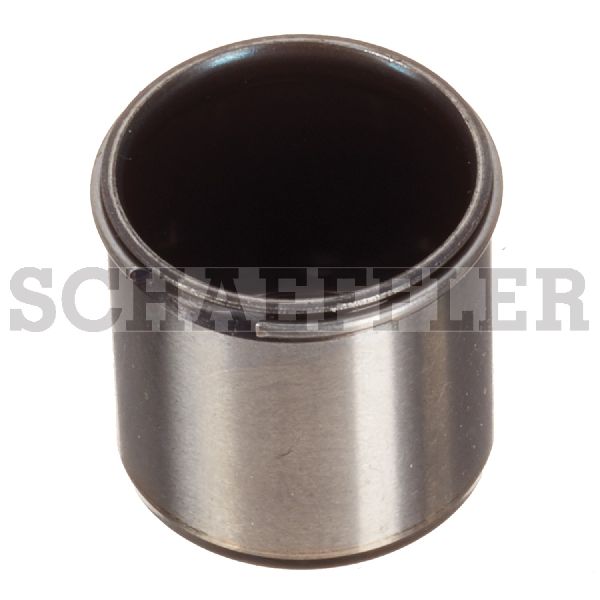
- Worn High-Pressure Fuel Pump (HPFP) Cam Follower 🔴 High Probability → Shop Engine Valve Tappet The EA113 engine's flat tappet cam follower design is a known wear item. The protective black coating on its surface wears away, leading to rapid deterioration of the follower itself. This is considered the number one problem with these engines.
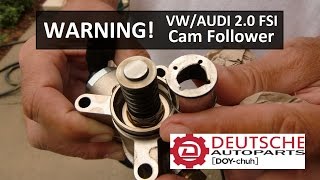
How to confirm: Remove the HPFP (typically held by three T30 bolts) and visually inspect the cam follower. Look for a hole worn through the center, deep scoring, or the black surface coating being completely worn away. It can be pulled out with a finger or a pick.
Typical fix: Replace the cam follower and the HPFP O-ring. If the follower has failed, you MUST also inspect the HPFP plunger and the camshaft lobe for damage. If they are scored, they must also be replaced to prevent repeat failure.
Est. part cost: $40-$90 - Failed High-Pressure Fuel Pump (HPFP) 🟡 Medium Probability → Shop Fuel Pump The HPFP can fail internally, but failure is often a direct result of a neglected, worn-through cam follower damaging the pump's plunger. Sometimes, the internal N276 regulating valve can fail, which is not a separately serviceable part, requiring replacement of the entire HPFP.
How to confirm: After confirming the cam follower and low-pressure system are healthy, use a scan tool (like VCDS) to monitor specified vs. actual fuel rail pressure in Measuring Blocks 106, 140, or 230. If actual pressure consistently fails to meet specified pressure under load (e.g., a 3rd gear pull), the HPFP is likely faulty.
Typical fix: Replace the high-pressure fuel pump. It is critical to install a new cam follower at the same time.
Est. part cost: $300-$600 - Failed Fuel Rail Pressure Sensor (G247) ⚪ Low Probability → Shop Fuel Pressure Sensor While the sensor can fail, it's more common for it to accurately report a pressure problem caused by the cam follower or pump. Misdiagnosis is frequent because P0191 is a 'Range/Performance' code, which can point to an electrical sensor issue.
How to confirm: If fuel pressure readings on a scan tool are erratic (e.g., jumping to 0 bar randomly) or if the code persists after confirming the mechanical parts (follower, pumps) are good, the sensor is suspect. Check wiring and connectors first, then test the sensor's voltage output.
Typical fix: Replace the fuel rail pressure sensor located on the high-pressure fuel rail.
Est. part cost: $50-$150 - Weak In-Tank Low-Pressure Fuel Pump (LPFP) or Clogged Fuel Filter ⚪ Low Probability → Shop Fuel Filter The HPFP cannot function correctly if it isn't supplied with adequate pressure (around 4-6 bar) from the in-tank pump. A failing LPFP or a clogged filter can starve the high-pressure side, triggering P0191.
How to confirm: Use a scan tool to check the LPFP duty cycle (VCDS block 106, field 2); a value consistently above 60% at idle suggests the pump is working too hard. A mechanical gauge can also be used to test the low-side pressure directly. The low-pressure system should regulate between 4.0 and 6.5 bar.
Typical fix: Replace the in-tank fuel pump and/or the fuel filter.
Est. part cost: $150-$300
Rare But Worth Checking
- Damaged Intake Camshaft Lobe: This is almost always a consequence of a completely failed cam follower. If the follower has a hole in it, the HPFP plunger will ride directly on the camshaft lobe, destroying it. This requires camshaft replacement and is a very costly repair.
- Wiring or Connector Issues: Damage or corrosion in the wiring harness for the G247 sensor can cause erratic signals, triggering the code. The connector is a 3-pin D-shape connector. Check for continuity and 5V reference before replacing the sensor itself.
- Faulty Fuel Pump Control Module (J538): → Shop Fuel Pump Located under the rear seat, this module controls the in-tank low-pressure fuel pump. A failure here can starve the HPFP and trigger P0191, often along with code P310B or 012555.
Diagnosis Steps
- Connect an OBD-II scanner (VCDS/VAG-COM is preferred) and confirm the presence of P0191. Note any other codes like P0087, P2293, or P310B.
- CRITICAL STEP for EA113: Before any other part replacement, remove the High-Pressure Fuel Pump (HPFP) to visually inspect the cam follower. This is the most probable cause. Look for excessive wear, scoring, or a hole. This requires removing three T30 Torx bolts.
- If the cam follower is worn, carefully inspect the tip of the HPFP plunger and the corresponding lobe on the intake camshaft for scoring or damage. Replace all damaged components.
- If the cam follower is in good condition, reinstall the HPFP (using a new follower is recommended as a preventative measure).
- Use a scan tool to monitor fuel pressure. Check low-pressure fuel system values (VCDS Block 103) and compare 'Specified' vs. 'Actual' high-pressure rail readings (VCDS Block 106, 140, or 230) under idle and load.
- If low pressure is weak (below 4.0 bar), investigate the in-tank fuel pump (LPFP), its control module (J538), and the fuel filter.
- If low pressure is good but high pressure does not meet the specified value under load, the HPFP is the likely culprit.
- If fuel pressure readings are illogical (e.g., dropping to zero intermittently) but the mechanical system seems sound, inspect the G247 sensor wiring and connector for damage or corrosion.
- If wiring is intact, the G247 sensor itself may be faulty and require replacement.
Parts You'll Likely Need
- HPFP Cam Follower
(OEM #06D109309C)— This is the most common failure point on the EA113 2.0T FSI engine and the primary cause of code P0191. It is a critical wear item that should be inspected regularly.
Trusted brands: INA (OEM), Audi Genuine
OEM price range: $50-$90
Aftermarket price range: $25-$50 - High-Pressure Fuel Pump (HPFP)
(OEM #06F127025M)
Related Codes That Often Appear With This One
- P0087 — Stands for 'Fuel Rail/System Pressure - Too Low.' This code is a direct result of the same mechanical failures (worn cam follower, bad HPFP) that cause the P0191 range/performance issue.
- P2293 — Stands for 'Fuel Pressure Regulator 2 Performance.' This code is also very common with cam follower failure and points to a problem with the high-pressure system's ability to regulate pressure.
- P310B — A VAG-specific code for 'Low Fuel Pressure Regulation.' It often indicates a problem with the low-pressure fuel pump (LPFP) or its controller, which starves the HPFP and can trigger P0191.
Technical Service Bulletins (TSBs) & Recalls
- TSB 2015-07-17: Mentions P0191, P0087, P0088 and discusses diagnosis when metallic particles are found in the HPFP, requiring extensive fuel system flushing.
Platform-Specific Known Issues
- Owner Experience: High-RPM Fuel Cut: An owner on the Ross-Tech forums reported that their B7 A4 would run fine until revved past 6,000 RPM, at which point it would trigger P0191 and enter limp mode. This points to the fuel system's inability to supply enough pressure at peak demand, a classic symptom of a worn follower or failing HPFP.
- Preventative Maintenance Interval: Across multiple forums and enthusiast sites, a consensus has formed that the cam follower should not be a 'replace when broken' part, but a regular maintenance item. The most common recommendation is to inspect it every 10,000-20,000 miles and replace it if any wear is visible.
- DIY Repair Video: A YouTube video by 'Project Build' shows the step-by-step replacement of the cam follower on a 2007 Audi A4. The video notes that after 10 years and 60k km, the follower was overdue but not completely destroyed, showing the variability in wear rates. The total parts cost for the DIY was around $50.
Mechanic-Grade Diagnostic Values
- G247 Sensor Pin 3 to Ground (Ignition On) — expected: 4.8 - 5.2 V. Failure: Voltage outside this range indicates a problem with the 5V reference from the ECM or wiring.
- G247 Sensor Pin 1 to Ground (Ignition On) — expected: 0 - 0.2 V. Failure: Voltage above this indicates a poor ground connection.
- G247 Sensor Harness to ECM Harness Continuity — expected: Max 1.5 Ohms. Failure: Resistance higher than 1.5 Ohms indicates a break or high resistance in the wiring harness between the sensor and the ECM.
- VCDS Block 106, Field 2 (LPFP Duty Cycle at Idle) — expected: ~50-55%. Failure: A duty cycle consistently above 60% indicates the low-pressure pump is working too hard, suggesting a clogged filter, failing pump, or faulty controller.
- VCDS Block 230, Field 3 (HPFP Pressure Deviation) — expected: Max. 5.0 bar. Failure: A deviation greater than 5.0 bar between specified and actual pressure indicates the high-pressure system cannot maintain commanded pressure.
- VCDS Block 140, Field 3 (Actual Fuel Rail Pressure at Idle) — expected: 25.0 - 50.0 bar. Failure: Pressure significantly below this range points to a mechanical fuel delivery issue (follower, HPFP, LPFP). Pressure should rise to over 100 bar under load.
Scan Tool Commands That Help
- VCDS (VAG-COM): Measuring Blocks (08) / Advanced Measuring Values — Essential for diagnosing P0191. Use Blocks 103, 106, 140, and 230 to compare specified vs. actual fuel pressure for both the low and high-pressure systems, and to check the LPFP duty cycle.
Wiring & Ground Locations
- G12 — Center of the firewall in the engine bay.. This is a primary ground point for the Engine Control Module (ECM). A corroded or loose G12 ground can cause erratic ECM behavior and phantom sensor codes.
- G18 / G19 — Located near the ignition coils on the cylinder head.. This ground point serves the brown wires of the ignition coils. While not directly for the fuel sensor, a bad ground here can cause electrical noise and misfire-like symptoms that can confuse diagnosis.
- G247 Sensor Connector — On the end of the high-pressure fuel rail, accessible after removing the engine cover.. This is the 3-pin connector for the sensor itself. Pin 1 is Ground, Pin 2 is Signal, Pin 3 is 5V Reference. Checking for voltage and continuity here is a key step in diagnosing a sensor vs. wiring fault.
- J538 Fuel Pump Control Module — Under the rear passenger seat.. This module controls the in-tank low-pressure fuel pump. Failures are common and will starve the HPFP, leading to P0191. Checking for power and ground at this module is critical if low-pressure is weak.
Real Owner Repair Stories
- YouTube User (Audi A3 2.0T FSI) — P0087 (Fuel Pressure Too Low), often seen with P0191.
❌ Tried (didn't work) Replacing the HPFP cam follower.
✅ What actually fixed it The intake camshaft lobe that drives the HPFP was worn down. Even with a new follower, the damaged lobe could not provide enough lift to generate proper fuel pressure. The final fix was replacing the intake camshaft. - Ross-Tech Forums User (2008 Audi A4 B7 with BWT engine) — P119A (Fuel Pressure Sensor Malfunction) and P2177 (System Too Lean), along with general fueling issues.
❌ Tried (didn't work) Initial diagnosis pointed to the G247 sensor.
✅ What actually fixed it The user discovered their car had an older black-colored G247 sensor, but the correct, updated part for their vehicle was an orange-colored sensor with a different pressure range. The issue was an incorrect part being installed previously. The fix was installing the correct OEM-specified G247 sensor for the vehicle's VIN and engine code. - AudiWorld Forums User (Audi A6) — Random stalling, P0192 (G247 short to ground). Actual fuel pressure on VCDS would randomly drop to 0 bar.
❌ Tried (didn't work) Replaced HPFP., Replaced in-tank electric fuel pump (LPFP)., Replaced G247 sensor with a new one (problem persisted)., Checked for a disconnected vacuum line., Tested camshaft position sensors.
✅ What actually fixed it The user did not post a final resolution, but the thread is a valuable example of how P0191-related symptoms can persist even after replacing all common components (HPFP, LPFP, follower, sensor), pointing towards a more obscure wiring or ECM issue.
OEM Part Supersession History
06F127025B / 06F127025F→06F127025H, 06F127025J, 06F127025K, 06F127025L, 06F127025M— Standard part lifecycle revisions to improve reliability and address internal component failure.
Heads up: Early HPFP versions (like 06F127025B/F) may require an additional adapter fitting (06F127213B) and other small parts when being replaced with the latest revision. Always verify with the parts supplier.06D109309C (Cam Follower)→06D109309J (as part of a kit)— Minor revisions. The core design flaw of the flat tappet remains.
Heads up: While revisions exist, the fundamental design is the weak point. The most significant 'upgrade' is a full conversion to a roller-follower system from the later EA888 engine, which is a complex modification.06D906051A (G247 Sensor)→06J906051B (and others)— Revisions for different pressure ranges and updated electronics.
Heads up: CRITICAL: These sensors are NOT interchangeable despite looking identical. Installing the wrong sensor for your car's VIN and ECM software will cause P0191 and lean running codes. Always verify the correct part number with a dealer.
Model Year Variations Within This Range
- 2005.5-2006: Vehicles in this early range are more likely to have the original, un-revised HPFP (e.g., 06F127025B/F) and may require an adapter kit to fit the latest pump revision (06F127025M).
- 2007-2008: These later B7 models may have come from the factory with a revised HPFP. More importantly, there was a running change in the G247 fuel rail pressure sensor. A VIN check is critical to determine if the car requires the earlier (e.g., 06D...) or later (e.g., 06J...) sensor, as they are not interchangeable.
Diagnostic Flowchart
Other Known Issues on This Vehicle
Issues unrelated to this code that are worth knowing about as an owner of this generation:
- PCV (Positive Crankcase Ventilation) Valve Failure 🟠 Medium — Common failure item. Can fail at any mileage, leading to high oil consumption, rough idle, and a whistling/squealing noise. (Ref: Audi issued TSBs for this, and the part has been revised multiple times. The latest revision is often 'R' or 'P'.)
- Intake Valve Carbon Buildup 🟠 Medium — A universal issue for direct-injection engines. Performance degradation is noticeable every 50,000-80,000 miles, causing misfires and poor performance.
- Diverter Valve (DV) Failure 🟡 Low — The original diaphragm-style DV is prone to tearing, causing a loss of boost pressure. It's a common failure, especially on tuned cars.
- High Oil Consumption 🟠 Medium — Can be caused by PCV failure, worn piston rings, or faulty valve stem seals. Some consumption is considered normal, but excessive loss is common.
- Timing Belt Maintenance 🔴 High — The EA113 is a belt-driven engine. The timing belt, tensioner, and water pump must be replaced at the recommended interval (typically 75,000-105,000 miles) to prevent catastrophic engine failure.
Used vs. New Parts: Buying Guide for This Vehicle
When a used part is the smart pick: For this specific P0191 issue on the EA113, using used parts is generally not recommended for the core components. The failure items (cam follower, HPFP) are high-wear parts. A used intake camshaft from a low-mileage donor is a viable option if yours is damaged, as a new one is extremely expensive.
Donor-vehicle mileage cap: roughly under 60000 miles for the part to have meaningful remaining life.
What to inspect on the donor part:
- For a camshaft: Verify the donor vehicle's mileage. Inspect the HPFP drive lobe meticulously for any scoring, pitting, or discoloration. Use your fingernail to feel for any grooves.
- For any other part: Avoid. The risk of receiving a part that is already near the end of its service life is too high.
OEM-only on this vehicle (don't cheap out):
- HPFP Cam Follower: This part is inexpensive and critical. Only use a Genuine Audi/VW or OEM INA part. The risk of catastrophic engine damage from a cheap aftermarket follower is not worth the minimal savings.
- Fuel Rail Pressure Sensor (G247): Due to the extreme sensitivity and VIN-specific nature of this part, only a Genuine or OEM Bosch sensor verified by VIN is recommended to avoid calibration issues.
Aftermarket brands forum-validated for this vehicle:
- Autotech, VIS Motorsport, 034Motorsport: These brands are well-regarded in the enthusiast community for offering upgraded HPFP *internals* (piston and sleeve). This is a good option for tuned vehicles or for those seeking a more robust solution than the OEM pump, but it requires rebuilding the pump.
- Hitachi, Pierburg: These companies are often the original equipment manufacturers for the complete HPFP assembly. A pump from one of these brands is a reliable alternative to a more expensive dealer part.
Brands owners have reported issues with on this vehicle:
- Unbranded / No-name eBay/Amazon Cam Followers: Many forum users report rapid failure of cheap, unbranded cam followers, leading to the very engine damage one is trying to prevent.
- Used High-Pressure Fuel Pumps: A used HPFP has an unknown history and may have been damaged by a previous follower failure. The labor to replace it again makes a new unit a smarter investment.
Real Owner Stories
Aggregated from forums and TSBs cited above. Mileages and costs reflect what owners reported in those sources.
2007 Audi A4 2.0T FSI — 37282 miles
Symptoms: The follower was overdue for replacement but not completely destroyed after 10 years of use.
What fixed it: DIY replacement of the cam follower.
Cost: $50-$50
Source hint: YouTube video by 'Project Build' titled 'DIY Repair Video'
Audi B7 A4 2.0T 6MT — ~100000 miles
Symptoms: The car would run fine until revved past 6,000 RPM, at which point it would trigger P0191 and enter limp mode.
What fixed it: Diagnosis pointed to the fuel system's inability to supply pressure at peak demand, requiring inspection of the follower and HPFP.
Source hint: Ross-Tech Forums - B7 A4 2.0T 6MT -- P0016 cam/crank correlation
Related OBD-II Codes
Frequently Asked Questions
How often should I inspect the cam follower on my 2005-2008 Audi A4 2.0T FSI to prevent a P0191 code?
Can a failed PCV system cause noises that sound like fuel system issues on this car?
What specific VCDS blocks should I check on my B7 A4 to diagnose fuel pressure?
Does TSB 2015-07-17 apply if I find metal shavings during my P0191 diagnosis?
Is it possible for the P0191 code to only appear at high RPMs on the 2.0T FSI?
What are the mechanical signs of a failing cam follower when I pull the HPFP?
Helpful Videos
We Have This Part in Stock


The information in this article is provided for general reference and educational purposes only. Vehicle specifications, procedures, and part compatibility can vary by production date, trim level, and region. Always consult your vehicle's factory service manual and verify part numbers before purchasing or performing repairs. Safety-critical components such as airbags, seat belts, and braking systems should be installed by a qualified professional.
- Audi A4:
- 🧭 Diagnostic Flowchart
- 🎬 Helpful Videos
- 🛍️ Shop This Part
- What's Unique About the 2005-2008 Audi A4
- Symptoms You May Notice
- Most Likely Causes
- Rare But Worth Checking
- Diagnosis Steps
- Parts You'll Likely Need
- Related Codes That Often Appear With This One
- Technical Service Bulletins (TSBs) & Recalls
- Platform-Specific Known Issues
- Mechanic-Grade Diagnostic Values
- Scan Tool Commands That Help
- Wiring & Ground Locations
- Real Owner Repair Stories
- OEM Part Supersession History
- Model Year Variations Within This Range
- Other Known Issues on This Vehicle
- Used vs. New Parts: Buying Guide for This Vehicle
- Real Owner Stories
- 2007 Audi A4 2.0T FSI — 37282 miles
- Audi B7 A4 2.0T 6MT — ~100000 miles
- Related OBD-II Codes
- Frequently Asked Questions
- 🎟️ Get 5% Off