

P0191 on 2005-2011 Audi A4 / A6: Fuel Pressure Sensor & Cam Follower Guide
On 2.0T FSI engines (A4 B7, 2005.5-2008), P0191 is most often caused by a worn-out high-pressure fuel pump (HPFP) cam follower. This should be inspected every 10,000-20,000 miles. On other engines (B8 A4 2.0T TFSI, A6 C6 3.2L/3.0T), the primary suspect is a faulty fuel rail pressure sensor (G247). Expect to pay $50-$150 for a new sensor or cam follower part, but a full HPFP replacement can exceed $1,500.
- If you have a 2005.5-2008 Audi A4 2.0T, your first step for P0191 should be to inspect the HPFP cam follower. This is the most likely cause.
- For all other engines in this range, the fuel rail pressure sensor (G247) is the most probable cause.
- Do not ignore this code. A stalling engine is a safety hazard, and a failed cam follower can lead to thousands of dollars in engine repairs.
- Diagnosis requires a scan tool that can read live data to compare requested and actual fuel pressure.
- Replacing the cam follower or fuel rail sensor are manageable DIY jobs for an experienced mechanic, but involve working with a high-pressure fuel system which carries risks.
What's Unique About the 2005-2011 Audi A4 / A6
The 2005-2011 Audi A4 and A6 use FSI/TFSI gasoline direct injection (GDI) engines, which have both a low-pressure and a high-pressure fuel system. P0191 specifically relates to problems on the high-pressure side. The EA113 2.0T FSI engine (found in the A4 B7, 2005.5-2008) has a well-documented, critical wear point: the flat tappet cam follower for the high-pressure fuel pump (HPFP). Failure of this small part is a leading cause of P0191 and can lead to catastrophic damage to the HPFP and intake camshaft if ignored. Later EA888 2.0T TFSI engines (A4 B8) use a more durable roller-style follower, making this specific failure less common. On all engines in this range, the fuel rail pressure sensor (G247) itself is also a common failure point.
Generation note: This range covers the Audi A4 B7 (2005.5-2008) and B8 (2009-2011) generations, and the A6 C6 generation (2005-2011). The most critical platform-specific issue, the HPFP cam follower failure, is primarily associated with the EA113 2.0T FSI engine in the A4 B7. While other engines (A6 3.2L FSI, A4/A6 3.0T TFSI) can get this code, the causes are more likely to be the sensor or the fuel pumps themselves. The B8 A4's EA888 TFSI engine uses a different, more reliable roller-style cam follower, but can still suffer from fuel pressure sensor or pump issues.
Symptoms You May Notice
- Check Engine Light is on
- Significant loss of power, especially under acceleration
- Engine hesitation or stumbling
- Rough or unstable idle
- Engine stalling, sometimes when coming to a stop
- Difficulty starting the engine (long crank times)
- Reduced fuel economy
- Audible ticking or knocking sounds from the engine bay, which could indicate advanced cam follower wear.
- Replacing the fuel rail pressure sensor (G247) on a 2.0T FSI engine without first checking the cam follower. The sensor is often correctly reporting the pressure loss caused by the mechanical follower failure.
- Replacing the expensive HPFP when the issue is a weak in-tank LPFP, a faulty fuel pump control module (J538), or the inexpensive cam follower.
- Assuming a P0191 on a B8 A4 (2009+) is a cam follower issue. While possible, the improved roller follower makes it much less likely than a sensor or pump failure.
Most Likely Causes
- Worn High-Pressure Fuel Pump (HPFP) Cam Follower 🔴 High Probability → Shop Engine Valve Tappet This is a notorious weak point on the 2.0T FSI (EA113) engine used in the A4 B7. The follower's surface coating wears away, causing it to fail and leading to a loss of drive for the HPFP plunger, which then damages the pump and camshaft.
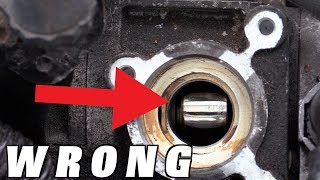
How to confirm: Visually inspect the cam follower. This requires removing the HPFP (held by three T30 bolts). Look for a hole, deep scoring, or the black coating being worn off the contact surface. A slight dimple is normal wear, but any concavity or exposed metal means it needs immediate replacement. Owners recommend checking every 10-20k miles.
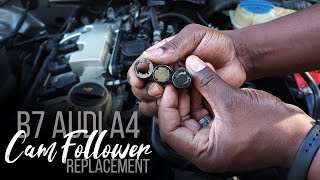
Typical fix: Replace the cam follower. If it has failed completely, the HPFP and potentially the intake camshaft will also need replacement. 🎬 Watch: Step-by-step B7 Audi A4 cam follower and HPFP replacement. This is a critical preventative maintenance item. Aftermarket solutions like ceramic followers or roller-follower conversion kits exist for improved longevity.
Est. part cost: $30-$90 - Faulty Fuel Rail Pressure Sensor (G247) 🔴 High Probability → Shop Fuel Pressure Sensor The sensor is exposed to heat and pressure cycles and is a common electronic failure point across all engine variants (2.0T, 3.2L, 3.0T). It can fail internally or provide an implausible signal.
How to confirm: Use a scan tool (like VCDS) to monitor requested vs. actual fuel rail pressure in the measuring blocks. For many 2.0T engines, this is in block 106, 140, or 230. If the 'Actual' pressure reading is erratic, stuck, or doesn't respond to changes in engine RPM, the sensor is likely faulty. A physical pressure gauge can be used to verify against the sensor's readings.
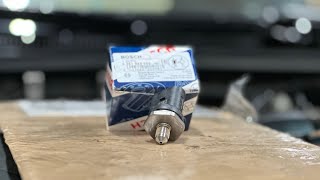
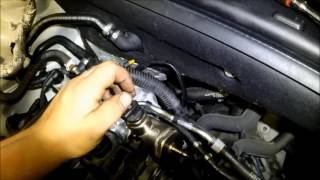
Typical fix: Replace the fuel rail pressure sensor. This requires depressurizing the fuel system. On some engines, an updated part may be available (e.g., 06J906051D). 🎬 See how to change the fuel rail pressure sensor.
Est. part cost: $40-$150 - Failing High-Pressure Fuel Pump (HPFP) 🟡 Medium Probability → Shop Fuel Pump The HPFP can fail internally, often as a direct result of a worn-through cam follower on the 2.0T FSI. On other engines, it can fail from normal wear. Tuned vehicles put more stress on the HPFP, potentially leading to earlier failure.
How to confirm: After confirming the cam follower (if FSI) and sensor are good, if actual fuel pressure still cannot meet the requested pressure under load, the HPFP is the likely culprit. Logging fuel pressure with a scan tool during a wide-open throttle pull will show the actual pressure dropping while requested pressure remains high.
Typical fix: Replace the high-pressure fuel pump. Upgraded HPFP internals are available for modified cars.
Est. part cost: $350-$600 - Failing Low-Pressure Fuel Pump (LPFP) or Fuel Pump Control Module (J538) ⚪ Low Probability → Shop Fuel Pump The in-tank LPFP or its controller (J538, located under the rear seat) can fail, starving the HPFP. If the LPFP can't supply enough volume, the high-pressure side cannot reach its target, triggering P0191.
How to confirm: Test the low-pressure fuel system pressure (typically 4-6 bar). With VCDS, check the LPFP duty cycle in Measuring Block 103; a consistently high value (above 60-70%) suggests it's struggling. Also check fuse S228 (position 28) for the fuel pump controller. A voltage test can be performed at the J538 module connector.
Typical fix: Replace the in-tank low-pressure fuel pump, its controller module (J538), or a clogged fuel filter.
Est. part cost: $150-$400 for the pump, $100-$200 for the controller, $30-$60 for the filter
Rare But Worth Checking
- Damaged Wiring or Connector: The wiring harness to the fuel rail pressure sensor (G247) can become brittle from heat and engine vibration, causing an intermittent connection or short. Always inspect the connector and nearby wiring for damage before replacing the sensor.
- Faulty Engine Control Module (ECM): → Shop Engine Control Module (ECM) This is extremely rare. The ECM should only be considered after all other mechanical and electrical components of the fuel system have been thoroughly tested and ruled out.
Diagnosis Steps
- Connect an OBD-II scanner (VCDS/VAG-COM is preferred) and check for P0191 and any other related codes (e.g., P0087, P2293, P310B).
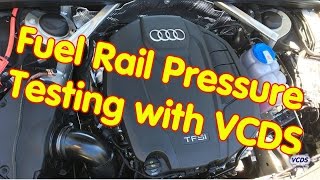
- Using the scanner's live data function, monitor 'Requested Fuel Rail Pressure' and 'Actual Fuel Rail Pressure'. On many VAG cars, this is in Measuring Block 106, 140, or 230. 🎬 Watch: How to perform a fuel rail pressure test with VCDS.
- At idle, the values should be very close. Rev the engine; both values should rise together. If the 'Actual' value is erratic, stuck, or lags significantly, suspect the sensor or a mechanical issue.
- For 2.0T FSI engines (A4 B7, EA113): STOP and inspect the HPFP cam follower. This is the most likely cause. Depressurize the fuel system, disconnect the battery, and remove the high-pressure fuel pump (three T30 bolts). The follower sits inside the pump housing. If it is worn, replace it. If it has worn through, inspect the HPFP plunger and camshaft lobe for damage.
- For all other engines (or if follower is good): Inspect the wiring and connector for the fuel rail pressure sensor (G247) for any signs of damage, corrosion, or looseness.
- If the sensor, follower (if applicable), and wiring appear good, test the low-pressure fuel system. Check for adequate pressure from the in-tank pump (4-6 bar). Check the fuse for the fuel pump control module (J538) and test voltage at the module if necessary.
- If the low-pressure side is healthy but the high-pressure side still cannot meet demand (verified with live data during a drive), the high-pressure fuel pump (HPFP) is the most likely cause.
Parts You'll Likely Need
- HPFP Cam Follower
(OEM #06D109309C (superseded by 06D109309F))— This is the most common failure point on the 2.0T FSI (EA113) engine and should be treated as a routine maintenance item (check every 10-20k miles) to prevent P0191 and catastrophic engine damage.
Trusted brands: INA (OEM manufacturer), Audi Genuine
OEM price range: $50-$90
Related Codes That Often Appear With This One
- P0087 — Fuel Rail/System Pressure - Too Low. This code often appears with P0191 as it indicates a direct measurement of low pressure, while P0191 indicates the pressure reading is out of its expected range or implausible.
- P2293 — Fuel Pressure Regulator 2 Performance. This code is also very common with cam follower failure on FSI engines, pointing to a problem with the high-pressure fuel system's ability to regulate pressure.
- P310B — Low Pressure Fuel regulation: Fuel Pressure Outside Specification. This code points specifically to the low-pressure side of the system and can help diagnose a failing in-tank pump or its control module as the root cause.
Technical Service Bulletins (TSBs) & Recalls
- TSB 01-14-01 / 2027306/4: While not for P0191 specifically, this TSB addresses related codes P0087, P0088, and P119A on 2009-2012 A4s (CAEB engine). It provides a diagnostic procedure for testing the G247 sensor against a mechanical gauge, recommending replacement if the pressure difference is greater than 500 kPa (72.5 PSI).
- TSB 23-15-06 / 2041057: Pertains to TDI diesel engines but details a diagnostic process for P0087, P0088, and P0191. It emphasizes checking for metallic particles in the HPFP as a final step after ruling out other causes, which is a relevant concept for gasoline FSI engines where a failed follower can send debris into the pump.
Platform-Specific Known Issues
- On the Audi A4 B7 (2005.5-2008) with the 2.0T FSI engine, the HPFP cam follower should be inspected every 20,000-30,000 miles as a preventative measure, regardless of whether a code is present.
Mechanic-Grade Diagnostic Values
- Low-Pressure Fuel System Pressure (Key On, Engine Off) — expected: 4.0 - 6.0 bar (58 - 87 PSI). Failure: Pressure below this range indicates a weak in-tank pump (LPFP) or clogged filter.
- High-Pressure Fuel System Pressure (Warm Idle) — expected: Approx. 40 - 50 bar (580 - 725 PSI). Failure: Pressure that is erratic, significantly lower, or fails to rise with RPM points to a HPFP, cam follower, or sensor issue.
- VCDS Measuring Block 230, Field 3 (HPFP Pressure Deviation) — expected: Max. 5.0 bar. Failure: A deviation larger than 5.0 bar between specified and actual pressure indicates the system cannot maintain commanded pressure.
- VCDS Measuring Block 103 (LPFP Duty Cycle at Idle) — expected: Below 60%. Failure: A duty cycle consistently above 70% suggests the low-pressure pump is working too hard to supply the HPFP, likely due to a restriction or pump failure.
- G247 Sensor, Pin 3 to Ground (Ignition On) — expected: 4.8 - 5.2 V. Failure: No voltage or low voltage indicates a wiring or ECM problem.
- G247 Sensor, Pin 1 to Ground (Ignition On) — expected: 0 - 0.2 V. Failure: Voltage significantly above 0V indicates a bad ground connection.
- N276 Fuel Pressure Regulating Valve (on HPFP) Resistance — expected: 1 - 5 Ω. Failure: Readings outside this range indicate a faulty regulating valve, often requiring HPFP replacement.
Hidden / Shadow Codes Worth Checking
- 16575 / 000401: This is the VAG-specific fault code corresponding to the generic P0191, defined as 'Fuel Pressure Sensor (G247): Implausible Signal'. (see via VCDS or other VAG-specific diagnostic tools.)
- P119A / 004506: A related code for 'Fuel Pressure Sensor (G247): Malfunction', which also points directly to the sensor or its circuit. (see via VCDS or other VAG-specific diagnostic tools.)
Scan Tool Commands That Help
- VCDS (VAG-COM): Measuring Blocks (08) / Advanced Measuring Values (Adv. Meas. Values) — Essential for diagnosis. Use to log and compare 'Specified' vs. 'Actual' fuel pressure on both low-pressure (Block 103) and high-pressure (Blocks 106, 140, 230) sides during idle, revving, and load conditions.
- VCDS (VAG-COM): Basic Settings - Fuel Pump Adaptation — Use is debated. Some sources suggest this may be needed after replacing fuel system components, but official repair manuals do not require it for HPFP replacement. Running this unnecessarily could cause confusion. Proceed with caution and only if other diagnostics are exhausted.
Wiring & Ground Locations
- G247 Sensor Connector — On the high-pressure fuel rail, often under the intake manifold.. This is the primary sensor. Pin 1 is ground, Pin 2 is the signal wire, and Pin 3 is the 5V reference. Checking for voltage, ground, and signal integrity here is a key electrical test.
- J538 Fuel Pump Control Module — Under the rear seat bench, typically on the right (passenger) side.. This module controls the in-tank low-pressure fuel pump. A failure here will starve the high-pressure pump and can trigger P0191. The connector can be tested for power and command signals.
- Ground Point G78 (A4 B7) — At the bottom of the passenger side B-pillar, behind the carpet and trim.. This specific ground point serves the fuel pump motor. A corroded or loose connection here can cause intermittent or total loss of low-pressure fuel supply.
- Ground Point G12 (A4 B7) — Center of the engine bay firewall.. This is a primary ground for the Engine Control Module (ECM). A poor connection can cause a wide range of phantom issues, including incorrect sensor readings like P0191.
Real Owner Repair Stories
- GOLFMKV.com forum user (MKV GTI (similar 2.0T FSI engine)) — Sudden fuel cut under WOT, limp mode, long crank (6-7 seconds), high long-term fuel trim (+25%), rail pressure stuck at low-pressure side value (~6 bar).
❌ Tried (didn't work) Initially, the problem seemed severe and pointed to a completely failed HPFP.
✅ What actually fixed it The problem resolved itself spontaneously after a day. The final diagnosis was a suspected intermittent failure of the N276 fuel pressure regulator on the HPFP. The advice was to monitor the issue, as it would likely become a hard failure eventually. - AudiWorld forum user 'cheungms' (2006 Audi A6 3.2L FSI) — P2294 (Fuel Pressure Regulator 2 Control Circuit), rough idle, and hesitation.
❌ Tried (didn't work) Replaced high-pressure fuel sensor (G247)., Replaced low-pressure fuel sensor.
✅ What actually fixed it The user inspected the HPFP cam follower. It was significantly worn (coating gone, concave surface) but had not failed catastrophically. The post is a detailed guide on replacing the follower on the 3.2L FSI engine, which is a more involved job than on the 2.0T. This inspection is presented as a critical preventative step.
OEM Part Supersession History
06D109309C→06D109309F— Improved material/design for the HPFP cam follower on 2.0T FSI engines.06J906051C (and others)→06J906051D (example of a later revision)— Updated design for the G247 Fuel Rail Pressure Sensor to improve reliability.
Heads up: Multiple revisions exist. While many are interchangeable, it is always best to use the latest available part number specified for the vehicle's VIN to ensure compatibility and reliability.
Model Year Variations Within This Range
- 2005.5-2008 (A4 B7): Uses the EA113 2.0T FSI engine with a flat tappet cam follower that is a critical wear item and the primary cause of P0191 on this platform.
- 2009-2011 (A4 B8): Uses the EA888 2.0T TFSI engine with a more durable roller-style cam follower. P0191 on these models is much more likely to be a failed G247 sensor or a pump issue, not the follower.
- 2005-2011 (A6 C6 3.2L FSI): The 3.2L V6 FSI engine also uses an HPFP with a cam follower. While it can wear, it is a different design and not as prone to the rapid, catastrophic failure seen on the 2.0T EA113. Replacement is more complex, requiring draining coolant and moving a coolant pipe to access the HPFP.
Diagnostic Flowchart
Used vs. New Parts: Buying Guide for This Vehicle
When a used part is the smart pick: Major electronic modules like the Fuel Pump Control Module (J538) or the ECM can be sourced from a reputable salvage yard to save costs. Structural components like the fuel rail are also safe to buy used.
Donor-vehicle mileage cap: roughly under 80000 miles for the part to have meaningful remaining life.
What to inspect on the donor part:
- Verify the part number and donor vehicle details (year, engine) match exactly.
- Inspect all electrical connectors for signs of corrosion, melting, or broken pins.
- Avoid parts from vehicles with flood or fire damage.
- If possible, get a warranty or guarantee of functionality from the seller.
OEM-only on this vehicle (don't cheap out):
- HPFP Cam Follower: This is a low-cost, high-failure part. NEVER install a used one. The risk of catastrophic engine damage is too high. Always buy new from an OEM supplier (INA) or Genuine Audi.
Aftermarket brands forum-validated for this vehicle:
- Bosch: OEM supplier for the G247 sensor and the high and low pressure fuel pumps.
- INA: OEM supplier for the HPFP cam follower.
Brands owners have reported issues with on this vehicle:
- Avoid unbranded, 'white-box' sensors and fuel pumps from online marketplaces. The failure rate is high, and for a critical system like direct injection, the risk of being stranded or causing further issues is not worth the small initial savings.
Real Owner Stories
Aggregated from forums and TSBs cited above. Mileages and costs reflect what owners reported in those sources.
B7 A4 2.0T FSI
Symptoms: Owners discuss seeing codes like P0191, P0087, and P2293, often as a result of cam follower failure.
What fixed it: Proactive replacement of the HPFP cam follower every 10-20k miles is recommended to avoid the codes and potential engine damage.
Source hint: Audizine - Multiple threads
Audi A3 TDI
Symptoms: A recurring P0191 code persisted even after replacing the fuel pressure sensor.
What fixed it: The owner reported that replacing the sensor was not the root cause, and further diagnosis of the entire fuel delivery system was required to solve the issue.
Source hint: AudiWorld
2.0 FSI — 30000 miles
Symptoms: A mechanic advised that preventative maintenance was critical to avoid engine failure on the 2.0 FSI engine.
What fixed it: The mechanic stated they would personally replace the cam follower every 30,000 miles on their own car as a preventative measure.
Source hint: Reddit (r/Volkswagen) - A thread titled 'Check yourself (and your cam follower) before you wreck yourself! 2.0 FSI'
2008 A4 (BWT engine)
Symptoms: The owner was in the process of replacing the G247 fuel rail sensor and needed information on adapting the new part.
What fixed it: Replacement of the G247 fuel rail sensor with an updated version (described as orange vs. the old black one).
Source hint: Ross-Tech Forums
Related OBD-II Codes
Frequently Asked Questions
How often should I check the HPFP cam follower on my 2.0T FSI engine to prevent a P0191 code?
What is the most common cause of P0191 on a 2005-2008 Audi A4 (B7)?
How can I use a scan tool like VCDS to help diagnose P0191?
I'm replacing the Fuel Rail Pressure Sensor (G247). Are there updated parts I should know about?
My cam follower looks fine. What should I check next for P0191?
Does TSB 01-14-01 apply to my P0191 code?
Helpful Videos

Used OEM Parts in Stock
New Aftermarket Parts Available



The information in this article is provided for general reference and educational purposes only. Vehicle specifications, procedures, and part compatibility can vary by production date, trim level, and region. Always consult your vehicle's factory service manual and verify part numbers before purchasing or performing repairs. Safety-critical components such as airbags, seat belts, and braking systems should be installed by a qualified professional.
- Audi A4 / A6:
- 🧭 Diagnostic Flowchart
- 🎬 Helpful Videos
- 🛍️ Shop This Part
- What's Unique About the 2005-2011 Audi A4 / A6
- Symptoms You May Notice
- Most Likely Causes
- Rare But Worth Checking
- Diagnosis Steps
- Parts You'll Likely Need
- Related Codes That Often Appear With This One
- Technical Service Bulletins (TSBs) & Recalls
- Platform-Specific Known Issues
- Mechanic-Grade Diagnostic Values
- Hidden / Shadow Codes Worth Checking
- Scan Tool Commands That Help
- Wiring & Ground Locations
- Real Owner Repair Stories
- OEM Part Supersession History
- Model Year Variations Within This Range
- Used vs. New Parts: Buying Guide for This Vehicle
- Real Owner Stories
- B7 A4 2.0T FSI
- Audi A3 TDI
- 2.0 FSI — 30000 miles
- 2008 A4 (BWT engine)
- Related OBD-II Codes
- Frequently Asked Questions
- 🎟️ Get 5% Off