

P0191 on 2008-2012 Audi S5 4.2L V8: Fuel Rail Pressure Sensor Guide
On the 2008-2012 Audi S5 4.2L V8, code P0191 is most often caused by a faulty high-pressure fuel rail sensor (G247). This part is located under the intake manifold, making replacement a labor-intensive job. Other significant causes include failing High-Pressure Fuel Pumps (HPFPs) or issues with the low-pressure fuel system. Expect a shop repair to cost between $700 and $1200 for the sensor, with the part itself costing $100-$200.
- P0191 on the S5 4.2L V8 points to a problem in the high-pressure fuel system, not the more accessible low-pressure side.
- The most likely cause is a faulty high-pressure fuel sensor (G247), but diagnosis is critical before starting the repair, as it is very labor-intensive.
- Use a scan tool to watch live fuel pressure data during a test drive. If the 'actual' pressure is erratic or nonsensical, the sensor is the prime suspect. If 'actual' pressure consistently fails to meet 'specified' pressure under load, suspect the high-pressure fuel pumps.
- Due to the complexity of removing the intake manifold and the dangers of working with a high-pressure fuel system, this repair is not recommended for novice DIY mechanics.
What's Unique About the 2008-2012 Audi S5
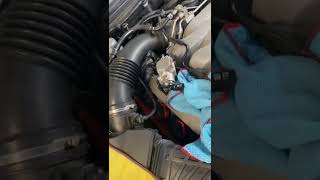
The 4.2L FSI V8 (engine code: CAUA) in the B8-generation S5 is a sophisticated direct-injection engine with two high-pressure fuel pumps (HPFPs) and a single high-pressure sensor (G247) to monitor the fuel rail. Unlike some other Audi FSI engines where a cam follower is the famous weak point, on this V8 the G247 sensor itself is a more common culprit for P0191. The sensor's location is a major factor, as it is buried underneath the intake manifold, turning a relatively inexpensive part into a significant labor-intensive repair. A repair manual confirms the intake manifold must be removed for access.
🎬 Watch: Step-by-step intake manifold removal guideSymptoms You May Notice
- Check Engine Light is on
- Engine hesitation or sudden loss of power, especially during acceleration
- Engine stalling, sometimes without warning, particularly at idle
- Rough or unstable idle
- Difficulty starting the engine or extended cranking time
- Reduced fuel economy
- Engine running in 'limp mode' with reduced power
- Replacing the in-tank low-pressure fuel pump without first diagnosing the high-pressure system. While it can be a cause, the high-pressure sensor and pumps are more common culprits for P0191 unless code P310B is also present.
- Replacing the fuel filter. While a clogged filter can cause pressure issues (usually code P0087), it's less likely to cause the specific 'Range/Performance' fault of P0191 unless severely restricted.
- Immediately replacing the G247 sensor without testing its wiring and connector first. The labor-intensive nature of the job makes it critical to rule out a simple electrical fault before removing the intake manifold.
Most Likely Causes
- Faulty High-Pressure Fuel Rail Sensor (G247) 🔴 High Probability The G247 sensor is a known failure point on this platform. Its internal electronics can fail or drift over time, sending implausible or erratic signals to the ECM.
How to confirm: Use a diagnostic scan tool (like VCDS) to monitor live data for 'Fuel Rail Pressure (actual)' and 'Fuel Rail Pressure (specified)'. If the actual pressure reading is erratic, jumps to zero intermittently, or is stuck at a fixed value (e.g., 5.0 bar) regardless of engine RPM, the sensor is likely faulty. A voltage check should show a 5V reference and ground at the connector; the signal wire should read between 0.5V and 4.5V.
Typical fix: Replace the G247 fuel pressure sensor. This requires removing the intake manifold for access. It is also recommended to replace the intake manifold gaskets at the same time.
Est. part cost: $100 - $200 - Failing High-Pressure Fuel Pump (HPFP) 🟡 Medium Probability → Shop Fuel Pump The 4.2L V8 uses two HPFPs that can wear out over time, failing to generate the pressure commanded by the ECM. Internal failure can also send metal debris through the system, causing widespread damage. Cam followers for the pumps can also wear, though it's less of a primary failure point than on other FSI engines.
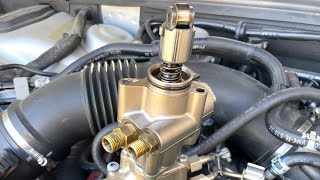
How to confirm: Monitor requested vs. actual fuel rail pressure under load (e.g., during a test drive with heavy acceleration). If the actual pressure consistently fails to meet the specified pressure, and the low-pressure system is confirmed to be working correctly, one or both HPFPs are likely weak. The HPFPs are located on top of the engine and are relatively easy to access compared to the G247 sensor.
Typical fix: Replace the failing high-pressure fuel pump(s) and their associated cam followers. 🎬 See this HPFP and cam follower replacement walkthrough The 4.2L V8 has two HPFPs located on the top rear of the engine.
Est. part cost: $300 - $600 per pump - Wiring or Connector Issue ⚪ Low Probability Engine heat can degrade the wiring harness over time, and corrosion can affect the connector pins for the G247 sensor or fuel pumps, leading to intermittent signals or short-to-ground faults. Water intrusion into the ECU box in the plenum can also cause widespread electrical issues.
How to confirm: Visually inspect the wiring harness and connector for the G247 sensor and HPFPs for any signs of damage, corrosion, or loose pins. Perform a wiggle test on the harness while monitoring live fuel pressure data to see if the reading fluctuates. Check for correct voltage (typically 5V reference) and ground at the sensor connector. A short-to-ground fault may blow a shared fuse, causing multiple seemingly unrelated fault codes.
Typical fix: Repair the damaged section of the wiring harness or clean/replace the corroded connector. In some cases, a poor connection can be fixed by simply unplugging and firmly reseating the connector.
Est. part cost: $10 - $100
Rare But Worth Checking
- Failing Low-Pressure Fuel Pump (In-Tank) or Control Module: → Shop Fuel Pump While P0191 points to the high-pressure side, the in-tank pump's failure to supply enough fuel (typically requires 5-6 bar) to the HPFPs can cause a performance code. This is often accompanied by VAG-specific code P310B. The fuel pump control module (J538), located under the rear seat, can also fail and is a common misdiagnosis. 🎬 Watch: How a fuel pressure regulator issue can mimic ECU failure
- Leaking Fuel Injector(s): → Shop Fuel Injector A fuel injector stuck open or leaking can cause a drop in fuel rail pressure, potentially triggering P0191. This is often accompanied by misfire codes (P030x) and a strong smell of fuel. Injectors on the 4.2 FSI are noted as a potential failure item, especially on cars over 80k miles.
- Clogged Fuel Filter: → Shop Fuel Filter A severely restricted fuel filter can starve the HPFPs of fuel, leading to a pressure performance code. This is less common but should be considered if maintenance history is unknown.
Diagnosis Steps
- Connect an OBD-II scanner (preferably VAG-specific like VCDS) and check for any other stored fault codes, paying close attention to P0087, P2293, or P310B.
- Access the live data stream. Monitor 'Fuel Rail Pressure (specified)' and 'Fuel Rail Pressure (actual)' in Measuring Blocks (e.g., Group 106) or Advanced Measuring Values.
- With the engine idling, observe the actual pressure. It should be stable and close to the specified value (typically around 25-35 Bar at idle).
- If the actual pressure reading is erratic, jumps to zero, or is stuck at an illogical value (like a constant 5.0 bar), suspect the G247 sensor or its wiring.
- While safely test-driving, perform some moderate to heavy accelerations. Watch to see if the actual pressure follows the specified pressure. A significant lag or inability to meet the target suggests a pump or filter issue.
- If a low-pressure fault (P310B) is present, test the in-tank fuel pump pressure and check the fuel pump control module (J538).
- Perform a visual inspection of the wiring and connectors for the G247 sensor (under the intake) and the two HPFPs (on top of the engine). Look for any signs of corrosion, chafing, or loose connections.
- If the G247 sensor is suspected, test its circuit. Check for the correct reference voltage (typically 5V) and a good ground at the sensor connector. The signal wire should read between 0.5V and 4.5V.
- If the HPFPs are suspected, an Audi-specific TSB suggests checking for metallic particles at the fuel metering valve (N290) on the pump, which indicates internal pump failure.
Parts You'll Likely Need
- High-Pressure Fuel Rail Sensor
(OEM #06J906051D)— This is the most common failure point for code P0191 on this specific engine. Part number 06J906051D is a revised part that supersedes earlier versions like 06J906051B.
Trusted brands: Bosch, Hitachi, Genuine Audi
OEM price range: $150-$220
Aftermarket price range: $80-$150 - High-Pressure Fuel Pump (HPFP)
(OEM #079127025J (Left), 079127026J (Right))— If diagnosis points to a mechanical pressure loss, a weak HPFP is the likely cause. The 4.2L V8 has two, one for each cylinder bank.
Trusted brands: Hitachi, Bosch, Genuine Audi
OEM price range: $400-$600
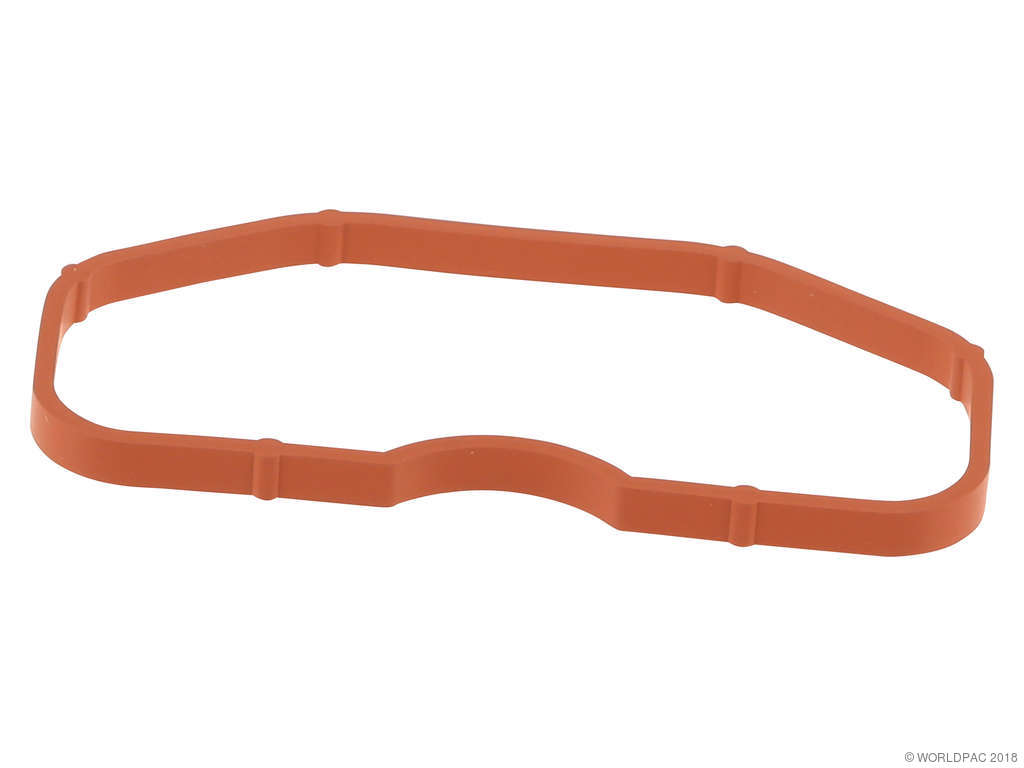
Aftermarket price range: $250-$450 - Intake Manifold Gasket Kit — These gaskets must be replaced when the intake manifold is removed to access the G247 sensor. It is not recommended to reuse the old gaskets.
Related Codes That Often Appear With This One
- P0087 — This code for 'Fuel Rail/System Pressure - Too Low' often appears when a mechanical issue, like a failing HPFP, causes a genuine drop in fuel pressure that the G247 sensor correctly reports.
- P2293 — This code for 'Fuel Pressure Regulator 2 Performance' is also related to the HPFP's ability to regulate pressure and is commonly seen when the pump or its cam follower fails.
- P0088 — For 'Fuel Rail/System Pressure - Too High', this code can be triggered if the G247 sensor fails and sends an erroneously high signal, or if a fuel pressure regulator malfunctions.
Technical Service Bulletins (TSBs) & Recalls
- TSB 2027731/5: While related to oil consumption, this TSB is an example of service bulletins for this engine platform.
- An unnamed TSB (referenced in NHTSA documents) for codes P0087, P0088, and P0191 describes checking for metallic particles in the HPFP as a diagnostic step for otherwise unexplained fuel pressure issues.
Platform-Specific Known Issues
- A known TSB for related fuel pressure codes (P0087, P0088) describes a diagnostic procedure for checking for metallic particles from a failing High-Pressure Fuel Pump (HPFP). If found, this indicates the pump is destroying itself and may have contaminated the entire fuel system, requiring extensive cleaning or replacement of lines and injectors.
Mechanic-Grade Diagnostic Values
- High-Pressure Fuel Rail (G247) - Specified vs. Actual at Idle — expected: Specified and Actual should both be stable around 25-50 Bar when the engine is warm.. Failure: Actual pressure is stuck at a fixed value (e.g., 5.00 bar), is erratic, or drops to 0 intermittently.
- High-Pressure Fuel Rail - Post-Shutdown (Heat Soak Test) — expected: After shutting down a hot engine, the pressure should rise above the idle value (e.g., to over 60 Bar) within a few minutes due to heat soak.. Failure: Pressure does not rise or drops, indicating a potential leak in the high-pressure system (injector or check valve).
- Low-Pressure Fuel System (In-tank pump) — expected: Should supply 5-6 Bar to the high-pressure pumps.. Failure: Pressure is significantly below 5 Bar, often triggering a P310B code alongside P0191.
- G247 Sensor Connector Voltage — expected: Approximately 5V reference between the two outer pins, with the signal wire reading between 0.5V and 4.5V depending on pressure.. Failure: No voltage, or voltage outside the expected range, points to a wiring or ECM fault.
Hidden / Shadow Codes Worth Checking
- P310B: VAG-specific code for 'Low Pressure Fuel regulation: Fuel Pressure Outside Specification'. (see via VCDS or other VAG-specific scan tools. Its presence strongly points the diagnosis towards the in-tank low-pressure fuel pump (LPFP) or its control module (J538) rather than the high-pressure system.)
- Pending fault for N276 mechanical malfunction: A pending fault for the fuel pressure regulator valve that may not show up in a standard VCDS engine scan but can sometimes be seen in the generic OBD-II function. (see via Use the generic OBD-II mode within a capable scan tool like VCDS.)
Scan Tool Commands That Help
- VCDS (VAG-COM): Engine > Measuring Blocks (or Adv. Measuring Values) > Group 106, 140, 141, or 230 — This is the primary function to log and compare 'Fuel high pressure: actual value' and 'Fuel high pressure: specified value' under idle, load, and WOT conditions to diagnose sensor vs. pump performance.
- VCDS (VAG-COM): Run Adaptation — After replacing fuel system components like the HPFPs or G247 sensor, an adaptation may be needed. One user noted it took a long time and timed out repeatedly, indicating it may be a finicky process.
Wiring & Ground Locations
- Engine Ground Strap (Main) — A key ground connection point is located on the driver's side frame rail in the engine compartment. Another is often found near the alternator.. A corroded or loose main engine ground can cause erratic voltage and faulty readings from various sensors, including the G247 fuel pressure sensor, leading to a false P0191 code.
- J538 Fuel Pump Control Module — Located under the rear seat, near the fuel tank access panel.. This module controls the in-tank pump. Failure or corrosion at its connector directly impacts the fuel supply to the HPFPs, which can trigger P0191 as a secondary fault.
- Shared Component Fuse — In the ECU box located in the plenum area, under the ECU itself.. A 15-amp fuse in this location supplies power to a relay that controls multiple components, including the fuel pressure regulators (N276). A short-to-ground in one component (like an EVAP valve) can blow this fuse, causing a loss of power to the fuel pressure regulators and triggering multiple codes, including P0191 or P0087.
Real Owner Repair Stories
- AudiWorld Forums User (2009 Audi 4.2L FSI) — Hard cranking, poor acceleration, stalling at stop lights, EPC light.
❌ Tried (didn't work) Initial diagnosis was unclear.
✅ What actually fixed it The user diagnosed the issue using VCDS. Live data showed the 'Actual Fuel Rail Pressure' was stuck at exactly 5.00 bar, even when revving the engine or with the engine off. Disconnecting the G247 sensor did not change the reading, confirming the sensor had failed and was sending a fixed, false signal. The final fix was replacing the G247 high-pressure sensor. - Edge Motors YouTube Channel (2008 Audi S5 4.2L V8) — Rough running, Check Engine Light, and a multitude of 'short to ground' or 'open circuit' codes for various components, including fuel pressure regulators, MAF sensor, and EVAP valve, plus a P0087 'Fuel Rail System Pressure Too Low' code.
❌ Tried (didn't work) The car came from another shop that was unable to diagnose the widespread electrical faults.
✅ What actually fixed it The technician identified that all failing components shared a common power supply relay and fuse located in the ECU box. The fuse was blown. The root cause was an intermittent short-to-ground in one of the two fuel pressure regulator valves (N276) on the HPFPs. When the valve would short, it blew the shared fuse, cutting power to all related components and causing numerous fault codes. Replacing the faulty HPFP with the shorting regulator resolved all codes.
OEM Part Supersession History
06J906051, 06J906051B→06J906051D— Revision to improve reliability and accuracy of the high-pressure fuel sensor (G247).
Heads up: The newest revision (06J906051D) is the recommended replacement for all prior versions.
Model Year Variations Within This Range
- 2009+: A service manual notes that the installation location or orientation of the G247 Fuel Pressure Sensor may differ on vehicles from model year 2009 onwards compared to the 2008 models.
Diagnostic Flowchart
Other Known Issues on This Vehicle
Issues unrelated to this code that are worth knowing about as an owner of this generation:
- Intake Valve Carbon Buildup 🔴 High — Considered an inevitable maintenance item on all FSI engines. Typically requires cleaning every 40,000-60,000 miles to restore performance and prevent misfires.
- Timing Chain Guide Wear 🔴 High — While improved over the previous generation V8, the plastic timing chain guides on the rear of the engine can still wear, typically after 80,000-100,000 miles. Symptoms include a 'rattle' on startup. Repair is extremely labor-intensive as it requires engine removal.
- Thermostat Failure 🟠 Medium — The thermostat can fail by sticking open (engine won't reach operating temp) or closed (engine overheats). It is a common failure item and replacement can be labor-intensive depending on engine type. (Ref: TSBs have been issued for thermostat issues on similar Audi platforms.)
- Excessive Oil Consumption 🟠 Medium — Some 4.2L V8 engines are known for high oil consumption, potentially related to piston ring design. Owners may need to add oil between changes. (Ref: TSB 2027731/5 addresses an oil consumption test procedure.)
- Failing Door Lock Actuators 🟡 Low — A very common issue where the door lock mechanism fails, preventing the door from locking or unlocking electronically.
Used vs. New Parts: Buying Guide for This Vehicle
When a used part is the smart pick: Given the critical nature of the fuel system and the labor involved, used parts are generally not recommended for this repair. The only potential exception might be a major structural component like a fuel rail from a verified low-mileage vehicle, but not the electronic or mechanical parts themselves.
Donor-vehicle mileage cap: roughly under 40000 miles for the part to have meaningful remaining life.
What to inspect on the donor part:
- Verify the donor vehicle's mileage and history if possible.
- For HPFPs, inspect the cam follower bucket for any scoring or wear; this can indicate the health of the pump's plunger.
- Check electrical connectors for any signs of corrosion, melting, or damaged pins.
OEM-only on this vehicle (don't cheap out):
- High-Pressure Fuel Sensor (G247): Aftermarket sensors have a high rate of premature failure or inaccurate readings. Given the extreme labor cost to replace it, using a Genuine Audi or OEM Bosch/Hitachi part is critical to avoid repeat repairs.
- Fuel Pump Control Module (J538): This electronic module is a critical component. Aftermarket versions can have compatibility or longevity issues. Stick with OEM.
Aftermarket brands forum-validated for this vehicle:
- Bosch: Bosch is an OEM supplier for many of Audi's fuel system components, including the G247 sensor and HPFPs. Their parts are considered equivalent to Genuine Audi.
- Hitachi: Hitachi is another OEM supplier for the High-Pressure Fuel Pumps on this engine and is a reliable alternative to Genuine Audi parts.
Brands owners have reported issues with on this vehicle:
- Unbranded/white-box sensors: Avoid generic, no-name fuel pressure sensors from online marketplaces. They often fail to meet the precise calibration required by the FSI system, leading to persistent codes or poor performance.
Real Owner Stories
Aggregated from forums and TSBs cited above. Mileages and costs reflect what owners reported in those sources.
2009 Audi S5 4.2L V8
Symptoms: Experienced multiple misfire codes alongside 'fuel rail pressure too low' and 'fuel rail pressure too high' after using a fuel cleaner.
What fixed it: The owner noted a complex interaction between injectors and pressure regulation, though the specific final part replacement was not detailed, it pointed to high-pressure system instability.
Source hint: Ross-Tech Forums (2015-11-27) thread titled '1938'
2010 Audi S5 4.2L V8
Symptoms: P2293 and P0087 codes; owner initially replaced the low-pressure pump with no success.
What fixed it: Replacing both High-Pressure Fuel Pumps (HPFPs) and their associated cam followers.
Source hint: YouTube - 'Audi S5 V8 4.2 High Pressure Fuel Pump diagnostics and Solutions' (2021-12-05)
2008 Audi S5 4.2L V8
Symptoms: Stalling and intermittent no-start conditions.
What fixed it: Replacement of the G247 High-Pressure Fuel Rail Sensor.
Source hint: AudiWorld Forums
Related OBD-II Codes
Frequently Asked Questions
Is there a Technical Service Bulletin for fuel pressure issues on my Audi S5 4.2L?
My S5 is stuck in 'limp mode' with a P0191 code; what is the most likely culprit?
Can I replace the G247 fuel pressure sensor myself on the 4.2L V8?
How can I tell if my High-Pressure Fuel Pumps (HPFP) are failing instead of just the sensor?
Could a simple wiring issue cause the P0191 code on this Audi?
Are there other engine issues I should look out for while fixing the fuel system?
Helpful Videos


We Have This Part in Stock


The information in this article is provided for general reference and educational purposes only. Vehicle specifications, procedures, and part compatibility can vary by production date, trim level, and region. Always consult your vehicle's factory service manual and verify part numbers before purchasing or performing repairs. Safety-critical components such as airbags, seat belts, and braking systems should be installed by a qualified professional.
- Audi S5:
- 🧭 Diagnostic Flowchart
- 🎬 Helpful Videos
- 🛍️ Shop This Part
- What's Unique About the 2008-2012 Audi S5
- Symptoms You May Notice
- Most Likely Causes
- Rare But Worth Checking
- Diagnosis Steps
- Parts You'll Likely Need
- Related Codes That Often Appear With This One
- Technical Service Bulletins (TSBs) & Recalls
- Platform-Specific Known Issues
- Mechanic-Grade Diagnostic Values
- Hidden / Shadow Codes Worth Checking
- Scan Tool Commands That Help
- Wiring & Ground Locations
- Real Owner Repair Stories
- OEM Part Supersession History
- Model Year Variations Within This Range
- Other Known Issues on This Vehicle
- Used vs. New Parts: Buying Guide for This Vehicle
- Real Owner Stories
- 2009 Audi S5 4.2L V8
- 2010 Audi S5 4.2L V8
- 2008 Audi S5 4.2L V8
- Related OBD-II Codes
- Frequently Asked Questions
- 🎟️ Get 5% Off