

P0191 on 2008-2013 BMW M3: S65 Fuel Pressure Sensor Causes and Fixes
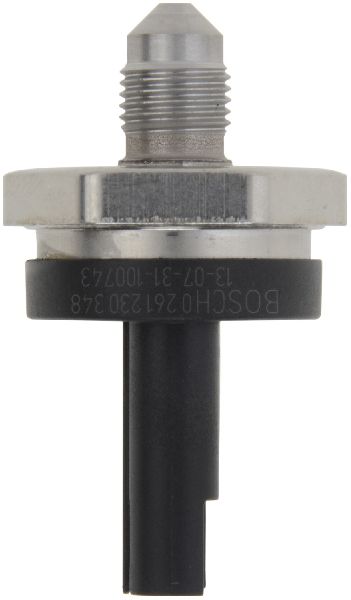
On the 2008-2013 BMW M3, code P0191 is almost always caused by a failing low-pressure fuel sensor. Expect to pay around $70-$120 for a new OEM Bosch sensor, which is a common and relatively easy DIY fix. The latest part number is 13537622231.
- P0191 on an E9x M3 almost always points to a bad low-pressure fuel sensor.
- Symptoms include rough idle, hesitation, and an 'Increased Emissions' warning.
- The correct replacement part is the updated Bosch sensor, OEM part number 13537622231.
- An adapter (16124800029) may be needed when replacing the original brass-colored sensor with the new silver one.
- Replacing the sensor is a DIY-friendly job that requires removing the airbox and taking safety precautions with the fuel system, such as pulling fuse 70 to depressurize the lines.
- Don't be misled by secondary codes for rich conditions or misfires; fix the fuel pressure issue first.
What's Unique About the 2008-2013 BMW M3
The E9x M3's S65 engine is naturally aspirated and uses a port-injection fuel system. Unlike many modern BMWs with direct injection, it does not have a complex high-pressure fuel pump (HPFP). Therefore, code P0191 on this specific vehicle refers to the single low-pressure fuel sensor that monitors the fuel supply from the in-tank pump. This specific Bosch sensor is a well-documented, common failure item on the S65 engine, often leading to this specific code.
Symptoms You May Notice
- Check Engine Light ('Service Engine Soon') is on
- "Increased Emissions" warning on the iDrive screen
- Rough idle, especially during a cold start, sometimes with RPM bouncing +/- 100 RPM
- Engine hesitation or stumbling during acceleration
- Engine stalling, particularly when coming to a stop
- Noticeable decrease in fuel economy
- Longer than normal engine cranking time before starting
- In some cases, the car may enter limp mode with a reduced redline
- Replacing oxygen (O2) sensors. While bad fuel pressure can cause rich/lean condition codes (like P0172/P0175) that are often associated with O2 sensors, the primary P0191 code points to the fuel delivery system itself.
- Replacing ignition coils or spark plugs. While misfires can occur due to incorrect fueling, the root cause is the pressure issue, not the ignition components. A user on m3post reported P0191 along with misfire codes for all 8 cylinders, which was resolved by replacing the fuel pressure sensor.
- Assuming it's bad gas. While bad gas can cause running issues, the specific P0191 code points to a sensor circuit performance problem, which is less likely to be caused by fuel quality alone.
Most Likely Causes
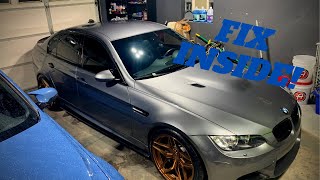
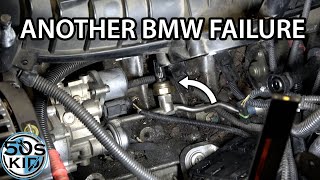
- Failed Low-Pressure Fuel Sensor 🔴 High Probability → Shop Fuel Pressure Sensor The low-pressure fuel sensor is a known common failure point on the S65 engine due to age and heat cycles in the engine bay. It is a widely discussed topic in owner forums as the primary culprit for P0191. 🎬 Watch: A real-world example of this sensor failing on an M3.
How to confirm: Using a capable scan tool (like INPA or ISTA for BMWs), monitor the live data for fuel pressure. A healthy sensor should show a steady reading of approximately 5.0 bar or 72.5 psi at idle. If the reading is erratic, stuck at a specific value (e.g., 0 or max), or clearly incorrect for the engine's state, the sensor is bad. Given the high failure rate and relatively low cost, many owners opt to replace it as the first step.
Typical fix: Replace the low-pressure fuel sensor and clear the fault codes. The sensor is located on the fuel line near the firewall, behind the airbox.
Est. part cost: $70-$120 - Damaged Wiring or Connector ⚪ Low Probability Engine bay heat can make wiring and plastic connectors brittle over time.
How to confirm: Visually inspect the 3-pin wiring harness and connector going to the fuel pressure sensor. Look for any signs of chafing, breaks, corrosion on the pins, or heat damage. Use a multimeter to check for continuity and proper voltage (typically a 5V reference, ground, and signal wire) at the connector.
Typical fix: Repair the damaged section of the wiring harness or replace the connector pigtail.
Est. part cost: $10-$50 - Failing Fuel Pump or EKP Module ⚪ Low Probability → Shop Fuel Pump The fuel pump control module (EKP) is another known failure point on E9x chassis vehicles, which can sometimes present with fuel pressure codes.
How to confirm: This is a less likely cause for P0191 alone. Diagnosis involves using a mechanical fuel pressure gauge to test the fuel pressure directly from the line. If the pressure is low or unstable and the sensor and wiring are known to be good, the pump or its control module is suspect. A failing EKP module might store its own specific fault codes.
Typical fix: Replace the in-tank fuel pump assembly or the EKP module located under the rear seat.
Est. part cost: $250-$500
Rare But Worth Checking
- Clogged Fuel Filter: → Shop Fuel Filter The fuel filter is integrated with the fuel pump assembly on this vehicle and is not considered a separate serviceable item by BMW. While a severe clog could cause pressure issues, it's less common to trigger P0191 without other symptoms and is typically addressed by replacing the entire pump/filter unit. Some aftermarket in-line filter solutions exist to address this design limitation.
- Faulty Engine Control Module (DME): → Shop Engine Control Module (ECM) This is extremely rare. The Siemens MSS60 DME is generally robust. The DME should only be considered after all other possibilities, including the sensor, wiring, and fuel pump, have been definitively ruled out by a professional.
Diagnosis Steps
- Read all fault codes stored in the DME. Note any other codes that are present alongside P0191, especially BMW-specific codes like 2722 or 2788.
- Using a scan tool with live data capability, monitor the 'Fuel Rail Pressure' value. Observe if the reading is stable around 5 bar (72.5 psi) at idle, if it responds to throttle input, and if it seems logical.
- Turn the engine off. CAUTION: Fuel is under pressure and flammable. Depressurize the fuel system by pulling the fuel pump fuse (Fuse 70 in the glove box fuse panel) and running the engine until it stalls. Disconnect the battery as a safety precaution.
- Gain access to the fuel pressure sensor, which is located on the fuel line near the firewall, behind the airbox.
- Inspect the sensor's electrical connector and wiring for any visible damage, corrosion, or loose connections.
- Given the extremely high failure rate of this part, the most common and effective step is to replace the fuel pressure sensor. Use a wrench to hold the fuel line fitting stationary while unscrewing the sensor to prevent bending the line. 🎬 See this DIY walkthrough for replacing the sensor and pump.
- After replacement, clear all fault codes and perform a test drive. Before starting, prime the fuel system by turning the ignition on (without starting the engine) a few times to check for leaks.
- If the code returns, perform a more in-depth diagnosis of the wiring and check the fuel pump's actual output with a mechanical gauge.
Parts You'll Likely Need
- Low-Pressure Fuel Sensor
(OEM #13537622231)— This sensor is the most common failure point for code P0191 on the S65 engine. The original factory sensor (often brass-colored, P/N 13537614317) is frequently superseded by this updated silver-colored Bosch part.
Trusted brands: Bosch (OEM), Genuine BMW, VEMO
OEM price range: $90-$120
Aftermarket price range: $70-$100 - Fuel Pressure Sensor Adapter
(OEM #16124800029)— If replacing an original brass-colored Sensata sensor with the updated silver-colored Bosch sensor (13537622231), this adapter may be required as the threading is different. Some replacement kits include this.
Trusted brands: Genuine BMW
OEM price range: $15-$25
Related Codes That Often Appear With This One
- P0192 — This code indicates 'Fuel Rail Pressure Sensor Circuit Low Input', which is a more specific version of the P0191 performance issue. They often appear together when the sensor fails electrically.
- P0172 / P0175 — These codes for 'System Too Rich' on Bank 1 and Bank 2 can be triggered if the DME receives an incorrectly low pressure reading, causing it to command the injectors to stay open longer than necessary, dumping excess fuel.
- 2722, 2788, 2796 (BMW-specific) — These are BMW-specific codes that can accompany the generic P0191. They relate to fuel pressure plausibility, variance comparison, and the activation of the emergency (limp) program, all pointing back to the fuel pressure sensor's data being unreliable.
Platform-Specific Known Issues
- The original fuel pressure sensor (P/N 13537614317, often brass-colored and made by Sensata) has been superseded multiple times by BMW. The latest recommended part number is 13537622231 (silver-colored, made by Bosch).
- Depending on the original fuel line and the new sensor, an adapter (P/N 16124800029) might be necessary to fit the new sensor to the old line due to different thread designs.
- A DIY guide on M3Post warns to be extremely careful when performing the replacement due to pressurized fuel spraying out. The user stated, "When I unscrewed the old one gas sprayed all over my face (wear eye protection)". Proper depressurization is critical.
Mechanic-Grade Diagnostic Values
- Fuel Pressure Sensor Signal Voltage (Key On, Engine Off) — expected: Approximately 0.5V to 1.8V. A common reading on a healthy, installed sensor is around 1.7V.. Failure: A reading of 0V or 5V indicates an electrical fault (short or open circuit). A reading outside the expected range suggests a faulty sensor.
- Fuel Pressure Sensor Connector Pin Test (Connector unplugged, Key On) — expected: Pin 1 (Ground): ~0V (less than 500mV). Pin 2 (Signal): ~5V (ghost/bias voltage from DME). Pin 3 (Supply): 5V reference voltage.. Failure: Absence of 5V reference voltage points to a wiring or DME issue. Ground wire reading significantly above 0V indicates a bad ground.
- Live Data Fuel Pressure at Idle — expected: Steady reading of approximately 5.0 bar (72.5 PSI).. Failure: Readings that are erratic, stuck, or do not respond logically to engine RPM changes.
Hidden / Shadow Codes Worth Checking
- 2722: Fuel Pressure Sensor, Electrical Diagnosis: This fault is set when the fuel pressure sensor signal transmitted to the DME is higher than the maximum plausible value stored in the DME's parameters. (see via BMW-specific scan tools like ISTA, INPA, or high-end aftermarket scanners (e.g., Carly, Foxwell).)
- 2788: Fuel Pressure Variance Comparison at Maximum Pressure: The DME compares the setpoint (target) fuel pressure with the actual measured value. This fault is triggered when the deviation between the two is too large, specifically indicating the measured pressure is too high at the maximum pressure threshold. (see via BMW-specific scan tools like ISTA or INPA.)
- 2786: Plausibility Fuel Pressure Sensor to Mechanical Pressure Controller: This is a rationality check fault where the sensor's reading is deemed implausible compared to the mechanical state of the fuel system. (see via BMW-specific scan tools like ISTA or INPA.)
- 2796: Motor Emergency Program Activated: This is not a cause but a result. The DME activates a limp mode (reduced power, lower redline) as a protective measure when critical faults like 2722 or 2788 are present. (see via BMW-specific scan tools like ISTA or INPA.)
Scan Tool Commands That Help
- ISTA/D: Call Up ECU Functions > Diagnostic Query > Fuel Pressure (Low Pressure) — This is the standard dealer-level procedure to read the live fuel pressure value directly from the DME while the engine is running. It is used to verify if the sensor's reported pressure matches the expected 5 bar and to check for erratic behavior, confirming or ruling out a bad sensor.
- ISTA/D: Fuel System Test Plan (ABL) — If live data is inconclusive, ISTA provides a guided diagnostic test sequence (ABL) for the fuel system. This test plan can guide a technician through a series of checks to isolate the fault between the sensor, wiring, EKP module, and fuel pump.
Wiring & Ground Locations
- DME Connector X60104, Pin 19 — On the MSS60 DME, which is located in the electronics box on the passenger side of the engine bay, under the cabin air filter housing.. This specific pin provides the power supply to the low-pressure fuel sensor. A fault diagnosis should include checking for 5V at this pin if the sensor appears dead.
- DME Ground Strap — A primary ground for the DME is located on the back of the cylinder head, secured with a 10mm bolt.. A loose or corroded DME ground can cause a variety of erratic sensor readings and seemingly unrelated fault codes, including fuel pressure sensor issues. Verifying this ground is tight and clean is a crucial step in diagnosing persistent electrical gremlins.
Real Owner Repair Stories
- Bimmerpost user 'IIAp3x' (E9x M3 (year not specified)) — Fault code 2722 (Fuel Pressure Sensor).
✅ What actually fixed it The user replaced the low-pressure fuel sensor located by the airbox, which resolved the issue. The repair was described as a 'Super easy DIY' that took about 20 minutes. - BimmerBoost forum user (E9x M3 S65) — Initially code 2786, which later progressed to include 2722, 2788, and 2796 (limp mode) as fuel demands increased.
✅ What actually fixed it The consensus from multiple consultants was that the low-pressure fuel sensor was the most probable cause. The thread confirms this is the primary fix for this combination of codes. - Reddit user 'felistrophic' (E93 M3 with ESS supercharger) — Fuel pump malfunction message, reduced power (7k RPM redline), and codes 2786 and 2788.
❌ Tried (didn't work) Replacing the fuel pressure sensor did not initially fix the problem.
✅ What actually fixed it The user was advised to reset adaptations (specifically throttle body adaptations) after replacing the sensor. After researching how to perform the reset, this resolved the lingering codes and symptoms.
OEM Part Supersession History
13537614317→13537622231— The original sensor, often a brass-colored part made by Sensata, is a high-failure item. It was updated to a more robust silver-colored sensor made by Bosch.
Heads up: The updated Bosch sensor (13537622231) has a different thread design than the original Sensata sensor. An adapter, BMW P/N 16124800029, is required to install the new sensor onto the original fuel line.
Diagnostic Flowchart
Used vs. New Parts: Buying Guide for This Vehicle
When a used part is the smart pick: For the EKP (fuel pump control module), a used part can be a cost-effective option if the primary cause is confirmed to be the module and not the pump or sensor. Forum members have reported success swapping in used EKP modules from similar vehicles, sometimes without needing to code them, although coding is officially recommended.
Donor-vehicle mileage cap: roughly under 80000 miles for the part to have meaningful remaining life.
What to inspect on the donor part:
- Verify the part number on the used EKP module matches your original or is a compatible replacement.
- Source from a reputable salvage yard that offers a warranty or return policy.
- Inspect the connector pins for any signs of corrosion or damage before purchasing.
OEM-only on this vehicle (don't cheap out):
- Low-Pressure Fuel Sensor: Given that this is an extremely common failure point and a relatively inexpensive part, installing a used sensor is not recommended. A new OEM (Bosch) or Genuine BMW sensor is the most reliable fix.
Aftermarket brands forum-validated for this vehicle:
- Bosch (OEM for the updated sensor)
Brands owners have reported issues with on this vehicle:
- Unnamed, no-brand sensors from online marketplaces are a gamble and may fail prematurely or provide inaccurate readings.
Real Owner Stories
Aggregated from forums and TSBs cited above. Mileages and costs reflect what owners reported in those sources.
2008 BMW M3 — 35000 miles
Symptoms: The car showed a 'Service Engine Light', an 'Increased Emissions' warning, and had a rougher than normal idle during startup.
What fixed it: The Fuel Rail Pressure Sensor was replaced under warranty.
Source hint: P0191 - Fuel Rail Pressure Sensor - BMW M3 Forum (E90 E92) - Bimmerpost
2009 BMW M3 (E92)
Symptoms: The owner experienced an 'Increased Emissions' warning, rough starts, and pulled a long list of codes: P0191, P0192, P0172, P0175, and misfires on multiple cylinders.
What fixed it: The community consensus in the thread was that the low-pressure fuel sensor was the likely culprit and a straightforward DIY replacement.
Source hint: m3post.bimmerpost.com: In a 2015 thread "Double check my analysis - Faulty fuel rail low pressure sensor"
BMW M3 (E9x)
Symptoms: The owner had a P0191 code along with other unspecified pressure-related codes.
What fixed it: The owner replaced the low-pressure fuel sensor as the first and most affordable step, which successfully resolved all issues.
Source hint: m3post.bimmerpost.com: A 2015 thread titled "Fuel Pump Malfunction Troubleshooting Help"
Related OBD-II Codes
Frequently Asked Questions
What is the updated part number for the low-pressure fuel sensor on my S65 M3?
Do I need a special adapter to install the new fuel pressure sensor?
What should the fuel pressure be on a healthy S65 engine at idle?
Where is the low-pressure fuel sensor located on the 2008-2013 M3?
Are there any specific safety warnings for replacing the fuel sensor myself?
Besides the sensor, what else is a known cause for P0191 on these cars?
What BMW-specific fault codes might I see along with P0191?
Helpful Videos
We Have This Part in Stock


The information in this article is provided for general reference and educational purposes only. Vehicle specifications, procedures, and part compatibility can vary by production date, trim level, and region. Always consult your vehicle's factory service manual and verify part numbers before purchasing or performing repairs. Safety-critical components such as airbags, seat belts, and braking systems should be installed by a qualified professional.
- BMW M3:
- 🧭 Diagnostic Flowchart
- 🎬 Helpful Videos
- 🛍️ Shop This Part
- What's Unique About the 2008-2013 BMW M3
- Symptoms You May Notice
- Most Likely Causes
- Rare But Worth Checking
- Diagnosis Steps
- Parts You'll Likely Need
- Related Codes That Often Appear With This One
- Platform-Specific Known Issues
- Mechanic-Grade Diagnostic Values
- Hidden / Shadow Codes Worth Checking
- Scan Tool Commands That Help
- Wiring & Ground Locations
- Real Owner Repair Stories
- OEM Part Supersession History
- Used vs. New Parts: Buying Guide for This Vehicle
- Real Owner Stories
- 2008 BMW M3 — 35000 miles
- 2009 BMW M3 (E92)
- BMW M3 (E9x)
- Related OBD-II Codes
- Frequently Asked Questions
- 🎟️ Get 5% Off