

P0191 on 2010-2016 Buick LaCrosse 3.6L V6: Fuel Rail Pressure Sensor Causes and Fixes
P0191 on your LaCrosse 3.6L V6 means the fuel pressure is out of spec. The most likely causes are a faulty Fuel Rail Pressure Sensor (FRPS) or a failing High-Pressure Fuel Pump (HPFP). Replacing the sensor is a 3-4 hour job costing $300-$500, as the intake manifold must be removed to access it.
- P0191 points to a mismatch between desired and actual fuel pressure in the high-pressure fuel rail.
- The most likely cause is a bad Fuel Rail Pressure Sensor (FRPS), but a failing High-Pressure Fuel Pump (HPFP) is also common.
- Diagnosis is key. Use a scan tool to compare desired vs. actual fuel pressure before buying parts.
- Always check for the smell of gas in the oil, as this is a tell-tale sign of a failing HPFP.
- Replacing the FRPS requires removing the intake manifold, so replace the intake gaskets at the same time.
What's Unique About the 2010-2016 Buick LaCrosse
The 3.6L direct-injection V6 in the LaCrosse has a two-pump fuel system: a low-pressure pump in the tank and a high-pressure fuel pump (HPFP) on the engine. P0191 almost always relates to the high-pressure side. Both the fuel rail pressure sensor (FRPS) and the HPFP are known failure points on this engine across many GM platforms like the Cadillac CTS and Chevy Traverse. Because the FRPS is buried under the intake manifold, diagnosis is critical to avoid a costly and labor-intensive misdiagnosis of replacing the HPFP unnecessarily.
Symptoms You May Notice
- Check Engine Light is on
- "Reduced Engine Power" me 🎬 See a diagnosis of P0191 and reduced engine power.ssage on the dashboard
- Hesitation or stuttering during acceleration
- Engine stalls or runs rough at idle
- Hard starting or long crank times
- Decreased fuel economy
- Engine cranks but will not start
- Replacing the in-tank fuel pump when the issue is with the high-pressure system. It's crucial to test both low-side and high-side pressures to pinpoint the fault.
- Replacing the High-Pressure Fuel Pump (HPFP) when only the Fuel Rail Pressure Sensor is bad. Since replacing the pump is much more expensive and the sensor is a very common failure, it's critical to diagnose the sensor and its wiring first.
Most Likely Causes
- Faulty Fuel Rail Pressure Sensor (FRPS) 🔴 High Probability → Shop Fuel Pressure Sensor This sensor is a common failure item on the GM 3.6L V6 engine family. It is located in a high-heat area under the intake manifold, which can contribute to its failure over time. This issue is seen across all platform mates.
How to confirm: With a scan tool, monitor the 'Desired Fuel Rail Pressure' and 'Actual Fuel Rail Pressure' PIDs. If the actual pressure is erratic, stuck on one value, or consistently deviates from the desired pressure, the sensor is likely faulty. The sensor is located under the intake manifold, requiring its removal for access. 🎬 Watch: See the exact location of the fuel rail sensor.
Typical fix: Replace the Fuel Rail Pressure Sensor. This requires removing the upper intake manifold. It is critical to also replace the intake manifold gaskets at the same time. A 27mm deep, thin-wall socket is required to remove the sensor. The sensor should be torqued to 18 ft-lbs.
Est. part cost: $50-$110 - Failing High-Pressure Fuel Pump (HPFP) 🟡 Medium Probability → Shop Fuel Pump The camshaft-driven HPFP is a well-documented weak point on this engine, with GM issuing special coverage programs for it on other models (though not officially for the LaCrosse). Wear and tear can cause it to fail to produce the required pressure.
How to confirm: Monitor desired vs. actual fuel rail pressure on a scan tool, especially under load. If actual pressure consistently drops far below desired pressure, the pump is likely weak. A critical diagnostic clue is a strong smell of gasoline in the engine oil, which indicates the pump's internal seal has failed and is leaking fuel into the crankcase. This is a widely reported symptom on forums. This is often accompanied by codes P0087 or P0089.
Typical fix: Replace the high-pressure fuel pump. This is a more involved and expensive repair than the sensor, but it is more accessible on the top of the engine.
Est. part cost: $250-$500 - Wiring or Connector Corrosion at the FRPS ⚪ Low Probability GM TSB #20-NA-197 was issued for a wide range of GM vehicles, including those with the 3.6L engine, for this exact issue. The connector is exposed to heat and vibration, which can lead to fretting corrosion and a poor connection over time, causing an incorrect signal.
How to confirm: After removing the intake manifold to access the sensor, disconnect the electrical connector. Inspect the terminals on both the sensor and the harness side for any green or black residue, bent pins, or signs of moisture. The TSB recommends dragging a terminal test tool through the connector to feel for corrosion.
Typical fix: Clean the connector terminals with electrical contact cleaner and apply dielectric grease (GM P/N 12377900) before reconnecting. If the connector or terminals are damaged, the connector pigtail (GM P/N 19367009) will need to be replaced.
Est. part cost: $20-$40
Rare But Worth Checking
- Failing In-Tank (Low-Pressure) Fuel Pump: → Shop Fuel Pump If the high-pressure pump is starved of fuel from the tank, it cannot build pressure. This would typically set low-pressure codes as well (like P069E), but it's worth checking low-side fuel pressure (should be 50-100 PSI with pump running, key on engine off) to rule it out.
- Clogged Fuel Filter: → Shop Fuel Filter A clogged fuel filter can restrict fuel flow to the high-pressure pump, leading to low pressure readings. On these vehicles, the filter is typically integrated into the in-tank fuel pump module and is not a separate serviceable item.
- Faulty Engine Control Module (ECM): → Shop Engine Control Module (ECM) This is extremely rare. The ECM should only be considered after all other possibilities—sensor, pump, wiring, and fuel supply—have been thoroughly tested and ruled out.
Diagnosis Steps
- Connect an OBD-II scanner and check for any other codes, especially P0087, P0089, or P069E. Address those first.
- Using the scanner's live data function, monitor 'Desired Fuel Rail Pressure' and 'Actual Fuel Rail Pressure' at idle and while driving.
- If 'Actual' pressure is erratic, stuck, or does not respond to engine load, the Fuel Rail Pressure Sensor (FRPS) or its wiring is suspect.
- If 'Actual' pressure consistently fails to meet 'Desired' pressure, especially under acceleration, suspect a weak High-Pressure Fuel Pump (HPFP) or a restriction in the fuel supply.
- Turn the engine off. Remove the oil cap and smell for gasoline. A strong fuel smell is a very strong indicator of a failed HPFP leaking fuel into the crankcase.
- If the sensor is suspected, gain access by removing the intake manifold. Visually inspect the sensor's electrical connector for corrosion or damage as described in TSB #20-NA-197.
- If the connector is clean, proceed with replacing the sensor. A 27mm deep, thin-wall socket is required. Torque the new sensor to 18 ft-lbs.
- If the pump is suspected, confirm the low-pressure fuel pump is supplying adequate pressure (50-100 PSI) to the HPFP before condemning the expensive high-pressure pump.
Parts You'll Likely Need
- Fuel Rail Pressure Sensor
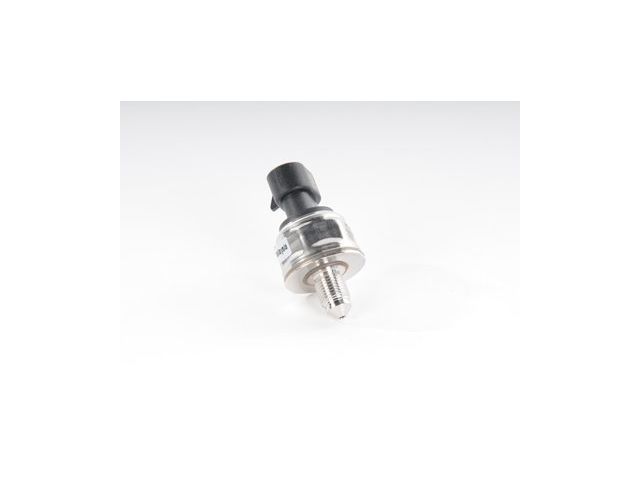
(OEM #12682589 (supersedes 12652442, 12662738))— This is the most common failure point for code P0191. It sends the pressure reading to the ECM.
Trusted brands: ACDelco, Bosch
OEM price range: $60-$110
Aftermarket price range: $40-$80 - High-Pressure Fuel Pump
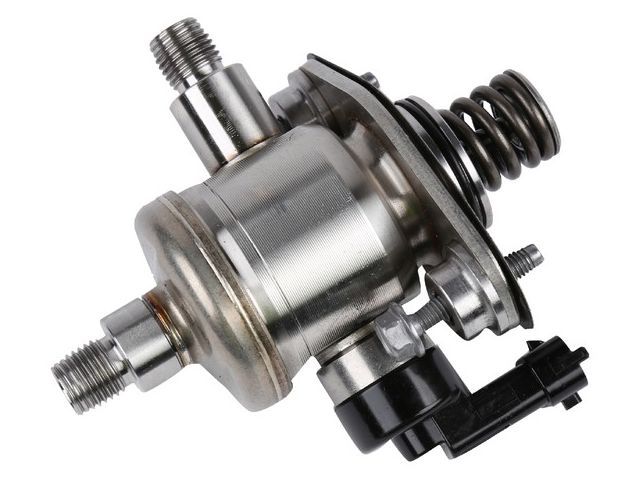
(OEM #12641740 (LFX Engine))— This is the second most common cause. It is a mechanical pump that often wears out, unable to generate the required pressure.
Trusted brands: ACDelco, Bosch
OEM price range: $330-$600
Aftermarket price range: $150-$300 - Upper Intake Manifold Gasket Set — Must be replaced when removing the intake manifold to access the fuel rail pressure sensor.
Trusted brands: Fel-Pro, ACDelco
OEM price range: $30-$50
Aftermarket price range: $15-$30
Related Codes That Often Appear With This One
- P0087 — Indicates 'Fuel Rail/System Pressure - Too Low'. This is a mechanical fault code that often appears with P0191 when the High-Pressure Fuel Pump is failing. TSB #20-NA-197 also lists this code as a potential result of connector corrosion.
- P0089 — Indicates 'Fuel Pressure Regulator Performance'. This code also points to a mechanical fuel pressure problem and is commonly seen alongside P0191 when the HPFP is the root cause.
- P069E — Indicates a fault with the Fuel Pump Control Module. The official GM diagnostic procedure for P0191 states to check for this code first, as a problem with the low-pressure pump's control can affect the entire system.
- P0300 — Indicates 'Random/Multiple Cylinder Misfire Detected'. This can occur when the unstable fuel pressure causes misfires across multiple cylinders.
Technical Service Bulletins (TSBs) & Recalls
- 20-NA-197: This bulletin addresses MIL illumination with various fuel pressure codes, including P0191. The cause is identified as potential corrosion or damage at the fuel pressure sensor electrical connector. The fix involves inspecting the connector, cleaning it, applying dielectric grease, and replacing the connector pigtail if damaged.
Platform-Specific Known Issues
- Owner Experience: 2014 GMC Acadia Crank-No-Start: An owner on YouTube with a P0191 code on a 2014 Acadia (platform mate) documented a difficult diagnosis that ultimately was resolved by replacing the fuel rail pressure sensor. The video highlights the necessity of removing the intake manifold for access.
Mechanic-Grade Diagnostic Values
- High-Pressure Fuel Rail Pressure at Idle — expected: 1.9–5.0 MPa (276–725 psi). Failure: Pressure that is erratic, stuck, or significantly deviates from the 'Desired Fuel Rail Pressure' PID on a scan tool.
- High-Pressure Fuel Rail Pressure at Wide-Open Throttle — expected: Should reach 14–17 MPa (2,031–2,466 psi) near 7,000 RPM.. Failure: Failure to reach this pressure range under heavy load points to a weak high-pressure fuel pump (HPFP).
- Low-Pressure Fuel System Pressure (Key On, Engine Off) — expected: 345–690 kPa (50–100 psi). Failure: Pressure below this range indicates a problem with the in-tank fuel pump or Fuel Pump Control Module (FPCM).
- FRPS 5V Reference Circuit Voltage — expected: 4.8–5.2 Volts. Failure: Voltage outside this range points to a wiring issue or a fault in the ECM (K20). Test at terminal A of the sensor connector to ground.
- FRPS Low Reference Circuit Resistance — expected: Less than 5 Ohms. Failure: Resistance higher than 5 ohms indicates an open or high-resistance ground circuit. Test at terminal C of the sensor connector to chassis ground.
- Fuel Rail Pressure Sensor Torque — expected: 25 N·m (18 lb ft). Failure: Incorrect torque can lead to fuel leaks or damage to the sensor or fuel rail.
Scan Tool Commands That Help
- GDS2 / Tech2: Live Data Graphing: Desired vs. Actual Fuel Rail Pressure — This is the primary diagnostic screen for P0191. Graphing both values allows a technician to see the exact moment the actual pressure deviates from the ECM's command, which is critical for diagnosing intermittent issues.
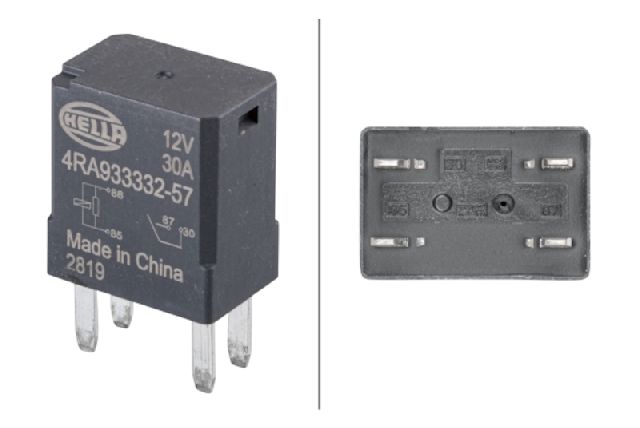
- GDS2: Fuel Pump Relay Command ON/OFF — This bidirectional control allows a technician to manually operate the low-pressure fuel pump to check its function and build pressure for leak testing without starting the engine. It is a primary step in the GM diagnostic flowchart for fuel system issues.
- GDS2: Fuel Pump Trim Reset — This function must be performed after replacing the in-tank fuel pump or Fuel Pump Control Module (FPCM). It clears the long-term learned values, allowing the system to recalibrate to the new component's flow characteristics.
- GDS2: Fuel Pressure Control / Regulator Test — This allows commanding the high-pressure pump's internal regulator to specific duty cycles to verify if the actual rail pressure responds accordingly. This helps isolate a sticking mechanical regulator from a sensor or wiring issue.
Wiring & Ground Locations
- B47B — This is the service manual identifier for the Fuel Rail Pressure Sensor itself, located under the intake manifold on the fuel rail.. Knowing this identifier helps locate the correct component and its associated wiring diagrams in service literature.
- FRPS Connector Pin A — Pin A on the fuel rail pressure sensor connector.. This is the 5V reference circuit from the ECM. It should have 4.8-5.2V with the key on. A loss of voltage here will cause the sensor to read incorrectly.
- FRPS Connector Pin C — Pin C on the fuel rail pressure sensor connector.. This is the low reference (ground) circuit. It should have less than 5 ohms of resistance to a good chassis ground. A bad ground will cause erratic sensor readings.
- G102 / G103 / G104 — These are primary engine ground points, commonly located on the rear of the cylinder heads or on the engine block.. The ECM's sensor circuits require a stable ground reference. A loose or corroded ground at these points can introduce electrical noise and cause false or intermittent sensor performance codes like P0191.
Real Owner Repair Stories
- YouTube user 'louis Rodriguez' (2012 Buick LaCrosse 3.6L V6) — Check Engine Light with P0191.
✅ What actually fixed it The Fuel Rail Pressure Sensor was replaced. The owner noted that contrary to other videos, the airbox did not need to be removed. He confirmed the sensor torque spec is 18 ft-lbs and that the fix resolved the Check Engine Light. - YouTube user 'Magnus Prime E1' (2012 Buick Enclave 3.6L V6 (Lambda Platform-mate)) — P0191 code, 'powertrain code', engine goes into limp mode.
✅ What actually fixed it The Fuel Rail Pressure Sensor was replaced. The video notes that a temporary fix to get home is often to shut the car off for a few minutes and restart it, which temporarily clears the limp mode. A 27mm socket is required for the sensor.
OEM Part Supersession History
12641740 (for LFX HPFP)→12691016 (current as of early 2024)— GM frequently updates parts to improve reliability or consolidate part numbers. This part has been superseded multiple times.
Heads up: The part number trail is 12641740 -> 12669005 -> 12677328 -> 12691016. Using an older, superseded part number may result in installing a part with known deficiencies. Always use the latest revision.
Model Year Variations Within This Range
- 2010-2011 (LLT) vs 2012-2016 (LFX): The LFX engine introduced in 2012 has a different, higher-volume High-Pressure Fuel Pump (HPFP), a composite intake manifold (vs aluminum on LLT), different fuel injectors, and a Delphi ECU (vs Bosch on LLT). These differences mean parts are generally not interchangeable between the two engine versions.
- 2012+ (LFX): The timing chain design was improved for the LFX engine, making premature chain stretch (a common issue on the LLT) much less likely to be a related cause of engine performance problems on these later models.
Diagnostic Flowchart
Real Owner Stories
Aggregated from forums and TSBs cited above. Mileages and costs reflect what owners reported in those sources.
2014 GMC Acadia 3.6L
Symptoms: Experienced a difficult crank-no-start condition accompanied by the P0191 code.
What fixed it: Replaced the fuel rail pressure sensor, which required removing the intake manifold for access.
Source hint: Owner Experience: 2014 GMC Acadia Crank-No-Start
2011 Chevrolet Traverse 3.6L
Symptoms: Check engine light illuminated with code P0191.
What fixed it: Removed the intake manifold and replaced the fuel rail pressure sensor using a 27mm deep, thin-wall socket.
Source hint: YouTube: How To Replace A Fuel Rail Pressure Sensor - 2011 Chevy Traverse
2012 GMC Acadia 3.6L
Symptoms: Vehicle exhibited no throttle response. The symptom was temporarily fixed by clearing the P0191 code.
What fixed it: Diagnosed as a faulty fuel rail pressure sensor located under the intake manifold.
Source hint: YouTube: 2012 gmc Acadia fuel rail pressure sensor replacement
2008-2017 Buick Enclave 3.6L
Symptoms: Vehicle went into limp mode with a P0191 code. Shutting the car off and restarting temporarily cleared the limp mode.
What fixed it: Removed the foam cover and installed a new Fuel Rail Injection Pressure Sensor using a 27mm socket.
Source hint: YouTube: How To: 2008-2017 Buick Enclave P0191 Fix, Fuel Rail Injection Pressure Sensor Install
Related OBD-II Codes
Frequently Asked Questions
Does TSB 20-NA-197 apply to my 3.6L Buick LaCrosse for code P0191?
I have a P0191 code and my oil smells strongly of gasoline. What does this mean for my LaCrosse?
What tools do I need to replace the Fuel Rail Pressure Sensor on my 3.6L V6?
Why does my LaCrosse go into 'Reduced Engine Power' mode with this code, and can I temporarily bypass it?
Should I replace the high-pressure fuel pump (HPFP) immediately if I get a P0191 code?
Helpful Videos

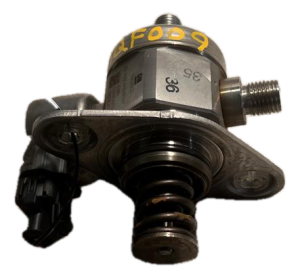
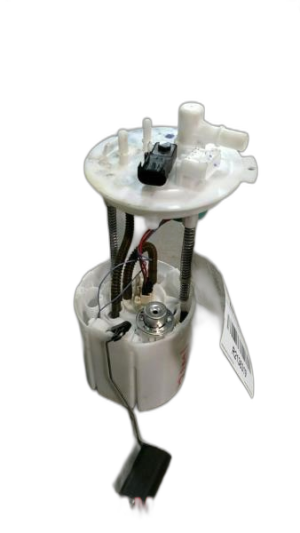
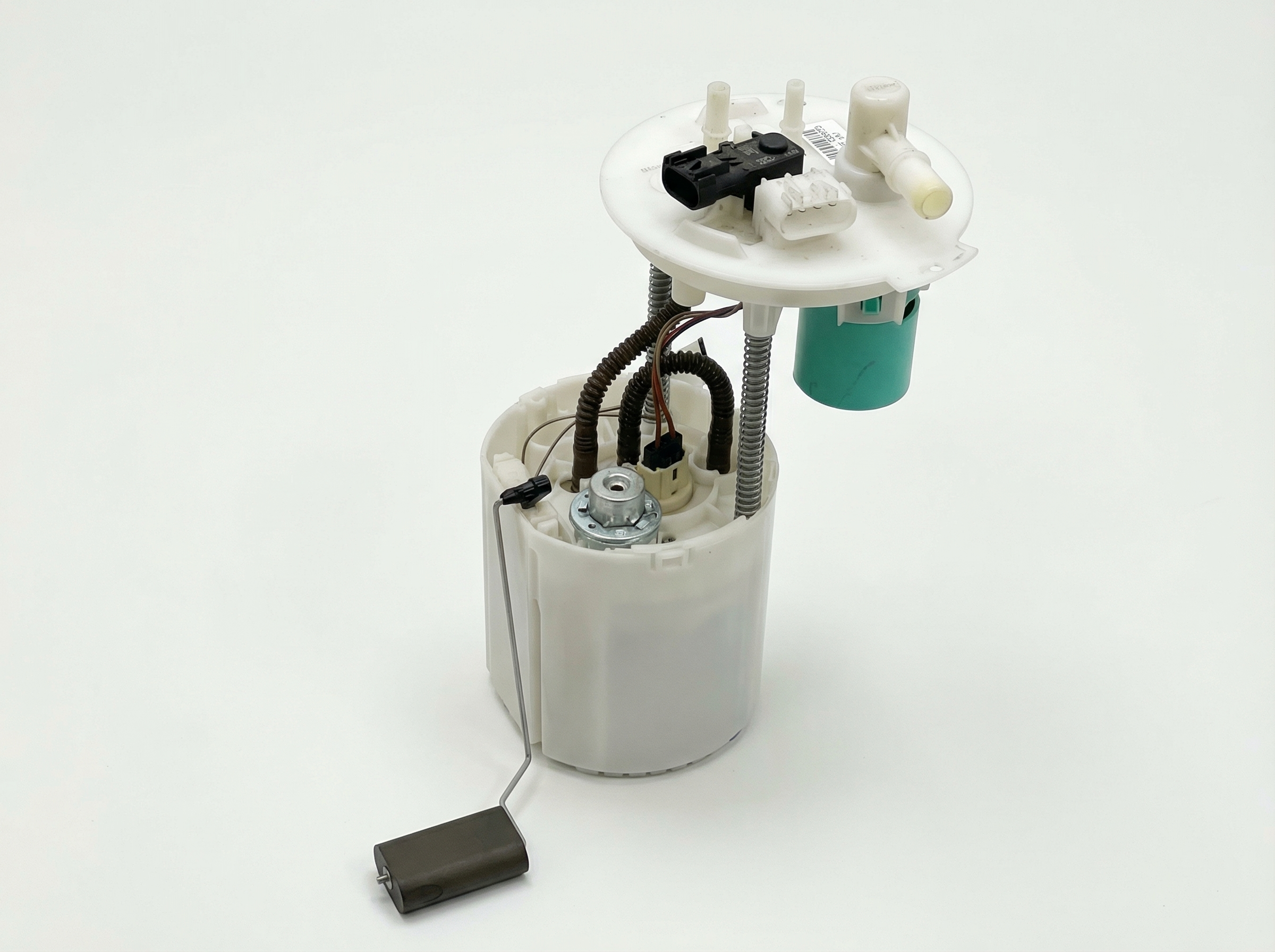
Used OEM Parts in Stock
New Aftermarket Parts Available


The information in this article is provided for general reference and educational purposes only. Vehicle specifications, procedures, and part compatibility can vary by production date, trim level, and region. Always consult your vehicle's factory service manual and verify part numbers before purchasing or performing repairs. Safety-critical components such as airbags, seat belts, and braking systems should be installed by a qualified professional.
- Buick LaCrosse:
- 🧭 Diagnostic Flowchart
- 🎬 Helpful Videos
- 🛍️ Shop This Part
- What's Unique About the 2010-2016 Buick LaCrosse
- Symptoms You May Notice
- Most Likely Causes
- Rare But Worth Checking
- Diagnosis Steps
- Parts You'll Likely Need
- Related Codes That Often Appear With This One
- Technical Service Bulletins (TSBs) & Recalls
- Platform-Specific Known Issues
- Mechanic-Grade Diagnostic Values
- Scan Tool Commands That Help
- Wiring & Ground Locations
- Real Owner Repair Stories
- OEM Part Supersession History
- Model Year Variations Within This Range
- Real Owner Stories
- 2014 GMC Acadia 3.6L
- 2011 Chevrolet Traverse 3.6L
- 2012 GMC Acadia 3.6L
- 2008-2017 Buick Enclave 3.6L
- Related OBD-II Codes
- Frequently Asked Questions
- 🎟️ Get 5% Off