

P0191 on 2016-2024 Chevrolet Camaro 6.2L LT1: Fuel Rail Pressure Sensor Issues and Fixes
P0191 on your Camaro means the fuel rail pressure is out of spec. It's often a faulty fuel rail pressure sensor, but could also be a weak fuel pump or wiring issue. A sensor replacement is the most common starting point, costing around $90-$160 for the part. Verify your model year, as the sensor changed in 2017.
- P0191 on a 6th Gen Camaro indicates a fuel pressure problem that requires prompt attention to avoid stalling or engine damage.
- Crucially, you must identify if your Camaro is a 2016 (4-pin sensor) or 2017+ (3-pin sensor) before ordering a new fuel rail pressure sensor, as they are different.
- Do not automatically assume the expensive high-pressure fuel pump has failed. The issue is often the sensor itself or the less expensive in-tank low-pressure pump.
- Due to the extremely high pressures of the direct injection system, diagnosis and repair are best left to a professional mechanic if you are not experienced with this type of system.
What's Unique About the 2016-2024 Chevrolet Camaro
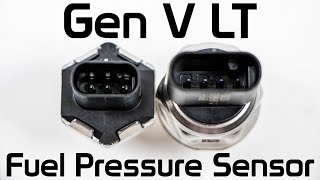
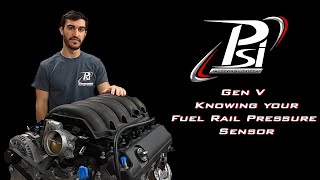
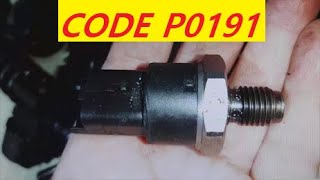
The 6.2L LT1 engine uses a high-pressure direct injection system, which is more complex than older port injection systems. A critical detail for this Camaro generation is a mid-cycle change in the fuel rail pressure sensor itself. 2016 models use a 4-pin analog sensor (GM Part #12673824), while 2017-2024 models use an updated 3-pin digital sensor (GM Part #12684286). They are not interchangeable, so 🎬 Watch: How to identify the 3-pin vs 4-pin sensor verifying your model year before purchasing a replacement is essential. This two-pump system (a low-pressure pump in the tank and a high-pressure mechanical pump on the engine) can also make diagnosis tricky, as a failure in either pump can lead to this code.
Symptoms You May Notice
- Check Engine Light is on
- "Reduced Engine Power" message on the driver information center
- "Service Stabilitrak" message may appear
- Engine hesitation or stumbling during acceleration, especially between 2,000 and 4,000 RPM
- Rough or unstable idle
- Engine may stall, especially at low speeds
- Noticeable loss of power
- Hard starting or extended cranking
- Rattling noise from the engine compartment (indicative of HPFP failure)
- Replacing the expensive high-pressure fuel pump (HPFP) when the actual fault is a much cheaper and easier to replace in-tank low-pressure pump or the fuel rail pressure sensor.
Most Likely Causes
- Faulty Fuel Rail Pressure Sensor 🔴 High Probability → Shop Fuel Pressure Sensor The sensor is a sensitive electronic component that operates in a high-heat, high-pressure environment. It's a common failure point across many direct-injection vehicles and the most frequent cause of P0191.
How to confirm: Using a scan tool, compare the 'Desired Fuel Rail Pressure' to the 'Actual Fuel Rail Pressure'. If the actual reading is erratic, stuck, or clearly incorrect (e.g., reading high pressure with the engine off), the sensor is likely bad. The ultimate confirmation is to check actual pressure with a mechanical gauge and see if it differs from the sensor's reading.
Typical fix: Replace the fuel rail pressure sensor. It is critical to buy the correct sensor for your model year: 4-pin for 2016, 3-pin for 2017+.
Est. part cost: $90-$160 - Failing Low-Pressure Fuel Pump or Fuel Pump Control Module (FPCM) 🟡 Medium Probability → Shop Fuel Pump The in-tank low-pressure pump is responsible for feeding the high-pressure pump. If its output is weak or erratic, the high-pressure side will be starved of fuel, causing pressure to drop below the target set by the ECM.
How to confirm: A technician can test the low-pressure side fuel pressure to see if it meets specifications (typically around 40-75 PSI). A significant drop under load points to a weak pump or faulty FPCM.
Typical fix: Replace the in-tank fuel pump assembly and/or the Fuel Pump Control Module.
Est. part cost: $250-$500 - Wiring or Connector Issue ⚪ Low Probability
How to confirm: Visually inspect the fuel rail pressure sensor's connector and harness for any signs of corrosion, damage, or loose pins. A voltage drop test can be performed on the sensor's circuit to check for high resistance.
Typical fix: Repair the damaged wiring or replace the connector pigtail.
Est. part cost: $20-$50 - Failing High-Pressure Fuel Pump (HPFP) ⚪ Low Probability → Shop Fuel Pump The HPFP is a mechanical pump driven by the camshaft. While robust, it can fail, especially at higher mileage or on modified engines. A worn internal plunger is a common failure mode.
How to confirm: This is typically diagnosed after ruling out the sensor and low-pressure fuel system. A rattling noise from the top of the engine can be an audible symptom. If the low-pressure supply is good but the high-pressure rail cannot meet the desired pressure commanded by the ECM, the HPFP is suspect.
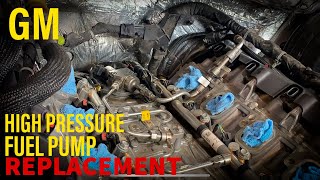
Typical fix: Replace the high-pressure fuel pump. 🎬 Watch: Complete walkthrough for replacing the high-pressure fuel pump
Est. part cost: $300-$600
Rare But Worth Checking
- Fuel Contamination: Bad gasoline with water, rust, debris, or other substances like Diesel Exhaust Fluid (DEF) can damage fuel system components and cause erratic fuel pressure. GM has issued service bulletin #PIP5151F, which specifically lists P0191 as a potential DTC resulting from such contamination.
- Leaking Fuel Injector: → Shop Fuel Injector A fuel injector stuck open can cause a drop in rail pressure. This would likely be accompanied by other codes, like a rich condition or a specific cylinder misfire. TSB #18-NA-137 addresses leaking fuel injector O-rings and seals on 2016-2018 models, which can cause fuel odors and extended cranking.
- Oil Consumption Issues: While less common, engine management issues can overlap; NHTSA ODI #11632552 describes a Chevrolet owner experiencing P0191 alongside timing codes (P0011, P0014) and extremely low oil levels, suggesting the vehicle was burning oil.
Diagnosis Steps
- Connect an OBD-II scanner and check for any other codes stored alongside P0191. Address those first if they point to a more specific issue (like a misfire).
- Monitor live data on the scan tool. Compare 'Desired Fuel Rail Pressure' with 'Actual Fuel Rail Pressure'. Note if the actual pressure is erratic, unresponsive, or stuck at a specific value.
- Visually inspect the fuel rail pressure sensor connector and wiring harness for any obvious damage, corrosion, or loose connections.
- (Professional Recommended) If the sensor reading is suspect, the next step is to verify the actual fuel pressure. This involves connecting a mechanical fuel pressure gauge to both the low-pressure and high-pressure sides of the system to compare real-world pressure to the 🎬 See this guide on testing fuel rail pressure and function scan tool data.
- If the mechanical gauge shows correct pressure but the scan tool reports incorrect pressure, the fuel rail pressure sensor is faulty and should be replaced.
- If the mechanical gauge confirms the pressure is low or erratic, further diagnosis of the low-pressure pump (target 40-75 PSI), high-pressure pump, and fuel filter is required.
- If other causes are ruled out, consider the possibility of fuel contamination as described in TSB #PIP5151F. A fuel sample may need to be taken and inspected.
- After any repair, clear the codes and perform a test drive to ensure the issue is resolved.
Parts You'll Likely Need
- Fuel Rail Pressure Sensor (2016 Models)
(OEM #12673824)— This 4-pin sensor is specific to the 2016 model year. It is a common failure point that causes incorrect pressure readings to be sent to the ECM.
Trusted brands: ACDelco (GM Genuine)
OEM price range: $90-$160
Aftermarket price range: $60-$120 - Fuel Rail Pressure Sensor (2017-2024 Models)
(OEM #12684286)— This 3-pin sensor is used on 2017 and newer models. It is a common failure point that causes incorrect pressure readings to be sent to the ECM. Note: Some parts catalogs incorrectly list 3-pin sensor #12682589 for V8 models, creating confusion; verify by VIN or pin count.
Trusted brands: ACDelco (GM Genuine), Bosch
OEM price range: $90-$150
Aftermarket price range: $50-$100 - In-Tank Fuel Pump Assembly — If the low-pressure side of the fuel system is weak, it will starve the high-pressure pump and trigger a P0191. This is a common misdiagnosis where people replace the HPFP first.
Trusted brands: ACDelco
OEM price range: $300-$450
Aftermarket price range: $200-$350
Related Codes That Often Appear With This One
- P0087 — This code means 'Fuel Rail/System Pressure - Too Low'. It often appears with P0191 when there is a legitimate mechanical problem causing low fuel pressure, such as a failing fuel pump.
- P0300-P0308 — Misfire codes can be triggered if incorrect fuel pressure leads to poor combustion in one or more cylinders.
- P0172 — A rich condition code; NHTSA ODI #11476716 notes this code can appear with P0191 when the vehicle runs rough and enters limp mode.
Technical Service Bulletins (TSBs) & Recalls
- TSB #18-NA-137: Addresses leaking fuel injector O-rings/seals on 2016-2018 models, which can cause an underhood fuel odor or extended cranking. While not a direct cause of P0191, a significant leak could potentially affect rail pressure.
- TSB #PIP5151F: Details how fuel contamination (from water, rust, debris, etc.) can cause P0191, along with other fuel pressure codes like P0087, P0088, and P128E. It notes that if contamination is found, the complete fuel system will need to be cleaned.
Platform-Specific Known Issues
- Transient Issue After Fueling: One owner on the Camaro6 forums reported that code P0191 appeared immediately after filling the gas tank. After clearing the code, it did not return, leading to the suspicion that a bad batch of gasoline may have been the temporary cause.
Mechanic-Grade Diagnostic Values
- Fuel Rail Pressure Sensor (FRP) - 5V Reference Wire — expected: 5.0 Volts DC with key on, engine off.. Failure: 0V indicates an open in the circuit or a faulty ECM. Voltage significantly different from 5V suggests a wiring short.
- Fuel Rail Pressure Sensor (FRP) - Ground Wire — expected: Less than 0.5V (500mV), ideally close to 0V.. Failure: High voltage on the ground wire indicates a bad ground connection (high resistance) which can skew sensor readings.
- Fuel Rail Pressure Sensor (FRP) - Signal Wire Voltage (Key On, Engine Off) — expected: Approximately 0.5V to 1.7V. One source specific to this type of GM vehicle showed 1.7V on a known-good sensor.. Failure: Voltage stuck at 0V or 5V indicates a failed sensor or a short/open in the signal wire. A reading of 5V will cause the ECM to see a default max pressure of ~4,622 PSI.
- High Pressure Fuel System - Pressure at Idle — expected: Approximately 40 bar (~580 PSI). A lab test on a Gen V engine showed 500-600 PSI at idle.. Failure: If pressure reads low (e.g., 4.5 bar), it indicates the high-pressure pump is not activating and the engine is running only on the low-pressure system.
- Low Pressure Fuel System - Commanded Pressure — expected: 40-75 PSI.. Failure: Pressure dropping below this range, especially under load, points to a weak in-tank fuel pump or a faulty Fuel Pump Control Module (FPCM).
Scan Tool Commands That Help
- GDS2 / Tech2: Fuel Pump On/Off Command (or Fuel Pump Relay Command) — This bidirectional command is used to manually activate the low-pressure in-tank fuel pump. It helps isolate a fuel delivery problem by confirming if the pump runs when commanded directly by the scan tool, bypassing other inputs. This is useful for testing the pump and FPCM functionality.
Wiring & Ground Locations
- Fuel Pump Control Module (FPCM) — Location varies by trim. On standard SS models, it is reportedly located above the rear axle on the driver's side. On 1LE and ZL1 models, it may be mounted near the differential or on the fuel tank itself. Some earlier 5th gen information incorrectly places it inside the cabin.. The FPCM controls the voltage to the low-pressure fuel pump. A failure of this module or its wiring can starve the high-pressure pump, causing a P0191 code. Its location being outside the vehicle on some trims makes it susceptible to weather and debris.
- G103 / G105 — G103 is on the cowl at the left rear of the engine compartment. G105 is on the left front of the engine compartment, often near the radiator support.. These are major engine and ECM ground points. A loose or corroded connection at these locations can cause erratic voltage and false sensor readings throughout the engine management system, potentially triggering a P0191 code.
- Main Engine Harness Connectors — There are two large, physically similar bulk harness connectors that join the fuel injector/sensor harness to the main engine harness.. These connectors can be accidentally swapped during major service like an engine replacement. This will reverse the 5V reference and ground wires to the fuel rail pressure sensor, causing a no-start and setting fuel pressure codes.
Real Owner Repair Stories
- YouTube channel 'Pro-Choice' / Shop (2016 Chevrolet Silverado 5.3L V8 (Same Gen V engine family and wiring architecture)) — Crank but no start condition immediately after a replacement engine was installed. Codes P0192 (Fuel Rail Pressure Sensor Circuit Low) and P127C were present.
❌ Tried (didn't work) Initial diagnosis pointed towards a bad fuel rail pressure sensor or wiring.
✅ What actually fixed it The technician discovered two main engine harness connectors had been swapped. The connectors were physically identical and could be interchanged. Swapping them back to their correct positions restored the 5V reference and ground to the sensor, resolving the no-start condition and codes. - NHTSA ODI #11476716 — An owner reported the vehicle going into limp mode after 15 minutes of driving with a rough run. A dealership initially replaced the fuel tank fuel pump, but the issue persisted during the drive home.
OEM Part Supersession History
12623130→12673824— Standard part revision/update by GM.
Heads up: This is the 4-pin sensor for 2016 models.12684286→12708493— Standard part revision/update by GM.
Heads up: This is the 3-pin sensor for 2017-2024 models. The new part number should be a direct replacement.
Model Year Variations Within This Range
- 2016 vs 2017-2024: The Fuel Rail Pressure sensor changed from a 4-pin analog design (PN 12673824) in 2016 to a 3-pin digital design (PN 12684286) for 2017 and newer models. They are not interchangeable.
- SS vs 1LE/ZL1: The physical mounting location of the Fuel Pump Control Module (FPCM) may differ. On standard SS models, it is often found above the rear axle, while on performance trims like the 1LE and ZL1, it is located near the differential.
Diagnostic Flowchart
Other Known Issues on This Vehicle
Issues unrelated to this code that are worth knowing about as an owner of this generation:
- 8-Speed (A8) Automatic Transmission Shudder 🔴 High — Very common on 2016-2019 models. Feels like driving over rumble strips under light throttle, typically between 25-80 mph. Can occur at low mileage. (Ref: TSB 18-NA-355)
- Active Fuel Management (AFM) Lifter Failure 🔴 High — A well-documented chronic issue for the Gen V V8 engine family. A lifter can collapse or become stuck, causing a persistent ticking noise and cylinder misfire codes (e.g., P0300-P0308). Failure can occur at various mileages.
- Rear Differential Cooler/Line Leaks 🟠 Medium — Some models equipped with a differential cooler can experience an internal failure of the heat exchanger, causing transmission fluid to mix with and leak from the differential. Pinion seal leaks are also reported.
- Direct Injection Carbon Buildup 🟡 Low — A long-term concern for all direct-injected engines. Over many miles, carbon can build up on the back of the intake valves, potentially leading to reduced performance or misfires.
Used vs. New Parts: Buying Guide for This Vehicle
When a used part is the smart pick: A used Fuel Pump Control Module (FPCM) from a reputable automotive recycler can be a cost-effective option, provided it's from a low-mileage, collision-damaged vehicle. Be aware that it may require programming by a dealer or qualified shop.
Donor-vehicle mileage cap: roughly under 60000 miles for the part to have meaningful remaining life.
What to inspect on the donor part:
- For an FPCM, inspect the connector for any signs of corrosion, bent pins, or heat damage.
- For a fuel pump assembly, ensure it comes from a vehicle with no known fuel contamination issues.
- Verify the part number on the component matches what is required for your specific model year and trim.
OEM-only on this vehicle (don't cheap out):
- Fuel Rail Pressure Sensor: Due to its critical role in a high-pressure system and the potential for aftermarket sensor calibration issues, using an OEM ACDelco or a top-tier OE supplier like Bosch is strongly recommended.
- High-Pressure Fuel Pump (HPFP): This is a precision mechanical component. Given the high labor cost for replacement, a new OEM part is the most reliable choice to ensure longevity and correct performance.
Aftermarket brands forum-validated for this vehicle:
- ACDelco (GM Genuine/Original Equipment)
- Bosch (Often an OE supplier for sensors)
Brands owners have reported issues with on this vehicle:
- Unbranded, no-name sensors and fuel pumps from online marketplaces are a significant risk and often fail prematurely or have incorrect calibration, leading to persistent codes and drivability issues.
Real Owner Stories
Aggregated from forums and TSBs cited above. Mileages and costs reflect what owners reported in those sources.
2016-2024 Chevrolet Camaro 6.2L V8
Symptoms: The P0191 code appeared immediately after filling the gas tank with fuel.
What fixed it: The owner cleared the code and it did not return, suggesting a temporary issue caused by a bad batch of gasoline.
Source hint: Camaro6 forums thread titled 'P0191 code immediately after filling up with gas'
2017 Chevrolet Owner
Symptoms: The vehicle was found to be burning oil with extremely low oil levels remaining. Diagnostic trouble codes included P0191, P0011, P228D, P0089, and P0014.
What fixed it: Investigation suggested this was a common engine problem involving oil consumption and related timing/fuel pressure codes.
Source hint: NHTSA ODI #11632552
Related OBD-II Codes
Frequently Asked Questions
I have a 2016 Camaro 6.2L; is the fuel rail pressure sensor the same as the 2017+ models?
Could my P0191 code be caused by contaminated gasoline according to GM technical guidance?
My Camaro is showing 'Reduced Engine Power' and 'Service Stabilitrak' along with P0191. Are these related?
Is there a TSB for the fuel odor and extended cranking I'm experiencing alongside the pressure issues?
I hear a rattling noise from the engine compartment; does this mean my high-pressure fuel pump is failing?
What should the low-pressure fuel pump be reading on a 6.2L LT1 engine?
Helpful Videos
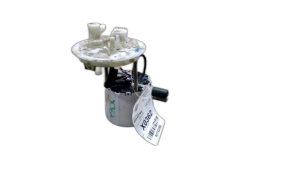
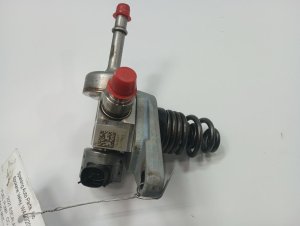
Used OEM Parts in Stock
New Aftermarket Parts Available


The information in this article is provided for general reference and educational purposes only. Vehicle specifications, procedures, and part compatibility can vary by production date, trim level, and region. Always consult your vehicle's factory service manual and verify part numbers before purchasing or performing repairs. Safety-critical components such as airbags, seat belts, and braking systems should be installed by a qualified professional.
- Chevrolet Camaro:
- 🧭 Diagnostic Flowchart
- 🎬 Helpful Videos
- 🛍️ Shop This Part
- What's Unique About the 2016-2024 Chevrolet Camaro
- Symptoms You May Notice
- Most Likely Causes
- Rare But Worth Checking
- Diagnosis Steps
- Parts You'll Likely Need
- Related Codes That Often Appear With This One
- Technical Service Bulletins (TSBs) & Recalls
- Platform-Specific Known Issues
- Mechanic-Grade Diagnostic Values
- Scan Tool Commands That Help
- Wiring & Ground Locations
- Real Owner Repair Stories
- OEM Part Supersession History
- Model Year Variations Within This Range
- Other Known Issues on This Vehicle
- Used vs. New Parts: Buying Guide for This Vehicle
- Real Owner Stories
- 2016-2024 Chevrolet Camaro 6.2L V8
- 2017 Chevrolet Owner
- Related OBD-II Codes
- Frequently Asked Questions
- 🎟️ Get 5% Off