

P0191 on 2016-2018 Chevrolet Colorado: Fuel Rail Pressure Sensor Causes and Fixes
P0191 on a 2016-2018 Colorado with the 3.6L V6 indicates a fuel pressure reading that is out of the expected range. The most common causes are a faulty fuel rail pressure sensor, a failing high-pressure fuel pump, or corrosion on the sensor's electrical connector. Diagnosis is critical before replacing parts, as misdiagnosis is common.
- P0191 on your Colorado means the fuel pressure on the high-pressure rail is out of its expected range.
- The most likely culprits are the fuel rail pressure sensor itself or the high-pressure fuel pump (HPFP).
- A GM Technical Service Bulletin (PIP5151F) warns that fuel contamination can cause this code and requires a full system cleaning.
- Always diagnose the issue by comparing commanded vs. actual fuel pressure with a scan tool before replacing expensive parts.
- This repair is best left to professionals due to the dangerously high pressures in the direct injection fuel system.
What's Unique About the 2016-2018 Chevrolet COLORADO

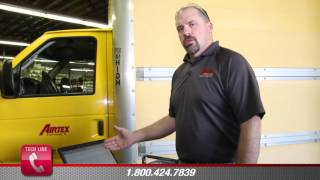
The 2016-2018 Colorado with the 3.6L V6 (LGZ) engine uses a gasoline direct injection (GDI) system. This system features both a low-pressure fuel pump in the tank and a high-pressure, engine-driven fuel pump that can generate over 2,000 PSI. Code P0191 specifically relates to the high-pressure side of the system. 🎬 Watch: A professional guide to diagnosing the P0191 trouble code. GM has issued multiple Technical Service Bulletins (TSBs) that apply to this platform, including PIP5151F for fuel contamination issues and 20-NA-197, which addresses corrosion at the fuel pressure sensor connector as a cause for this code.
Diagnostic Flowchart

Tap your situation to follow the diagnostic path that matches what you're seeing on this vehicle.
Symptoms You May Notice

- Check Engine Light is on
- Engine hesitation or stumbling on acceleration
- Reduced engine power or 'limp mode'
- Rough idle
- Hard starting or long crank times, especially after sitting
- Engine stalling, sometimes at idle
- Poor fuel efficiency
- Strong smell of gasoline in the engine oil
- Replacing the high-pressure fuel pump without first verifying that the fuel rail pressure sensor and its wiring/connector are functioning correctly.
- Replacing the fuel rail pressure sensor without checking for corrosion in the electrical connector first.
- Replacing the low-pressure fuel pump in the tank without first testing its pressure output and confirming the high-pressure system is the source of the fault.
- Replacing the high-pressure fuel pump without inspecting the camshaft drive lobe for wear, which will cause the new pump to fail quickly.
Most Likely Causes

- Failing Fuel Rail Pressure Sensor 🔴 High Probability → Shop Fuel Pressure Sensor The sensor is located in a high-heat area at the back of the driver's side fuel rail, under the intake manifold, making it susceptible to failure over time. Its location makes it a labor-intensive replacement.
How to confirm: Using a scan tool, compare the 'Commanded Fuel Rail Pressure' to the 'Actual Fuel Rail Pressure'. If the actual pressure is erratic, stuck, or does not change with engine RPM while commanded pressure does, the sensor is likely faulty. A visual inspection of the connector for corrosion is also necessary.
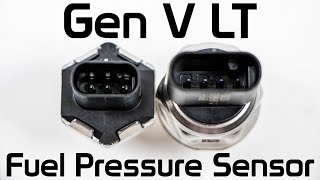
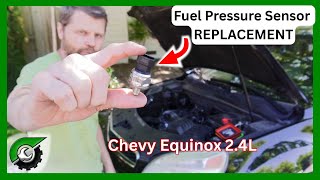
Typical fix: Replace the fuel rail pressure sensor and its O-ring. This requires removing the upper intake manifold for access. 🎬 Watch: Tech tips for handling the Gen V fuel pressure sensor. It is also recommended to inspect and potentially replace the electrical connector pigtail.
Est. part cost: $50-$150 - Corroded Fuel Rail Pressure Sensor Connector 🔴 High Probability → Shop Fuel Pressure Sensor GM TSB #20-NA-197 was issued specifically to address corrosion or damage at the fuel pressure sensor electrical connector, which can cause this code. The location of the sensor under the intake manifold can trap moisture and lead to fretting corrosion over time.
How to confirm: After gaining access to the sensor, disconnect it and inspect the connector and sensor pins for any signs of green or white corrosion, or black marks from arcing. Per the TSB, drag a terminal test tool inside the connector to feel for poor pin tension.
Typical fix: If corrosion is found, replace the electrical connector pigtail (GM Part #19367009). Clean the sensor pins carefully. Apply dielectric grease to the new connector before installation to prevent future moisture intrusion.
Est. part cost: $30-$60 for the connector pigtail - Failing High-Pressure Fuel Pump (HPFP) 🔴 High Probability → Shop Fuel Pump The HPFP is a mechanical pump driven by the camshaft. As a mechanical component operating under high stress, it is a common wear item. GM has acknowledged high failure rates for this part on the 3.6L V6 engine and issued Special Coverage 14329 for some models.
How to confirm: Monitor commanded vs. actual fuel pressure with a scan tool. If actual pressure is consistently lower than commanded pressure, especially under load, and the low-pressure fuel system is confirmed to be working correctly, the HPFP is suspect. A failing HPFP can also leak fuel into the crankcase; check the engine oil for a strong gasoline smell. Before replacing, inspect the camshaft lobe that drives the pump for wear.
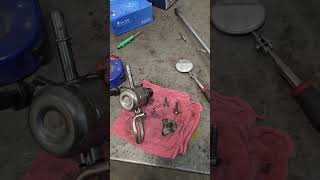
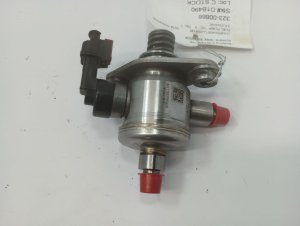
Typical fix: Replace the high-pressure fuel pump. This pump is located on the cylinder head and is mechanically driven. It is critical to also replace the single-use high-pressure fuel line to prevent leaks. 🎬 See these expert tips for removing the high pressure pump.
Est. part cost: $200-$400 - Fuel System Contamination 🟡 Medium Probability TSB #PIP5151F specifically calls out fuel contamination as a potential cause for P0191 and related codes on 2016 models. This can be from water, debris, or poor quality fuel, including excessive E85 use which can cause internal pump components to stick per TSB 18-NA-072.
How to confirm: Take a fuel sample from the tank or fuel rail and inspect it for water, debris, or separation. A contaminated fuel filter is also an indicator.
Typical fix: Per the TSB, the complete fuel system needs to be cleaned. This includes draining and cleaning the fuel tank, flushing fuel lines, and replacing the fuel filter. The high-pressure components may also need replacement if damaged by debris.
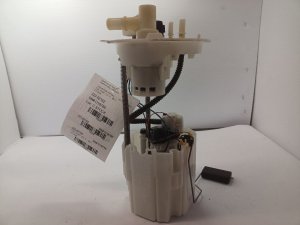
Est. part cost: $100-$500+ - Weak Low-Pressure Fuel Pump ⚪ Low Probability → Shop Fuel Pump The high-pressure pump relies on a steady supply of fuel from the in-tank low-pressure pump. If the in-tank pump is weak, it can starve the HPFP, causing pressure to drop on the high side and trigger P0191. Failures are more common in extreme hot or cold weather.
How to confirm: Test the low-pressure fuel system pressure. It should be 55-60 PSI at idle. A scan tool can also monitor the low-pressure fuel sensor reading; the difference between desired and actual pressure should not exceed 60 kPa (8.7 PSI).
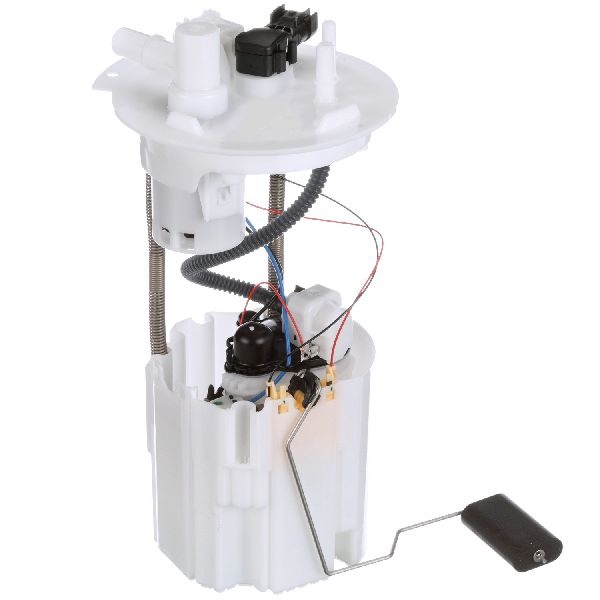
Typical fix: Replace the in-tank low-pressure fuel pump module. The Fuel Pump Trim must be reset with a scan tool like GDS2 after replacement.
Est. part cost: $200-$400
Rare But Worth Checking
- Faulty Engine Control Module (ECM): → Shop Engine Control Module (ECM) This is extremely rare. The ECM should only be considered after all other possibilities, including wiring, sensors, and mechanical fuel system components, have been thoroughly tested and ruled out.
- Wiring Harness Issues: Damage to the wiring harness between the ECM and the fuel rail pressure sensor can cause this code. This could be from chafing against engine components or heat damage. A continuity test from the sensor connector to the ECM connector can confirm this.
Diagnosis Steps
- Connect a professional scan tool and check for any other stored trouble codes. Note any codes like P0087 or P0088.
- Graph the 'Commanded Fuel Rail Pressure' and 'Actual Fuel Rail Pressure' PIDs.
- At idle and during a test drive, observe if the actual pressure closely follows the commanded pressure. Note any significant drops, spikes, or erratic behavior.
- If the actual pressure reading is erratic or stuck, perform a wiggle test on the fuel rail pressure sensor connector and wiring to see if the reading changes.
- Gain access to the fuel rail pressure sensor under the intake manifold. Disconnect and thoroughly inspect the electrical connector for corrosion, damage, or loose pins, as per TSB 20-NA-197.
- If corrosion is found, replace the connector pigtail and apply dielectric grease. If the connector is clean, test the sensor's wiring for continuity back to the ECM.
- If the wiring and connector are good, the sensor is the likely culprit. Replace it.
- If the sensor and wiring are good, but the actual pressure is consistently low, test the low-pressure fuel system to ensure the HPFP is receiving adequate fuel supply (target 55-60 PSI at idle).
- If the low-pressure system is healthy, but high pressure remains low, the high-pressure fuel pump is the most likely cause. Before replacing the pump, remove it and inspect the camshaft lobe that drives it for any scoring or unusual wear. Also check the engine oil for a fuel smell.
- If fuel contamination is suspected, as per TSB PIP5151F, obtain a fuel sample for inspection.
Parts You'll Likely Need
- High-Pressure Fuel Pump
(OEM #HPM1006)— This mechanical pump is a common failure point that directly causes low fuel pressure on the high-pressure side, triggering code P0191.
Trusted brands: ACDelco
OEM price range: $217-$250
Aftermarket price range: $150-$220 - Fuel Rail Pressure Sensor
(OEM #12679295, 12651990)— This sensor provides the pressure reading to the ECM. A faulty sensor can send incorrect data, causing the P0191 code even if the mechanical pressure is correct.
Trusted brands: ACDelco, Bosch
OEM price range: $50-$100
Aftermarket price range: $30-$70 - Fuel Rail Pressure Sensor Connector Pigtail
(OEM #19367009)— GM TSB #20-NA-197 identifies corrosion at this connector as a specific cause for P0191. Replacing the pigtail is often necessary if any corrosion is found.
Trusted brands: ACDelco
OEM price range: $30-$60
Aftermarket price range: $20-$40
Related Codes That Often Appear With This One
- P0087 — This code means 'Fuel Rail/System Pressure - Too Low,' which often accompanies P0191 when the mechanical issue is a weak high-pressure or low-pressure fuel pump.
- P0088 — This code means 'Fuel Rail/System Pressure - Too High,' which can occur with P0191 if the pressure regulator fails or the sensor reports an erroneously high reading.
- P228C — This code for 'Fuel Pressure Regulator Control Performance - Low Pressure' is often linked to high-pressure fuel pump issues, particularly related to fuel contamination or E85 usage as noted in TSB 18-NA-072.
Technical Service Bulletins (TSBs) & Recalls
- PIP5151F: Addresses hard start, no start, rough running, or low fuel pressure with DTCs P0087, P0088, P0191, and P128E. States that if fuel contamination is found, the complete fuel system must be cleaned.
- 20-NA-197: Addresses MIL illumination with P0191 (and other codes) caused by corrosion or damage at the fuel pressure sensor electrical connector. Recommends connector replacement and application of dielectric grease.
- 18-NA-072: Discusses DTC P228C, which can accompany P0191, and links the condition to excessive E85 fuel use causing the high-pressure fuel pump plunger to stick.
Platform-Specific Known Issues
- TSB for Connector Corrosion: TSB #20-NA-197 specifically addresses P0191 caused by corrosion at the fuel pressure sensor electrical connector. The fix involves inspecting for corrosion, replacing the connector pigtail if necessary (Part #19367009), and applying dielectric grease.
- TSB for Fuel Contamination: TSB #PIP5151F notes that on 2016 models, P0191 can be set due to fuel system contamination. In such cases, simply replacing parts is not enough; the entire fuel system must be cleaned to prevent repeat failures.
- High Pressure Fuel Pump Failures: → Shop Fuel Pump The 3.6L V6 has a known history of high-pressure fuel pump (HPFP) failures across multiple GM platforms. A recall (GM #18268) was issued for some 2016-2018 models for improperly welded HPFPs that could leak.
Mechanic-Grade Diagnostic Values
- Low-Pressure Fuel System Pressure (at idle) — expected: 55-60 PSI. Failure: Pressure is significantly lower, erratic, or drops under load.
- High-Pressure Fuel System Pressure (under load) — expected: 14–17 MPa (2,031–2,466 PSI). Failure: Pressure fails to reach this range during a wide-open throttle test.
- Scan Tool: Low-Pressure Actual vs. Desired Fuel Pressure Delta — expected: Within 60 kPa (8.7 PSI). Failure: A difference greater than 60 kPa indicates a flow performance issue with the low-pressure pump.
- Fuel Rail Pressure Sensor Reading (after commanding fuel pump OFF) — expected: Pressure should drop to or near 0 PSI.. Failure: If the pressure reading remains high after the system depressurizes, the sensor is faulty.
Scan Tool Commands That Help
- GDS2 / Professional Scan Tool: Fuel Pump On/Off Command — Used to test the fuel pressure sensor's response. After commanding the pump off and letting the engine stall, the sensor's pressure reading should fall to near zero. If it doesn't, the sensor is stuck/faulty.
- GDS2 / Professional Scan Tool: Fuel Pump Duty Cycle Command — Allows a technician to manually increase or decrease the low-pressure pump's speed while monitoring the actual pressure PID to see if the pump responds correctly and can build pressure as commanded.
- GDS2 / Professional Scan Tool: Fuel Pump Trim Reset — This is a mandatory procedure after replacing the in-tank fuel pump or the Fuel Pump Control Module (FPCM). It allows the control module to relearn flow characteristics and calibrate for the new component.
Wiring & Ground Locations
- Fuel Pump Control Module (FPCM) — Mounted to the driver's side frame rail, above the spare tire.. This module controls the in-tank low-pressure pump. Its exposed location makes it susceptible to corrosion and physical damage, which can cause low-flow conditions (P2635) that may lead to high-side starvation and P0191. It is a key point for visual inspection and voltage testing for the low-pressure system.
OEM Part Supersession History
12658331→28289962— Standard part revision by the manufacturer.
Heads up: This part number applies to the 2017-2022 models with the 3.6L LGZ V6 engine.Varies by engine→Varies by engine— The HPFP and fuel rail pressure sensor part numbers differ between the 2016 LFX engine and the 2017-2018 LGZ engine.
Heads up: Always verify parts by VIN, as the LFX and LGZ fuel systems are not interchangeable.
Model Year Variations Within This Range
- 2016: The 2016 model uses the 3.6L LFX V6 engine. Fuel system components, such as the high-pressure fuel pump and sensors, will have different part numbers than the 2017+ models.
- 2017-2018: These model years use the updated 3.6L LGZ V6 engine. This was a significant redesign with a different fuel system tuned for truck applications. Part numbers for the HPFP and fuel rail pressure sensor are specific to the LGZ engine.
Helpful Videos
Used OEM Parts in Stock
New Aftermarket Parts Available


The information in this article is provided for general reference and educational purposes only. Vehicle specifications, procedures, and part compatibility can vary by production date, trim level, and region. Always consult your vehicle's factory service manual and verify part numbers before purchasing or performing repairs. Safety-critical components such as airbags, seat belts, and braking systems should be installed by a qualified professional.
- Chevrolet COLORADO:
- 🧭 Diagnostic Flowchart
- 🎬 Helpful Videos
- 🛍️ Shop This Part
- What's Unique About the 2016-2018 Chevrolet COLORADO
- Symptoms You May Notice
- Most Likely Causes
- Rare But Worth Checking
- Diagnosis Steps
- Parts You'll Likely Need
- Related Codes That Often Appear With This One
- Technical Service Bulletins (TSBs) & Recalls
- Platform-Specific Known Issues
- Mechanic-Grade Diagnostic Values
- Scan Tool Commands That Help
- Wiring & Ground Locations
- OEM Part Supersession History
- Model Year Variations Within This Range
- 🎟️ Get 5% Off