

P0191 on 2014-2018 Chevrolet Cruze: Fuel Pressure Sensor Causes and Fixes
P0191 on a Chevy Cruze indicates the fuel rail pressure is out of the expected range. This is often caused by a failing high-pressure fuel pump (HPFP) or a faulty fuel rail pressure sensor. A weak low-pressure in-tank pump is also a common, and often misdiagnosed, culprit. Expect to pay $300-$800 for a pump replacement or $150-$300 for a sensor replacement at a shop.
- P0191 means the fuel pressure is not what the car's computer expects it to be.
- The most likely causes on a 2014-2018 Cruze are a failing high-pressure fuel pump or a bad fuel rail pressure sensor.
- Do not immediately replace the sensor; the problem is often the pump failing to produce enough pressure.
- Diagnosis is critical to avoid replacing expensive parts unnecessarily. A professional diagnosis is recommended due to the high pressures involved.
- Check for fuel contamination as suggested by a GM Technical Service Bulletin, as this could be the root cause.
What's Unique About the 2014-2018 Chevrolet CRUZE

The 2014-2018 Chevrolet Cruze, particularly models with the 1.4L Turbo engine, uses a gasoline direct injection (GDI) system. This system has two fuel pumps: a low-pressure pump in the tank and a high-pressure, engine-driven pump. Code P0191 often points to issues with the high-pressure side of the system, but can also be triggered by a failing low-pressure pump starving the high-pressure one. A GM Technical Service Bulletin (PIP5151F) also links this code to fuel system contamination, which can cause a cascade of problems beyond just a single sensor. This entire fuel system architecture is shared with other GM vehicles like the Buick Encore and Chevy Sonic/Trax, which exhibit the same failure patterns.
Diagnostic Flowchart

Tap your situation to follow the diagnostic path that matches what you're seeing on this vehicle.
Generation note: This range covers the end of the first generation (2014-2015, and 2016 'Limited' models) and the beginning of the second generation (2016-2018). Both generations use 1.4L turbo engines with high-pressure fuel systems, but the specific engine and part numbers differ (Gen 1 uses the LUV engine, Gen 2 uses the LE2). While the causes are similar, always verify part numbers for your specific year and model.
Symptoms You May Notice
- Check Engine Light is on
- Engine is hard to start or has a long crank time
- Stalling or rough idling
- Hesitation or lack of power during acceleration
- Reduced fuel economy
- Engine may crank but not start at all
- Abnormal smell of gasoline from the tailpipe emissions
- Replacing the fuel rail pressure sensor when the high-pressure fuel pump is actually the cause of the low pressure.
- Replacing the high-pressure fuel pump when the in-tank low-pressure pump is weak or the fuel filter is clogged.
- Replacing fuel pumps when the actual issue is a corroded wire or faulty Fuel Pump Control Module (FPCM). 🎬 Watch: Understanding P0191 sensor circuit range and performance codes.
Most Likely Causes

- Failing High-Pressure Fuel Pump (HPFP) 🔴 High Probability → Shop Fuel Pump The mechanically driven high-pressure pump is a common failure point in many GDI engines, including the 1.4L Turbo in the Cruze. Wear and tear on the pump's internal components or the camshaft lobe that drives it can prevent it from generating the required pressure.
How to confirm: A technician will use a scan tool to monitor desired vs. actual fuel rail pressure. If the actual pressure is consistently low under load, and the low-pressure pump is confirmed to be working correctly (maintaining ~50-60 PSI), the HPFP is the likely culprit.
Typical fix: Replacement of the high-pressure fuel pump and its associated gasket.
Est. part cost: $200-$500 - Faulty Fuel Rail Pressure Sensor 🟡 Medium Probability → Shop Fuel Pressure Sensor The sensor itself can fail, sending incorrect voltage signals to the ECM. This can be due to internal electronics failure, contamination, or physical damage.
How to confirm: Compare the sensor's reading on a scan tool to a reading from a mechanical fuel pressure gauge. If the mechanical gauge shows correct pressure but the scan tool shows an erratic or incorrect value, the sensor is bad. A multimeter can also be used to check for correct voltage at the sensor connector.
Typical fix: Replacement of the fuel rail pressure sensor.
Est. part cost: $40-$150 - Failing Low-Pressure Fuel Pump 🟡 Medium Probability → Shop Fuel Pump The in-tank low-pressure pump is responsible for feeding the HPFP. If it becomes weak, it cannot supply enough volume or pressure, starving the HPFP and causing it to underperform, which triggers P0191. This is a very common misdiagnosis for a bad HPFP.
How to confirm: Connect a mechanical fuel pressure gauge to the low-pressure line. The pressure should be stable and within the manufacturer's specification (typically 50-60 PSI). If this pressure is low, erratic, or drops significantly under load, the in-tank pump is the problem.
Typical fix: Replacement of the in-tank fuel pump module. Access is often under the rear seat.
Est. part cost: $150-$350 - Fuel System Contamination ⚪ Low Probability As noted in GM TSB #PIP5151F, contamination in the fuel system from water, debris, or incorrect fluids can cause low fuel pressure and trigger P0191. This can clog filters, injectors, and damage the fuel pump.
How to confirm: Inspection of the fuel tank, fuel filter, and a fuel sample for debris, water, or other contaminants.
Typical fix: The TSB advises that if contamination is found, the complete fuel system needs to be cleaned, which may include flushing the tank, lines, and replacing the fuel filter and potentially the fuel pump.
Est. part cost: $100-$1000+ - Damaged Wiring or Connector ⚪ Low Probability Engine vibration and heat can cause wiring to the fuel rail pressure sensor to become brittle, frayed, or corroded over time, especially at the connector. This can cause an intermittent or complete loss of signal.
How to confirm: Visually inspect the wiring harness and connector for the fuel rail pressure sensor for any signs of damage, corrosion, or loose pins. A multimeter can be used to check for continuity and proper voltage at the connector.
Typical fix: Repairing the damaged wire or replacing the connector pigtail.
Est. part cost: $15-$50
Rare But Worth Checking
- Faulty Fuel Pump Control Module (FPCM): → Shop Fuel Pump The FPCM regulates the voltage to the in-tank fuel pump. If it fails, it can cause the low-pressure pump to perform poorly, leading to P0191. This is sometimes seen with code P069E.
- Faulty Engine Control Module (ECM): → Shop Engine Control Module (ECM) This is very rare, but a software glitch or internal failure in the ECM can cause it to misinterpret the sensor's signal. This should only be considered after all other possibilities, including wiring, have been exhaustively ruled out.
Diagnosis Steps
- Connect an OBD-II scanner to read the code and check for any other related codes like P0087 or P069E.
- Use the scanner's live data function to monitor 'Desired Fuel Rail Pressure' and 'Actual Fuel Rail Pressure'. Note any significant discrepancies, especially under load.
- Test the low-pressure fuel system first. Connect a mechanical fuel pressure gauge to the low-pressure line. Verify it holds a steady 50-60 PSI. If it's low or fluctuating, the in-tank pump is the likely issue.
- If low-pressure is good, visually inspect the fuel rail pressure sensor and its electrical connector for any signs of damage, corrosion, or loose wiring.
- Test the sensor's circuit with a multimeter to confirm it has proper power, ground, and signal voltage according to the service manual.
- If the low-side pressure is good and the sensor wiring is intact, the two main possibilities are a faulty sensor or a failing high-pressure fuel pump (HPFP).
- If the scan tool shows erratic pressure but a mechanical gauge (if one can be safely connected) shows steady pressure, the sensor is likely faulty.
- If both the gauge and scanner show low pressure (and the low-pressure pump is confirmed good), the high-pressure fuel pump is the primary suspect.
- If TSB #PIP5151F symptoms (hard start, rough run) are present, inspect the fuel system for contamination before replacing any parts.
Parts You'll Likely Need

- High-Pressure Fuel Pump
(OEM #12677329 (Gen 1, LUV) / 12682079 (Gen 2, LE2, supersedes 12649461, 12673450))— This is a common failure point on GDI engines and directly responsible for creating the pressure monitored by the sensor.
Trusted brands: ACDelco, Bosch, Delphi
OEM price range: $350-$550
Aftermarket price range: $200-$400 - Fuel Rail Pressure Sensor
(OEM #12651990 (Gen 1, LUV) / 12705503 (Gen 2, LE2, supersedes 12672582))— The sensor itself can fail, sending incorrect readings to the computer. It's a less expensive part to replace than the pump.
Trusted brands: ACDelco, Bosch, Standard Motor Products
OEM price range: $60-$150
Aftermarket price range: $40-$100
Related Codes That Often Appear With This One
- P0087 — This code means 'Fuel Rail/System Pressure - Too Low'. It often appears with P0191 because a performance problem (P0191) is frequently caused by a sustained low-pressure condition (P0087). The TSB #PIP5151F also lists them together.
- P0171 — This code means 'System Too Lean'. If the fuel pressure is too low, the engine will not get enough fuel, leading to a lean air-fuel mixture.
- P0088 — This code for 'Fuel Rail/System Pressure - Too High' can also appear if the system is behaving erratically, as noted in TSB #PIP5151F.
Technical Service Bulletins (TSBs) & Recalls
- PIP5151F: Diagnostic Tip - Diesel Fuel System Contamination (also applies to gasoline contamination symptoms)
Platform-Specific Known Issues
- TSB #PIP5151F: Fuel Contamination: GM Technical Service Bulletin #PIP5151F directly addresses P0191, P0087, and P0088 on 2018 and prior models, linking it to hard starting, rough running, and low fuel pressure caused by fuel system contamination (e.g., water, debris). The bulletin recommends cleaning the entire fuel system if contamination is found, warning that replacing parts without cleaning will lead to repeat failures.
- Real-World Experience: Low-Pressure Pump Failure: A common repair story shared by owners and technicians involves replacing the expensive high-pressure fuel pump, only for the P0191 code to return. Further diagnosis often reveals the true culprit was a weak in-tank low-pressure fuel pump that was not supplying adequate fuel to the HPFP. A video for a similar GM vehicle showed low-side pressure erratically dropping from 60 PSI to under 40 PSI, which was the root cause.
Mechanic-Grade Diagnostic Values
- Low-Pressure Fuel System Pressure (In-tank pump) — expected: 50-60 PSI, stable at idle and under load. Some service procedures specify checking for 50-94 PSI with the engine off and the pump commanded on via a scan tool.. Failure: Pressure is below 45-50 PSI, is erratic (fluctuates wildly on a live data graph), or drops significantly under load.
- Fuel Rail Pressure Sensor (FRPS) Voltage — expected: The sensor operates on a 5V reference signal from the ECM. The signal wire voltage will vary with pressure. A key-on, engine-off reading should be compared to the service manual's specification.. Failure: No 5V reference at the connector, no signal voltage, or a signal voltage that does not change when engine vacuum or pressure changes (where applicable). If the signal voltage is stuck at 5V even with the circuit closed (sensor plugged in), the sensor itself is likely faulty.
Hidden / Shadow Codes Worth Checking
- P128E: A GM-specific code related to fuel rail pressure sensor performance. Its presence alongside P0191 strongly suggests a fault in the fuel pressure sensing or delivery system. (see via Professional scan tools or dealer-level software like GM GDS2. Basic OBD-II readers may not display this manufacturer-specific code.)
Scan Tool Commands That Help
- GM GDS2 (or equivalent professional scanner): Fuel Pump ON/OFF Command — This command allows a technician to turn on the low-pressure in-tank fuel pump without starting the engine. It is essential for testing the pump's ability to build and hold pressure independently, helping to isolate a weak pump.
- GM GDS2 (or equivalent professional scanner): Fuel System Test — This is an automated test procedure that commands the fuel pump and monitors the pressure sensor readings over a short period. It's used to check for small leaks in the system or an inability to hold pressure, which might not be obvious during a simple idle test.
Wiring & Ground Locations
- G103 / G105 — Major chassis grounds located on the driver's side shock tower in the engine bay. G103 may also be found on the cowl above the brake booster.. The ECM and Fuel Pump Control Module rely on clean, solid grounds to function. A corroded or loose ground at these locations can cause erratic behavior in the entire fuel control system, mimicking sensor or pump failures. Poor grounding is a known issue on this platform.
- Fuel Rail Pressure Sensor Connector (at ECM) — At the main connector for the Engine Control Module (ECM), which is typically located on top of the transmission or on the side of the engine compartment.. Allows for testing the sensor circuit from the ECM side to definitively rule out a wiring harness break or short between the sensor and the computer. Based on similar GM diagrams, the pinout is likely a 3-wire setup: 5V Reference, Low Reference (Ground), and Signal.
- Low-Pressure Fuel Pressure Sensor — On some models, there is a second fuel pressure sensor for the low-pressure side, located on the fuel line under the car, often in front of the rear driver's side tire.. It's critical not to confuse this with the high-pressure sensor on the fuel rail that P0191 refers to. However, data from this low-pressure sensor (if equipped and viewable on a scan tool) can be invaluable for diagnosing a weak in-tank pump.
Real Owner Repair Stories
- YouTube diagnostic video on a 2012 Buick Verano (shared platform) (2012 Buick Verano with P0191) — Check Engine Light with code P0191.
❌ Tried (didn't work) A previous shop had already replaced the expensive high-pressure fuel pump (HPFP), but the code returned.
✅ What actually fixed it The actual cause was a failing low-pressure, in-tank fuel pump. The technician confirmed this by monitoring live data for the low-side fuel pressure sensor, which was fluctuating erratically between 30-51 PSI at idle. A good vehicle showed a steady pressure. Replacing the low-pressure pump resolved the issue.
OEM Part Supersession History
12641847→12677329— Part update/revision for High-Pressure Fuel Pump (HPFP)
Heads up: These parts are for the Gen 1 LUV engine only and are not compatible with the Gen 2 LE2 engine.12649461, 12673450→12682079— Multiple part updates/revisions for High-Pressure Fuel Pump (HPFP)
Heads up: These parts are for the Gen 2 LE2 engine only and are not compatible with the Gen 1 LUV engine.12673824→12651990— Part update/revision for Fuel Rail Pressure Sensor12672582→12705503— Part update/revision for Fuel Rail Pressure Sensor
Model Year Variations Within This Range
- 2014-2016 (Gen 1, including 'Limited' models): These models use the 1.4L LUV engine. It is part of the older 'Family 0' engine family, features a cast-iron block, and its design has roots in multi-port fuel injection, though it was adapted with a turbo.
- 2016-2018 (Gen 2): These models use the newer 1.4L LE2 engine. It is a 'clean sheet' design from the Small Gasoline Engine (SGE) family, featuring an all-aluminum block and was designed from the ground up for Spark Ignited Direct Injection (SIDI). It is lighter and has different internal dimensions than the LUV. Fuel system components are not interchangeable between LUV and LE2 engines.
Helpful Videos
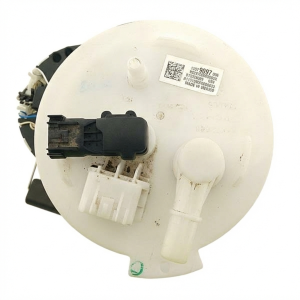
Used OEM Parts in Stock
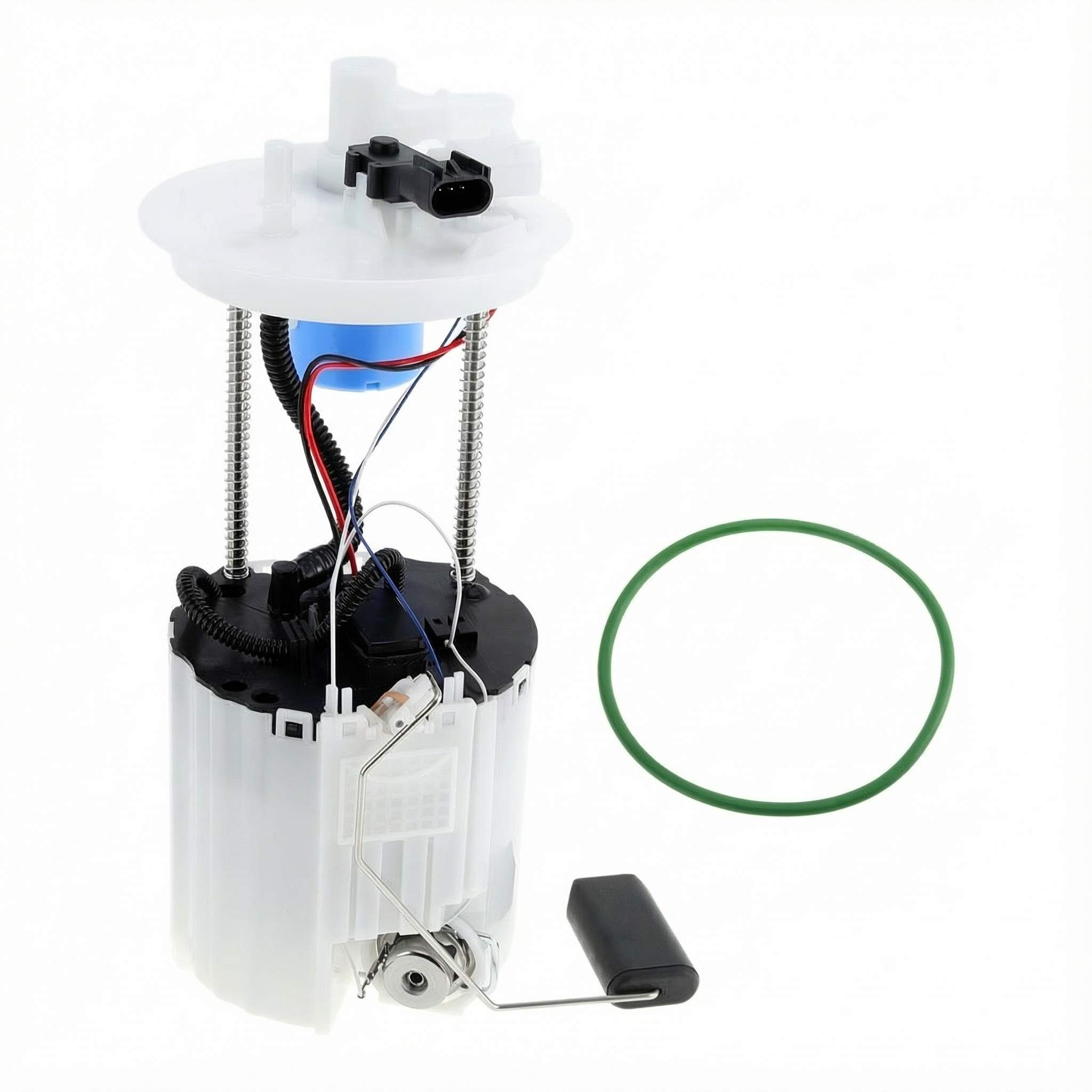
New Aftermarket Parts Available



The information in this article is provided for general reference and educational purposes only. Vehicle specifications, procedures, and part compatibility can vary by production date, trim level, and region. Always consult your vehicle's factory service manual and verify part numbers before purchasing or performing repairs. Safety-critical components such as airbags, seat belts, and braking systems should be installed by a qualified professional.
- Chevrolet CRUZE:
- 🧭 Diagnostic Flowchart
- 🎬 Helpful Videos
- 🛍️ Shop This Part
- What's Unique About the 2014-2018 Chevrolet CRUZE
- Symptoms You May Notice
- Most Likely Causes
- Rare But Worth Checking
- Diagnosis Steps
- Parts You'll Likely Need
- Related Codes That Often Appear With This One
- Technical Service Bulletins (TSBs) & Recalls
- Platform-Specific Known Issues
- Mechanic-Grade Diagnostic Values
- Hidden / Shadow Codes Worth Checking
- Scan Tool Commands That Help
- Wiring & Ground Locations
- Real Owner Repair Stories
- OEM Part Supersession History
- Model Year Variations Within This Range
- 🎟️ Get 5% Off