

P0191 on 2018-2019 Chevrolet Equinox: Fuel Rail Pressure Sensor Causes and Fixes
P0191 on a 2018-2019 Equinox means the fuel pressure reading is erratic. This is often caused by a faulty fuel rail pressure sensor, a failing high-pressure fuel pump (HPFP), or fuel contamination as noted in GM TSB #PIP5151F. A full diagnosis, including checking for fuel in the oil and comparing scan tool data to a mechanical gauge, is needed before replacing parts.
- P0191 indicates the fuel pressure is not what the engine computer expects it to be.
- Do not immediately replace the fuel rail pressure sensor; a full diagnosis is required.
- Check for fuel contamination, as this is a known issue for this vehicle per a GM Technical Service Bulletin.
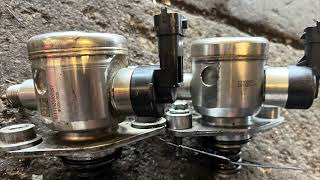
- The high-pressure fuel pump (HPFP) is a common point of failure on these GDI engines and a likely cause.
- Due to the high pressures involved, diagnosis and repair of the GDI fuel system are best left to a professional.
What's Unique About the 2018-2019 Chevrolet EQUINOX
The 2018-2019 Equinox uses a Gasoline Direct Injection (GDI) fuel system on its 1.5L (RPO: LYX) and 2.0L (RPO: LTG) turbocharged engines. This system operates at extremely high pressures, requiring both a low-pressure in-tank pump and an engine-driven high-pressure fuel pump (HPFP). A key issue for this platform, as highlighted in GM Technical Service Bulletin #PIP5151F, is the potential for fuel contamination to cause this code, requiring the entire fuel system to be cleaned. Furthermore, the HPFP itself is a frequent failure point, known to leak fuel internally into the engine oil, making diagnosis more complex than simply a failed sensor.
Diagnostic Flowchart
Tap your situation to follow the diagnostic path that matches what you're seeing on this vehicle.
Symptoms You May Notice
- Check Engine Light is on
- Engine is hard to start or will not start.
- Rough running or rough idle.
- Engine stalling or shutting off while driving, sometimes when coming to a stop.
- Reduced engine power and poor acceleration, may enter 'limp mode'.
- Decreased fuel economy.
- Hesitation or sputtering during acceleration.
- Strong smell of gasoline from the oil dipstick.
- Replacing the high-pressure fuel pump without first checking for fuel in the oil or confirming low-side pressure is adequate.
- Replacing the fuel rail pressure sensor without checking for fuel contamination or wiring issues first.
- Replacing the in-tank fuel pump when the high-pressure fuel pump is the actual cause.
Most Likely Causes
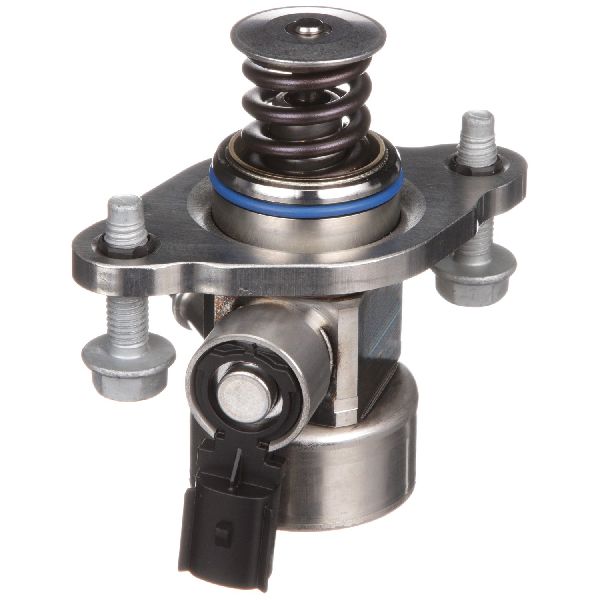
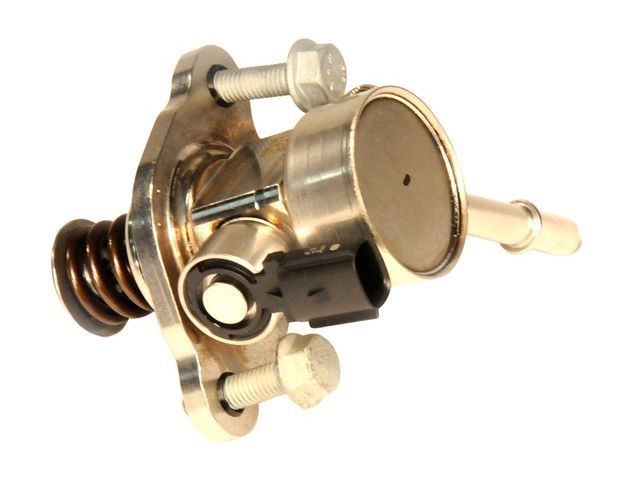
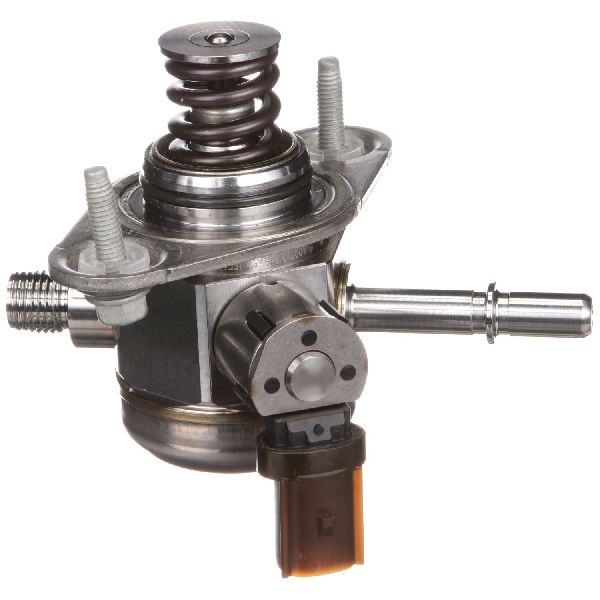
- Failing High-Pressure Fuel Pump (HPFP) 🔴 High Probability → Shop Fuel Pump The HPFP is a mechanical pump driven by the camshaft and is a widely documented failure point on these GM GDI engines, leading to incorrect or erratic fuel pressure. A common failure mode is an internal leak, which allows fuel to enter the crankcase and contaminate the engine oil.
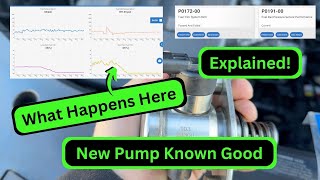
How to confirm: Monitor fuel rail pressure with a scan tool; if it cannot reach the desired pressure under load or fluctuates wildly, the HPFP is a likely suspect. A key symptom of a failing HPFP solenoid is the 'Desired Fuel Rail Pressure' PID on a scan tool dropping to 0 PSI at idle. The most crucial physical check is to smell the engine oil for gasoline. If fuel is present, the HPFP has almost certainly failed. When replacing, inspect the cam follower for wear.
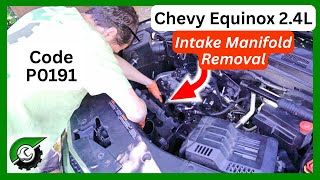
Typical fix: Replace the high-pressure fuel pump and the one-time-use high-pressure fuel line. An oil change is mandatory if the oil was contaminated with fuel. It is strongly recommended to use an OEM pump to avoid compatibility issues. While the HPFP is removed, it is wise to clean the small PCV orifice inside the intake manifold. 🎬 Watch: How to remove the intake manifold to access the PCV.
Est. part cost: $300-$800 - Failing Fuel Rail Pressure Sensor 🟡 Medium Probability → Shop Fuel Pressure Sensor The sensor provides the direct reading that triggers the code. It's a common failure point in many modern fuel systems due to heat and vibration.
How to confirm: Use a scan tool to compare the fuel rail pressure reading with the desired pressure. If the reading is erratic, stuck, or doesn't match a mechanical gauge reading, the sensor is likely faulty. For example, if a mechanical gauge shows 55 PSI on the low side but the scan tool shows an erratic or incorrect high-side reading at idle, the sensor is suspect.
Typical fix: Replace the fuel rail pressure sensor. On the 1.5L and 2.0L engines, this sensor is located on the high-pressure fuel rail and may require removal of other components for access. 🎬 See this walkthrough for replacing the fuel rail pressure sensor.
Est. part cost: $40-$150 - Fuel Contamination ⚪ Low Probability GM issued TSB #PIP5151F specifically for this issue, indicating that water, debris, or other fluid contamination can cause P0191 along with other fuel codes by affecting pressure regulation.
How to confirm: Take a fuel sample and inspect it for water, debris, or other contaminants. The TSB guides technicians to inspect the fuel system for contamination if this code is present.
Typical fix: The entire fuel system needs to be cleaned, which may include flushing the tank, lines, and replacing the fuel filter. This is a labor-intensive job.
Est. part cost: $20-$100 (for filters and cleaning agents) - Wiring or Connector Issues ⚪ Low Probability The wiring harness for the fuel rail pressure sensor is exposed to engine heat, which can cause wires to degrade or the connector to become corroded over time, leading to an out-of-range signal.
How to confirm: Visually inspect the connector and wiring going to the fuel rail pressure sensor for any signs of corrosion, damage, or loose pins. Test for proper voltage, ground, and signal continuity at the connector with a multimeter.
Typical fix: Repair the damaged wiring or clean/replace the connector pigtail.
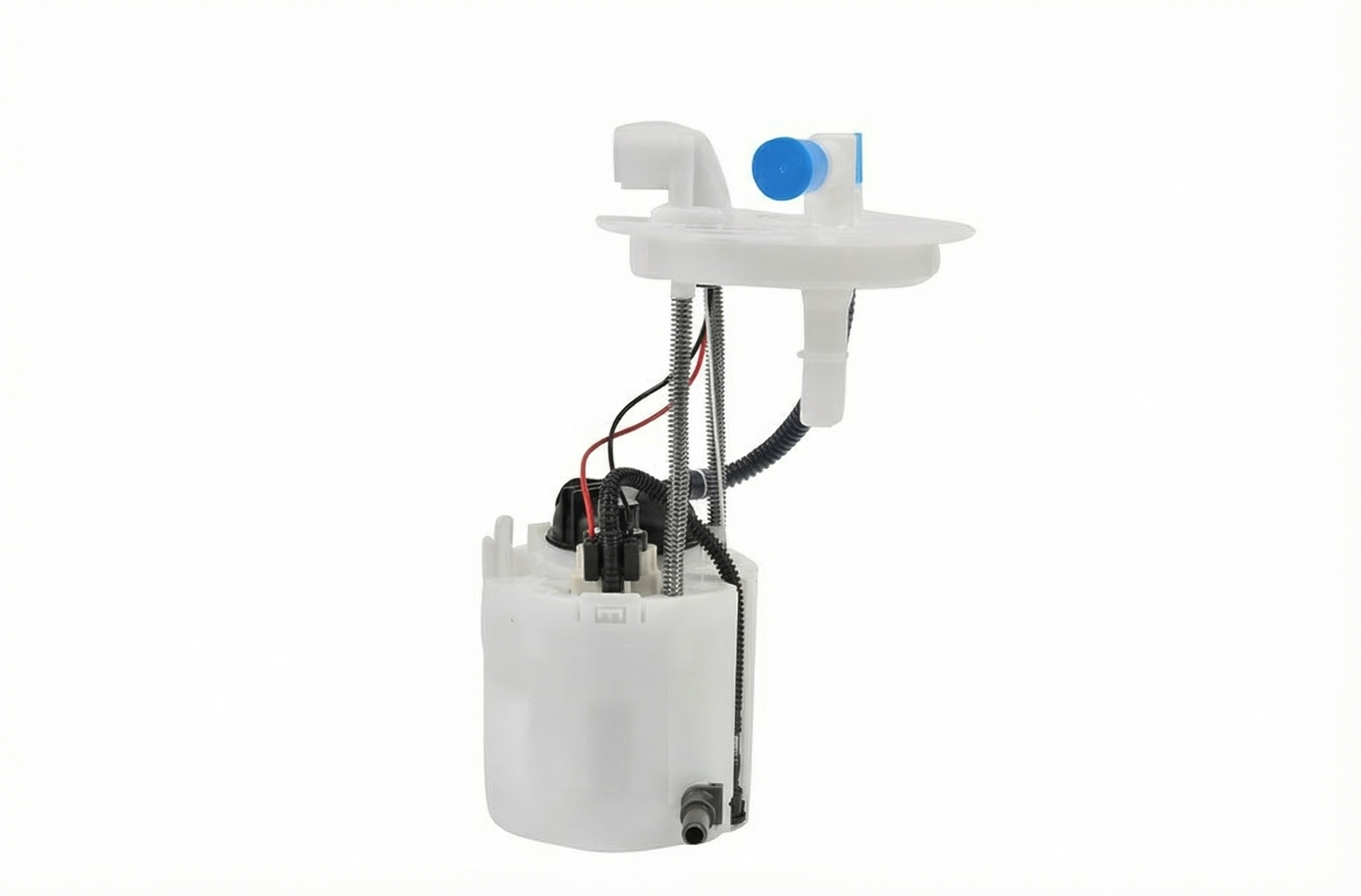
Est. part cost: $15-$50 - Failing In-Tank (Low-Pressure) Fuel Pump ⚪ Low Probability → Shop Fuel Pump The HPFP relies on a steady supply of fuel from the in-tank pump. If the low-pressure pump is weak, it can starve the HPFP, causing rail pressure to be lower than expected. Widespread failures of these pumps have been noted on slightly newer (2020+) models.
How to confirm: Test the low-side fuel pressure with a mechanical gauge. It should meet the manufacturer's specification (typically around 45-62 PSI). If the pressure is low or erratic, the in-tank pump is likely at fault.
Typical fix: Replace the in-tank fuel pump module.
Est. part cost: $200-$400
Rare But Worth Checking
- Faulty Camshaft Position Sensor: In some cases, a faulty exhaust cam sensor can send erratic signals to the ECM even when the engine is off. This can trick the computer into setting a P0191 code and entering reduced power mode upon the next startup. A technician forum documented this exact scenario.
- Faulty Powertrain Control Module (PCM): → Shop Engine Control Module (ECM) This is very rare, but if all other components and wiring have been tested and confirmed to be working correctly, the PCM itself could be the source of the problem.
Diagnosis Steps
- Check for other DTCs, paying close attention to P0087 (low pressure) or P0172 (rich condition).
- Connect an OBD-II scanner and observe live data for both desired and actual fuel rail pressure. Note any large discrepancies, fluctuations, or if the value is stuck. A key indicator of HPFP failure is the 'Desired Fuel Rail Pressure' PID dropping to 0 PSI at idle.
- Check the engine oil level and smell the dipstick for a strong gasoline odor. If gas is present, the High-Pressure Fuel Pump (HPFP) is the most likely cause.
- Visually inspect the fuel rail pressure sensor's electrical connector and wiring for any signs of damage, corrosion, or loose connections.
- Perform a fuel pressure test on the low-pressure side (in-tank pump) to ensure it is supplying adequate pressure (typically 45-62 PSI) to the high-pressure pump.
- If low-side pressure is good, the sensor/wiring are intact, and there is no fuel in the oil, the focus shifts to the HPFP or the sensor itself.
- If the HPFP is replaced, inspect the camshaft follower for scoring or damage. Also consider cleaning the PCV orifice in the intake manifold at the same time.
- If all fuel system components test good, investigate less common causes like the camshaft position sensor or the ECM itself.
Parts You'll Likely Need
- High-Pressure Fuel Pump
(OEM #ACDelco 12679294 (for 1.5L LYX))— This mechanical pump is a very common failure point that directly causes pressure performance issues, often leaking fuel into the engine oil. Using an OEM pump is highly recommended.
Trusted brands: ACDelco (GM Genuine), Bosch
OEM price range: $500-$800
Aftermarket price range: $300-$550 - Fuel Rail Pressure Sensor
(OEM #ACDelco 12691242)— This sensor is the primary input for the code. If its readings are erratic or incorrect, it will trigger P0191. It is a frequent point of failure.
Trusted brands: ACDelco (GM Genuine), Standard Motor Products, Bosch
OEM price range: $40-$100
Aftermarket price range: $25-$70 - High-Pressure Fuel Line
(OEM #ACDelco 12707219 (for 1.5L LYX))— This is considered a one-time-use part by GM. Once it is loosened, it must be replaced to ensure a proper seal at the high-pressure fittings.
Trusted brands: ACDelco (GM Genuine)
OEM price range: $85-$125
Related Codes That Often Appear With This One
- P0087 — This code means 'Fuel Rail/System Pressure - Too Low' and often appears with P0191 when the issue is caused by a weak pump or fuel starvation. It is cited in TSB #PIP5151F.
- P0172 — This code means 'System Too Rich' and is a strong indicator that the high-pressure fuel pump has failed and is leaking fuel into the engine oil, creating a rich condition via the PCV system.
- P0088 — This code means 'Fuel Rail/System Pressure - Too High' and can appear with P0191 if there's a regulator issue or blockage. It is also cited in TSB #PIP5151F.
- P128E — This is a manufacturer-specific code also mentioned in TSB #PIP5151F related to fuel system issues.
- P2635 — This code indicates a problem with 'Fuel Pump Flow Performance' and points directly to an issue with the low-pressure or high-pressure pump's ability to deliver the correct volume of fuel.
Technical Service Bulletins (TSBs) & Recalls
- PIP5151F: Details procedure for when fuel system contamination is suspected of causing P0087, P0088, P0191, and P128E. Instructs technicians to clean the entire fuel system if contamination (like water or other fluids) is found.
Platform-Specific Known Issues
- High-Pressure Fuel Pump (HPFP) Failure Mode: → Shop Fuel Pump A very common failure on the 1.5L and 2.0L engines is the internal seal on the HPFP failing. This allows gasoline to leak directly into the crankcase, mixing with the engine oil. This dilutes the oil, reducing its lubricating properties, and can cause a rich running condition (P0172) in addition to P0191. A key diagnostic step is to check the oil dipstick for a strong gasoline smell or a higher-than-normal oil level.
- Aftermarket HPFP Causing P0191: There are multiple technician reports of a new P0191 code appearing immediately after replacing a failed high-pressure fuel pump with an aftermarket brand. The vehicle may enter reduced power mode. Replacing the aftermarket pump with a genuine GM/ACDelco part resolves the issue, indicating a performance or compatibility problem with some non-OEM pumps.
Mechanic-Grade Diagnostic Values
- Low-Side Fuel Pressure (In-tank pump) — expected: 45-62 PSI at idle.. Failure: Pressure is low, erratic, or drops under load, indicating a weak in-tank pump or control module issue.
- High-Side Fuel Rail Pressure (at idle) — expected: Approximately 440 PSI.. Failure: Pressure is significantly lower than desired, fluctuates wildly, or fails to increase with RPM.
- Fuel Rail Pressure Sensor Signal Voltage — expected: Varies between ~0.5V (low pressure) and ~4.5V (high pressure). At idle, expect around 2.2V.. Failure: Voltage is stuck at 0V, 5V, or does not change in response to engine load.
- Fuel Rail Pressure Sensor 5V Reference — expected: 4.8 - 5.2 Volts.. Failure: 0 volts indicates an open or short to ground in the reference circuit from the ECM.
- FRP Sensor Circuit Integrity Test (at ECM connector) — expected: With sensor disconnected, signal circuit voltage should be < 0.02V. With a fused jumper between signal and 5V reference pins, voltage should be > 4.96V.. Failure: Readings outside these specific values indicate a short to voltage or other wiring fault between the sensor and the ECM.
Scan Tool Commands That Help
- GM GDS2 (or equivalent high-level scan tool): High-Pressure Fuel Pump Test / Fuel Pressure Control — This bidirectional test is used to verify the functionality of the high-pressure fuel pump's inlet metering solenoid. The tool commands the solenoid to fully open, which should cause the fuel rail pressure to drop to near zero. It then commands it closed to verify the pump can build pressure again. This can confirm if the pump is responding to commands from the ECM.
Wiring & Ground Locations
- Fuel Rail Pressure Sensor Connector — On the high-pressure fuel rail, which is mounted to the cylinder head near the fuel injectors.. This 3-wire connector provides power, ground, and signal for the sensor. Corrosion or damage to the pins or wires at this connector is a common cause of P0191, leading to erratic signals. The three wires are typically a 5V reference, a low reference (ground), and the signal wire back to the ECM.
- Engine Block Grounds — Multiple ground wires are bolted directly to the engine block and cylinder head from the main wiring harness.. The ECM and its sensors rely on clean, secure ground connections. A loose or corroded engine ground can cause a variety of strange electrical issues and fault codes, including P0191, by creating an unstable reference for the sensor signals.
Real Owner Repair Stories
- ScannerDanner Forum (2015 Chevrolet Equinox 2.4L (similar GDI system)) — P0191 and P0172 (System Rich) set intermittently, especially when idling at a stop. Scan tool showed 'Desired Fuel Rail Pressure' dropping to 0 PSI when the fault occurred.
❌ Tried (didn't work) Initial diagnosis was confusing due to the desired pressure dropping to zero, which could imply a PCM issue.
✅ What actually fixed it Replacing the high-pressure fuel pump with an OEM part resolved the issue. The internal solenoid on the pump was failing, causing the erratic desired and actual pressure readings. - YouTube comment by user @CaliLife559 (2015 Equinox with 215,000 miles) — Gas mixing with engine oil, long term fuel trim at nearly -50%, engine sounded like it was about to fail.
✅ What actually fixed it The user replaced the high-pressure fuel pump, which fixed the fuel-in-oil issue. Critically, they also cleaned a small, paperclip-sized PCV orifice located inside the intake manifold, which is accessible with the HPFP removed. After the repair, the long-term fuel trim returned to 0.
OEM Part Supersession History
12672582→12705503— Part revision or manufacturer change.
Heads up: These are different fuel pressure sensors listed for the 2018 Equinox, likely for different engine or emissions packages. Verifying the correct part by VIN is critical.12647909→12686809— Part revision or manufacturer change.
Heads up: These are different fuel pressure sensors listed for the 2018 Equinox, likely for different engine or emissions packages. Verifying the correct part by VIN is critical.12658331→28289962— Part revision or manufacturer change.
Heads up: These are different fuel pressure sensors listed for the 2018 Equinox, likely for different engine or emissions packages. Verifying the correct part by VIN is critical.
Model Year Variations Within This Range
- 2018-2019: No significant changes have been documented for the fuel systems of the 1.5L LYX or 2.0L LTG engines within the 2018-2019 model years. Parts and diagnostic procedures should be consistent across both years.
Helpful Videos
Used OEM Parts in Stock
New Aftermarket Parts Available

The information in this article is provided for general reference and educational purposes only. Vehicle specifications, procedures, and part compatibility can vary by production date, trim level, and region. Always consult your vehicle's factory service manual and verify part numbers before purchasing or performing repairs. Safety-critical components such as airbags, seat belts, and braking systems should be installed by a qualified professional.
- Chevrolet EQUINOX:
- 🧭 Diagnostic Flowchart
- 🎬 Helpful Videos
- 🛍️ Shop This Part
- What's Unique About the 2018-2019 Chevrolet EQUINOX
- Symptoms You May Notice
- Most Likely Causes
- Rare But Worth Checking
- Diagnosis Steps
- Parts You'll Likely Need
- Related Codes That Often Appear With This One
- Technical Service Bulletins (TSBs) & Recalls
- Platform-Specific Known Issues
- Mechanic-Grade Diagnostic Values
- Scan Tool Commands That Help
- Wiring & Ground Locations
- Real Owner Repair Stories
- OEM Part Supersession History
- Model Year Variations Within This Range
- 🎟️ Get 5% Off