

P0191 on 2018-2019 Chevrolet Silverado 1500: Fuel Pressure Sensor Causes and Fixes
P0191 on a 2018-2019 Silverado usually indicates a problem with the fuel pressure sensor's reading. The most common causes are a faulty fuel rail pressure sensor, a failing high-pressure fuel pump (HPFP), a faulty Fuel Pump Control Module (FPCM), or fuel system contamination as noted in GM Technical Service Bulletins. A sensor or FPCM replacement is relatively inexpensive, but a pump replacement can be costly. Diagnosis is key to avoid replacing the wrong part.
- P0191 means the fuel rail pressure reading is out of the expected range; it can be a sensor fault or an actual pressure problem.
- Before replacing expensive parts, check for the simple things: inspect the sensor's wiring connector for damage or corrosion.
- GM has issued service bulletins (TSB #PIP5151F) indicating that fuel contamination can cause this code on your truck; this may require a full fuel system cleaning.
- Diagnosis requires a scan tool to compare commanded vs. actual fuel pressure to determine if the problem lies with the sensor, the high-pressure pump, or the low-pressure pump.
- Due to the very high pressures in the direct injection system, this repair is best left to professionals.
What's Unique About the 2018-2019 Chevrolet SILVERADO 1500
For these direct-injection Silverado models, the fuel system has both a low-pressure in-tank pump and an engine-driven high-pressure fuel pump (HPFP). P0191 can be triggered by faults in either system. The HPFP can generate pressures up to 2,250 PSI. Notably, General Motors has issued Technical Service Bulletins (TSBs) like #PIP5151F for these trucks, specifically mentioning that fuel system contamination (from water, debris, or other fluids) can cause P0191 along with hard starting and rough running, requiring the entire fuel system to be cleaned. Another TSB, #20-NA-197, points to corrosion at the fuel pressure sensor's electrical connector as a potential cause for this code.
Diagnostic Flowchart
Tap your situation to follow the diagnostic path that matches what you're seeing on this vehicle.
Generation note: The 2018 model year is the last of the K2XX generation. The 2019 model year introduced the new T1XX generation. While the engines and fuel systems are similar (EcoTec3 family with direct injection), there can be differences in part numbers and component locations. TSB #PIP5151F applies to both generations in this range. TSB #20-NA-197 also covers models in this timeframe, highlighting potential wiring connector issues. A key difference for the 2019 T1XX model is a known software issue with the GDS2 scan tool, requiring a specific workaround to configure a new Fuel Pump Control Module, as detailed in GM bulletin PIP5728.
Symptoms You May Notice
- Check Engine Light is on
- Hard starting or no-start condition
- Engine runs rough or idles poorly
- Engine stalling, especially when stopping or at low RPM
- Reduced engine power (Limp Mode)
- Hesitation or lack of power during acceleration
- Decreased fuel economy
- Smell of gasoline from the engine oil dipstick (indicates a leaking HPFP)
- Replacing the fuel rail pressure sensor when the actual problem is a weak high-pressure or low-pressure fuel pump.
- Replacing the expensive high-pressure fuel pump when the issue is a much cheaper wiring fault or a problem with the low-pressure in-tank pump or its control module (FPCM).
- Replacing a fuel pump when the root cause is fuel contamination, which will likely cause the new pump to fail as well if not addressed.
Most Likely Causes
- Faulty Fuel Rail Pressure (FRP) Sensor 🔴 High Probability → Shop Fuel Pressure Sensor The sensor operates in a high-heat, high-vibration environment and can fail electronically over time. Additionally, GM TSB #20-NA-197 notes that the electrical connector itself can become corroded or damaged, causing faulty readings even if the sensor is good.
How to confirm: Using a scan tool, compare the 'commanded' fuel pressure to the 'actual' fuel pressure reading from the sensor. If the reading is erratic, stuck, or clearly incorrect (e.g., reading high pressure with the engine off), the sensor or its circuit is the primary suspect. A scan tool test that commands the fuel system to depressurize should result in the pressure dropping to 0 PSI; if it sticks at a non-zero value, the sensor is likely faulty. Before replacing, inspect the connector for corrosion or damage as per TSB #20-NA-197.
Typical fix: Replace the fuel rail pressure sensor and/or repair the connector pigtail.
Est. part cost: $40-$120 - Failing High-Pressure Fuel Pump (HPFP) 🟡 Medium Probability → Shop Fuel Pump These mechanical pumps are subject to wear and can fail to produce the high pressures commanded by the ECM, especially under load. A common failure mode involves the internal seals degrading, causing fuel to leak into the crankcase, which dilutes the engine oil.
How to confirm: Monitor commanded vs. actual fuel pressure with a scan tool. If the actual pressure consistently fails to meet the commanded pressure, especially during acceleration, and the low-pressure system is confirmed to be working correctly, the HPFP is suspect. A strong smell of gasoline on the engine oil dipstick is a tell-tale sign of a failed HPFP.
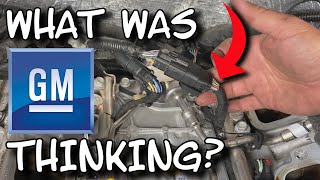
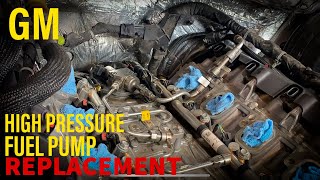
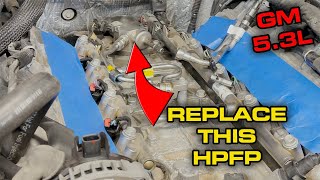
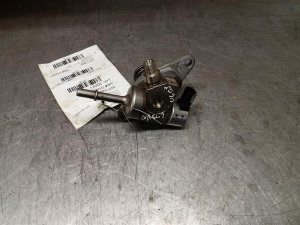
Typical fix: Replace the high-pressure fuel pump. 🎬 Watch: Complete guide to replacing the high pressure fuel pump. An oil change is also required if fuel has contaminated the oil.
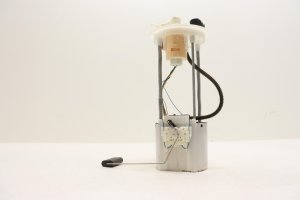
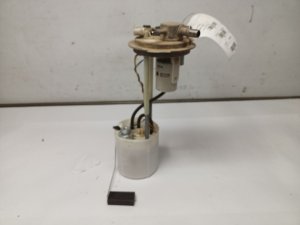
Est. part cost: $200-$500 - Weak Low-Pressure (In-Tank) Fuel Pump or Faulty Fuel Pump Control Module (FPCM) 🟡 Medium Probability → Shop Fuel Pump The in-tank pump feeds the HPFP. If its supply is weak, the HPFP will be starved of fuel. The FPCM, which controls the in-tank pump, is a known failure point on many GM trucks, often due to corrosion from its location on the frame near the spare tire. A failing FPCM can cause intermittent or complete loss of low-side fuel pressure.
How to confirm: Test the low-pressure fuel system pressure; it should be stable and within specification (typically 55-62 PSI). Check for related codes like P069E or P2635, which point directly to the FPCM or low-pressure pump performance. In some cases, the FPCM can be bypassed with a jumper wire for a quick no-start test.
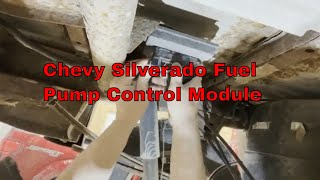
Typical fix: Replace the in-tank fuel pump module or the Fuel Pump Control Module (FPCM). 🎬 Watch: How to locate and replace the fuel pump control module. The FPCM may require programming.
Est. part cost: $200-$400 (pump), $70-$150 (FPCM) - Fuel System Contamination ⚪ Low Probability As per GM TSB #PIP5151F, debris, water, or other contaminants (like DEF) in the fuel can clog injectors, filters, and damage pumps, leading to erratic pressure readings. This bulletin explicitly lists P0191 as a resulting code.
How to confirm: Inspect the fuel for debris or water by taking a fuel sample. This is often discovered during the replacement of other fuel system components. The TSB advises a complete fuel system flush if contamination is found.
Typical fix: The complete fuel system needs to be cleaned, and the source of contamination addressed. This may involve replacing the fuel filter, cleaning the tank, and flushing all lines.
Est. part cost: $50-$300 (plus significant labor for cleaning) - Wiring or Connector Issue ⚪ Low Probability
How to confirm: Visually inspect the wiring harness and connector at the fuel rail pressure sensor for any signs of corrosion, damage, or loose pins, as highlighted in TSB #20-NA-197. Perform a wiggle test on the connector while monitoring the sensor data on a scan tool. A repair story on a 3.0L Duramax Silverado fixed a recurring P0191 by replacing the wiring harness connector at the fuel rail, which had a visibly damaged pin.
Typical fix: Repair the damaged wiring or replace the connector pigtail. In some cases, the harness section may need replacement.
Est. part cost: $20-$150
Rare But Worth Checking
- Faulty Engine Control Module (ECM): → Shop Engine Control Module (ECM) This is very rare. The ECM should only be considered after all other possibilities, including sensors, pumps, and wiring, have been exhaustively tested and ruled out. One documented case required an ECM replacement along with a sensor connector to finally resolve the code.
Diagnosis Steps
- Check for other DTCs that may provide more context, such as P0087 (low pressure), P0088 (high pressure), or P069E (FPCM fault).
- Connect a scan tool and observe live data for 'Commanded Fuel Rail Pressure' and 'Actual Fuel Rail Pressure'.
- Compare the two values at idle, during light throttle, and under heavy acceleration. They should track each other closely. At idle, high-side pressure should be around 500-1000 PSI, while the low-side should be stable around 55-62 PSI.
- If the actual pressure is erratic or does not respond to commands, inspect the fuel rail pressure sensor connector and wiring for damage, corrosion, or looseness, as per TSB #20-NA-197.
- Check the engine oil for a gasoline smell. If present, this strongly indicates a leaking high-pressure fuel pump (HPFP).
- If wiring is intact and there's no fuel in the oil, test the low-pressure fuel system to ensure the high-pressure pump is receiving adequate fuel supply. Pressure should be stable and within GM specifications (55-62 PSI).
- If the low-pressure side is healthy but the high-pressure reading is still incorrect, the issue is likely the high-pressure fuel pump or the fuel rail pressure sensor itself.
- As per TSB #PIP5151F, if symptoms like hard starting are present, consider taking a fuel sample to inspect for contamination before replacing major components.
Parts You'll Likely Need
- High-Pressure Fuel Pump
Related Codes That Often Appear With This One
- P0087 — Indicates Fuel Rail/System Pressure is too low, often appearing with P0191 when a pump is failing or the system is contaminated. (Cited in TSB #PIP5151F and TSB #20-NA-197)
- P0088 — Indicates Fuel Rail/System Pressure is too high, which can also trigger the P0191 performance code. (Cited in TSB #PIP5151F)
- P128E — A GM-specific code that can be related to fuel rail pressure sensor performance, often set in conjunction with P0191. (Cited in TSB #PIP5151F)
- P069E — Indicates a fault within the Fuel Pump Control Module (FPCM). This code strongly suggests the issue lies with the FPCM or the low-pressure pump it controls, rather than the high-pressure side.
Technical Service Bulletins (TSBs) & Recalls
- PIP5151F: Discusses hard start, no start, or low fuel pressure issues (P0087, P0088, P0191, P128E) caused by fuel system contamination. Recommends cleaning and flushing the entire fuel system if contamination is found.
- 20-NA-197: Addresses a range of fuel pressure codes (including P0191 and P0087) that may be caused by corrosion or damage at the fuel pressure sensor's electrical connector, advising inspection and replacement of the connector if necessary.
- 16-NA-102: Pertains to older models but is relevant, linking low fuel pressure codes to potential high-pressure fuel pump failure and contamination from debris.
- PIP4949E: An earlier bulletin, similar to PIP5151F, that also links codes P0087, P0088, and P0191 to hard start/no start conditions requiring diagnosis.
Platform-Specific Known Issues
- GM Technical Service Bulletin #PIP5151F notes that on 2018-2019 models, codes P0191, P0087, P0088, and P128E accompanied by hard start, no start, or rough running can be caused by fuel system contamination, requiring a full system cleaning.
Mechanic-Grade Diagnostic Values
- Low-Pressure Fuel System Pressure (at idle) — expected: 55 - 62 PSI. Failure: Pressure consistently below 55 PSI suggests a weak in-tank pump, FPCM issue, or a restriction.
- High-Pressure Fuel Rail Pressure (at idle) — expected: 500 - 1,000 PSI. Failure: Pressure significantly below this range or erratic readings.
- High-Pressure Fuel Rail Pressure (while cranking) — expected: ~300 - 400 PSI. Failure: Failure to build pressure or a rapid drop after cranking.
- Fuel Rail Pressure Sensor Voltage (Key On, Engine Off) — expected: 5V reference, 0V ground, ~1.0-2.0V on signal wire. Failure: Incorrect voltages, such as 3V+ on the signal wire with KOEO, indicate a sensor or circuit fault.
- Low-Pressure Sensor Reading (after commanded stall) — expected: Should drop to 0 PSI. Failure: Reading remains stuck at a value like 30-40 PSI, indicating a faulty sensor.
Scan Tool Commands That Help
- GDS2: Fuel System Depressurize — To test the fuel rail pressure sensor's response. When commanded, the engine should stall and pressure should read zero. If the reading hangs at a non-zero value, the sensor is likely bad.
- GDS2: Fuel Pump Driver Control Module Configuration — This function is required after replacing the Fuel Pump Control Module (FPCM) on 2019-2020 models. If the function is missing, a workaround is to manually build the vehicle in GDS2 as a 2.7L L3B engine to access the configuration screen.
- GDS2: Fuel Pump On/Off Command (Output Control) — To verify if the ECM, FPCM, and the low-pressure fuel pump are communicating and functioning. Commanding the pump 'ON' should result in an audible pump noise and pressure build-up.
Wiring & Ground Locations
- Fuel Pump Control Module (FPCM) — Located on the frame, above the spare tire.. This module controls the low-pressure fuel pump. It is in a location prone to corrosion, which can cause erratic pump behavior and trigger P0191.
- FPCM Fuses (2017-2019 models) — In the under-hood fuse box.. Fuses #18, #21, and #41 supply power to the Fuel Pump Control Module. A blown fuse will disable the low-pressure pump, starving the high-pressure pump and causing low-pressure codes.
- Fuel Rail Pressure Sensor Connector — On the fuel rail, located on the passenger side of the engine, often behind the throttle body.. This connector is a known failure point. Corrosion or poor pin tension can interrupt the signal from the sensor to the ECM, directly causing a P0191 code even if the sensor itself is good. TSB #20-NA-197 and owner reports confirm this.
Real Owner Repair Stories
- YouTube user 'Greasy's Garage' (2020 Chevrolet Silverado 3.0L Duramax) — Reduced engine power (limp mode), P0191 code stored.
❌ Tried (didn't work) Initial diagnosis focused only on the sensor.
✅ What actually fixed it The final repair required replacing both the fuel rail pressure sensor connector and the Engine Control Module (ECM). Diagnosis revealed a visibly damaged pin #3 on the connector and incorrect voltage coming from the ECM. - Reddit user in r/Chevy (2019 Chevrolet Silverado) — Vehicle needed a new Fuel Pump Control Module (FPCM), part #13565641.
❌ Tried (didn't work) Waiting for a new part, which was on national backorder.
✅ What actually fixed it A used FPCM with the exact same part number was sourced from a salvage yard. The used module was installed and worked immediately without requiring reprogramming ('plug and play'). - Reddit user in r/Duramax (2018 Chevrolet Silverado L5P Duramax) — Intermittent P0191 code and limp mode.
❌ Tried (didn't work) Clearing the code would temporarily fix it, but the issue would return randomly.
✅ What actually fixed it The fuel rail pressure sensor connector pigtail was replaced. The user noted there is a TSB for failing contacts within this specific connector.
OEM Part Supersession History
12633417→12635273— Part revision by manufacturer.
Heads up: While superseded, multiple part numbers like 12623130 and 12673824 are also listed for similar GM V8 engines. Always verify the correct part number by VIN before purchasing.
Model Year Variations Within This Range
- 2019-2020: A software glitch in the GDS2 scan tool can prevent technicians from programming a new Fuel Pump Control Module (FPCM). GM issued bulletin #PIP5728 instructing technicians to manually build the vehicle in GDS2 and select the 2.7L (L3B) engine option to access the necessary 'Fuel Pump Driver Control Module Configuration' function. This does not apply to the 2018 K2XX models.
Helpful Videos
Used OEM Parts in Stock
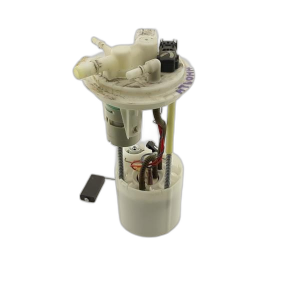
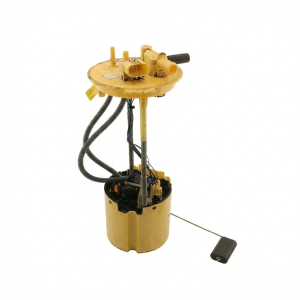
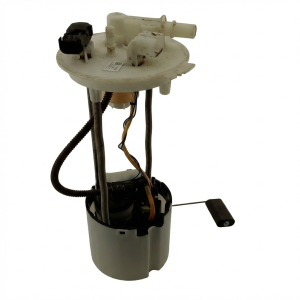
New Aftermarket Parts Available
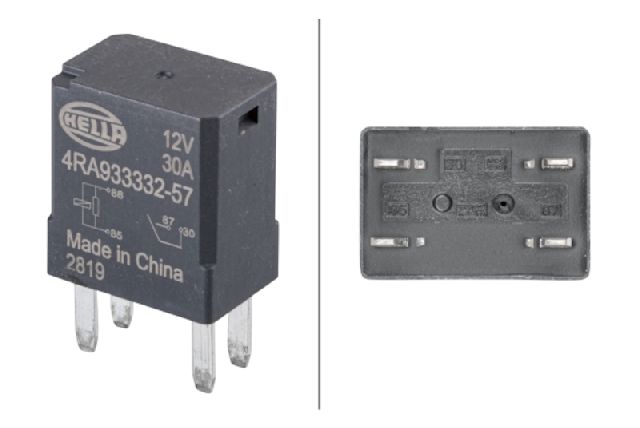


The information in this article is provided for general reference and educational purposes only. Vehicle specifications, procedures, and part compatibility can vary by production date, trim level, and region. Always consult your vehicle's factory service manual and verify part numbers before purchasing or performing repairs. Safety-critical components such as airbags, seat belts, and braking systems should be installed by a qualified professional.
- Chevrolet SILVERADO 1500:
- 🧭 Diagnostic Flowchart
- 🎬 Helpful Videos
- 🛍️ Shop This Part
- What's Unique About the 2018-2019 Chevrolet SILVERADO 1500
- Symptoms You May Notice
- Most Likely Causes
- Rare But Worth Checking
- Diagnosis Steps
- Parts You'll Likely Need
- Related Codes That Often Appear With This One
- Technical Service Bulletins (TSBs) & Recalls
- Platform-Specific Known Issues
- Mechanic-Grade Diagnostic Values
- Scan Tool Commands That Help
- Wiring & Ground Locations
- Real Owner Repair Stories
- OEM Part Supersession History
- Model Year Variations Within This Range
- 🎟️ Get 5% Off